Category: Norfolk

  • Skeyton – War Memorial (Gunner Alfred Allard)

    Skeyton – War Memorial (Gunner Alfred Allard)

    One of the saddest elements of the war memorial in Skeyton is that it commemorates three members of the Allard family who died, all brothers. They are Gunner Alfred Allard, Driver Bertie John Allard and Private Percy Walter Allard.

    The parents of the men were Edward John Allard (born in 1853) and Ann Elizabeth Allard, who were living at Workhouse Corner in the village at the time of the 1911 census. At the 1911 census, there were five people living at that household, Edward John Allard, Ann Elizabeth Allard, Bertie John Allard, Kathleen Hetty Allard and Percy Walter Allard. Rolling back to the 1901 census, this shows that the family was bigger, with Edward and Ann as the parents, along with their children Louisa, Alfred, Alice, Bertie, Kathleen and Percy, along with their grandchild Spencer.

    Alfred Allard, service number 30620, worked as a farm labourer before he went off to war. He joined the 72nd Heavy Battery of the Royal Garrison Artillery and was sent off to Mesopotamia, alongside men who had come from India and who formed the British Indian Army. It’s hard to imagine what a young man from a rural Norfolk village must have made of this, fighting the Turkish army in what is now Iraq.

    Alfred would have seen the defeat of the British by the Turks in early 1916, in what turned into something of a capitulation in some aspects. He didn’t see the British fight back and gain back control in 1917, as he died on 6 June 1916 at the age of 28. I’m unsure of the reason for his death, as it didn’t appear to occur during military action, but he could have been wounded in the earlier conflict, or just became unwell.

    Alfred is buried at Basra War Cemetery, but for the moment, this is not a peaceful location. The cemetery has been badly vandalised and desecrated and the Commonwealth War Graves Commission is doing everything it can to try and restore it. There is security fencing up and efforts are being made to get contractors in to restore the site, but it remains closed to the public and will likely remain so for some time.

  • Skeyton – War Memorial

    Skeyton – War Memorial

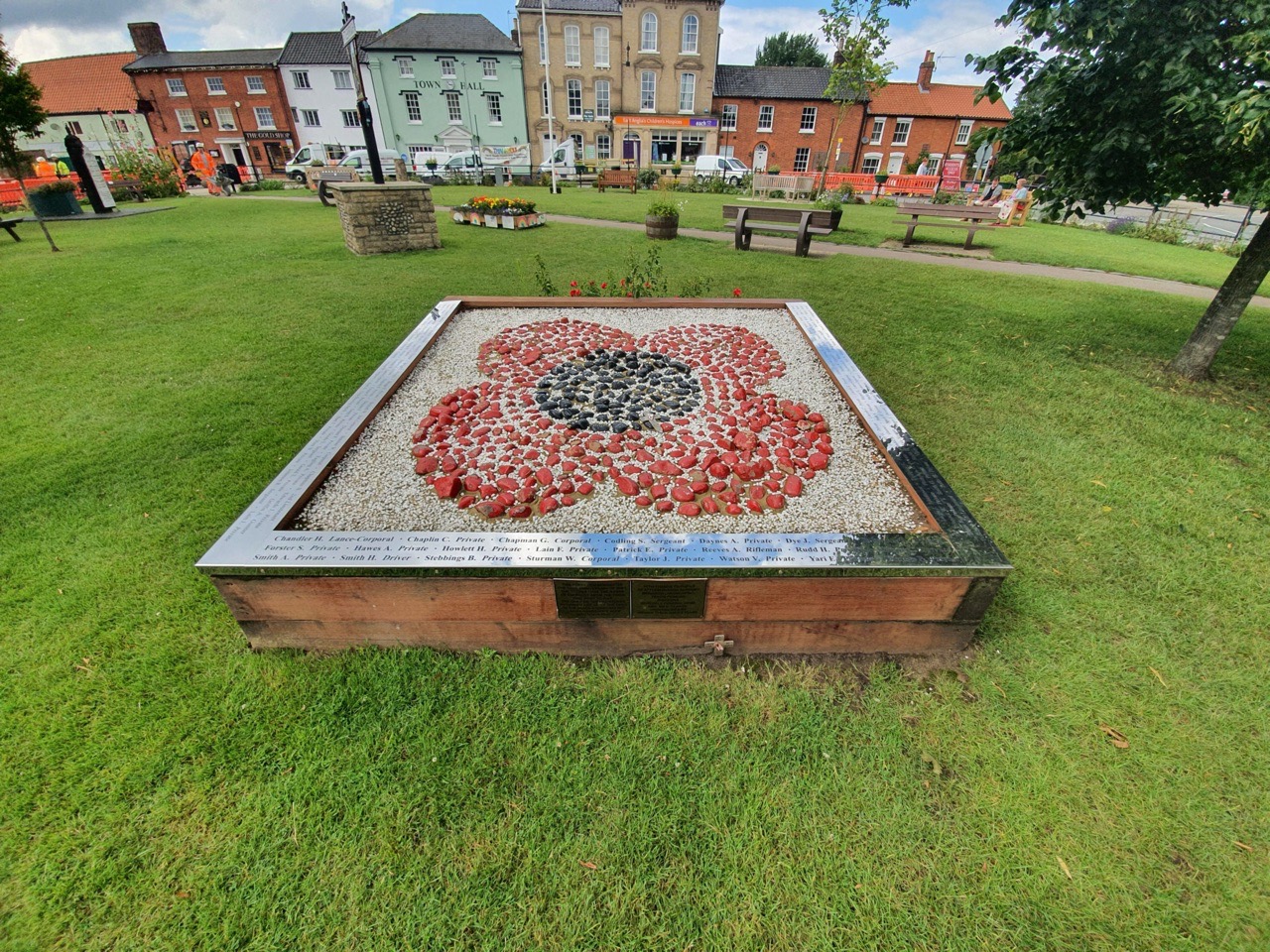
    Skeyton’s war memorial is located in front of the village church, commemorating the nine men who lost their lives in the First World War and the three men who lost their lives in the Second World War. The memorial is a listed monument and is in the form of a Celtic cross with the image of a sword.

    Perhaps the most noticeable element of this war memorial are the three Allard brothers who died during the First World War, although more on them in a separate post. The memorial was installed here in 1920 and for friends and relatives of those who had died, this is all that they had because bodies of the dead weren’t brought back.

  • Skeyton – All Saints Church

    Skeyton – All Saints Church

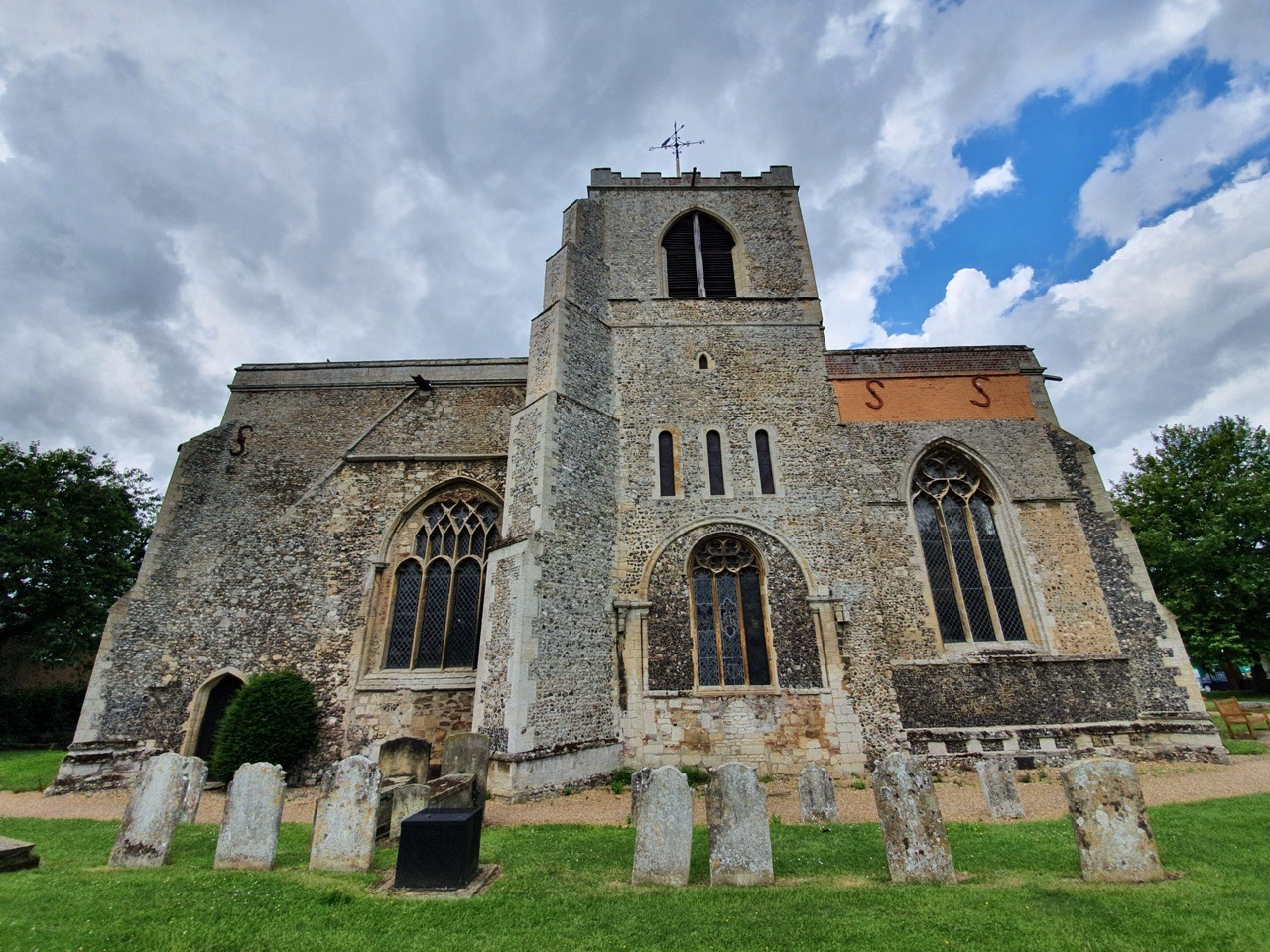
    There’s something of a majestic beauty about Skeyton Church, pretty much alone in the landscape and there was likely an Anglo-Saxon church here. The current building is primarily from the late twelfth and early thirteenth centuries, although the church was reworked in the fifteenth century, including with the installation of the large nave windows.

    The tower which was rebuilt in the fifteenth century and has meant that it’s all a bit off-centre.

    One thing that I’ve seen posted relatively frequently over recent years is how people in the past respected religious buildings and wouldn’t have caused any damage to them. Unfortunately, this wasn’t the case and the newspapers are littered with cases of churches being vandalised. The Morning Post reported in January 1826 that “on Saturday night last, or on Sunday morning, some evil disposed persons broke the windows of Skeyton Church; they took the road to Aylsham, breaking windows in almost every house they passed; great hopes are entertained that such cowardly miscreants will be brought to justice”.

    Some of the monuments in the graveyard are looking a bit bedraggled, but I like that they’re still there and haven’t been moved away to make things easier for the church to flatten out the ground.

    Unfortunately, the current health situation means that churches are still generally closed, although the interior was apparently mostly redesigned in the early nineteenth century and not a great deal has changed since then. They were proud at the time of the carefully designed church benches installed in the nave, with their carved endings, whilst the former box pews were removed.

    There was a modernisation and renewal of the building in 1937, which had apparently become unsafe, with the Bishop noting that “they had followed the way of their ancestors in renewing the white walls, this bringing light and brightness into the church”. I suspect their ancestors would have had wall paintings which were hidden under whitewash, but it’s interesting how once churches were colourful and heavily painted, but tastes evolved to just wanting white paint.

  • Lamas – St. Andrew’s Church

    Lamas – St. Andrew’s Church

    Although there was a previous church on this site from the Anglo-Saxon period, the current nave mostly dates to the fifteenth century and until relatively recently, the church would have been thatched. What is noticeable is that the chancel is at an angle to the nave, which the listed building record explains is known as a weeping chancel. The chancel was rebuilt in the 1880s (there’s a plan from 1887 here), using stone from the former chancel, likely on the foundations of the old structure.

    Ian Hinton, from the UEA although he doesn’t specifically mention Lamas, wrote a document about weeping chances and there seems to be no single reason as to why they were constructed like that. It doesn’t seem that anyone knows why the chancel here is built like this, although Hinton gives plenty of suggestions as to why churches were once constructed in this manner.

    The church tower, which was partly rebuilt in the 1880s.

    The lean is also visible from the north side, with one of the doors bricked up. Incidentally, this church is sited in a rather tranquil location and it is also located by the peacefully flowing river.

    This is a scratch dial, or a mass dial, and since the one at Ingham Church was explained to me by a guide, I’ve started to notice more of them. They are used as a sundial for canonical hours and there would have been a peg in the hole which would have cast a shadow. Having written that though, this one looks quite new and so is probably from the late nineteenth-century renovation.

    I thought that this was quite a graceful tree in the churchyard.

    Always sad to see stones broken, but at least they haven’t been turned into paving slabs.

    The south porch which was renovated in 1977 for the Queen’s Silver Jubilee which the listed building record notes has a coffin lid step.

    Sadly, I suspect that the readable element on this stone won’t last much longer.

  • Swanton Abbott – St. Michael’s Church

    Swanton Abbott – St. Michael’s Church

    St. Michael’s Church is strangely detached from the rest of the village, but on this occasion, it’s unlikely that the settlement has moved much, rather the church is on a slightly elevated hill platform.

    The tower, which dates from the early part fourteenth century, is the earliest section of the current church, with the nave being added later on during the fourteenth century and the chancel was constructed in the fifteenth century. There was though likely a Saxon church that existed on the site before work started on the current building.

    The porch was added in the fifteenth century, with the more modern set-up unfortunately masking the medieval wooden door.

    The south side of the church, with the priest’s door visible between the two windows. The church has received a grant in recent months from the Norfolk Churches Trust which will allow for some repairs to the guttering and also work to remove a flock of pigeons that has been causing issues in the tower.

    I’m unsure why the east window has been partly bricked-up, I assume it was for structural reasons.

    I’ll return to the church at some point when it’s likely to be open (I’ve been able to do that), with the interior being of note, as there’s a mauled about rood screen which was heavily, and badly, restored at the beginning of the twentieth century which is worth seeing. The pulpit has some medieval carving work to it, there’s fifteenth-century stained glass and the font is of a similar age, all along with numerous memorials of interest.

  • Buxton – Name Origin

    Buxton – Name Origin

    And following on from my visit to Buxton yesterday (the one in Norfolk, not the one in Derbyshire), this is what The Concise Oxford Dictionary Of English Placenames have to say about the origins of the village name.

    Buxton, Norfolk. Buchestuna in Domesday Book, Buxstone in 1254. Bucc’s Tun.

    Short and sweet, ‘tun’ is a farm or village, so it’s the settlement of ‘Bucc’. As an aside, Buxton in Derbyshire has a different word origin, theirs relates to a rocking stone. There is also the possibility that there wasn’t a person called Bucc, but instead the village was named after deer (or bucks) which might have been kept there.

  • Lamas – Name Origin

    Lamas – Name Origin

    Following the walk I went on last night, this is how The Concise Oxford Dictionary Of English Placenames explains the origins of the Norfolk village name of Lamas.

    Lamas, Norfolk. Lamers in Domesday Book, Lammesse in 1044, Lammasse in 1186. Old English lam- or lamb-mersc ‘loam marsh’ or ‘marsh where lambs were kept’. The first alternative seems preferable.

    So, because the word origins of loam and lamb can’t be separated out, the dictionary suggests the two alternatives and thinks loam marsh is more likely. It does seem like fertile soil today, so the dictionary is probably right, but I much prefer the idea that this village name has been in existence for a century and is named from when lambs were grazed here.

  • Swanton Abbott – Name Origin

    Swanton Abbott – Name Origin

    Back to The Concise Oxford Dictionary Of English Placenames to look up the origins of the village name Swanton Abbott. There has been some variance on spelling this village name, some spell it as Swanton Abbot, but I’m in favour of the Swanton Abbott spelling as is on the signs.

    Swanton Abbott, Norfolk. Swaneton in 1044, Suanetuna in Domesday Book, Abbot Swanton in 1451. Old English for Tun of the (swine) herds. Swanton Abbott belonged to Holme Abbey.

    ‘Tun’ is a farm or village, so it’s the farm or village of the swine herds, which explains the Swanton bit, and Abbott is solely because of its religious owner.

  • Walking – Swanton Abbott and Lamas

    Walking – Swanton Abbott and Lamas

    Just photos from tonight’s walk, an area I knew quite well in parts. We also visited the exterior of three churches, so more on those in later posts. The walk was 12.3 miles, walked in just over 4 hours, and it was nice to finish later into the evening and it was still light. Unfortunately, it goes downhill from here with regards to that for the rest of the year.

    Fortunately, despite the sign, we didn’t see any of the adders.


  • South Walsham – Church of St. Lawrence

    South Walsham – Church of St. Lawrence

    South Walsham only has three listed buildings, although that’s still a fair number, but all three are located in this one churchyard. The first is the Church of St. Lawrence (in the front of the above photo), the second is the collapsed tower of St. Lawrence (just visible in the middle of the above photo) and the other is the larger Church of St. Mary (at the rear of the above photo).

    The church was originally built in the fourteenth century, likely on the same site as an earlier religious building. The idea of having two churches next to each other seems slightly illogical today, although if you’ve got two different parishes and one particularly decent piece of land, then it does make some sense to have two different buildings at the same site. And, this worked well enough until the fire that destroyed most of the church in 1827.

    The above photo is of the north side of the church, with the central window being bricked up.

    The doors to the church give the appearance of having fire damage to their base, which would be a permanent reminder of 1827. The locals didn’t though merge the churches even when faced with the problem that one of them was burnt out, instead rebuilding much of the former chancel and re-opening in 1832. The two churches then continued separately until 1890, when their congregations were merged.

    This meant that St. Lawrence’s church was left to become derelict, seemingly forever destined to fall under the shadow of St. Mary’s. But, a recent restoration of the building has returned it to use as an arts centre, with photos on their web-site with the scale of the challenge they had.

    The churchyard is well-kept, all very neat.

    This is what is left of the tower of St. Lawrence, badly damaged by fire in 1827 and then what remained collapsed in 1971 (George Plunkett’s archive has a photo of the tower in 1937 as it looked before the collapse). Today, the area is used as the Sacristan’s Garden and contains medicinal herbs and plants and reflects what may have been grown in the medieval period.

    The Sacristan’s Garden, looking towards the main part of St. Lawrence’s Church.

    The flushwork design is still present at the base of the tower.