Category: Norfolk

  • Hoveton – Hoveton Village Sign

    Hoveton – Hoveton Village Sign

    There’s not a huge amount of innovation in Hoveton’s village sign in terms of the design, but it’s a pleasant area with benches and a lovely view of the busy road.

    The village sign was installed here to mark the Coronation of King George VI in 1937 and there were also plans to build a playing field to celebrate the Royal event.

    The sign was refurbished and restored in 2012.

    Another view of the sign. And busy road. This reminds me that I must also go back to Hoveton and cross over the river so that I can get a photo of Wroxham’s village sign.

  • Hoveton – St. Peter’s Church (George Neave)

    Hoveton – St. Peter’s Church (George Neave)

    The grave of George Neave (1803-1871) is in the churchyard of St. Peter’s Church in Hoveton. He was born in Smallburgh and he spent his life working as an agricultural labourer, initially living in Neatishead. George was listed on the 1841 census, living with his wife Elizabeth in Cangate Common in Neatishead, along with his 12-year old daughter Mary, his 10-year old daughter Clarisy, his 7-year old son William, his 5-year old son James and his 1-year old daughter Emily.

    In 1851, George was living with Elizabeth, as well as with his 16-year old son William, who worked as an agricultural labourer, his 12-year old daughter Emily, his 9-year old daughter Emma, his 6-year old daughter Sarah Ann, his 5-year old daughter Susan, his 1-year old daughter Jane, and his grandson William, aged 5. All of George’s children, and his grandson, had been born in Neatishead. Looking through the burial records at Neatishead, there is a 3-year old, Ann Neave, recorded as having been buried in the church in 1858 and this could have been one of George’s children.

    In 1861, George was living with Elizabeth, along with his 16-year old daughter Sarah, his 14-year old daughter Susan and the new-born George, who was George senior’s grandson. Unlike the others who had been in Neatishead, George, the grandson, had been born in Salhouse. That must have seemed just a little bit exotic….

    By the 1871 census, he was listed as living near the Common in the village, along with his wife Elizabeth and Hannah Hales, a servant out of situation. A few months after the census was taken, George died at the age of 68.

    George’s entry in the burials register for the church, the vicar was from the local Blofeld family of Hoveton Hall and the burial took place on Tuesday 30 May 1871. Elizabeth, his wife, was buried with George following her death in 1889, at the age of 85.

  • Hoveton – St. John’s Church (Elizabeth Agnes Thrower)

    Hoveton – St. John’s Church (Elizabeth Agnes Thrower)

    Located in the churchyard of St. John’s Church in Hoveton, this unusual grave marker is that of Elizabeth Agnes Thrower. Aged just 27 at her death, the grave marker was paid for by her husband, Alfred Thrower. Elizabeth died on 25 July 1892 and was buried on 31 July 1892, in a service overseen by the vicar Jonathan William Woolley. Sadly, that’s as far as I’ve got with the story of Elizabeth’s life, but her grave marker is near to the entrance to the church and is quite evocative of the period.

  • Hoveton – St. John’s Church

    Hoveton – St. John’s Church

    The parish church of Hoveton is a short walk from the village centre, now dominated by Roys of Wroxham. The nave of the church dates to the late eleventh century, with the chancel being a little later and was finished at the end of the thirteenth century. The church was once alone at the top of a small hill that overlooked the village, but more modern building development has brought it into an urban setting.

    The brick tower was constructed in the 1760s.

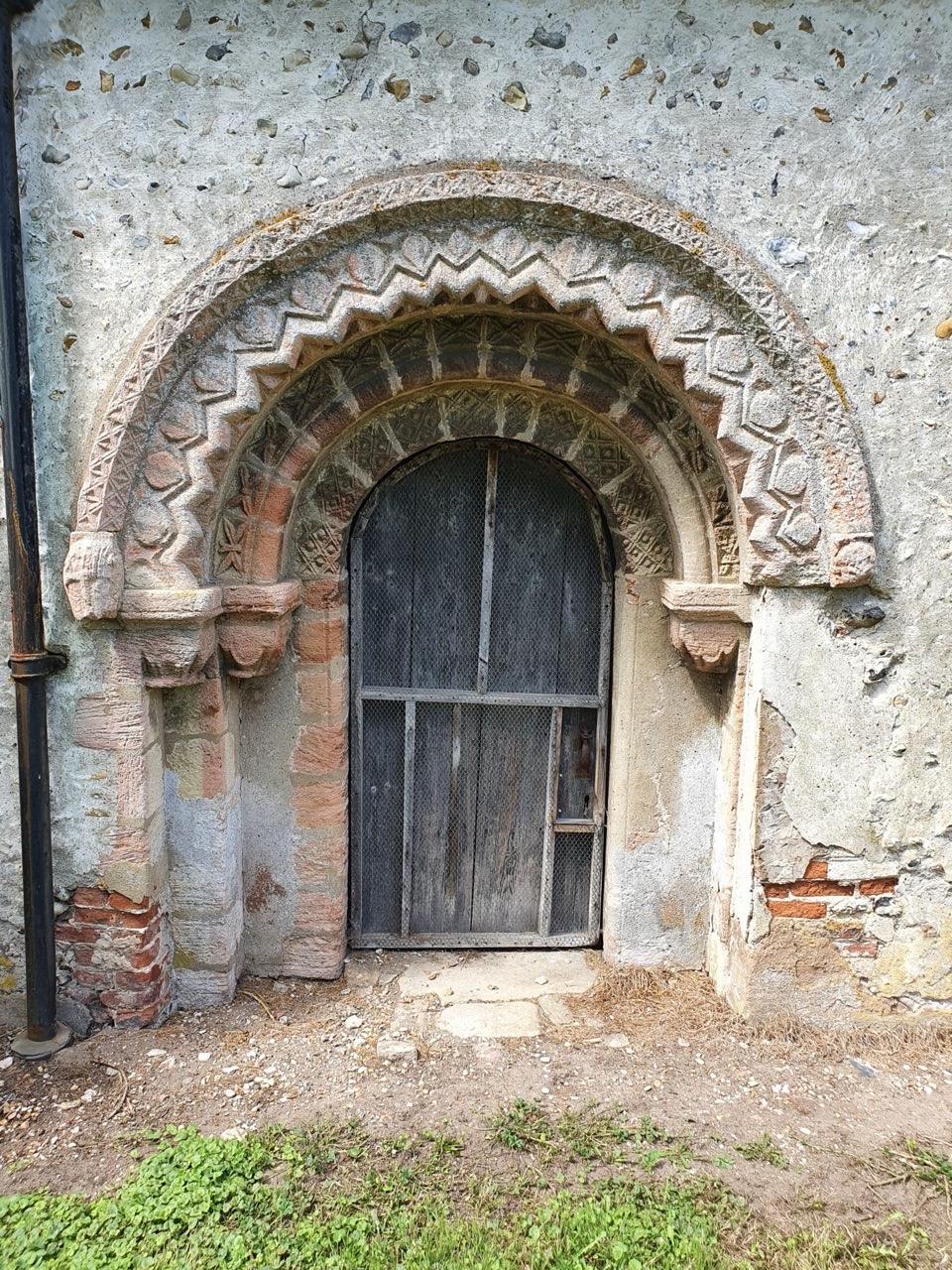
    There are a few architectural styles here and the chancel door on the south side of the church has been bricked up, probably relatively early on.

    The church was modernised in 1890 under the supervision of HJ Green and in August 1889 the EDP mentioned the fund-raiser that was taking place to secure funds for this. There was a military band, lawn tennis, fish ponds, photography, fortune-telling, an art gallery, concerts and refreshments. That’s some considerable effort for a church bazaar, I’m impressed.

  • Hoveton – St. Peter’s Church (Solomon Hannant)

    Hoveton – St. Peter’s Church (Solomon Hannant)

    The grave of Solomon Hannant (1821-1901) is in the churchyard of St. Peter’s Church in Hoveton.

    At the 1841 census, Solomon was listed as being a farm labourer, although I can’t find him in the 1851 census (not that I’ve looked very hard). But there’s something interesting in the 1861 census, as a large family has formed:

    Solomon Hannant (40-year old agricultural labourer)

    Maria Hannant (37-year old housewife, born in East Ruston)

    George Hannant (13-year old agricultural labourer, born in East Ruston)

    Hannah Hannant (11-year old, at school)

    Harriet Hannant (9-year old, at school)

    Robert Hannant (6-year old, at school)

    Sarah Hannant (3-year old)

    Benjamin Hannant (1-year old)

    Solomon Hannant (81-year old pauper, born in Worstead)

    By the 1871 census, the family were living on Common Road in the village and Solomon, Maria, George, Robert, Sarah, Benjamin and Emily were living at home. Solomon (the elder) died at the age of 84 and was buried at the church on 24 March 1864. At the 1881 census, the children had all left home, other than Benjamin who was aged 21 and was working as a carpenter’s apprentice.

    By the 1891 census, Solomon and Maria was living on Plantation Road in Hoveton St. Peter and by now they were living alone. By 1901, Solomon and Maria were living at Upper Street in Hoveton, along with Sarah Hannant who was still single and by now was aged 43. By the time of his death, Solomon was paying £5 per year rent on his home, which is around £500 per year by today’s money and this is perhaps a sign of how much things have changed.

    And, with a touch of pathos, here is the burial register for St. Peter’s Church. Solomon was buried on 10 May 1901 and the next burial at the church was that of Maria, on 23 December 1901.

  • Norwich – Former St. Peter’s Methodist Church

    Norwich – Former St. Peter’s Methodist Church

    This is the former St. Peter’s Methodist Church on Park Lane in Norwich, currently being redeveloped.

    The photo is a little wonky as I had to put my phone over the fence to get an unobstructed view. But, what is visible here is the former frontage of the Wesleyan Methodist Church (see http://www.norfolkchurches.co.uk/norwichparklanemeth/St.Peter’s-Old%20Chapel(1d4).jpg) and this was all bricked over in the 1960s to create a flat frontage.

    This was the frontage and I have to say, the developers have done the building a huge favour in revealing what was once here. The developers of this site are turning the two former church buildings into residential properties, although they’ve run into some difficulties with the council. According to the EDP, Norwich City Council demanded £507,000 as a contribution towards affordable housing and the property developers offered £371,800. Anyway, after lots of negotiations and debate, Norwich City Council accepted £167,108. I mean, what an expert negotiation that was, £200,000 lower than the first offer. Anyway, I won’t get political here.

  • Norwich – Heigham Park

    Norwich – Heigham Park

    We meandered into Heigham Park on a group walk and it’s a park that I’ve never been to before. The decision to construct it was made in around 1919 as there was a plan to build on the former Heigham Playing Fields site and the council wanted some space devoted to a public park. That was some forward planning from the council and other projects from the same period include Wensum Park, Waterloo Park, Eaton Park and Mile Cross Gardens.

    There was originally a fountain and pool near to the sole entrance to the gardens, but this has now been filled in to become a large garden feature. The park feels quite spacious, but they’re only 2.5 hectares in size and they’re bordered on all sides by residential properties. Work started on the gardens in 1921 and they were completed in 1924 when the public was allowed entry.

    The Friends of Heigham Park have a useful and interesting web-site, with much more information about the park’s history. Anyway, photos from the walk:

  • Hoveton – St. Peter’s Church

    Hoveton – St. Peter’s Church

    Unusually, this church was built in the early part of the seventeenth century, in 1624. Its location, near to Hoveton Hall, seems to suggest it was more constructed for the country house rather than for the people of Hoveton. They also didn’t need a church, they already had St. John’s which was actually near to the settlement of Hoveton.

    There is the possibility that the settlement of Hoveton St. Peter might have been larger and once had a church of its own, but no-one is quite sure where this might have been located.

    The building itself was ‘modernised’ internally in the 1880s, but externally, the church is nearly entirely unchanged since it was built.

    The only change to the building is that the north door has been blocked, but the thatched roof remains and this feels like a little bit of a hidden treasure in the Norfolk countryside.

  • Norwich – Las Iguanas

    Norwich – Las Iguanas

    And that’s another restaurant in Norwich permanently closed, the Latin American themed Las Iguanas on Wherry Road. Located near to Coast to Coast, which also permanently closed a few weeks ago, Las Iguanas is closing as a result of the Casual Dining Group going into administration. A little surprisingly, both Bella Italias in Norwich are staying open, although many are closing around the rest of the country.

  • Norwich – The Chip Shop (Stafford Street)

    Norwich – The Chip Shop (Stafford Street)

    Not the most innovative of chip shop names, but I’ve heard positive things about this location and their reviews are broadly glowing in praise. Before I start, I’ll get my pet hate out of the way, which is businesses that don’t take cards. Although I have no complaint as they can run their business how they want, it means I won’t go back. The number of locations that don’t take cards is now so small that customers expect it, and in my view, local businesses need to fight back against the sea of monotony that is offered by some chains.

    Indeed, Amex is running their usual December offer early, so any customer visiting a chip shop (or any small business which accepts Amex) with that offer will get £5 for free if they spend £10. More and more market traders are accepting cards and any business which doesn’t seems destined to need a large sign visible in their window or on entrance telling customers they don’t accept cards. And, that was the case here, the first marketing message in the shop was “cash only”. Although to be fair, the shop wasn’t quiet, the trade was steady.

    The service was polite and efficient, with the social distancing system being a little unclear (over half the customers got it wrong), but the staff were verbally explaining it. The price for battered sausage and small chips was £2.60, which is below average and the portion of chips was substantial. There was a moderate customer service failing in that they wrapped the whole lot up, even though I wanted it unwrapped, and didn’t offer salt and vinegar.

    But, the chips were excellent, fluffy on the interior, slightly firm on the exterior and they had a pleasant taste. The sausage content was a little generic, but it tasted fine and the batter seemed freshly made, was golden and had a richness of flavour.

    So, I can understand why they have the reputation that they have, there’s a focus on the food and all seemed fine with perfectly good value for money. The locals are fortunate to have this chip shop here, it is clearly well respected in the area.