Category: Norfolk

  • Acle – St. Edmund’s Church

    Acle – St. Edmund’s Church

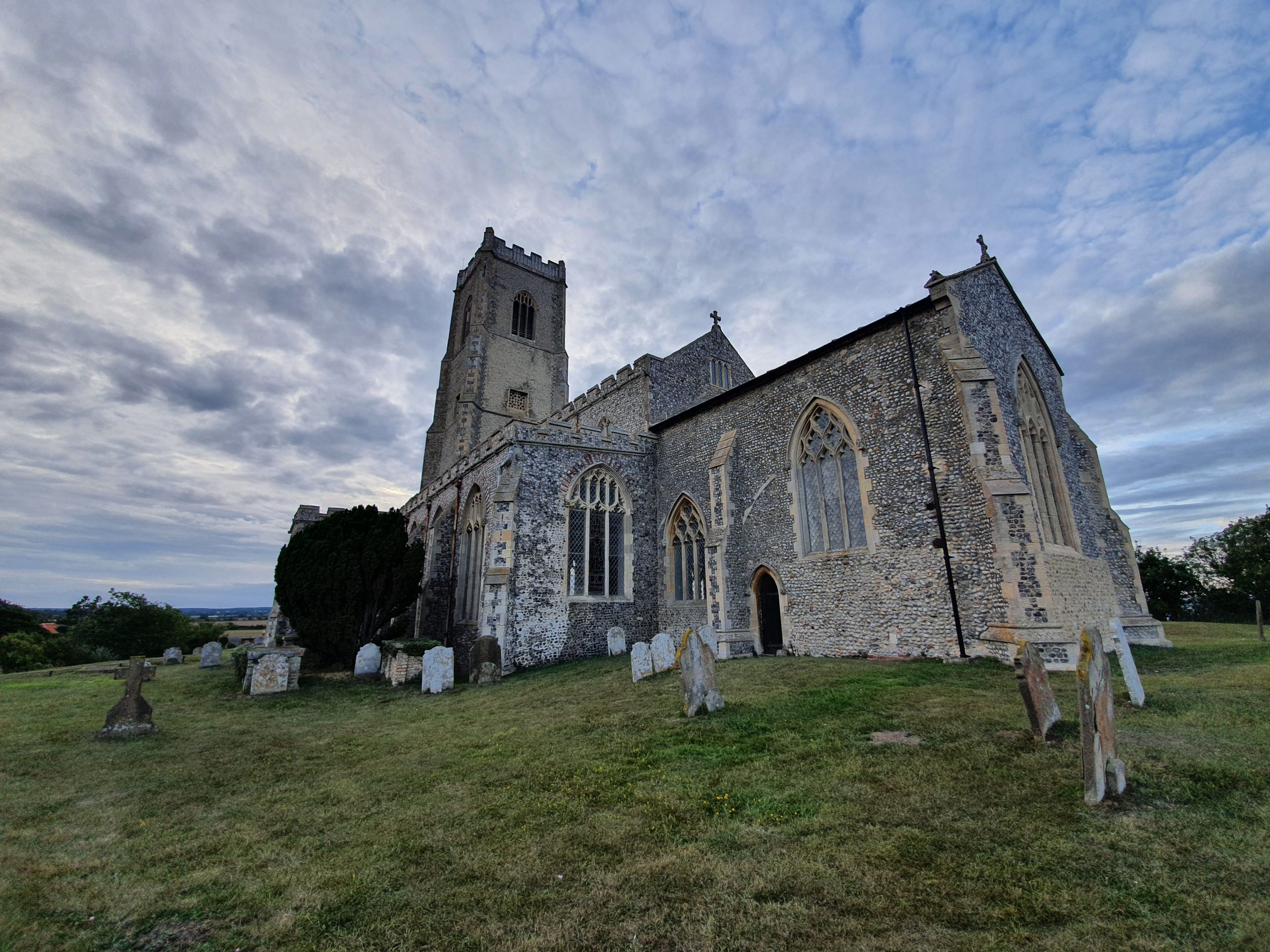
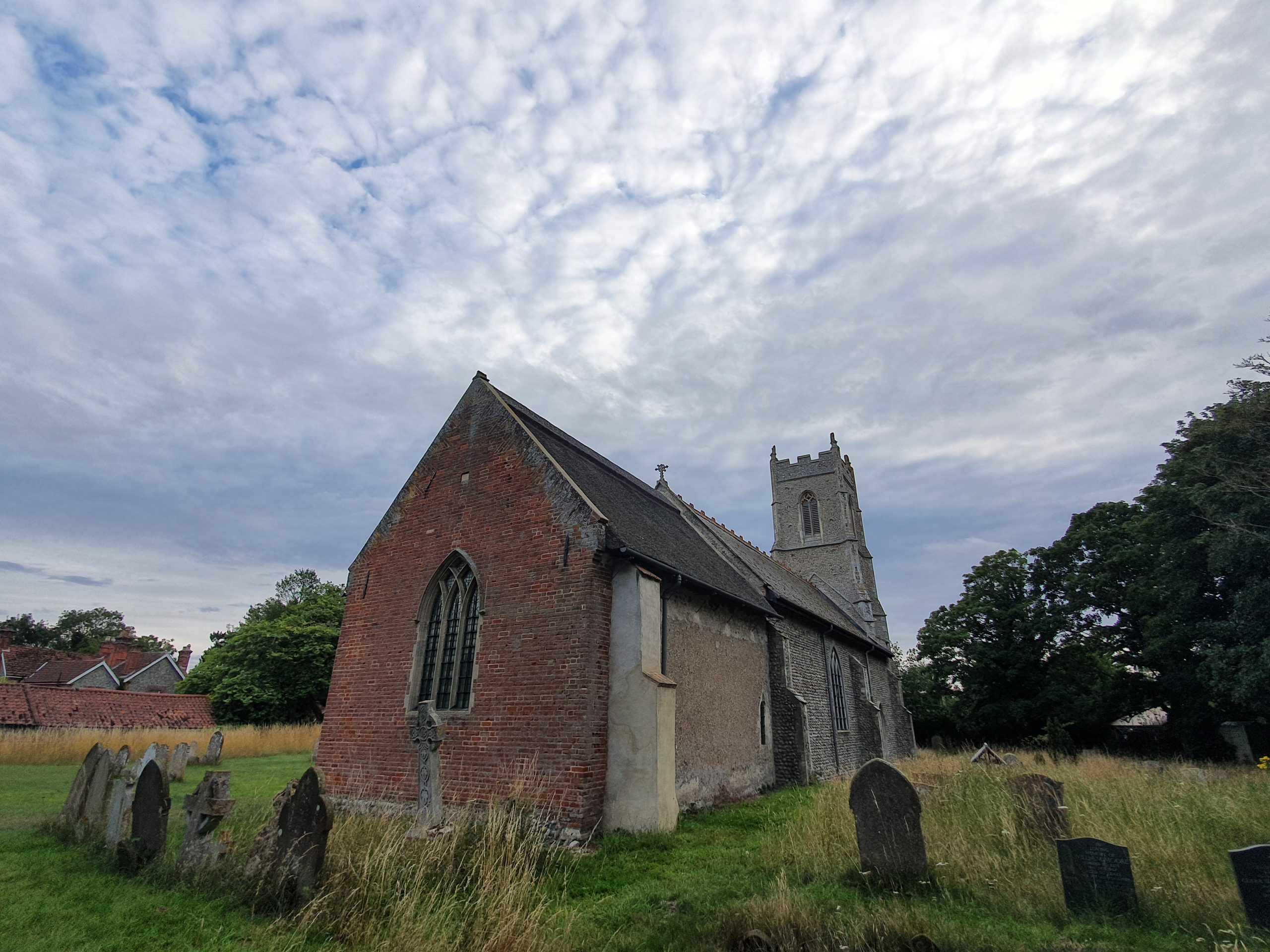
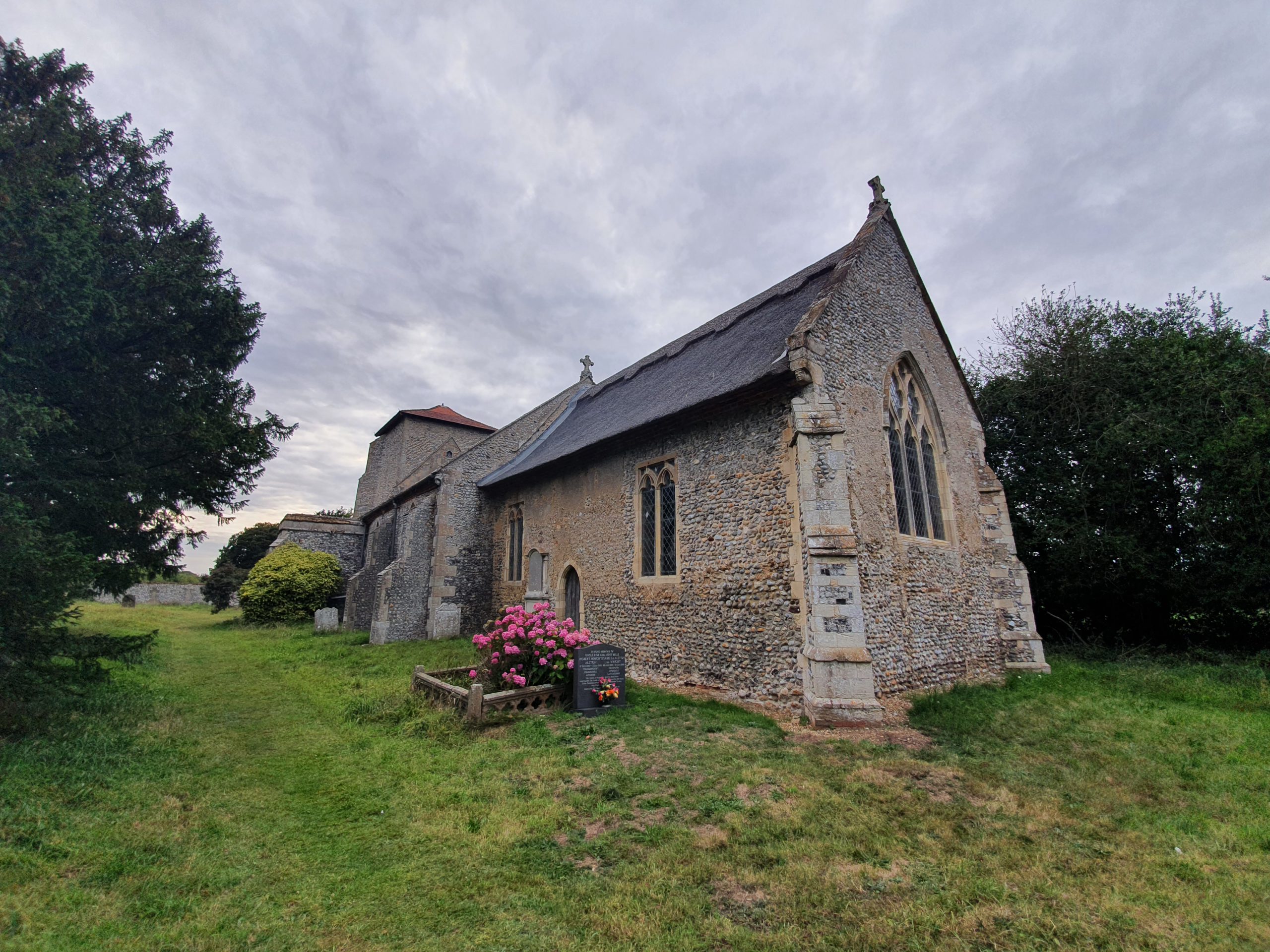
    The round tower of St. Edmund’s Church in Acle is from the twelfth century, although most of the rest of the structure is from the fourteenth century. The look of the church from this southern side shows the exterior of where the rood stairs were located, as well as the different heights of the nave and chancel.

    The building was restored internally in the 1860s, with Richard Phipson (perhaps best noted for his work on St Mary-le-Tower in Ipswich) working on the nave and Ewan Christian (perhaps best known for designing the National Portrait Gallery and restoring Southwell Minster and Carlisle Cathedral) working on the chancel.

    There was another major restoration that was completed in 1904, which primarily dealt with the roof, with the work being overseen by Herbert Green, the Diocesan surveyor. It was noted that before this restoration that the underside of the roof was plastered, but this was removed and replaced by oak boarding. Some work was also done to fix the floor of the nave, which had become dangerously uneven by this point. I’m not actually sure what happened to Richard Phipson’s 1866 plans, as he had planned to remove the plastered ceiling to show the oak cradle roof.

    The thatching is in need of some repair on the north side (and the church is mid-way through a fund-raising campaign to sort this out, as well as to see what damage lies below), but I hope it’s rethatched rather than covered in something looking much more modern, as happened at Potter Heigham.

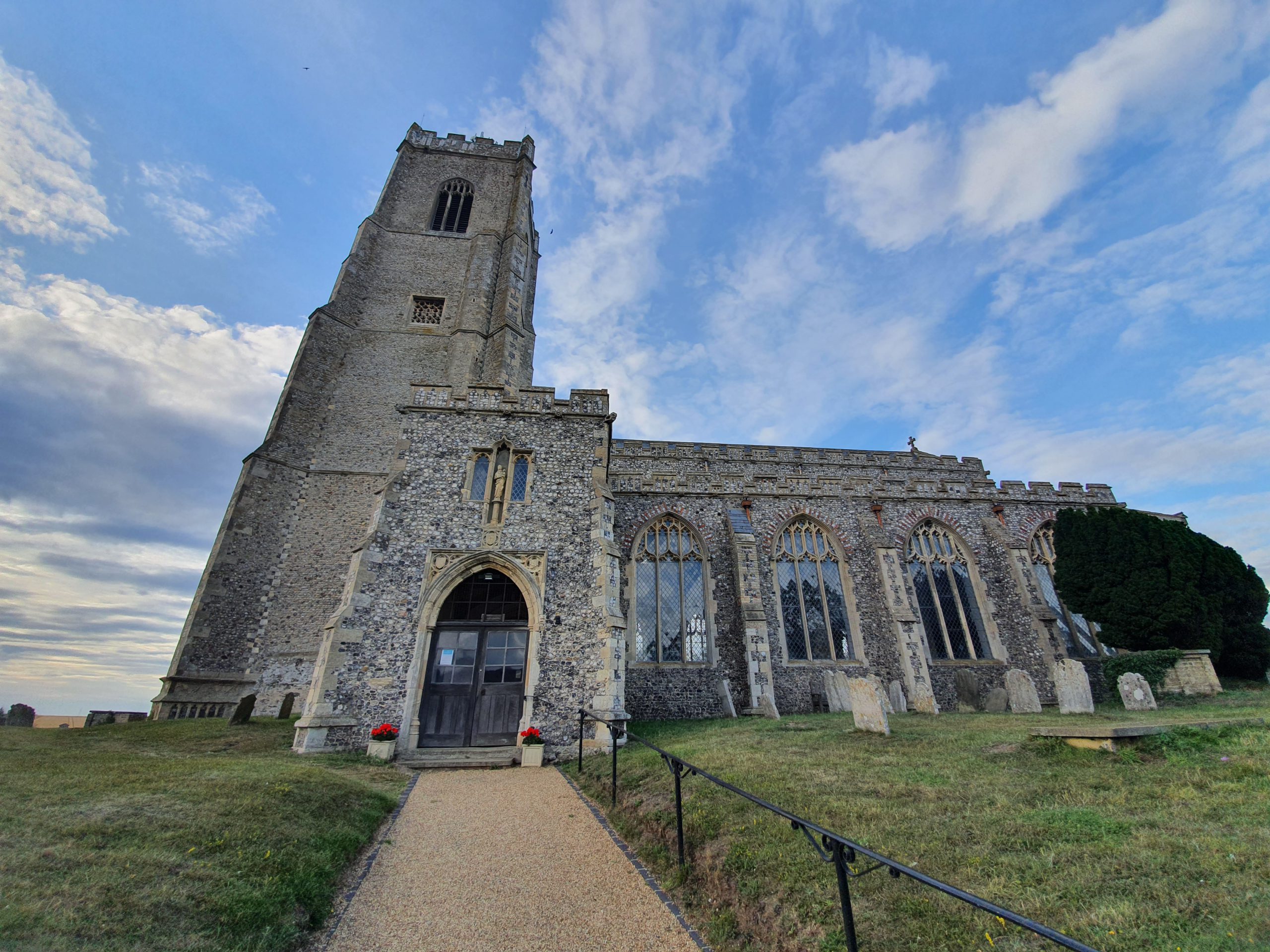
    The north porch, which is now the main entrance to the church.

    The south porch, which like its northern counterpart, also has a room above it.

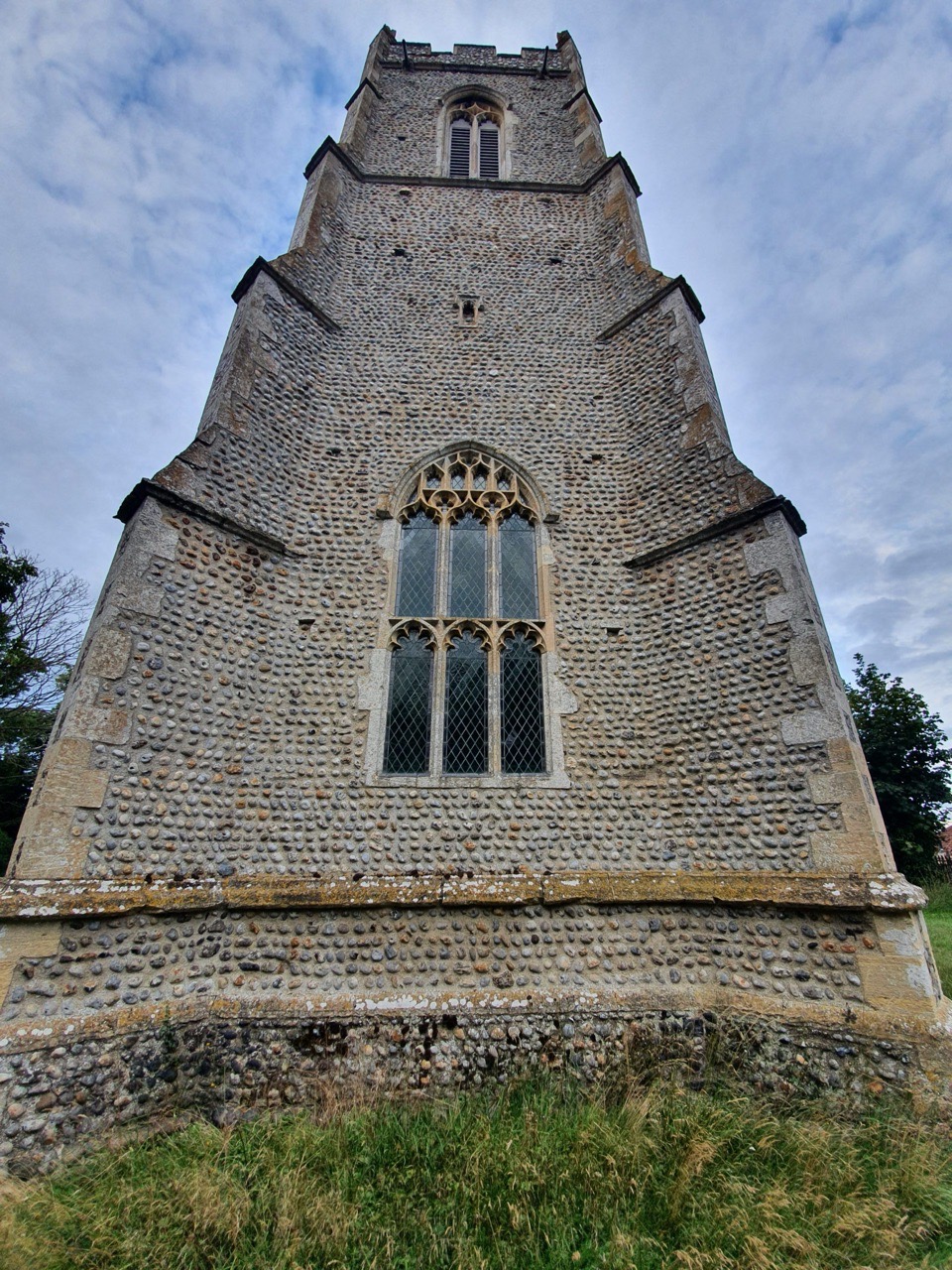
    The twelfth-century round tower, although that top section is later, probably from the thirteenth century. The tower is listed as being older by some sources, perhaps as early as the ninth century. Whatever its age, it is likely that there was a church here in around the ninth or tenth century.

    Unfortunately, as with many churches at the moment, the interior wasn’t open to visit, so that’s yet another building that I’ll have to return to when some form of normality returns.


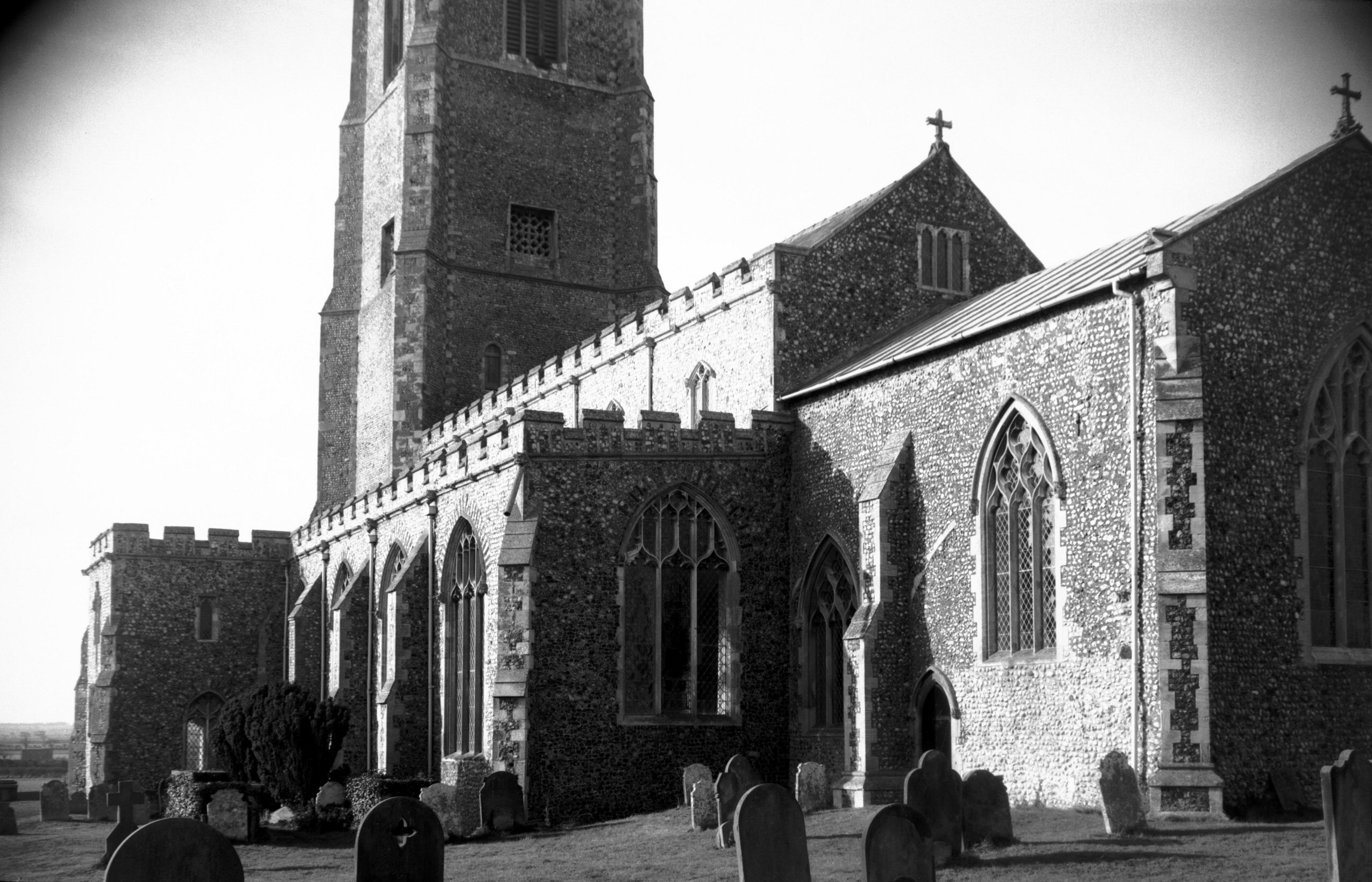
    The church in 1955.
  • Acle – Town Sign

    Acle – Town Sign

    The town sign in Acle was unveiled in August 1974 at what appears to have been a surprisingly well-attended event. On one side there’s a wherry, Acle bridge, the church tower, a windmill and a tree, whilst on the other side there’s a horse and cart going over Acle bridge, with the church making another appearance. I can’t suggest it’s worth a special trip from another country to see it, but it’s one of the better signs I’ve seen.

  • Acle – Jubilee Memorial

    Acle – Jubilee Memorial

    Located on Monument Green, which is named after this stone (the monument bit, not the green bit), is the Jubilee Memorial. This was placed here in 1887 to mark the Queen’s Golden Jubilee and it supports a cast iron lamp-post, an element which does today perhaps look just a little out of place.

    The face of Queen Victoria is visible in the stonework, along with noting that Acle was equidistant between Great Yarmouth and Norwich, something I’m sure Alan Partridge would have been pleased to note.

    The depiction in the stonework is of a camera, which would have been something of an innovation when it was being sculpted.

    In addition to the sign about the Acle Bypass, there’s also a depiction of a train on the stonework.

    Unfortunately, the stonework has been eroded, likely because of the pollution from what was a busy road next to it for over a century. There’s also a sign noting the victory in the Best Kept Village from over 20 years ago, making me suspect something has gone awry in the town for the last two decades if they haven’t won anything.


    The memorial is visible in this photo from 1955, where the green wasn’t in such a good state and it was a considerably less peaceful area with the main Norwich to Great Yarmouth road storming through the middle of the town.

  • Acle – Acle Bypass

    Acle – Acle Bypass

    This plaque, marking the opening of the 3-mile long £7.1 million Acle Bypass, is on the town’s Jubilee Memorial. I’m not sure many towns put a sign up about the road which bypassed them, but I can imagine what a problem it was having large numbers of vehicles ploughing through the middle of Acle en route between Norwich and Great Yarmouth. As the sign suggests, the bypass was opened on 14 March 1989 and there was a well-attended street party, carnival and fete in June 1989.

  • Acle – Name Origin

    Acle – Name Origin

    After my expedition to Acle today (OK, it’s not exactly the remote hinterlands of Europe, but everything is relative at the moment), this is what The Concise Oxford Dictionary Of English Placenames have to say about the name origin of the town.

    Acle, Norfolk. Acle in Domesday Book, Achelai in 1159, Acleda in 1186, Aclee in 1197. From Old English Acleah meaning oak wood.

    This sounds an easy one for the dictionary, which is clear that Acle, and other settlements which are spelled Oakley, come from the old English word for an ‘oak wood’. Others define it as oak-lea, ie, a cleared settlement or meadow by the oak trees. Either way, Acle’s history is based around oak….

    Incidentally, the Woodland Trust have a tree register at http://woodlandtrust.org.uk/, with two ancient oaks listed nearby to Acle. There are some oak trees in the UK which are older than 1,000 years old, it would have been quite appealing to have had one of that age near Acle still standing. But there isn’t, but there we go, can’t have everything…..

  • Acle – War Memorial

    Acle – War Memorial

    The town’s war memorial is located in the churchyard of St. Edmund’s Church in Acle.

    The war memorial was unveiled on 18 December 1921 by the sons of Edward Cushion and Owen Waters, two of the men who died during the First World War.

    There are 28 names from the First World War on the memorial, which is made from granite and overlooks the Norwich Road.

    An additional five names were added following the end of the Second World War. In 1995, there was a renewal of the area to mark 50 years since the end of the conflict, with steps being added to the war memorial.


    As it looked in the 1950s before the building of the steps.

  • Attleborough – Community Centre

    Attleborough – Community Centre

    This puzzled me for a while (as many things do), as I took a photo of what looked like a restored building with some interesting period doors. However, it wasn’t on the listed building register, and this is likely because it’s a fake twentieth century Tudor facade. Although, interestingly, the building behind this frontage is from the late sixteenth or early seventeenth century. The structure has been heavily changed and modified, but it’s a shame that more of the original structure can’t be seen. Given this internal heritage, it’s also slightly surprising that the building isn’t listed, as the bar for this is relatively low. Its lack of excitement must have been evident to George Plunkett, the photographic recorder of so much of Norfolk, as he didn’t take a photograph of it, instead focusing on other nearby buildings on this road.

  • Attleborough – Name Origin

    Attleborough – Name Origin

    After my expedition to Attleborough last week, this is what The Concise Oxford Dictionary Of English Placenames have to say about the name origin of the town.

    Attleborough, Norfolk. Atleburc in Domesday Book and Atleburc in 1194. Aetla’s burg.

    The ‘burg’ here means a fortified settlement and it was under the control of Aetla. It was quite a substantial town when the Domesday Book was compiled, with 71 settlements being recorded. There’s something that can be gleaned here from how Atleburc would have been pronounced, as if every syllable in this is spoken, then it does sound similar to today’s spelling (or it does to me anyway, others may differ….).

  • Attleborough – St. Mary’s Church (Theodosia Colman)

    Attleborough – St. Mary’s Church (Theodosia Colman)

    The grave of Theodosia Colman is located on a path, which isn’t really ideal, at St. Mary’s Church in Attleborough.

    Theodosia was born in 1752 as Theodosia Howes and she married William Colman on 6 February in 1778 in Besthorpe, a village near to Attleborough. Theodosia died at the age of 76 on 12 October 1828 and was buried on 18 October 1828 at a service overseen by the curate, John Fairfax Francklin.

  • Attleborough – War Memorial

    Attleborough – War Memorial

    The war memorial in Attleborough, located at the end of Queen’s Road, was designed by local sculptor AJ Harrison at a cost of £350, which was funded by public subscription. The memorial was unveiled on 27 June 1920 by Earl Albemarle at a ceremony attended by the Bishop of Norwich, which followed a service at St. Mary’s Church. Former servicemen and relatives of the dead walked to the memorial from the church whilst the Norfolk Regiment band played Beethoven’s Funeral March. At the end of the service, the Regiment band played Chopins’s Funeral March and finally, a bugler played the Last Post

    There are 101 names on the 20-foot high memorial from the First World War, with 24 names added following the Second World War and an additional name from the Korean War. The full list of names of those who died during the First World War is at the base of this post, below the photos of the memorial below.

    Barnard, Bertie
    Beckett, Leonard
    Bishop, Robert Sidney
    Blaxall, Ernest William
    Briggs, Elijah Samuel
    Briggs, Percy William
    Britnell, William Edward
    Butcher, William Clarence
    Chandler, Herbert
    Chaplin, Charles Edward
    Chapman, Bertie R W
    Chapman, George Henry
    Clarke, Alfred Bruce
    Codling, Sidney F W
    Coe, Cornelius Robert
    Crummett, Frederick E
    Cubitt, Terence A K
    Dagless, Alexander
    Dagless, Philip
    Daynes, Albert
    Daynes, Frederick John
    Dunnett, Percy A
    Dye, John William
    Eagling, Arthur Walter
    Edwards, Harry Ambrose
    Edwards, John
    Elvin, Ernest Robert
    Elvin, Syndey James
    Elvin, Wilfred Harold
    Etteridge, Robert W
    Fincham, Walter William
    Forster, Philip James
    Forster, Sidney Percy
    Gapp, Sidney Jack
    Gooda, Ernest George
    Gould, Edward
    Griffin, Arthur William
    Griffin, William Albert
    Halls, Frederick William
    Hawes, Albert William
    Hillier, Frederick William
    Hilton, William Charles
    Holman, William James
    Howlett, Harry
    Hunt, Arthur
    Hunt, Ted
    Hunt, William
    Johnson, Robert Frederick
    Lain, Frederick
    Lain, John
    Large, John Gerald
    Laurence, Alfred
    Lenney, George J W
    Lincoln, Charles
    Lincoln, Edward
    Orford, Lancelot E
    Ottaway, Walter James
    Parker, Sydney Samuel
    Patrick, Arthur
    Patrick, Edward
    Piercy, William John
    Pinnock, William
    Plumpton, Alfred
    Ponder, Bertram Thomas
    Pratt, Victor John
    Rayner, George Alfred
    Rayner, Walter Filby
    Redit, Joseph
    Redit, Sidney Charles
    Redit, Walter John
    Reeves, Arthur J
    Rudd, Henry Reginald Wallace Kingston
    Sharpe, Cecil G
    Shaw, Albert
    Shaw, Robert
    Smith, Arthur George
    Smith, George William
    Smith, Henry John
    Smith, Herbert
    Speck, Frank W
    Starke, Charles Arthur
    Stebbings, Bertram E
    Stephenson, Harold
    Stubbings, Leonard Victor
    Stubbs, Robert Henry
    Sturman, William John
    Taylor, John William
    Tillott, Leonard William
    Tufts, George Henry
    Tuttle, Harry
    Viney, Harry James
    Warner, Forbes Mackay
    Watson, Valiant A
    Webster, William
    Weir, Ronald
    Weir, William Oswald
    Welton, Norman
    Woods, David E H
    Yari, Ernest H
    Youngman, Geoffrey W
    Youngs, Percy