Category: Norfolk

  • King’s Lynn – Westgate House

    King’s Lynn – Westgate House

    This is 42 Chapel Street and I had thought when taking this photo that the building was a little older, but the southern section (to the right-hand side of the photo) is from the eighteenth century. The northern section was added in the early nineteenth-century when the entire building was given a new facade to unite the new addition.


  • Dereham – Church of St. Nicholas (Richard Peacock)

    Dereham – Church of St. Nicholas (Richard Peacock)

    This is another in my series of wanting to find out whatever stories are possible from gravestones, for no real reason other than being intrigued about how much information still remains about a person.

    This is the grave of Richard Peacock, who died on 28 April 1856, at the age of 36. The burial record remains and gives his full name, Richard Henry Peacock, buried on Sunday 4 May 1856.

    That gives us sufficient information to find Richard on the 1851 census, where he was listed as living with his wife Mary Ann and his 1-year old son, Henry William Peacock. Richard was working as a machine maker and he had been born in Warham (a village in North Norfolk), whilst his wife who was also born in 1820 came from London. At this census, Richard and family were living on Theatre Road, which I assume is the same as Theatre Street in the town today.

    Going back to the 1841 census, Richard was living in Binham with his parents, Henry and Ann, as well as numerous siblings. Richard and Mary Ann (nee Roper) married in the church in Dereham in 1848.

    The Norwich Mercury reported in January 1856 that Jeremiah Oakley, a machine maker, had been arrested and charged with the theft of two match planes, three chisels and one gouge that belonged to Richard Peacock of Dereham. Given that these were tools used by machine makers, this is likely the same Richard Peacock. In March 1856, the trial took place and more information came to light, which was that Oakley worked with Peacock, who had been ill in late 1855 and noticed the missing items. The court wasn’t convinced and Oakley was found not guilty, although this does now give some background to the illness that may have caused Richard’s death in the April of 1856.

    Richard’s grave also notes “also two of his children”, suggesting that they died young. Henry William Peacock, Richard’s son, did survive and was married in 1873, living in Dereham with his family until his death in the first few years of the twentieth century. So, that’s as much as I can find, it’s a life which sounds like it was challenging and led to a relatively early death. It is also sad that the last few months of Richard’s life were mired in part with the court case of some of his items being stolen.

  • East Ruston – Name Origin

    East Ruston – Name Origin

    The church in East Ruston isn’t in the geographical heart of the community, but it is the oldest building in the village. And, this is what The Concise Oxford Dictionary Of English Placenames has to say about it:

    East Ruston, Norfolk. Ristuna in the Domesday Book, Ristone in 1129, Riston in 1198, Estriston in 1405. From Old English Hristun, meaning brushwood.

    That might not be the most exciting of all name origins, a settlement in a bushy area. The evolution of the village name also explains why it’s called East Ruston, as there isn’t any such place as West Ruston. But, the old word was Riston and there is a place in Norfolk called West Riston.

  • East Ruston – St. Mary’s Church

    East Ruston – St. Mary’s Church

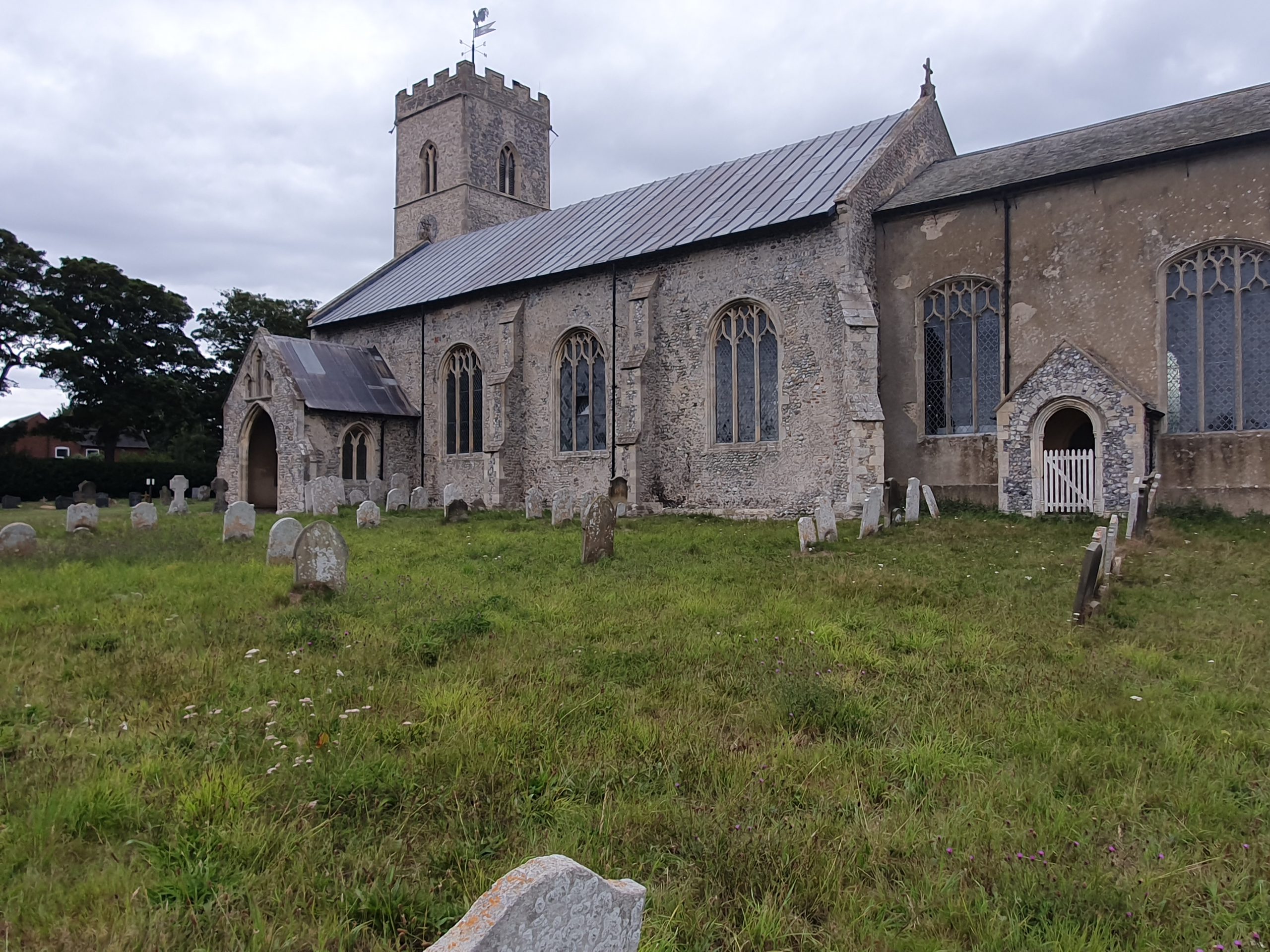
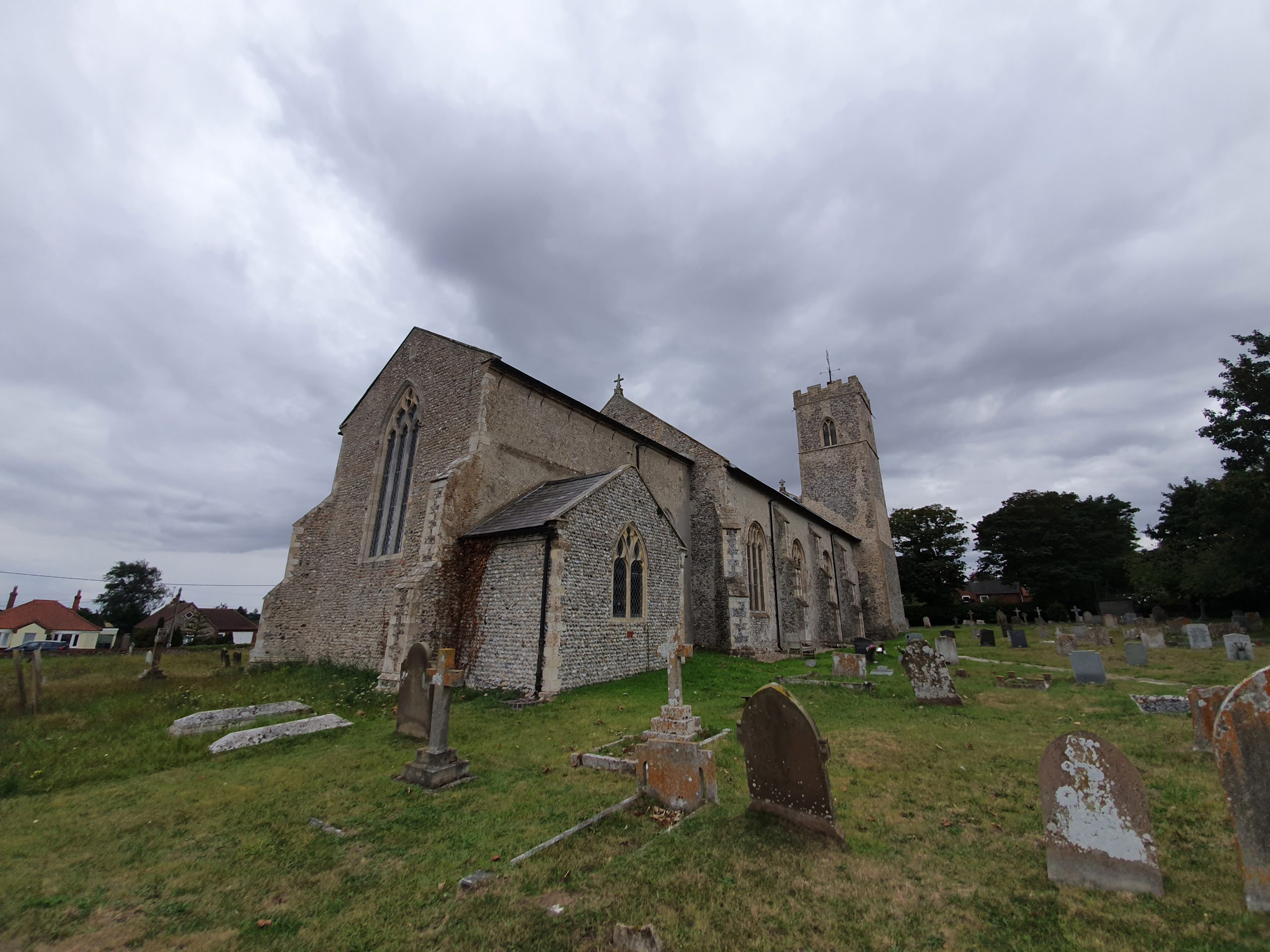
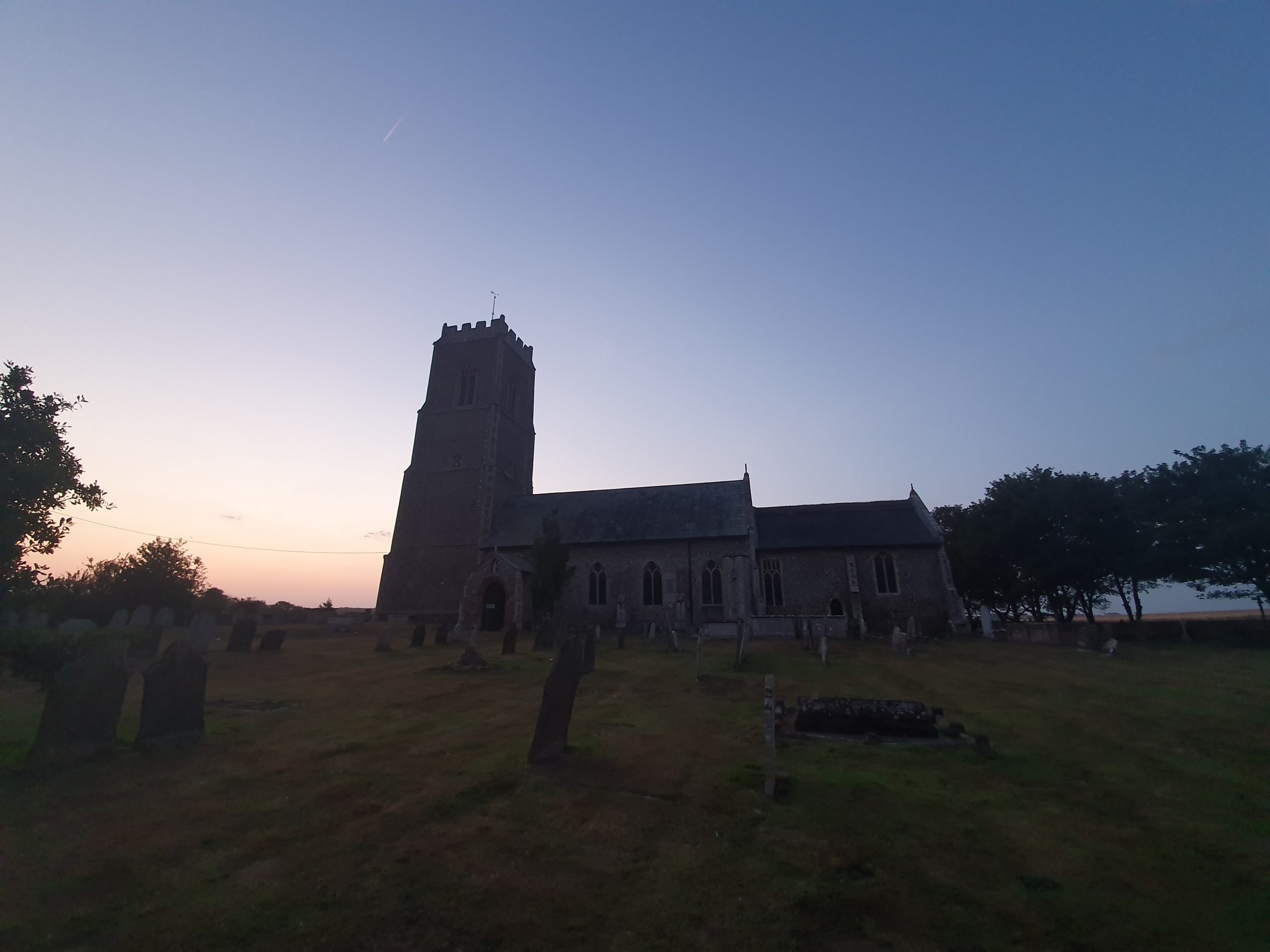
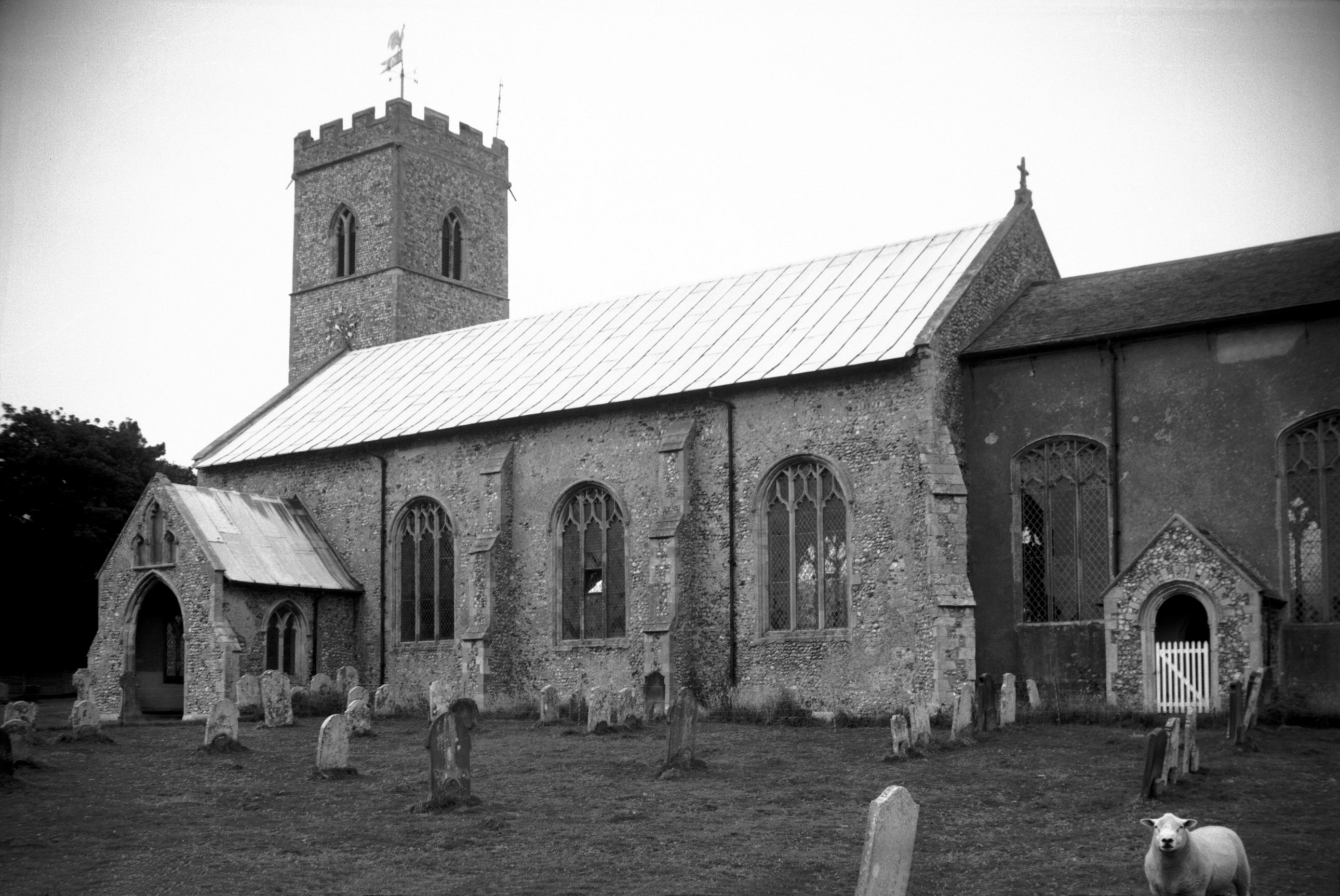
    One of the first obvious things of note about St. Mary’s Church in East Ruston is that it’s not really in East Ruston. It instead has a rather precarious position by a main road and is one of the few churches that looks entirely different depending on which side it’s viewed on.

    The main part of the churchyard has been turned (perhaps not deliberately) into a large wildlife garden, making it rather difficult to take photos of the church from some angles. The foliage is quite high and I could just sense the snakes that were lurking in the undergrowth, so I didn’t intend to charge in.

    So, I’ve used this photo (by John Salmon, https://commons.wikimedia.org/w/index.php?curid=13001263) to show what the church did look like before the foliage surged in height.

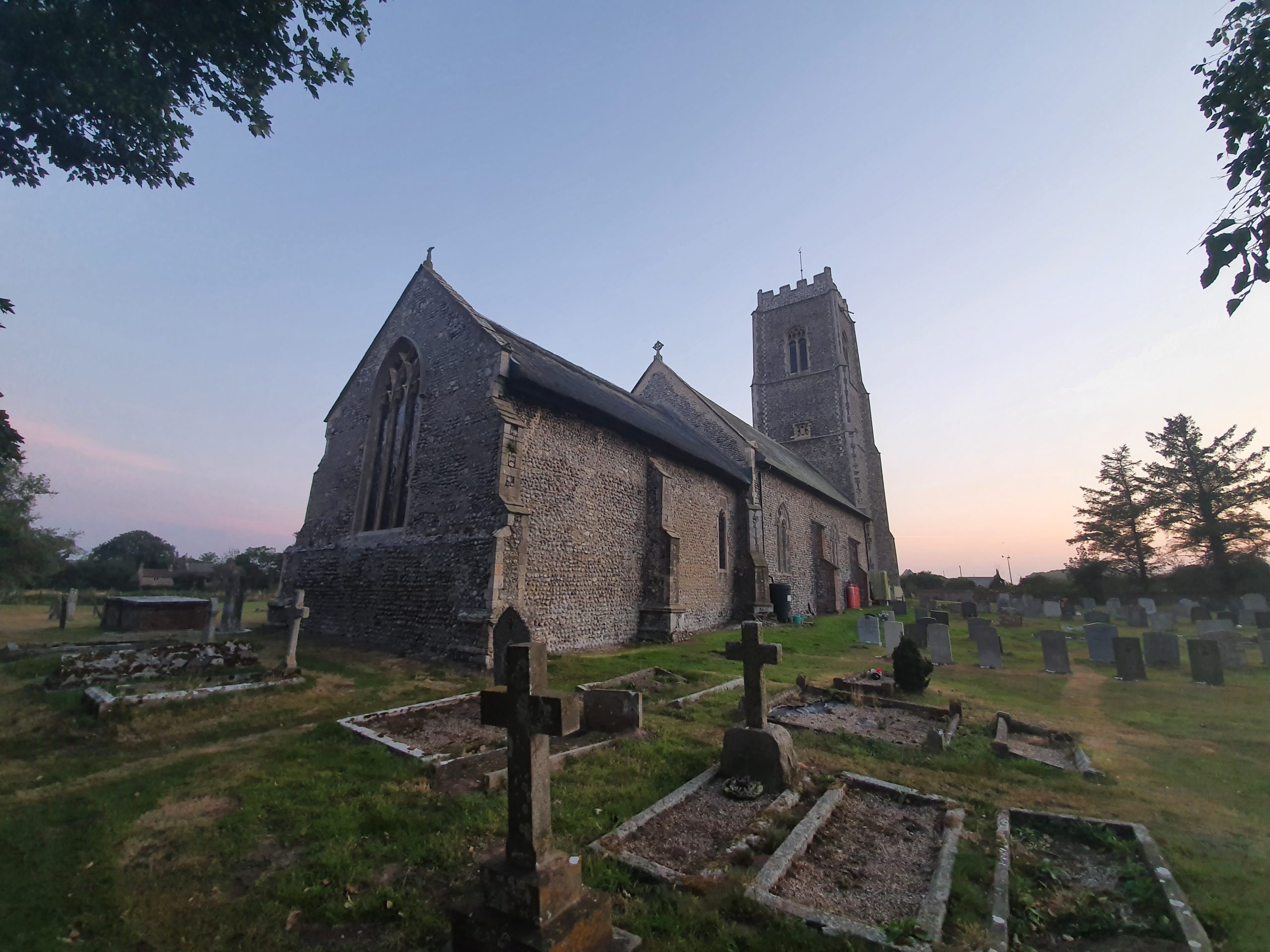
    And this is the church from the other side, the nearest I could get to it. It looks like a completely different church, but it’s because the north aisle was removed in 1778. It’s an interesting question of why bricks were used in this transformation given the rest of the church was made from flint, were people at all concerned about the aesthetic appearance of the building then?

    There is record of one of the vestry meetings which was held before the north aisle was removed, and there was a problem because a decision was made to use bricks, but no-one at the meeting knew how many would be needed. They tried to work this conundrum out, but failed, so they instead sought the assistance of the young Richard Porson, a local boy who became a well-respected mathematician.

    Another view of the north side of the church, as best I could get, with a strange wall at the front of the photo which is underneath the tower. I have no idea what that’s there for.

    The tower is contemporary with the main part of the church, which is fourteenth-century, although there was likely a previous church on the site from an earlier date.

    The church once had a spire, but it was either taken down or fell off. The almost inevitable Victorian restoration came to this church late, financed in the mid-1880s with funding from Maria Atthill, the wife of the former churchwarden. Before this money came in, the church had fallen into a state of some considerable disrepair.

    The south porch is a little later than the rest of the structure, being added in the fifteenth century. As the church is redundant, the building is now under the care of the Churches Conservation Trust, but the interior is currently closed until they can complete a risk assessment. There is apparently a chancel screen inside which is worth seeing, as well as a fifteenth-century font, so I shall hopefully meander along again to see the interior.

  • Dereham – George Hotel Milestone

    Dereham – George Hotel Milestone

    I’ve never noticed this milestone near to Dereham marketplace, located outside of the George Hotel, which was once a coaching inn. It’s a simple enough bit of stone, marking that it’s 100 miles to London (that reminds just how far the LDWA 100 challenge is) and 10 miles to Watton. It also reminds people that they’re currently in Dereham, which is probably quite handy for the weary traveller. But, there’s a long heritage to this stone, it has been here since around 1770, which makes it one of the earliest of the 360 or so milestones in Norfolk.

  • Honing – Name Origin

    Honing – Name Origin

    On a little meander around North Norfolk churches we visited Honing, a village with a population of around 300 people. So, on my theme of establishing where these names come from, The Concise Oxford Dictionary Of English Placenames says:

    Honing, Norfolk. Hanninge in 1044, Haninga in Domesday Book, Haninges in 1150. Old English Haningas, the people at the han or rock. Very likely han here means hill and refers to the small hill at the place.

    As an aside, the ‘han’ here is the derivative of what became the word honing, as in improving and sharpening skills. The word ‘han’ could mean hill or rock, in this usage of the word it became used as meaning a whetstone where razors were sharpened. So, although they’re pronounced differently, Honing (the place, Hon rhymes with Bon as in the French word) and honing (the skill, honing rhymes with boning) have the same origins.

  • King’s Lynn – St Nicholas’s Chapel (No Bells)

    King’s Lynn – St Nicholas’s Chapel (No Bells)

    This is sad to see, the Grade I listed chapel has successfully raised money to restore its bell and to encourage a new wave of volunteers to bring back this historic tradition. Some local (I assume) denizen has scrawled “no bells” on the door in white paint, which must be a slightly soul-destroying sight for those involved with the chapel’s restoration. But it seems that the Churches Conservation Trust are undeterred and will continue with their work.

  • King’s Lynn – St Nicholas’s Chapel (Churchyard)

    King’s Lynn – St Nicholas’s Chapel (Churchyard)

    One of the most notable elements of the churchyard is the Exorcist’s House, located on its edge.

    But, sadly, the graves here are nearly all in a poor state of repair and many have been lifted up and propped up against the walls. It’s disappointing that the majority of gravestones are unreadable, there are many stories here that now can’t easily be told. I can’t find an old photo of the churchyard to establish when the stones were moved, but I imagine it was in recent decades.

    There’s an interesting mix of gravestones, with several from the seventeenth century, but I struggled to make out sufficient details to be able to identify the person listed on them.

  • King’s Lynn – 2 St Ann’s Street

    King’s Lynn – 2 St Ann’s Street

    This property is one of many reasons that King’s Lynn is so interesting historically, so many buildings with a long heritage that have survived the centuries. Much of this is because King’s Lynn was a relatively large town that never really grew rapidly, so there wasn’t the constant upgrading and rebuilding of structures.

    The building is now used as a shop and residential property, but was originally constructed in the late fourteenth century. The surround on the left-hand side of the building, going towards the rear courtyard, is from the nineteenth century, from a similar period to the shop frontage, which is from the mid-nineteenth century. The listed building record notes that “the interior was not accessible at time of the review but likely to be of considerable interest” and that sounds entirely sound given the long history of the structure.

    In many towns, a fourteenth-century building such as this might be seen as the pride of the area, but here, it’s just another historic building. All very lovely.

  • King’s Lynn – The Exorcist’s House

    King’s Lynn – The Exorcist’s House

    Whilst having a little look around the churchyard of the Chapel of St. Nicholas (which is frankly nearer to the size of a Cathedral than the usual chapel you might expect) I noticed this quaint little building. It’s evidently charming, although I’d never dare live in it given how close it is to the graves. And, also its name, it’s the Exorcist’s House.

    The house, also more delicately known as 8 Chapel Lane, was built in 1635 and other than the twentieth-century door, isn’t much changed. So, why the Exorcist’s House name? No-one is quite sure, but an exorcist used to have a more prosaic meaning to it than the modern horror linked word. It was simply a church official who would try to cast out a demon, which is not an unusual Christian theological tradition. It’s likely that the name is from a property that is older than the current one, so it probably relates to a different structure and the moniker just carried over.

    One former owner noted in the book Ghost and Legends that “the house is haunted, but not very enthusiastically” which sounds a nuisance, an uninspired ghost lumbering about the property.

    The house was placed on the market recently for £215,000, not a bad price for those who like their history. And ghosts.