Category: Great Yarmouth

  • 200 Years Ago in Great Yarmouth : King’s Arms For Sale

    200 Years Ago in Great Yarmouth : King’s Arms For Sale

    In my erratic series of posts from Norfolk newspapers 200 years ago this week, I noticed that the King’s Arms in Great Yarmouth was being advertised for sale in the Norwich Mercury. The text reads:

    “KING’S ARMS INN,
    Great Yarmouth.

    To be Sold by Private Contract,

    All that Old-established and well-known INN, called the KING’S ARMS INN, with 3 Cottages adjoining, situate near the North Gates, in Great Yarmouth, in Norfolk, now in the occupation of Mrs. Mayhew, with good arched Wine and Beer Cellars, extensive Yards, Stabling, Standing for Carriages, &c. &c.

    The above Property has long been distinguished as being one of the best situations for an Inn in the borough of Great Yarmouth.

    The Estate is all Freehold, and the only out-going is an annual Land-tax of £2.

    N. B. — An excellent Weighing Machine for Hay is attached to the Premises.

    For price and further particulars apply (if by letter post-paid) to Mr. Samuel Sherrington, Priory, Great Yarmouth, or Mr. Miller, Union Office, Norwich.”

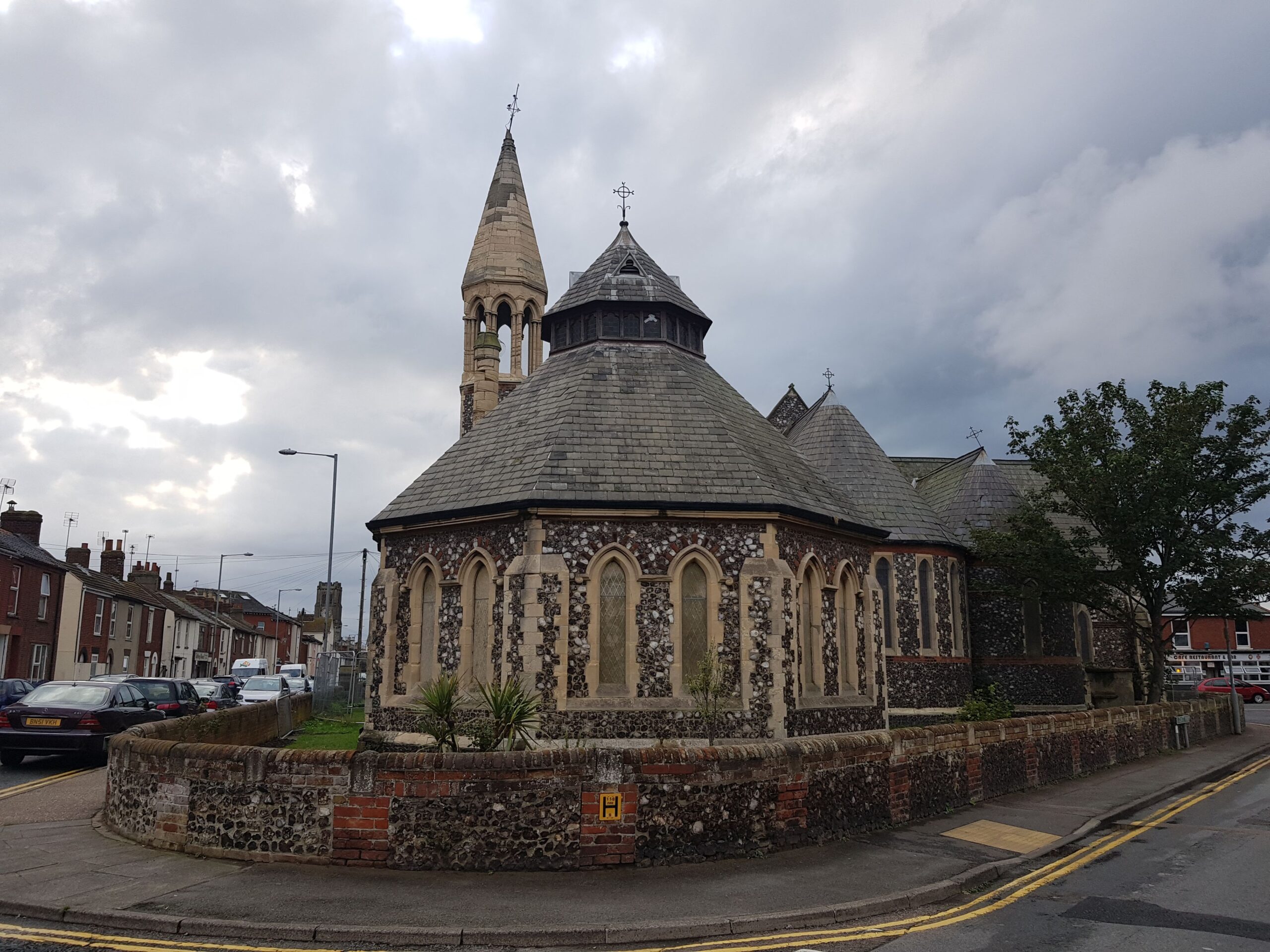
    I rather like that this pub is still there, although it was mostly rebuilt in the early twentieth century and then had to be repaired after extensive damage during the Second World War. To this day, the pub retains its large beer garden and I visited it a few times during the partial lockdown a few years ago.

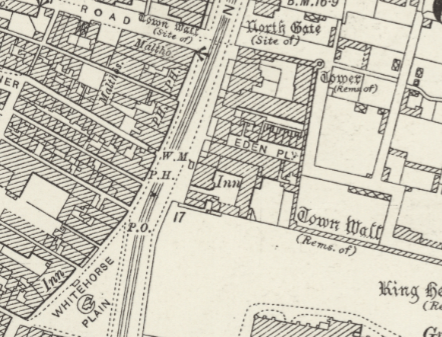
    Here’s what it looked like at the turn of the last century, the area to the left has nearly all been lost, but the area around the pub remains looking pretty similar. Mrs Mayhew, who was mentioned as the landlady in the advert, remained running the pub until 1830 and it was up for sale a couple of times in the years that followed so it’s possible that it never actually sold.

  • Great Yarmouth – Tourist Information Centre (and Sailors’ Home)

    Great Yarmouth – Tourist Information Centre (and Sailors’ Home)

    [I originally posted this in August 2018, but have reposted it to fix the broken image links]

    20180830_171332

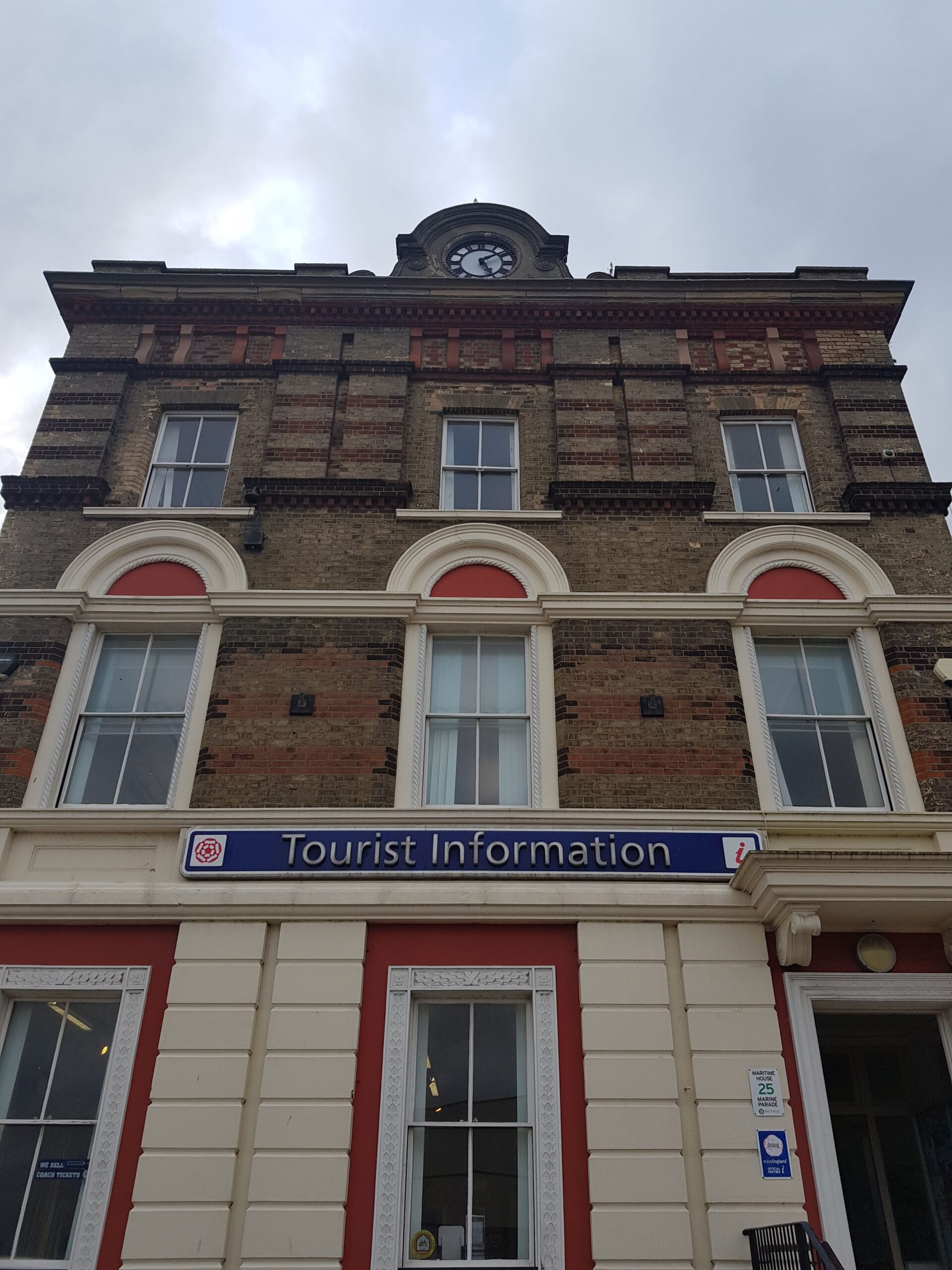
    This building isn’t of historic interest just because it’s a tourist information centre (although I’m sure it is a lovely little service for visitors to the town), but because it was the Sailors’ Home from 1861 until 1965. During the time which it was open it looked after over 11,000 shipwrecked sailors from 29 different countries. I’m sure that I remember this building being used as a Maritime Museum for a while in the 1980s.

    20180830_171344

    There doesn’t seem to be any specific connection with this building and HMS Lutine, other than it sailed from Great Yarmouth in 1799. The boat was carrying today’s equivalent of £100 million of bullion and coin and it sank, which must have irritated its owners. Although not overly irritated them as they had the sense to insure it, so Lloyds of London paid out for the losses. Lloyds have since salvaged some of the gold, although much is still underwater, and they also got back the ship’s bell. This bell, the Lutine Bell, is now pride of place in the Head Office of Lloyds in London. Although it occurs to me that if I sent a salvage crew to collect my gold I’d rather they returned with that rather than the bloody ship’s bell.

  • Great Yarmouth – St. Mary’s Catholic Church

    Great Yarmouth – St. Mary’s Catholic Church

    [I posted this in August 2018, but have reposted it to fix the broken image links]

    20180830_170359

    I’ve walked by this church on Regent Road hundreds of times over the years, but never actually gone in it. The church opened in 1850 after three years of construction, replacing a small chapel which couldn’t cater for the growing congregation. At the time this was the only building on Regent Road and it now looks a little out of place with the mainly tourist orientated shops and restaurants that are on the street today.

    20180830_170340

    The church was designed by Joseph John Scoles, who also designed St. Peter’s Church in the town. It was built for the Jesuits, although was taken over by the Diocese of East Anglia in the mid-twentieth century. When the church opened it had a congregation of over 800 people, showing why the previous building had been of an inadequate size.

    20180830_170037

    The font is from the 1850s and was also designed by Scoles.

    20180830_170059

    There are numerous of these painted artworks around the church and there are information sheets (well, pieces of paper stuck to the wall) which give information as to what they represent. The information sheets are though useful and give a little bit more context about the building’s history.

    20180830_170024

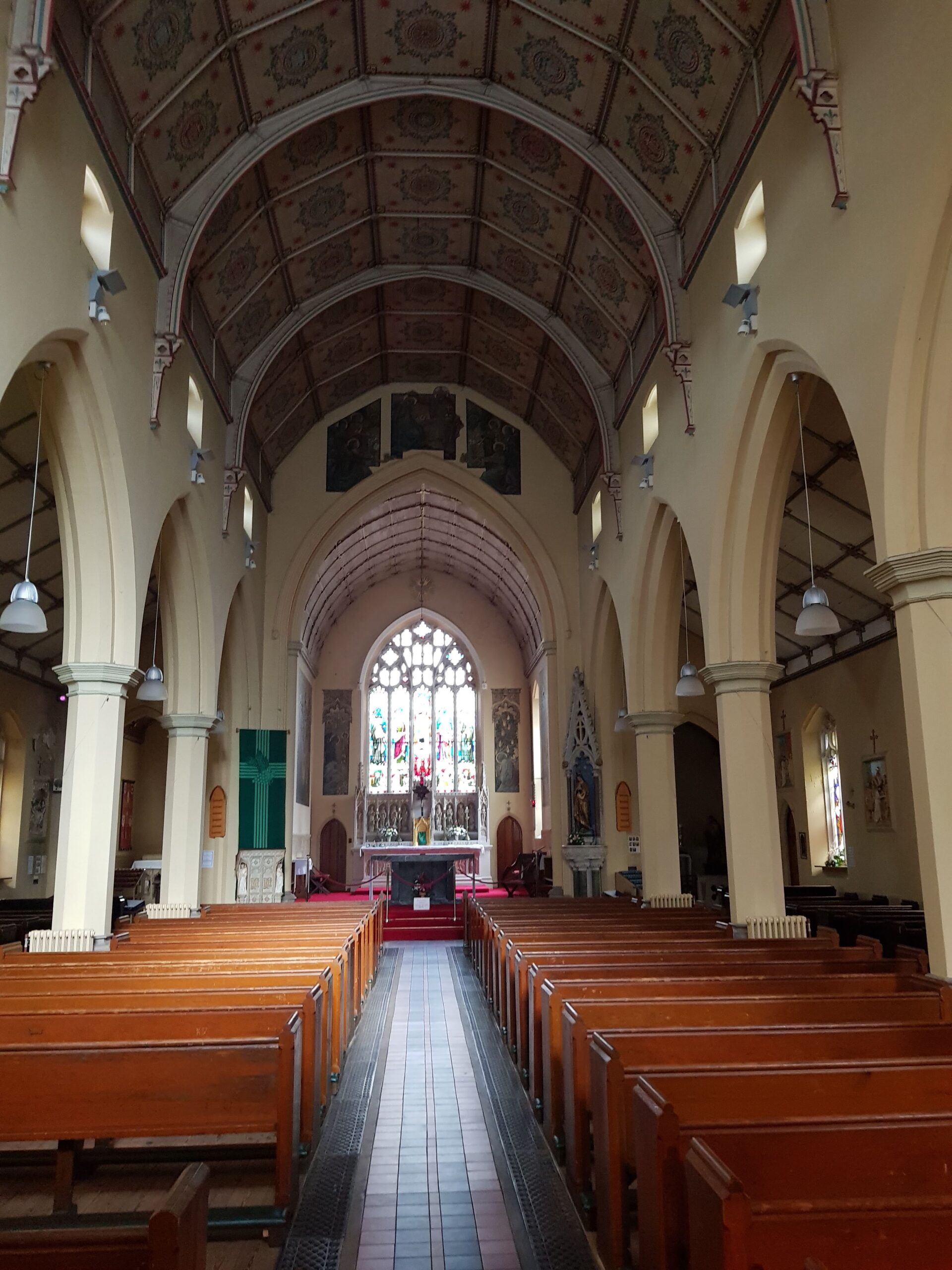
    The impressive interior, which is relatively unchanged since the church was built, with some interesting roof decorations. There are over 800 carved roof bosses in the church and there are a few of the original mid-nineteenth century pews remaining in situ.

    20180830_170206

    The pulpit was apparently designed by Pugin, although there seems some doubt on this, and it was installed under the supervision of George Myers.

    20180830_170138

    The stained glass window, which I think is from the mid-nineteenth century.

    20180830_170144

    The organ dates from the late nineteenth century and has 1,032 pipes.

    I had wondered why there were numerous CCTV signs and warnings of alarms, but assumed it was a general security measure. Unfortunately though it now makes sense, as some yob tried to set the church on fire earlier on in 2018. Fortunately the damage wasn’t too severe and the idiot was caught and charged with committing hate crimes.

    It’s a peaceful and quiet environment in the church, in contrast to the rather busy and noise shopping street outside. I can’t imagine this church when it was located on a little quiet road which led to the beach, but I’m pleased that it has survived intact.

  • Great Yarmouth – St. Spyridon Church (St. Peter’s Church)

    Great Yarmouth – St. Spyridon Church (St. Peter’s Church)

    [I originally posted this in September 2018, but have reposted it to fix the broken image links]

    20180830_172009

    It has to be noted that the state of Anglican churches in Great Yarmouth isn’t what it was, with perhaps most of the energies in recent decades going into the Minster. This church was opened in 1831 as St. Peter’s Church, designed by JJ Scoles, who also designed the nearby St. Mary’s Church.

    The church fell into disuse in the 1960s and it was given to the Greek community to use as an Orthodox church. It was fortunate for the building that a new use was found, as this was at a time when churches were often demolished if they had become redundant.

    20180830_171911

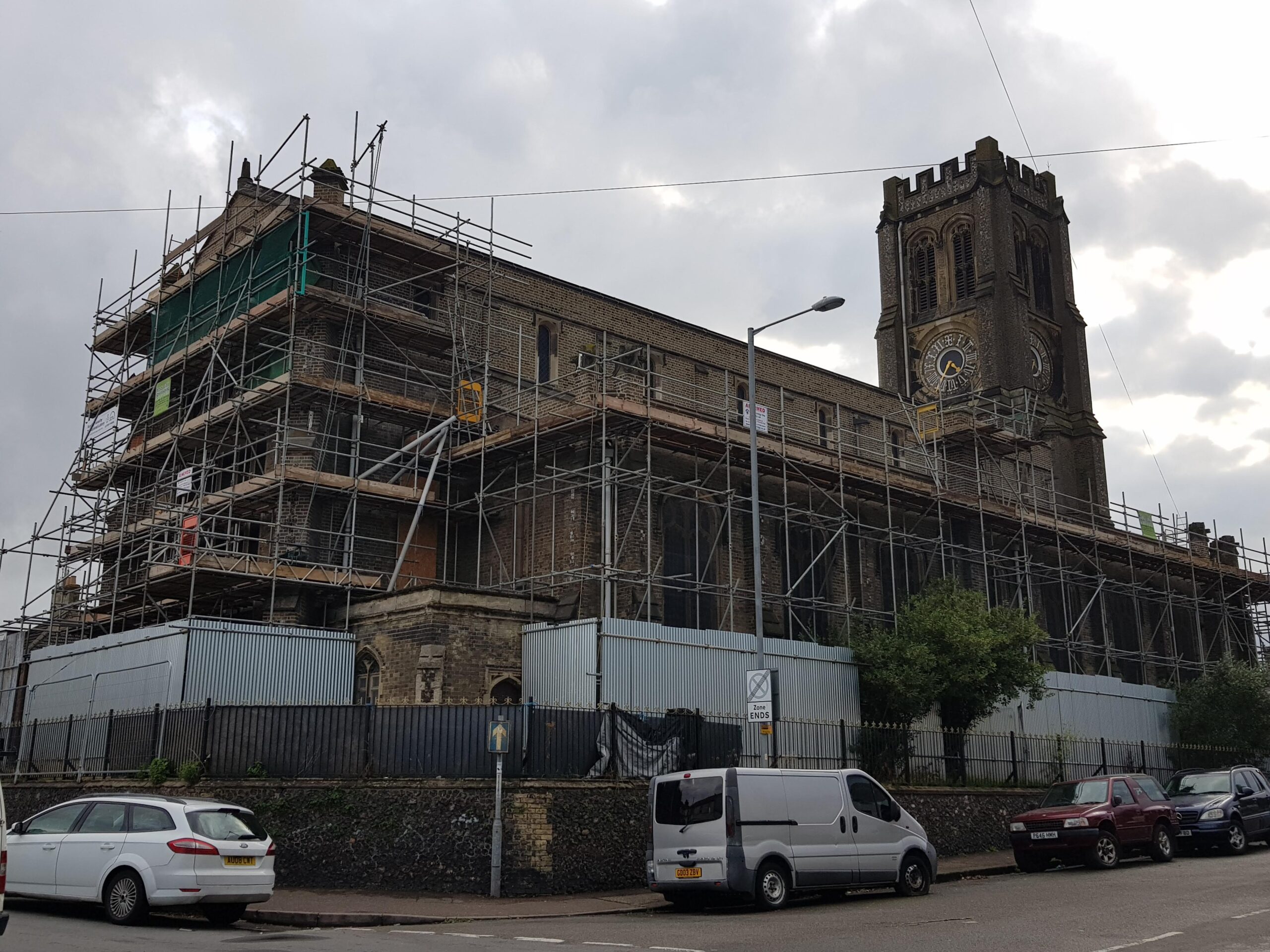
    The building is currently being repaired and the process has been on-going for several years. English Heritage have helped with the funding, but it has also been a major financial challenge for the local congregation to raise money themselves to put towards the project. The first part of the work involved repairing the tower, which had become a danger given that bits were falling off of it, never an ideal situation…..

  • Great Yarmouth – St. John’s Church

    Great Yarmouth – St. John’s Church

    [I originally posted this in August 2018, but I’ve reposted it to fix the broken image links]

    20180830_171645

    A short way from the busy seafront is this closed and redundant church, looking a little sad. Its future is though more positive, as it was sold to the Great Yarmouth Preservation Trust in 2016 for £1 and the organisation has plans to restore the building and use it for the community. The funds aren’t currently in place to complete the project, but the Trust seems hopeful that they can be secured.

    20180830_171641

    A rather charming tree in the churchyard.

    20180830_171605

    Sadly, at the moment the entire church is fenced off. The church had first opened in 1858 when it was opened by the Beach and Harbour Mission. During the Victorian period the church was primarily used by the local beachmen, sailors and their families.

    20180830_171543

    The church’s former chapter house. The building was built by John Henry Hakewill, who designed and restored many churches during the mid-Victorian period.

    20180830_171619

    The Trust is restoring and preserving seven documents which were found in the church, including an impressive baptism roll. It’s delightful that these documents have been secured for the future, as without the Trust’s intervention there must have been the risk that the church would have been turned into flats and the contents lost for ever. The kneeler cushions, which had been left unused for years, were also kept and there are plans to repair and preserve them.

    The restoration of the church appears to be in good hands, and the Trust said to the local media that the repairs would be sensitive and that the interior wouldn’t be reconstructed. Hopefully in a few years this building will once again be used by the community, and I can then have a little look inside.

  • 200 Years Ago in Norwich : Joseph Christmas Died at Port-au-Prince

    200 Years Ago in Norwich : Joseph Christmas Died at Port-au-Prince

    In a newspaper article in the Norwich Mercury from 200 years ago this week, it’s mentioned that the death of Joseph Christmas, aged 17, was confirmed. The news had come from Port-au-Prince, which is today one of the most dangerous cities in the world and nearly entirely controlled by gangs. This likely wasn’t his destination, he was on a merchant ship where he died during the travels.

    Joseph Harmer Christmas was born on 19 May 1809 in Great Yarmouth and was baptised the following day, which seems to be rather efficient. He was the son of John and Honor Harmer Christmas and here’s the will of John. On the surname, it’s relatively rare and its origins are unclear although there’s more on a Wikipedia page about the matter. What intrigues me more is what the 16 year old (the newspaper article got his age wrong) was doing off in the then British West Indies, his family didn’t appear to be wealthy enough to be involved in owning plantations, although they did seem reasonably well connected. Yet another mystery that maybe one day I’ll be able to solve to my complete satisfaction….

  • 200 Years Ago in Great Yarmouth : Funding a New Church (St. Mary’s Church in Southtown)

    200 Years Ago in Great Yarmouth : Funding a New Church (St. Mary’s Church in Southtown)

    The below article is from the Norwich Mercury 200 years ago this week and it notes those people who donated money towards the construction of a new church. This was a little rare for the time in terms of the Anglican Church, although it was to become much more common later on during the nineteenth century. The money was being collected to fund what became St. Mary’s Church in Southtown, which opened in 1831. I rather like that it’s still there, as it seems to be a little sad that so many people donated for a project which ultimately didn’t survive in the long-term. The article is also an interesting list of the generous nature of various people and institutions of the time.

    “Subscriptions:

    The Corporation of Great Yarmouth: £500 0s. 0d.
    The Hon. G. Anson, M.P.: £100 0s. 0d.
    C. E. Rumbold, Esq. M.P.: £100 0s. 0d.
    Lord Viscount Siduey: £50 0s. 0d.
    Aldred Mr. S. H.: £2 2s. 0d.
    Atkinson Mr. J.: £2 0s. 0d.
    Baker Rev. T.: £20 0s. 0d.
    Baldry Miss: £1 0s. 0d.
    Barchard Mr.: £1 0s. 0d.
    Barmby Mr. W. H.: £5 0s. 0d.
    Barber Mr.: £0 5s. 0d.
    Beckett Mr. John: £1 0s. 0d.
    Beckett Mr. G. W.: £1 0s. 0d.
    Bell J. M. Esq.: £10 0s. 0d.
    Blomfield Mr.: £1 0s. 0d.
    Blomfield Mr. H.: £2 0s. 0d.
    Bolton Mr. G.: £2 0s. 0d.
    Bracey Mr. John: £1 0s. 0d.
    Brand Mr. W.: £1 0s. 0d.
    Breeze Mr. Jas.: £1 0s. 0d.
    Broadbank Mrs.: £10 0s. 0d.
    Brown Mr. John: £1 0s. 0d.
    Bunn Mr. James: £10 0s. 0d.
    Burton C. F. Esq.: £20 0s. 0d.
    Burton T. Esq.: £10 0s. 0d.
    Burton Mr. S.: £10 0s. 0d.
    Chambers Mr. W.: £5 0s. 0d.
    Child Mr. John: £0 2s. 6d.
    Christmas Mr. J.: £5 0s. 0d.
    Christmas Mr. S.: £2 0s. 0d.
    Clark Mr. Jas.: £50 0s. 0d.
    Clarke Mr. F.: £10 0s. 0d.
    Clowes Mr. T.: £2 0s. 0d.
    Cole Mr. R.: £1 0s. 0d.
    Cory R. Jun. Esq.: £21 0s. 0d.
    Costerton C. Esq.: £15 0s. 0d.
    Cox Miss: £1 0s. 0d.
    Cracknell Mrs.: £1 0s. 0d.
    Crisp Mr. F.: £1 0s. 0d.
    Crovitlier Mr. S.: £5 0s. 0d.
    Cubitt Mr. R.: £5 0s. 0d.
    Diver Mr. W. H.: £2 0s. 0d.
    Diver Mr. R.: £2 0s. 0d.
    Docking Mr. G.: £1 0s. 0d.
    Douglas Mr. T.: £1 0s. 0d.
    Dowson B. Esq.: £21 0s. 0d.
    Drake Mr. Jas.: £1 0s. 0d.
    Draper Mr. J. sen.: £10 0s. 0d.
    Draper Mr. J. jun.: £0 10s. 0d.
    Duncan Mr. A.: £0 10s. 0d.
    Ellis Mr. C. T.: £2 2s. 0d.
    English Mrs.: £2 0s. 0d.
    Fear Mr. John: £10 0s. 0d.
    Ferrier Mr. R.: £10 0s. 0d.
    Fielding B. Esq.: £21 0s. 0d.
    Fiddis Mr. T.: £10 0s. 0d.
    Fisher W. Esq.: £50 0s. 0d.
    Fisher Jas Esq.: £25 0s. 0d.
    Fisher J. G. Esq.: £25 0s. 0d.
    Fisher Mr. T.: £2 0s. 0d.
    Friend, by Mr. Glasspoole: £5 5s. 0d.
    Friend at the Bath House: £1 0s. 0d.
    Gamble Mr. Win.: £1 0s. 0d.
    Garwood Mr. T.: £5 0s. 0d.
    Gill Mr. W.: £1 0s. 0d.
    Giles Mr. Charles: £1 0s. 0d.
    Glasspoole Mr. H.: £10 10s. 0d.
    Gooding Mr. J.: £1 10s. 0d.
    Gourlay Mr. D.: £1 0s. 0d.
    Green Mr. J.: £1 0s. 0d.
    Greenwood Mr. E.: £1 0s. 0d.
    Groome Mr. E.: £1 0s. 0d.
    Grout, Baylis and Co.: £20 0s. 0d.
    Gunthorpe Matthew, Esq.: £50 0s. 0d.
    Hallmark Mrs.: £50 0s. 0d.
    Hamment Mr. R.: £1 0s. 0d.
    Harmant Mr. Jes.: £10 0s. 0d.
    Harley Mr. Geo.: £0 10s. 0d.
    Hart Mr. Wm.: £0 10s. 0d.
    Haynes Mr. Wm.: £1 0s. 0d.
    Hook Mr. Dan.: £10 0s. 0d.
    Hume Mr. Wm.: £0 5s. 0d.
    Hunt Mr. A.: £1 0s. 0d.
    Jefferies Capt.: £5 0s. 0d.
    Johnson Mr. C.: £5 0s. 0d.
    Johnson Mr. J.: £1 0s. 0d.
    Johnson Mr. Wm. J.: £1 0s. 0d.
    Kenworthy Mr. J.: £1 0s. 0d.
    Kelly Rev. S.: £5 0s. 0d.
    Lacon, Youell, and Co.: £100 0s. 0d.
    Lahy Mr. James: £1 0s. 0d.
    Lane Mr. J.: £0 10s. 0d.
    Libbis Mr. R.: £0 7s. 0d.
    Lott Mr. J. H.: £1 0s. 0d.
    Lubbock Mr. R.: £1 0s. 0d.
    Lubbock Mr. C.: £1 0s. 0d.
    Lucas Rev. G.: £15 0s. 0d.
    Luson Miss: £1 0s. 0d.
    Mann Mr. R.: £1 0s. 0d.
    Mackland Mr. E.: £5 0s. 0d.
    Mason Mr. J.: £2 0s. 0d.
    Meggy Mr. Wm.: £1 0s. 0d.
    Meyrick Mr. Wm.: £1 0s. 0d.
    Minter Mr. John: £2 0s. 0d.
    Miller Mr. Wm.: £1 0s. 0d.
    Miller Mr. Step.: £2 0s. 0d.
    Moore Mr. P.: £1 0s. 0d.
    Moon Mr. S.: £2 0s. 0d.
    Morgan Mr. E. W.: £10 0s. 0d.
    Moxon Mr. John: £5 0s. 0d.
    Moyse Mrs. Jane: £10 0s. 0d.
    Nicholls Mr. C.: £10 0s. 0d.
    Nolloth Mr. Jas.: £1 0s. 0d.
    Norman Mr. Jas.: £2 0s. 0d.
    Nuthall Mr. P.: £2 0s. 0d.
    Offord Mr. D.: £1 0s. 0d.
    Paget S. Esq.: £25 0s. 0d.
    Palmer W. D. Esq.: £100 0s. 0d.
    Palmer G. D. Esq.: £21 0s. 0d.
    Palgrave W. E. Q.: £21 0s. 0d.
    Pope Mr. J.: £1 0s. 0d.
    Poppy Mr. J.: £0 10s. 0d.
    Powell Mr. J.: £0 5s. 0d.
    Preston J. Esq.: £20 0s. 0d.
    Preston I. Esq.: £25 0s. 0d.
    Preston E. Esq.: £25 0s. 0d.
    Preston J. Esq.: £10 0s. 0d.
    Preston Mr. J. K.: £3 3s. 0d.
    Preston Mr. A.: £3 0s. 0d.
    Preston Mr. G.: £2 0s. 0d.
    Pulford Mr. G.: £2 0s. 0d.
    Ranney J. Esq.: £15 15s. 0d.
    Reeve Mr. W.: £1 0s. 0d.
    Reynolds F. R. Esq.: £50 0s. 0d.
    Robinson J. J. Esq.: £10 0s. 0d.
    Roe Mr. T.: £2 2s. 0d.
    Ruzby Mrs.: £1 0s. 0d.
    Saunders Mr. W.: £25 0s. 0d.
    Sayers and Son: £20 0s. 0d.
    Seaman Mr. F.: £2 0s. 0d.
    Searum Mr. R.: £1 1s. 0d.
    Sharman Mr. E.: £10 0s. 0d.
    Sherrington Mr. S.: £10 0s. 0d.
    Short Mr. J.: £1 0s. 0d.
    Shreeve Mr. H.: £2 0s. 0d.
    Sloman Mr. Chas.: £1 0s. 0d.
    Smith Mr. R. C.: £1 0s. 0d.
    Smith Mr. J.: £2 2s. 0d.
    Smith Mr. R.: £1 0s. 0d.
    Springall Mr. T.: £0 10s. 0d.
    Steele Miss: £0 5s. 0d.
    Stevenson Mr. J.: £5 0s. 0d.
    Sutton Mr. S.: £0 10s. 0d.
    Swirles Mr. D.: £1 0s. 0d.
    Thacker Mrs.: £0 10s. 0d.
    Thompson Mrs.: £5 5s. 0d.
    Thompson E. Esq.: £20 0s. 0d.
    Thrower Mr. A.: £1 0s. 0d.
    Toluer & Preston: £25 0s. 0d.
    Townshend Mr. R.: £1 0s. 0d.
    Turner Rev. R.: £50 0s. 0d.
    Turner D. Esq.: £25 0s. 0d.
    Turner Mrs. M.: £0 10s. 0d.
    Veal Mr. R.: £1 0s. 0d.
    Vardon Mr. John: £0 5s. 0d.
    Warren Mr.: £1 0s. 0d.
    Watling Mr. F.: £3 3s. 0d.
    Watson J. Esq.: £20 0s. 0d.
    Watson Mr. T.: £5 5s. 0d.
    Watson R.: £1 0s. 0d.
    Williams J. H. Esq.: £25 0s. 0d.
    Wright Mr. E.: £1 0s. 0d.
    Yette Win. Esq.: £20 0s. 0d.
    Youngman Mr. T.: £1 0s. 0d.

    And a Site of Ground on which to erect a Building, Subscriptions are received at the Town Hall, the Banks, the Subscription-Room, and at the Bath Rooms, in this Town.

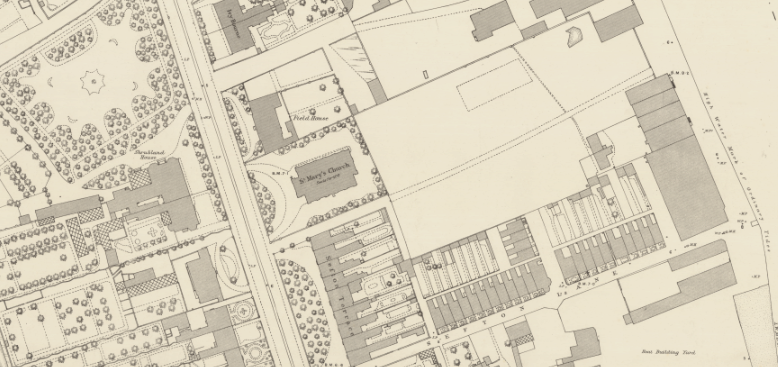
    And here it is in the 1880s.

  • 200 Years Ago in Norwich : Madame Tussaud Visits Great Yarmouth

    200 Years Ago in Norwich : Madame Tussaud Visits Great Yarmouth

    And another in my series of posts from articles and adverts in the Norwich Mercury from 200 years ago this week, this advert was placed in the newspaper in the first week of May 1825.

    “MADAME TUSSAUD, ARTIST,

    Has the honour most respectfully to announce to the Ladies and Gentlemen of Yarmouth and its vicinity, that by the kind liberality of the Worshipful the Mayor, she will have the honour to Exhibit her Collection as above announced, where she hopes to meet with that acknowledgement which Yarmouth is known to afford to Exhibitions of merit.

    The Collection consists of TWO MAGNIFICENT CORONATION GROUPS, one representing the AUGUST CORONATION of his MAJESTY GEORGE IV.; the other the CORONATION of BONAPARTE; the whole got up at an immense expense, and such as have never failed of giving general satisfaction, having been viewed in Liverpool, Manchester, Birmingham, Bristol, and Bath, by 136,000 Persons.

    There will be a PROMENADE every Evening from Seven till Ten, accompanied by a MILITARY BAND.

    ADMITTANCE ONE SHILLING. SUBSCRIBERS’ TICKETS FIVE SHILLINGS EACH. OPEN EVERY DAY From Eleven till Four, and from Six in the EVENING till Ten.”

    Marie Tussaud (1761-1850) has been unable to return to France as a result of the Napoleonic Wars, so she spent most of her time in England. She started a touring exhibition in 1824, which is the one that reached Great Yarmouth, and in 1833 she eventually settled on a permanent location in Baker Street in London. The growth of the galleries meant that new premises were needed in 1884, where Madame Tussauds is still located today. This must have been quite a sight to behold for the lucky denizens of Great Yarmouth.

  • 200 Years Ago in Norwich : A Case of Poisoning in Great Yarmouth

    200 Years Ago in Norwich : A Case of Poisoning in Great Yarmouth

    Part of my occasional series of newspaper articles from the Norwich Mercury from 200 years ago this week.

    The year 1825 saw the Neal family – Mary, and her adult children Susan and William – at the centre of a grave accusation which was the attempted murder of shoemaker William Halls (or Hales) and his family through arsenic poisoning. Arsenic, readily available and difficult to detect in that era, was a feared agent of clandestine violence, and its alleged use in this case invoked particular societal horror. The crime was not only shocking for its malicious intent but also for its familial dimension, with a mother and her children implicated in a conspiracy against their neighbour and employer. The trial was held at the Great Yarmouth Quarter Sessions and presiding over the whole arrangement was Robert Alderson.

    This is quite a long and interesting article from the newspaper, which I’ll quote in full:

    “From its being generally known that the trial of the Neals for poisoning would be the first on Friday morning, the Court was crowded to excess, and the Recorder took his seat. Mary Neal, aged 42, Susan Neal, aged 21, and William Neal, aged 18, were placed at the bar, charged with having feloniously put a quantity of white arsenic into a boiler containing beef broth, with intent to cause the death of William Hales and his family. It appeared in evidence that Mr. Hales is a cordwainer, residing in Howard-street, Yarmouth.

    His family consisted of himself, Mrs. Hales, three children, and a servant. On the day previous to that on which his family were taken ill, Mrs. Hales boiled a piece of beef in an iron boiler for dinner, of which they all partook, but they did not experience any illness from it. The liquor in which the beef was boiled remained in the boiler, as Mrs. Hales intended to make it into soup the following day for the family. The boiler was placed in a room under the keeping room, and in which Mr. Hales and his apprentices worked at their business. On the following morning the boiler was put upon the fire a short time before dinner, with the liquor in it, and when hot, Mrs. Hales took about a teacup full out of the boiler to taste, and gave her little boy (about three years of age) some at the same time. The servant was then ordered to put in the different ingredients to make it into soup.

    In about ten minutes after Mrs. Hales had taken the liquor, the little boy complained of illness, she therefore took him up-stairs and laid him down on the bed. Mrs. Hales had scarcely done this when she herself was taken ill. Mr. Hales, with his other two children and servant girl, then sat down to dinner, having of course no idea of the cause of Mrs. Hales’ illness. They all at table partook of this soup, and shortly after they were seized with similar symptoms, which caused Mr. Hales to suspect they had been poisoned. He therefore immediately sent for a surgeon, who, on his arrival, administered proper antidotes, which had the desired effect, or a few hours more would have terminated their existence. The whole family were under the surgeon’s hands for some time, but Mrs. Hales and one of the children still retain the effects of the poison, and are very likely to do so. The surgeon took the remaining part of the soup out of the boiler, some of which he gave to a dog, which immediately ejected it: the remainder he submitted to Mr. Davies, an eminent chemist on the Quay, who, on analysing it, found it to be deeply impregnated with white arsenic. It was afterwards discovered that Mrs. Neal and her daughter had purchased a pennyworth of arsenic at the shop of Mr. Suthern, a chemist in Gaol Street.

    They were in consequence, with Mr. Hales’ apprentice, immediately taken into custody, and on their examination before the Mayor, Mrs. Neal stated she was not troubled with rats or mice, nor did she know what arsenic was; but on her being confronted with the young man who sold her the poison, she could no longer conceal the fact, but she said she bought it to kill the mice with which her house was troubled; she, however, had previously stated that they had none in the house. On being questioned as to what they had done with the poison, an altercation ensued between the mother and daughter, as to the possession of it, the mother saying she gave it to the daughter, and the daughter saying she gave it to her mother; the daughter, however, at last informed the officer where he might find it, and on going to the house he discovered it on the top of the clock-case. On examining the paper in which it was enveloped, the chemist’s assistant stated that about one half of the quantity which Mrs. Neal and her daughter received had been taken out. Mrs. Neal stated that the part missing from the paper had been put on some bread and butter, and placed in different parts of the house, for the destruction of the mice.

    Mr. Hales stated that he had been lately compelled to take Wm. Neal, his apprentice, before the Mayor, for misconduct at two different periods, and that his mother wished him to leave, but that he refused to give up his indenture. On the evening previous to the day on which the family were poisoned, Mr. Hales went to his club, leaving Wm. Neal in the kitchen alone, where he was asked, and where the boiler was placed with the liquor in it. The apprentice did not board or lodge with the family. Mr. Hales also stated that Mrs. Neal, the mother, had contracted a debt with him, for the settlement of which he had repeatedly pressed her, but he had as repeatedly been abused by her; and she had lately expressed her fears to a neighbour that he intended to summon her before the Court of Requests. The whole of the evidence against the prisoners being entirely circumstantial, the Recorder stated the law upon the case with his usual ability and perspicuity, and left it to the Jury to consider whether the prisoners at the bar were guilty or not guilty of the dreadful offence of which they stood charged.—The Jury deliberated for a short time, and returned a verdict of guilty against all the prisoners. Sentence of Death was therefore recorded. This trial commenced at half-past nine in the morning, and did not terminate until half-past six in the evening.”

    The crime is one of the most infamous that took place in the town in the nineteenth century and it was followed widely with some considerable interest. The sentence was the final ever death sentence issued by the Great Yarmouth Sessions Court as it lost that power in 1835. And, in this case, it was decided to commute the sentences to transportation. They were held at the Tolhouse Gaol in Great Yarmouth and then sent to Australia for life on different ships.

    Mary Neal, the mother, was assigned to the female convict ship Midas which sailed from London on 24 July 1825 carrying 108 convicts. The ship’s master was James Baigrie, and the surgeon superintendent responsible for the health of the convicts was Charles Cameron and he noted that Mary was “very much emaciated” and she unfortunately died en route on 5 October 1825. The fate of Susan Neal, the daughter, isn’t known but there’s a high chance that she also died during transportation.

    William Neal, the son, was sent on the convict ship the Medway on 2 August 1825, arriving in Van Diemen’s Land (Tasmania) on 14 December 1825. He married Eliza (Clayton) Rowley on 31 December 31 1847, in Avoca, Tasmania. At the time of his marriage, his occupation was listed as a shoemaker which was the very trade he was learning as an apprentice under Mr. Hales, the man he was convicted of trying to poison. He and Eliza had several children and I do wonder whether he actually ended up having a better life with more opportunities than he might have had staying in Great Yarmouth.

  • 200 Years Ago : Mental Health in the Early Nineteenth Century

    200 Years Ago : Mental Health in the Early Nineteenth Century

    In my series of posts from 200 years ago this week, there were two stories in the same issue of the Norfolk Chronicle and Norwich Gazette which I noticed. These type of stories are very common, so there’s nothing unusual with this, but it’s a reminder of how bad mental health was in the early nineteenth century and how this isn’t just something that is a modern situation as some people I’ve heard have suggested. There’s nothing new about struggling with life, as these two stories suggest.

    Firstly, from Great Yarmouth:

    “An unfortunate female threw herself into the river, near the bridge on the north side, about one o’clock on Wednesday morning; first deliberately taking off her cap, and placing it on the ground, she floated under the bridge, and had it not been for her clothes keeping her buoyant, she must inevitably have met with a watery grave. An alarm was immediately given by the watchman near the bridge, when she was got out with great difficulty, her clothes fortunately caught the rudder of a boat lying under the bridge, or she must have been drawn under by the rapidity of the current and would not have risen again. Jealousy is assigned as the cause of this imprudent act.”

    Mental health issues and insecurity were perhaps the real cause of the act, but this is from 1823 and it feels wrong to judge.

    Secondly, from Oulton, near Lowestoft:

    “An inquest took place before JE Sparrow, coroner, on the body of Susan Sewell, who on Friday 8 August put an end to her existence by hanging herself in a shed contiguous to her dwelling. It was stated in evidence that the deceased was upwards of 75 years of age and had the misfortune to lose her husband by an accident about three months ago, which calamity appeared to preyed so much upon her mind as to lead to self-destruction.”

    And that’s it, a tragic story of what was perhaps a lonely lady who felt she had no other options and I assume nowhere else to go. It all feels like a tragedy to me, but what has changed recently is attitudes to depression and mental health. It has clearly always been there since time immemorial, but at least now it is better understood and there are ways of tackling it.