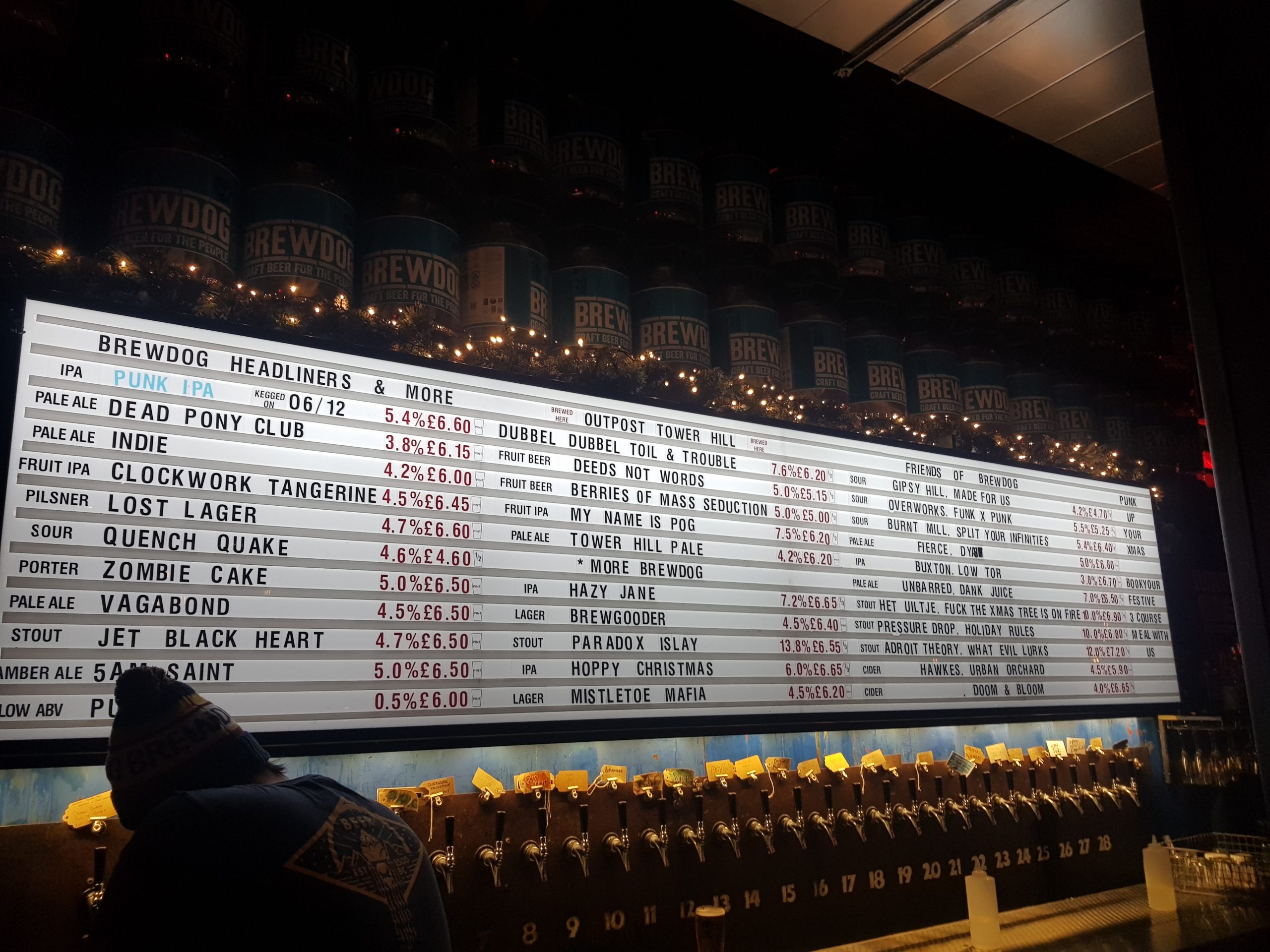
Category: Central London

  • London – City of London – Old Bank of England Pub

    London – City of London – Old Bank of England Pub

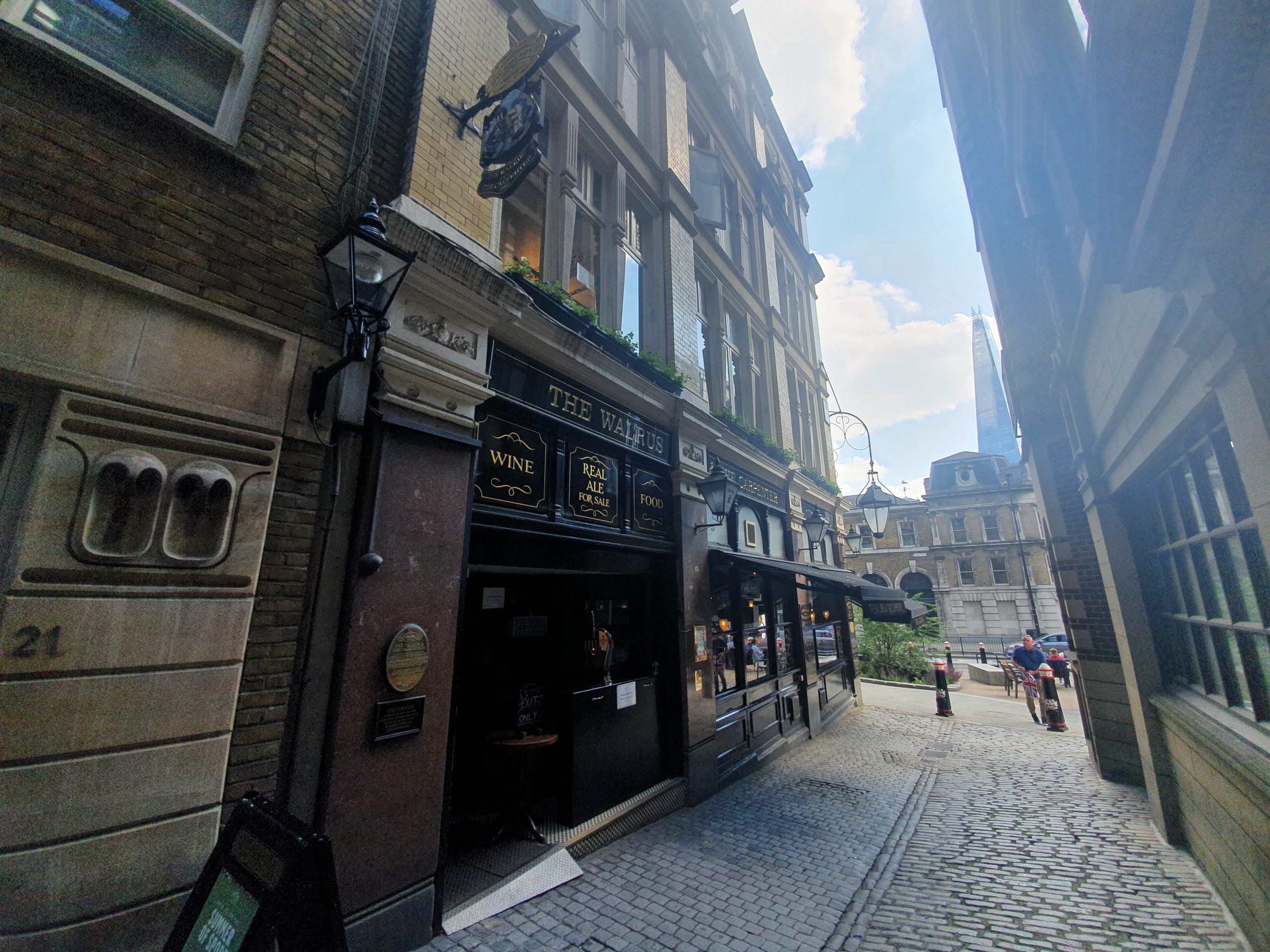
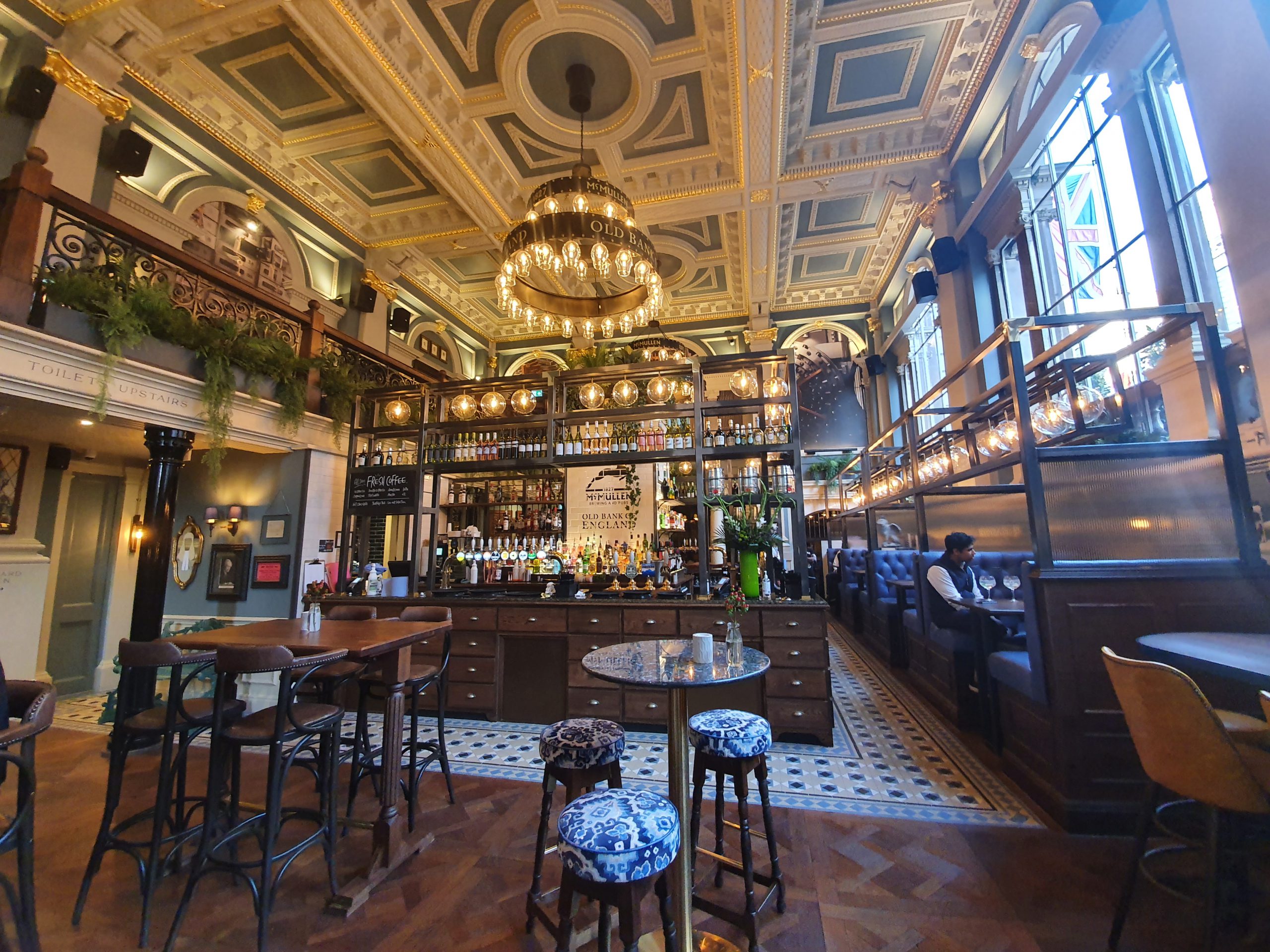
    London is a strange place at the moment to establish when and where it will get busy. Usually when I’m walking down Fleet Street and this part of the city, pubs would be pretty packed out in the evening. I walked by this pub and thought it looked interesting, but also thought it might be one of those decadent food pubs who hardly wanted someone in there for a quick pint before their train home. But, whilst merrily walking by and already having pre-judged it, I checked CAMRA’s Whatpub and discovered that it was in the Good Beer Guide. So I walked back again, trying to not look like a confused tourist.

    I had guessed the bit about decadent correctly. However, it wasn’t a gastropub at all as I had thought it might be, although their pies are apparently pretty decent. The building was from 1888 until 1975 used by the Bank of England as their Law Courts and then it was for a while used by a building society, before it was used for a much better purpose, as a pub. The building once had gold bullion in its cellars and the Wikipedia page for the building notes that it might have held the Crown Jewels for a time.

    Going back to the pies that I just made reference to, the pub themselves mention that it’s located between where Sweeney Todd and Mrs Lovett operated (or allegedly operated since it’s likely entirely made up), noting:

    “It was in the tunnels and vaults below the present building that his victims were butchered before being cooked and sold in the pies to Mrs Lovett’s unsuspecting customers”.

    What a lovely selling point for the pies today…..

    The service was professional and efficient, although it seemed slightly over-staffed, so maybe they had been expecting more customers. It got a little bit busier during my visit, but nothing that was going to be a challenge for the staff to cope with in terms of the numbers.

    It’s a pub run by McMullen brewery, so it had their beers in, which is fair enough for their perspective, but gives less incentive for me to return to try something new.

    Slightly mispoured, but by no great margin as I think this was a lined glass, but the beer range was slightly less riveting. I had half a pint of the AK and half a pint of the Country, which were both well kept and tasted fine, but they were perhaps just a bit routine. The Country had some interesting flavours, not least being biscuity as promised, and I like that clean taste. The prices were actually quite moderate (and looking through the food menu, they were reasonable too given the location), fortunately not matching the decadent surroundings.

    One unfortunate omission is a photograph of the double decker bus that they’ve managed to move into their beer garden. I was going to take a photo from the beer garden after leaving the pub, but it transpired you now need to go through the pub, and I decided against meandering around the building again looking for it. But it’s worth Googling this double decker bus they’ve managed to position into their central London location.

    All in all, I’m pleased I popped into here before my train back to sunny Norwich, certainly a memorable interior and the staff were friendly. Maybe I’ll come back for one of their pies at some point…..

  • London – City of London – The Pelt Trader

    London – City of London – The Pelt Trader

    This bar is listed in the Good Beer Guide and I’m not sure how I’ve missed it in the past, given that it sells craft beer and pizzas. It’s located under a railway arch at Cannon Street railway street and it opened here in 2013. I was fortunate with my timing, as I hadn’t realised just how small this venue is. I asked if there was space for me and the helpful team member said that they were giving up with a table booking for six people that hadn’t bothered to turn up or let them know. That table had been left empty for half an hour, a really unhelpful thing for such a small venue. Anyway, the team member asked if I was happy with that table, which I most certainly was.

    There’s a canoe hanging from the ceiling which all adds some atmosphere to the proceedings I suppose. Ordering could be done via a web-site, but it was just as easy to order from the staff member. There were beers from a number of decent breweries, with a balance of different beer types which met my approval.

    The beer list is chalked up on the back bar, but it was somewhat easier to read it using the bar’s on-line menu system. This is one advantage that has come out of the blasted pandemic, pubs have been forced to be more innovative in their ordering systems. The food could also be ordered on-line, including 12 and 18 inch pizzas, not unreasonably charged at around £12 and £18 each. My knowledge of maths is sufficiently good enough to know that this makes the larger pizza considerably better value for money. Anyway, I digress.

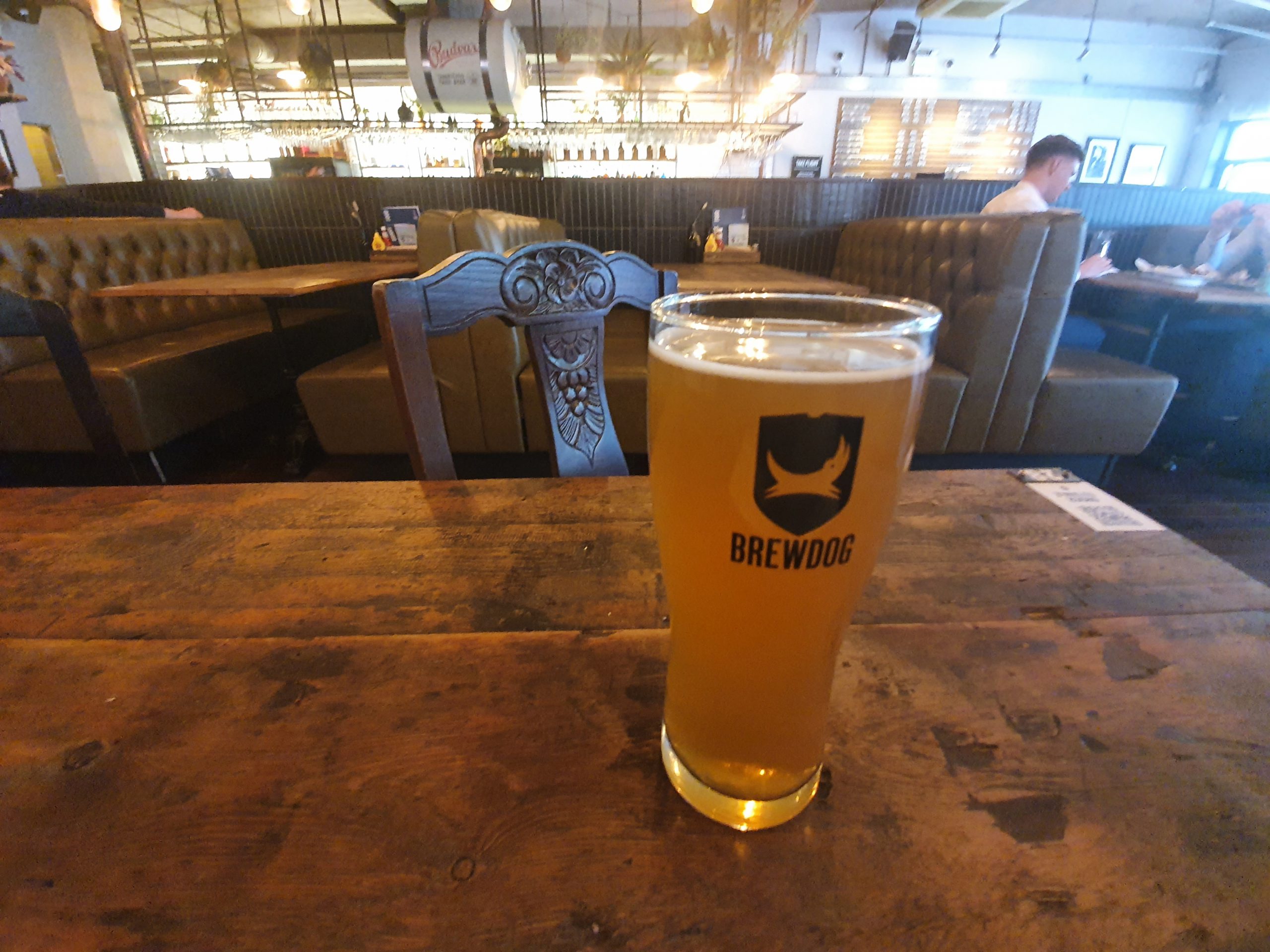
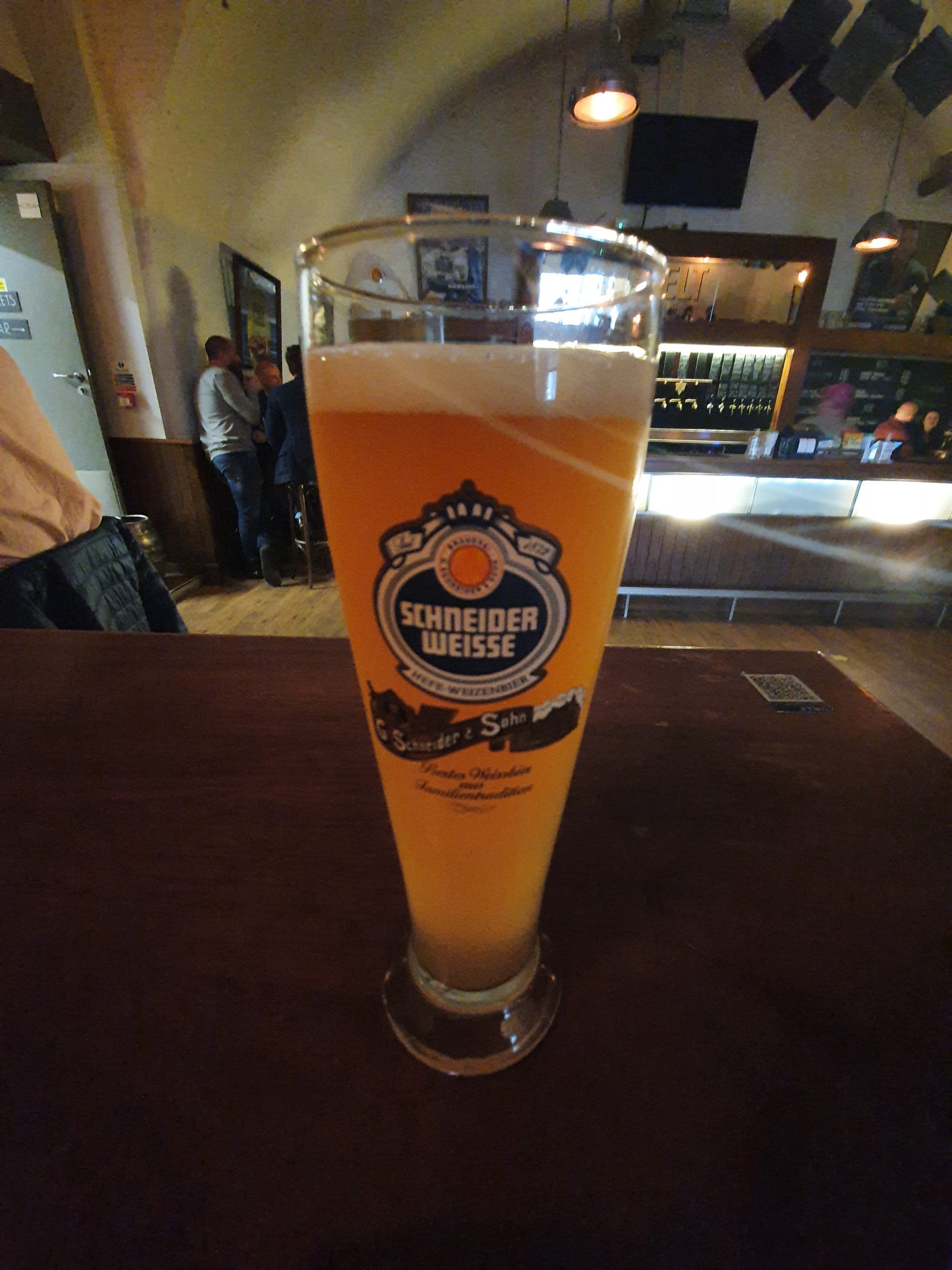
    The branding on the glass isn’t relevant to the drink that I ordered, with this one being Orange Crush from Brick Brewery and I also went for the Tropical Deluxe from Howling Hops. Both very agreeable beers, well kept and those are both excellent breweries.

    I was a little unsure what to expect from this bar and I was entirely pleased with its offering, which remains on-trend although was perhaps ahead of its time when it opened. Friendly service, comfortable environment and a quirky feeling all bode well, especially with that mix of decent craft beer and pizza. Nice.

  • London – City of London – First London Coffee House

    London – City of London – First London Coffee House

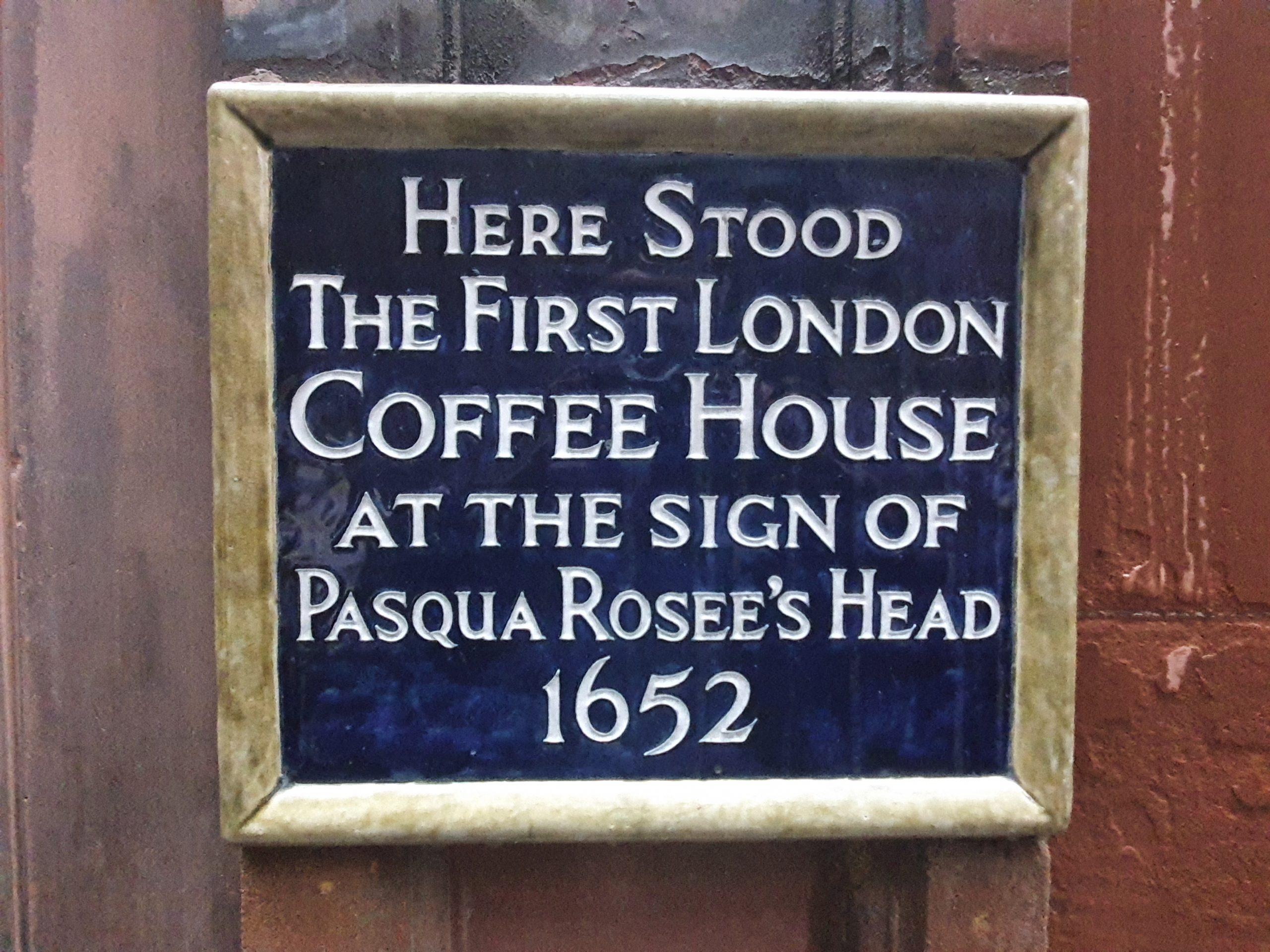
    From where it all began for coffee shops in London, what is now the Jamaica Wine House on St  Michael’s Alley in the Cornhill area. This first coffee house was opened in 1652 by Pasqua Rosée who had connections with the Turkish and Greek communities. He built himself a little shop, although I can imagine that it wasn’t exactly Pret (it was probably more akin to something that I’d create with a few bits of wood and a civil engineer friend to do some sawing and construction), and this new drink of coffee seemed to catch on. He put a sign up out the front with his own image on it, similar to what Tim Martin did with his now closed pub on Whitehall. He had some important customers (Rosée I mean, not Tim Martin), not least Samuel Pepys who wrote about his visit in 1660.

    It had quite a nice little location by St. Michael’s Cornhill Church, but this whole area was badly affected (by badly affected, I mean it burned down) by the 1666 Great Fire of London. The church is still in situ, although it was heavily rebuilt following the Great Fire, with the shop also being rebuilt on pretty much the same site it had been standing on. Rosée wasn’t a freeman of the city and I can imagine the problems that this caused him, so apparently there was some partnership arrangement created to get around this problem to ensure that he could trade. No-one is entirely sure what the premises were called, but it’s thought that for a while they were known as the Turk’s Head. Rosée did well from his enterprise, but he decided to go an innovate in Paris instead, opening up that city’s first coffee shop in 1672.

    The building on the site today is the Jamaica Wine House, a Victorian building which was completed in 1869. The pub might have switched from coffee to beer and then more to wine (next step craft beer…..), but there’s still a nineteenth century cooker in place from where the coffee beans were roasted.

    I still like how exotic this coffee shop must have been when it opened, probably as exciting as an innovative craft beer bar being announced. It was a place to be seen and also to discuss financial arrangements, which is how the large insurance, banks and financial institutions evolved. They were good places for traders to meet to discuss their purchase and sales, usually also quite energetic (loud) environments. Usually there was no alcohol served in these coffee shops in the early days and women were excluded from attending such decadent places.

    I can only imagine the sort of gossip that was discussed at this coffee shop from 1652, but I think that I’d like to have listened to it. King Charles I had been executed just three years before the coffee shop opened, so political talk would have been inevitable, and I’m sure care was taken to avoid upsetting the wrong people. Coffee shops and pubs later often welcomed one political group over another, which would be an interesting set-up for Pret, they could have shops for Starmer supporters and maybe the odd one or two for supporters of Grant Shapps or something. Anyway, I digress.

  • London – City of London – Gilt of Cain (Slave Trade Monument)

    London – City of London – Gilt of Cain (Slave Trade Monument)

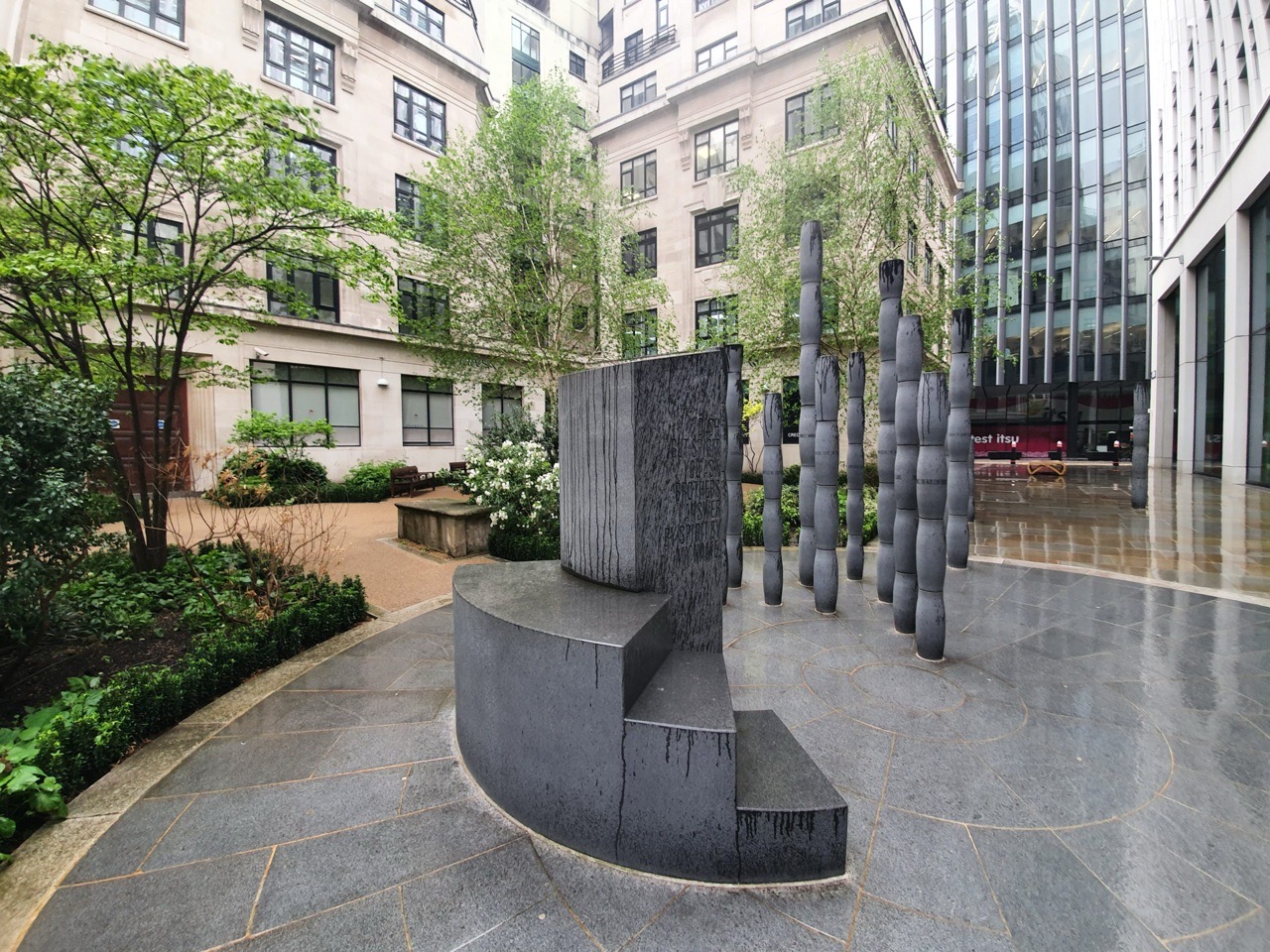
    This was on the wonderful walk around London led by Des yesterday evening, focusing on the issue of slavery and the links that London has to that (and there’s no shortage of such links). It’s a monument that was unveiled by Desmond Tutu on 4 September 2008 and I’m not sure that I’d have ever noticed it if it wasn’t for Des pointing it out. Not that it’s entirely hidden away, it’s next to 74 Fenchurch Street in what was once the churchyard of St Gabriel Fenchurch which was destroyed during the Great Fire of London and wasn’t rebuilt.

    I like this monument, as the messaging behind it is clear without requiring a 62-page guidebook to explain its meaning and purpose. I initially thought that the pulpit was one where anti-slavery campaigners would preach their message and although this is the case, another meaning is apparently also that it is symbolic of how slave auctions might take place. The columns represent sugar cane and show people listening to the message at the pulpit, or, alternatively waiting to be sold to their new owner.

    The sculpture is located near to where John Newton of St. Mary Woolnoth parish was the vicar between 1780 and 1807 and he was buried here, although he was later moved. This is important as Newton was a slave trader who changed his views and decided to campaign to end the trade and he’s perhaps best known today for writing the words to the hymn Amazing Grace.

    Anyway, this sculpture is thoughtfully located, has a depth of meaning and is creatively intriguing. This is perhaps an ideal which similar projects should try and match in the future. The spelling of the word ‘Gilt’ in the name is also deliberate, it’s a play on the financial term and a nod towards how important that was to London at the time of the slave-trade, and still is today.

    There’s a poem written by Lemn Sissay (who later became the official poet of the London Olympics in 2012) and some of the text of that is incorporated onto the monument.

  • London – City of London – St. Dunstan’s Court

    London – City of London – St. Dunstan’s Court

    Like the yards of Norwich, I rather expected the series of courts off Fleet Street to have some kind of long heritage.

    But, at first this didn’t seem to be the case. The red cursor on the above map from 1920 shows where the court goes through the building today. Indeed, on late nineteenth century maps, it shows that this was the site of a pub rather than a court. The court takes its name from the nearby medieval church of St Dunstan in the West (this makes sense as there’s another one in the East, albeit mostly destroyed during the Second World War, which isn’t too far from the Tower of London).

    However, the 1886 Insurance Plan of London shows that the court was there and this tallies up with 160 Fleet Street being the Hole in the Wall pub. The court doesn’t really go anywhere, it just reaches what was a playground in 1886 and then joins onto Bolt Court, which is as it is today (although the playground has gone). Also visible in this map is an electrotype facility, a useful and quite modern publishing device at the time. There’s a photo on Wikipedia of a set-up in 1902 that was used at the New York Herald, and I imagine that it was equally cramped.

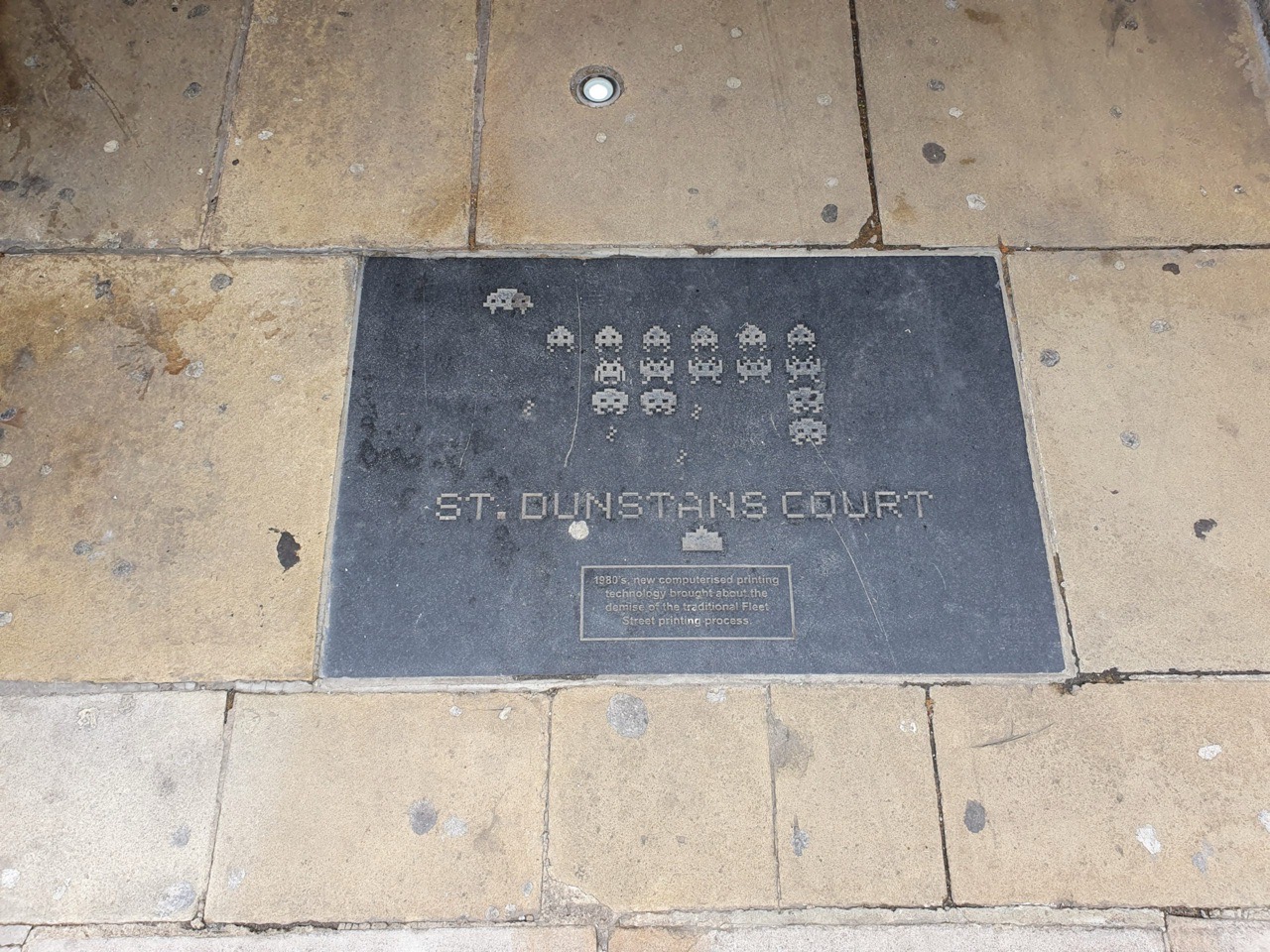
    Each of the courts off Fleet Street on the north side of the road has tablets which show the heritage of the newspaper industry, which is what this area was once known for. This one shows the 1980s computerised printing technology that was introduced, that brought about the demise of the traditional printed processes. The usage of the Space Invaders as an example of something from the 1980s is perhaps a little obscure, but it stands out on the pavement.

    There was a court case heard at the Mansion House in September 1896 when a Mr Charles Pensotti was accused of stealing letters from a post box on St. Dunstan’s Court. He had been interfering with letters placed there by Dean & Son, a publisher of some note, who wondered why cheques and postal orders had been going missing. When arrested, Pensotti was found to have a number of blank cheque books and six picklock keys, but he said to the police that it was a big mistake.

  • London – City of London – London Mithraeum

    London – City of London – London Mithraeum

    A few years ago I went to the Cavern Club in Liverpool and was moderately disappointed to discover that it’s not quite in the same place as the original. In 1973, British Rail decided that they must definitely have the site of the Cavern Club (although they were prepared to build elsewhere if they were given some extra money to pay for their costs) and so they compulsorily purchased it, filled it in, then decided they didn’t want it. An attempt was later made to excavate the site which wasn’t entirely successful, so the current Cavern Club is sort of where the old one was with some of the same bricks.

    And, I mention this tangential story because this is what has happened to the London Mithraeum. Not British Rail this time, but Legal & General and the construction of their far from beautiful Bucklersbury House. It would have been possible to redesign the building and keep the Roman finds, but the Government announced it would cost £500,000 and they weren’t spending that. However, it shouldn’t be under-estimated just how interested Londoners were, it attracted unprecedented interest for historic remains and the site was being opened three hours earlier than anticipated in its last week, such were the number of people who wanted to see it. These were challenging times for London in the mid-1950s where much was still being rebuilt following the war, so there was a great deal of positivity when this Roman structure was being uncovered.

    The end result was that they shoved out the Roman remains into the street and called it a compromise. Perhaps less a compromise and more of a sell-out. There was talk of just destroying the site entirely, so the option chosen did at least save the stones. Anyway, Bucklersbury House has now gone and been replaced by a lovely new building designed by Fosters & Partners. And it’s in the cellar of that new building that this temple now resides once again.

    The hole that was dug for the Legal & General building. There’s a lot of history, including some interesting video of people there in the 1950s, at the official web-site at https://www.londonmithraeum.com/about/. Given the quantity of information there, I’ll just borrow a little of their text to ensure my history is correct.

    “The site lies over the course of one of London’s lost rivers, the Walbrook. Nearly 2,000 years ago when Londinium was founded by the Romans, this river marked the limits of their first settlement. In the 3rd century AD, nearly 200 years after the founding of London, a Roman Londoner, built a temple to the god Mithras on this reclaimed ground, next to the river.

    The mysterious cult of Mithras first appeared in Rome in the 1st century AD. It spread across the Empire over the next 300 years, predominantly attracting merchants, soldiers and imperial administrators. Meeting in temples which were often constructed below ground, these were private, dark and windowless spaces. The mythological scene of Mithras killing a bull within a cave, the ‘tauroctony’ is at the heart of the cult, and its full meaning is subject of much speculation.”

    But, going back in this story a little bit, there’s a ground floor entrance to the new Bloomberg Building which gives access to a museum and public space. The first surprise was seeing my friend Steve, who had coincidentally booked the exact same time to visit the same location. And there was one other person (who we didn’t know) booked for this time, as although the tickets are free, they need to be pre-booked at the moment. And we chose the right day to book our tickets to visit, as changing tier restrictions meant that this was to be its final day of opening for the moment.

    This is the first part of the experience. I’m not sure they call it an experience, but it’s a word that perhaps adds an extra dimension to a visit, so I’m using it. The staff member who welcomed us gave a spirited explanation of it. The other person vaguely looked at it and walked off, whereas Steve and I decided we would make an effort to look at it and pretend to understand it. I’m not sure that we did, and I did think this would be a handy spot for a cafe. I’m not sure that’s what the artist had intended me to think, but there we go.

    Some of the finds are now on display, although 14,000 items were found, so I’m not entirely sure where the rest are. Going downstairs, and before getting slightly lost, we found the second part of the museum, where there are some screens giving more of the site’s history.

    And, this is the centrepiece of the attraction located down another flight of stairs. I understand there’s usually some form of audio-visual experience for visitors before entering here, but for reasons unknown, the current health situation makes that impossible.

    And another photo of the Roman remains with visitors being able to walk around the outside. I couldn’t help be distracted by the neatness of the stones, it all felt too polished and modern. And the reasons for this are clear, namely that when they moved it to an outside location and slightly crudely rebuilt it, much of the original was lost in terms of the mortar and indeed its authenticity. Eric Morecambe’s line is often quoted, but there’s an element of truth to say that “there are all the right stones, but not necessarily in the right order”.

    There’s an article in the Sphere on 23 October 1954 with a photo of a wall being built, subtitled “workmen are rebuilding the lower walls with the stones made by Roman masons”. I’m not convinced that there was complete archaeological rigour going on with the rebuilding, although this seems to have been glossed over a little in the telling of the temple’s story.

    But, I have no complaint with the efforts made by Bloomberg, they’ve restored some dignity to this site after some rather casual and off-hand treatment of it over the last few decades. The web-site they’ve created is informative and useful, with the reviews of the museum nearly all veering towards the very positive. And there’s been some magic put back to these stones, in whatever order they’ve been relaid. A visit isn’t likely to take much more than thirty minutes, but I’m glad that I got to see this site at Walbrook.

  • London – City of London – The Telegraph Pub

    London – City of London – The Telegraph Pub

    Firstly, thank you to Fuller’s for my free drink, which will of course influence everything else that I now write….. This is one of what I consider to be their upmarket pubs, located near to Moorgate and likely popular with city workers when there are any workers in the city…..

    The lighting wasn’t ideal for these photos, but a shot of the interior.

    And the bar area.

    My free drink was a pint of London Pride, which was entirely acceptable. I treated myself to the cheese and onion crisps, which seem to be sold throughout the Fuller’s estate, although I wish they’d stock Brannigans. Not that they can because Brannigans have been discontinued, which I find very annoying indeed. And I’ll try not to complain about this savage decision from KP Snacks too often.

    The pub is a bit tucked away and visitors to London are unlikely to just stumble upon it, unless they get a bit lost. It had around ten customers on Friday afternoon, none of whom were dining, but the food menu was available. This is quite an expensive pub for food and drink (unless you get a free pint) and I found it just a bit formulaic. Given the history of the area, it’s all a bit sterile for my liking. The building itself is though new, built in 2003, replacing the Butlers Head pub which was demolished in 2002. The staff were though friendly and helpful, so the welcome seemed authentic and genuine.
    Anyway, since this was rather a cheap visit for me, I can’t complain.

  • London – Central London – Farringdon – Hoop and Grapes

    London – Central London – Farringdon – Hoop and Grapes

    I had a little visit here as it’s a pub in the Good Beer Guide that I haven’t visited before, a rare survival of an historic licensed premises which was nearly demolished in the 1990s. It’s fortunate that it has survived, it’s got some history as being a location for where Fleet marriages took place and it’s also built on a former burial ground.

    The welcome was a bit stilted with the staff member looking at me confused that I’d come into the pub. At a guess I’d say that anyone coming into a pub and standing by the entrance, where it says to wait, is probably a customer and might need assistance. Anyway, I was seated and when I asked what real ales they had and was told a list of their lagers, which isn’t quite the same thing.

    I went for a half a pint of Spitfire and it puzzled me, as the pub must surely have enough volume of this beer to ensure it doesn’t taste off, but this pint was only just on the right side of me sending it back. At the prices charged, I thought it should have been better, especially from a Shepherd Neame pub since it’s their beer.

    The rest of the service was much better and was from a different staff member (who I think was the licensee), so there was more engagement and interest in me as a customer. Not that I really needed any interest, but it made me feel more welcome. The pub was clean and organised, with a nice olde world charm. The pub was also following all of the rules, two multi-household groups came in and admitted they weren’t in the same household, with one asking the licensee to turn a blind eye. I’m not sure that’s a very fair thing for a customer to do, but the staff member apologised and turned them away.

    I liked the building and the service ultimately was fine, but I’m not sure that there was anything else of interest here beyond the history and heritage. But, it was a pleasant location for a drink and it was relatively busy during the early evening. The pub normally has a good reputation for food, but they’re offering a reduced menu at the moment, mostly curries and snacks. The downside was that it felt like a Greene King pub, but I won’t digress down that line of thinking….

  • London – City of London – Faceted Column by Stephen Cox

    London – City of London – Faceted Column by Stephen Cox

    Unfortunately, I fear that my art knowledge has let me down here, as this is probably an amazing work. However, I thought it was World War Two bomb damage initially, until realising it was too new. It has though been put here deliberately and has graced the pavement of Finsbury Square since 1999. I don’t like it as I can’t understand what it is, but I’m sure many do.

  • London – City of London – London Liverpool Street – Fur das Kind

    London – City of London – London Liverpool Street – Fur das Kind

    I’ve wanted to take a photo of this numerous times before, but there have always been people sitting either on the sculpture or perched on the seat like thing next to it. Since London is suffering from a lack of visitors and workers at the moment, the railway station is quiet and there were few people around at all.

    The sculpture is designed by Flor Kent and not by Frank Meisler as I had thought, although he designed the sculpture on the main concourse and the one in Gdansk. They commemorate the same thing though, the Kindertransport which saved thousands of Jewish children from death. Unfortunately, the transports were brought to a halt by the start of the Second World War, but the lives of 10,000 children were saved.

    Originally this sculpture was placed on the main outside concourse of the railway station, but just the girl, which is a life size cast of one of the survivor’s grand-children. Along with the girl was a large perspex case of actual items that had been brought over by the children. Today, the figure of a child has been added and the case is no more, and they have been placed in the railway station as a reminder that this is where many children came on their rescue mission. I’m not sure that it’s best placed by the entrance to the underground station as it’s easily missed because of the people who often stand in front of it.

    There are other similar sculptures across Europe which note other parts of the journey that children went on. It’s a very emotive piece and a reminder of what went on here.