Category: Camden (Borough of)

  • London – Camden (Borough of) – Euston Railway Station – The Doric Arch

    London – Camden (Borough of) – Euston Railway Station – The Doric Arch

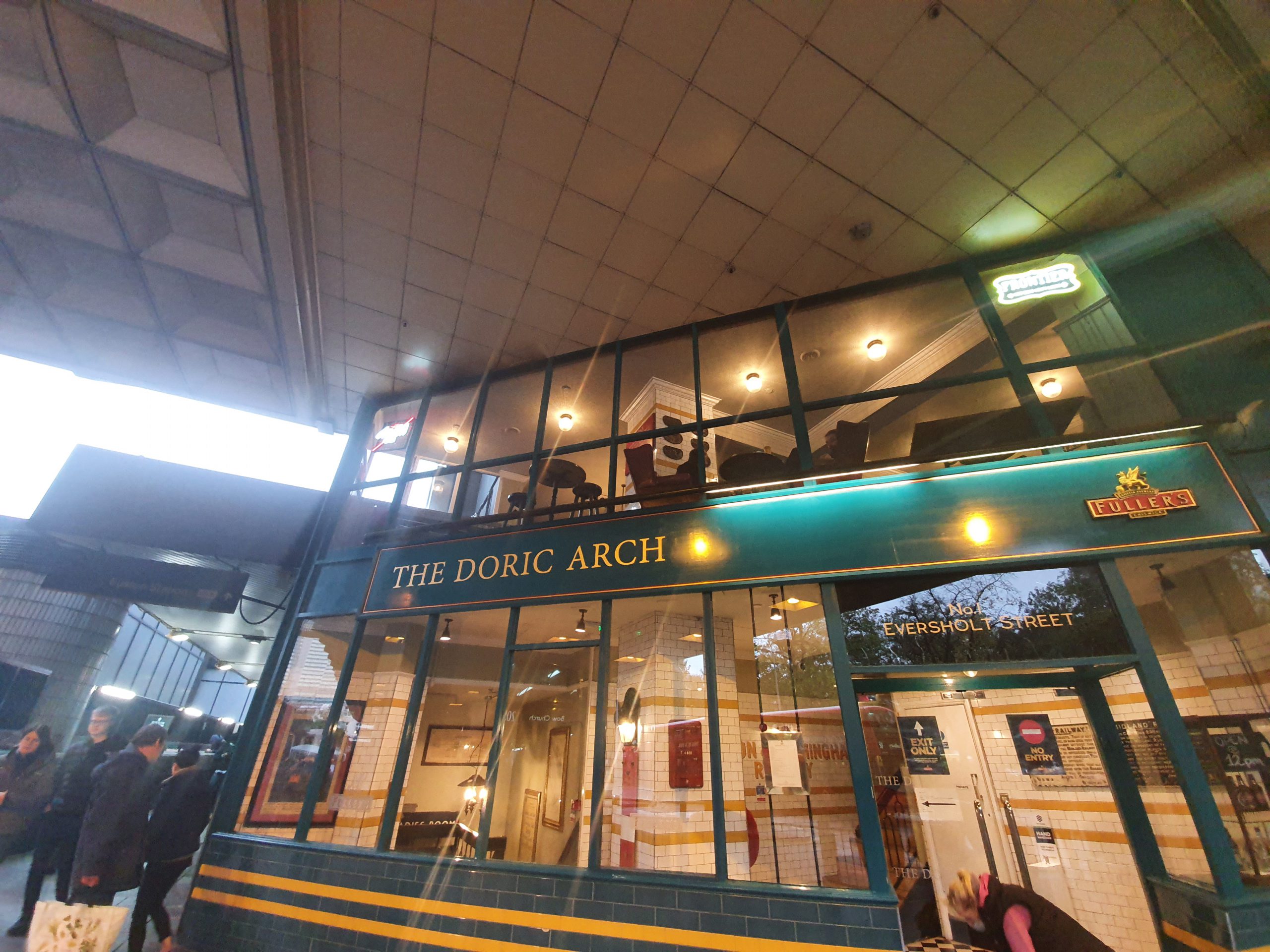
    This pub is named after the Euston Arch, which was of a doric design. The arch was pulled down in 1961, an error which haunts the drab railway station to this day, with numerous attempts considered to get the stone back from out of the River Lea where it was dumped. This was all the decision of the horrendous Ernest Marples, who I’d argue did more to damage public transport than any other figure over the last two centuries. I think that’s a polite way of putting his conduct in office. But, I digress and will limit my political grumpiness at Marples and British Rail for the moment. Anyway, at least the pub recognises the importance of the arch in its name.

    The pub has quite a bland design in terms of its external architecture, but it has been turned into a friendly, laid-back and comfortable pub by Fuller’s. I’m not one for bus spotting, but the upper area where I was sitting provides a marvellous opportunity for anyone that does enjoy looking at London buses. The service in the pub was excellent, it was pro-active, warm and helpful, so I felt welcome. I was on an long LDWA NEC Zoom meeting and was pleased to find a quiet corner as it started to rain and I felt that I’d done enough walking around outside in parks.

    There’s lots of railway memorabilia around the pub.

    I treated myself to mini cheddars and half a pint of ESB, which I liked more than I thought I might (the ESB I mean, I knew that I’d love the mini cheddars). This reminds me that I had the HSB from Fuller’s a few weeks ago, which was better than I had anticipated as well. The prices were reasonable for a railway station pub outlet and they do cooked food as well, although are apparently operating on a smaller menu to usual at the moment. The pub was very quiet when I got there, but an hour later when I left it had around ten people in, so I assume just about worth opening. Anyway, if I was at Euston railway station again, then I’d likely pop in here.
  • London – Camden – British Museum (Early Prosthetic Toe)

    London – Camden – British Museum (Early Prosthetic Toe)

    This is thought to be one of the earliest prosthetics used in the world, dating to around 1070BC to 664BC and it was found in Egypt. It’s not known whether the person had this toe when they were alive, as it’s possible that it was to fix a little accident caused by the mummification process. There was once something in the toenail bed (is that a proper term?) to recreate the nail, but that has been lost. The item was purchased in 1881 from Rev Greville John Chester, a clergyman who decided he fancied partaking in some adventures in Egypt in the mid nineteenth century.

  • London – Camden – British Museum (Mummy of a Young Bull)

    London – Camden – British Museum (Mummy of a Young Bull)

    I’m not sure quite what this young bull would have thought of spending his life in eternity like this, but he lived in the period after 30AD. The bull was found in Thebes, an ancient Egyptian city, and was acquired by the British Museum in 1821 from the archaeologist Henry Salt. Salt did a good job at sourcing items for the museum, forming a strong relationship with the ruler of Egypt, the Pasha Mohamed Ali, with large numbers of items leaving the country.

  • London – Camden – British Museum (Tuberculosis in the Spine)

    London – Camden – British Museum (Tuberculosis in the Spine)

    I’m not a medical expert, but I can write with some confidence that this isn’t ideal. It’s the spine of a female, aged between 20 and 34, who was suffering from tuberculosis of the spine, with the damage being so severe that the vertebrae have fused together and collapsed. The museum notes that this would have “significantly affected her mobility”, which is no doubt true, but I can’t imagine how painful this must have been as well. The body was found in Sudan, but the aging is quite wide, the lady could have lived during any period between the fourth and fifteenth centuries.

  • London – Camden – British Museum (Nubian Book Page)

    London – Camden – British Museum (Nubian Book Page)

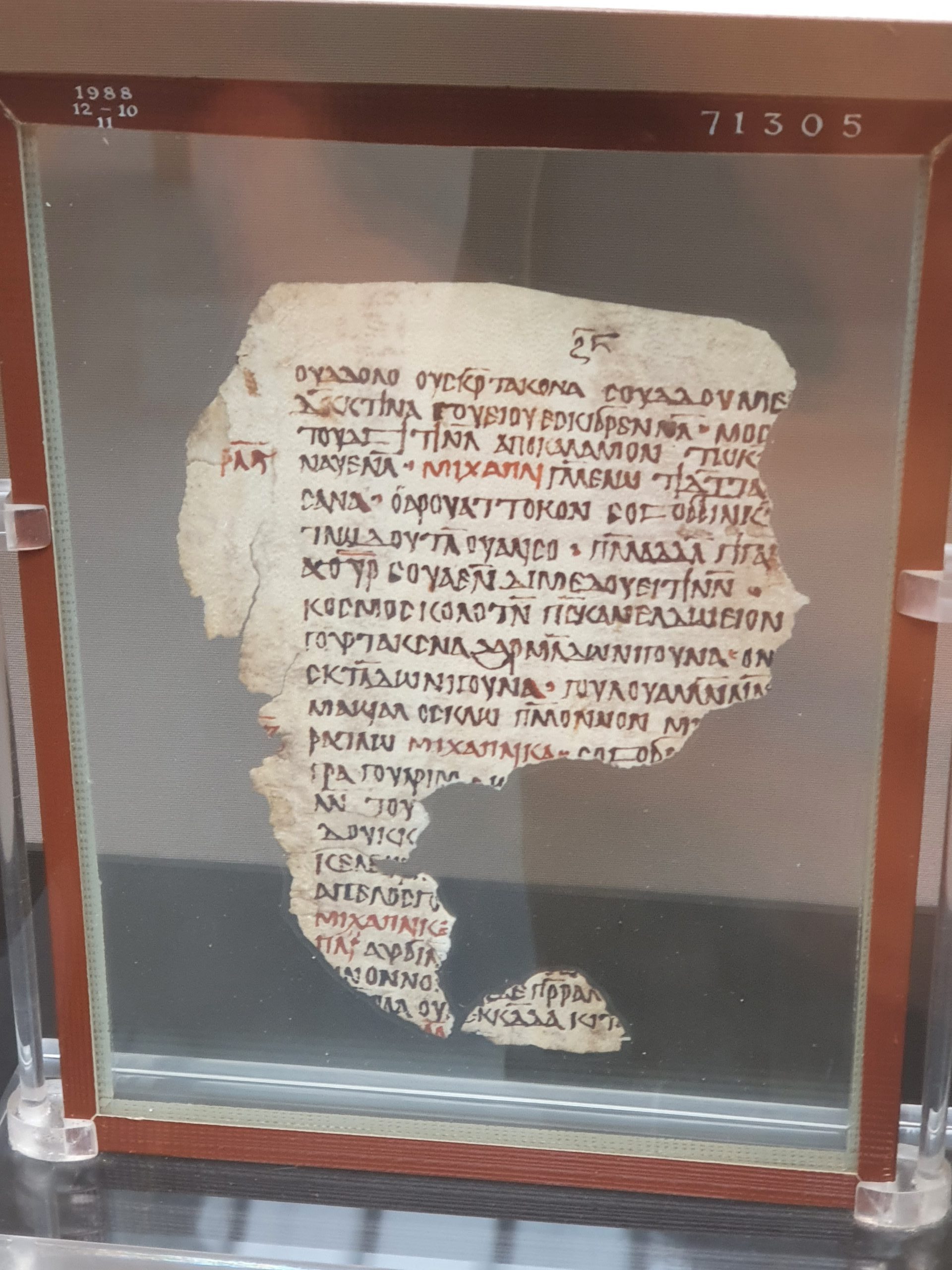
    I like a nice book, although this isn’t exactly a big chunk of documentation. It’s a parchment dating to around the ninth or tenth centuries from the Nubians, a population who lived in what is now northern Sudan and southern Egypt. The word in red is the ‘Archangel Michael’ and I hadn’t realised that the Nubians had converted to Christianity (but, it’s not something I’ve given a great deal of thought to in the past), although today this population is mostly Islam.

  • London – Camden – British Museum (Beer for the Workers)

    London – Camden – British Museum (Beer for the Workers)

    This is rather sweet and is one of the oldest examples of writing to have been found. It dates from around 3300 to 3100BC and, even more excitingly, it’s a beer token issued by a temple for workers. It’s from Uruk in Mesopotamia and when this token was issued, the settlement was likely the largest urban area in the world. The drink the workers received was barley beer, although they weren’t fortunate enough to be able to express their views on it using Untappd.

  • London – Camden (Borough of) – King’s Cross Railway Station – The Parcel Yard Pub

    London – Camden (Borough of) – King’s Cross Railway Station – The Parcel Yard Pub

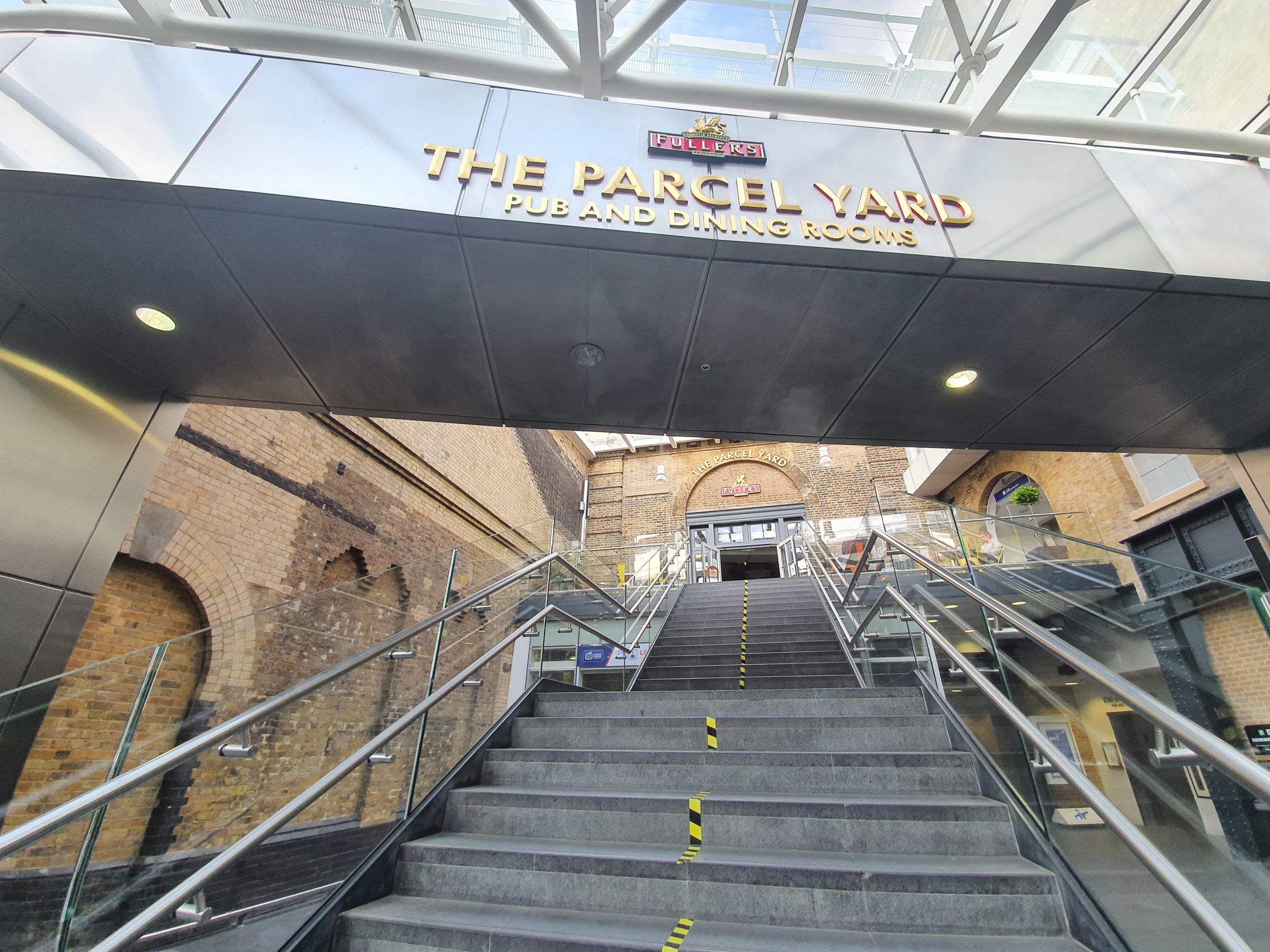
    This is the main pub at King’s Cross railway station and is operated by the London brewery of Fuller’s. It’s got a decent reputation as a pub and it’s also listed in the Good Beer Guide. I was going to visit here a few weeks ago, but they weren’t ready to re-open at that point.

    There are a variety of seating areas, I went for the area that was a conservatory type set-up. There was a friendly member of staff at the door and the pub seemed to be following all of the rules, with everything clean and organised.

    There was a rail theme which is hardly a surprise and in this area there was a parcel theme, which is what the building was once used for.

    The pub is all quite open, lots of rooms and lots of corridors.

    Some more of the themed signage.

    Fuller’s paid for this beer as part of their current Friday promotion, which was very generous of them. The London Pride was well-kept and at the appropriate temperature, so I can’t much complain, although it doesn’t have the richness of taste that I’d ideally like. But I’m tolerant of beers which are given to me for free.

    Anyway, this is a decent pub with lots of space. I didn’t order food, or indeed anything other than the free beer, but there’s a modern menu which is meant to be a cut above standard pub food. There’s a nearby (well, sort of, it’s the Barrel Vault at St Pancras) JD Wetherspoon for anyone who wants standard pub food at a cheaper price, so options for whatever people want.

  • London – Camden – Old Street Sign on Heathcote Street

    London – Camden – Old Street Sign on Heathcote Street

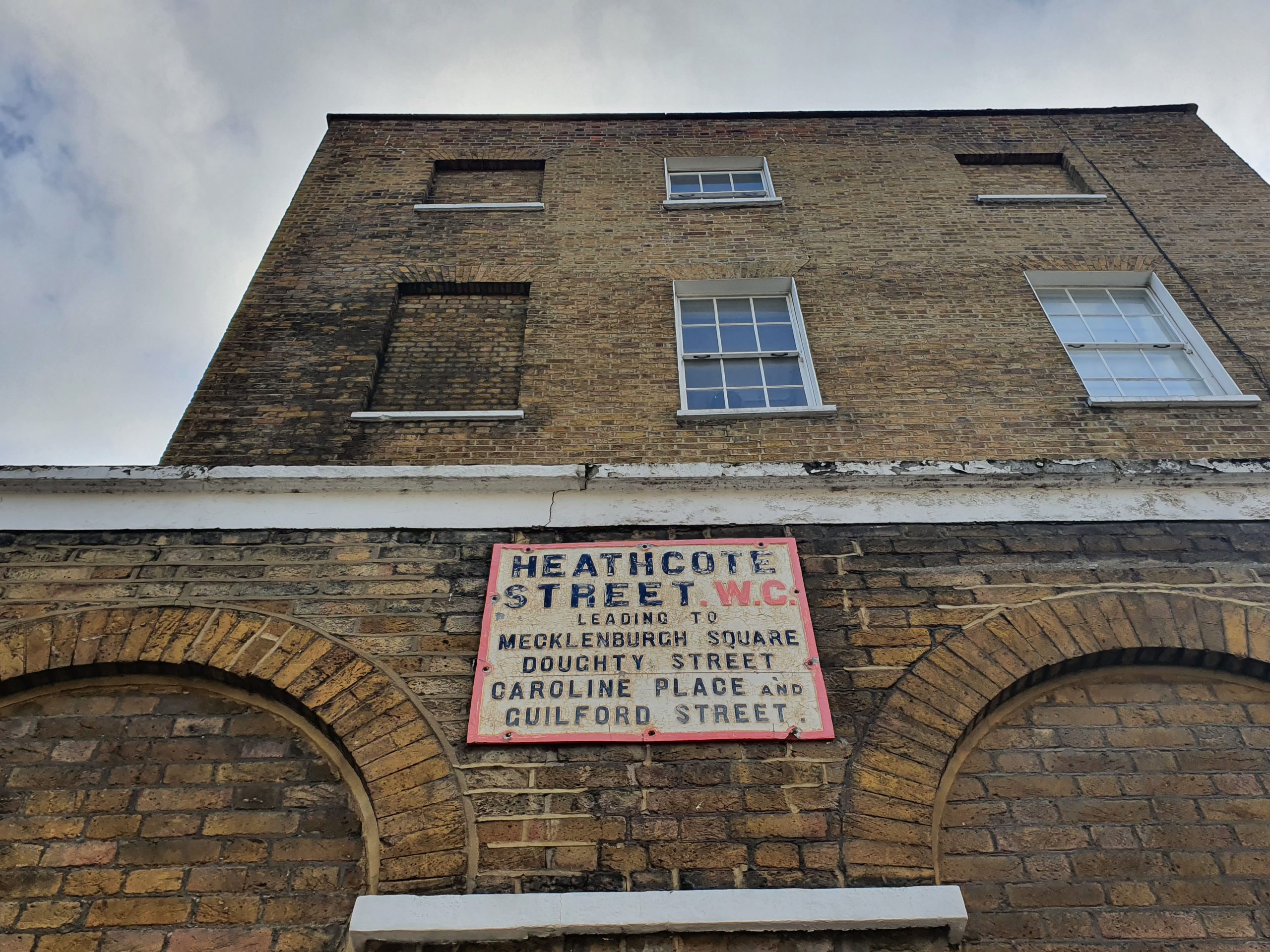
    I’m sure there are many older examples of street signs, but I’m still impressed that this one remains. The WC postcode was scrapped in 1917 and replaced with WC1 and WC2. Or, more precisely, it was a postal district back when it was created in the mid nineteenth century, as postcodes are more modern. But they’re of a similar principle.

    The Heathcote Street sign mentions that it leads on to Mecklenburgh Square, Doughty Street, Caroline Place and Guilford Street. The sign has lasted longer than one of the streets, as Caroline Place has now become part of Mecklenburgh Square, likely because there’s another Caroline Place in the city.

  • London – Camden – British Museum (King’s Library)

    London – Camden – British Museum (King’s Library)

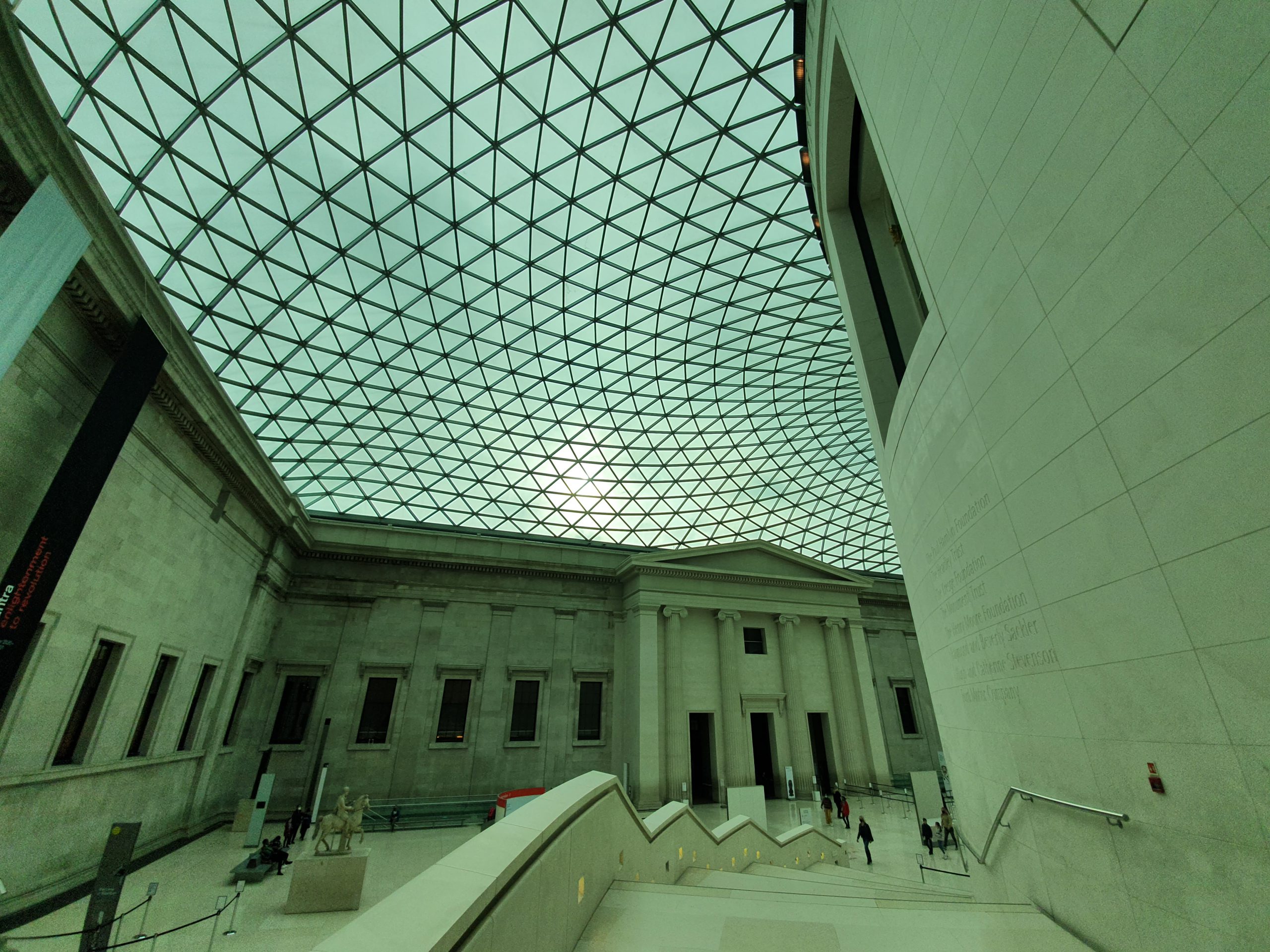
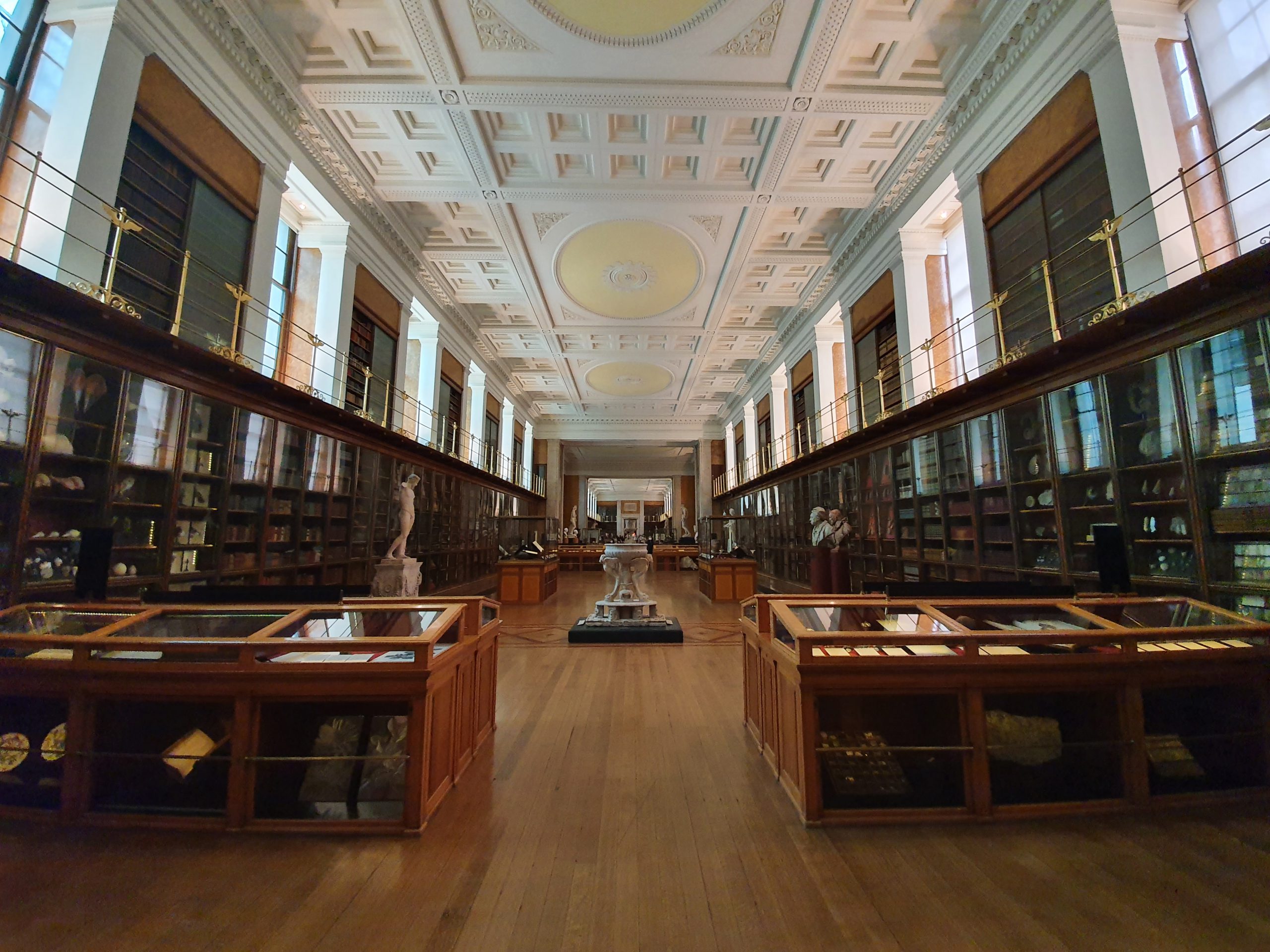
    I didn’t get to see this room last time I was in the British Museum, which was just after it re-opened, either because it wasn’t open or I got muddled up with signage. Probably the latter. It’s the room which housed the King’s Library between 1827 and 1998, with the books now moved to a new display area at the British Library at its new site nearby.

    It held the library of books that were collected by King George III and which were given to the nation by his son, King George IV. It’s suspected he did this mainly to avoid paying to maintain them, but either way, the nation benefitted from this legacy. He made the demand that the collection must be kept separate from the rest of the library’s volumes, which has been honoured. Unfortunately, a few hundred books were destroyed during air raids in the Second World War, but most of the collection has survived the last 200 years.

    The room is used today by the British Museum as an “Enlightenment Gallery” which is interesting, although there’s not a great deal of linkage to literature. But, I suppose, that’s the job of the British Library now. Anyway, it’s a beautiful room and the bookshelves have all been left in situ.

    A drawing (© The Trustees of the British Museum – https://www.britishmuseum.org/collection/object/P_2003-0227-1) by Eugene Armand Roy from 1851 and it’s the earliest known colour representation of the old King’s Library in the British Museum.