Category: Bratislava

  • Bratislava – Old Town Hall (Schützenscheiben – Ferdinand V from 1830)

    Bratislava – Old Town Hall (Schützenscheiben – Ferdinand V from 1830)

    20250628_112804

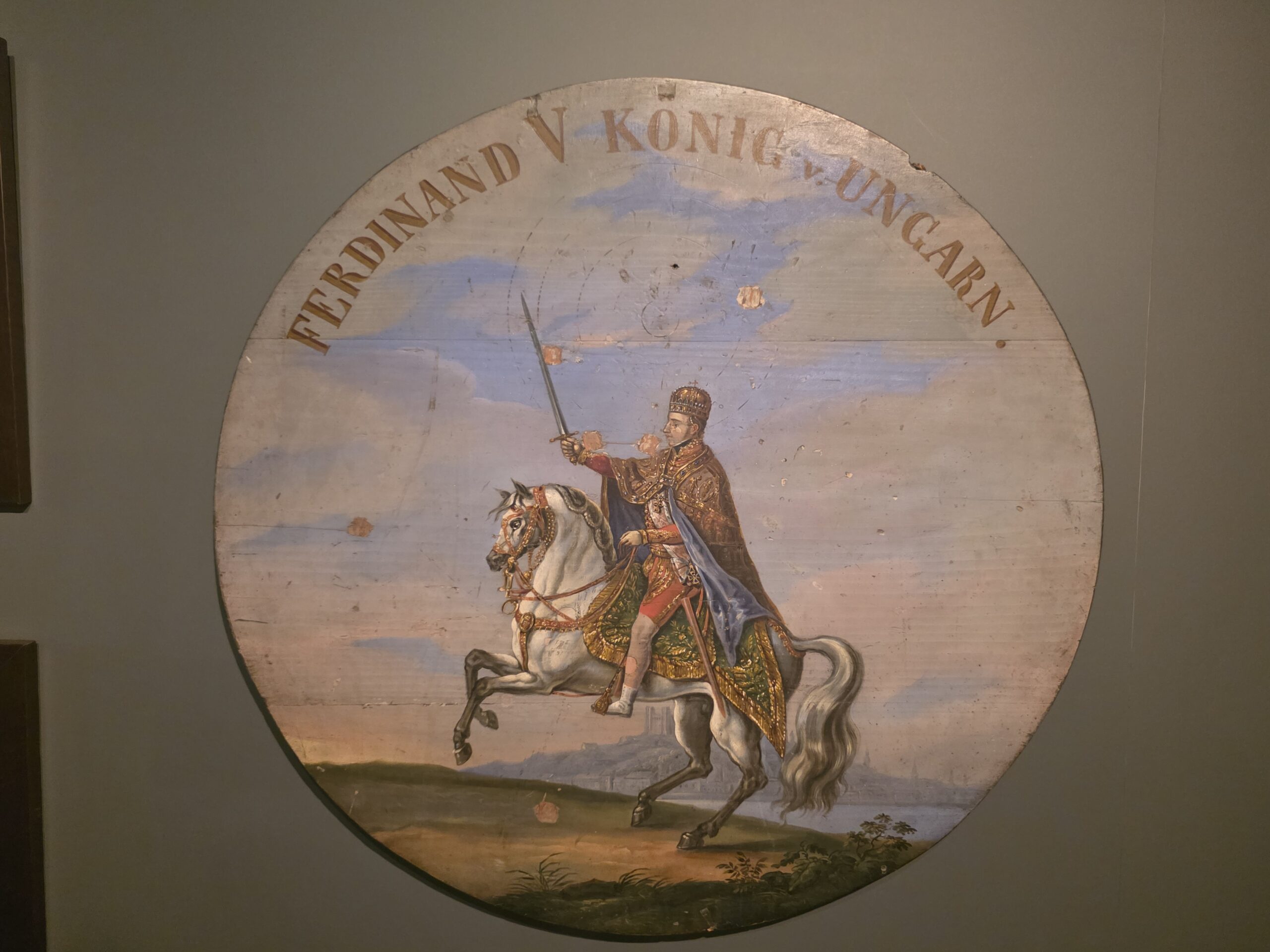
    This rather bold bit of decorative violence is a Schützenscheibe, a painted shooting target, and this blog might be featuring a fair few of these. This one features Ferdinand V (1793-1875), King of Hungary, looking thoroughly regal while charging into battle atop a very well-behaved horse. The date is 1830, when he was crowned in Bratislava (or Pressburg, depending on how much imperial nostalgia you’re feeling), and this object captures the solemn majesty of that moment, shortly before someone presumably tried to shoot it in the face. I was quite engaging with these targets, although that will likely become obvious to my two loyal blog readers when they see how many more there are.

    The Schützenscheibe tradition was a peculiar mix of patriotic enthusiasm and marksmanship, whereby people celebrated important figures or events by painting them onto wooden discs and then proceeding to fire projectiles at them. It’s not quite a state portrait, more of a royal rendering with optional bullet holes, but as ever, I rather liked it. Ferdinand V is doing his best “imperial grandeur” pose here and he’s wearing the Hungarian Crown of St. Stephen, because nothing says “shoot me here” like a giant jewel-encrusted hat. The whole thing is painted with surprising finesse, especially considering its fate involved standing at the end of a rifle range.

    There aren’t many holes in this one, so perhaps it was either just not used or the shooters were a bit inept. Ferdinand V, not content with being the King of Hungary, also became the Emperor of Austria in 1835. He abdicated from the Austrian throne in 1848, but he remained the King of Hungary as there was no way of abdicating from that. As a leader he was well-meaning and hopeless (I simplify things there quite a lot) but he’s an interesting character.

  • Bratislava – Old Town Hall (Eighteenth Century Map of the City)

    Bratislava – Old Town Hall (Eighteenth Century Map of the City)

    20250628_105608

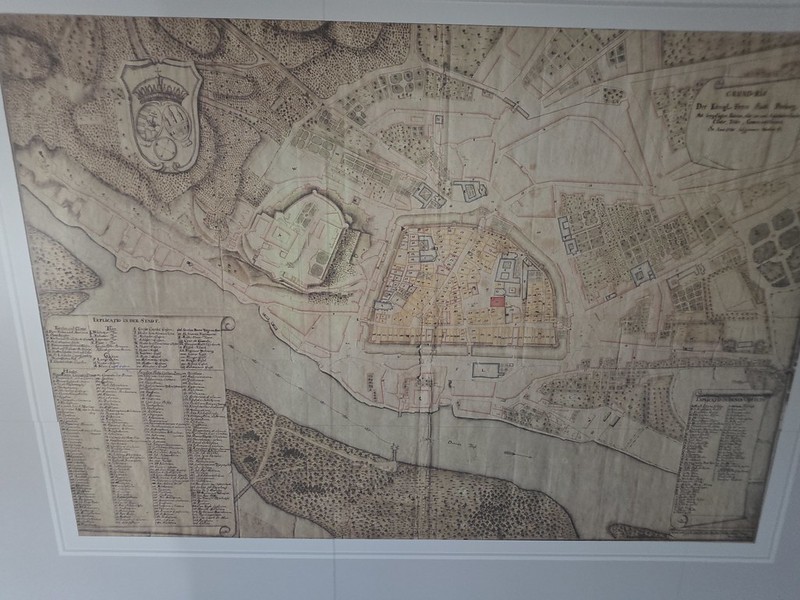
    This is a rather decadent old map of Bratislava, or Pressburg, or Pozsony, depending on how many empires you’ve been through and how particular you are about historical cartography. It shows the city sometime in the middle of the 18th century, back when people still called Austria-Hungary a good idea and maps were beautifully hand-drawn works of art rather than something you angrily pinch-zoom on while lost in a car park. It is a thing of beauty and the level of detail in the whole arrangement is high.

    20250628_105614

    What we’ve got here is a proper Grundriss, a ground plan, the sort of thing a Habsburg official would have unfurled dramatically in a candlelit war room while saying things like “we must reinforce the bastion” and “who authorised this delightful fountain?” This large fortified lump on the left is Bratislava Castle, looking satisfyingly blocky and formidable, perched up on its hill like it’s judging the rest of the city for not being quite as symmetrical. But, the history of Bratislava has been for a long time the fortified heart and then the neighbouring castle arrangement.

    20250628_105611

    I’m not suggesting that it’s a map to navigate by today, but the main street layout of the central fortified area hasn’t really changed that much. It’s a beautiful snapshot in time of a medieval walled city, albeit with many later redevelopments, not long before all the city walls were pulled down on the orders of Empress Maria Theresa in 1775. Although it was likely a sensible idea in terms of giving more space to the city and the threat of the Ottomans had somewhat diminished, it’s always just a little sad I think for a city to have lost its walls.

  • Bratislava – Bratislava Transport Museum (1968 Velorex)

    Bratislava – Bratislava Transport Museum (1968 Velorex)

    20250626_100958

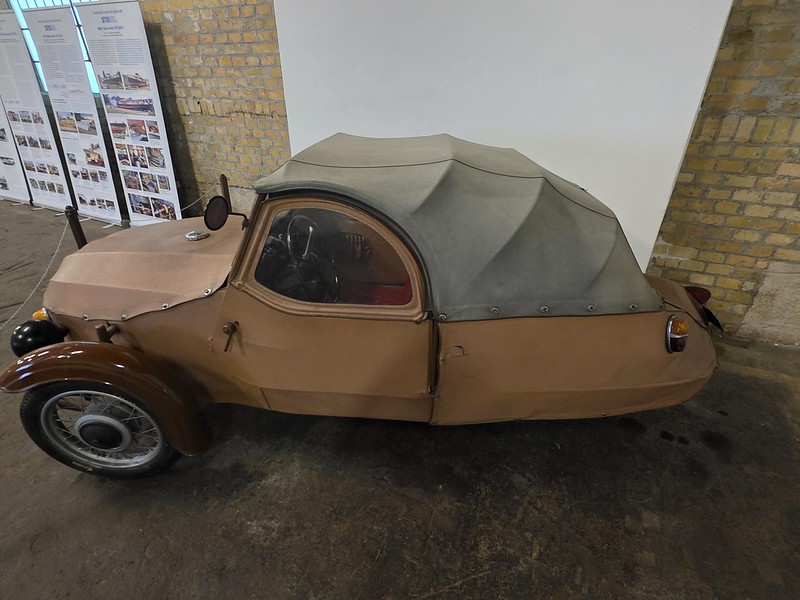
    This gloriously odd little machine is a Velorex from 1968, the Czechoslovakian solution to the question no one had asked “What if a car was made out of curtains?” Built from the late 1940s into the 1970s, it’s the vehicular equivalent of a determined shed because who needs crumple zones when you can just unzip your way out? This particular model is a Velorex Oskar 16/350, although the differences between versions were usually marginal and often depended on which bit of canvas hadn’t fallen off yet. The top speed was technically 85 kph with its motorcycle engine, but I suspect only achievable with a tailwind, a steep downhill slope and a complete disregard for mortality.

    What I rather liked, though, is how much design effort went into something that has the aerodynamics of a bread bin. The folded roof looks like it was borrowed from a military tent, and the door opens with all the structural confidence of a marquee flap. But I imagine that it works. It’s functional, minimal, and rather decadent in its refusal to pretend it’s anything other than a very determined mobility aid. But yet, a lot of people wanted these and demand outstripped supply for years.

    The Velorex was originally aimed at people with disabilities and what’s rather lovely is that this one has survived at all. Many were driven into the ground or abandoned when actual metal-bodied cars became affordable. But someone clearly saw enough charm in this canvas cocoon to wheel it into a museum rather than roll it quietly into a ditch. And rightly so. It’s an honest little thing, unpretentious, slightly ridiculous and all the better for it. It’s not a major exhibit here as it’s sat quietly off to the side, with the kind of modesty that suggests it knows it is playing second fiddle to the museum’s fine collection of Skodas.

  • Bratislava – Old Town Hall (Stained Glass from St. Martin’s Church)

    Bratislava – Old Town Hall (Stained Glass from St. Martin’s Church)

    20250628_105132

    20250628_105136

    20250628_105140

    20250628_105143

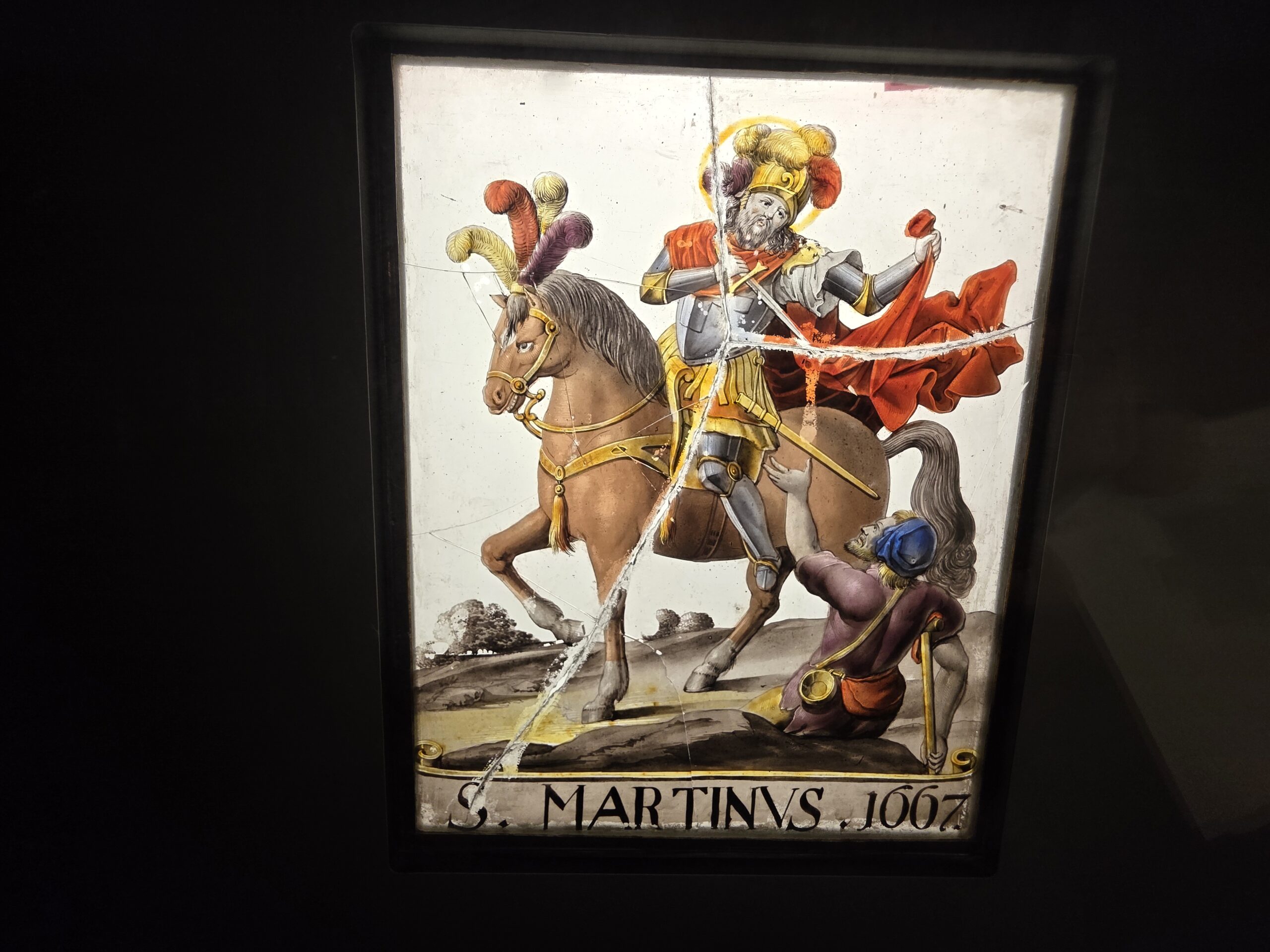
    The museum seems rather proud to have these four pieces of stained glass which were located in St. Martin’s Cathedral in the city. The stained glass dates from 1667 and it was donated by Johann Glitzer, a master hatter and they were originally located in the second window of the northern wall of the shrine in the Cathedral. However, in the first half of the eighteenth century they were removed as George Rafael Donner was leading a reconstruction of the Chapel of St. John the Almoner in a Baroque style. That meant out went Glitzer’s gift.

    This Baroque chapel was in itself fortunate to survive as tastes changed and the whole cathedral was made to look Gothic in the nineteenth century, but they kept the chapel’s decorative features. It’s not a major exhibit in the museum, but the quality of the stained glass is high and I do like that a decision was made to keep it rather than just chuck it in some skip (or whatever the early eighteenth century equivalent was).

  • Bratislava – Bratislava Transport Museum (Skoda Octavia)

    Bratislava – Bratislava Transport Museum (Skoda Octavia)

    20250626_105202

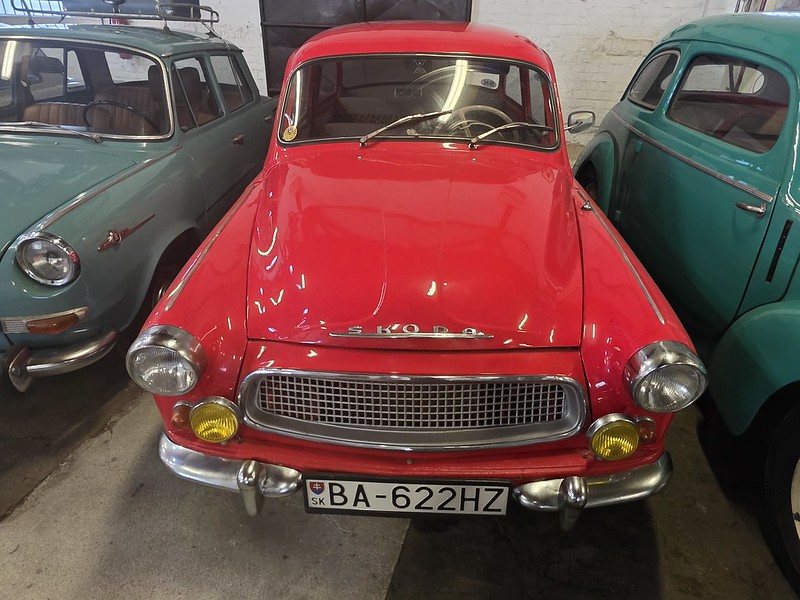
    This charming red contraption is a Škoda Octavia which has Bluetooth and crumple zones, and it’s not to be confused with the modern Škoda Octavia, which has Bluetooth and crumple zones, this version has neither, but it does have style, presence and just enough horsepower to make it to the end of your street if the wind is kind. Manufactured from 1959 until 1971, this was Škoda’s eighth post-war model, hence the name ‘Octavia’ which they presumably thought sounded rather decadent. And in fairness, for something made in a command economy, it’s rather swish.

    Power came from a 1.1 or 1.2 litre engine that produced around 40 horsepower, although that’s ‘horsepower’ in the same loose way that instant coffee is ‘coffee.’ It would get up to about 110 km/h if you were being brave, had a clear road, and said your goodbyes before setting off. The rear-wheel drive setup meant that in the right conditions, by which I primarily mean snow, you could probably get a bit of sideways action, or at least an elegant pirouette into a ditch.

    This particular example is in glorious postbox red, nestled confidently between a few other Czechoslovakian classics in the museum. I rather liked it. It has that Cold War chic that’s now swung firmly into the territory of retro-cool. The kind of car you’d drive ironically until you realised you’d accidentally grown fond of it. It doesn’t whisper luxury, it mutters durability and it doesn’t demand attention, it earns it. And unlike most modern cars, it could probably survive a mild nuclear event with only cosmetic damage…..

  • Bratislava – Ibis Bratislava Centrum

    Bratislava – Ibis Bratislava Centrum

    20250627_205801

    I had one night at the Ibis Bratislava Centrum, staying loyal once again to Accor Hotels. It’s centrally located in the city, around a five minute walk away from the city centre with its restaurants, museums and craft beer bars. It’s also quite convenient, as might be obvious from the photo, to the tram line. The slightly odd thing in terms of first impressions is that they drape the mat outside the front door so that it’s over the top step, I’m moderately surprised no-one has fallen down the stairs, especially as some of the tiles are chipped and damaged.

    20250627_165207

    The room is the standard Ibis design, but I’m content with that. The staff member at reception was friendly and helpful, but there was quite a queue to check-in when I arrived. Fortunately, I’m rarely in a rush unless there’s a bakery or craft beer bar involved. As a minor point, they could though do with more power points, they are all over by the desk and they could probably do with them by the bed. I think that’s usually resolved though when the room renovations take place.

    20250627_165221

    My welcome gifts and I particularly liked that chunky fridge magnet. Well, and the chocolate and the peanuts, there’s always a need for food based gifts. Call it an edible bribe.

    20250627_210135

    And my welcome drink from the downstairs bar, the Urpiner Classic 10. It was the only beer that was available as a welcome drink and to be honest, I’m surprised that the fridge magnet didn’t stick to it as it tasted so metallic. It’s a very basic beer which was pretty devoid of any flavour, maybe some malt although I wondered whether that was just some slightly tasty dust. But, it was free, so I drank it.

    20250628_075805

    The breakfast room was relatively quiet, which always makes for a calm start to the day. The staff member at the little desk had a friendly welcome as I arrived, but she said my room number wasn’t on her list for breakfast. She phoned downstairs to the reception desk and seemed pleased with their response as I was allowed in without any further query.

    20250628_075808

    There were a variety of different seating types. This room is only used as the breakfast room as the bar is downstairs and the hotel doesn’t offer hot meals.

    20250628_074010

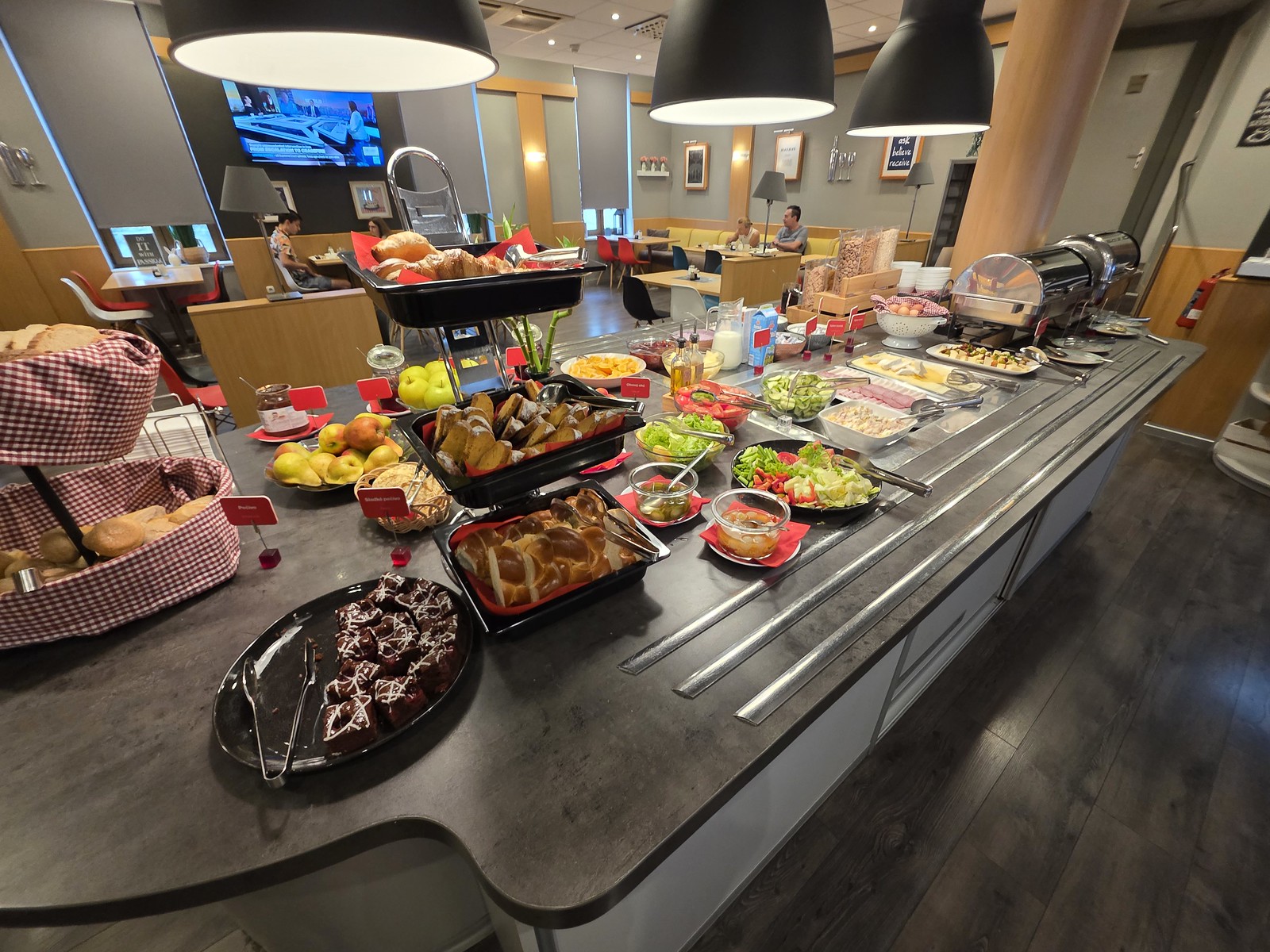
    The breakfast buffet selection.

    20250628_074537

    Delicious. There was a limited hot food selection, but I ignored that as usual, going for the cold food selection. That baguette was really decent, I had quite a lot of that bread along with half the hotel’s tomatoes, gherkins and pickled onions. I know how to live….

    20250628_100405

    The view from my window over the city. It’s probably not the best view from a hotel room in Bratislava, but I liked looking at the trams going by. I also managed to make my room very cold, which pleased me greatly that the air conditioning was working, as the temperature outside was ridiculous.

    20250628_100521

    I’m not sure that I entirely like “only use the stairs in an emergency” as that clutters up the lifts needlessly and also isn’t exactly the inspirational healthy message to give customers….

    The on-line reviews for the hotel are a little mixed, so I thought I’d meander through the negative ones to see if there was anything exciting.

    “Horrible noisy hotel, the room is dirty. The guests comprise of out of control kids and drunk Brit’s on stage parties.”

    Assuming that’s stag parties, that is a problem and I think is a challenge for the hotel. There was a British stag group when I was there with the stag dressed as someone from Guantanamo Bay, but the staff coped with them admirably.

    “I had an absolutely awful experience on the phone with the receptionist. After being sworn at multiple times and being told “I see people like you every day with your bullshit” i couldn’t face going to the hotel itself and booked through an Airbnb instead.”

    I find it odd how people manage to make a receptionist react like this, although I’m highly sceptical about this narrative anyway.

    “Location is crap.”

    It’s in Bratislava. May I ask what you were expecting to see out of a Bratislava hotel bedroom window? Sydney Opera House, perhaps? The Hanging Gardens of Babylon? Herds of wildebeasts swinging majestically…

    There are a lot of complaints about the air conditioning, so I might have been very fortunate to have a room where it worked so well. I have twice this year gone to reception at hotels to reject a room for being too hot, so I have a lot of sympathy for customers stuck in a room which is too hot. At least the windows open in this hotel, unlike some IHG hotels which seem to so often have sealed windows.

    “No mini bar no room service.”

    Aspirational.

    Anyway, I liked this hotel as it was clean and comfortable. I suspect the staff member was fed up with putting my bag in the luggage store as they did it the day of my stay and the day afterwards, with it being a slight faff to get the key, walk to the luggage room and all that, but she pretended not to be annoyed. The breakfast was decent and I liked the welcome gifts, so another win there. It was more expensive than I’d usually pay at around £60 for the room and breakfast, but I wanted to be in the city centre for at least one night. Hopefully I’ll stay here again, all rather recent.

  • Bratislava – Museum of History at Bratislava Castle (Portrait of Juraj Haulik)

    Bratislava – Museum of History at Bratislava Castle (Portrait of Juraj Haulik)

    20250627_111636

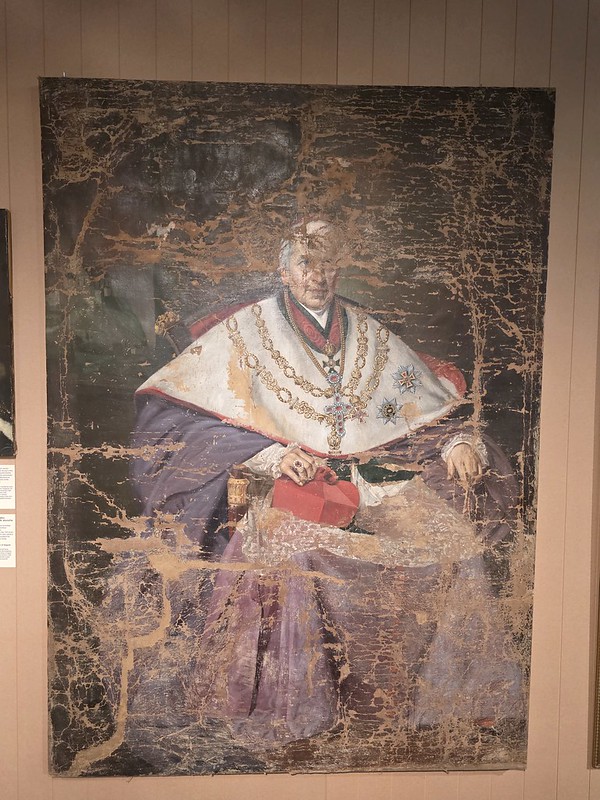
    This is Juraj Haulik, or at least about 70% of him, seen here emerging stoically from a canvas that’s spent the last century doing battle with humidity, moths and what I assume must have been a particularly enthusiastic caretaker with a mop. Once the Archbishop of Zagreb and later its very first cardinal, Haulik doesn’t look too put out by the state of his portrait, and to be honest neither am I. It has a certain battered charm, like a 19th-century version of one of those sofas that’s been in the family for decades and may or may not be partly held together by hope.

    Conservators might struggle to look at it, but I rather like it as it is. There’s authenticity in all those cracks and scars and you could restore it but then you’d lose that rather lovely sense that it’s endured several empires, two World Wars and possibly a badly controlled climate system in a dusty museum basement at some stage.

    Juraj Haulik was born in what’s now Slovakia in 1788, he eventually rose through the clerical ranks to become Archbishop of Zagreb, a position which, in true Austro-Hungarian fashion, came with elaborate robes and a sceptre of some sort. He was known for supporting Croatian national identity at a time when it wasn’t exactly fashionable in Vienna, which probably earned him a few awkward silences at imperial dinners.

    The panel by the painting states that it’s going to be restored and there’s a very modern urge to fix things, to polish and restore until they gleam again. But sometimes, a bit of wear and tear tells a better story than any pristine restoration could and it may not be perfect, but it’s real and authentic. I hope that the museum leaves it just as it is.

  • Bratislava – Bratislava Transport Museum (Skoda 1101 Tudor)

    Bratislava – Bratislava Transport Museum (Skoda 1101 Tudor)

    20250626_105215

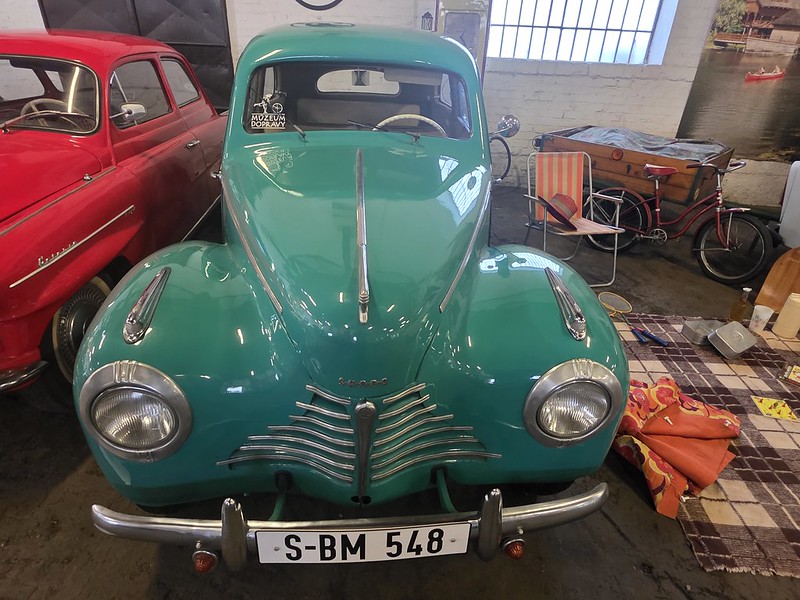
    This lovely aquatic number is a Škoda 1101 Tudor, a name which sounds like it might have been dreamt up in a PR meeting held over a warm and annoying Pilsner and some leftover goulash. Produced in post-war Czechoslovakia starting in 1946, the 1101 Tudor was Škoda’s way of saying “we’re back,” albeit in a very gentle, unthreatening tone and possibly with the odd backfire along the way. I accept that I don’t know much about cars and also that British manufacturers were struggling as well, but it does look a little basic whilst also I suppose being creative.

    The colour is certainly striking, a sort of minty-fresh toothpaste green that suggests someone wanted to make a statement, but had access to only three pigments. It has that glorious post-war optimism baked into the paintwork, the sort that says “things may be bleak, but by God we’ll build a car with a front grille like a Venetian blind.” I suppose communism had to instil some positivity somehow.

    The Škoda 1101 was powered by a 1.1-litre engine, and with my limited car knowledge this is about as powerful as a strong breeze. The name ‘Tudor’ genuinely comes from ‘two-door’, which is a stretch even by motoring standards and I thought for a while that it was some sort of urban myth. Inside, the car looked reassuringly basic, there’s a large wheel, a gear stick you could stir paint with, and seats that offer the comfort of a bus stop bench. This was a car for people who had somewhere to be and didn’t mind getting there eventually, but there’s a place for not being excessive or overly decadent. And that’s probably enough of my thoughts about communism era cars for today at least….

  • Bratislava – Bratislava Transport Museum (Trabant 601)

    Bratislava – Bratislava Transport Museum (Trabant 601)

    20250626_105242

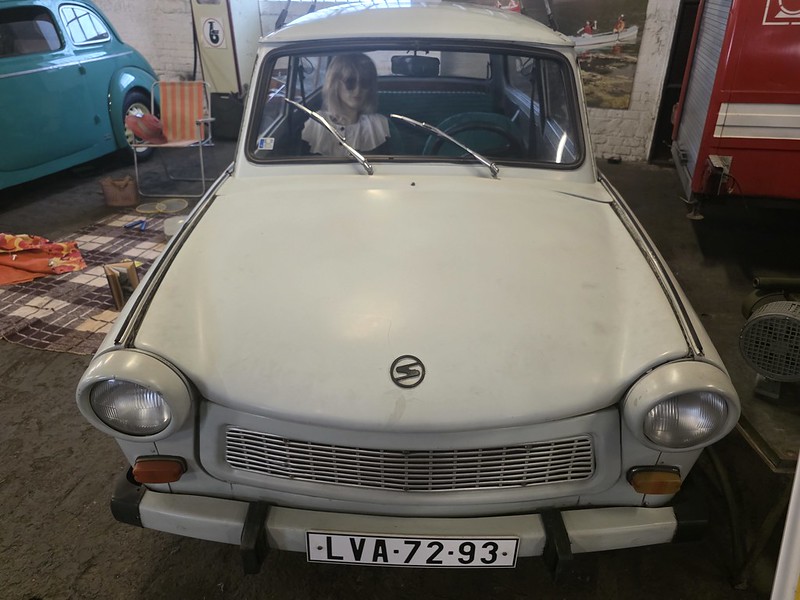
    This is the sort of car that really makes you feel like you’ve gone back in time, not to a glamorous era of chrome fins and leather driving gloves, but to something a bit more, well, functionally beige although at least it came in a choice of colours. It’s the Trabant 601, East Germany’s answer to the question no one in the West was asking, namely “How can we make a car that sounds like a chainsaw and smells like a lawnmower?” And yet, it is iconic.

    This particular example, now safely imprisoned in the transport museum, would have rolled off the production line sometime between 1963 and 1991 (the last one fell off the production line on 30 April 1991) which doesn’t narrow things down much, since the design changed about as often as the Politburo. In an admirable commitment to aesthetic consistency, they decided not to modernise it at all over its 28 year production run. But why update perfection and all that?

    The body isn’t metal, because that would be far too decadent. Instead, it’s made of Duroplast, which is what happens when you take cotton waste and add a lot of hope. To give them credit, it’s very eco-conscious as if you leave it out in the rain long enough, it may compost. The doors feel like they were designed by someone whose previous job was building filing cabinets, and there’s every chance they were. The logo on the front – a sort of stylised “S” stands for Sachsenring, the manufacturer. You can still buy Trabant badges on eBay for about £4, which feels both entirely fair and somehow excessive.

    Inside, someone’s posed a mannequin behind the wheel, looking like she’s about to pop to the Intershop (and I am referring to the East German shops during the communist period, this isn’t a new business venture for Richard) for a packet of tea and some state-authorised toothpaste. The whole set-up includes picnic rugs, plastic chairs and a general feeling of socialist melancholy. There’s something quite charming about how defiantly unglamorous it all is. It’s not retro chic, it’s just well, rather retro. And not even on purpose.

    It’s easy to mock the Trabant, and I merrily have, but there’s also something genuinely admirable about it. People waited years to get one of these. It was the people’s car, assuming the people didn’t mind an annual cloud of oil-smoke and the occasional need to push-start it on a cold morning. It’s also probably the only car that improved in value after reunification purely because it became an ironic statement. So yes, it’s slow, noisy, smelly, and makes a Sinclair C5 look like a Bugatti. But it’s also got character, which is more than can be said for most modern hatchbacks. I’d never drive one, obviously, but I’m rather glad it exists.

  • Bratislava – Bratislava Transport Museum (Ticket Machine from Late 1990s)

    Bratislava – Bratislava Transport Museum (Ticket Machine from Late 1990s)

    20250626_105726

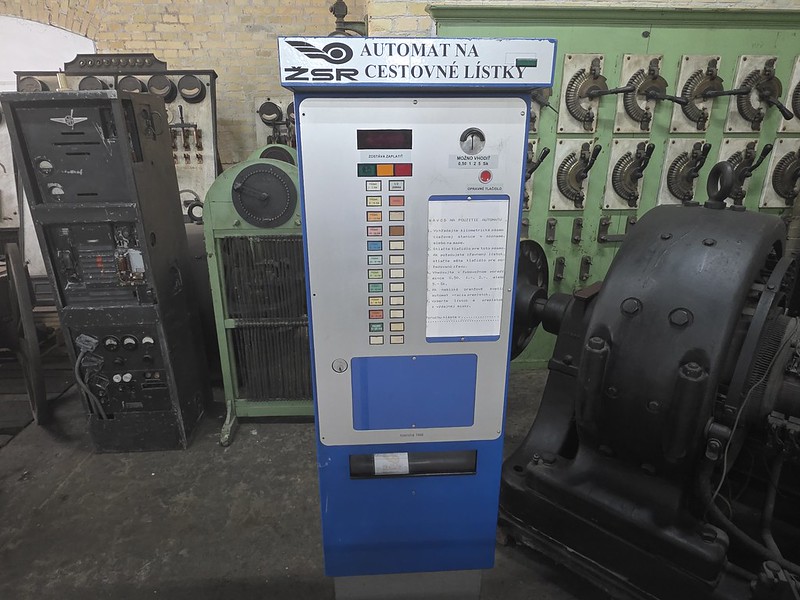
    It’s an old railway ticket machine at the Bratislava Transport Museum and I can’t imagine that this has what might be called mass appeal, but I rather liked it. It was rolled out by ZSR (Železnice Slovenskej republiky) who are the national rail network and I didn’t see a date on it, but it’s from either the late 1990s or the early 2000s. It would have spat out a thermally printed ticket and I imagine that they weren’t envisaging too many tourists given that the instructions are only in Slovakian. You put your coins in, pressed a button to say how far you were travelling and out came the ticket. The machine seems to have been made by Merona, but I can’t find out anything about them, but they were used by the public transport networks of numerous Slavic and Baltic countries.

    I like it as it’s unsung infrastructure which gets removed, but it was an important part of everyday life for many years. It all looks a bit clunky and I’m glad that technology has progressed, but it’s positive that someone has shown the initiative to ensure its preservation in a museum for people like me to look at excitedly.