As part of my random series of posts from newspapers of 200 years ago, this article appeared in the Norwich Mercury in October 1823. I can’t say that the subject matter is particularly humorous, although I can’t imagine that I will upset any of his descendants given the passage of time, but I quite liked the style of how the proceedings were written up.
“An inquiry was held at Lakenheath, on Sunday last, by Mr. Wayman, Coroner, upon Mr. William Roper, aged 78, a respectable farmer of that place, who, after eating a very hearty breakfast, and having been previously in good health, dropped down and expired immediately. Verdict – Died by the Visitation of God”.
This “Visitation of God” is really just died of natural causes, but it was a relatively common description used during the early nineteenth century. It’s an intriguing turn of phrase nonetheless…..
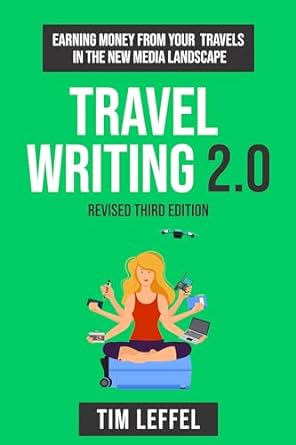
This is another in my occasional series of book review posts and they might be appearing here more as I’ve just realised you can’t leave reviews on Amazon unless you spend £30 per year on other products. I admire their attempts to make reviews genuine, but it feels a little sub-optimal as I rarely buy anything from Amazon. Anyway, this book is by the travel writer Tim Leffel and I’ve followed him via his newsletters for some years. This is a slightly elongated version of the review that I would have posted on Amazon if I had met their new requirements.
The present book aside, the best title that I’ve read on travel writing over recent years has been How to be a Travel Writer by Don George. That book perhaps needs a new version in a similar way to this update from Leffel given the ever shifting sands of the topic. The nature of travel writing has changed over recent years, but there are sections in this book on both traditional earnings as a travel writer and digital opportunities for a travel writer. Leffel notes that “the rise of one type of media does not mean the automatic fall of another” and I think that’s a solid way of thinking.
Travel writing books many years ago would focus on writing articles for magazines and newspapers, as well as how to write guidebooks. Writing guidebooks is a challenging and time-consuming occupation and the comment that “you barely have time to write full sentences before moving on to the requisite restaurant listings and museum hours” is evident from any Lonely Planet or Rough Guide book. Leffel’s comment that many young travellers use their phone to source material and don’t go near guidebooks seems accurate as I can’t recall the last time I saw anyone in Europe or the United States under the age of around 40 looking at them. The market will continue to evolve, certainly the way in which travellers source their curated information on an area.
The key element here, which I think is standard advice from all travel writers I’ve noted over the years, is to have a diverse portfolio of different income streams. Without that there will be inevitable highs and lows which make cash flow planning nigh on impossible without another way of earning money. The book is a useful exercise for those who are wondering what potential there is from entering the travel writing market, but the positive element is that there are low barriers to entry for anyone who wants to.
In terms of writing style, the author stresses the importance of always being curious, noting:
“If you are a closed-minded, dogmatic person who only gets news from one source, doesn’t have a passport, and never reads quality fiction, you are going to be a lousy travel writer.”
I don’t claim to be a travel writer, although I have done some of it in numerous different ways over the years, but I’d agree that poor writing is often apparent. The author writes that some skills are innate and some are learned, but travel writing is certainly something that needs curiosity, practice and a lot of reading. Finding a tone of voice is inevitably important and Leffel preaches the need “to be authentic” in writing.
All authors should perhaps consider getting their own blog, but this book suggests that it isn’t for everyone and it does potentially take up a lot of time. For some writers, the time and energy won’t be justified, but for others it is a useful marketing tool. I started this blog to primarily remember where I’d been, which I accept isn’t necessarily the inspirational back story some might like, but between my two loyal readers and myself I’ve been able to get numerous paid projects because of it. The pros and cons of having a blog are examined by Leffel, it’s certainly something to consider.
There’s also practical advice relating to search engine optimisation, social media and networking. There’s also advice on things to definitely not do if new to the trade, alongside the importance of having a good work ethic. Most importantly, Leffel notes that it’s important to develop a thick skin for the inevitable rejections that will come. The advice on travelling in a frugal manner is also wise, I’ve managed to do that for years and I’ve always thought that this makes travel more authentic rather than taking away from the experience. When British Airways paid for me to travel in First and Club World I always had very different stories to tell than when in World Traveller, with most of my interactions during my five weeks in the United States last year being on public transport. There’s nearly always an angle, but the engagement with others plays a big part in telling any story.
The author addresses very early on in the book the matter of income potential. Realism is important here, as most travel writers don’t earn that much from their profession, although there are some who do very well indeed. But, this is partly because some are hobbyists or just writing part-time, writing because they enjoy travelling and find that it makes their trips more affordable. For those who want to get into travel writing, this is certainly a good first book to read, particularly in conjunction with Don George’s book.
I’m aware that this riveting blog is creaking along at a very slow pace, both the front-end and the back-end of the site. Unfortunately, this is sub-optimal (not least as it stops Google Adsense helping fund my pub visits which are so important to the local community) for numerous reasons and I don’t have a timescale for any fix either. Hopefully it won’t be too long coming, then I can return to continue writing my irrelevant piffle.
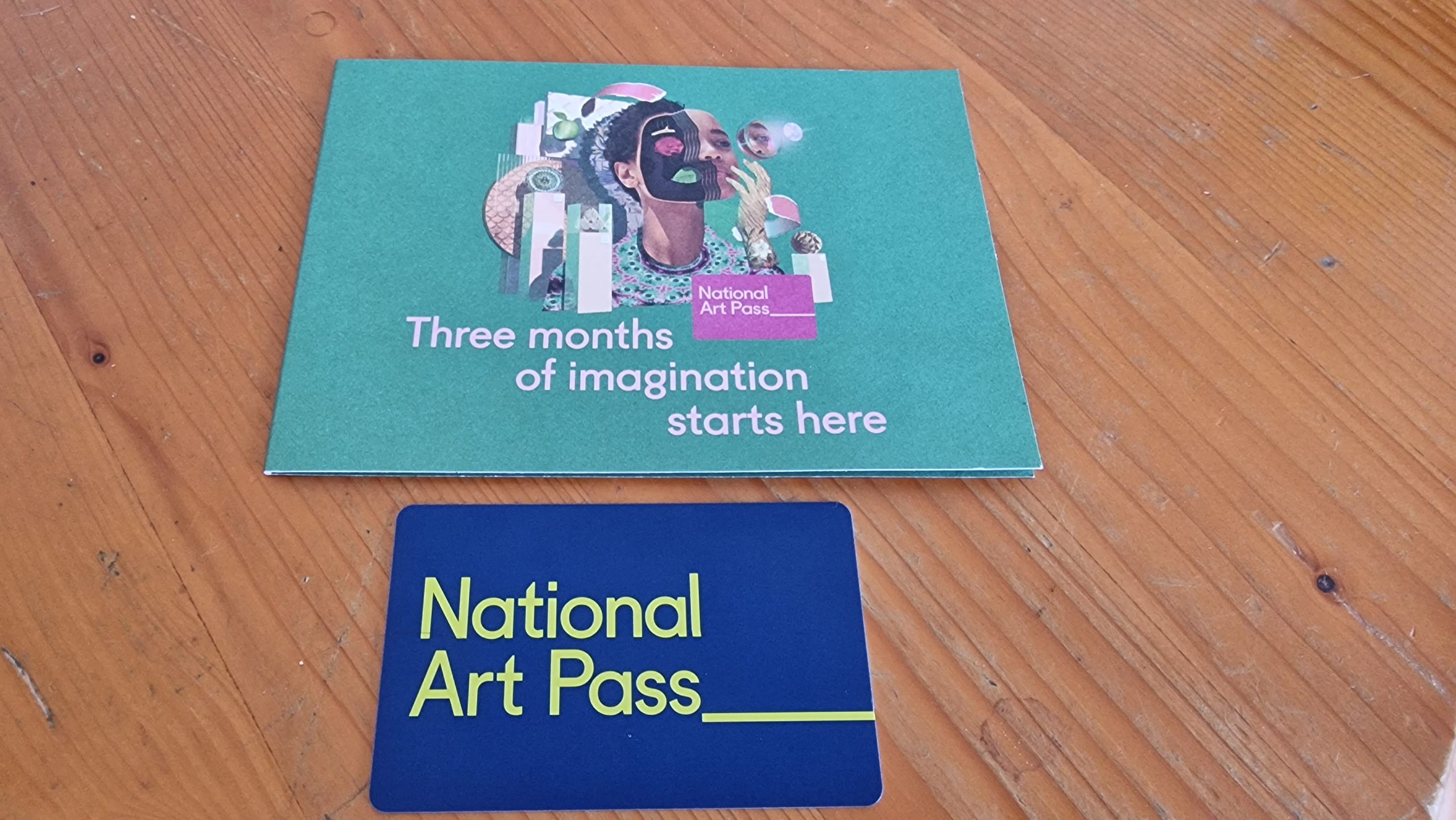
I’ve been waiting for the Art Fund to offer this £15 three month trial membership for a while, as it seems rather good value. It allows free entry into a large number of museums and historic properties, and discounts to many others. To start off with, I’m going to use mine to visit museums in Norfolk which I haven’t visited for some time, including Norwich Castle which I haven’t been to for many years. It’s usual £75 per year for a membership, which seems a bit decadent to me, so I’ll likely just make do with having this one for three months.
The deal is available until the end of June 2023 at https://www.artfund.org/national-art-pass. My card arrived within two working days of buying the pass and there’s no digital version, you have to wait for the card to arrive before it can be used.
Expect a heap of posts about museums now, in addition to all of the usual pub posts…..
I feel that this is worthy of a brief mention as it’s the first time it’s happened to me and likely the last time that it’ll ever happen. Guessing Wordle in one go, using a word that I routinely use as my opening guess. What a time to be alive and all that….. It also means that I’ll never use the word ‘GUARD’ again on Wordle on the grounds that it’s unlikely to come up again. My friend Madeleine, who I update regularly on Wordle matters, had a special cup of tea to celebrate this great achievement (or stroke of luck, whichever you prefer).
I’m sorry, due to a server upgrade the posts from the last few months aren’t showing at the moment, just ones from pre-February 2022. The missing posts will be back soon, sorry for any confusion! The missing pages can be seen at archive.org……
I’m now packed and waiting for Liam who has kindly offered (or been commandeered, pick your favourite) to take me to Heathrow just after midnight. To save the £5 drop-off fee we’ll have to work out the free long-stay parking option at the airport, that’ll be an interesting challenge in the middle of the night. I could have done with more sleep as well, but we can’t have everything.
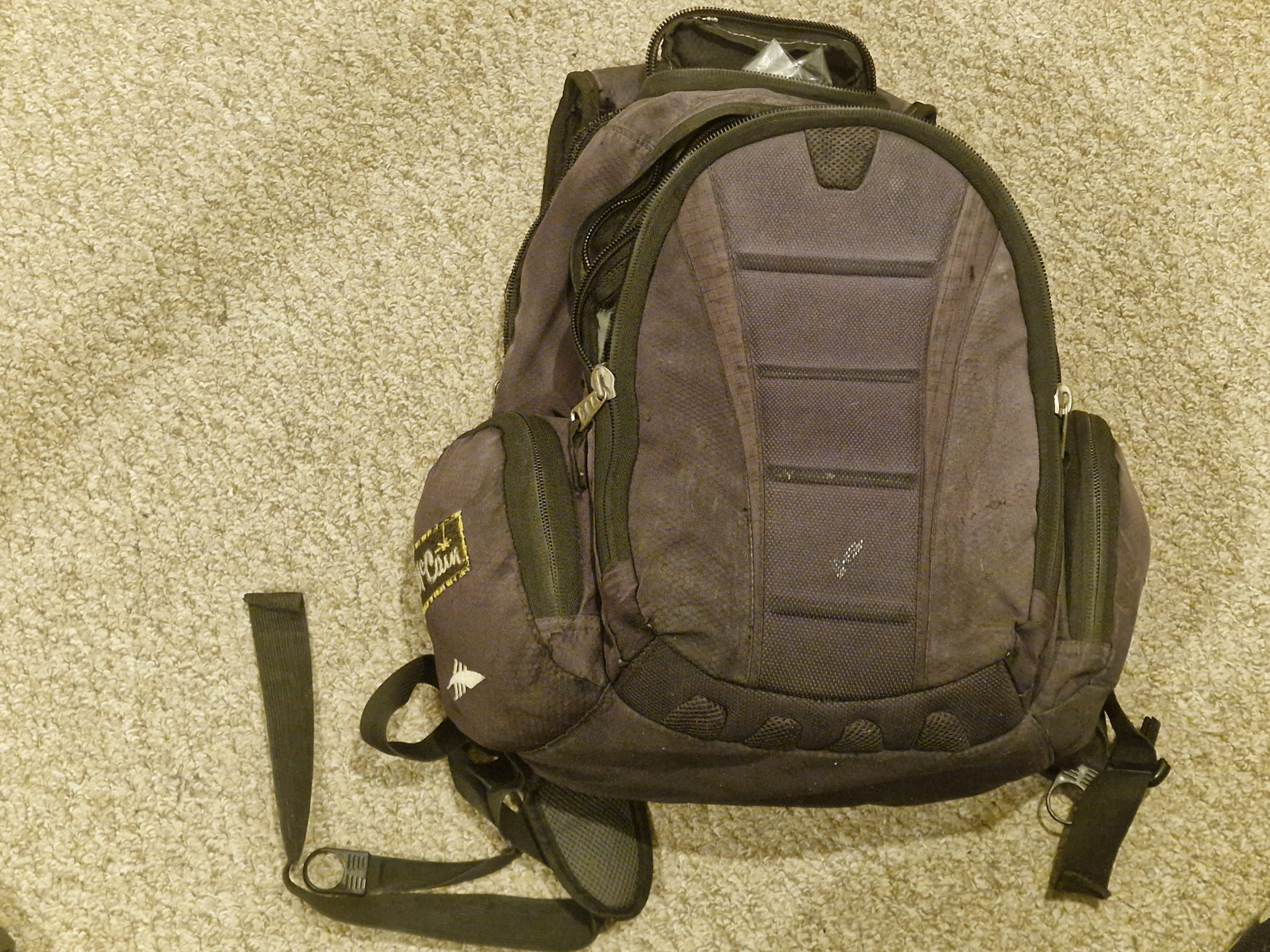
So that we start on random drivel, I felt I should have one post about my McCain backpack, because at some point it’ll be nicked, accidentally destroyed or something else I might not like. I’ve worked out that it has been to around 30 countries, over 30 US states and I think nearly every county in the UK. It’s also made an appearance on just about every long-distance walk that I’ve done, so it’s a very well travelled bag. Bits keep falling off it, the zip is glued shut as it got broken (there’s another way in obviously) and it’ll probably fall apart in the next few years. But for the moment, I’m sticking with it. Although it regularly gets washed, it looks a bloody mess, but who wants decadent matching luggage anyway?
Bag aside, this will be an interesting trip, which goes via Dublin, as parts of it have already been troublesome in terms of needing to reschedule things (not least Amtrak who have amended, cancelled and refunded numerous trips I had booked) and half of it isn’t planned now. There are also rather cheaper Airbnbs making an appearance due to the horrendous pound and dollar exchange rate, meaning ever cost cutting measures. But over-planning is never good for the soul and I’m sure that nothing could possibly go wrong….
There might be a lot of posts over the next few weeks, I’ll do more shorter posts otherwise I’ll never catch up, so those people who subscribe to individual posts might want to switch them to the daily summary versions. Unless they like receiving exciting blog updates like the story of a bag.
I mentioned in a post a couple of days ago that I had purchased Brewdog Plus. This is likely just a one-off for me, but I know I have a few Brewdog trips coming up in the next few months, so on this occasion I decided to go for it. It costs £99, but they give you £150 of credit at Brewdog (and I’m merrily working around their bars) which means that it works for me on this occasion. They also give you a free coffee every day as well, which is a handy little extra benefit, and although I can’t imagine I’ll use it, they give you free UK delivery on Brewdog on-line orders.
It is a bit of a decadent purchase, but is of course worthwhile for anyone spending over £99 in Brewdog over the year. I know a few people (well, two) who have purchased it for that reason, but the staff at a couple of bars I’ve spoken to have said that the take-up has been patchy so far. A few bars have had no idea how to deal with it, which is a QR code that they scan, but the outlet at Newcastle was very clued up. I don’t have shares in Brewdog, but it can’t be used in conjunction with Equity Punk discounts, which seems harsh for those who have loyally backed Brewdog financially. Perhaps they’ll change that next year.
For anyone who visits Brewdog infrequently, it’s of course not going to be worth it. I don’t think I’ll pop in very often just for a coffee, but it’s a handy little extra free of charge if I was visiting anyway. And, I can’t rule out just popping into the Norwich one every now and then to get a coffee, so it’s a nice bonus to have. I like that it’s easy to see the balance on the same web-page as the QR code, so at least that’s relatively clear.
One of the slightly more jovial definitions in Grose’s book, this means “a peruke maker”, with a peruke being a wig.
As an aside, the word peruke itself has rather fallen out of usage over time. Specifically, a peruke wig is the one worn by barristers and judges in British courts, although at the time of Grose they were quite a common fashion accessory amongst the well-to-do. I’m not sure that this was a much used phrase though, it doesn’t appear to have been used often in print.
Scum
I thought it was interesting that this definition is an old one, not anything more recent, and it’s “the riff-raff, tag-rag, and bob-tail, or lowest order of people.” In its other meaning of the dirty layer on liquid, it’s from the Germanic word ‘Schaúm’, which still means ‘foam’ in English.
Sea Lawyer
It’s a long time since I’ve heard this phrase, which Grose defines as “a shark”. I know it more in the sense of it being an argumentative person, but it also means a sailor who refuses to follow an order, although that usage seems to be more from the late nineteenth century. It’s a quirky little phrase though, I like the idea of being able to refer to someone as a sea lawyer without them realising its full meaning….
Any excuse for me to roll out Ngram….. However, it shows the phrase is sadly fading out of usage.
As this print from 1742 shows, this procession had been going on for a few years and it took place just outside of the boundaries of the City of London. I can’t imagine that the Freemasons were much impressed by this little show, but there were many even at this time who treated the organisation with some disrespect.
Schism Shop
On the subject of disrespect, those involved with the dissenting religions in the eighteenth century were often vilified by those who couldn’t believe anyone couldn’t accept everything that the Church of England said was true. The dictionary definition of this is “a dissenting meeting house”, whether that be Quakers, Baptists, Congregationalists or Unitarians, to name just a few. There’s something quite charming though in the abusive term, I like to think that some of the groups would have adopted it almost as a badge of pride. Looking at newspaper archives, the dictionary was ahead of its time, as the term was relatively rare at the end of the eighteenth century, but it became much more commonly used towards the end of the nineteenth century before it died out during the early twentieth century.
Scourers
There’s a myth that there used to be a lot more respect for the law in centuries gone by, but there were plenty of robberies in churches in the nineteenth century and no shortage of anti-social behaviour in the eighteenth and nineteenth centuries. That is also evident from this dictionary definition, namely “Riotous bucks, who amuse themselves with breaking windows, beating the watch, and assaulting every person they meet: called scouring the streets”. Crime as a whole was also high in the eighteenth century, partly through increased poverty but also through a greater opportunity given the newly wealthy classes. Much as I like city living, I think the rural life was probably safer and more peaceful back in the late eighteenth century when Grose wrote his book.