Category: London

  • London – British Museum (Ship Tavern, Great Yarmouth)

    London – British Museum (Ship Tavern, Great Yarmouth)

    I usually visit the British Museum three or four times a year, something which is a little difficult to do with the current virus situation, primarily because it’s shut. However, they’ve placed hundreds of thousands of images on their web-site, so this will have to do me for the moment. The images can be used non-commercially, as long as the British Museum is credited. So, this is their credit.

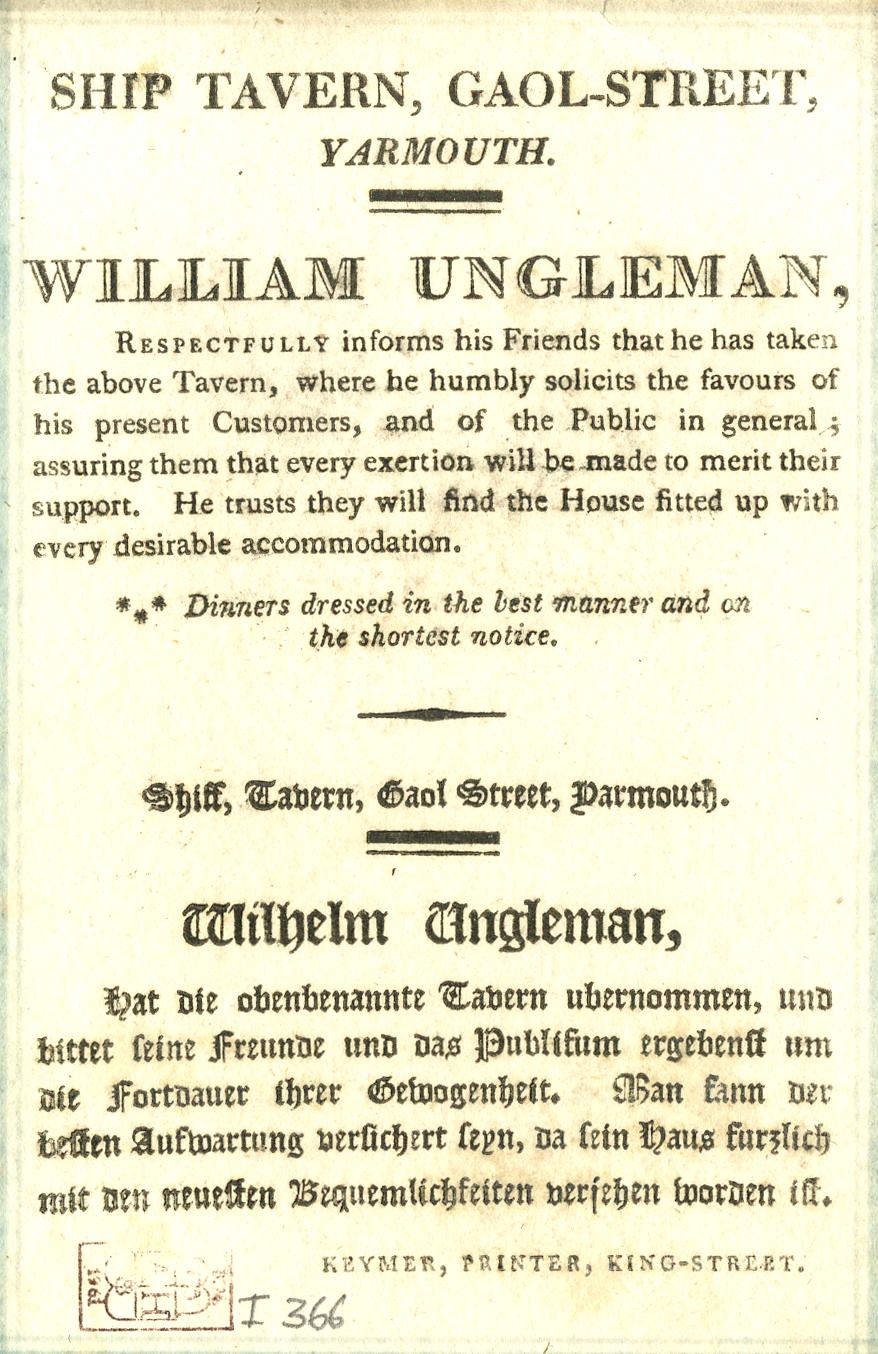
    I’m not sure that there’s much advertising from pubs at the turn of the nineteenth century surviving, especially not in two languages. But this advertising card in English and German is now in the collection of the British Museum and they acquired it in 1960 from the estate of Sir Ambrose Heal. Heal was a collector of trade cards, and had a large number in his collection, as well being the chairman of Heal’s on Tottenham Court Road, which is still trading.

    The Ship Tavern is though sadly no longer trading, it lasted from the 1760s until 2010, being located next to Row 84 in the town. But there’s something quite captivating about how multi-national the docks and port of Great Yarmouth once were. Indeed, in 1797 this pub had welcomed (I use welcomed slightly loosely here….) Dutch naval prisoners from the Battle of Camperdown. As for William Ungleman who produced these trade cards, he ran the pub between September 1809 and 1819, but I have no idea where he went after that.

  • London – British Museum (Bishopgate Bridge by John Thirtle)

    London – British Museum (Bishopgate Bridge by John Thirtle)

    I usually visit the British Museum three or four times a year, something which is a little difficult to do with the current virus situation, primarily because it’s shut. However, they’ve placed hundreds of thousands of images on their web-site, so this will have to do me for the moment. The images can be used non-commercially, as long as the British Museum is credited. So, this is their credit.

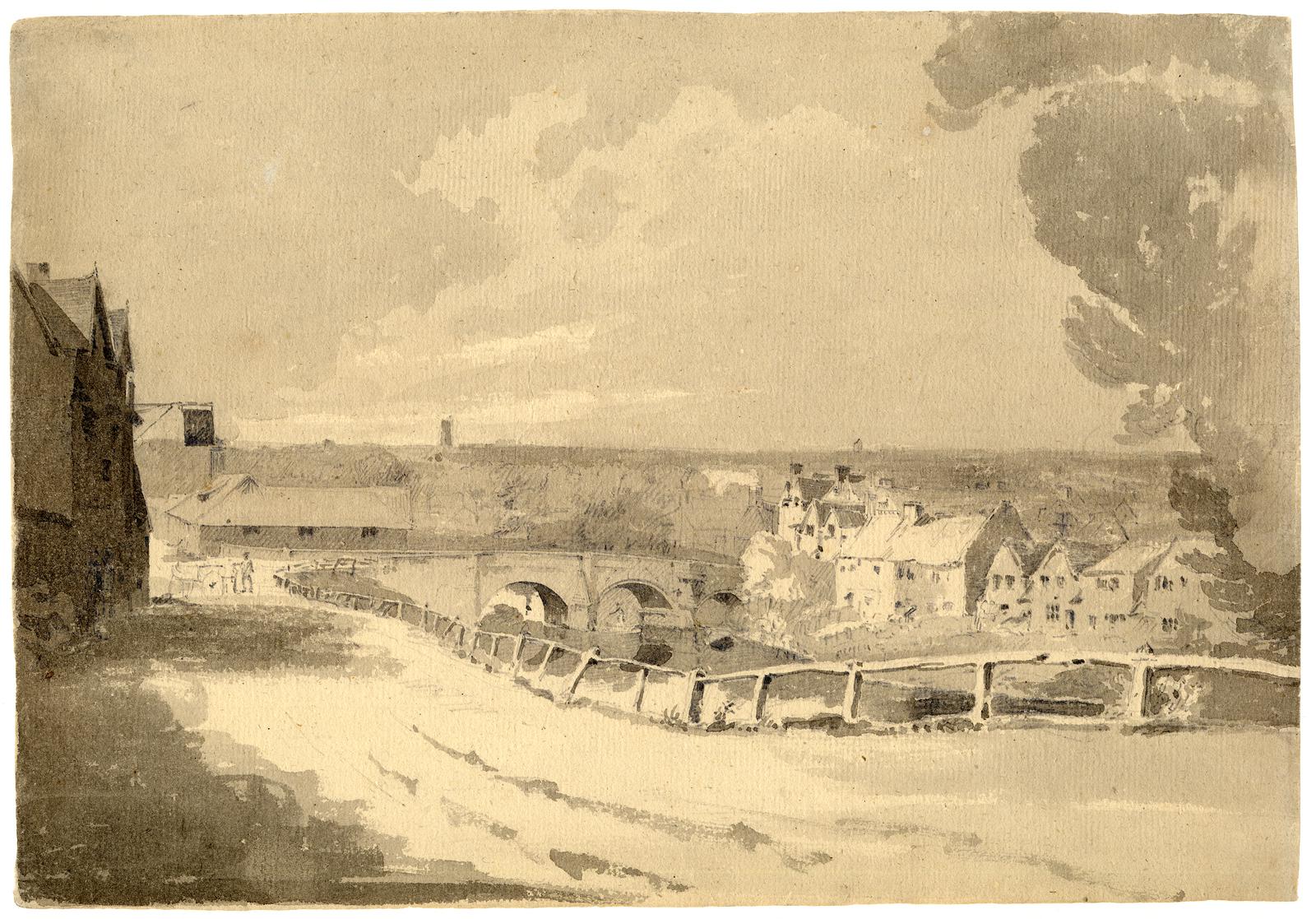
    This drawing was made by John Thirtle, likely at the very end of the eighteenth century or the early part of the nineteenth century. The museum purchased the drawing from Andrew Wyld in 1977, a dealer in fine art. Like nearly everything I seem to look up, this artwork isn’t on public display and they don’t seem to have used it in any exhibitions or the like. It’s a pen and grey ink drawing with a grey wash, showing Bishopgate Bridge. Thirtle is buried in the Rosary Cemetery, a reminder to myself that I should go and have another investigation there as I haven’t visited in a while.

    I think this photo was taken from around the same place as the above drawing was made, I was slightly hampered by three things. One were bushes, one was a big tree and the other was a blasted fence where I wanted to stand to take the photo. I didn’t fancy having any little incidents by climbing over that small fence and falling into the River Wensum, so this is the best that I could safely get.

  • London – British Museum (Great Yarmouth Fisher Girl by John Sell Cotman)

    London – British Museum (Great Yarmouth Fisher Girl by John Sell Cotman)

    I usually visit the British Museum three or four times a year, something which is a little difficult to do with the current virus situation, primarily because it’s shut. However, they’ve placed hundreds of thousands of images on their web-site, so this will have to do me for the moment. The images can be used non-commercially, as long as the British Museum is credited. So, this is their credit.

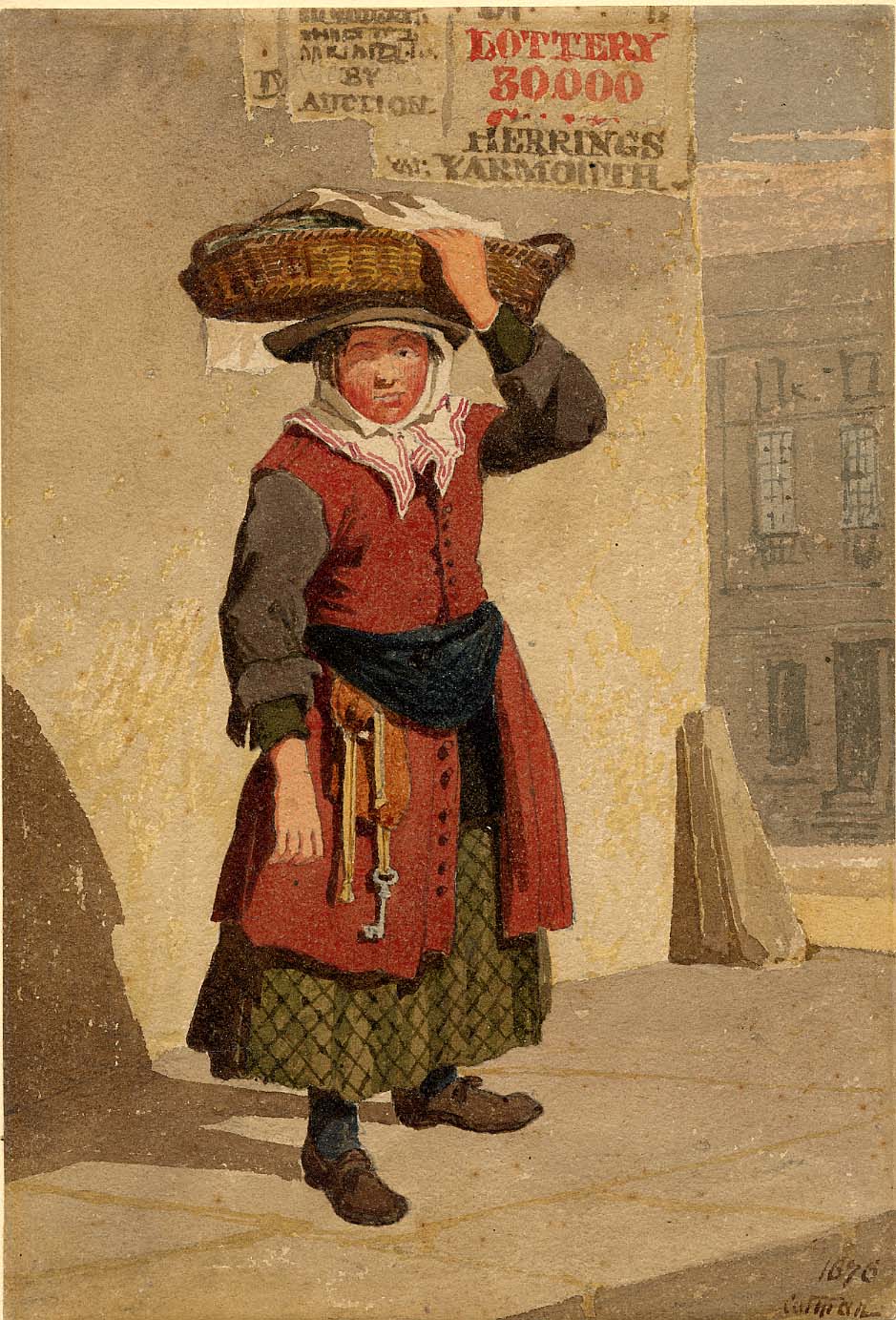
    A watercolour of a fishwife in Great Yarmouth by John Sell Cotman (1782-1842) which was acquired by the British Museum in 1902 from James Reeve. They don’t know when it was painted, but Cotman lived in Great Yarmouth between 1812 and 1823, so it was probably then. There’s something quite intriguing about this one-eyed lady, standing in front of a lottery sign, with her key at her waist and her fish on her head. I’m not sure that I can think of another painting which is more evocative of Great Yarmouth at that time. I’m equally unsure what that says about Great Yarmouth or me, but there we go….

  • London – British Museum (1787 Print of Norwich Cathedral by John Sanders)

    London – British Museum (1787 Print of Norwich Cathedral by John Sanders)

    I usually visit the British Museum three or four times a year, something which is a little difficult to do with the current virus situation, primarily because it’s shut. However, they’ve placed hundreds of thousands of images on their web-site, so this will have to do me for the moment. The images can be used non-commercially, as long as the British Museum is credited. So, this is their credit.

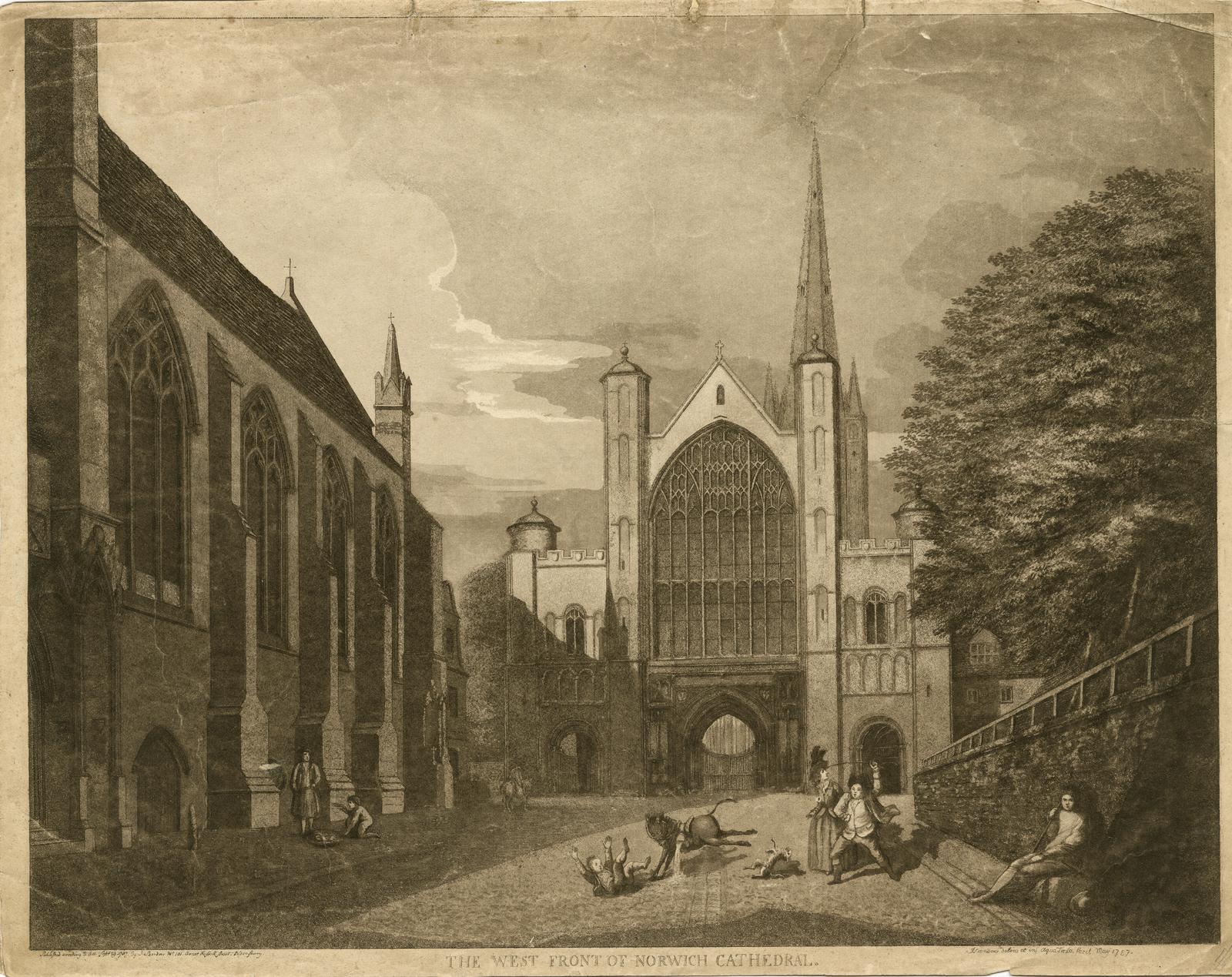
    This plate is from 1787 and has the beautiful Norwich Cathedral at the rear, whilst a donkey chucks a boy off its back, kicks a dog and then gets whipped by its owner. Eventful to say the least…. The plate isn’t on display and was acquired by the British Museum in 1873 from George Mason, who was a bookseller.

    I’m puzzled what that wall to the right is, there’s no obvious building on any overhead map from the period. It is though the site of whether Norwich Cathedral’s bell tower once stood, but this was torn down in the late sixteenth century and the bells flogged off. The building on the left is Norwich School’s chapel, the chantry chapel and college of St John the Evangelist which was built in 1316.

    And a photo from around the same spot today. Unfortunately, no donkeys were visible to liven proceedings up.

  • London – British Museum (Cicely Ormes)

    London – British Museum (Cicely Ormes)

    I usually visit the British Museum three or four times a year, something which is a little difficult to do with the current virus situation, primarily because it’s shut. However, they’ve placed hundreds of thousands of images on their web-site, so this will have to do me for the moment. The images can be used non-commercially, as long as the British Museum is credited. So, this is their credit.

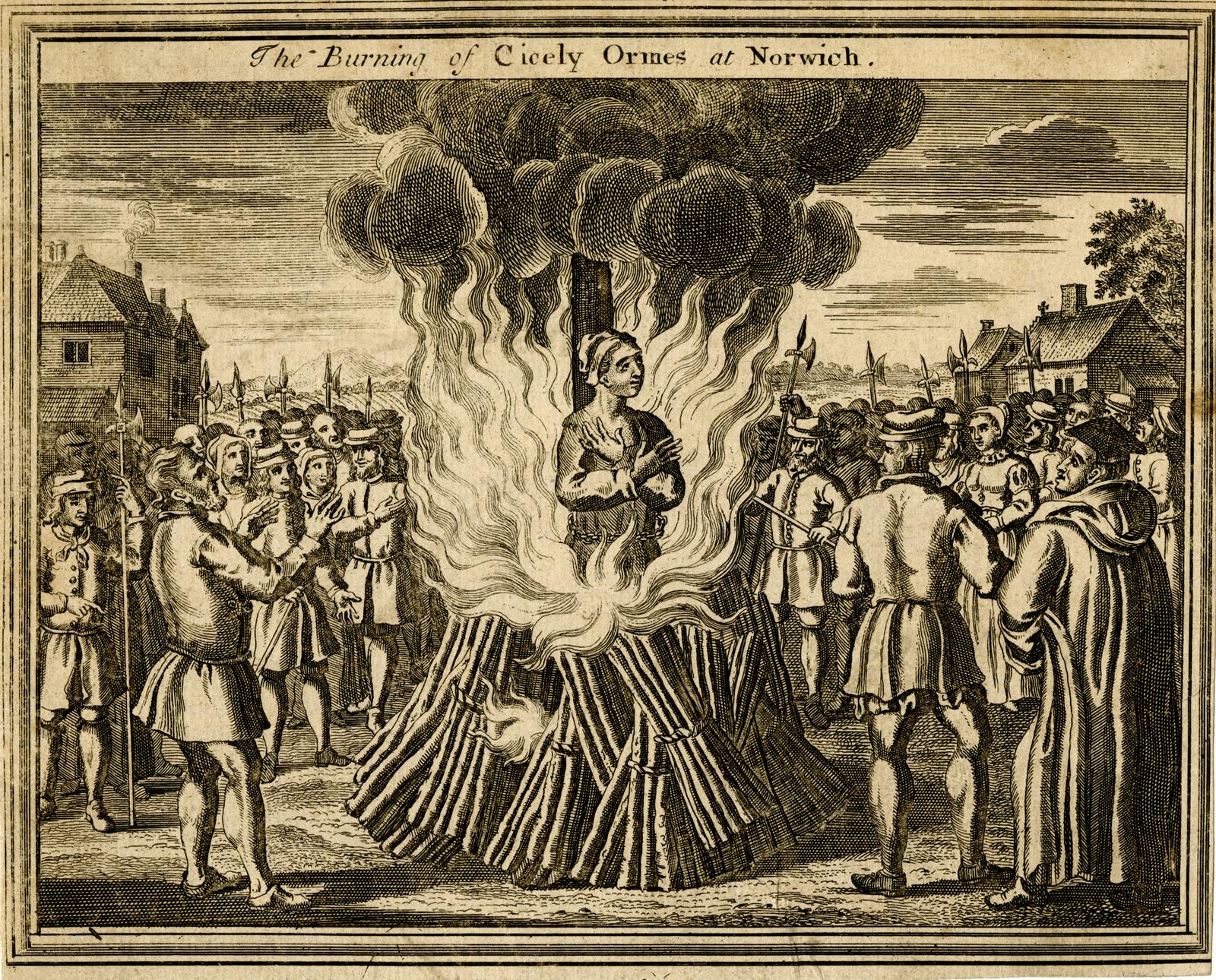
    This print was made by Thomas Bowles II in the mid-eighteenth century and it was donated to the British Museum in 1901 by Sir Sidney Colvin. The image tells the story of Cicely Ormes, a brave woman from Norwich who was burned at the stake on 23 September 1557.

    Ormes, who was born in East Dereham, lived in the St. Lawrence parish of the city and when she was aged 21, she was pressured by a Catholic magistrate to denounce her Protestant faith. She did, but she regretted this, and so she recanted. Ormes, the wife of a worsted weaver, was then arrested a few months later and ordered to shut up about her refusal to accept the Catholic faith. She said no, so the magistrate ordered that she be burned to death.

    At the stake she stood firm and said:

    “Welcome thou cross of Christ” and “my soul doth magnify the Lord, and my spirit rejoiceth in God my Saviour”.

    It was common for people to change their religion at this time, indeed, it was pretty essential as the Monarchs kept faffing about with their decision on what the national religion should be. But, they were allowed to just change their minds to suit the situation, which most people did for a quiet life. Cicely Ormes was clearly braver than that, she didn’t want to sacrifice her beliefs and so she died at the age of 22. She was reported to feel no pain as she died, and she was clearly very courageous, and I’m not sure that Norwich has really recognised that bravery.

  • London – British Museum (1500s Map of Nordovicum)

    London – British Museum (1500s Map of Nordovicum)

    I usually visit the British Museum three or four times a year, something which is a little difficult to do with the current virus situation, primarily because it’s shut. However, they’ve placed hundreds of thousands of images on their web-site, so this will have to do me for the moment. The images can be used non-commercially, as long as the British Museum is credited. So, this is their credit.

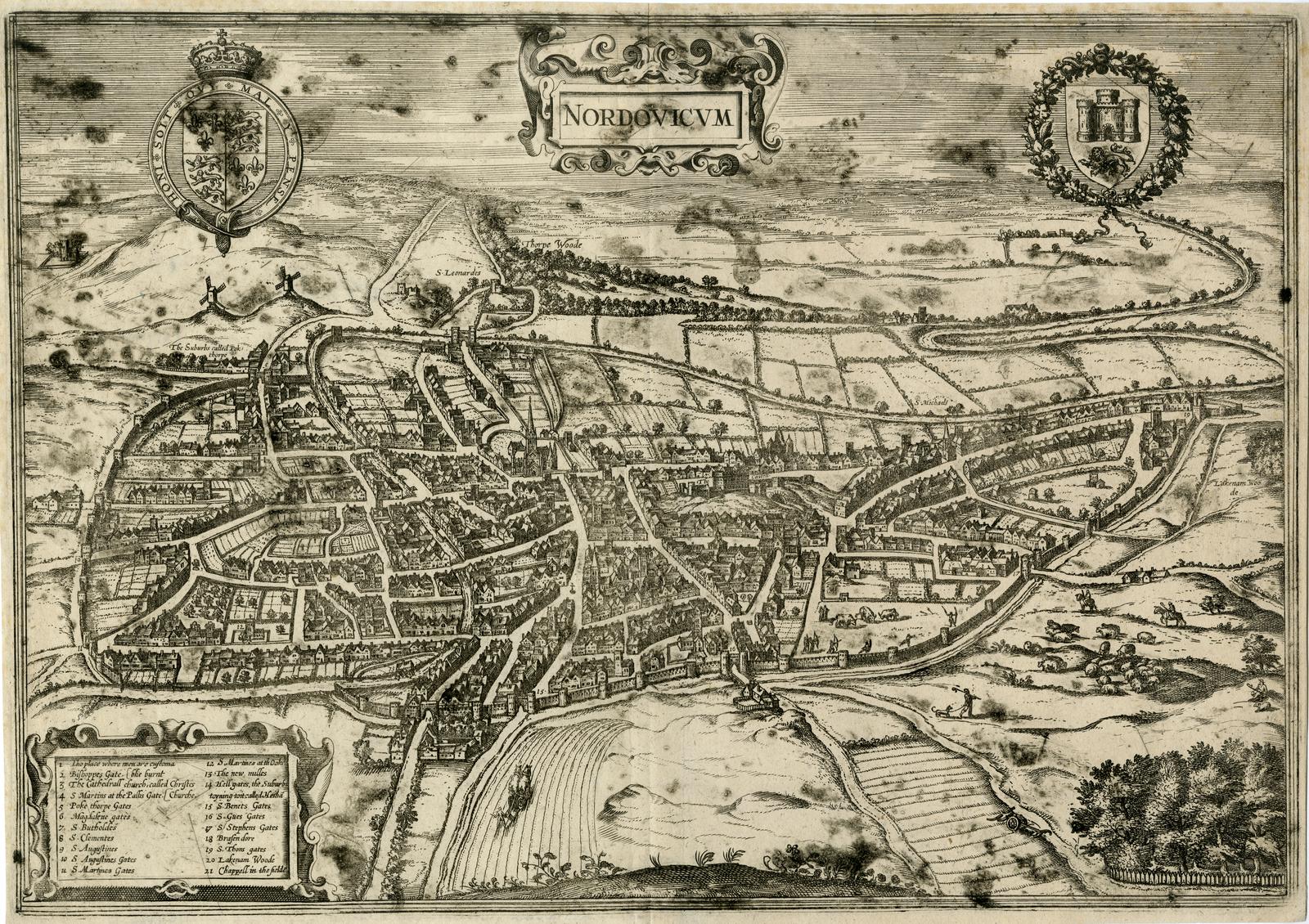
    Clicking on the above image will bring up a larger version. It’s one of the better known plans of Norwich (or Nordovicum), issued at some point after 1581. It’s been in the British Museum collections for so long they don’t know when they got it, but it was before 1811.

    Anyway, it’s gorgeous. At the top is Bishopgate Bridge, when it still had its gate, and Cow Tower is visible to the left of that. To the bottom, at number 14, is “Hell Gates”, which is more usually called Heigham Gate, but I prefer the version on this plan of the city. And near number 17, which is St. Stephen’s Gate, is near where the St. Stephen’s outlet of Greggs is now located.

  • London – British Museum (Ephesus Takeaway Menu)

    London – British Museum (Ephesus Takeaway Menu)

    I usually visit the British Museum three or four times a year, something which is a little difficult to do with the current virus situation, primarily because it’s shut. However, they’ve placed hundreds of thousands of images on their web-site, so this will have to do me for the moment. The images can be used non-commercially, as long as the British Museum is credited. So, this is their credit.

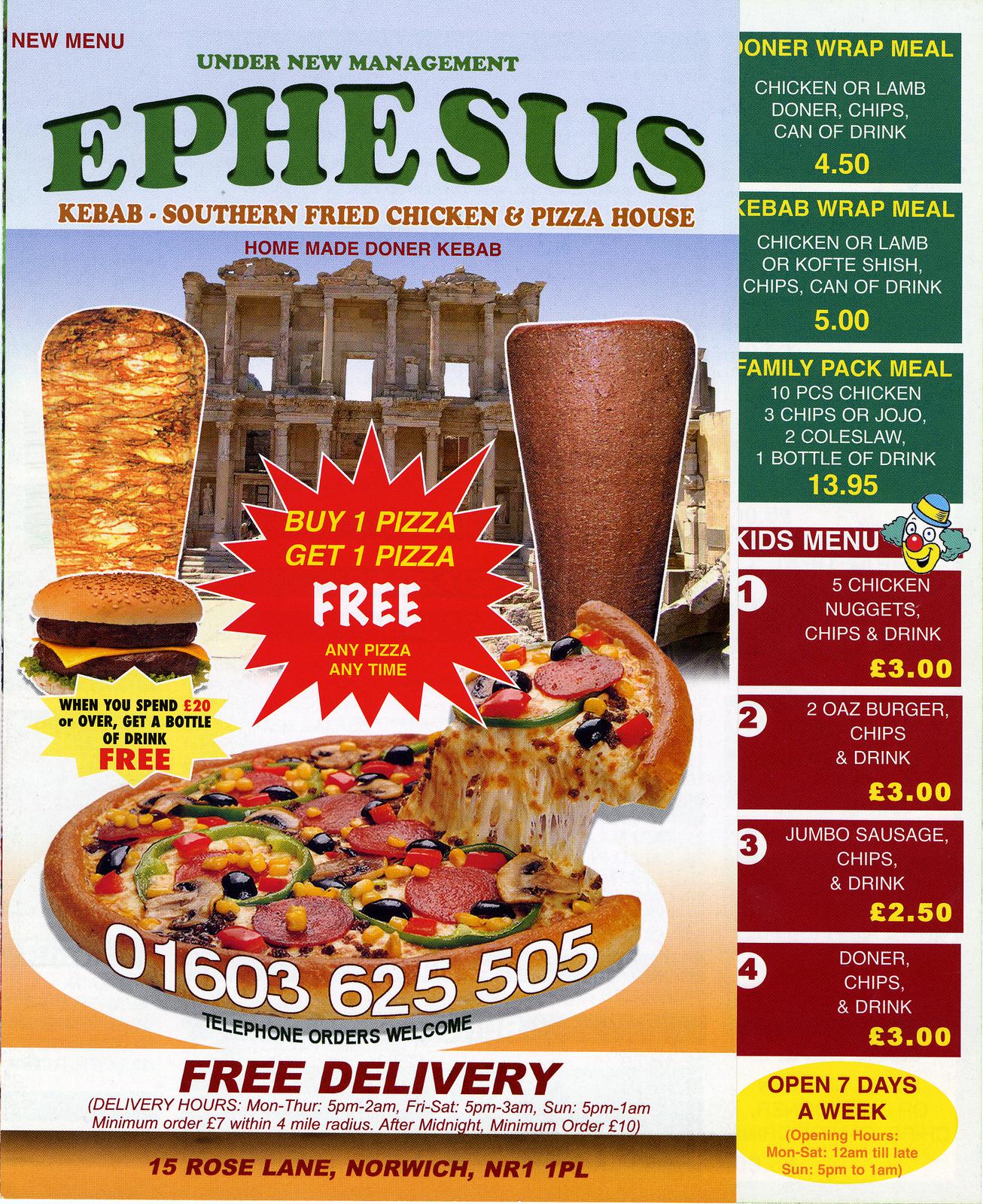
    This is perhaps one of the more surprising items in the collections of the British Museum, a takeaway menu from Ephesus on Rose Lane in Norwich. It was given to the museum by St John Simpson, who is a curator specialising in items from the Middle East. Perhaps I’ll send the British Museum a nice JD Wetherspoon menu for their collection. Unsurprisingly, the museum hasn’t put this on display.

  • London – British Museum (East of England Bank)

    London – British Museum (East of England Bank)

    I usually visit the British Museum three or four times a year, something which is a little difficult to do with the current virus situation, primarily because it’s shut. However, they’ve placed hundreds of thousands of images on their web-site, so this will have to do me for the moment. The images can be used non-commercially, as long as the British Museum is credited. So, this is their credit.

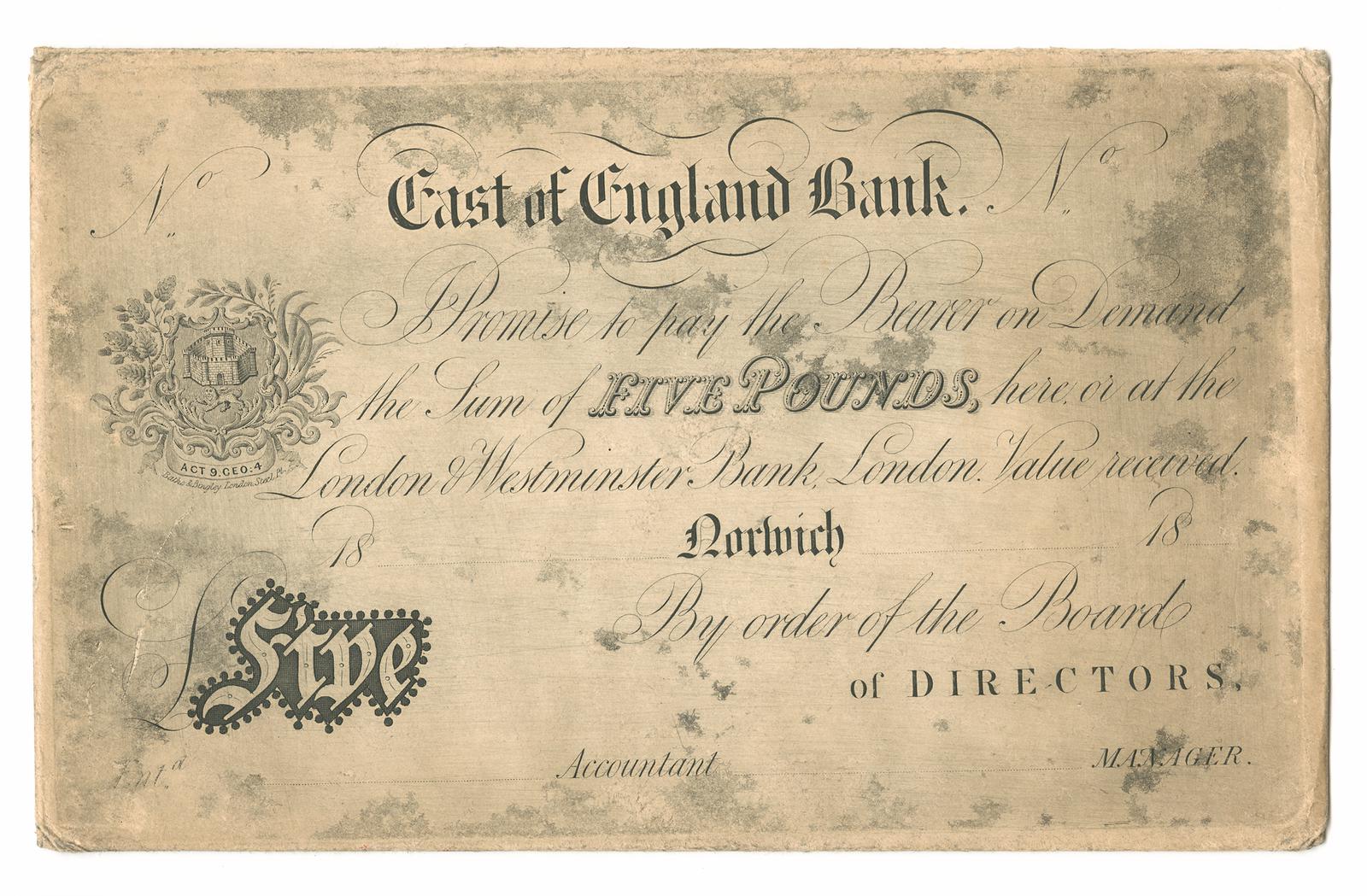
    The technical description for this is an “original envelope for banknote printing plate” which has the Norwich coat of arms on it. Banks in the nineteenth century seemed to be taken over as fast as sausage rolls sell in Greggs, so the whole ownership thing gets complex. I like what this represents, a period of banking revolution in the mid-nineteenth century, when banks were truly local. Although they also kept going bust which wasn’t ideal.

    The East of England Bank had already taken over numerous banks, such as the Suffolk Banking Company and the Stable Bank, which I think is a very sensible name for a financial institution. The London & Westminster Bank mentioned on the note was founded in 1834 and later merged with the National Provincial and then that merged with the Westminster Bank, to become Natwest.

    Barclays Bank (and I have no idea what involvement they have with all of this and why they hold some of the archives) note that:

    “The East of England Bank was established in 1836 with paid up capital of £100,000 and note circulation of £25,000. The bank expanded rapidly, opening 33 branches across Norfolk and Suffolk, but got into difficulty and suspended payment on 20 July 1864. The six directors were a farmer, a retired draper, a clergyman, a surgeon, a retired commercial traveller and a Yarmouth wharfinger. The solicitor’s report said, ‘The Books and Accounts of the Bank are admirably kept and if the management had been as good as the book keeping the . . . state of affairs . . . would not have arrived.’ The company was reconstructed as the Provincial Banking Corporation, which bought the premises, other assets and accounts of the East of England for £11,625 9s. 6d.”

    The note, or envelope or whatever it’s called, was issued between 1836 and 1864 and like nearly everything seems to be that I’ve seen, it’s not on display. It was on loan from the Chartered Institute of Bankers between 1987 and 2009, when the British Museum acquired it for themselves.

  • London – British Museum (Norwich Triumphal Arch etching by Paul Fourdrinier)

    London – British Museum (Norwich Triumphal Arch etching by Paul Fourdrinier)

    I usually visit the British Museum three or four times a year, something which is a little difficult to do with the current virus situation, primarily because it’s shut. However, they’ve placed hundreds of thousands of images on their web-site, so this will have to do me for the moment. The images can be used non-commercially, as long as the British Museum is credited. So, this is their credit.

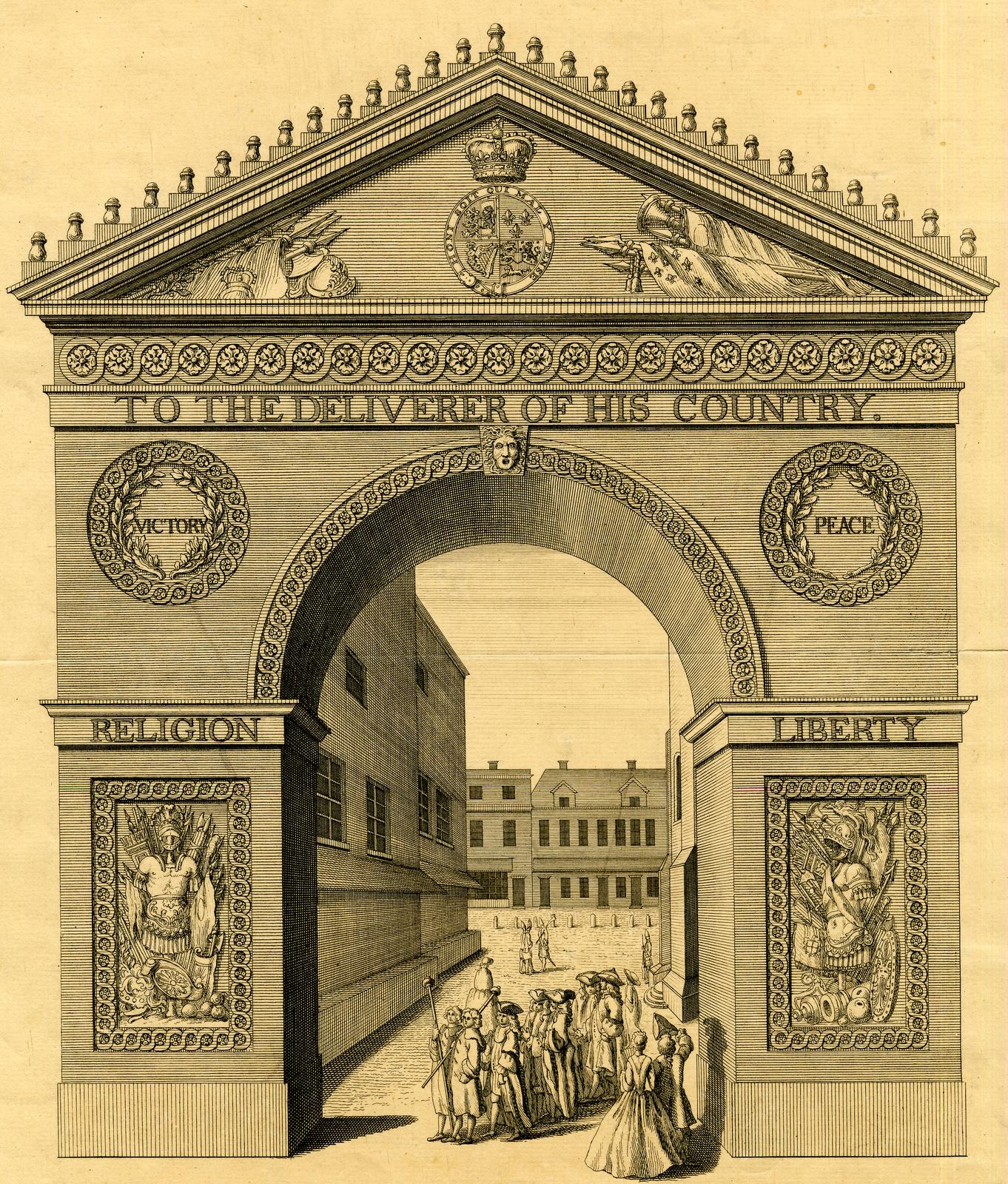
    When I was in Bucharest a few weeks ago I was quite impressed by the number of triumphal arches they had, which marked victory in some conflict or other. I wondered briefly, as to be honest I wonder about a lot of bloody rubbish, why no enterprising man or woman had bunged something up in Norwich. They were often only temporary structures, so a bit of wood, bit of decoration and there’s a lovely arch.

    I digress. Again. So, this plate above is etched by Paul Fourdrinier, an engraver and etcher who lived between 1698 and 1758, who kept himself busy by doing the illustrations for books, as well as being a portrait painter. The British Museum noted that this scene is in Norwich and being naturally sceptical, I did wonder whether that was right. But, of course, the curators were right and I found a similar etching which does have Norwich written on it.

    The arch was erected in honour of the Duke of Cumberland in 1746 and it had the phrase “to the deliverer of his country”. My rickety knowledge of history means this is the Battle of Culloden, where the Duke of Cumberland put down the Jacobite Rising. So, the next question is where on earth in Norwich was this arch put up? After reading through old newspapers, it seems there were triumphal arches placed in the city centre on a regular basis between around 1700 to 1850, usually at the marketplace. And then, I noted on Wikipedia, there’s a reference to the exact spot being by the Guildhall. I still can’t pin down exactly where the buildings in the above etching are, but I can now sleep at night with my new knowledge of triumphal arches in Norwich. I really need to get out more.

    And you can’t see the etching at the British Museum, it’s not on display.

  • London – British Museum (Norwich Cathedral by John Sell Cotman)

    London – British Museum (Norwich Cathedral by John Sell Cotman)

    I usually visit the British Museum three or four times a year, something which is a little difficult to do with the current virus situation, primarily because it’s shut. However, they’ve placed hundreds of thousands of images on their web-site, so this will have to do me for the moment. The images can be used non-commercially, as long as the British Museum is credited. So, this is their credit.

    The British Museum purchased this sketch by John Sell Cotman from the collector James Reeve (1833-1920) in 1902 although it’s not currently on display. Reeve had purchased it in 1862 when a collection of Cotman works were sold at the Bazaar Rooms in Norwich.

    That’s a photo from pretty much the same spot today. The British Museum refer to this as a drawing of Norwich Castle, although I’m not convinced, that’s definitely Norwich Cathedral. Cotman lived near here for a while, on St. Martin’s Plain, which is at the end of Bishopgate. I like the idea that artists have been sitting in this spot by the river for centuries painting the Cathedral, and that the fields (now part of Norwich School) are still there.