Category: London

  • London – Lambeth – Imperial War Museum

    London – Lambeth – Imperial War Museum

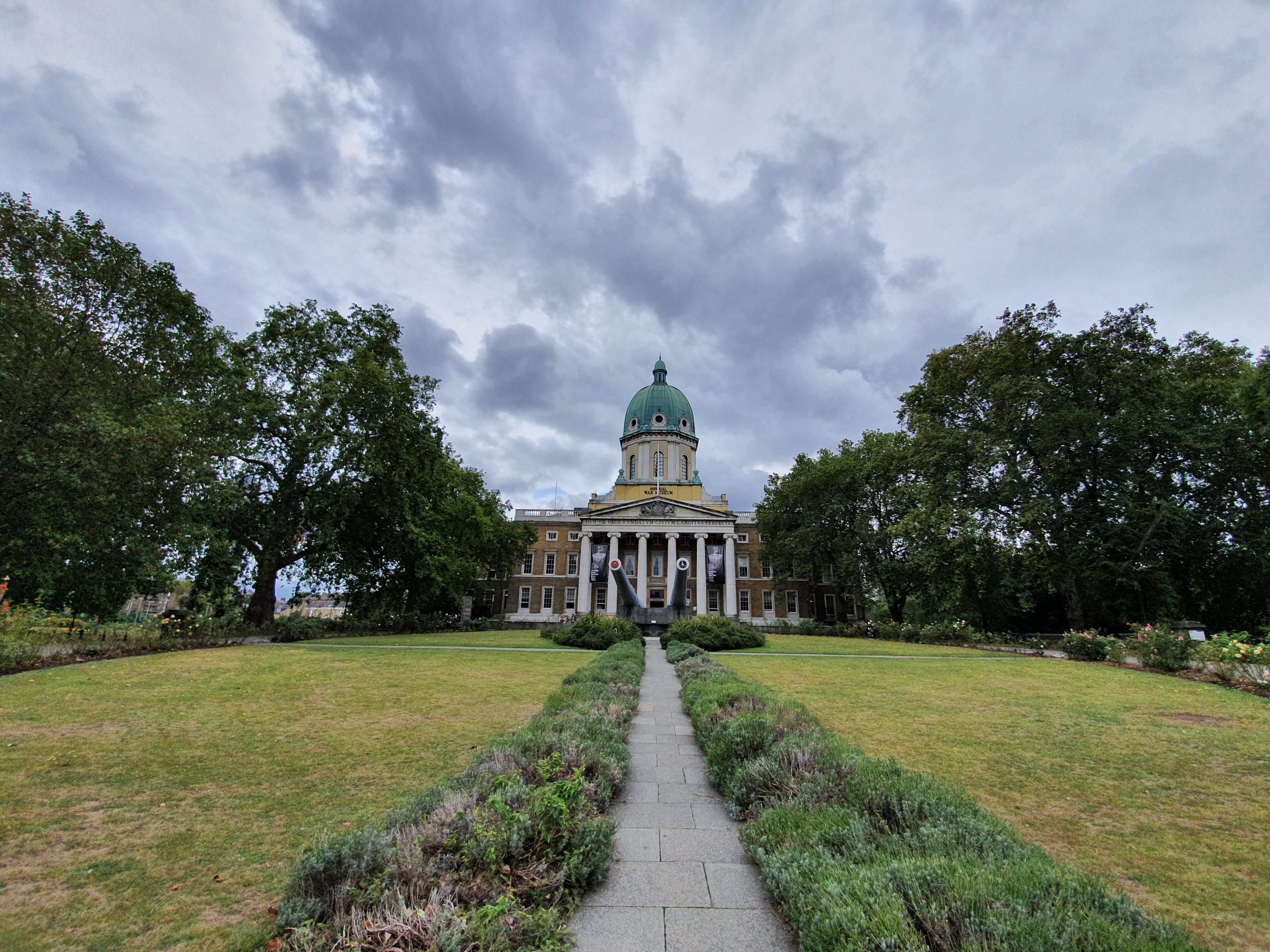
    I last went to the Imperial War Museum before it closed for a substantial refurbishment in early 2013 and the opportunity to visit now when it was quiet seemed quite appealing. It remains free of charge, provided with substantial funding from the Government, whilst it makes the rest from its commercial activities.

    The museum first opened in 1920 and it had become essential to tell the story of the First World War and other conflicts that the British had become involved with. This first museum was located at the Crystal Palace, before a new site being found in South Kensington in 1924 and then, finally, the museum moved to its current site in 1936, at what was previously the Bethlem Royal Hospital in Southwark.

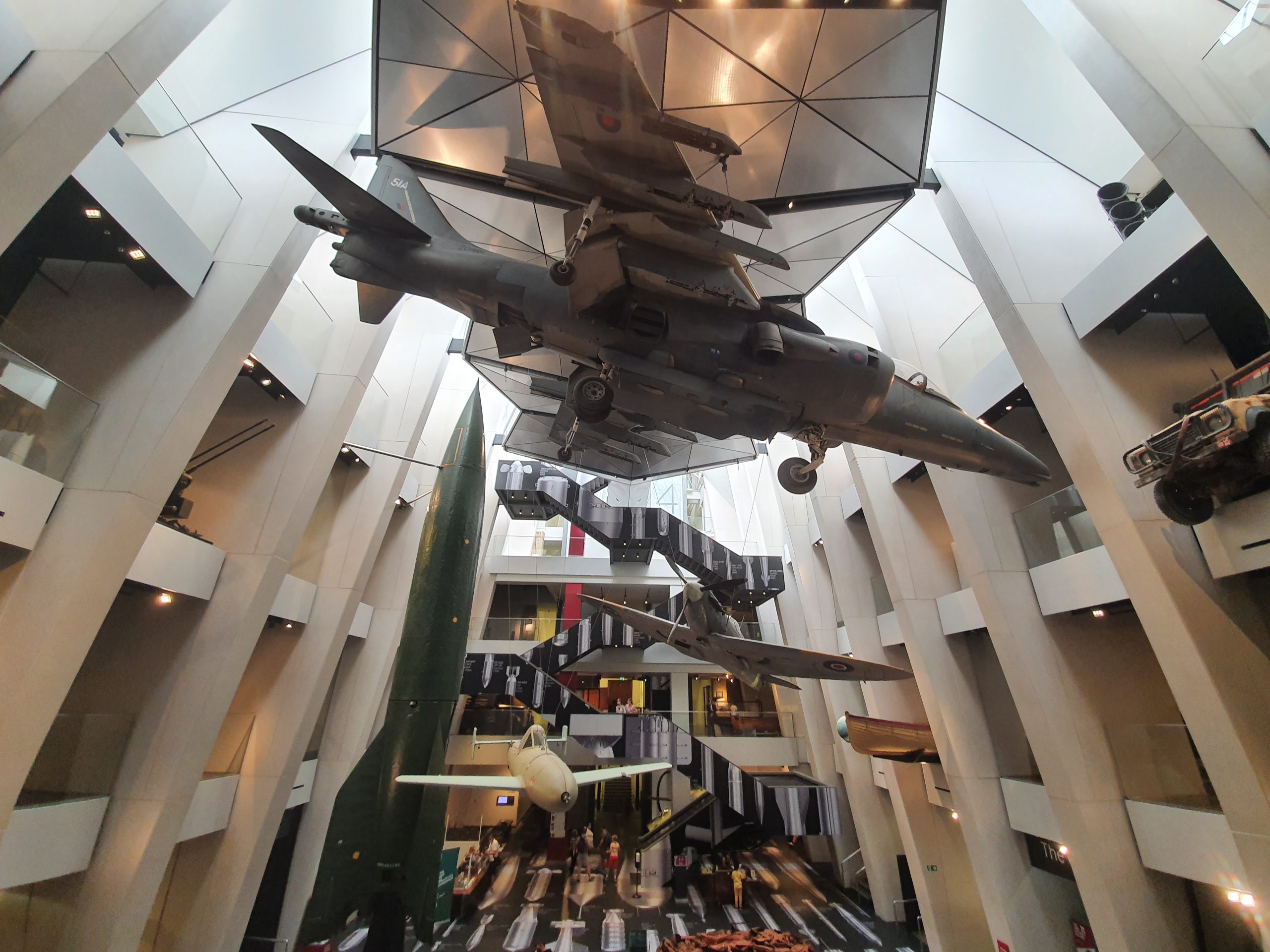
    The entrance hall is impressive, with various military vehicles and planes visible. There are, broadly, four main exhibition halls which cover the First World War, the Second World War, the Holocaust and the Lord Ashcroft Gallery.

    The First World War gallery is perhaps the museum’s best, although I found it drifting all over the place and it didn’t present a clear narrative. The Second World War gallery was, in my limited view, hard to follow and again lacked any clear direction. There were lots of facts presented in a random manner and I’m not sure that I discovered anything new about the Second World War. It is a country mile behind the Museum of the Second World War in Gdansk, although it might be unfair to compare it to this Polish institution, which is I think one of the best museums in the world.

    I’m not entirely sure why the Holocaust exhibition has been shoved into the Imperial War Museum, although it has been given the size and status that it deserves within the building. The UK needs a Holocaust Museum that isn’t just part of another institution, but the Imperial War Museum is currently working on a new set of displays that are meant to complement the controversial Holocaust memorial being built by the Palace of Westminster. The Holocaust displays are excellent, although very powerful, perhaps too powerful. They have some graphic images of nudity and videos of people about to be hanged, I’m always uneasy that someone who suffered in the Second World War should be further humiliated in this way. But, this was a sizeable display and it was laid out clearly and with a central narrative. Ideally, I’d have liked the Imperial War Museum to operate a Holocaust Museum on another site (preferably nearby) where it could have more space and more funding.

    This is the top of the building, I’m not sure what it’s usually used for.

    The Lord Ashcroft Gallery was, I think, designed for children and it has the world’s largest collection of Victoria Crosses. I struggled to engage with this gallery, I wanted them to pull out interesting stories of some of the individuals who had been awarded military honours, but there were just a few words about many individuals and the most confusing mixed usage of fonts, media and display methods that I think I can recall. I think I’m getting old and grumpy, but I did see lots of children reading the displays and that’s perhaps the most important thing, that they engage with the history.

    All told, I think I preferred the more traditional nature of the old museum displays, rather than the pared back current building. I often come to that conclusion though, but the Imperial War Museum is well-reviewed and is clearly doing something which appeals to the majority of visitors. But, the staff were all helpful and engaging, with visitors seeming to be enjoying their experiences. I think I wanted something with more narrative and I would have liked more exhibits and more stories about individuals. It was a perfectly pleasant way to spend a couple of hours though and more people should come here.

    And, as an aside, I have discovered that the Imperial War Museum has placed part of their vast photographic archive on-line, which is very exciting as there are over 350,000 photos on their web-site. That’s an impressive effort, but they have 11 million photos so the size of this archive will be incredible when they’ve finished making it all available.
  • London – Kensington – Churchill Arms

    London – Kensington – Churchill Arms

    It’s hard to deny that this pub obviously has character, even before walking in that’s evident. Although it wasn’t originally named after Winston Churchill, it is now at least a little themed around him and the pub’s web-site notes that his grandparents drank there.

    The interior of the pub was no less quirky. The staff in the pub were friendly, with the operation of track and trace being handled professionally and everything seemed clean. Just as my view, the beer selection was weak with no dark options, limited to London Pride (and I know many people like London Pride, but its appeal is a little lost on me) and Honey Dew, both from Fuller’s Brewery, who operate the pub. The pricing was some of the most expensive that I’ve seen, over £6 for a pint of real ale which tops the prices of nearly every central London pub I’ve visited. I was rather pleased that I only ordered half. The drink was, well, metallic in flavour with some sweetness. Lovely if you like Metal Mickey I suppose.

    The Honey Dew taste and price was enough for me to abort my plans to eat food, which was awkward as the staff member seemed moderately confused as why I hadn’t ordered after I said I was planning to. This was quite a surprise even to myself, as it was half price day for food as part of the Eat Out to Help Out, and the Thai kitchen menu items seemed intriguing and tempting. The reviews suggest that the food is excellent (and I could hear the number of phone calls coming in asking for reservations, but they were full), but there is something I didn’t like about any pub, even in Kensington, topping £6 for a pint of real ale, so I resisted the temptation of the Jungle Curry.

    But, the pub is clearly a local favourite and it has a long tradition with a friendly welcome. It wasn’t for me though, but I’d have probably been more of a fan of the whole experience if they’d stocked Fuller’s Porter. Incidentally, although the Thai cuisine perhaps seems a little mismatched for the British theme of the pub, it clearly works as they’ve been doing it since the early 1990s. Besides, any pub which has its own page on Wikipedia is likely worth a visit.

  • London (Marylebone) – Metropolitan Bar

    London (Marylebone) – Metropolitan Bar

    JD Wetherspoon might not surprise and delight everyone, but they certainly do have some pubs located in beautiful and historic buildings. This is the former Chiltern Court Restaurant within Baker Street underground railway station, which has also been used by the railway network. It’s named after the Metropolitan Railway, which was the first passenger-carrying designated underground railway and it operated between 1863 and 1933.

    It wasn’t very busy and I only went in to get out of the heat. It was all clean, well presented and comfortable, with the helpful advantage of having lots of power outlets.

    The most delightful element about this pub, although there were numerous, was that it was freezing cold because of that air conditioning by the window. This was quite marvellous and I very much appreciated it, as I may have mentioned to numerous people that London at the moment is too hot. The drink was £1.10, a Dalston’s fizzy rhubarb and this apparently contains real British rhubarb. So, with my refreshing drink with ice along with the air conditioning chucking out cold air, I was quite settled.

    I didn’t see much of the staff, just the drink that I ordered on the app being dropped off. They seemed friendly enough though, it was a relaxed environment and it would have normally been much busier than this. It might take the pub many more months to return to how busy it was, the number of rail passengers and the reduced number of tourists in the capital seems to be taking its toll on many pubs.

    As an aside, and I’ll let those interested read more about a little incident (well, quite a major incident really) that the pub had in their toilets a few years ago…. https://www.thesun.co.uk/archives/news/765720/hole-in-pub-lav-was-den-for-pee-ping-tom/

  • London (Marylebone) – The Volunteer

    London (Marylebone) – The Volunteer

    Since I was in the Marylebone area I was going to pop into a pub listed in the Good Beer Guide, but unfortunately most of the ones around here haven’t re-opened yet. So, the Volunteer looked quite historic and interesting, located opposite Regent’s Park and also on Baker Street, of note to Sherlock Holmes fans.

    There was a very prompt and polite welcome from a team member, so it felt a friendly location. I was asked if I wanted to sit inside or out and I opted for inside as it’s still hot in London and there’s still been no rain to cool things down a bit. The pub’s web-site notes that “come along to The Volunteer, get cosy and escape from the cold in our pub”, but it was the reverse that I was trying to achieve. I had just been near frozen in the Metropolitan Bar, the local Wetherspoons, and I very much liked that, but this pub was a bit too warm for my liking. But, the weather is ridiculously hot, there’s a limit to what they can do.

    The beer choice wasn’t very exciting at all, the real ale choice was limited to Doom Bar. That meant I was only going to have half a pint, although the beer was well kept and tasted as it was meant to. They did apologise for this limited beer choice, I was unfortunate that they were between barrels. Whatpub mentioned they usually have three guests as well as Doom Bar, so the choice isn’t usually this limited. Customers seemed happy with the food and drink being offered and although I didn’t eat here, the menu looked like a mix of traditional British dishes and some more contemporary options.

    I was pleased to have visited though, there’s plenty of history to this pub and they explain some of it on their web-site. it takes its name from when it was a recruiting office in the nineteenth century (other stories for the pub’s name exist) and there are a few war-themed sections in the pub. The owners say that it’s haunted, but I’m pleased to note that I didn’t sense anything when I was there. The story goes that there was once a large property on this site, but it was destroyed by fire, and it’s the ghost of the owner of that building, Rupert Neville.

    The pricing was reasonable and the pub seemed well managed, feeling safe from a health point of view. I wasn’t asked to leave my name for track and trace, but they did have a QR code system to register on-line. The tables had already been socially distanced and I liked that staff were prompt to welcome customers at the front door. The main reason I like this pub is that it isn’t branded around Sherlock Holmes, even though they are just a few doors away from the museum. The pub could have felt quite tacky if they’d taken it down that route and hidden its own identity, so I thought it was all well thought through.

  • London – Soho (Brewdog)

    London – Soho (Brewdog)

    Part of my slow and steady attempt to work my way through the lists of Brewdog outlets, the Soho location is on two floors and is relatively spacious. The staff seemed to spend quite a bit of time worrying how they were going to fit their reservations inside the pub if it rained, not that they needed to worry, it didn’t rain and it’s still too hot in London. But, I digress and I can’t keep going on about how hot it is in the capital. Although it is very hot.

    I was seated alone at a table for eight, which seemed a grand use of space for me, but they weren’t getting particularly busy until later on.

    The interior of the pub, with the traditional Brewdog beer fridge.

    The menu board for those wanting to order at the bar. But, there were also drinks lists at the table and customers could order via the app as well. The coronavirus standards seemed to be high and the staff were asking customers to leave their details under track and trace, which a good number of pubs aren’t bothering with.

    I went for Wings Wednesday as this was half-price due to the Government’s Eat Out to Help Out scheme. The first portion is served as a large-size and then they top up the wings on request. I was marginally irritated that I tried to hide the blue cheese sauce, as that isn’t replaced, but a staff member swept it up when clearing the first plate away and no replacement brought. I did think about querying this, but I didn’t want to cause a scene over some blue cheese sauce. Even I’d struggle to complain about something that minor. Although I thought about it.

    The additional portion sizes were more moderate, even for Brewdog, and the service was reactive and never pro-active. I didn’t want another drink, but they didn’t ask about that, nor did they ever ask if I wanted more wings. I suspect they were suffering from having too many staff on, which can sometimes lead to poorer service.

    This was the Dr Todd from the Wild Beer Company, which comes in at the best part of £14 for a pint. I’m not made of money and so I limited myself to a third, which was probably the perfect size drink as the taste is strong and this is better sipped than downed. It’s a sour, which was pleasingly not too, well, sour, but it did have powerful flavours of ginger and lemon, along with a more subtle hint of honey. The drink has been aged in whisky barrels, which was also evident from the taste and I remain convinced this is the best way to experience whisky. So, have a drink from a whisky barrel that isn’t whisky. Win-win.

    The walk down to the toilets and also to the downstairs bar area.

    The Government’s subsidy made this very reasonably priced and everything seemed well managed and under control. The service was always polite, but it could have been far more pro-active. I have to say though, the Brewdog choice of drinks was outstanding, perhaps not the cheapest, but there were numerous innovative options. The atmosphere was laid-back and friendly as well, it was a comfortable environment.

  • London – Tavistock Place (Vladimir Ilyich Lenin Plaque)

    London – Tavistock Place (Vladimir Ilyich Lenin Plaque)

    This is 36 Tavistock Place in London and what might look like any other town-house, but it has a special little claim to fame. It’s where Lenin stayed in May 1908 on one of his visits to the city, conveniently located near to the British Museum’s Reading Room which he frequently visited during his stay. Under 10 years later he was the Chairman of the Council of People’s Commissars of the Russian SFSR, with the Tsars deposed.

    The plaque was put up by the Marchmont Association in November 2012 and they reported that not everyone was happy as they got a complaint from a local resident saying:

    “Appalling! He was responsible for a movement that caused far more deaths than Hitler, from which the Russians are only just recovering. I intend to email the Chair dissociating myself from the Marchmont Association.”

  • London – Amen Corner

    London – Amen Corner

    The beautifully named Amen Corner is located near to St. Paul’s Cathedral, in the bottom-right of the above map from the end of the nineteenth century.

    Although the buildings along Amen Corner are modern (and rather unimpressive), the street-line is original and is unchanged. The street takes its name from when monks used to walk along Paternoster Row chanting the Lord’s Prayer and they would reach the “Amen” section just as they walked down this street, before entering St. Paul’s Cathedral. That’s the story on Wikipedia and the one that’s repeated the most often on-line.

    However, a different reason was given in the nineteenth century, which was that this was where monks would find a corner to repeat their prayers privately, in the hope that they would be fortunate for a whole year. There’s probably more to this story than the perceived origin quoted today, but, I have no idea…..


  • London – Central London (Cordwainer Statue)

    London – Central London (Cordwainer Statue)

    This statue is located on Watling Street in the ward known as Cordwainer, named after the shoemakers who worked in this area. There’s a difference between a cordwainer and a cobbler, as the former makes shoes and the latter fixes shoes. The word is from the French ‘cordewaner’, meaning shoemaker, which is derived from the Spanish town of Córdoba in Andalusia whether the leather used in shoemaking was often from.

    The statue was commissioned in 2002 by the Ward of Cordwainer Club to mark their centenary. Initially, the statue was placed in the churchyard of St Mary le Bow, but was moved to its current location a couple of years later. The statue is located near to the site of the Livery Hall of the Cordwainers’ Company, where there were six successive halls from 1440 until 1941. When the hall was destroyed in the London Blitz, a decision was made by the company that they wouldn’t construct another. The Worshipful Company of Cordwainers still exists, but they’re primarily a charitable organisation, with some members being descendants of shoe-makers and some working in the industry today. One of their charitable efforts in recent years was a bike ride from Córdoba, where their name began, to London.

  • London – Christ Church Greyfriars

    London – Christ Church Greyfriars

    I haven’t paid much attention to these ruins before, but they have a considerable heritage as they are from a monastic church built in the thirteenth century on what is now Newgate Street. The monastery was dissolved during the Reformation and was turned into a parish church which was given by King Henry VIII to the Mayor of London for the use of the city’s population. This church building was though lost, along with most others in the heart of the city, during the Great Fire of London in 1666. The replacement building was designed by Sir Christopher Wren, but this in turn was unfortunately destroyed in 1940 during the London Blitz.

    The few sections of the remaining church still standing were demolished following the end of the Second World War, with the site turned into public gardens. There are some important people who have been buried at this site over the centuries, including Isabella of France (also the Queen of England), Marguerite of France (another Queen of England) and Joan of England (who was the Queen of Scotland). I’m equally confused as to who was Queen of where, but it’s evidence of the importance of the church.

    Some of the surviving arches and it’s positive that it was decided to keep this as a public park, rather than shoving up another office block on the site.

    The former door into the nave.

    The gardens are impressive and before this health scare meant fewer people came into London, I imagine that this was a busy place for those wanting to eat their lunch.

    The tower, which was completed in 1704, survived the London Blitz and was restored in 1960.

    There are many more photos of how the church used to look at https://thecitizensmemorial.wordpress.com/2012/05/19/11/.

  • London – Chinatown

    London – Chinatown

    Some photos from Chinatown in London on Monday evening. Although London had felt quiet all day, there was a bit more vibrancy with people taking part in the Eat Out to Help Out scheme and most restaurants looked pretty full. Within a short distance of Chinatown and Soho though it remained a different matter, numerous restaurants and takeaways not even opening at all this month.