Category: London

  • London – Ibis Styles – Kensington (Second Visit)

    London – Ibis Styles – Kensington (Second Visit)

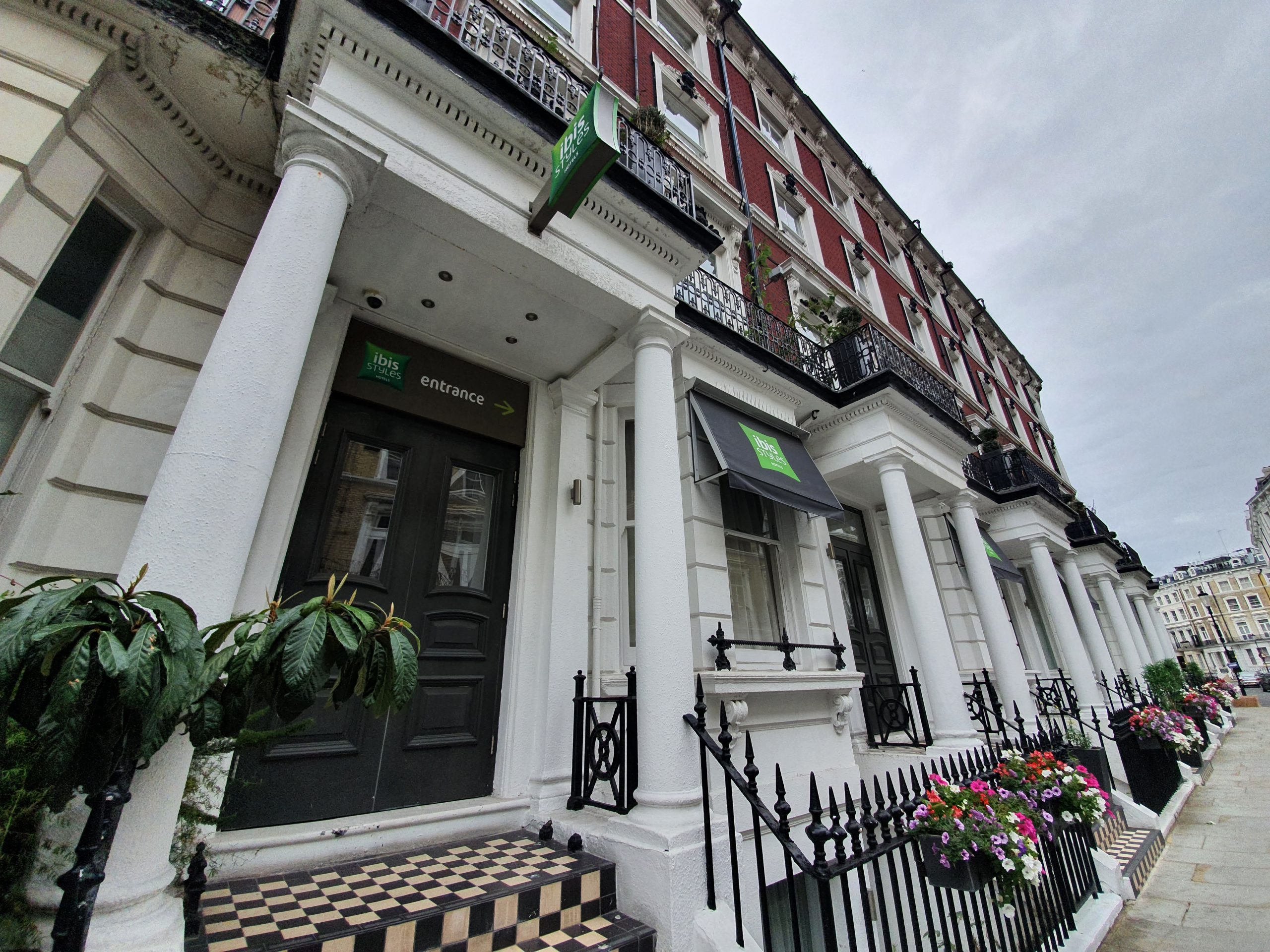
    I stayed at this hotel a couple of weeks ago and thought that for the money, it was entirely reasonable. Clearly, as I booked to come back, and I have another reservation here next week and two friends have now booked the hotel as well. On my last visit, the hotel was clean, although there were elements that suggested to me that things hadn’t been checked, such as an empty shower gel dispensers.

    This time the hotel kindly upgraded me to a family room, which was room 16, the Mozart Room.

    Interesting theming on the inside of the door, Ibis Styles remains my favourite of the Accor brands.

    And the room was absolutely spotless, and I had no reservations here about the cleanliness. The bathroom was also clean, although perhaps needed a little modernisation. However, this was a lovely room, although the view was a little limited. Not that that’s a complaint, it was much better than the room I’d paid for.

    My view that more Accor hotels should offer a craft beer option is unchanged, but I was willingly given the Bud as a welcome drink. And, on this note, the staff members I encountered were friendly, engaging and really welcoming. Customer service here isn’t a problem, it’s a comfortable environment to be in.

    The breakfast bag, with coffee available in the basement as it was before. Perfectly acceptable under the current circumstances.

    And, overall, this proved to be excellent value for the money I paid. Especially since I got a bonus 500 points from Accor (worth €10) and with other discounts, this managed to take the room price to just over £20 including the breakfast. Quite marvellous.

  • London – Westminster (Borough of) – Wallace Collection (Prince Baltasar Carlos in the Riding School by Diego Velázquez)

    London – Westminster (Borough of) – Wallace Collection (Prince Baltasar Carlos in the Riding School by Diego Velázquez)

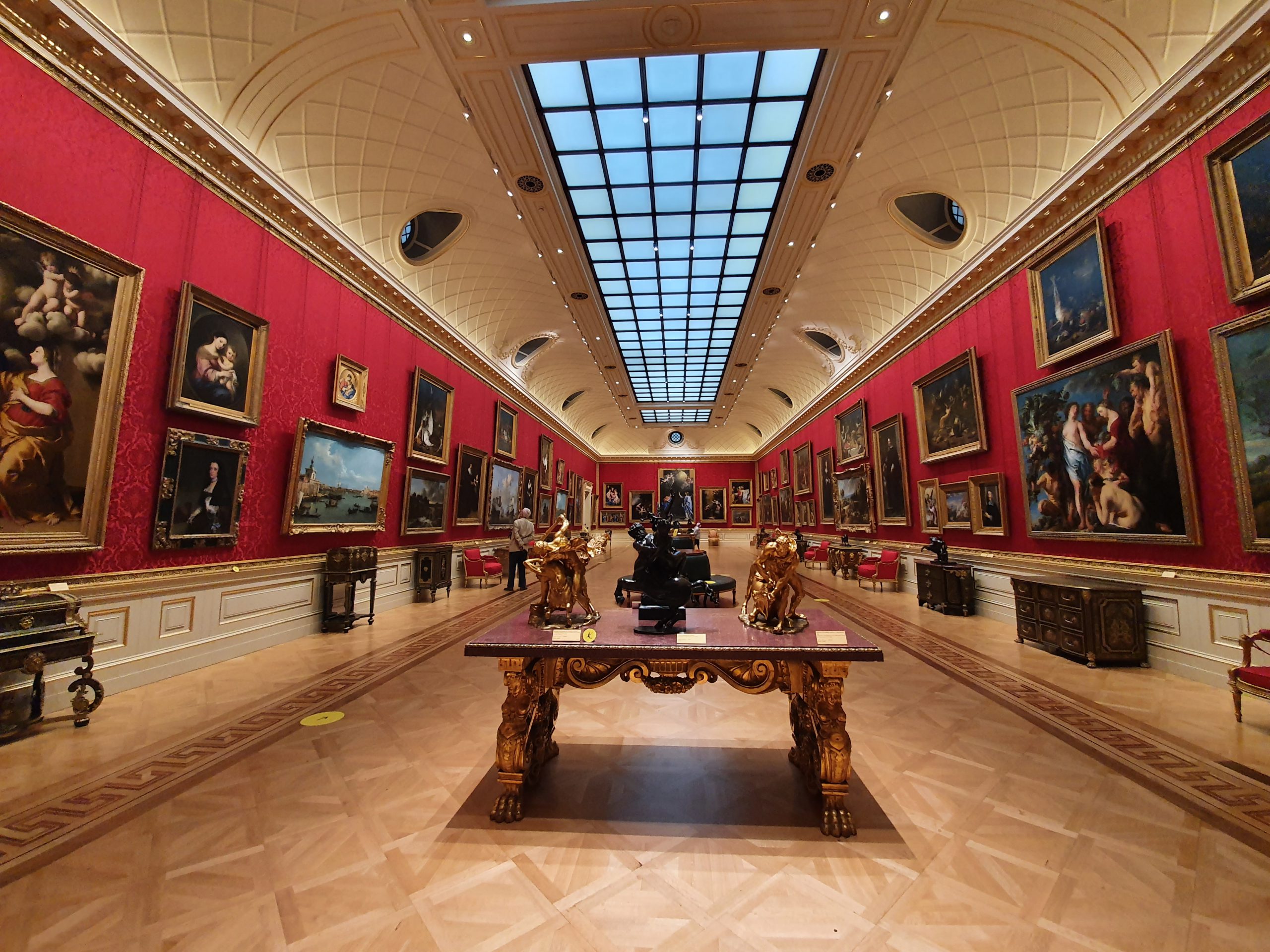
    This painting in the Wallace Collection has its own Wikipedia page, albeit shared with another version of the artwork. It’s not known whether Diego Velázquez (1599-1660) painted this himself, or it was done by his studio. The gallery has traditionally gone for the latter, but Xavier Bray, who is the director of the collection, has featured in a video on their web-site saying that he thinks it might be the work of Velázquez himself. Apparently, the painting needs cleaning and it is that which the director thinks will show the quality of the artwork underneath. And, it would be nicer to have a painting by the artist himself and not just his studio (he didn’t add that, I did).

    The artwork was painted at the riding school in Madrid in 1636, featuring Prince Baltasar Carlos in control of his horse. It was deliberate, to show the young man and future King being able to manage horse-riding and seem competent. I liked that Bray mentioned he thinks there might be figures who have been removed on the right-hand side of the painting, with the artist doing this to direct the eye back to the Prince. There’s a plan for the painting to be X-Rayed and then they will have their answer.

    Unfortunately, this bright new hope for the Spanish Empire died at the age of 16 with smallpox, which was a problem as he was the only son of King Philip IV at the time. However, when Philip’s wife died, he remarried and at the age of 56 he had another son, King Charles II. Who became infamous for a whole host of reasons not entirely relevant here….

  • London – City of London – Monument Pub

    London – City of London – Monument Pub

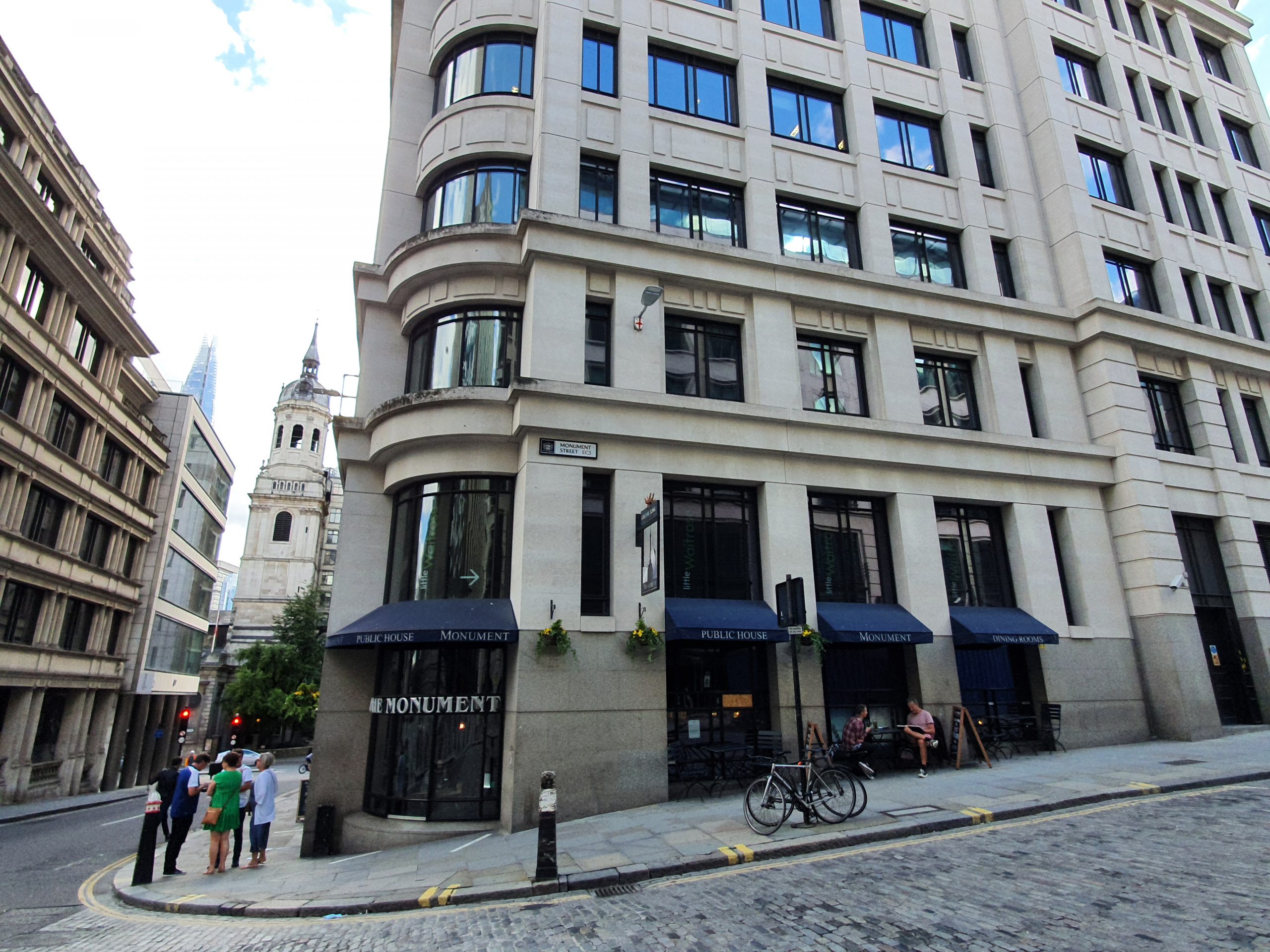
    We popped to this pub after Des’s rather lovely Great Fire of London walk and it’s located right by the Monument memorial. It’s Greene King, so expectations have to be lowered accordingly.

    The real ale selection on the pump clips was limited to Greene King IPA, so I had Camden Pale Ale. It tasted as it should and all that, perfectly refreshing. But, for a pub in this location, the beer choice is in my view completely inadequate and mostly just generic lagers.

    What the pub did do rather well was customer service, as the staff were fully engaged and keen to help. Welcoming, conversational and polite, the staff had delivered a laid-back and comfortable atmosphere. I’m not entirely sure that the large group crowded around one table were entirely compliant with the current rules, but there we go, that’s Greene King’s problem. They were otherwise dealing with track and trace competently, something which the chain are doing really quite well at the moment. Perhaps they could move the Head Office person responsible for track and trace over to beer selection when this is all over.

    The reviews for the pub on TripAdvisor are pretty dire, to the point that I wonder why Greene King actually link to them on their web-site. Much of the problem appears to be about their food, with the reviews on Google being a little more positive. A few customers complained about children not being allowed in after 18:00, with one customer noting that the pub didn’t understand the law and that the 2003 licensing act removed that limitation. As the pub noted, it did no such thing….

    For those popping in for a drink, this is a clean and organised pub, but I’m not sure that it offers anything particularly exciting beyond that. Decent location though, although I doubt it will be troubling the Good Beer Guide any time soon.

  • London – City of London – Museum of London (Medieval Statue of St. Christopher)

    London – City of London – Museum of London (Medieval Statue of St. Christopher)

    This is a statue displayed at the Museum of London which was discovered in a Tudor Wall when Newgate Prison was being demolished in 1903. I feel that I have an affinity to St. Christopher since he’s the patron saint of travellers and I liked that the museum noted:

    “Medieval Londoners believed ‘whoever shall behold the image of St. Christopher shall not faint or fall on that day’”.

    What a rather lovely sentiment. It also meant that statues were placed in many locations around London, including the entrances to homes and bridges. The bridges element is important, as the legend goes that St. Christopher helped people across rivers, and then unbeknown to him, he helped Christ himself over a dangerous river.

    St. Christopher is also the patron saint of travel in general, so a fair few companies relying on this trade for survival might well be hoping that the saint can answer their prayers…

  • London – City of London – Crosse Keys

    London – City of London – Crosse Keys

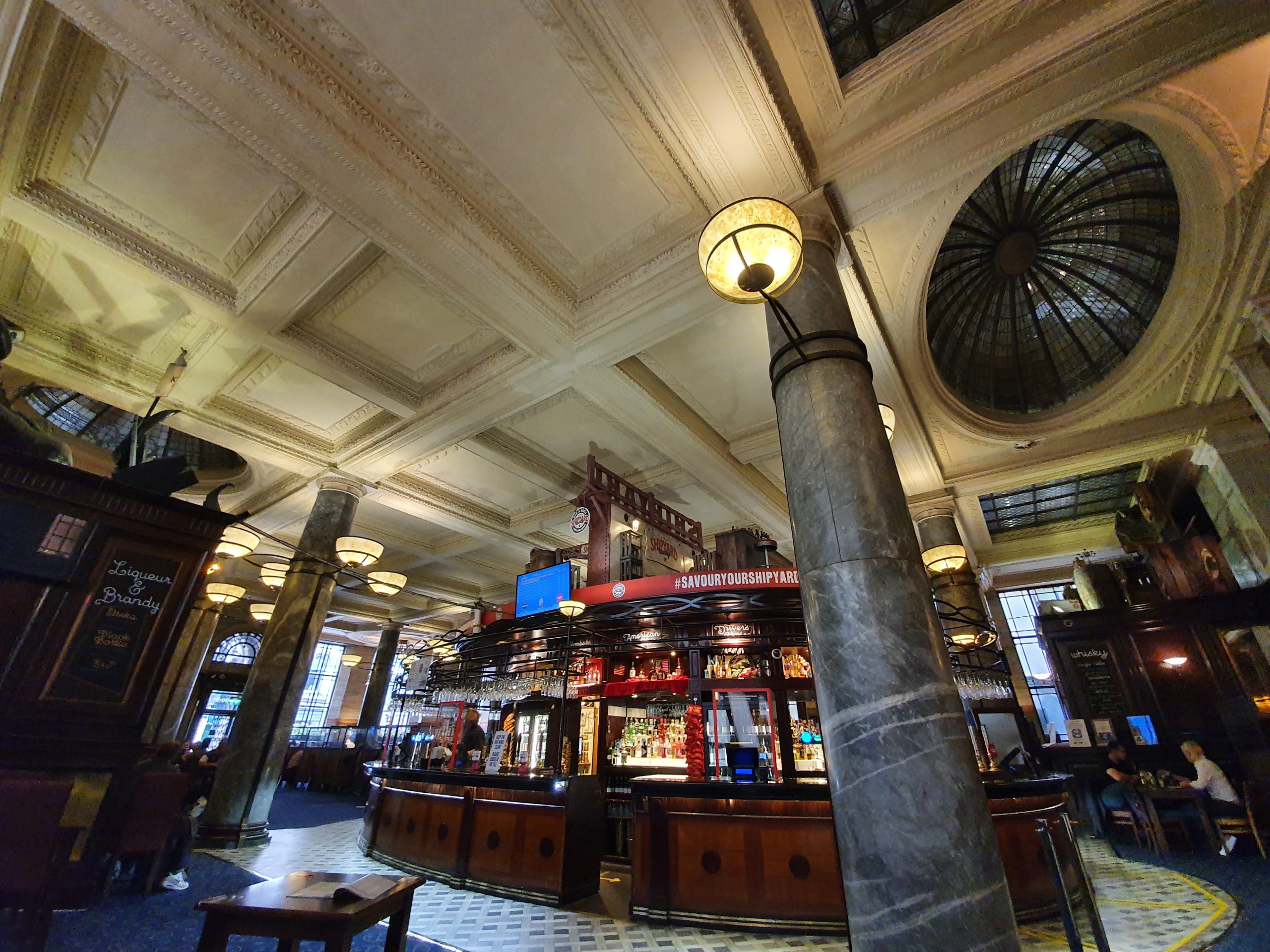
    I’ve visited Crosse Keys in London many times over the last decade, as it’s spacious and convenient for London Liverpool Street railway station. It’s a glorious location, named after an inn that was located here before the nineteenth century. I thought I’d write something about it, as it’s listed in the Good Beer Guide and I’m working my way around that.

    This is the former banking hall of the Hong Kong and Shangai Banking Corporation and it opened in October 1913. The picture on the left is recent and the one on the right is from last year, before the current crisis.

    Easily missed, there’s also an upper area that overlooks the main part of the pub. I was sitting here last year when a staff member looking over mentioned to me that Tim Martin often sits in this area before board meetings. I have no idea how true that is, but there are some grand function rooms here.

    This was my drinks selection from this weekend, keenly priced at £1.10 each, it was a convenient table location within the pub as it was near to a plug socket. I have found myself coming here before getting the train home, as Hamilton Hall (a JD Wetherspoon outlet actually within London Liverpool railway station) is often too busy to get a seat.

    These photos are older, the burger and the chicken wrap, which for some reason I can’t recall I ordered with salad rather than chips. The selection of real ale is usually excellent, one of the widest varieties in this area of London, and all keenly priced.

    And back to the days in 2018 when this was an option with chicken club…..

    Anyway, this is one of the grandest buildings that Wetherspoons have and they’ve operated it since the 1990s. It can get busy in the evenings and at weekends, but it’s usually possible to find a table without too much of a wait because of its size. And it’s quite rightfully in the Good Beer Guide with its history and the range of real ale and craft beer.

  • London – City of London – Noble Street Roman Fort Ruins

    London – City of London – Noble Street Roman Fort Ruins

    The Second World War brought many changes to the streets of London, including the uncovering of pieces of the city’s past. The above map (click to make it larger) is from 1900 on the left and from today on the right, with Noble Street looking very different. Properties had been built backing onto the Roman wall and it had been covered up over the centuries, but the wartime bombings of the city brought the wall back into view.

    The old meets the new.

    It’s not very clear, but there’s an overlay on this panel which gives an indication of what the area looked like in Roman times.

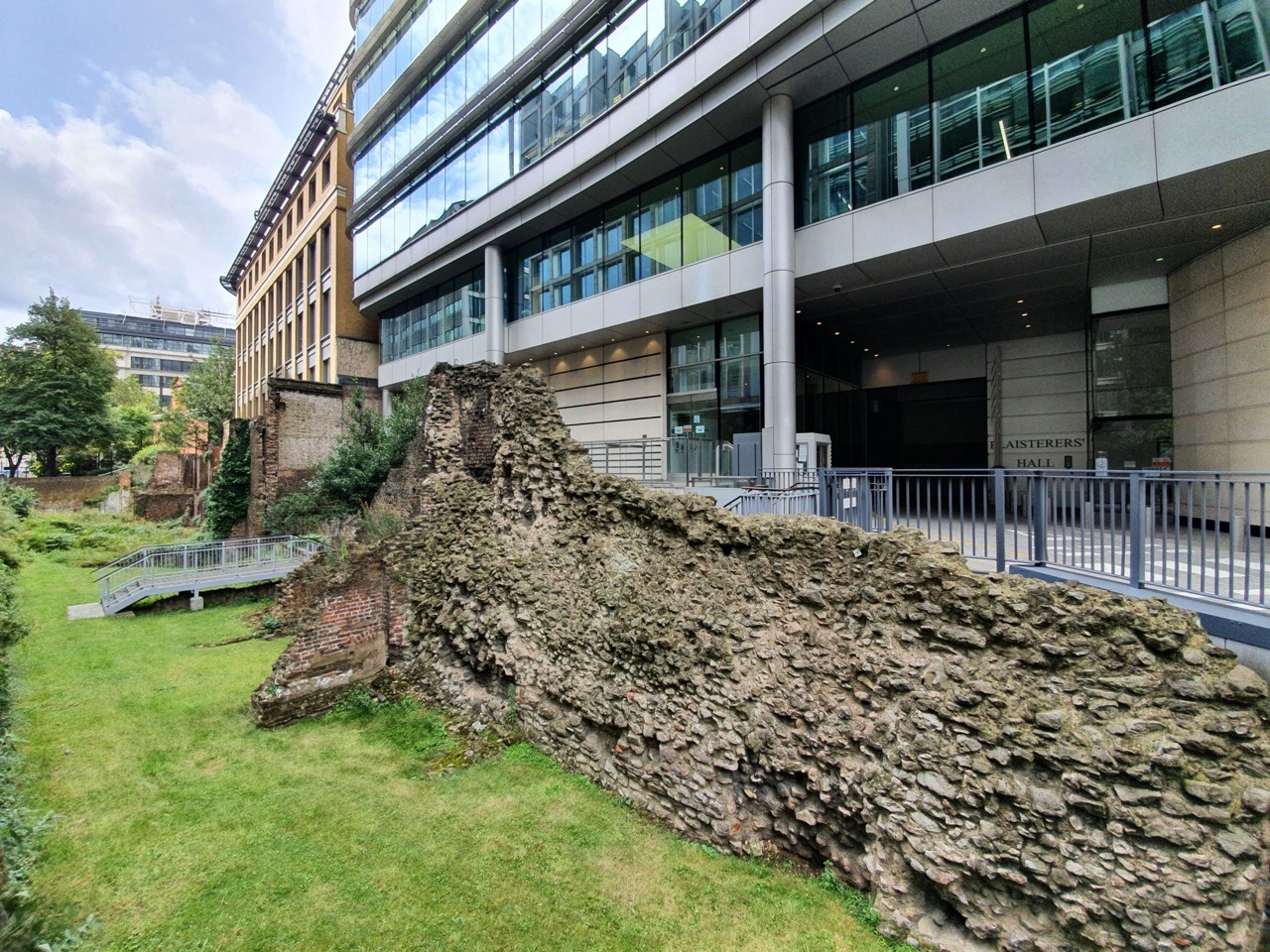
    The Roman wall was built in one go to defend the city, starting in around 190AD and being completed by around 225AD. It served as the boundary wall of London until the medieval period and it wasn’t much changed until the sixteenth century, just some strengthening works in places.

    The bits of brickwork jutting out are from eighteenth to twentieth-century buildings that were damaged or destroyed during the Second World War. There were extensive archaeological investigations here in the late 1940s and 1950s, with a decision being made to protect the area and to prohibit redevelopment.

    A boundary marker.

  • London – City of London – Museum of London (Model of Old St. Paul’s Cathedral)

    London – City of London – Museum of London (Model of Old St. Paul’s Cathedral)

    A model at the Museum of London of the old St. Paul’s Cathedral, destroyed during the Great Fire of London in 1666. Work has started on it at the end of the eleventh century and it was already the fourth church to be located at this site. By the time it was completed it was one of the longest churches in the world and for a while, it was also the tallest building in the world.

    The building was in a state of some disrepair, not least due to the English Civil War, by the mid seventeenth century and efforts were underway to restore it. Wooden scaffolding had been placed around the building, but then the Great Fire struck, and the building had little chance, especially given the handy wooden structure around it that soon caught fire.

    And the remains of the building after the fire. It was decided to start again with a new design, designed by Sir Christopher Wren, who had also been supervising the reconstruction of the old building.

    And its replacement, the modern St. Paul’s Cathedral.

  • London – City of London – Museum of London (Wellclose Square Prison Cell)

    London – City of London – Museum of London (Wellclose Square Prison Cell)

    This cell is on display at the Museum of London and is from the Wellclose Square Prison, also known as the Neptune Street Prison. It was primarily used as a debtors prison and this cell dates to around 1750, once located under the Cock and Neptune public house. Wellclose Square still exists, a short walk from the Tower of London, with the prison being used until the late eighteenth century.

    And some of the graffiti etched into the walls of the cell.

  • London – Westminster (Borough of) – Wallace Collection (Venice: the Bacino di San Marco from San Giorgio Maggiore by Canaletto)

    London – Westminster (Borough of) – Wallace Collection (Venice: the Bacino di San Marco from San Giorgio Maggiore by Canaletto)

    Canaletto, one of the few artists whose works are recognisable from the other side of a gallery, painted this artwork in either the late 1730s or the early 1740s. I hadn’t realised how many of his works that the Wallace Collection holds, one of the highest number in the world.

    The painting has an exquisite amount of detail, although the artist shuffled some things about to fit them in the artwork. Artistic licence and all that…. The paintings would have usually been purchased by those on a Grand Tour, a permanent reminder of the things that they had seen on their travels.

    The gallery notes (far better than I can), in its long description, that:

    “The figures in the foreground represent different levels of Venetian society; from the seated beggar on the left, the merchants in the centre, and the priest and lawyer engaged in conversation on the right. There is the customary assortment of sea vessels in the picture, including a burchiello, or passenger boat, being towed in the middle ground. This is a superb example of Canaletto’s attention to composition. The triangle of the foreground terrace – framed by the temporarily-docked burchiello with the detail of passengers embarking – is matched by the boat in the middle of the painting. Its two masts are in turn replicated in the vertical soar of the Campanile di San Marco and the dome of Santa Maria della Salute.”

    It’s not known when Francis Seymour-Conway, the 1st Marquess of Hertford, purchased this painting, but he had been on a Grand Tour to Italy in the late 1730s. It then remained in the family collections until the house and artworks were given to the public in the late nineteenth century.

  • London – Lambeth – Imperial War Museum (Kindertransport of Peter Needham)

    London – Lambeth – Imperial War Museum (Kindertransport of Peter Needham)

    I’ve been having another look at the photo collection of the Imperial War Museum and this is something I haven’t seen before (© IWM HU 88869). It’s an image taken at Prague Airport on 12 January 1939 of Peter Needham, a half-Jewish Czech boy, with his parents. He was part of a Kindertransport flight bringing him to safety, one of around 10,000 children that the UK accepted. Being realistic, he would have likely died if he hadn’t have had this opportunity.

    Fortunately, the other side of this tale exists, and Peter (original surname of Niethammer) flew into Croydon Airport and had a happy life in the UK. His mother lived until 1993 and his parents had already commenced divorce proceedings.

    An interview with Peter noted:

    “Peter Needham (previously Niethammer), was born in May 1934 in Teplice, Czech Republic (then Czechoslovakia). His Lutheran lawyer father, Fritz, was born in Aachen, Germany, on 6 February 1900; his assimilated Jewish mother Anna (nee Bergman), an economic research worker, was born in Most (previously Brux) on 5 November 1910. However, following the September 1938 Munich Agreement ceding the Sudetenland region to Nazi Germany, they divorced, and Anna took Peter to her wealthy parents’ home in Radic, near Prague, of which he retains happy memories.

    Jews, though, were not entirely safe. After Anna’s discussion with German clergyman, Wilhelm (William) Wallner, The Barbican Mission to the Jews helped fly Peter, aged 4, from Prague to Croydon Airport, London, on 12 January 1939 with some 20 other children. She escaped soon after, then her parents on 31 March 1939. Peter’s uncles Hans and Seppl also escaped. Germany invaded and occupied rump Czechoslovakia mid-March 1939; a relative subsequently perished in the Holocaust.”

    His full story is at https://www.ajrrefugeevoices.org.uk/RefugeeVoices/Peter-Needham.