Category: London

  • London – Tower Hamlets (Borough of) – Greggs at Canary Wharf

    London – Tower Hamlets (Borough of) – Greggs at Canary Wharf

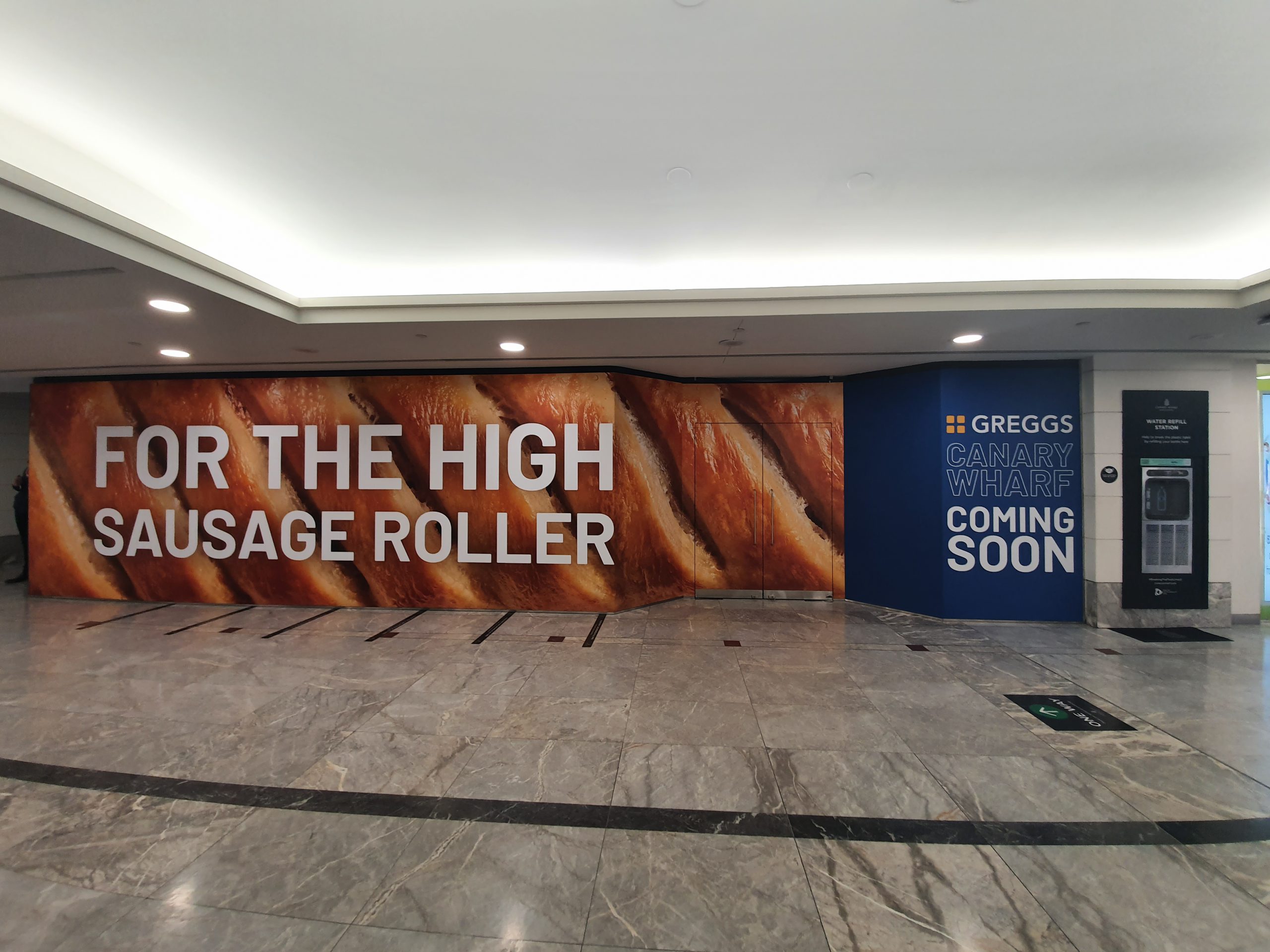
    I was slightly surprised to see this at Canary Wharf, Greggs are opening their first ever outlet in the capital’s financial district. I always thought that this shopping centre was like Heathrow T5, where they tried to avoid any cheaper brands for fear of it damaging the prestige of their retail operation. I’m glad that sense has prevailed, and perhaps even Heathrow T5 will have a Greggs before we know it….

    I would say what a time to be alive, but that might be overkill just because a new Greggs is opening.

  • London – Westminster (Borough of) – Trafalgar Square Fourth Plinth

    London – Westminster (Borough of) – Trafalgar Square Fourth Plinth

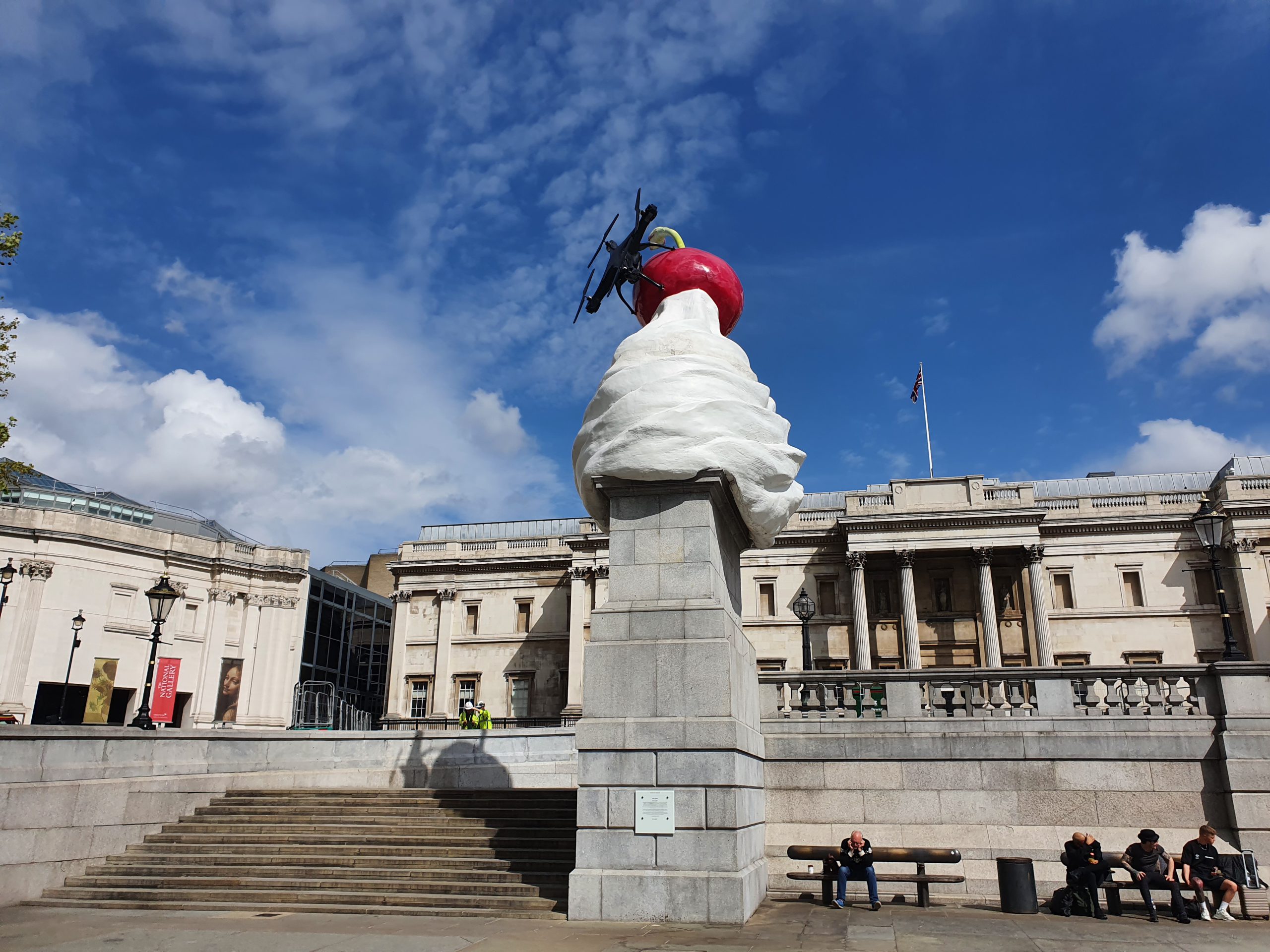
    This is the current art installation on the fourth plinth in London’s Trafalgar Square and it’s the thirteenth to be placed there since this project started in 1998. The installation is by Heather Phillipson and the description reads:

    “This sculpture attempts to address the specific physical context of the square, whilst considering a broader ideological one. How do we negotiate congregation, the intimacy of personal experience, broadcast and surveillance in one space?”

    That puts it better than I can as I didn’t really understand it.

    What I hadn’t realised before is that if you go to https://web102.secure-secure.co.uk/theend.today/, then it’s possible to see a live feed from the drone which is on the fourth plinth. I was in a bit of a rush to get a train and so I’m not really that visible in the above image, but that’ll do, it is definitely me (although mostly my shadow, but perhaps that’s in keeping with the art installation).

  • London – Greenwich (Borough of) – Blackheath – Zerodegrees Microbrewery

    London – Greenwich (Borough of) – Blackheath – Zerodegrees Microbrewery

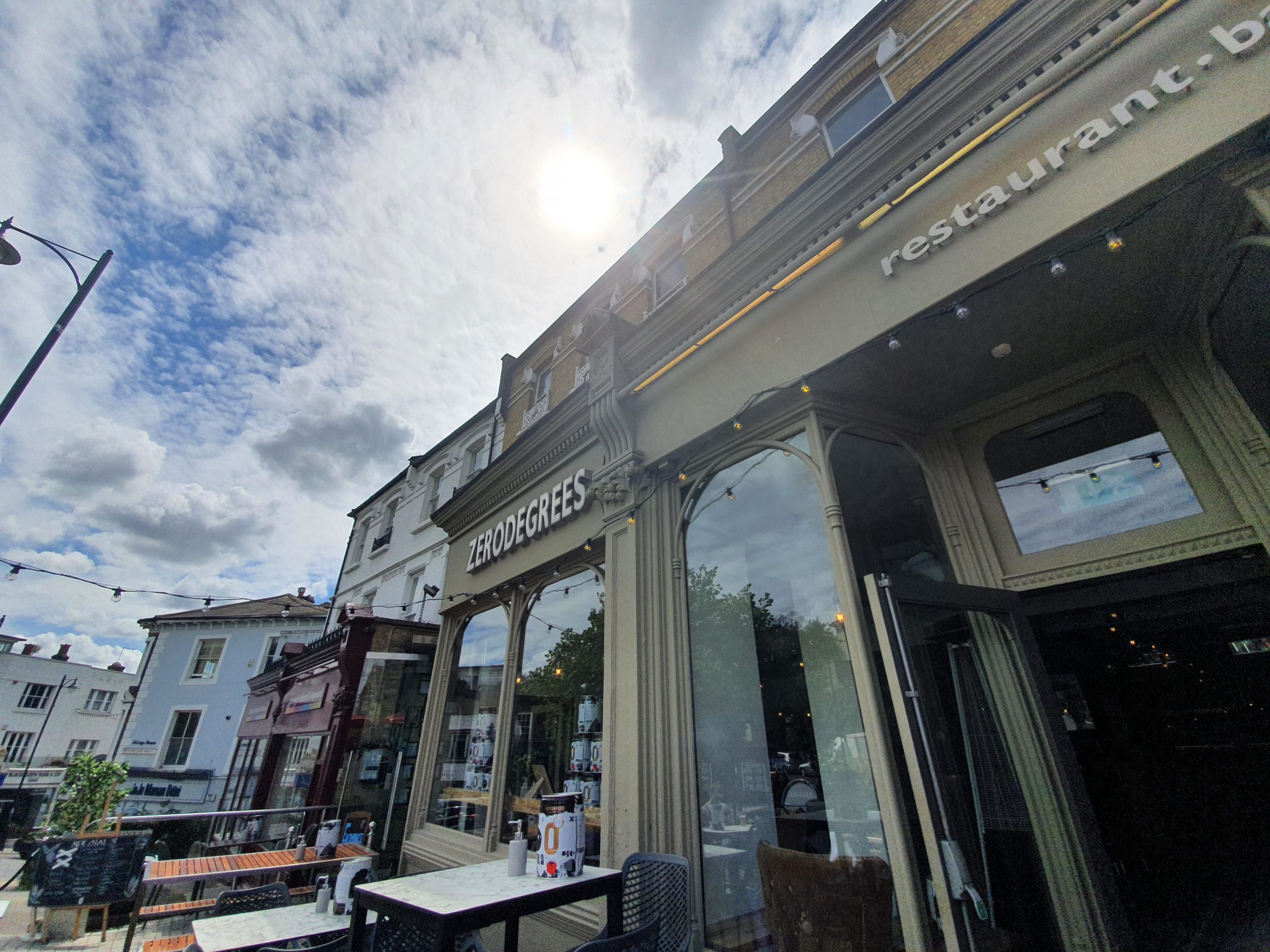
    This is the Zerodegrees brewery outlet in Blackheath and although they now have other outlets around the country, this is where it started. Blackheath is located just a short walk away from Greenwich (with its meridian line), hence why they chose that name for the business in 2000. They were early adopters of the pizza and craft beer concept, one which I very much applaud.

    Only the outside of the pub is open at the moment and there are also only a handful of tables available. Most people were ordering food as well, but my stop wasn’t for a decadent lunchtime purpose. Staffing was excellent, plenty of helpful staff and they were knowledgeable about the beers, so there was a welcoming feel to the whole arrangement.

    The specials list, which wasn’t entirely balanced in terms of the types of beer, but these are challenging times and at least there were three additional options. The brewery has also produced a ferocious number of beers over the years, with some rather interesting and innovative flavours and beer types.

    There are some standard Zerodegrees beers, alongside the specials. One thing that I’ve never seen at anywhere that is interested in beers is that sort of price differential between a half pint and a pint. CAMRA don’t like this and it really seems to try and discourage people from trying numerous different beers. It gave me a bad vibe about Zerodegrees, almost that they knew their product was of a poor quality and they thought people wouldn’t try additional products after trying one. It meant that I scrapped my intention to have a pint of Lollipop and half of the Linus Blanket to just half a pint of the former, as I had doubts about their quality. I did try and just cut it down to 2/3rds of a pint, but the pub doesn’t serve anything in thirds. I forget the luxury of places like the Artichoke in Norwich.

    The Lollipop milkshake IPA was fine, at the appropriate temperature as someone I won’t mention will be pleased to know, although it’s a slightly strange drink given it’s got a sour element. I quite liked it, although half a pint was actually enough.

    All told, I rather enjoyed this visit, but I still don’t entirely understand why the brewery isn’t keen to promote people trying a variety of their beers. Having a third of a pint samplers which customers could buy seems near universal at breweries, but here they seemed to be wanting customers to stick to the same product. So nothing really bad, but I’m not really sure whether I understand whether this place is pushing their food, their cocktails or their beer. I rather got the impression that beer was third on their list of priorities.

  • Greater Anglia : Norwich to London Liverpool Street

    Greater Anglia : Norwich to London Liverpool Street

    This is my first rail journey of 2021 and it’s certainly a step-up from the bus travel that I’ve been limited to for the last few months. It wasn’t busy at Norwich railway station with just a few people walking around the concourse, a couple peering into the M&S that has remained closed since March 2020. I still think that should have been a Greggs, but I don’t go on about it…..

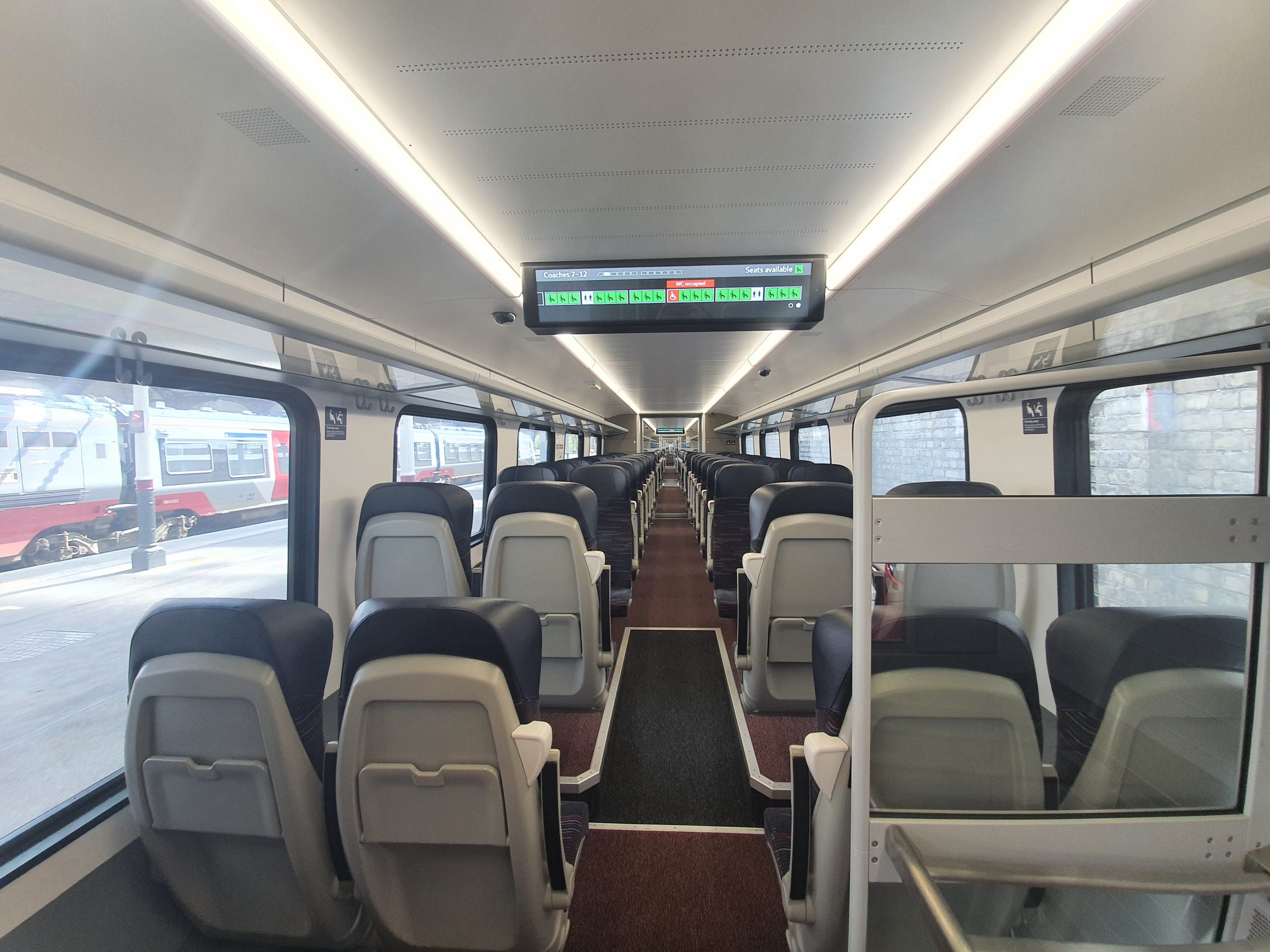
    This is one of the Greater Anglia fleet that has no tables, as passenger surveys have apparently told them that customers don’t like them. I make no comment….. Anyway, the train was clean, shiny and nearly completely empty. Everything on the train was working though, including the power and even all the toilets were functional. How lovely.

    One of the slight problems with the rail journey into London is that it stopped at Witham, one of the few towns in Essex that I haven’t visited. I looked at TripAdvisor to see the top four rated attractions in the town and they are (i) a walk by the river, (ii) the library, (iii) the statue of Dorothy L Sayers and (iv) the town hall information centre. Given that, and with respect to the denizens of the town, I might wait just a little longer before making a proper visit.

    Anyway, there were plenty of Greater Anglia staff to guide customers onto the buses which would take us to Newbury Park. I’m not sure where Greater Anglia had found these staff, but they were particularly friendly and engaging, all a really organised effort.

    I try not to complain about things, but on my bus travels in recent years I’ve discovered that just about every vehicle has no more than four seats across. This is because there is only space for four seats and an aisle between them. But, no, this bus company has decided that more is better and have crammed in five seats across. I accept that if all the passengers were five years old, then this would be a perfectly sensible transportation move. But, the rail passengers were all above 18, which presented me with an interesting time watching them try to fit into the space provided, which was made more exciting as the bus company have given customers no real amount of leg room either. One man looked positively annoyed. I’d add that wasn’t me.

    I moved to the back of the bus to get some space, and I’m pleased to say that unlike the Inbetweeners, I wasn’t moved off those seats by anyone. The fortunate thing is that social distancing means that customers are kept apart, so there were only about 12 of us on the vehicle. About 105 seats, but only 12 people sitting on them.

    The rail replacement bus arrived into Newbury Park, where we were politely told to get on the Central Line into London. I asked the gateline staff if I was allowed to continue travelling down the Central Line to Oxford Circus, or whether I needed to get off at London Liverpool Street. To cut a long story short, he told me that I should really get off at London Liverpool Street, but that wasn’t what he recommended I should do. He suggested winging it with the gateline staff at Oxford Circus as that would be much quicker. He mentioned though that this was all at my own risk. Indeed, he mentioned that three times.

    I worry if I don’t have the right ticket, so I decided not to spend an hour worrying and I got off at London Liverpool Street. That also meant I didn’t have to try and enter into protracted negotiations with the gateline staff at Oxford Circus, which didn’t sound an exciting game to play. I had to faff about finding a member of gateline staff to let me out of London Liverpool underground station, and he looked slightly annoyed to watch me then go back through from where I had come from around thirty seconds later. But, my journey was now fully compliant with railway rules and I didn’t have to fear any TFL ticket inspectors. And more excitingly, I was back in London after way too many months.

  • London – Camden (Borough of) – Hampstead Heath Sightline

    London – Camden (Borough of) – Hampstead Heath Sightline

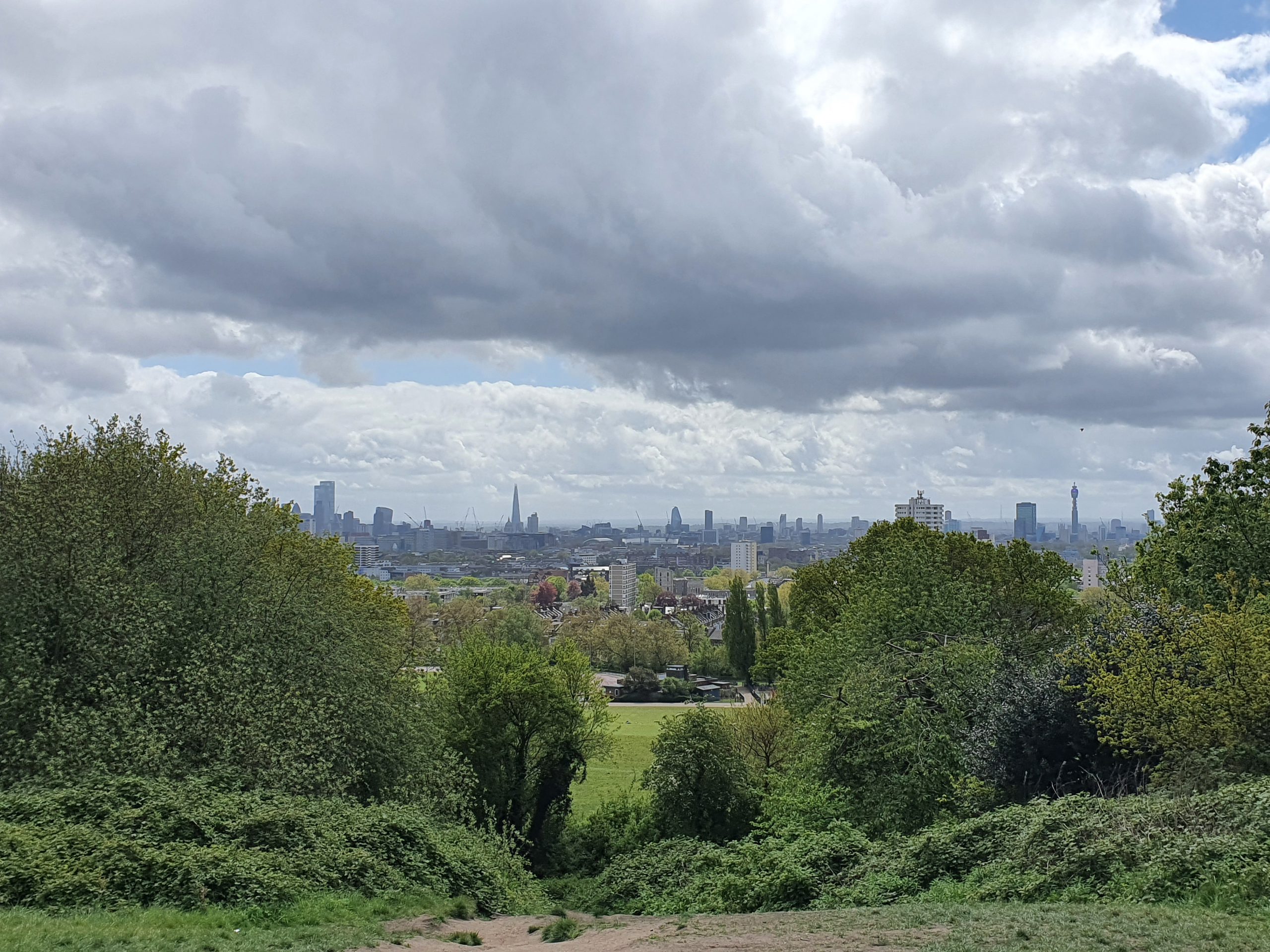
    There are a number of these protected views and sightlines in London and they’re listed on Wikipedia. This is from Parliament Hill in Hampstead Heath and I think it’s quite beautiful. Clicking on the image makes it larger and it’s possible to see not just the big skyscrapers, but also buildings such as St. Paul’s Cathedral which are all about six or so miles away.

    A slightly different view and this is the spot where it’s said that Guy Fawkes and Robert Catesby stood on 5 November 1605 when waiting to see if the Houses of Parliament blew up. There’s no certainty about this at all, but it seems conceivable and it would have been easy to see the destruction of the buildings if the plot had been successful.

    The name of Parliament Hill isn’t from the view, it’s thought to be from when the Parliamentary troops were stationed here during the English Civil War. Incidentally, it’s also the highest point in London, standing at 98 metres in height, so that’s another mountain that I’ve climbed.

    There are numerous benches for people to sit and gaze over London city centre, along with a little map of the various things to look out for.

    The BT Tower is the most obvious in this photo, but just to the left of that is the Houses of Parliament.

  • London – Camden (Borough of) – The Stone of Free Speech

    London – Camden (Borough of) – The Stone of Free Speech

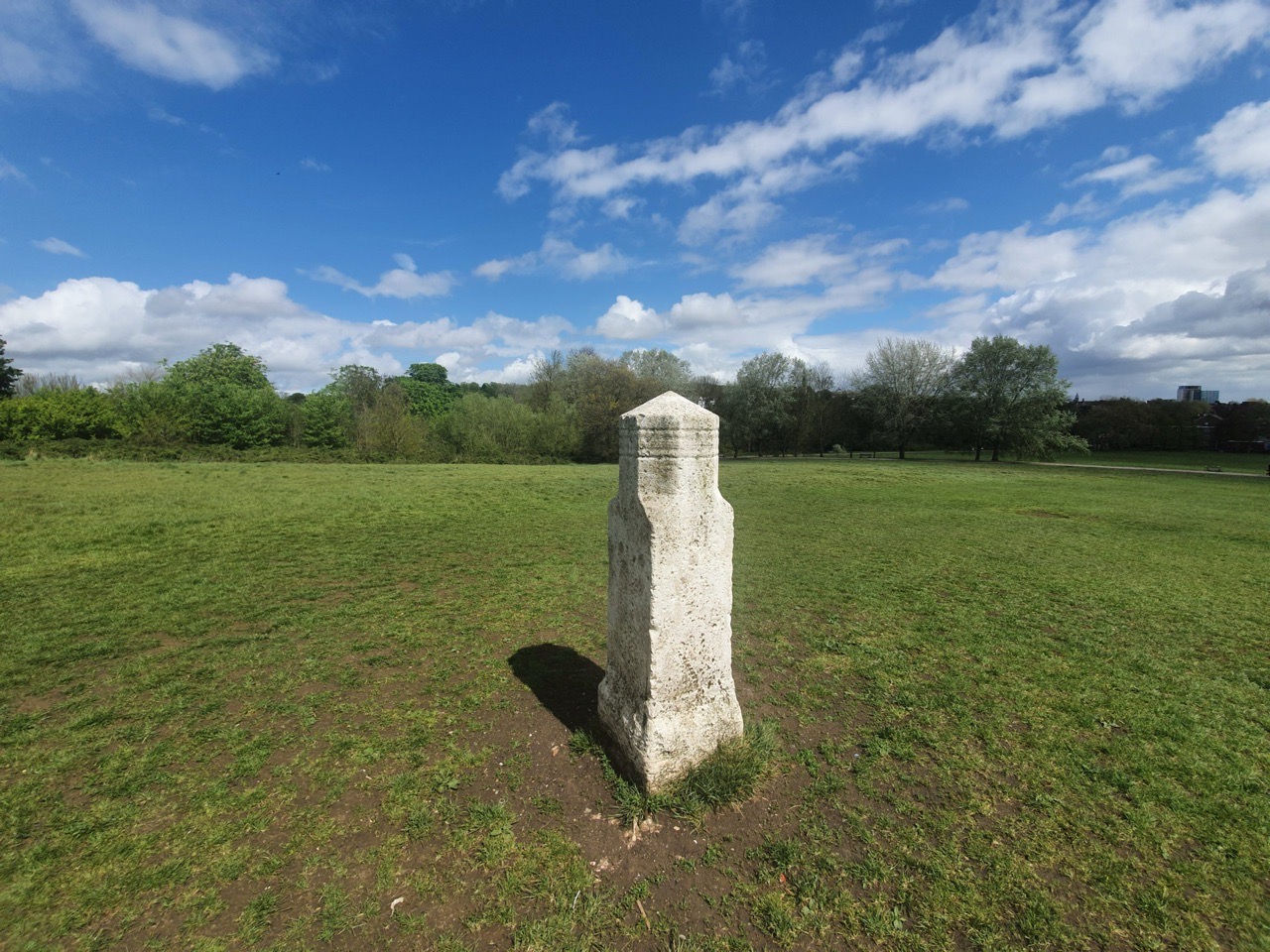
    This ‘stone of free speech’ looked quite exciting on the map, although it was perhaps just a little less riveting when I got to it. However, it’s said that this might have some considerable heritage, although all of the evidence appears to be a little woolly.

    The official Hampstead Heath web-site says that “the origins are sketchy”, which often just means someone made it up about 30 years ago and no-one can really disprove it now. It might though have been the centre for religious and political meetings in the eighteenth and nineteenth centuries, and that is quite exciting if it’s true. I can’t find any mention of it though in newspapers from the nineteenth century, so even if it did exist then, I’m not convinced that had a reputation for being the location in the park for free speech.

    The myth suggests that this stone dates from the late seventeenth century and it could have been some form of marker post for surveying perhaps. I don’t know if it was at this exact spot, but there was a suffragette meeting at the park in April 1913, but the female speakers were shouted down and then what the media called “a youth” chucked a wooden box at the speaker. After twenty minutes of this, the police decided they were stopping the meeting and so everyone went home.

    Even if it’s not true, I like the idea that large meetings took place here in the open air, so I’ve decided I buy into the whole concept.

  • Pubs Along the Victoria Line

    Pubs Along the Victoria Line

    [this was a project that got delayed due to Covid, but I’ll finish this one in 2024!]

    I feel that I’ve done enough posting about walking for a bit, so it’s time to return to my other true love of pub visiting…. This will be a bit of a holding page until I can start my visiting (and I might revisit the pubs I’ve already frequented, such is my commitment to high standards with this project).

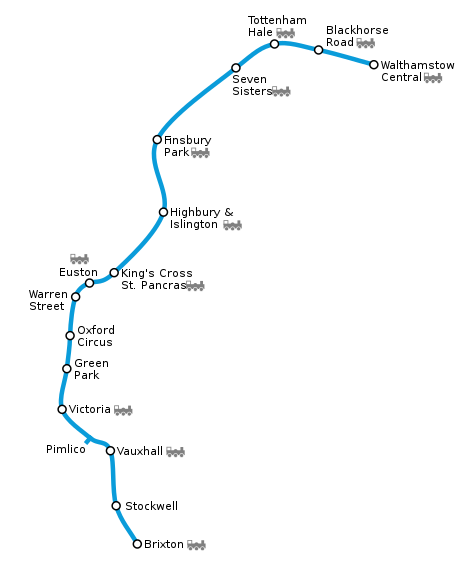
    https://commons.wikimedia.org/wiki/File:Victoria_Line.svg

    I’m staying in London frequently over the next few months, so my little project is to find a favourite craft beer pub near every underground station in the city. To ensure that I select only the finest, I’m aiming to go to three carefully (sort of) chosen options near each station, then I can pick the pub that meets my requirements the best based on my little visit.

    I’m going to start with the Victoria Line, which has 16 stations, so, 48 pub visits (or potentially more if I find some extra interesting looking pubs in a locality). I think I might enjoy this little project trying them all out. I’ve currently still got some gaps in the planning process, all suggestions welcomely received. I’m hoping to have completed the Victoria Line stations by the middle of June if this goes to plan.

    STATIONS:

    Walthamstow Central (The Untraditional Pub, The Village Pub, Wild Card Brewery Barrel Room)

    Blackhorse Road (Wild Card Brewery Taproom, Signature Brew Brewer’s Bar, Exale Brewing Taproom)

    Tottenham Hale (Ferry Boat, Beavertown Brewery Taproom, Bluecoats)

    Seven Sisters (True Craft, Five Miles, ???)

    Finsbury Park (The Finsbury, The Naturalist, ???)

    Highbury & Islington (Brewhouse & Kitchen, The White Swan, Snooty Fox)

    King’s Cross St. Pancras (Parcel Yard, King Charles I, Skinners Arms)

    Euston (Doric Arch, Euston Tap, ???)

    Warren Street (Smugglers Tavern, Marlborough Arms, ???)

    Oxford Circus (Old Coffee House, Star & Garter, Brewdog Soho)

    Green Park (King’s Head, Red Lion, ???)

    Victoria (Willow Walk, St George’s Tavern, ???)

    Pimlico (Cask Pub & Kitchen, White Swan, Grosvenor Arms)

    Vauxhall (Mother Kelly’s, ???, ???)

    Stockwell (Phoenix, Surprise, ???)

    Brixton (Craft Beer Co, Brewdog Brixton, Brixton Brewery Taproom)

  • London – Greenwich (Borough of) – National Maritime Museum (Guillotine Blade)

    London – Greenwich (Borough of) – National Maritime Museum (Guillotine Blade)

    This exhibit, which I accept isn’t the cheeriest, is in the collections of the National Maritime Museum in London. It’s a guillotine which dates from around 1792 and it was used on the Caribbean island of Guadeloupe to execute about 50 royalists.

    I have to say that I’m not sure I’d have wanted to live on Guadeloupe in the late eighteenth century. It was French until 1759, when the British took it over, but the French really liked having it. The French decided that they wanted it so much that at the Treaty of Paris in 1763, they swapped their French colonies in Canada to keep control of it, so they took over the island again. The French Revolution, which really wasn’t ideal for the wealthy in France, also spread to Guadeloupe and everyone was made free on the island, regardless of their colour. The British decided that this political power vacuum was a chance to get the island back, so they invaded in 1794 and gained control, only to see the French quickly take it back.

    The guillotine was likely taken over by Victor Hugues when he went out to try and purge the Royalists and set the country free from the British who had interfered with arrangements. Hugues arrived on the island with his guillotine on 2 June 1794 along with 1,153 Republican soldiers who were keen and eager to fight and kill people. Documentation mentions that those killed included the estate owners on the island, as well as some military officers, and the guillotine was carried around the island as further victims were sought.

    It is said by the National Maritime Museum that Captain Matthew Scott of the Royal Navy decided that it seemed an ideal souvenir, so he brought this guillotine back on HMS Rose when the British left the island. I can understand why Captain Scott took the item, as he might have thought it was something important politically, but Hugues attacked and pushed the British off the island, so it’s unclear why Scott would have this guillotine. It’s unlikely that Hugues would have willingly given it up (Paul Fregosi in his book Dreams of Empire said that he was very attached to it), as he still had work to do with it.

    And the next part of this mystery, HMS Rose sank near Jamaica on 28 June 1794, so I have some queries about this situation as well….. It’s clear that Scott hasn’t sailed home with it and come back, as there wasn’t time, so that guillotine would have been on board when the ship sank. The 200 sailors on board had to fashion bits of the ship to create rafts to paddle to safety, this wasn’t some little incident in the harbour where they had chance to reclaim everything. I’m unsure whether someone decided that the guillotine needed salvaging as some sort of priority, was Scott that keen to have it?

    So, there’s perhaps something slightly wrong about the story told by the National Maritime Museum and my theory (based on no evidence at all) is that Scott did bring this item back, but that he did so later on. Scott later became a Vice Admiral and he was still on board ships in the region in 1810, the year that the British took back Guadeloupe. So, my historical guess (like this is of relevance to anyone) is that Scott brought back the guillotine as a war trophy at this point, and not before. And I am unanimous in that to quote Mrs Slocombe….

  • London – Greenwich (Borough of) – National Maritime Museum (Nelson’s Death Coat)

    London – Greenwich (Borough of) – National Maritime Museum (Nelson’s Death Coat)

    This is “one of the most iconic items in our collections” the National Maritime Museum note, the uniform which Admiral Horatio Nelson was wearing when he died. Vice Admiral Nelson was killed on 21 October 1805 during the Battle of Trafalgar, when a bullet fired from the French ship Redoutable hit his left shoulder. The damage done was fatal and Nelson was aware of this immediately and he’s quoted as saying “Hardy, I do believe they have done it at last, my backbone is shot through”. He was carried off to get medical help, stopping en route whilst he gave advice to others whilst the battle continued, dying around three hours after he was injured.

    It was suggested to Nelson that he perhaps shouldn’t wear medals on board the ship as it made him stand out to the opposing forces, who could target him. However, removing them was a slight faff as they were sewn on and such was the inaccuracy of weaponry at this time, Nelson didn’t seem to fear much. The ones on display here are those which were on the coat when he died, but they themselves were replicas.

    It’s possible to see on the coat a hole where the bullet hit Nelson on the shoulder, making this a slightly grim exhibit, albeit one of national importance. There are also blood marks on the sleeve, which aren’t particularly visible, although it’s thought that these are likely that of Nelson’s secretary, John Scott, who had died about an hour before. Scott’s body’s had been thrown into the sea but blood remained on the deck and Nelson fell onto that spot when he was hit.

    The coat was given to Lady Emma Hamilton, who was Nelson’s mistress, but she was in a slight predicament that the Government excluded her from events, and her own husband wasn’t best pleased at this entire situation. She sold the coat in 1814 to help pay off some of her debts and it was later repurchased by Prince Albert, who gave it to Greenwich Hospital.

    Copyright of the Royal Collection Trust

    One of the joys of history is that most things entwine with each other, although that’s sort of literally the case here. The bullet which killed Nelson, along with bits of his coat that got caught up with it, are exhibited at the Queen’s Guard Chamber at Windsor Castle. It was taken from Nelson’s body by William Beatty, the doctor of HMS Victory, who decided that he quite fancied having a souvenir of the whole incident. He wore this locket for the rest of his life, but when he died his family donated it (probably with some relief) to Queen Victoria.

    As an aside, Nelson didn’t want his body chucking overboard as the usual way of getting rid of dead bodies. So, it was Beatty was put Nelson’s body in a barrel of brandy to preserve it whilst the ship set sail back for England. During this period of transportation the gases from the body forced the lid of the barrel off. It’s said that the sailors guarding the barrel were rather surprised by this occurrence….

  • London – Islington (Borough of) – Edward Johnston Memorial at Farringdon Station

    London – Islington (Borough of) – Edward Johnston Memorial at Farringdon Station

    Just in case anyone thinks I’ve started travelling again, these are photos from a very quiet Farringdon underground station last month. And this is the sort of slightly niche memorial that I like, a quite glorious addition to what would otherwise be a sterile corridor area. It’s also perhaps not really apparent what it is at first, I like a bit of depth to things such as this.

    The memorial was unveiled in 2019 and was designed by Fraser Muggeridge and it honours the work of Edward Johnston (1872-1944). Johnston was commissioned by Frank Pick to design a new typeface for the London Underground and it started to appear across the network in 1916. The London Underground roundel concept wasn’t designed by Johnston, but he was responsible for its design evolution and how it appears today. The London Transport Museum has more information about the roundel and Johnston’s influence on it.

    The typeface was initially planned to just be used on London Underground posters, but it was seen to be clean and tidy, so its use was extended to nearly all signage. This memorial has been designed to look like the printing blocks that were once used, hence why it looks back to front.

    As an aside, this memorial was unveiled by Sir Peter Hendy, someone who has a long interest in the fabric and heritage of transport in London. I remember when I was at an underground station in 2013 (I’ve forgotten which) where there was an issue where everyone needed to leave. I sought help from a staff member, and by chance I managed to get assistance from Hendy who was there offering customer service help. He knew exactly what buses I needed to get and had a formidable knowledge of the network, although I suppose that’s inevitable given that his career was spent in buses and he was heading TFL. Anyway, because I like to report excellent customer service to companies, I filled in the TFL customer service feedback form and I got an template e-mail back the next day that my positive comments had been forwarded onto the staff member……