Blog

  • Denton – St. Mary’s Church

    Denton – St. Mary’s Church

    20250706_180052

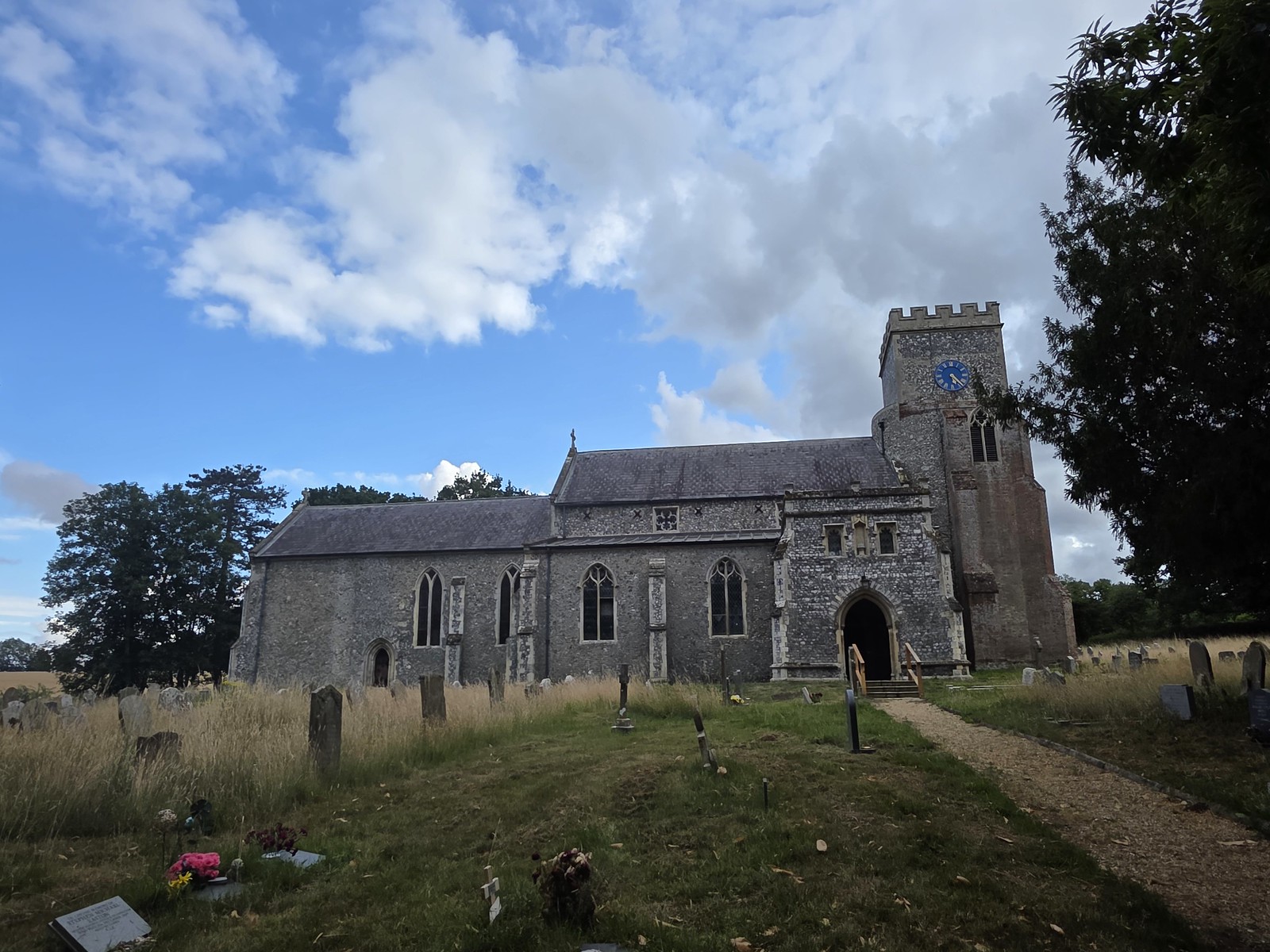
    St Mary’s parish church in Denton, Norfolk sits rather quietly off the beaten track and it doesn’t even front onto a public road, it requires a walk (or drive in Richard’s car) past the rectory and then up some steps. There has though been some disabled access added to the church which avoids those steps. Denton is a village on the Norfolk and Suffolk border, with the name meaning ‘village in the valley’ in old English. The original Denton was located around the church, but it shifted after the plague in 1665 and the heart of the village is now a little to the north.

    20250706_174655

    The first sight of the church is really rather memorable because of one of the more quirky tower arrangements that I’ve seen in Norfolk.

    20250706_174837

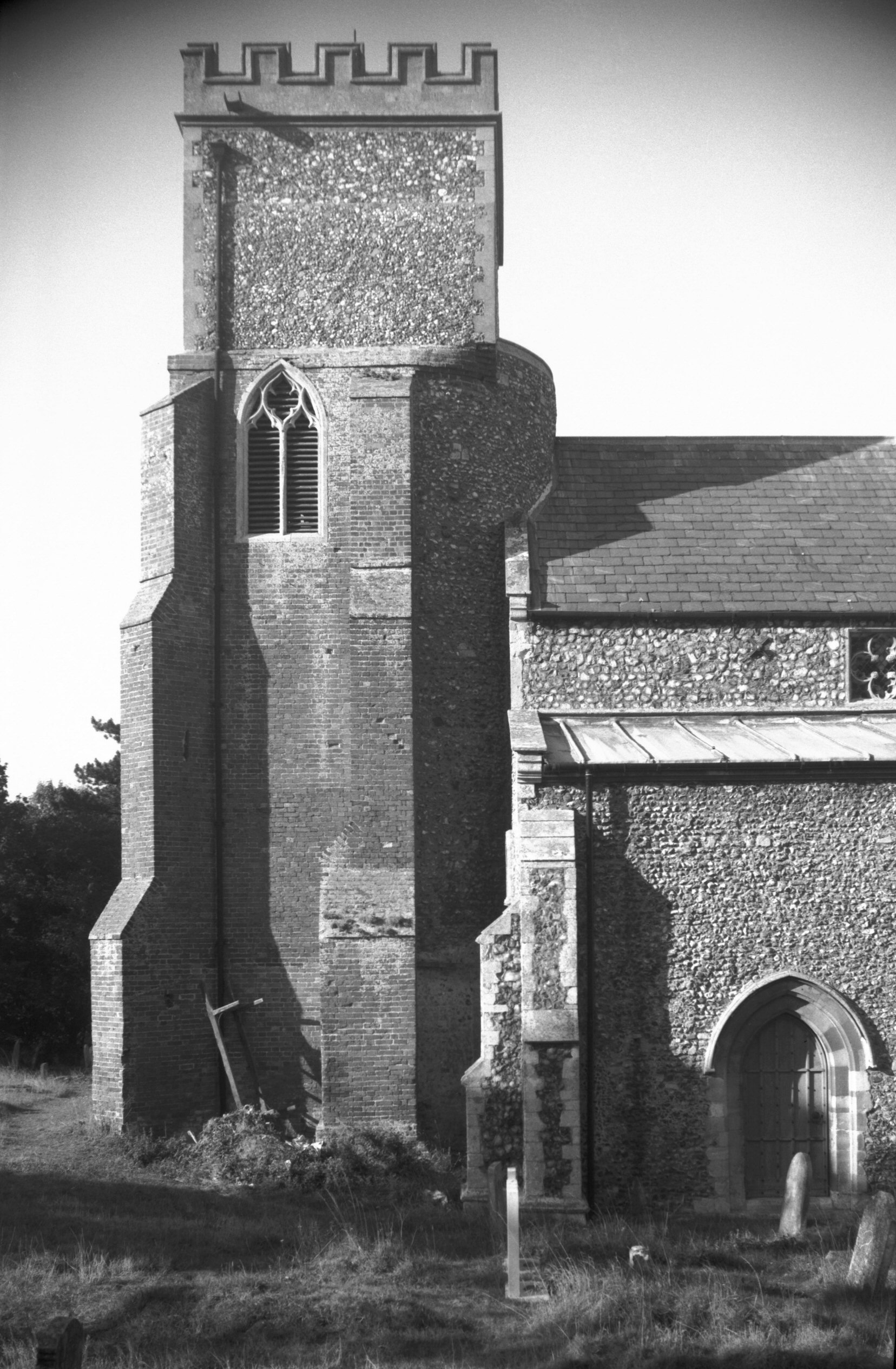
    There was likely a religious building here during the Saxon period, but the Normans constructed a round tower, although this was rebuilt in something like the thirteenth century.

    20250706_172353

    Then in the sixteenth century, there was the sub-optimal situation that most of the church tower fell down. This wasn’t a time when the church was the most wealthy or loved, so it took some time to fix the arrangement. In 1714, the locals finally built a square brick tower against what remained of the collapsed tower, leaving what would have been a slightly untidy arrangement, but at least one which let them have a complete tower and bells to put in it.

    20250706_174940

    The entirely rebuilt section of tower.

    20250706_172535

    In 1843, not wanting to be outdone by previous generations, the Victorians decided that they wanted to raise the height of the tower by around ten feet and later in the nineteenth century, they decided to shove a clock on it as well. As the church puts it, “a square tower in a round hole”, with the Round Tower Churches Society including it in their list.

    20250706_172948

    The bulk of the rest of the church’s structure dates to the fourteenth and fifteenth centuries. George Plunkett has a photo of the church from 1976. Recently, the lead roof has been replaced with something that is terne coated steel that looks like lead but is rather less useful to any thieves who might be passing.

    20250706_173236(0)

    And there’s a rather glorious ceiling that I think is nineteenth century.

    20250706_173200

    The chancel dates to the late thirteenth century, albeit that was also faffed around with in the nineteenth century.

    20250706_172457

    The Perpendicular north porch is from the fifteenth century and rather grand with a room above, accessed from within the church, which was in the Victorian period used as a schoolroom for the local children, but was likely used to store church treasures when it was constructed. There’s a niche at the front of the porch that would have housed a statue of the Virgin Mary, but that has long gone.

    20250706_172509

    Inside the impressive porch with its roof bosses.

    20250706_172829

    The church has a sizeable chest, there would be no moving that in a hurry.

    20250706_174452

    This is rather outdone by the Denton Chest, located in the chancel, which has medieval painted panels on it which likely date from the early sixteenth century. It’s not entirely known where these are from, but they are likely from the church’s rood screen, or potentially the rood loft. The paintwork has faded somewhat, the photograph makes these panels look much brighter than they actually are.

    20250706_172709

    The fourteenth century chancel was ‘improved’ by the Victorians, under the influence of the rector, William Bouverie, with the floor being lifted up. The Victorians made lots of changes around the nave as well and, as ever, I’m not entirely sure they’ve really improved matters as there’s some heritage that feels like it has been knocked out.

    20250706_173207

    This East Window in the chancel is an interesting arrangement and it comprises pieces of stained glass that were collected by Archdeacon Postlethwaite and they were then arranged by Joshua Price between 1716 to 1719, using a financial legacy left by the Archdeacon. It’s an impressive sight now, lots of bits of glass treasure and a fair amount of heraldic glass, with the whole arrangement thought to be the first of its type in the country. There’s more about the stained glass in the church at https://norfolkstainedglass.org/Denton/Denton.pdf.

    The design which was completed for the church by John Brown of Norwich in 1839.

    This is one of the most impressive churches that I’ve visited so far in Norfolk, there’s plenty of history here, but it’s also nice to come to a church which is left permanently open and that’s something they’ve done for over a decade. It feels a welcoming place, there’s an effort that has been made to explain the building’s history and everything feels in good order. It also feels like a loved church and that has been essential as a lot of repair work has been needed in recent years to protect the interior and exterior.
  • Bratislava – Bratislava Transport Museum (1902 Austrian Locomotive)

    Bratislava – Bratislava Transport Museum (1902 Austrian Locomotive)

    20250626_103017

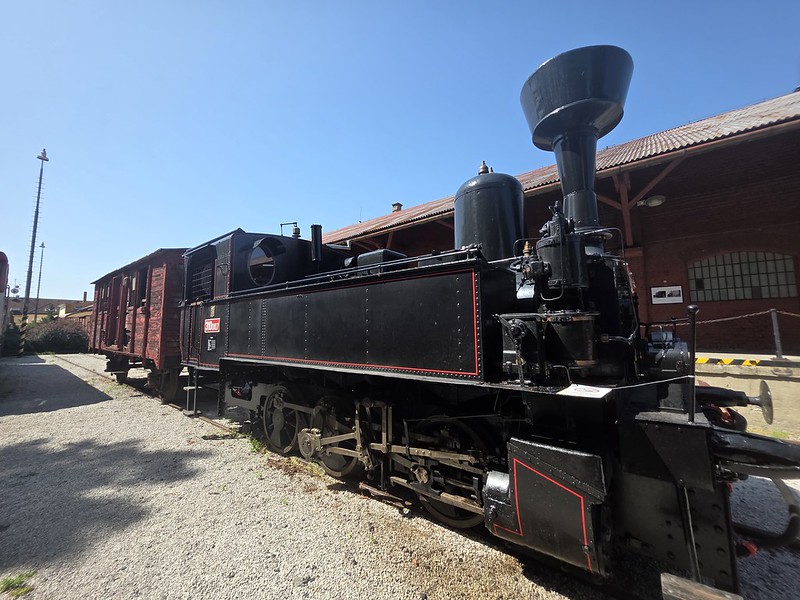
    This feels like what a noble steam locomotive should look like, and this rather lovely Krauss 310 was built in Linz in 1903. It’s now sitting in the courtyard of Bratislava’s Transport Museum, looking rather photogenic in the baking Slovakian sun. I might have mentioned it was very hot and sunny when I was there. The locomotive is older than most modern democracies and arguably more reliable than some and it served for decades on narrow-gauge lines in the Austro-Hungarian Empire. There’s no option to climb aboard the locomotive, but it was too hot anyway for such escapades.

    The attached little red wooden wagon adds a rustic contrast, though perhaps a bit less decadent. It’s charming in that functional and splintery kind of way, and I dare say it wouldn’t have passed modern health and safety inspections, unless those inspections were done by candlelight and accompanied by schnapps.

    20250626_103000

    From the front and the relatively small size of the locomotive is a little more obvious now and it looks somewhat less of a thundering beast.

  • Bratislava – Bratislava Transport Museum (1989 MNA 1000)

    Bratislava – Bratislava Transport Museum (1989 MNA 1000)

    20250626_104242

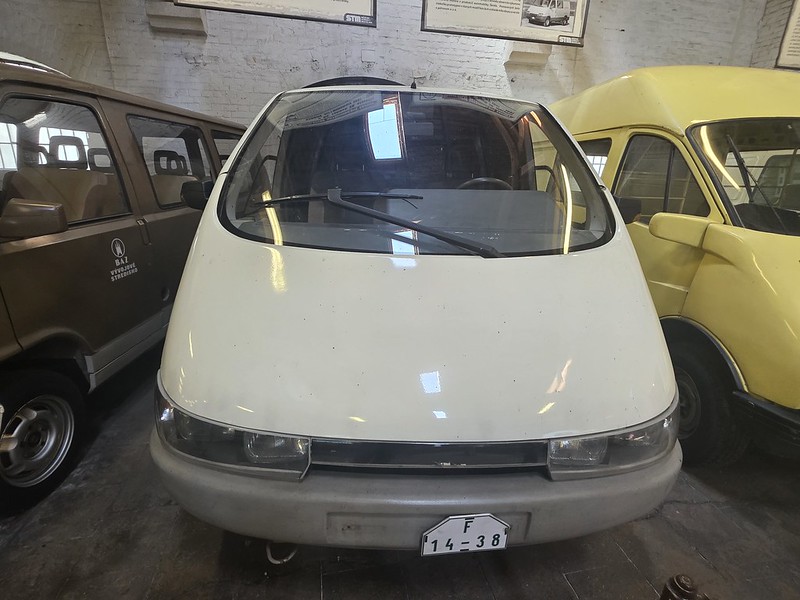
    Obviously, I didn’t have a bloody clue what this was before looking at the information board, but for my riveted two loyal blog readers, I can confirm that it’s a MNA 1000 produced by the Bratislava Automobile Company, a rather bold and ultimately doomed attempt to drag Czechoslovak van production into the modern age. It was rather a modern design, especially with the wraparound windscreen and the single windshield wiper valiantly attempting to clear a vast surface and the headlights that seem to be playing peek-a-boo from behind slightly sulky eyelids. The design process kicked off in 1983, with the aim of replacing the ageing and increasingly sub-optimal Škoda 1203 van, a workhorse that was apparently not considered as particularly glamorous.

    What’s rather touching, and is what intrigued me, about the whole story is how much hope was poured into this little van. Engineers had ambitions, there was talk of a front-wheel drive layout, sleek design and even collaboration with Moscow-based AZLK to push things forward. But then the Iron Curtain came crashing down, the market economy swept in, and the idea of building something locally that looked like a squashed spaceship became less appealing and it never made it to full production. A few prototypes were made and this is one of them, parked up in a museum but at least it survives.

  • Bratislava – Museum of History at Bratislava Castle (Restored Painting of the Coronation of the Virgin Mary)

    Bratislava – Museum of History at Bratislava Castle (Restored Painting of the Coronation of the Virgin Mary)

    20250627_115418

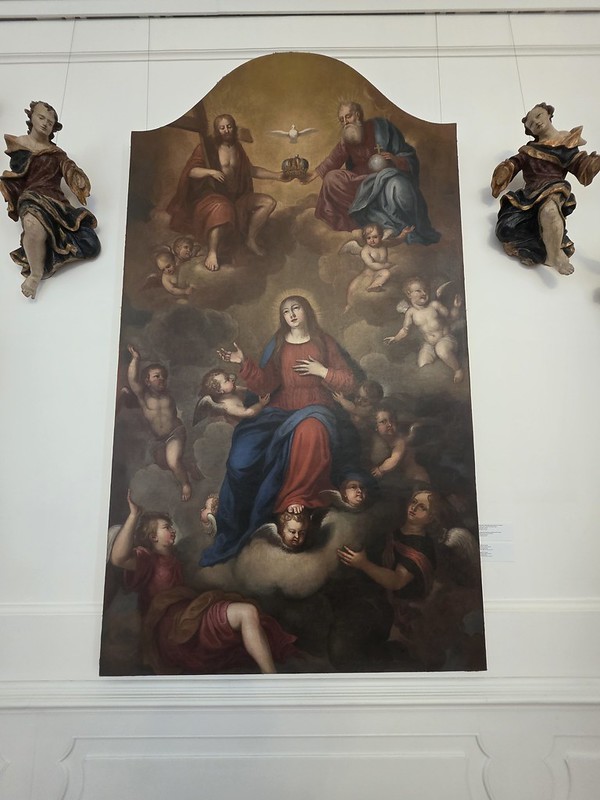
    The artist of this painting is unknown, but it dates from the middle of the eighteenth century and it depicts the Coronation of the Virgin Mary. This sort of painting was likely once the centrepiece of a church altar, part of the visual storytelling for congregations, many of whom might have been illiterate, but could still spot a divine coronation when they saw one. The artwork has that unmistakably decadent Baroque flair of dramatic skies, dynamic poses, and a generally high angel-to-square-foot ratio. But, despite all that excitement, I didn’t like it.

    20250627_115428

    The reason for my general disapproval, and I witter on a lot about this theme, but for me, and I know views vary (and mostly disagree with me), I would have rather that they had left this instead of restoring it. I felt what I was looking at now was something too perfect, removing all evidence of its history and heritage. I understand that there was evidence of previous restorations, bits of paint were missing and some of it had faded, but I like the authenticity of what they had. What they’re ultimately doing is creating something fake, they’re changing things to try and make the imperfect somehow perfect, but history can’t be turned back. I do like that the museum has put this information board up to explain the restoration process and there’s obvious huge skill involved with this whole endeavour which I respect. But, I don’t really see why they don’t just leave the artwork and then paint an entirely new one for visitors who would like to see what it was intended to look like.

  • Limoges – Walk from Airport

    Limoges – Walk from Airport

    [I originally posted this in June 2018, but have reposted it to fix some broken image links]

    20180629_101425

    Limoges is the first airport that I can remember visiting that has managed to provide no bus, rail or tram link for its passengers. There is a bus link, but there are only three a day and they’re not at all timed to the movement of the aircraft. The taxi drivers at the airport must be very pleased indeed at the local bus company, as that’s the only option to get around for those who aren’t hiring cars.

    Well, other than for those people who walk. I’m getting the impression that there aren’t many who do that, as no-one from my flight seemed to feel the need to walk the six miles into the city centre. Anyway, what’s the point of being a member of the LDWA (long distance walkers) if I don’t walk from time to time?

    So, I walked.

    20180629_102430

    Although there isn’t much pavement for the first two miles, there also isn’t really much traffic. The first part of the walk is alongside a busy road, but they’ve carefully added an area to walk on the grass, so it’s safe.

    20180629_103417

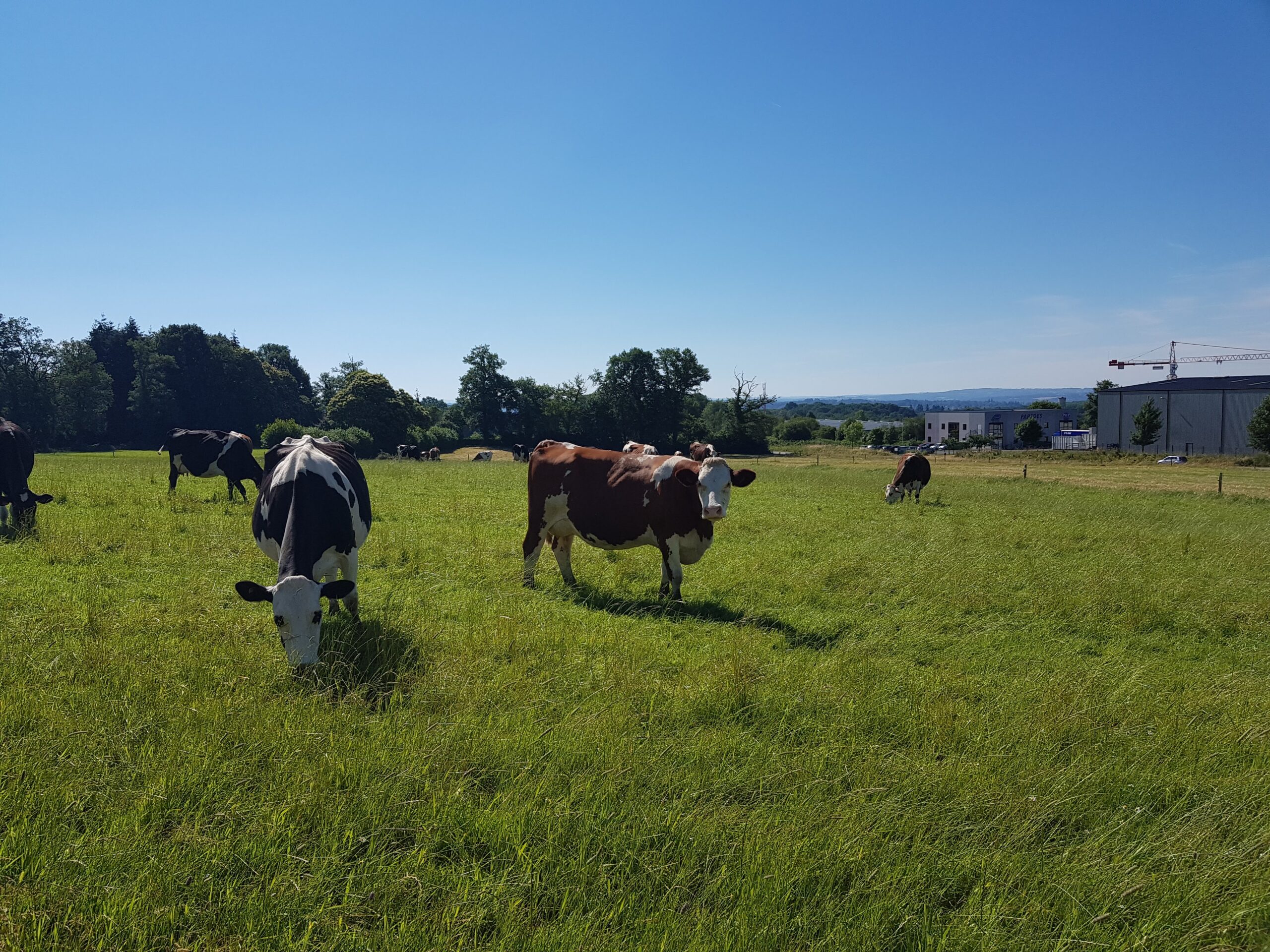
    There were lots of cows in the fields.

    20180629_102157

    The view on the walk was certainly rather pleasant, lots of countryside and some lakes.

    20180629_105214

    And some streams, all very lovely. Just under half-way through the walk is a town where there are numerous small shops. There was also a church which I would have visited, but there was a funeral going on when I was there, so it didn’t feel entirely appropriate.

    20180629_115236

    When reaching the city, one of the first sites that it’s necessary to cross is one of the city parks.

    20180629_121429

    And after going through a park there’s a woodland walk, which given the hot temperature, was very welcome indeed. As can be seen from the photo, it was sunny.

    20180629_122048

    A look back at the woodland area, which is surprisingly dense for such a relatively central area in a city.

    20180629_122554

    This is the last photo before I arrived at the hotel, a view of the main railway line which goes into Limoges. The entire walk takes around two hours, although I took a little longer as I decided to sit down every now and then to cool down from the heat. It’s not the most sheltered of walks from the sun in places….

    For those not in a rush, it’s a very walkable route into Limoges, especially for those who don’t want to pay the €24 taxi fare.

  • Bratislava – Hotel Matyšák

    Bratislava – Hotel Matyšák

    20250626_151936

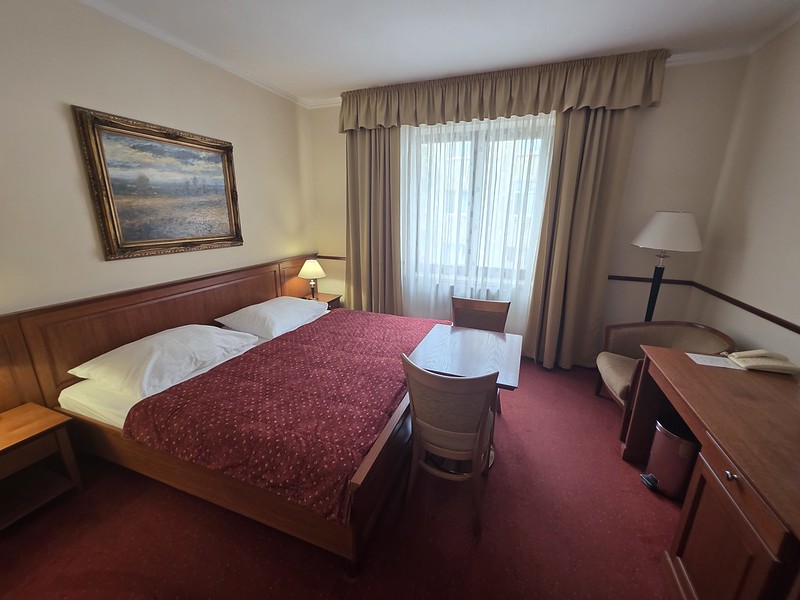
    My first night’s stay in Bratislava was at Hotel Matyšák, a very keenly priced hotel a short distance from the city centre. The hotel is known for its associated wine shop and wine focused restaurant, although I promptly ignored that and went to a craft beer focused restaurant for my evening meal. However, for those that are rather more cultured and engaged in wine than I am, I think this might be rather a sensible accommodation choice and guests get a discount on their meals.

    The weather was ferociously hot when I was in Bratislava, something that I might have mentioned as it tested my strengths of human endurance, but I was pleased to discover that the room was relatively cool and that there was a fan which was sufficiently powerful to vaguely cool me down. There was also a mini-bar, which I unusually took advantage of, namely as the lovely and cool Coke was only around £1.50.

    20250627_074354

    Breakfast was included in the room rate and there was a reasonable selection of hot and cold food items. There were numerous croissants, breads, cold meats, cheeses and quite a lot of fruit.

    20250627_074854

    My healthy choices, which actually included fruit. The breakfast room was peaceful and calm, without being overly busy, so that made for a leisurely rather than stressed start to the day. I really can’t be doing breakfast carnage which happens at some hotels, so this was a decent peaceful affair.

    The hotel is positively reviewed on-line and I think my £45 room including breakfast was unusually cheap, but was certainly convenient for me. The welcome at reception was friendly and everything felt clean, organised and in order. The reception is in an odd location at the rear of the building, but that’s because their main entrance is used for the restaurant and fortunately everything is clearly signed so I didn’t get muddled up. I’d stay here again as long as my little fan was still in situ, it was easy to get to, there were no noise disturbances internally or externally, with everything feeling well managed.

  • Bratislava – Museum of History at Bratislava Castle (Immaculata from Church of the Holy Trinity in Březová)

    Bratislava – Museum of History at Bratislava Castle (Immaculata from Church of the Holy Trinity in Březová)

    20250627_115338

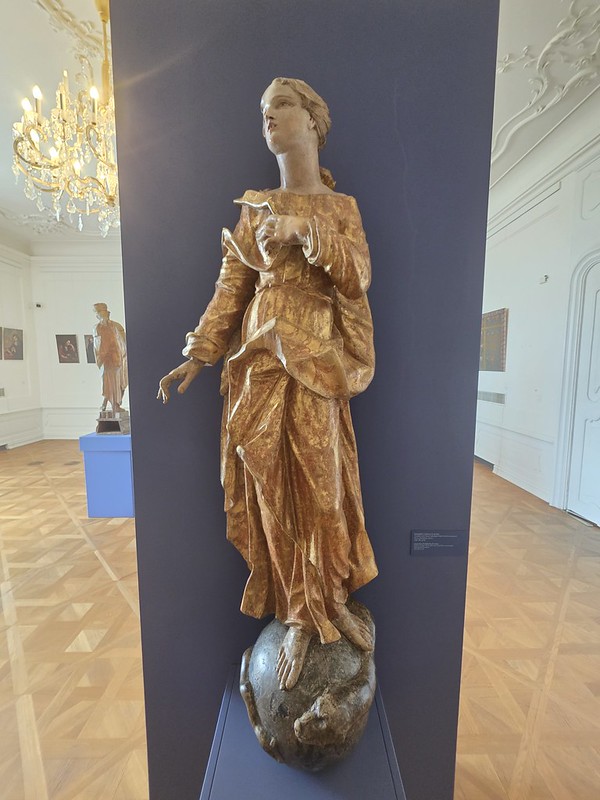
    Here we have Immaculata, created sometime in the first half of the eighteenth century by a sculptor who, despite presumably putting in a solid effort, has somehow remained anonymous. I’m not quite sure what the Virgin Mary is standing on here, it might be a snake and if it is, I hope it is being shown being crushed. Although she’s also barefoot on top of a globe, which I’m also not sure that I understand. The swirling golden robes are a little decadent and the whole arrangement is in decent condition.

    What I really like is knowing where this item once was, as that adds somewhat to being able to picture the importance of this statue to previous generations. This gilded delight originally stood in the Church of the Holy Trinity in Březová, although I don’t known why it now resides in a rather more climate-controlled room in Bratislava Castle, although I suppose it at least has considerably fewer incense fumes to contend with. Its former home is a modest but rather resilient Roman Catholic church dating back to around 1650. It was constructed on the bones of a previous building that had been confiscated as part of the Counter-Reformation, so it’s literally built on the spoils of religious politics. Its original protestant incarnation got the axe during Habsburg re-Catholicisation, before the current Baroque version went up in 1650. Matters had been restored to some form of normality by the time that this sculpture was placed in the church although I don’t know how long it stayed there for.

    Anyway, I’m not sure that I’ve found much to really write about here to surprise and delight my two loyal blog readers, I was just intrigued that they knew where the statue came from, as in some many cases the museum just didn’t know where their treasures had once been located.

  • Bratislava – Museum of History at Bratislava Castle (St Joseph the Foster Father of Jesus by Johann Ignaz Cimbal)

    Bratislava – Museum of History at Bratislava Castle (St Joseph the Foster Father of Jesus by Johann Ignaz Cimbal)

    20250627_115230

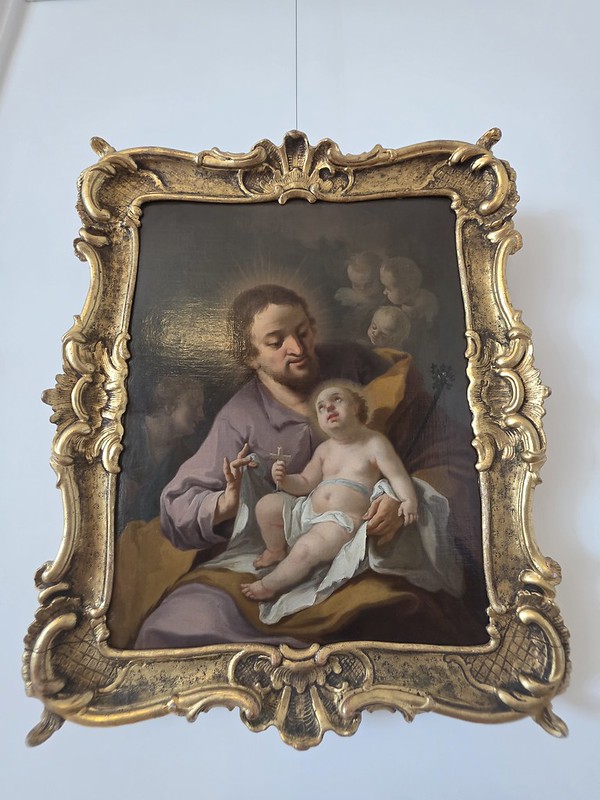
    This is “St Joseph the Foster Father of Jesus”, painted in the eighteenth century by Johann Ignaz Cimbal (1722-1795), who seems to have leaned heavily into the brief of “tender paternal scene with bonus cherubs”. I’m not sure that I much like the painting really, the medieval artists painted Jesus looking a bit odd, but by now many artists made him look a little more, well, cute or at least holy. I’m also not quite sure really what the messaging is here. Joseph looks vaguely pleased, perhaps even slightly startled that he’s been entrusted with this holy toddler, while Jesus stares up with the weary wisdom of someone who already knows what’s coming.

    Wikipedia notes about the artist:

    “In his lifetime, Cimbal was in demand as a painter, and his clients were satisfied with his work. Since his death, however, he has been less adulated: his works have been described as dry and sourced from a limited inventory, and his detailing sometimes clumsy.”

    I think that I rather agree with this. It does feel clumsy to me and although he painted hundreds of altarpieces and frescoes, I’m not sure I would have felt inspired by looking at it. But, I don’t know where this altarpiece was displayed, if it was originally in some church in the middle of some village in what is now Slovakia, it might have been rather acceptable. I’m not sure that the denizens of Florence would have looked at it with much delight though.

  • Bratislava – Museum of History at Bratislava Castle (Veil of Veronica)

    Bratislava – Museum of History at Bratislava Castle (Veil of Veronica)

    20250627_115240

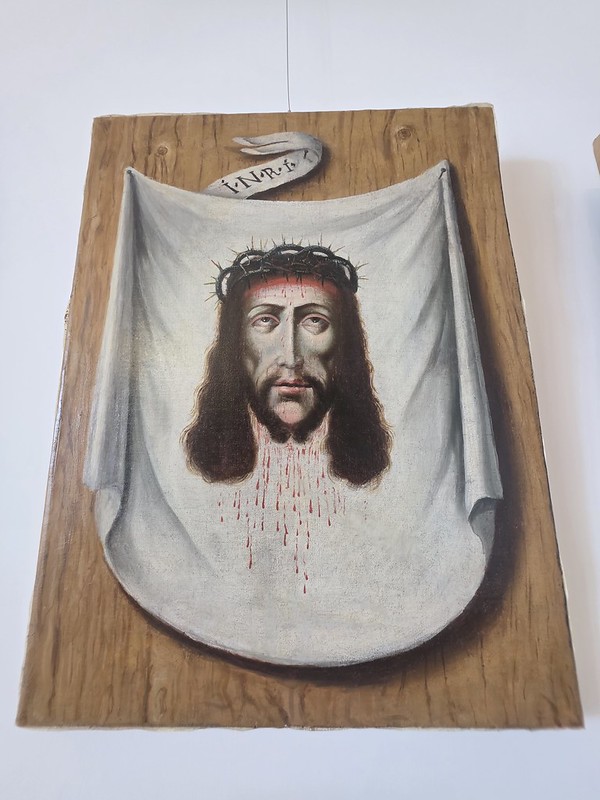
    This rather striking bit of religious art is a depiction of the Veil of Veronica, an image that hovers somewhere between theology, relic culture and the sort of iconography that would have deeply unsettled 17th-century Protestants. And quite honestly, it’s a bit intense for me, it’s not something I’d want adorning the wall of my Norwich abode. The basic idea behind this depiction is rooted in a popular medieval legend, that as Christ carried the cross to Golgotha, a woman named Veronica stepped forward and compassionately wiped his face with her veil. In return, the image of his face was miraculously imprinted on the cloth.

    The piece here is especially gory, there’s no romanticising the crown of thorns, and the blood flows freely in a way that can only be considered sub-optimal. Above Christ’s head is the abbreviation “I.N.R.I.” — Iesus Nazarenus, Rex Iudaeorum — which translates as “Jesus of Nazareth, King of the Jews.” This was the inscription placed above his head on the cross, and it’s become the go-to Latin tag for anyone wishing to subtly indicate their religious art credentials. The gallery doesn’t know who painted it, but states that it’s from the eighteenth century.

    I suppose that art like this wasn’t created just to sit on a wall and collect polite admiration, it was meant to surprise and delight, or indeed in this case, shock. It’s something of a spiritual call to arms, but that’s why I rather liked this. I’m not sure whether a painting of a man dripping blood is ever going to be something that delights, but it certainly stood out in the gallery and I thought it looked quite modern when I first saw it.

  • Trier – Railway Station

    Trier – Railway Station

    [I originally posted this in June 2018, but have reposted it to fix the broken image links]

    20180627_124505

    I’m slightly cheating here as I didn’t use the rail network to get to Trier, but since I walked by the railway station, I felt the need to go in and have a look. There is a direct rail line to Luxembourg and I’m fairly confident that I’ll be visiting Trier again, and I think rail is the best way of getting there.

    20180627_124547

    Nice and clear information board with the time of the trains, and they appear to be frequent. The railway station was also clean and well organised, with plenty of seats available.

    20180627_124605

    Dylan would be delighted to see that there was a double decker train on the platform.

    20180627_124643

    20180627_124527

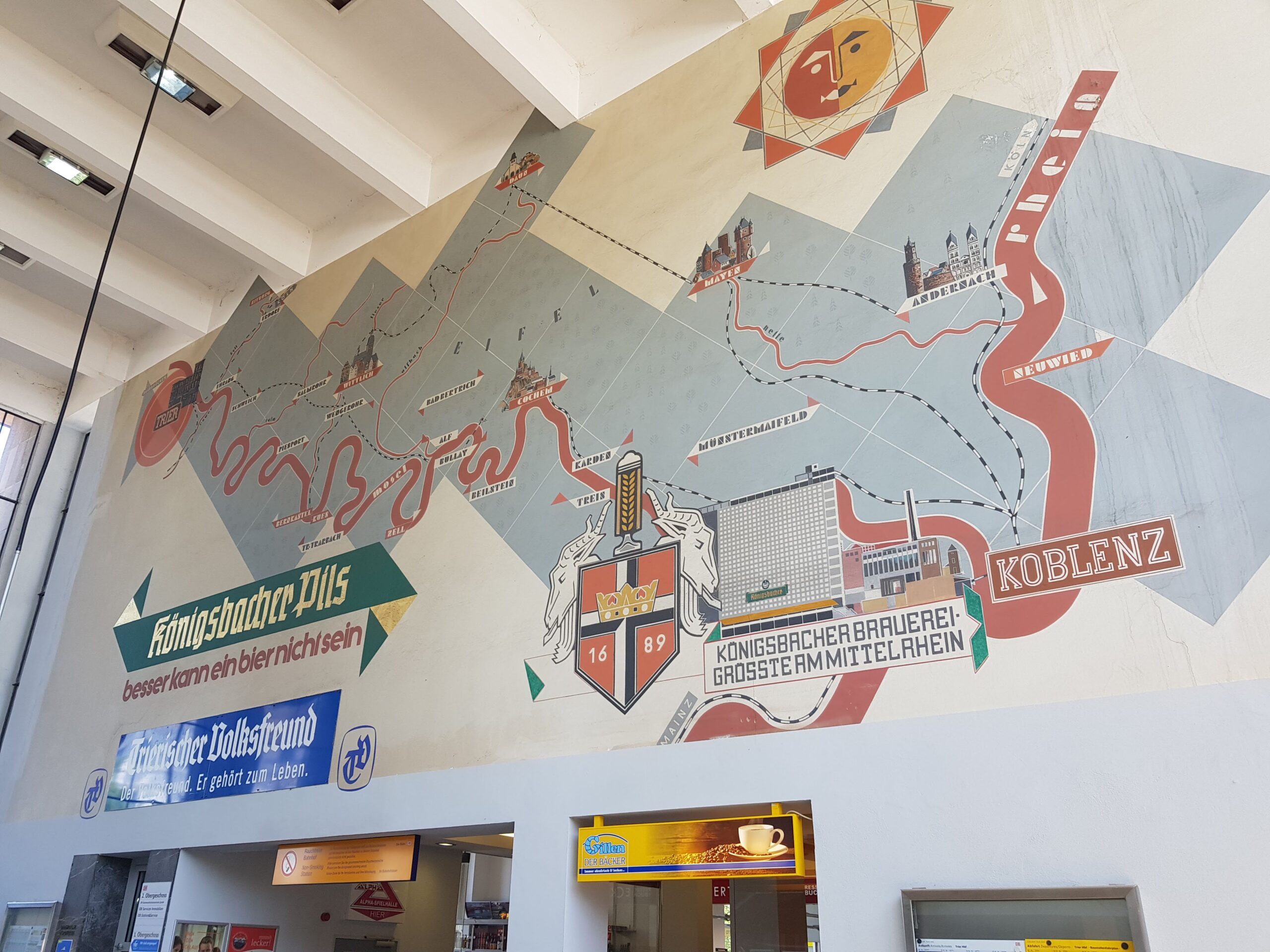
    I’ve seen this sort of graphical representation of the area and the surrounding lines in a few railway stations. I think it’s interesting to look at and a good use of the space, hopefully the idea will continue to catch on.