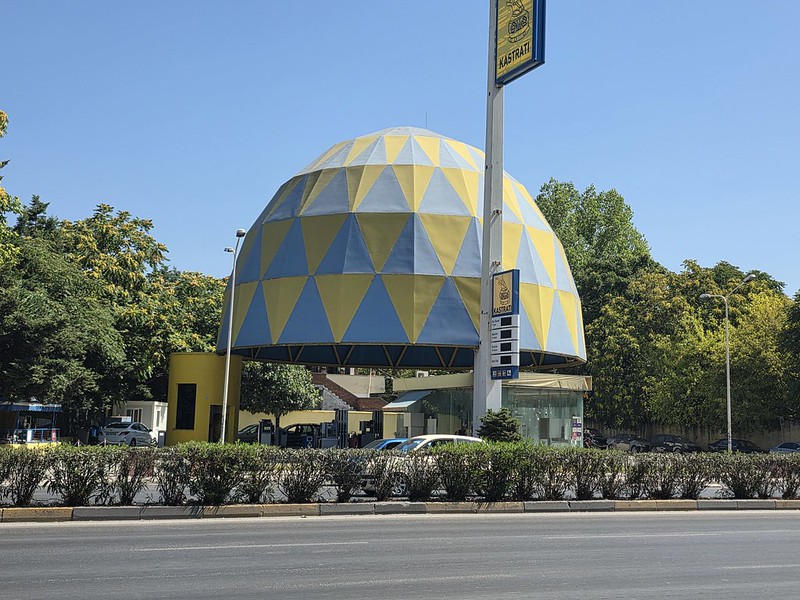
This is certainly noticeable and it’s the dome of a petrol station. Perhaps a curious example of Albania’s love for bold, slightly eccentric architecture and it makes it stand out against the otherwise ordinary backdrop of roads and trees. I did wonder whether it was fulfilling some higher cosmic purpose, but it’s just sheltering fuel pumps. It’s part practical, part playful and entirely memorable. I liked it……
Blog
-

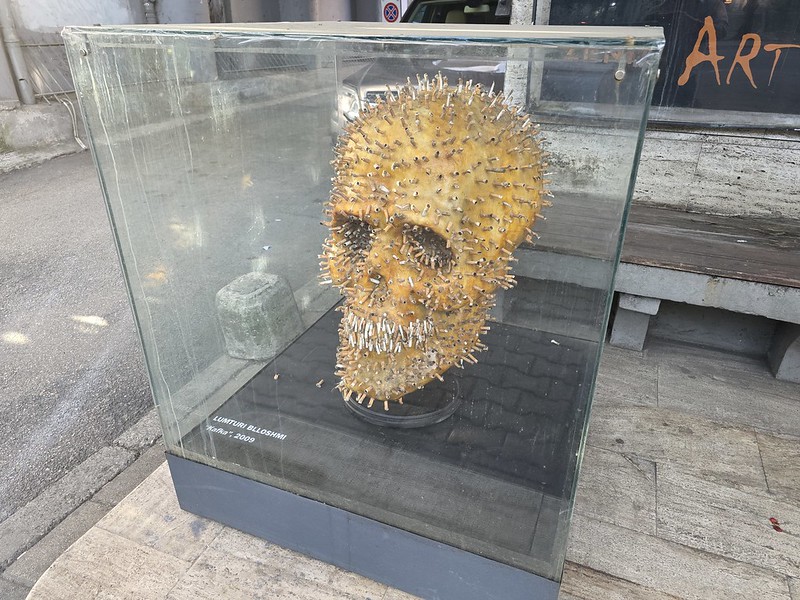
Tirana – Kafka by Lumturi Blloshmi
This was something of an intriguing artwork to walk past and it’s Kafka by Lumturi Blloshmi (1944-2020), created in 2009. She was an Albanian artist who was stuck working for a while under the suppression of the communist regime, but later on in her career she focused on artworks that related to the human skull. This artwork is made out of resin with hundreds of the cigarette ends which are attached to it, trying to emphasise the transience of life and the dangers of pollution. Unfortunately, she died on Covid in 2020 and she had been deaf since the age of five, so she had to contest against political repression, the limitations of the art world being mostly male and a lack of hearing. She sounds like really something of a fascinating character. There’s more information about her life at https://secondaryarchive.org/artists/lumturi-blloshmi/.
-

Tirana – The Former House of Dictator Enver Hoxha
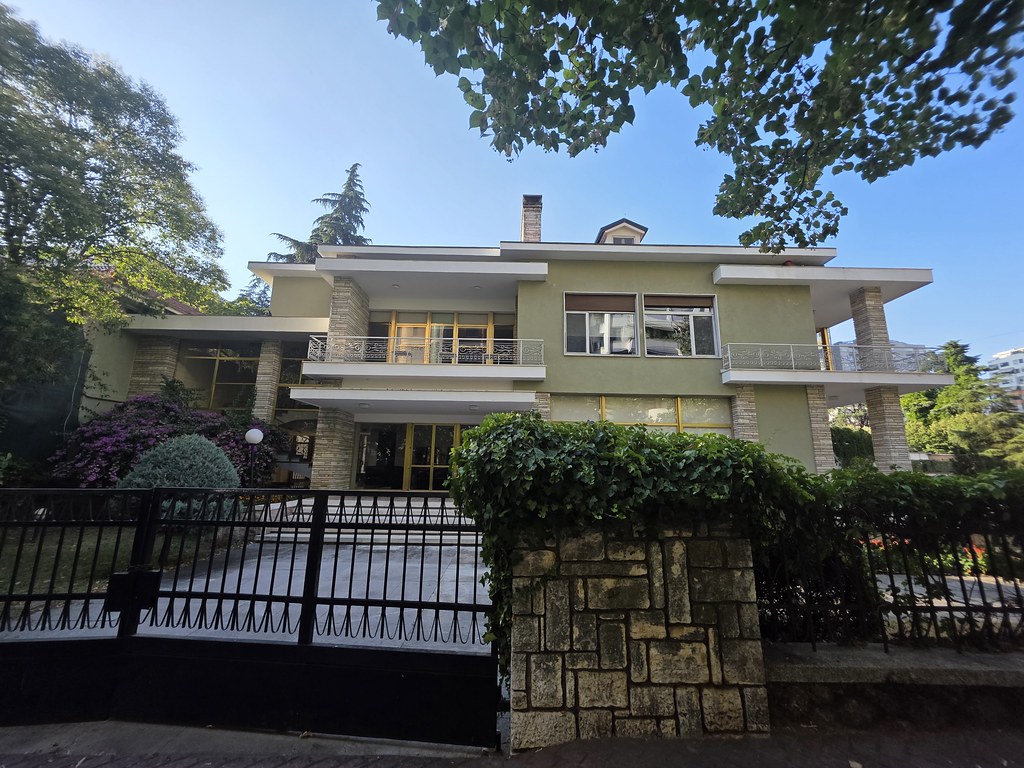
Hidden away in the once-exclusive Blloku district of Tirana where the political elite once lived is Vila 31, the former home of the dictator Enver Hoxha (1908-1985) sits there looking quite unassuming. Constructed between 1972 and 1973, it was designed to be modern yet suitably imposing, the kind of place where a dictator could pretend to be modest while secretly enjoying the perks of power. There was a private cinema, a basement swimming pool and even a secret tunnel to an underground bunker as nothing screams ‘I trust the people’ quite like a hidden escape route under your own living room. Although a lot of this he blamed on foreigners, whilst Albania suffered financially, Hoxha told his population that the west as so jealous of Albania’s wealth that they might invade at any time to share in the prosperity. This ridiculous lie is perhaps why Hoxha didn’t let any Albanian travel outside of the country, it all has rather North Korea vibes to it.
This entire neighbourhood was once sealed off from ordinary Albanians and only the party elite could live here, and mere mortals weren’t even allowed to walk through it. Hoxha and his family lived surrounded by books, some of them on subjects he happily banned everyone else from reading. He also spent vast sums of the country’s money on importing fashionable European interiors, whilst bankrupting the country and mocking foreign design.
When Hoxha died in 1985 and the regime collapsed a few years later, the villa became a strange sort of relic. It wasn’t demolished, because no one quite knew what to do with it, but it also wasn’t turned into a museum or shrine. For years it sat there behind drawn curtains, an awkward reminder of the past while the rest of the neighbourhood filled with lively cafes and bars. Indeed, opposite the property is a KFC, the first in Albania, which I felt the need to pop into in order to cool down. The photos are evidence of just how bloody hot it was in Tirana when I was there….
And as for now, it’s been reborn as an artist residency. The marble floors and gloomy halls that once hosted political plotting now welcome painters, writers and filmmakers. Instead of propaganda speeches, there are poetry readings and instead of whispered paranoia, there are film screenings. So a house that was once a symbol of control and isolation has become a space for creativity and free expression. A former dictator’s stronghold now full of people doing exactly what he spent decades suppressing, Hoxha would absolutely hate it and we can all drink craft beer to that thought.
-

Tirana – The Pyramid of Tirana

By Brosen – Own work, CC BY 2.5, https://commons.wikimedia.org/w/index.php?curid=332478 This is what the Pyramid of Tirana looked like in 1996 and it had been opened in 1988 as the Enver Hoxha Museum, the inept communist leader of Albania who trashed the country’s economy and banned the entire population from travelling overseas. The now disgraced Hoxha was widely detested and as soon as communism fell the museum closed, despite it being the most expensive building constructed in the country. During the 1999 Kosovo War, it was used as a base by NATO and it was also used as a conference centre.
There was a great deal of confusion about what to do with the structure, with some people wanting it to be demolished, but there were many others who wanted it repurposed. So, in 2023, that’s what they did, they repurposed it and put steps up so that people could walk up it. This was a little bit of a throwback to the past when local kids used to climb up it and then slide down, which wasn’t quite what the authorities wanted.
Here it is today, with the interior being a little under-used, although there are cafes and some charitable institutions use the facilities.
The views from the top.
It was probably a little too hot to be climbing all these steps if I’m being honest. Climbing the steps seems popular with locals and visitors, with Tirana being increasingly visited by tourists. All this freedom would have horrified Enver Hoxha, who was perhaps rather fortunate to have died from natural causes before communism collapsed, as otherwise he would have joined his wife, Nexhmije Hoxha, in prison. The only museum to Hoxha in the city today is that which tells the story of his totalitarian rule where people lived in fear.
-

Tirana – The Taproom by Pan’s Microbrewery
The craft beer scene seems to be growing in Tirana and this is one of the best reviewed taprooms in the city. I checked before ordering and was pleased that they accepted cards so that I wouldn’t miss out on any beers.
It’s a quirky and informal environment, with an outside terrace as well but there was smoking going on out there and I’m an indoors kind of person anyway.
It was all clean and comfortable, with table service available although I ordered at the bar so I could see what beers there were.
The beer selection, although a few weren’t available.
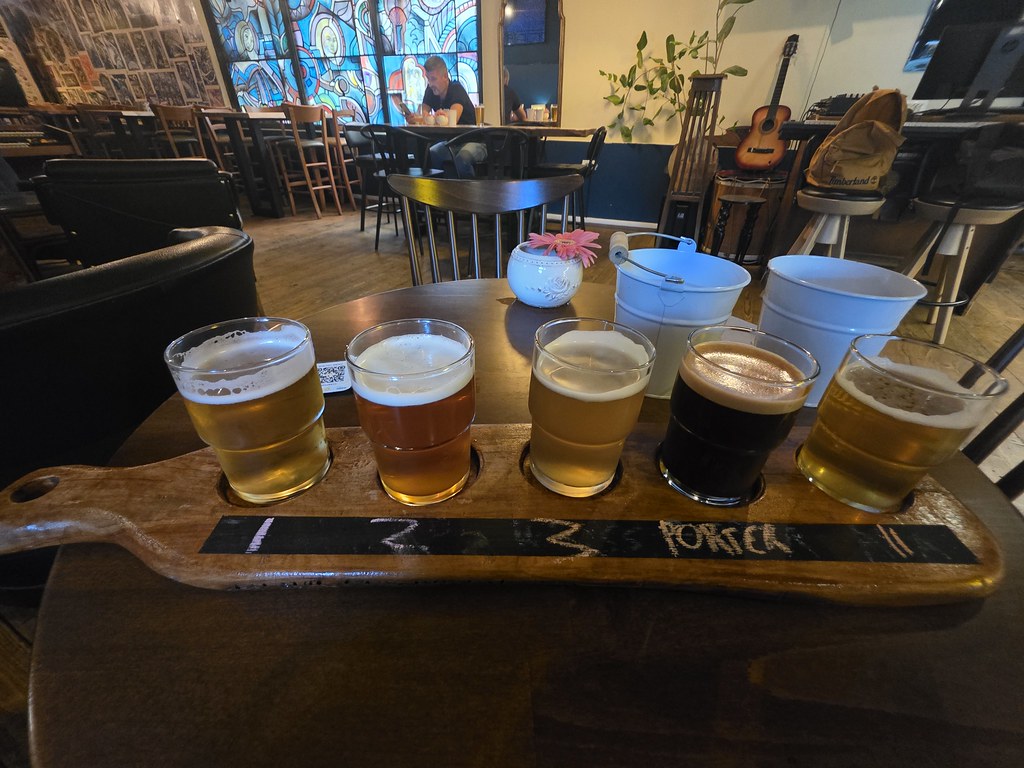
I asked if they could do me a flight of beers and I’m pleased to note that they could. He did offer me the choice of what I wanted, but I was in a reckless mood and opted for the cherry porter and let the server pick the other four. That’s about as much adventure as I need for one evening.
All the beers were brewed by the Pan’s Microbrewery and from left to right:
(i) Siringha – as lagers go this was very agreeable, light, floral and fluffy.
(ii) Vagabondi – a light and gentle IPA.
(iii) Midas Kiss – a balanced and gentle wheat beer, with some orange and more floral notes.
(iv) Cherry Porter – there’s cherry flavour in it but this was a little less balanced and was a bit clumpy, although it was still pleasant.
(v) Goat Head – full flavoured and citrusy IPA, rounded and rich.
They had brought some free nuts over to the table, but I thought I’d have the crispy chicken as well to add to the decadence of the whole arrangement. The chicken was tender and those chips were light and fluffy.
This was a really rather lovely venue and I can see why the online reviews are so positive. The service was friendly, the surroundings were comfortable and the food was of a decent quality. They didn’t have their usual full line-up of beers, but there was still plenty of choice and the server was engaging and knowledgeable about the options. The beers were all very drinkable, there was a balance to most of them and the lager and IPA were gentle and quite floral. The meal and five beers came to around £14, which is expensive for the city, but I think decent value for what is effectively an on-trend craft beer operation in the middle of a capital city.
-

Limoges – Oradour sur Glane (Bus Journey)
[I originally posted this in July 2018, but have reposted it to fix the broken image links]
I mentioned in my main blog post about Oradour sur Glane that the bus situation to get there was a little complex. So, in case anyone in future stumbles across this blog and wants surety on where to go, then I hope that this might be of some use.
One of the problems that I faced was that all of the bus timetables on posters, at bus stops, bus stations, in publications and on-line are mostly for the local bus company. They include Oradour on the map, but they mark it as “en car” which isn’t perhaps immediately obvious. But, by this, they mean get the alternative bus service, which has a web-site at http://www.moohv87.fr/ (and which has timetables).
So the bus company that goes to Oradour from Limoges is a different one, and it does run services throughout the year. The service seemed reliable and although a little infrequent, it’s cheap and an efficient way to get to the historic site.
There are a number of stops in Limoges which the bus goes through. Personally, I ignored them all and just went to the railway station, because that’s where the service starts. It’s easier to catch a bus at the start point and you’re more likely to get a seat, although that proved to be a little irrelevant….
The service you need is the number 12 bus, although there’s also a 14 bus which does the same route which runs from early July to early September every year.
Above is the bus at the city’s main railway station, and the bus station is accessed by going into the main terminal and turning right. It’s clearly signed, just go past the ATM and vending machine (well, there are tens of vending machines, but follow the signs) and it goes out through an elevated walkway and then down to the bus platforms.
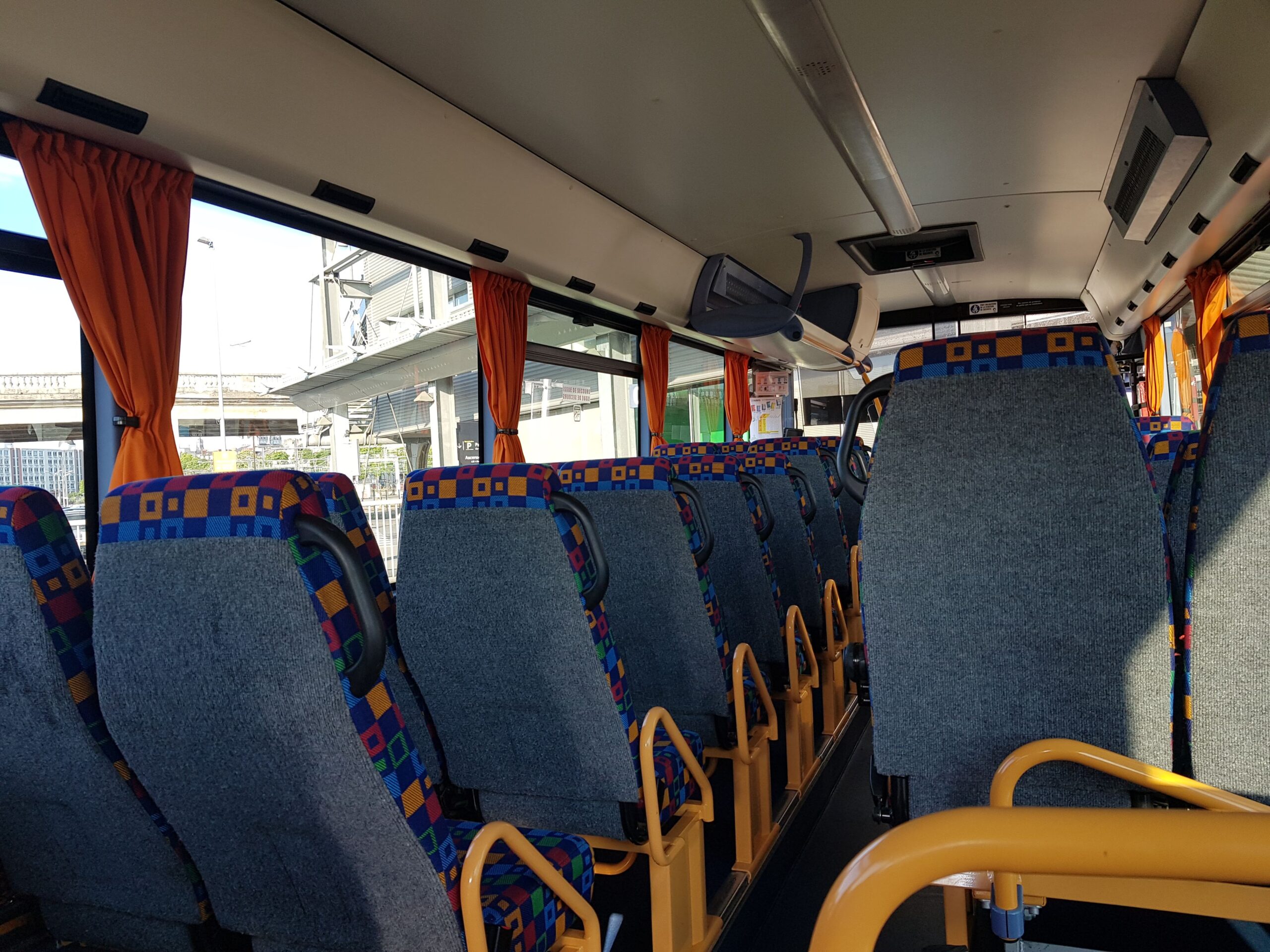
I was the only passenger…. It seemed a shame that the bus service didn’t seem well used, but I wasn’t entirely surprised. The driver was incredibly friendly and she was quite engaging about the whole process. A single fare is €2 and you can buy two tickets at the same time to avoid needing to get a return, although there’s no cost saving for doing this. The ticket needs to be validated in the machine by the driver, but they can help with this. Or, just stand there looking confused, they’ll have to help if they’re not pro-active. The bus driver seemed willing to offer change as well, although it’s best to have the correct money of course.
This is the bus stop at Oradour sur Glane, and it’s in the centre of the new town. It’s only though a five-minute walk to the visitor centre to see the ruins of the old town. The bus stops at Limoges in the same place that it departs from later on in the day.
And here is the timetable at Oradour to get back to Limoges. Overall, for €4 return I thought that the service was excellent, with the bus being clean and comfortable. I’m sure that it could perhaps be better advertised, as I’ve seen many tourists just get taxis, but these cost around €50 each way, so not very cost effective unless it’s for a group.
-

Limoges – Musée National Adrien Dubouché
[I originally posted this on 1 July 2018, but have reposted it to fix the broken image links]
This blog post is about a pottery museum. Now, at first, that might sound something which is of rather limited interest other than to Andrew. But, it was more accessible that I expected and it was carefully and thoughtfully laid out. My first impressions from the exterior of the building were that it looked a grand institution, and it has a long history given that it was first established in the middle of the nineteenth century.
The former entrance to the museum was through the grand frontage in the top photograph, but a more recent expansion to the building has created a new entry point.
Above is the original entrance hall to the museum, with its decorative flooring and sweeping stairs to the upper levels.
The external exhibit is made up of colourful pieces of pottery which have been mis-shapen and attached to a wall. It looks interesting and sets the tone for the rest of the museum visit, which is a narrative that isn’t too formal.
I had intended to buy the Limoges City Pass to give me free entrance to the museum, but it has transpired that there was no admission charge today because it’s the first Sunday of the month. I thought that the museum would be a lot busier because of that, but it’s a spacious building and it never felt at all crowded.
The staff member at the entrance was helpful and engaging, explaining what was in the museum and how to get around it. There’s also a free English translation available on iPad, although they need a form of ID and payment to be left with them to ensure they get the iPad back.
The first part of the museum is on the mezzanine level and it’s an introduction to porcelain and pottery. I must admit that I was distracted at this point by the extreme heat that I had walked through to get the museum, so I spent the first fifteen minutes trying to cool down.
The photo above shows the process of making decorative plates, from their initial firing to the end result which includes the different layers of decoration. I don’t think I could have a career in this type of thing, it sounds like a process fraught with things that could go wrong….
One of the long galleries with porcelain and pottery being displayed, all spacious and well presented. I liked how although the environment was clearly nineteenth century, the use of modern signage and presentation methods made the museum feel rather contemporary.
One thing I did like is that there was an entire room dedicated to explaining how the museum had come to exist, and how it developed. The current purpose-built location is the third home for the museum, with the second home being a former lunatic asylum. I’m sure that didn’t quite have entirely the right aesthetics for the museum, so above are the original drawings for the new building.
This colourful pieces of pottery are from the earlier part of the museum collection, with the potters starting to be able to add colours and detailed decoration to the products.
Another early decorative plate.
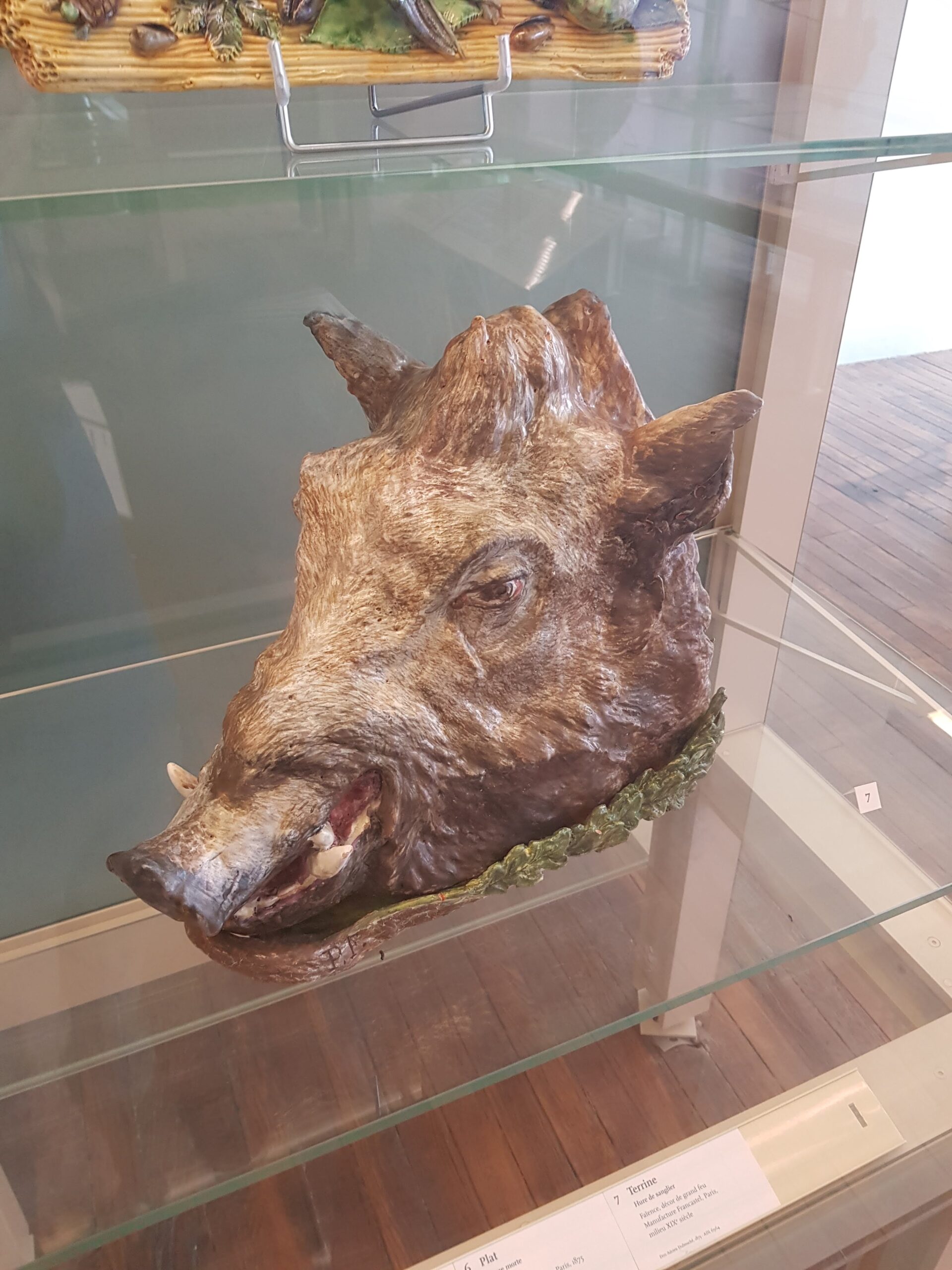
I’m not sure that I’d want this on my mantelpiece… Well, I don’t have a mantelpiece, but if I did, I wouldn’t want it there….
On that theme, this is a photo of a small section of a much larger piece. The snakes depicted on it are I’m sure very lovely for those who like snakes, but I can’t think of any pottery I’d want less on display in my home. Well, I can, but my point remains sort of valid.
The above two photographs are of Meissen pieces, and I’ve heard of this German porcelain producer. I think primarily because it was mentioned in one of the Steptoe and Son episodes.
In the fifteenth century (I didn’t know this, I learned this at the museum!) potters in China were able to develop polychrome decoration. This process really meant that they had five colours to work from, so the pieces which they made started to become more decorative.
Spanish faience pieces from the seventeenth century. No, I hadn’t heard of the word until the information on the iPad explained it to me. It’s an Italian term for a certain form of tin-glazed pottery.
This piece puzzled me for some time, it’s modern and made from porcelain and metal. Well, that’s what the description said, but it honestly looked like a leather bag to me even up close. If it actually is pottery, and I have no reason to doubt that it isn’t since it’s in a pottery museum, then this is an incredible piece of work.
I had no idea, which is primarily because I have no clue about art, that Picasso designed pottery. And above is one of his pieces, which does have a certain depth to it which I like.
The above three photos are of items which were on the table of modern ceramics, make of those what you will…
I’m not sure what this is meant to represent, but it looked fun. It’s called Space Mountain and was produced (or crafted, whatever the best word is) in Paris in 2013.
So, overall, I thought this was a really novel and interesting museum, somewhere that I might not have usually gone. The history of porcelain and pottery making was explained, and I liked how the iPad was clearly laid out for those who didn’t speak French. My visit here lasted for around ninety minutes, but I’m sure those with a deeper knowledge of pottery would want to stay for much longer. Another friendly and welcoming museum, very lovely!

-

Tirana – Airport Bus Confusion
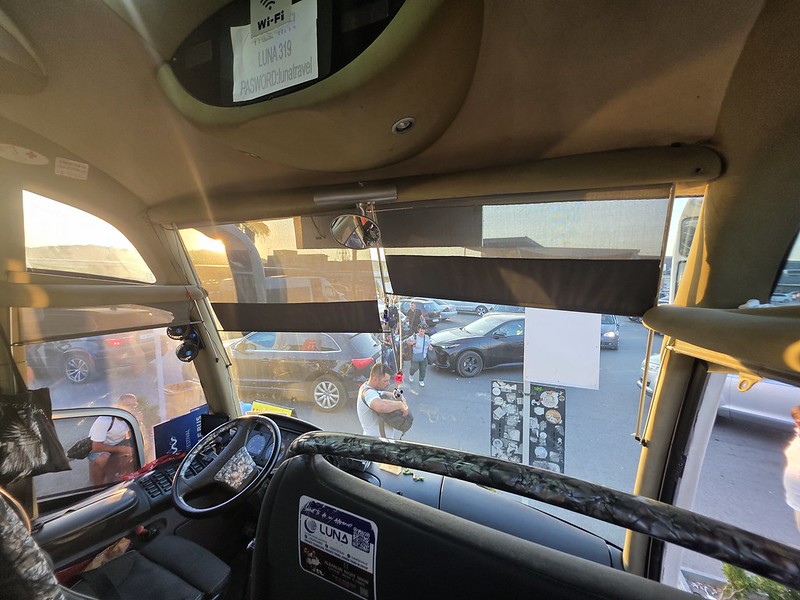
After I declined around fifteen offers of taxis walking through the airport terminal, I found the clearly signed airport buses operated by Luna at the rear of the taxi area and these operate every hour to the city centre. They cost €4 which seems reasonable and they take cards and cash, although more on that in a moment. I realised that my hotel was around an hour walk from the city centre, but by good fortune there was a bus stop on the route which was located very near to my hotel. I asked twice about stopping here and the ticket person confirmed both times that it would stop there, although I think he thought that I was an idiot for double checking this. Fair point though. I then discovered that my PayPal card didn’t work, so I used the remaining coins that I had to pay the €4 fare, which I deliberately had kept just in case of a situation like this. That is now my emergency supply used up, as I spent the rest on an emergency Fanta in the extreme heat of Faro the other day.
Anyway, a driver got on and the bus trundled along and I knew – just knew – that when we got near my stop, it was going to sail straight past. There technically aren’t any stops en route, but they will stop on request but there’s no bell and they’re not stopping unless they need to. As we approached the stop, which is near the city’s coach station, another passenger started to make some noises about stopping but as it was in Albanian I had no idea what was being said. I decided to ask the lady next to me, who I had already established was Albanian and spoke English, if she knew whether the bus was stopping. She didn’t, but she had some conversation with the driver and she said that my stop was further away.
The bus then stopped for the other two passengers who wanted to get out and I was delighted to see the Mercure hotel only a thirty second walk away, but the driver tried to stop me getting off saying that it wasn’t my stop. I confirmed that it was and he said that it wasn’t the city centre. I did think that was fairly obvious, but I decided to force the issue as otherwise I would be walking for an hour to get back to where I was. The driver kept telling me that it wasn’t the city centre, but I got off quickly before I was bundled back in. Fortunately, I was at the hotel within one minute…. I was going to take a photo of the bus for this blog post, but I thought that I’d rush away quickly.
I’ve purchased my return ticket online for tomorrow, so hopefully nothing will go wrong. I will add that the team members were doing their best and I appreciated the driver not wanting me to be stranded near the coach station on the outskirts, even though that’s where I wanted to be stranded. I was fortunate that two other passengers wanted to get out at the stop, otherwise I might have had quite a walk back.
-

Tirana – Sub-Optimal Situation with PayPal Card in Albania

A great start to my first visit to Albania is something that I hadn’t realised, it’s a country where PayPal has decided that it doesn’t want to operate. This means that my PayPal Business Debit card which gives free overseas transactions just doesn’t work, something I realised quickly when the card didn’t work on the airport bus (fortunately, I had euros) and at the hotel. It’s also my only physical card, but at least I have my phone to make contactless card payments from two back-up cards which was helpful to say the least at the hotel.
-

Wizz Air (London Luton to Tirana)
The train from St. Pancras to Luton Airport was just £4, which I consider a bargain. That damaged chair has been like that for months, not that it’s something I have spent a great deal of time contemplating and it has become something of a familiar friend now.
The usual Thameslink train, no tables or power outlets, but they just about always have lots of seats available and the services are usually reliable.
My usual order at Big Smoke at Luton Airport, this time they didn’t accidentally overcharge me. The beer is the Electric Eye from Big Smoke themselves, a punchy citrus beer.
A pint of Menabrea and a Limoncello at Nolito. The lager was generic, clean and dull, the Limoncello not the most decadent. But the environment was comfortable and thanks to Priority Pass for funding this visit.
And then ready to board and they had a helpful staff member checking the larger bags for size, but he was letting quite a lot off that were just a little too big in an attempt to be helpful. One lady had a suitcase that would fit a hippo in and he said it was ridiculously large, but the lady said that she was Albanian and wouldn’t be paying. After some discussions and translations from other passengers, it was agreed that she had a bag within her bag, so she just had to leave the larger bag at the gate.
We all then get the boarding passes scanned and go to a different part of the room, which is barriered off from the previous part, but it’s possible to pass things over. And, back to our lady with the bag, she started to get another passenger who still hadn’t checked-in to have a look through her now discarded bag to see if there was anything she had missed. The team member was now annoyed, it gave the impression that she thought she could get the bag back over the gated area when he wasn’t looking. He went to hide the bag.
It’s the aircraft on the right, which is G-WUKV, an Airbus A321 which took me back from Kaunas a couple of weeks ago.
The boarding starts.
The seating Gods had given me a middle seat which felt sub-optimal, but I’d had a good run of being given aisle or window seats. So, I was surprised and delighted to discover that the seat they had given me was actually an emergency exit row seat.
The crew member quickly discovered that the woman in the window seat couldn’t speak English, so I was swapped with her as I obviously look good in an emergency. And I speak English, so she could explain my responsibilities. The rest of the flight was bloody awful. I’ve never experienced such noise from kids on an aircraft, I was fortunate my headphones meant I could ignore most of that. I had a kid behind kicking the seat, but his father gave me some Pringles, so I tolerated that as I’m easy to bribe. The crew struggled to keep passengers from standing up the second we landed and there was no shortage of eye rolling from the crew about the situation. The crew were impeccable, they had a lot to deal with on this flight and I was thinking about writing to the Pope to see if a couple could be made saints.
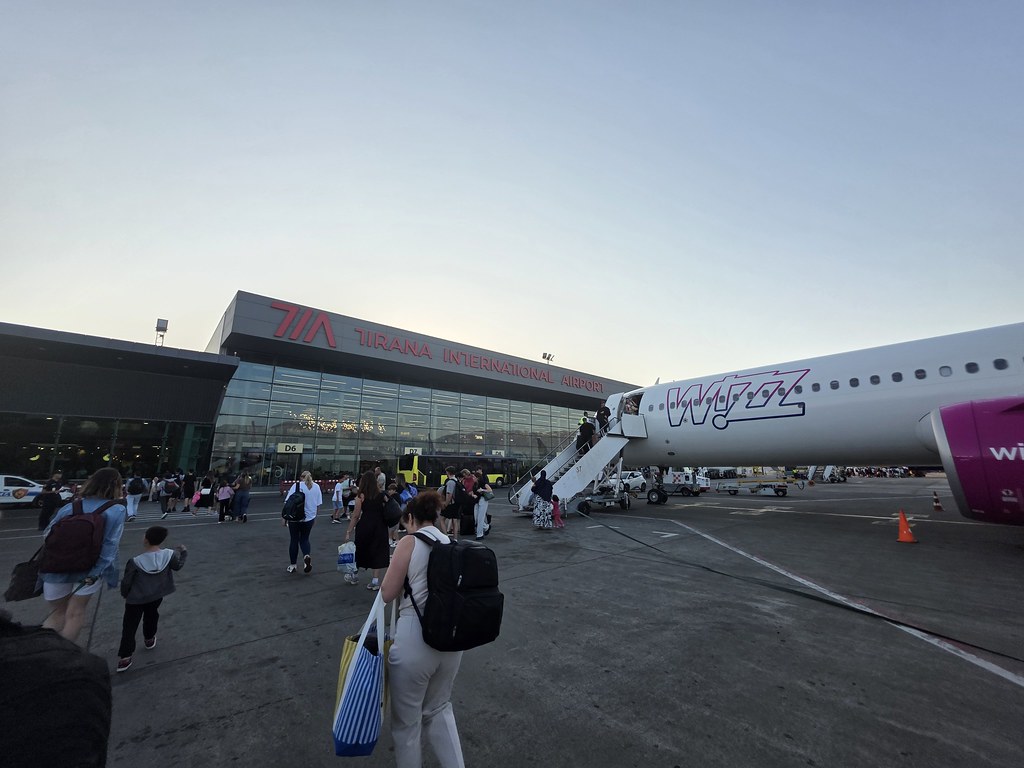
I was only mildly traumatised by the time we landed in Tirana. Border control couldn’t have been any faster, it involved going through an e-gate without seeing any border agents and my passport didn’t need stamping.
It wasn’t the most quiet and relaxed airport terminal I’d been through. The flight cost £8.99 which is impressive, but this was not the most relaxing of experiences to say the least.