Blog

  • Dachau – Dachau Concentration Camp (Claus Schilling)

    Dachau – Dachau Concentration Camp (Claus Schilling)

    20250821_111043

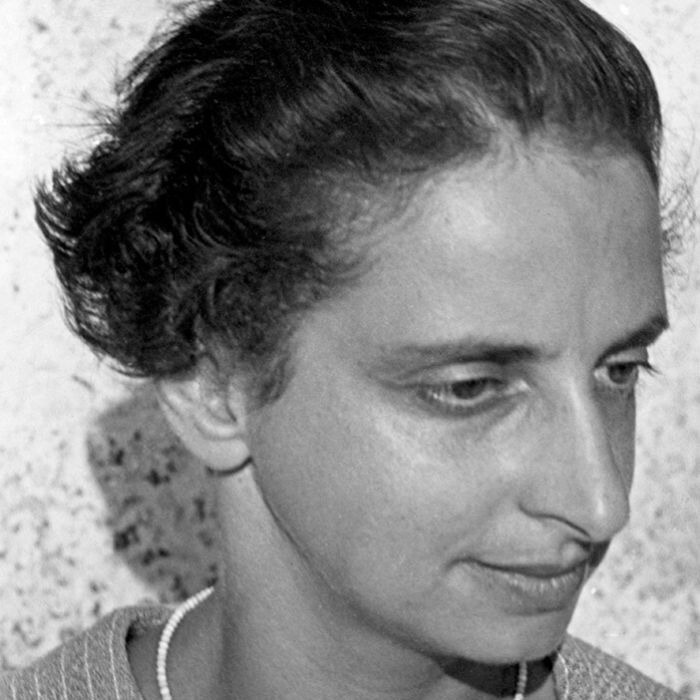
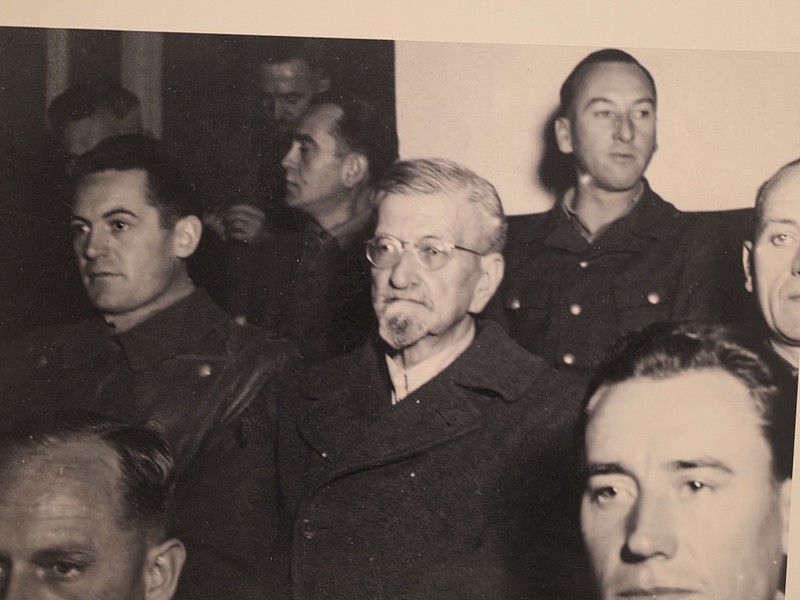
    Claus Schilling (1871-1946) is not a name that I had heard of and he sits very uncomfortably in medical history, though it is one that deserves remembering for the darkest of reasons. A German tropical medicine specialist born in 1871, Schilling built his reputation on malaria research in Italy before the war. That early work was legitimate enough, but his career took a grotesque turn under the Nazi regime when his skills were redirected towards human experimentation at Dachau concentration camp.

    In 1942, by then in his seventies and retired from normal academic life, Schilling was encouraged by Heinrich Himmler to continue his malaria studies, but now using prisoners as unwilling test subjects. The barracks at Dachau were adapted for this purpose, and over the next three years thousands of inmates were deliberately infected with malaria parasites so Schilling could observe the progress of disease and trial treatments. The authorities were told me Schilling that his experiments would be legitimate and avoid suffering, but I can’t imagine the Nazis would have stopped him if he had told them the truth.

    The conditions were absolutely brutal for those chosen to be his patients. Prisoners were exposed either through bites from infected mosquitoes or by being directly injected with parasites. Once ill, they were given a variety of drugs, some experimental, others known to be ineffective, in order to measure responses. Many suffered agonising fevers, complications or long-term debilitation. It is estimated that around 400 prisoners died as a direct result of these experiments, though the suffering of survivors is harder still to quantify.

    Schilling himself seemed to justify the work as a contribution to military medicine, I assume actually convincing himself of that. Malaria remained a problem for troops in southern Europe and North Africa, and his argument was that the research might save German soldiers’ lives. But the cost was borne entirely by the prisoners, who were stripped of choice, consent or dignity. It was medical science twisted beyond recognition, an exploitation of knowledge for cruelty rather than healing. When the war ended, Schilling was arrested by American forces. At the Nuremberg Doctors’ Trial held between 1946 and 47, his actions were laid bare alongside those of other physicians who had abused their positions under the Nazi system. Found guilty of war crimes and crimes against humanity, he was sentenced to death. Schilling was hanged in Landsberg Prison in May 1946, aged 74, one of the relatively few who lost their lives for what happened at Dachau.

    There really wasn’t much compassion or understanding to him, he spoke in English when he told the war crimes trial:

    “I have worked out this great labour. It would be really a terrible loss if I could not finish this work. I don’t ask you as a court, I ask you personally to do what you can; to do what you can to help me that I may finish this report. I need only a table and a chair and a typewriter. It would be an enormous help for science, for my colleagues, and a good part to rehabilitate myself.”

    It seems to me that this type of behaviour is the most challenging of all the atrocities that took place during the Second World War. A medical doctor, who I assume had been trained to alleviate pain, had instead gone down another route and dehumanised people for his experiments. He doesn’t appear to have been a Nazi in terms of joining early or showing political interest, he just got swept along with the hate of the Nazi regime and became a war criminal. I’m not sure I understand how what appeared to be a mild-mannered doctor managed to end up being one of the worst war criminals of his generation.
  • Reading – Three Guineas

    Reading – Three Guineas

    20250904_183521

    This is the only Good Beer Guide pub in Reading that I haven’t been to, as I had a rather comprehensive stay in the town a few years ago. There’s plenty of history in this Grade-II listed building, which was constructed to be the main entrance and booking hall to what was then known as Reading General Station. It was designed by Isambard Kingdom Brunel between 1865 and 1867, but the station was reconfigured in 1989 with a new entrance and this building was turned into the Three Guineas.

    20250904_183635

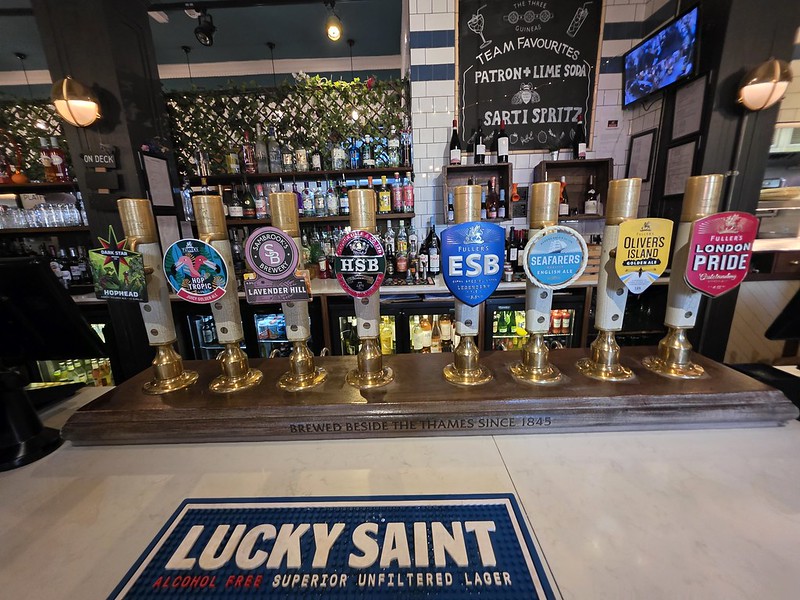
    The real ale selection was extensive although it’s all quite mainstream and it didn’t seem entirely well curated as they’re missing some beer styles here with some heavy duplication. The welcome was immediate and friendly, with the venue being relatively busy with mostly mainly weary looking commuters just arriving back from London.

    20250904_183731

    I went for the Lavender Hill from Sambrook’s Brewery which I hadn’t realised I’d had before a few years ago, but it was well-kept, clean tasting with a floral and sweet flavour to it. The pricing was towards the higher end of the scale, but not unreasonable.

    20250904_183815

    I wasn’t looking to eat here, but there’s a relatively extensive food menu and there’s an open kitchen which always gives me a feeling of some confidence.

    20250904_183757

    This is the main room of the station’s former ticket office, but it’s not that spacious although there are plenty of external seats available. The pub wasn’t that clean, the team members were ignoring the fine array of empty glasses on tables, surfaces were sticky and it didn’t feel that loved. The venue was reconfigured and redesigned in 2017, although it feels just a little tired now.

    20250904_191238

    The history of the pub name.

    I rather suspect that this venue is clinging onto its place in the Good Beer Guide given the choice that there is in the town, but the beer was well-kept and the surroundings were comfortable. I like the heritage of the building, although that’s perhaps a little understated and I’m pleased to have visited, I’m fairly confident that they were doing some construction work when I last came to Reading and that’s why I didn’t visit.

  • Dachau – Dachau Concentration Camp (Former Dormitories)

    Dachau – Dachau Concentration Camp (Former Dormitories)

    20250821_095907

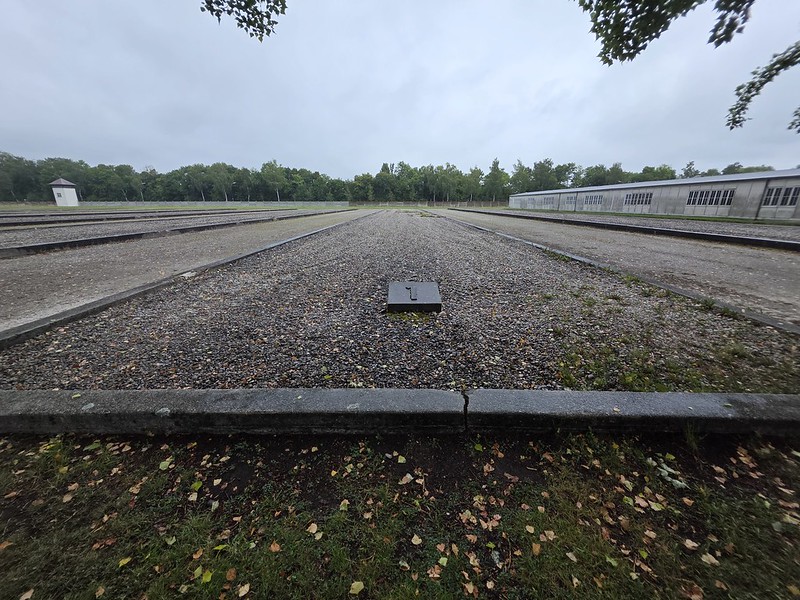
    Although there is one recreated dormitory building at Dachau, all of the former dormitory buildings on the left and right of this rather stately looking poplar lined main avenue (known as Camp Road) have gone with only their footprints remaining. The long rows of prisoner accommodation that once stretched across the roll-call square are now reduced to just these outlines on the ground, faint concrete or gravel borders marking where walls once stood. Walking down here in the rain, it was hard to really imagine just how noisy and unpleasant this area would once have been.

    20250821_095549

    These footprints are the remains of the camp’s other dormitories, the majority of which were demolished after liberation. Their traces are preserved not as reconstructed facsimiles but as bare, skeletal floor plans so visitors have to use their imagination to contemplate the scenes that once unfolded here. The choice not to rebuild them all was deliberate as to reconstruct twenty-odd barracks would have risked creating something that looked too complete, too much like a functioning place rather than a memorial.

    20250821_095626

    From 1942, medical experiments used to take place here at Barracks 1, although by 1943 they were using prisoners to supply the medical care. Initially, the medical barracks was well-equipped and had the facilities that it needed, but that situation didn’t last long and they were soon struggling to get hold of medical supplies. There’s a hollowness to all of this now, but there’s enough left to be able to understand the scale of what went on here, architectural order and human chaos.

    Here’s what the scene looked like in 1945, shortly after the American liberation.

  • Dachau – Dachau Concentration Camp (Recreated Dormitories)

    Dachau – Dachau Concentration Camp (Recreated Dormitories)

    20250821_094643

    There’s one accommodation block at Dachau, although it’s not original but it still tells a harrowing story. The first set of barracks built in the 1930s have long since been demolished, erased as part of the camp’s post-war dismantling. What stands in their place was put up in the 1960s as part of the memorial site’s efforts to give a sense of the living conditions without pretending that the wood and nails themselves date back to the darkest years. It is, in other words, an interpretation based on plenty of evidence rather than an untouched relic.

    20250821_094751

    The decision to rebuild was controversial at the time, not least because it risked accusations of falsifying history. But the curators argued, and still argue, that leaving the ground bare would rob visitors of any real sense of what life looked and felt like inside. The result is a set of reconstructed barracks, faithful to the original dimensions, where one can move from one dormitory style to another and see how the regime altered living space over the course of the war.

    20250821_095058

    20250821_095102

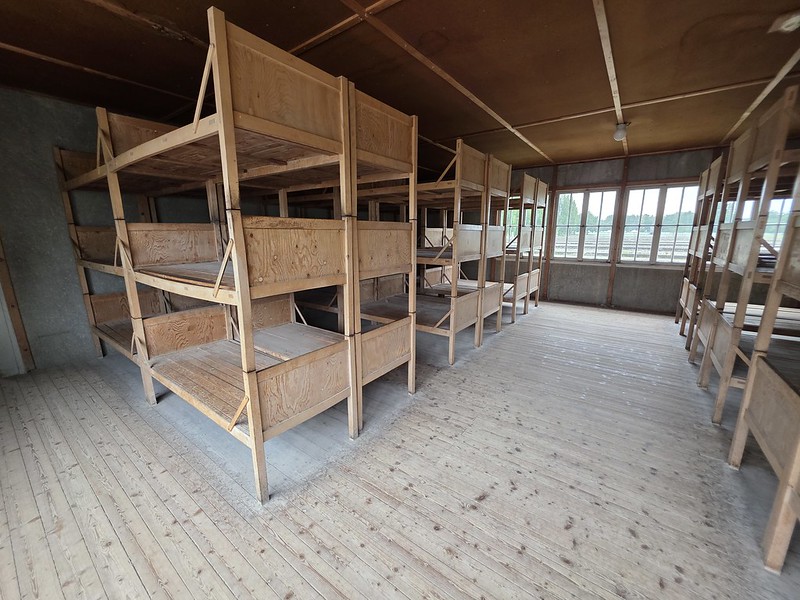
    Inside, there are three types of dormitory arrangement, staged in sequence. The first represents the early years of the camp, when conditions were already harsh but still allowed something resembling order with neatly aligned beds, lockers, and a sense of regimented, almost military discipline. It wasn’t comfortable by any modern measure, but it was structured, a vision of a barracks meant to break individuality but still keep the veneer of control. At the time the intention was still to operate as a form of prison and although the Nazis strongly disliked their political opponents and weren’t afraid of killing some, the arrangement wasn’t designed to be a mass killing machine.

    20250821_095255

    20250821_095241

    The washroom facilities.

    20250821_095003

    20250821_094847

    The second reconstruction shows how the accommodation degraded as prisoner numbers grew. Here the beds are closer together, storage space has vanished, and the atmosphere is more obviously oppressive. It is a space designed not for discipline but for crowding, with privacy and dignity stripped back even further. The physical closeness illustrates what documents and testimonies often describe, namely overcrowding that was deliberately allowed to spiral.

    20250821_095331

    The third dormitory shows the final stage, when conditions collapsed entirely into rows of bunks crammed together with little more than straw and blankets. It is the starkest of the three, stripped of any pretence of order and with no living space supplied as had previously been the case. This space is meant to demonstrate the extreme overpopulation of the camp in its later years, when disease and exhaustion became as much a part of the environment as the walls and ceilings. The contrast between this room and the first is brutal, and that is very much the point.

    The reconstructed barracks are not there to trick anyone into thinking they are standing in untouched history. Instead, they function as a visual and spatial narrative, walking visitors through a steady decline in living conditions, from rigid control to chaos. By building them in the 1960s, the memorial’s designers created a tool to teach rather than a relic to worship. They remain one of the most immediate, unsettling parts of the site, not because of their authenticity, but because they distil the story of degradation into something that can be seen and felt in the space of a short walk.

  • Annemasse – Ibis (Accor Hotel)

    Annemasse – Ibis (Accor Hotel)

    [I originally posted this in August 2018 about a visit from March 2016, but I’ve reposted it to fix the broken image links]

    ibisann

    One of the problems of visiting Geneva is that it’s very expensive, and so, since I had visited the city before I made the decision to go and explore some of nearby France. Annemasse is a town on the French/Swiss border and the prices are much cheaper. It’s about a ninety-minute walk or a thirty-minute bus journey (I walked, obviously) from Geneva to Annemasse, so it was a convenient place to stay on my first evening.

    The Ibis hotel (I pinched the above photo from the hotel) is towards the Geneva side of Annemasse, although it’s only a short walk into the town centre. It was a relatively cheap option and although it wasn’t particularly exceptional, it was clean and comfortable.

    20160318_095817

    20160315_085915

    I stayed in the hotel twice during the week, once on the evening my flight landed and another time the night before my flight departed Geneva. I’m rather risk averse, so I like to be as near to the airport as possible, to minimise the possibility of any little disasters taking place….

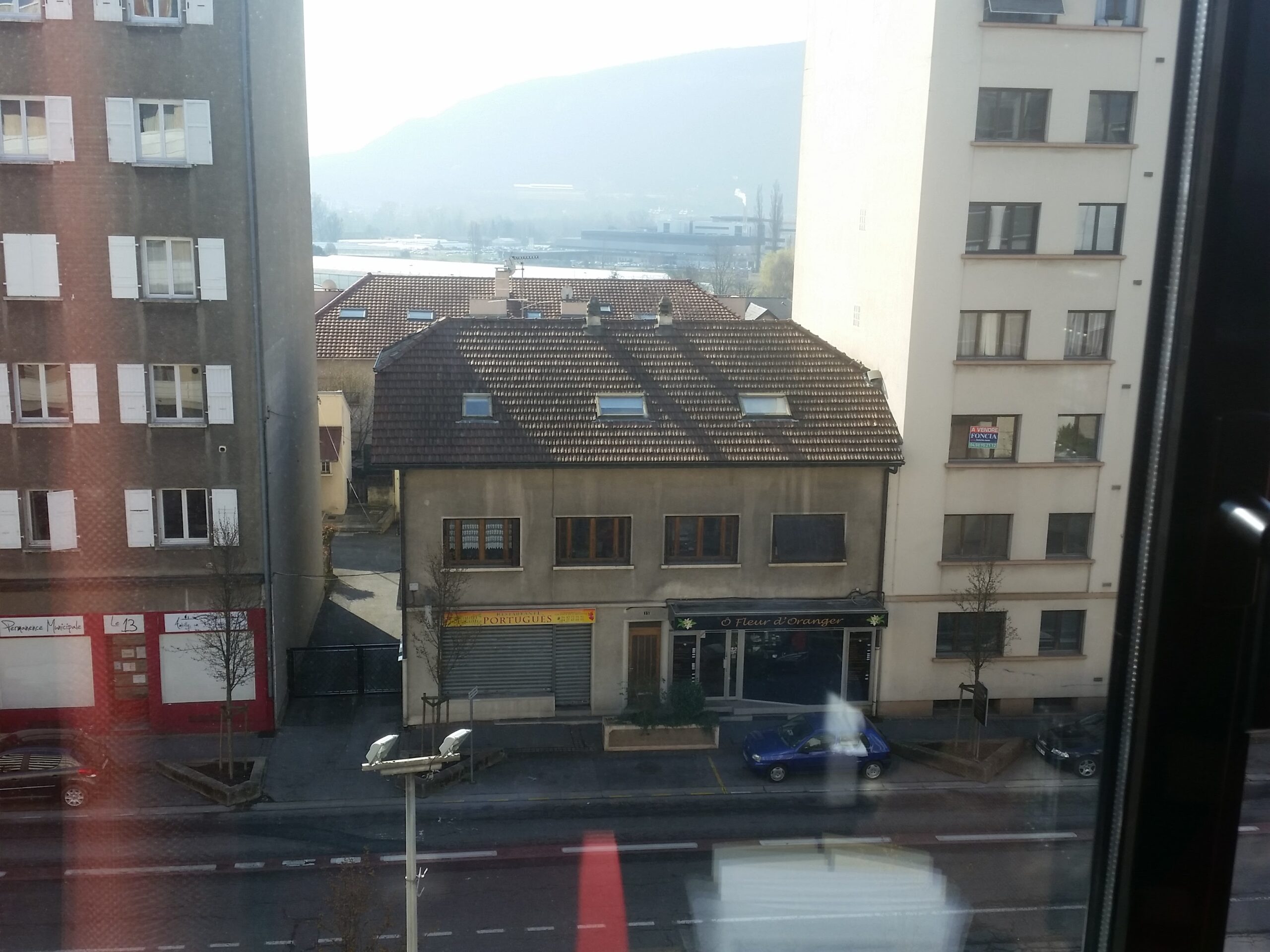
    As can be seen from the photos, I had the same exciting view on both of my stays since they gave me similarly located rooms during my two visits.

    20160315_085905

    Not the best of photos, but it doesn’t really matter with Ibis, as all the rooms look pretty much the same across the chain. Clean and comfortable, and I didn’t experience the construction noise that some people were complaining about when I visited.

    The breakfast, which rather unusually I didn’t take photos of, was adequate, although again, wasn’t exceptional. For visitors to Geneva though who want to save some money, this is a perfectly viable hotel and it’s within relatively easy distance of the Swiss city.

  • Food from Every Stall on Norwich Market (2025 Edition) – Week 27 and Tasty House

    Food from Every Stall on Norwich Market (2025 Edition) – Week 27 and Tasty House

    20250902_132355

    We’re approaching the end of visiting every food stall at Norwich market and this week’s expedition was to Tasty House, which we visited before when we did this before in 2023. I very much liked the food on this previous visit and everything felt organised and well managed, so my expectations were high. After we waded through the throngs of middle-class people that James knew, first impressions this time were positive as we reminded that the menu is actually rather exciting.

    20250902_131027

    The menu options with most of the dishes already being pre-cooked, although a couple are made fresh to order. There was also a daily special of ribs available as well, so the menu options felt extensive, with a choice of sticky rice, jasmine rice or noodles with each main course. There’s one vegan and vegetarian option, which is listed top of the menu, but all of the others are meat based.

    20250902_131223

    The counter and the stall accepts card and cash. The service was friendly and helpful, although there wasn’t much engagement beyond the minimum needs but there’s a lot to be said for efficiency. We had a wait of around thirty seconds to be served as the customer in front was asking quite a lot of questions, but James pretended not to be annoyed and obviously I’m always calm.

    20250902_131412

    I like the variety of free condiments that can be added to the food, although there’s a sister stand opposite the shop which sells all these raw ingredients. There was quite a lot of general litter on the counters such as abandoned water bottles, coffee cups and other detritus, so that didn’t feel entirely optimal. There’s a small seating area at the end of the stall, but we had our food standing near to the condiments.

    20250902_131453

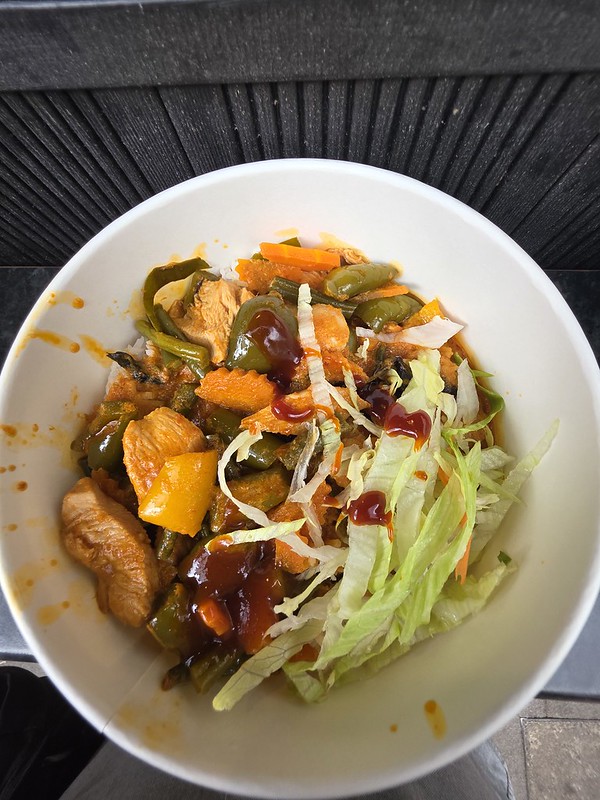
    I went for the large panang chicken curry with jasmine rice which came to £9.50, an increase of £1.50 from when we last visited. This arrangement seemed a little odd as they were quite stingy on the portion of rice, but very generous with the amount of chicken. However, this meant that the meal seemed a little unbalanced as I had plenty of chicken curry, but nowhere near as much rice as would have been ideal. Given rice is a cheap ingredient, it’s usually the other way around. The curry was though aromatic, rich in flavour, the chicken was tender and moist with the vegetables taking on the flavour of the sauce. I can’t say that the lettuce does much here, but the quality of the arrangement was high and the curry was at the appropriate hot temperature.

    IMG-20250902-WA0003

    James’s food and he went for the Korean BBQ beef, the regular £8 size, but they forgot to ask him if he wanted noodles or rice, but he was satisfied with the sticky rice that he was automatically given. I’m not sure that there was much kimchi which was mentioned in the menu description, but James said that the food was agreeable although the beef a little dry.

    I left feeling satisfied with the lunchtime snack, it was filling and had a depth of flavour to it. Ideally they could have packed the large bowl out with a little more rice, but I have no complaints about the quality of the curry itself. The service was friendly, there was a minimal waiting time and I’d merrily recommend this stall to others once again.

  • Munich – Munich Documentation Center for the History of National Socialism (Thomas Wimmer)

    Munich – Munich Documentation Center for the History of National Socialism (Thomas Wimmer)

    20250820_103122

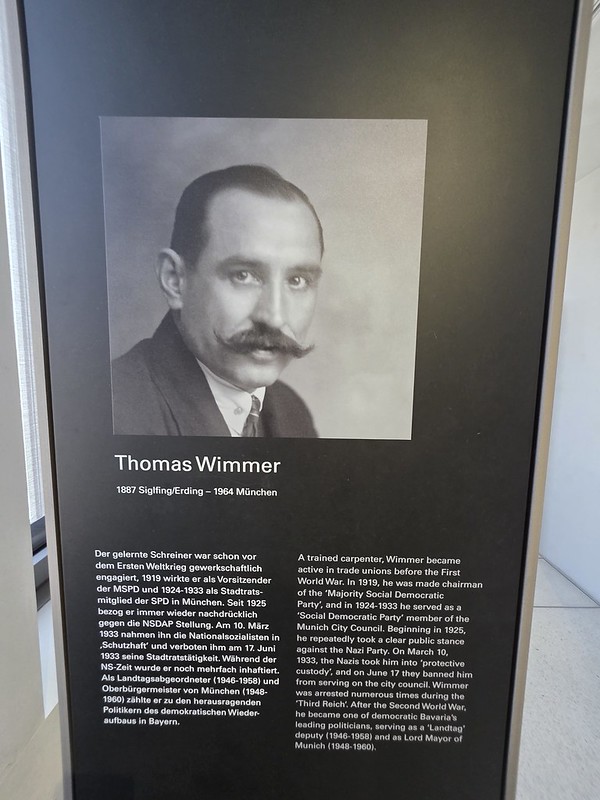
    Thomas Wimmer (7 January 1887–18 January 1964) was the Social Democratic mayor who became the public face of Munich’s post-war recovery, one of the heroes of his generation. He had been born in Siglfing near Erding, the son of a blacksmith and a domestic worker and he trained as a cabinet-maker, joined the woodworkers’ union in 1907 and the SPD in 1909 before settling in Munich after years as a journeyman. In the First World War he served briefly at the front before being released as an armaments worker and after 1918 he worked at the city labour office and was active in municipal politics. He sat on the city council from 1924 to 1933 and, with the collapse of the Weimar Republic, was arrested a day after the Nazi takeover in Munich, spending time in Stadelheim prison and at Landsberg, and later facing repeated Gestapo detentions. After the 20 July 1944 attempt on Hitler’s life he was held for six weeks in Dachau concentration camp, perhaps very fortunate to have managed to stay alive during this process. I rather suspect that if the Nazis had remained in power for just a little longer, his future would have been more in doubt.

    After liberation the American military authorities reinstalled Karl Scharnagl as mayor, Wimmer returned to City Hall as third, then second mayor, and in 1946 served in Bavaria’s constitutional assembly and entered the Landtag. When the SPD topped the 1948 city elections he was chosen as Oberbürgermeister, a post he held until 1960 while also representing Munich in the Bavarian parliament through the 1950s. These were hard years of shortages and ruins and Wimmer pushed pragmatic measures such as the “Holzaktion” to secure winter fuel and, most famously, the citizen clean-up “Rama dama” on 29 October 1949, when more than 7,500 volunteers, shovel in hand, the mayor among them, shifted an estimated 15,000 cubic metres of rubble in a single day. The Bavarian dialect slogan stuck, and the image of a hands-on mayor helped rally a city to reconstruct itself.

    Politically he resisted post-war schemes to drive a motorway-scale traffic cut through the historic centre, arguing that the city should be rebuilt for people rather than exhaust fumes. Twice directly re-elected (1952 and 1956), he left office in 1960 with a reputation for plain speech and practical administration. Wimmer died in Munich in 1964 and was buried at the Ostfriedhof. The city named the Thomas-Wimmer-Ring on the Altstadtring after him, and he was made an honorary citizen of Munich in 1957, receiving the Bavarian Order of Merit in 1958 and the Grand Cross of the Order of Merit of the Federal Republic of Germany in 1955 (with Star in 1959). For many Munich residents, though, his memory is still tied most strongly to a broom, a shovel and the decision to clear a path back to normal life.

    As a politician, his strength must have been substantial to have resisted the Nazis for so long and to have remained steadfast in his views. To have then been given the opportunity to influence the post-war Munich was at least some justice in his life and it’s evident that he continued to surprise and delight the communities which he served. I hadn’t heard of him before visiting the museum, but I very much like that they have a section on those heroes of their generation who stood up to the Nazis.

  • Munich – Munich Documentation Center for the History of National Socialism (Puppet Chanele and Maria Luiko)

    Munich – Munich Documentation Center for the History of National Socialism (Puppet Chanele and Maria Luiko)

    20250820_103808

    This exhibit at the Munich Documentation Center for the History of National Socialism is a little tricky to photograph because of the light, but it’s an important part of their current exhibition. The puppet is Chanele, created by the Munich Puppet Theatre of Jewish Artists which was in existence between 1934 and 1937 when it performed five plays and three musical dramas.
    The central person featured by the museum is Maria Luiko (1904-1941) who was a founding member of the theatre group and she made the puppets and most of the stage sets, so she was likely the first person to pull the strings of Chanele. Maria was unable to join the Reich Chamber of Fine Arts when it was created in 1933 as she was Jewish, which also meant that she couldn’t display or sell any of her works. Maria had ideally wanted to move to Palestine, but she was arrested and deported on 20 November 1941, along with her sister Dr. Elisabeth Kohn and her mother Olga Kohn (nee Schulhöfer), from Munich to Kaunas in 1941 and she was then murdered on 25 November 1941. These murders became known as the Ninth Fort massacres, the first systematic mass killings of German Jews during the Second World War.

    The museum notes:

    “Chanele still remembers what it was like to move on the stage, to tell her story, to play a role. She remembers the excitement and the applause, the hands that made her and the held her on the stage. The hands of the people who believed in the magic of theatre and the power of stories to transform, to comfort, to hold people together.”

    The puppet’s survival feels a little remarkable, but its existence means that the story of Maria Luiko is at least not lost to history.

  • Fakenham – Superstore

    Fakenham – Superstore

    [This is from August 2018, but I’ve reposted it to fix the broken image link for the photo that amused me at the time….]

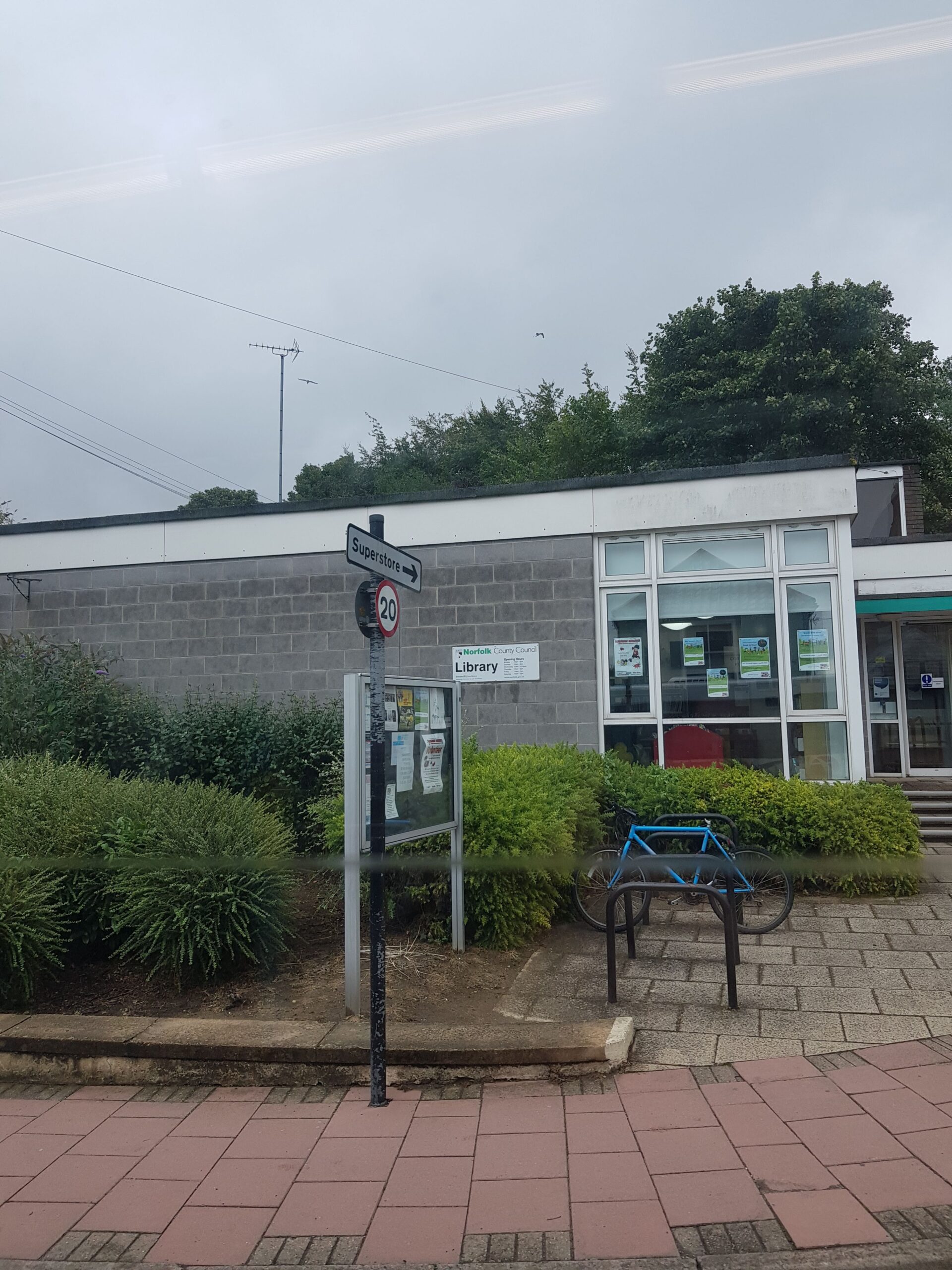
    This isn’t particularly amusing, but this is certainly my sort of superstore   🙂

  • Smuggler’s Trod Challenge Walk 2018 – Yorkshire Coast LDWA

    Smuggler’s Trod Challenge Walk 2018 – Yorkshire Coast LDWA

    [I originally posted this in August 2018, but have reposted it to fix the broken image links]

    Screenshot_20180827-171002_GPX Viewer

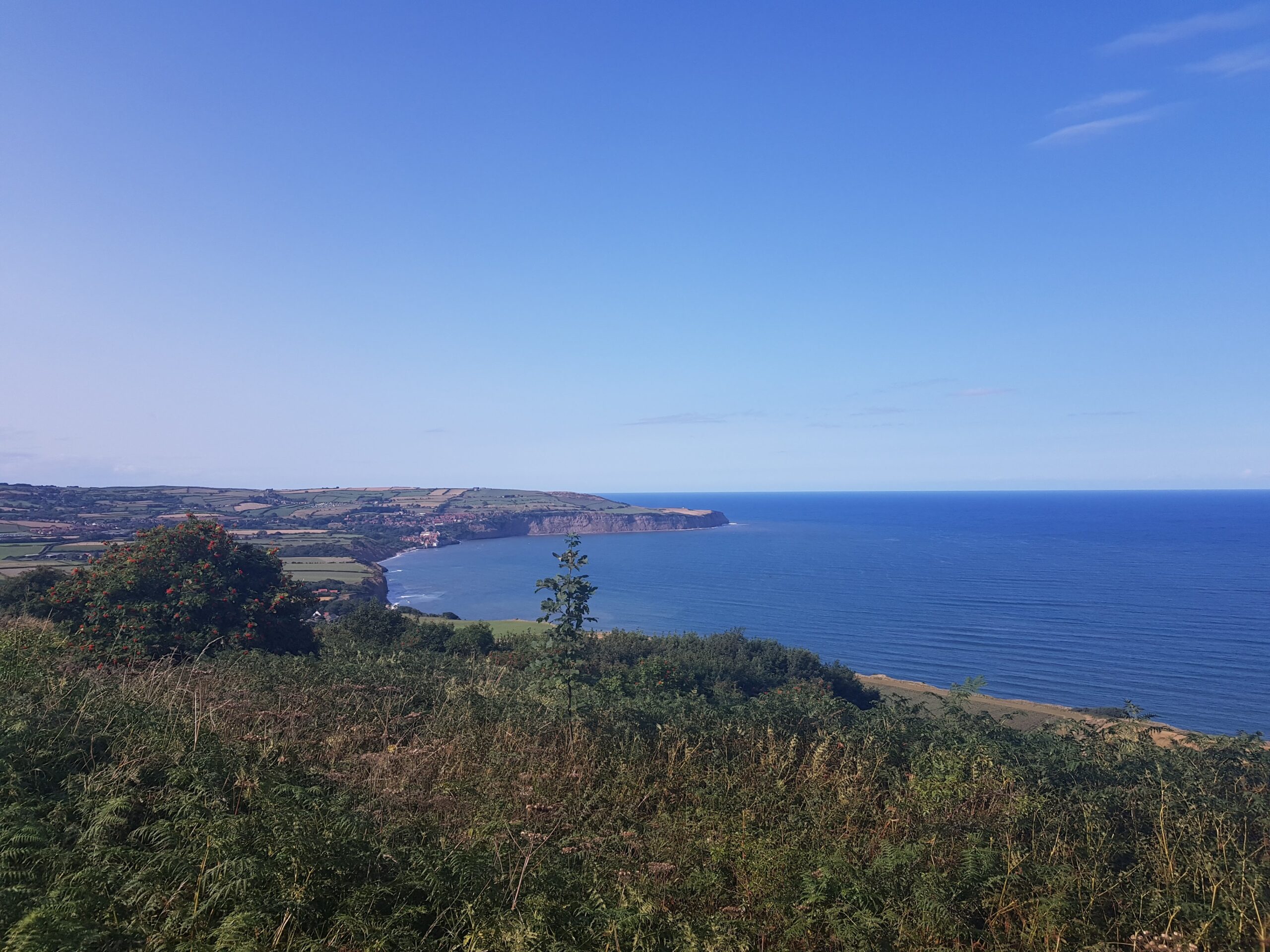
    I thought it’d be a great idea to spend a weekend in Whitby and also complete the Smuggler’s Trod 25-mile challenge event which is held nearby as part of the adventure. Five other people from Norfolk & Suffolk LDWA came along and we were rather lucky with the perfect weather for the event, no rain and not too much sun.

    20180825_082546(0)

    The walk wasn’t particularly challenging in terms of hills, but there was a hill climb straight from the start at Robin Hood’s Bay. The total ascent for the entire walk was 657 metres though, which was hilly enough for me.

    20180825_091105

    The early section of the walk went along the official Coast to Coast path as we went inland.

    20180825_151435

    The colours along the route were beautiful and the whole walk was along a varied landscape with numerous wooded areas, moors and along riverbanks.

    20180825_095059

    Bev trapped in ferns.

    20180825_095723

    20180825_104613

    20180825_140305

    The food selection was wonderful throughout and the doughnut type things were particularly delightful and very moreish. One checkpoint was kindly making up sandwiches to order, so I quite happily waited there whilst eating jelly babies.

    20180825_150601

    We went through a farm with some interesting pieces of ironwork dotted about, including this fine looking soldier.

    20180825_155637

    Approaching Robin Hood’s Bay again towards the end of the route.

    20180825_162047

    The last part of the route was along the former railway line from Whitby to Scarborough. It’s a great shame that this line has been lost, but it is now a popular cycling and walking route.

    The end of the challenge event today leaves the railway line just before Robin Hood’s Bay so that entrants have to walk up the hill to the former railway station, which is the end point of the event. For those who are running out of time, the organisers allow them to just walk along the railway line to the end, which I was tempted by anyway, but that would have felt like cheating….

    20180825_172759

    This is what I had to deal with….

    We walked around the challenge event in two groups of three and I won’t go into details into what went wrong for the group of three that I wasn’t in. But I will say that Maria, Jane and Ray clearly weren’t able to navigate as well as me, as I didn’t end up walking four miles extra by mistake…..

    IMG-20180825-WA0000

    Everyone is rewarded with a pie at the end of the walk, and I was so brave that they let me have two. Actually, they let me have two without the bravery bit, but if they had known have brave I was, they’d have given me two anyway, so that’s the same thing…

    20180825_172009

    They were selling flasks from the 2017 event for £1, which seemed a bargain to me as another reminder of the event.

    I thought that the whole event was well run and the volunteers from the Yorkshire Coast LDWA group were all friendly and had a great sense of fun. I hadn’t intended before the event to repeat this one, but having completed it, I’m pretty sure that I’ll do it again in the future.