Blog

  • Wetherspoons – Greater London (A-B)

    Wetherspoons – Greater London (A-B)

    As I bored everyone with here, my travel has meant that I’ve managed to visit a lot of JD Wetherspoons over the years. So in an attempt to remember them all, I’ve decided to try and write about them. As explained elsewhere, other perfectly good pubs are also available and of course should be visited   🙂

    There are 111 JD Wetherspoon outlets in Greater London, and I’m not typing all that up in one go. So here, for my own amusement during the Covid-19 situation, are those in towns which start with the letters A-B. So, entirely arbitrary really.

    Figures: (which are more for me than to interest anyone else):

    Number visited : 7/11

    Favourite pub in list : Goodman’s Field


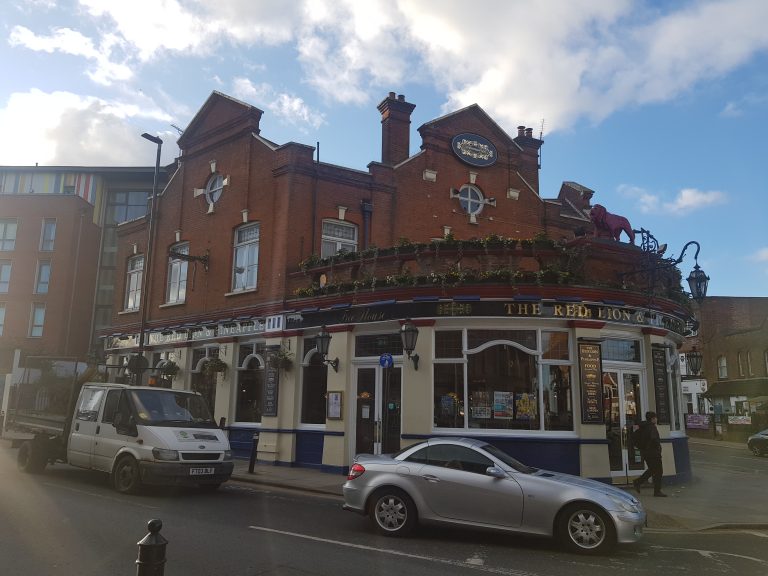
    Acton (Red Lion and Pineapple) – I visited this one a few weeks ago, just before the lockdown, so this one is easy to link to. I very much like it, a quirky design and a real sense of history to it.

    Aldgate (Goodman’s Field) – This pub is the easiest to get a seat in for those in the Tower of London area of the city and it has quite a cafe bar feel to it, as well as lots of power outlets. I’ve visited here plenty of times over the last decade and it’s got one of the more relaxed vibes to it and it’s well-reviewed on TripAdvisor for a Wetherspoons. Well, relatively. The pub name harks back to when the area was fields that were once owned by Roland Goodman.

    Barking (Barking Dog) – I always thought that this pub name was just a wry word-play about it being located in Barking, but the actual reason according to Wetherspoons is:

    “For centuries, fishing was Barking’s most important industry. Its fishermen fished the high seas off Doggerbank and the coast of Iceland. If you shorten ‘Doggerbank’ and join it to ‘Barking’, you end up with the name of this Wetherspoon pub.”

    The reviews for the pub are again relatively high on TripAdvisor, although it’s a shame that the poster didn’t explain what the mistake was.

    “What an awful customer service by Manager Kerry. it was meant to be the perfect Sunday where I would enjoy a meal and a drink. Not the case wrong choice. I paid around £15 for meal and drink and realised i made a mistake. Bad Customer service from a poorly trained duck.”

    But referring to a female staff member as ‘duck’ like that is probably all I need to know. A chunk of the negative reviews of this pub have all been written by the same person, I’m not sure why anyone would rate somewhere as 1/5 and then keep going back before then leaving more 1/5 ratings…..

    Anyway, the pub is hardly the prettiest from the outside, at the base of a bland and modern office block, but it’s convenient for the next door underground/railway station. The interior is relatively large and about as much character has been added in the design as is likely realistically possible in such a modern building.

    Barkingside (New Fairlop Oak) – Never been here….

    Battersea (Asparagus) – This memorable pub name refers back to when in the nineteenth century the area around where the pub now stands was used for growing asparagus, which became known as Battersea bundles. It’s, I think, the only pub in the country with this name, and there’s something to be said for finding a unique and memorable name. The pub opened in 1998 as part of a new commercial building, but it’s not too garish and there is a beer garden out the back for those who like wasps.

    Bexleyheath (Furze Wren) – Never been here….

    Bexleyheath (Wrong ‘Un) – It was a nuisance to get to Bexleyheath when I lived north of the river in the east end of London, the lack of underground meant connecting to North Greenwich (which was already a DLR journey and an underground journey from where I was) and then getting a bus which seemed to take hours. And probably did. So, I’ve only been here once and I never made it to the other Wetherspoons in Bexleyheath.

    And, since my sole visit was seven years ago, I’ve mostly forgotten everything about the pub. Which is why I now write the blog primarily, to remind myself of where I’ve accidentally gone before I forget. The pub name is a bit tenuous, it’s apparently because cricket was once played in the area and a Wrong ‘Un is a difficult delivery to play for the batsman.

    I like the TripAdvisor review exchange with a customer complaining that he had been told to drink up five minutes before the pub closed, which to me isn’t an unreasonable request, but there we go. The review then accuses the manager of the below.

    “The manager came out and his name is terry fitzgerald. I explained to him what happen and he reply qas well you are in England you should speak English. How dare they even suggest such a thing. The was more than willing to take our money over the bar.”

    But, I like very much that the manager himself has replied:

    “I take great issue with your comments as this incident did not happen, I lived in Spain and Portugal for a total of fifteen years and have great memories of the countries and the people I would not say anything so ridiculous and there is no proof from our head office that you complained to them. I do not what issues you might have but if you are going to review please tell the truth. Terry Fitzgerald ( and I am sorry for the late reply)”

    Each person can decide who they believe, but I know who I’m with here…. Anyway, I digress again.

    Another customer complained that they had been spoken to because they kept complaining about the food, and I do wonder why people keep going to pubs if they do keep complaining about the food. And another customer who complained about a staff member’s behaviour and demanded an apology, but the customer didn’t mention themselves that they had been filming him with a phone.

    I must return to this pub, I like moderate drama like this, keeps things interesting.

    Brixton (Beehive) – I’ve been here three times and it’s the only Wetherspoons I’ve felt unsafe in, given that there were fights on two of those visits (not involving me) and on the third a huge argument between an aggressive staff member and a customer. The toilets were on all three visits beyond unclean, the staff had entirely clearly given up. It’s the only Wetherspoons I’ve been to as well where there were “customers only – no public use” signs on the toilets, although by the time someone has gone in and reached the toilets I can’t imagine this sign would put them off.  Having written that, I haven’t gone back in years and a few reviews have mentioned new security processes, so perhaps it’s a lot better now. It is quite a small Wetherspoons though, so given its central location in Brixton and cheap prices, it gets busy quickly. Or did when I last visited.

    Brockley (Brockley Barge) – The pub name here is a good one, it’s a reminder that the Croydon Canal used to pass near to where the pub stands today, although a railway line has now been laid along much of the canal’s former route. I much prefer this new pub name to the Breakspear Arms, which was the pub’s previous name, and JD Wetherspoon re-opened this location in 2000 after a few years of closure. The closure was probably inevitably as media reports noted that the pub had established itself as somewhere with a poor reputation, so it’s entirely to JD Wetherspoon’s credit that they’ve managed to turn this place around.

    The interior is homely, although not particularly notable, but the atmosphere is welcoming, even though the pub has been busy in the early evening on the times that I’ve visited. Perfectly decent pub though, the staff here have always been friendly when I’ve been in as well.

    Bromley (Greyhound) – Never been here….

    Bromley (Richmal Crompton) – Never been here….
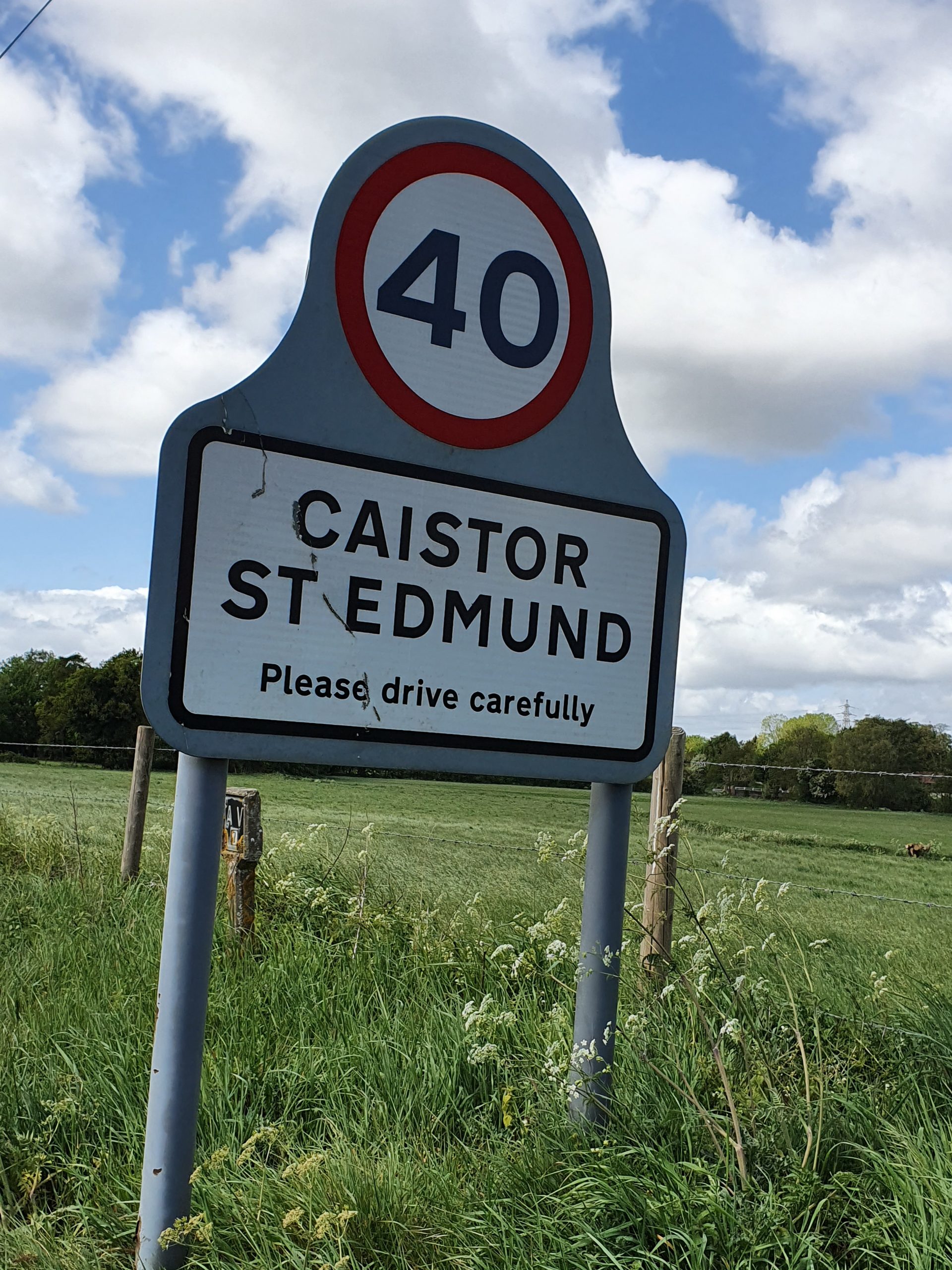
  • Caistor St Edmund – Origins of Village Name

    Caistor St Edmund – Origins of Village Name

    Further to my riveting post about Caistor St. Edmund (by riveting, I mean not especially riveting), I like that the village has retained its full name. This is primarily likely because of the other Caister in Norfolk, so although the spelling is different, differentiating the two locations has probably proved useful over the centuries, so there’s Caistor St. Edmund and Caister-by-the-sea.

    Both places are named Caistor/Caister for the same reason, it’s the old English word for a Roman fort, although it might once have been spelled in different ways, such as caester or castre. The Romans themselves called it Venta Icenorum, meaning the ‘marketplace of the Iceni’.

    The surname Caister, and its variants, derives from the same meaning and it’s most common in England, Canada, the United States, Italy, South Africa, New Zealand, and for reasons unknown, Ecuador. What’s even more interesting, to me anyway, is that by looking at a map of England and its surnames, there is a basic correlation between where Roman sites once were and where people live today with the surname Caister.

    The St. Edmund bit is because the parish was owned by the Abbey of Bury St. Edmunds, with the village church also dedicated to St. Edmund. The village is also commonly known as St. Edmunds, although I’m not sure that anyone much minds which one is used. But, I’m sticking to St. Edmund since it seems to be the official version.

  • Dictionary of the Vulgar Tongue – Day Fifty-Six

    Dictionary of the Vulgar Tongue – Day Fifty-Six

    The Dictionary of the Vulgar Tongue was first published at the end of the eighteenth century, and given that the Coronavirus crisis is giving too much time to read books, I thought I’d pick a daily word from it until I got bored…..

    Cagg Maggs

    Defined by the dictionary as “Old Lincolnshire geese, which having been plucked ten or twelve years, are sent up to London to feast the cockneys”. There’s not much to add to this precisely worded definition, but I like the slight north-south divide being hinted at here, send the old and scraggy meat down to London rather than keep it up north…. That assumes that Lincolnshire is in the north, which is perhaps pushing it though.

  • Caistor St Edmund – War Memorial (J. Derek Corrould Warren)

    Caistor St Edmund – War Memorial (J. Derek Corrould Warren)

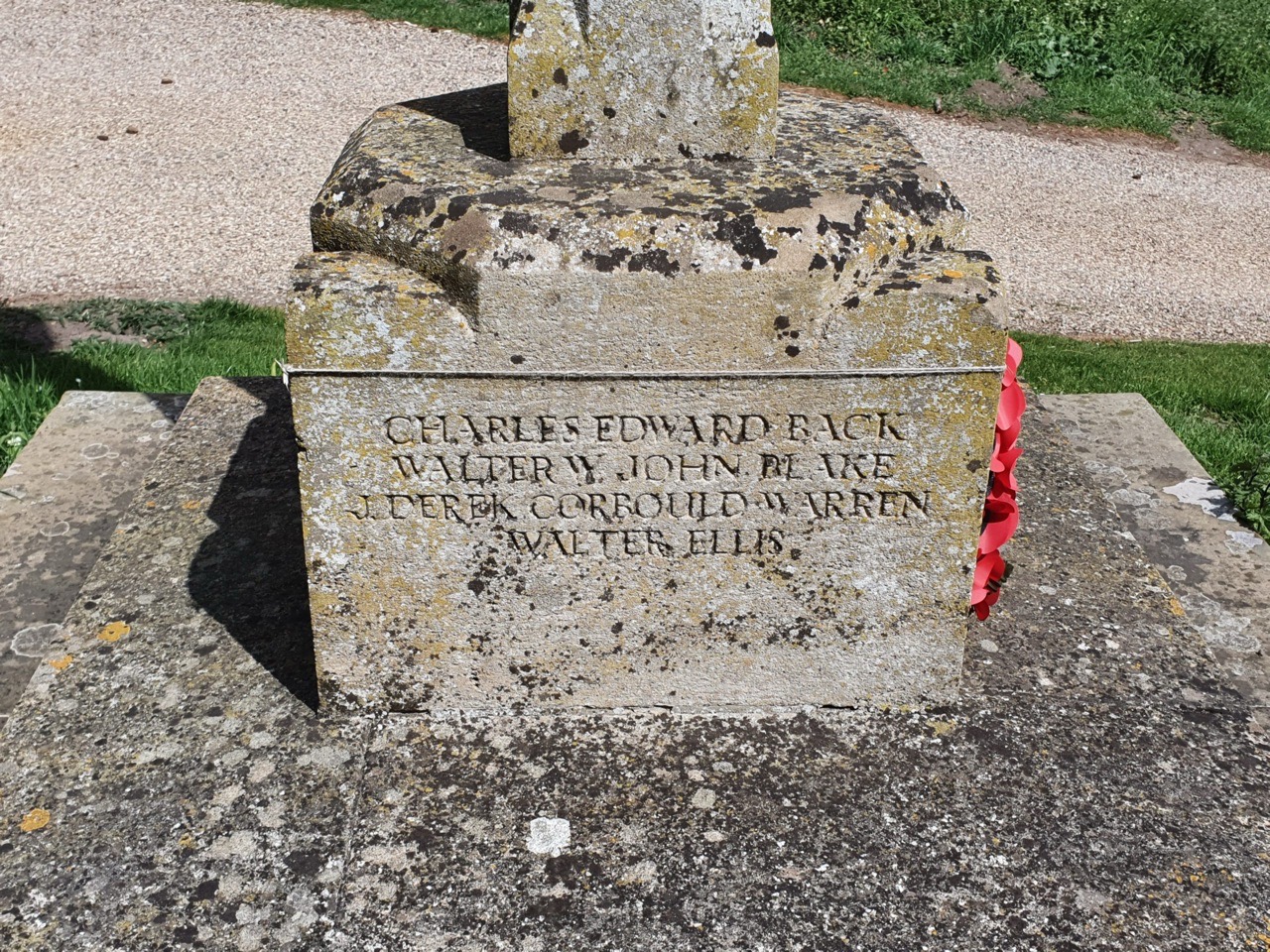
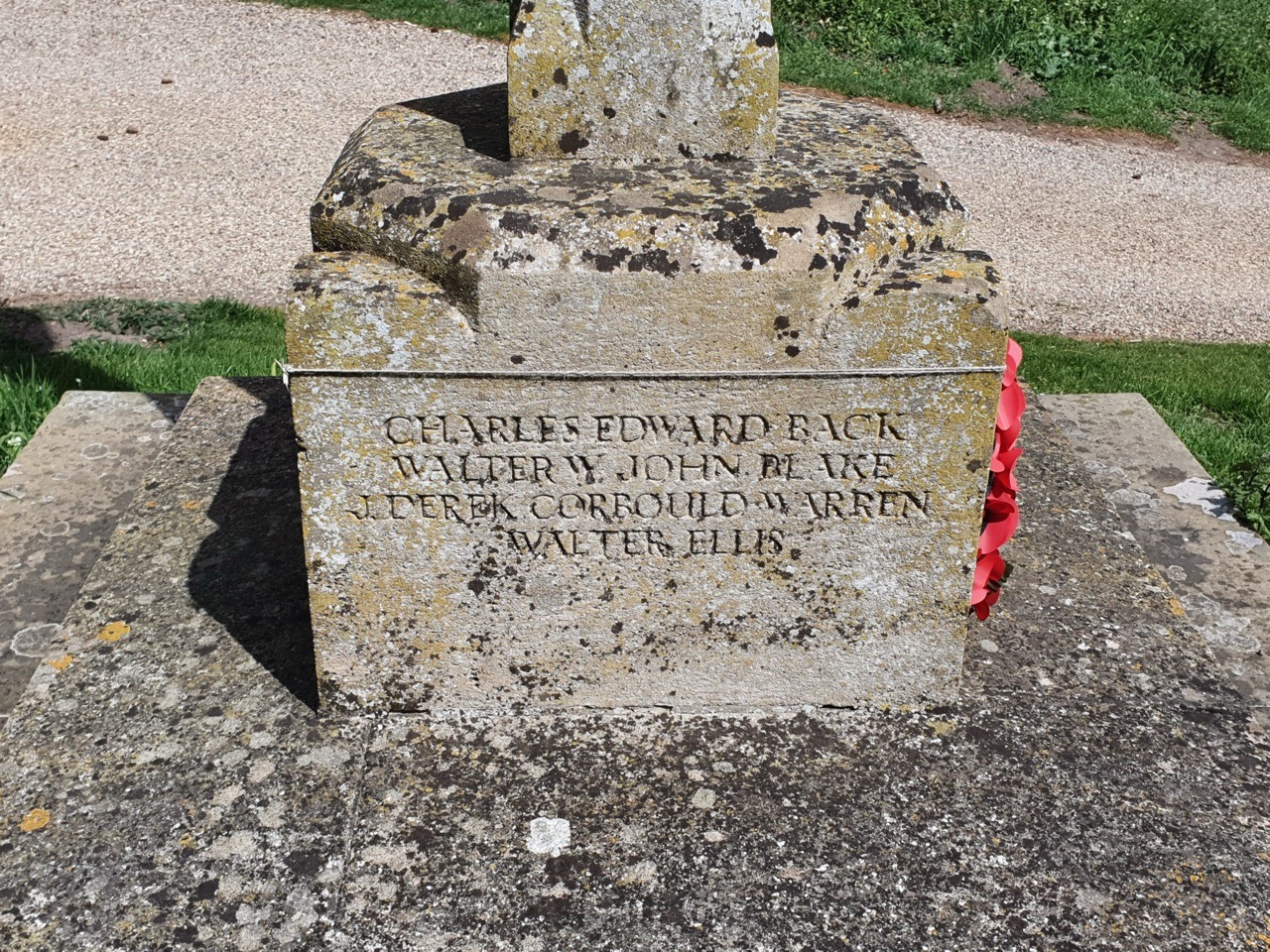
    J. Derek Corrould Warren is one of the names listed on the war memorial in Caistor St Edmunds.

    John Derek Corbould Warren, who was known as Derek, was born in Surrey in 1899, the son of the Rev. John Corbould Warren of Caistor Hall and Agnes Elizabeth Corbould Warren. This was a wealthy family, and although the father was the vicar, he was actually also the Lord of the Manor and owner of much of the village. There was a set-up at the time where the land-owner could appoint whatever vicar that they wanted, hence his appointment was likely partly self-awarded. But, more about him in another post, as he was one of the most important figures in the village over the last century.

    Derek was killed at the age of 18 following a riding accident whilst training at Sandhurst, dying at Surbiton Cottage Hospital on 10 July 1917. His name doesn’t appear on the Commonwealth War Graves web-site, likely because the circumstances of his death meant that his body could be brought back to be buried in the churchyard at Caistor St Edmund. He joined the army early on during the war, serving as a cadet at the Royal Military Academy in Sandhurst. It must have been a difficult day for his father, the Reverend John Corbould Warren, as when he conducted the service at the unveiling of the war memorial in 1922, he knew that his son’s name was on it. Derek was his only son, although he had a daughter, Enid, who later married and lived at Caistor Hall.

  • Dictionary of the Vulgar Tongue – Day Fifty-Five

    Dictionary of the Vulgar Tongue – Day Fifty-Five

    The Dictionary of the Vulgar Tongue was first published at the end of the eighteenth century, and given that the Coronavirus crisis is giving too much time to read books, I thought I’d pick a daily word from it until I got bored…..

    Buzman

    The dictionary defines this as a criminal’s word for a pickpocket. The interesting element about this is that some people think that this is the origin of the phrase “busman’s holiday”, which dates back to at least the 1880s. It would be that the pickpocket was always working even when they’re on holiday, such would be the nature of their ‘trade’. I’m not sure that this is the actual origin, but I do prefer this version.

  • Caistor St. Edmund – Forged Coin

    Caistor St. Edmund – Forged Coin

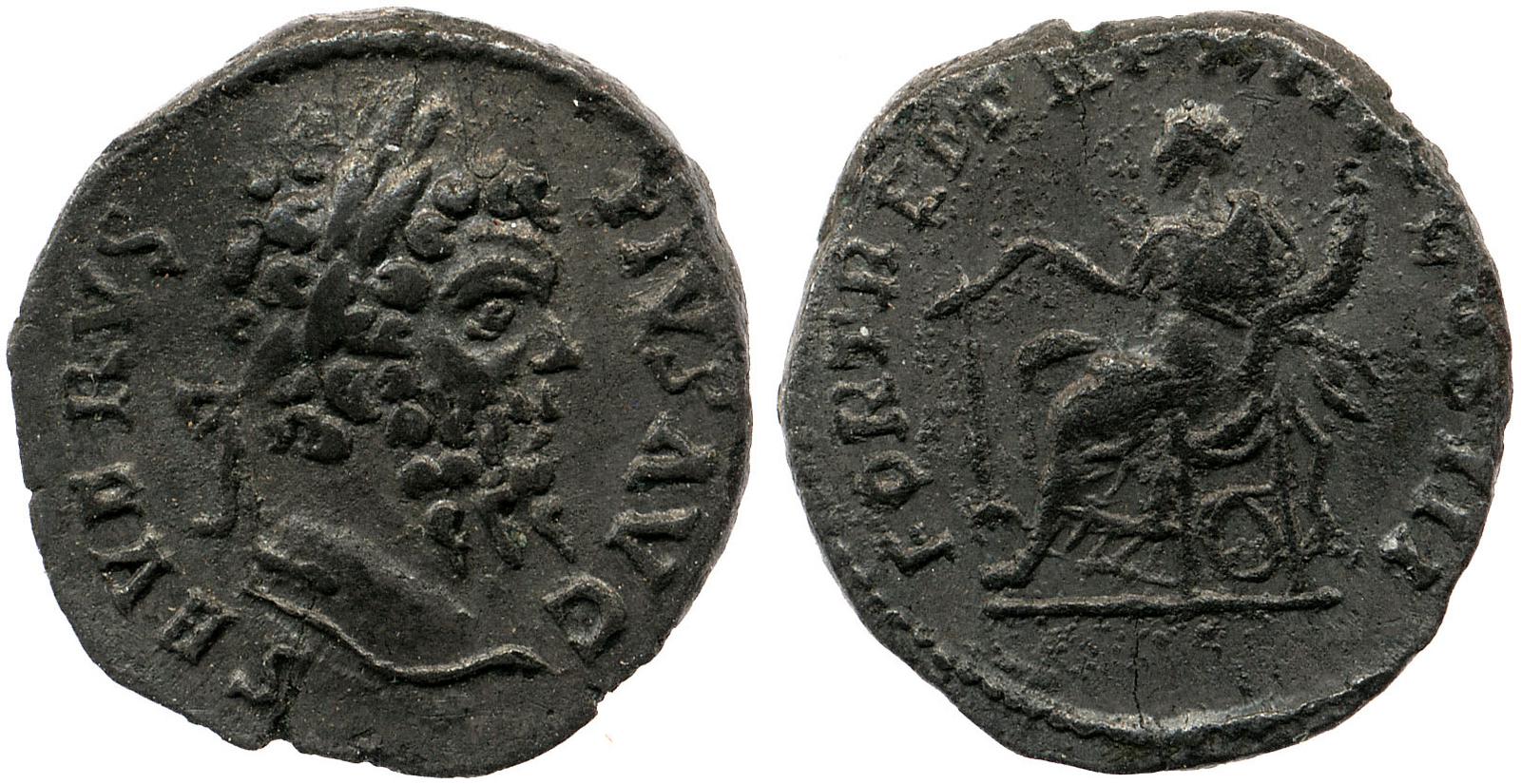
    This coin is in the collections of the British Museum, and the image is copyright of the Trustees of the British Museum.

    It was found at Caistor St Edmund in 1978 and was purchased by Charles A Hersh, who donated it to the British Museum following his death in 1999. The denarius silver coin is a forgery, but not a recent copy, but instead made in antiquity. And, because it’s a forgery, the museum can’t easily date it, but it’s probably from around the end of the second century.

    Forged coins were a problem for the authorities throughout the Roman period and some people only collect these ancient forgeries. I like that at some point that this was being used at Caistor St Edmund, evidence of a fraud committed nearly 2,000 years ago. Fortunately for my understanding, the museum has also indicated what is on each side of the coin:

    On the reverse, there is Fortuna seated on the left, holding a rudder in right hand and cornucopia in left hand. On the obverse there is a Laureate head of Septimius Severus, the Emperor from 193 until 211.

    This coin isn’t on display at the British Museum, but neither are 99% of items in its collections. I hadn’t previously realised though that anyone can make an appointment to have a look at one of their items, so they do remember at least partially accessible.

  • Caistor St Edmund

    Caistor St Edmund

    The village of Caistor St Edmund is located around three miles from Norwich and today has a population of a little under 300. The village is perhaps best known for being next to Venta Icenorum, the Iceni and Roman town which was once of some considerable importance. More about the origins of the village’s name here.

    The village’s church, St. Edmund’s, is located by the remains of the Roman settlement and the war memorial is also located there, which is a walk of around 200 metres from the village itself.

    Here’s the village in 1900 and it’s pretty much unchanged today. The Roman settlement is in the bottom-left of the map and the important large buildings of Caistor Old Hall, Caistor Hall and the Rectory are visible, along with Markshall Farm in the north.

    Caistor Hall.

    Caistor Old Hall.

    Visible in the centre of the above map is a crossroads, with the north-south road being Stoke Road, the road to the west being Markshall Lane and the road to the east is Caistor Lane.

    There’s the entrance to Markshall Lane.

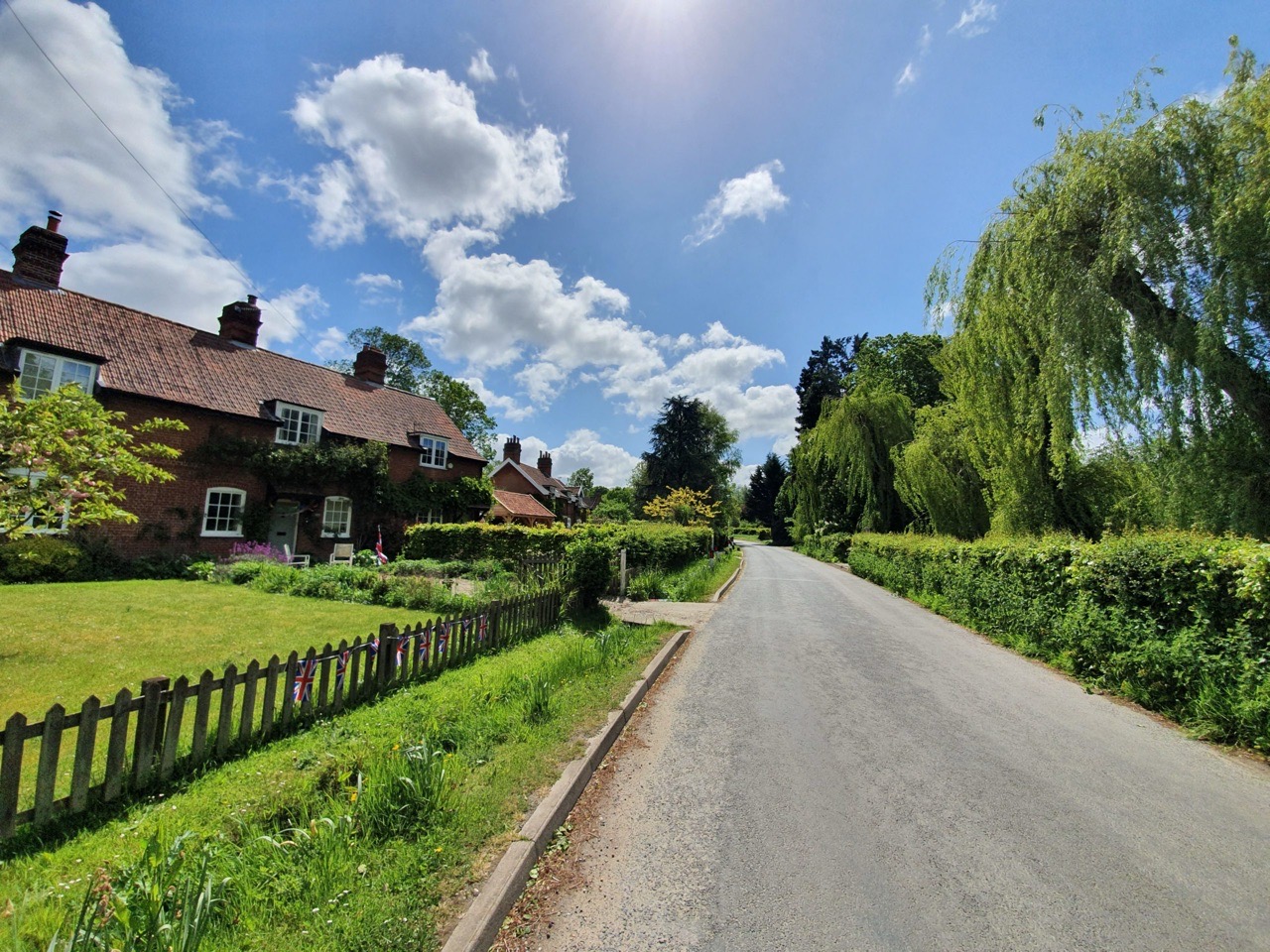
    There’s a row of three cottages at the heart of the town, near the crossroads, with the building in the distance, with the white edge to the roof, being the former Post Office.

    This is today’s Post Office.

    There’s not much more to the village, Caistor Lane continues to the left, whilst the road to the right leads to villages such as Stoke Holy Cross and Poringland.

    This is the only listed building in the heart of the village, which is Queen Anne Cottage, formerly known as Caistor Cottage. The property was constructed in 1729, for the Cogman family.

    But, more about all of this in other posts…. Since I haven’t worked out most of what I need to write yet  🙂

  • Caistor St Edmund – Village Sign

    Caistor St Edmund – Village Sign

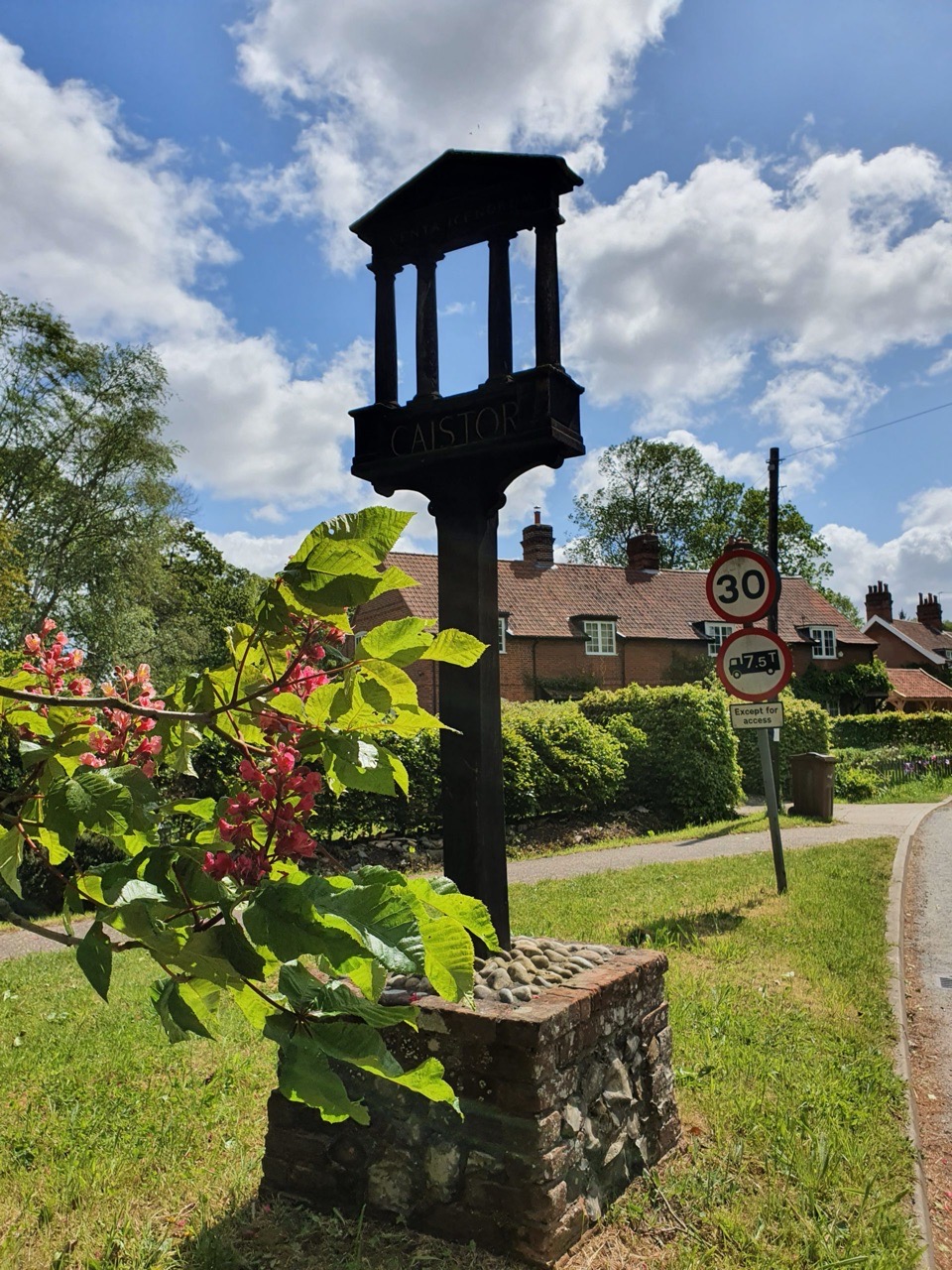
    This didn’t come out as clearly as I hoped, I’ll take another photo at some point. But, it’s a decent village sign with its columns and portico arrangement, a link to the Roman and Iceni settlement which effectively founded Caistor St. Edmund.

    It’s 100 years ago last month that Prince Albert, who became King George VI, gave a speech at the Royal Academy which promoted the introduction of village signs. He was inspired by some local examples that he had seen around the Sandringham Estate and there developed a bit of a national craze in ensuring that nearly every village had one.

    I have no idea when the village sign was erected here and I’m not an expert in such things (or indeed about anything of use), but it’s probably from around the 1970s.

  • Walking – Treasures on the Boudicca Way

    Walking – Treasures on the Boudicca Way

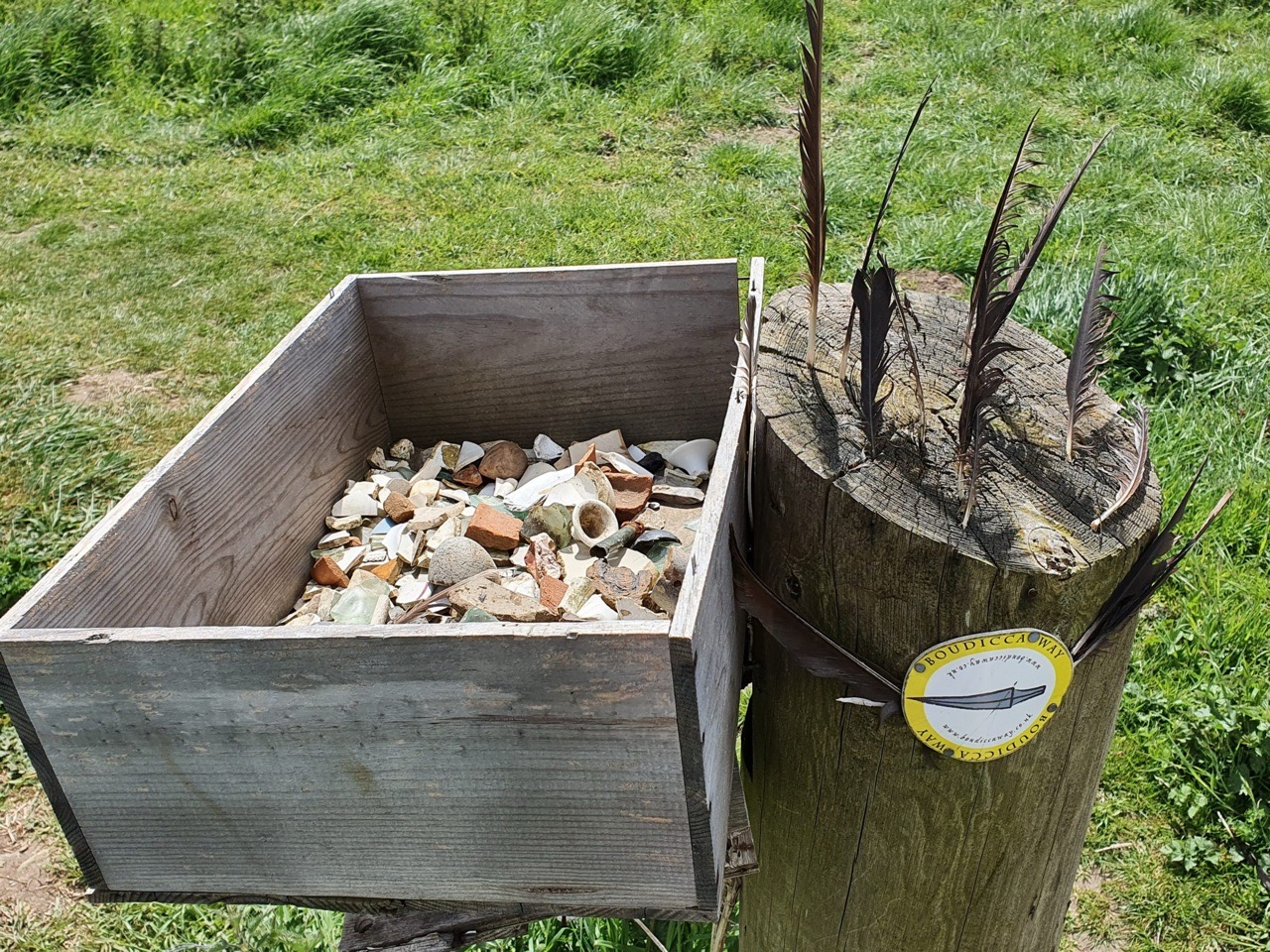
    Located towards the latter part of the Boudicca Way, if walking towards Norwich, is this little finds box that has been placed on the edge of a farmer’s field. It always seems to contain new items of interest every time I go by it, it’s an interesting concept that perhaps could be done elsewhere.

    OK, so it’s unlikely to interest the British Museum, but it shows how much stuff can be found in fields. And, for reasons unknown, it now appears to have attracted some feathers.

  • Caistor St Edmund – War Memorial (Walter John Blake)

    Caistor St Edmund – War Memorial (Walter John Blake)

    Walter William John Blake is one of the names listed on the war memorial in Caistor St Edmund.

    Walter served in France and Flanders during the First World War, dying of his wounds on 29 March 1918 at the age of 19. He was born on 26 November 1898 and was the son of Mrs Eliza Blake, who lived in Hall Cottages, Wacton Common in Long Stratton.

    In the 1911 census, he was living in Kimberly, near Wymondham, when he was listed as being a 12-year old still at school, living with his younger brother Leonard who was aged 9, along with his mother Eliza and his father Walter Blake, who was a farm labourer.

    He’s commemorated today at the Pozieres Memorial, which is around five miles from the French town of Albert.  There are 14,700 casualties recorded here and many of those are listed only on a panel as the bodies were never recovered, but they were men in the Allied Fifth Army (renamed the Fourth Army on 2 April 1918) which was driven back by the Germans. As Blake is listed only on a tablet, I’m assuming that his body was never found.

    I haven’t ascertained where he lived before going to war, it must have been in the village as I can’t see any other connections that he had to Caistor St. Edmund.