Blog

  • Evil Twin Brewing – Beautiful Advert

    Evil Twin Brewing – Beautiful Advert

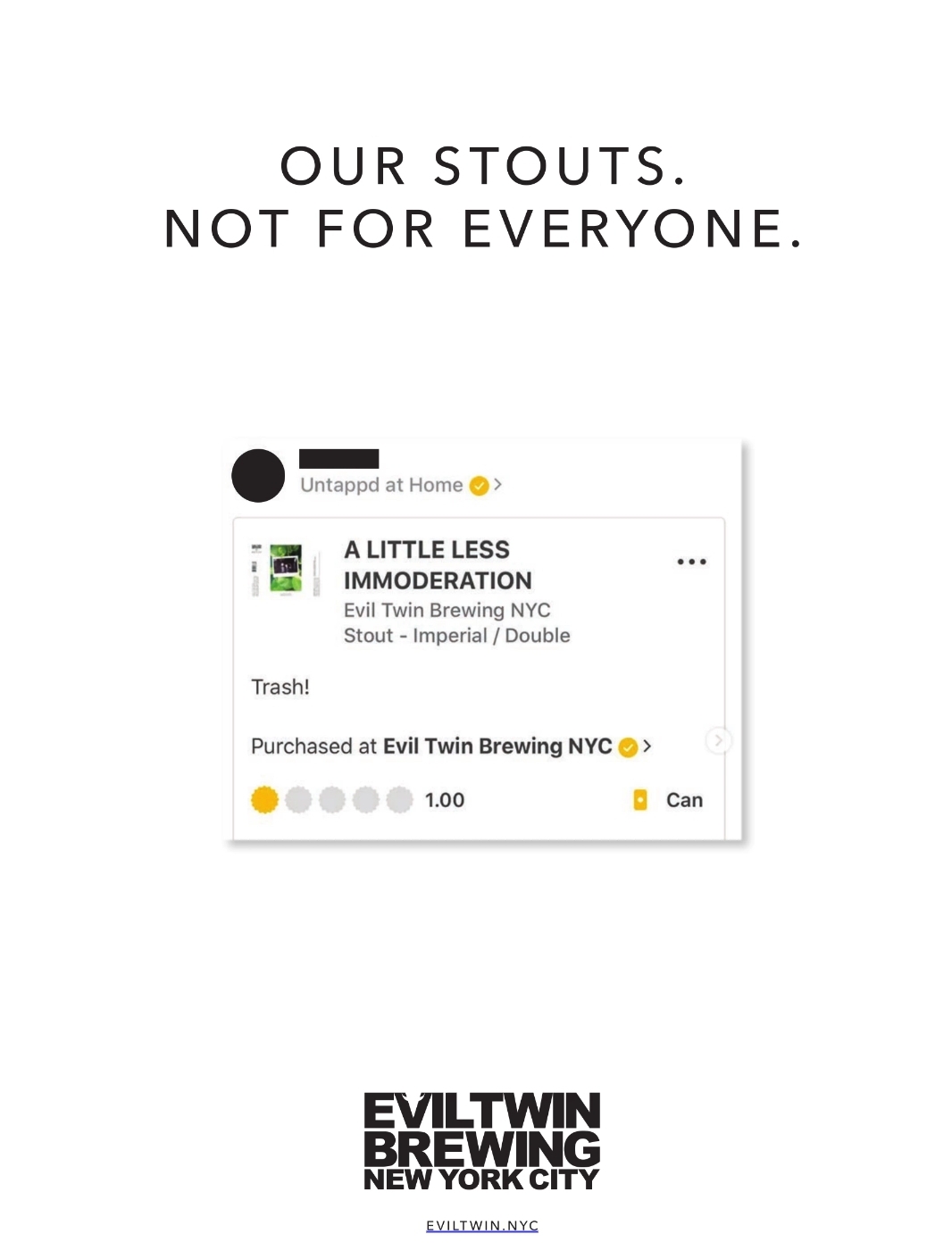
    This is a full-page ad in Craft Beer & Brewing magazine, and it’s beautiful. I’m not sure how anyone can leave a 1-star rating on Untappd for anything that Evil Twin Brewing produce, but, perhaps it’s not for everyone as they say. But, Evil Twin is one of the best breweries going, so they can definitely get away with advertising like this. It is annoying me now that I haven’t had enough of their beer though, I need to get out more…

  • Add to the Wants List – Carton Brewing Regular Coffee

    Add to the Wants List – Carton Brewing Regular Coffee

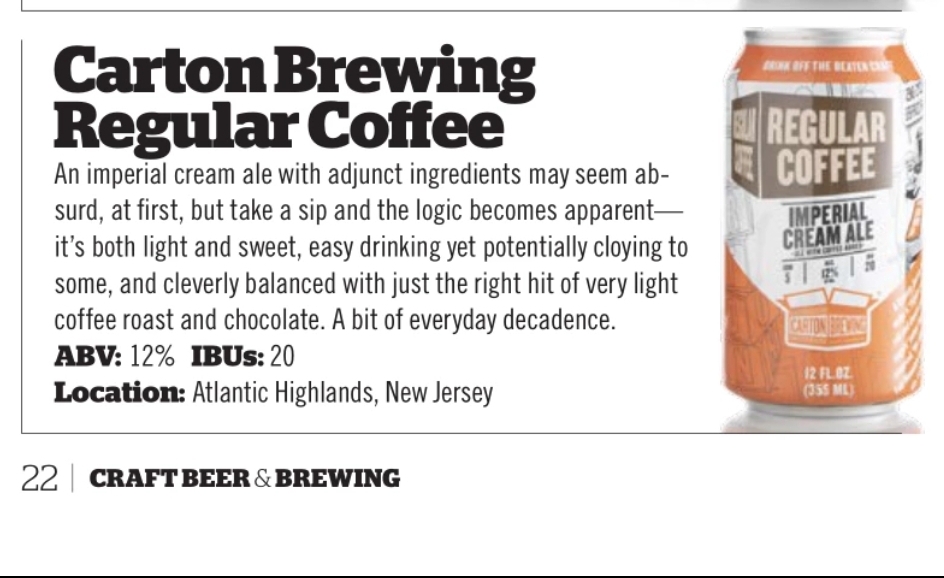
    I’ve never heard of this beer mentioned in Craft Beer & Brewing, and I’ve never heard of imperial cream ales (which goes to show that I need to get out more) but I’ve decided that I need some of this in my life….. I like a bit of “everyday decadence”.

    I also haven’t been to this part of New Jersey, but the brewery do tours and tastings. That’s another place to add to my little list of places to go.

  • Pret – £20 Monthly Coffee Subscription

    Pret – £20 Monthly Coffee Subscription

    For years, I’ve wondered why Pret have such an appalling loyalty system. By appalling, I mean they didn’t have one, they simply allowed staff to give stuff to people they liked. So, the ‘beautiful people’ got stuff and others didn’t. Although I did once see a young French boy (well, he spoke French, so I made an assumption) at Heathrow T5 proudly giving the staff member a 2p coin for a bottle of water, not realising that it wasn’t the £2 coin that he needed. The boy looked crestfallen, but the staff member then told him that he could have it for free. It was all rather lovely and helped Anglo-French relations no end.

    Anyway, I digress. Pret have now launched an all you can drink coffee option, although smoothies, hot chocolate and tea are also included. It costs £20 and it allows you up to 5 coffees per day in, I think, any of their shops (bar a motorway service station outlet). This now makes them cheaper than JD Wetherspoon, who have unlimited hot drinks for between 99p and something like £1.89, depending where you go. You have to wait 30 minutes between drinks, to stop you getting rounds in for friends.

    It’s a ferociously competitive offer and I hope that other locations do something similar. I’ve signed up, primarily because the first month is free. I’m not in the UK for two of those first four weeks, but, since it’s free, I’ll go with it. From then on, the £20 per month seems very reasonable. I’ll report back about how well it actually works….

  • Dictionary of the Vulgar Tongue – Day 170

    Dictionary of the Vulgar Tongue – Day 170

    The Dictionary of the Vulgar Tongue was first published at the end of the eighteenth century, and given that the current health crisis is giving too much time to read books, I thought I’d pick a daily word from it until I got bored….

    Itchland

    Grose’s definition of this word, which is simply “Scotland”, doesn’t actually hint at how negative and offensive it was meant. For a period in the eighteenth century and into the nineteenth century, the Scots were referred to this in this way by the English, suggesting that they had lice and were infested. And, this was nothing new in terms of insults, the same word had been used against the Welsh in the seventeenth century.

    It seems that English-Scottish relations improved by the 1820s or so, as the word went out of usage. Quite why it has made something of a return in the twentieth century, I’m not sure, perhaps it’s just in articles about the past….

  • Big Issue Cover – Positive Imagery by Charlie Mackesy

    Big Issue Cover – Positive Imagery by Charlie Mackesy

    This is perhaps one of the most uplifting and positive magazine covers that I’ve seen. Drawn by Charlie Mackesy, it’s rather impressive from the Big Issue.

  • London – City of London – Crosse Keys

    London – City of London – Crosse Keys

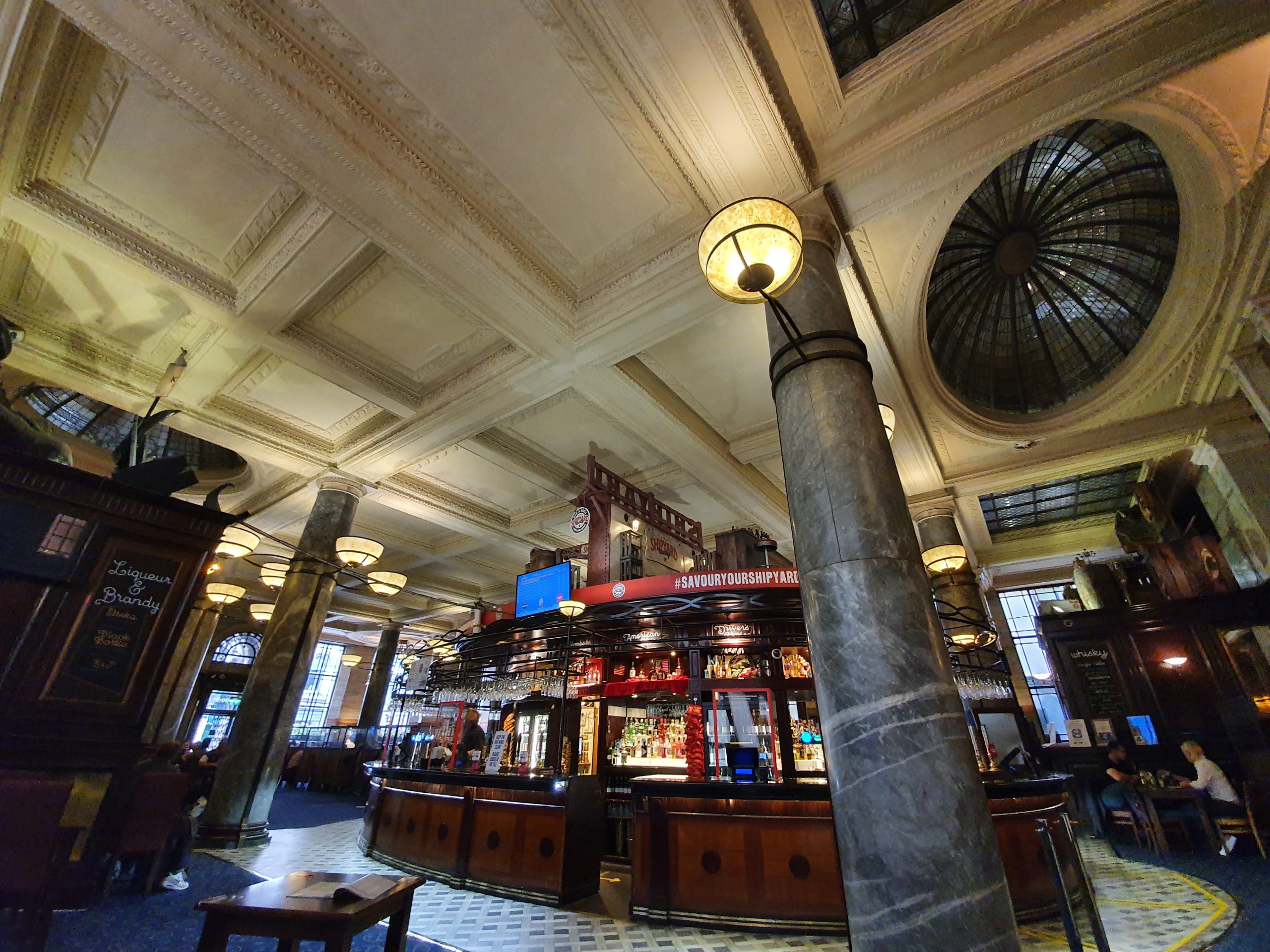
    I’ve visited Crosse Keys in London many times over the last decade, as it’s spacious and convenient for London Liverpool Street railway station. It’s a glorious location, named after an inn that was located here before the nineteenth century. I thought I’d write something about it, as it’s listed in the Good Beer Guide and I’m working my way around that.

    This is the former banking hall of the Hong Kong and Shangai Banking Corporation and it opened in October 1913. The picture on the left is recent and the one on the right is from last year, before the current crisis.

    Easily missed, there’s also an upper area that overlooks the main part of the pub. I was sitting here last year when a staff member looking over mentioned to me that Tim Martin often sits in this area before board meetings. I have no idea how true that is, but there are some grand function rooms here.

    This was my drinks selection from this weekend, keenly priced at £1.10 each, it was a convenient table location within the pub as it was near to a plug socket. I have found myself coming here before getting the train home, as Hamilton Hall (a JD Wetherspoon outlet actually within London Liverpool railway station) is often too busy to get a seat.

    These photos are older, the burger and the chicken wrap, which for some reason I can’t recall I ordered with salad rather than chips. The selection of real ale is usually excellent, one of the widest varieties in this area of London, and all keenly priced.

    And back to the days in 2018 when this was an option with chicken club…..

    Anyway, this is one of the grandest buildings that Wetherspoons have and they’ve operated it since the 1990s. It can get busy in the evenings and at weekends, but it’s usually possible to find a table without too much of a wait because of its size. And it’s quite rightfully in the Good Beer Guide with its history and the range of real ale and craft beer.

  • London – City of London – Noble Street Roman Fort Ruins

    London – City of London – Noble Street Roman Fort Ruins

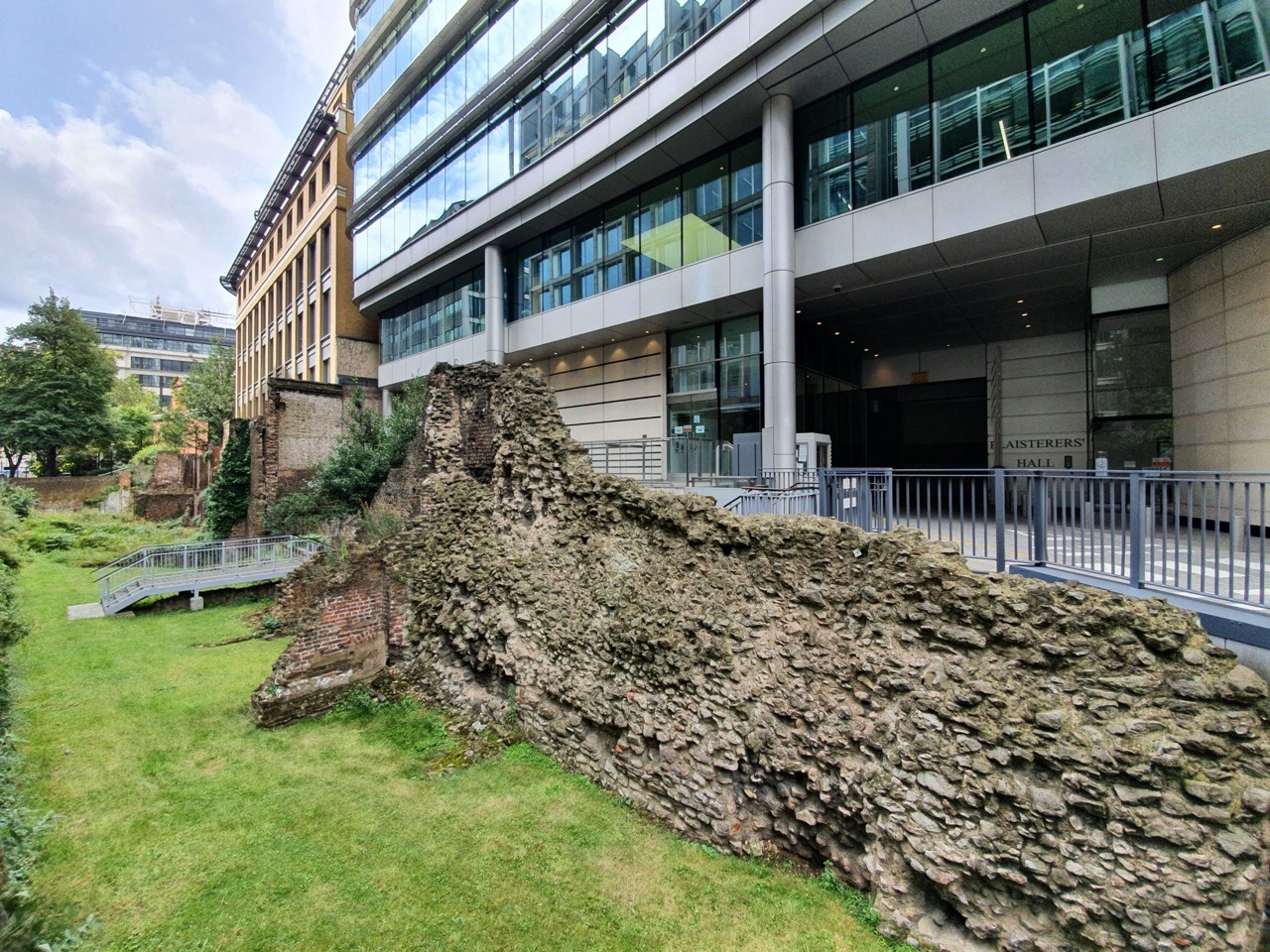
    The Second World War brought many changes to the streets of London, including the uncovering of pieces of the city’s past. The above map (click to make it larger) is from 1900 on the left and from today on the right, with Noble Street looking very different. Properties had been built backing onto the Roman wall and it had been covered up over the centuries, but the wartime bombings of the city brought the wall back into view.

    The old meets the new.

    It’s not very clear, but there’s an overlay on this panel which gives an indication of what the area looked like in Roman times.

    The Roman wall was built in one go to defend the city, starting in around 190AD and being completed by around 225AD. It served as the boundary wall of London until the medieval period and it wasn’t much changed until the sixteenth century, just some strengthening works in places.

    The bits of brickwork jutting out are from eighteenth to twentieth-century buildings that were damaged or destroyed during the Second World War. There were extensive archaeological investigations here in the late 1940s and 1950s, with a decision being made to protect the area and to prohibit redevelopment.

    A boundary marker.

  • London – City of London – Museum of London (Model of Old St. Paul’s Cathedral)

    London – City of London – Museum of London (Model of Old St. Paul’s Cathedral)

    A model at the Museum of London of the old St. Paul’s Cathedral, destroyed during the Great Fire of London in 1666. Work has started on it at the end of the eleventh century and it was already the fourth church to be located at this site. By the time it was completed it was one of the longest churches in the world and for a while, it was also the tallest building in the world.

    The building was in a state of some disrepair, not least due to the English Civil War, by the mid seventeenth century and efforts were underway to restore it. Wooden scaffolding had been placed around the building, but then the Great Fire struck, and the building had little chance, especially given the handy wooden structure around it that soon caught fire.

    And the remains of the building after the fire. It was decided to start again with a new design, designed by Sir Christopher Wren, who had also been supervising the reconstruction of the old building.

    And its replacement, the modern St. Paul’s Cathedral.

  • London – City of London – Museum of London (Wellclose Square Prison Cell)

    London – City of London – Museum of London (Wellclose Square Prison Cell)

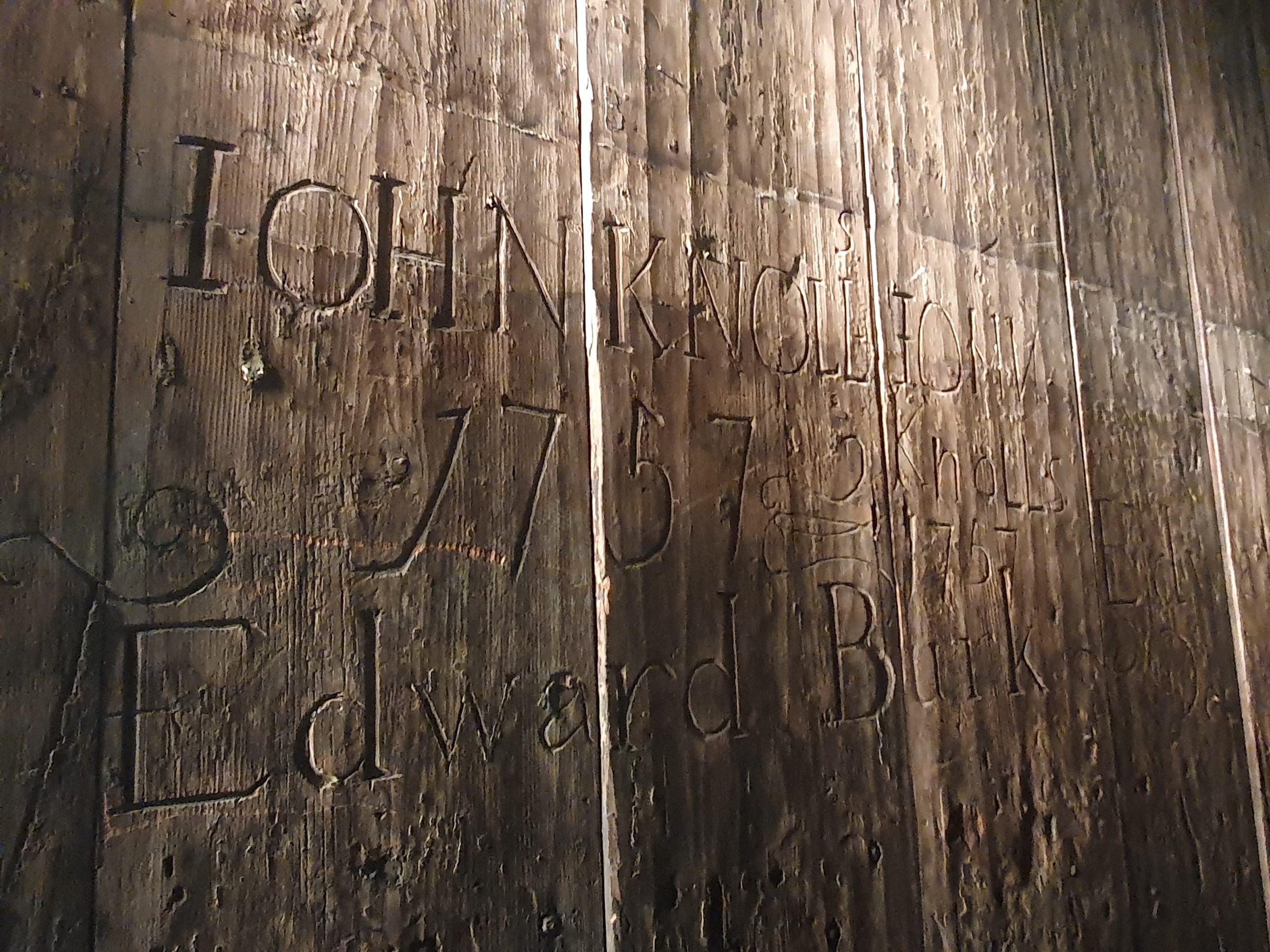
    This cell is on display at the Museum of London and is from the Wellclose Square Prison, also known as the Neptune Street Prison. It was primarily used as a debtors prison and this cell dates to around 1750, once located under the Cock and Neptune public house. Wellclose Square still exists, a short walk from the Tower of London, with the prison being used until the late eighteenth century.

    And some of the graffiti etched into the walls of the cell.

  • Dictionary of the Vulgar Tongue – Day 169

    Dictionary of the Vulgar Tongue – Day 169

    The Dictionary of the Vulgar Tongue was first published at the end of the eighteenth century, and given that the current health crisis is giving too much time to read books, I thought I’d pick a daily word from it until I got bored….

    Irish Apricots

    This is defined by Grose as “Potatoes. It is a common joke against the Irish vessels, to say they are loaded with fruit and timber, that is, potatoes and broomsticks”. There was no end of similar phrases, with Irish apples, Irish footballs, Irish grapes and Irish lemons all meaning the same thing, ie, potatoes.

    The Irish Apricots phrase wasn’t recorded before the end of the eighteenth century, so it was perhaps quite a new reference when Grose wrote about it. It was used more commonly in the early nineteenth century, but has since fallen out of use.