
I don’t understand a lot of the background of this graffiti, but some of it looks of a really high quality. The artworks are on ul. Puławska and I have no idea whether they’re supposed to be there or who has done them….


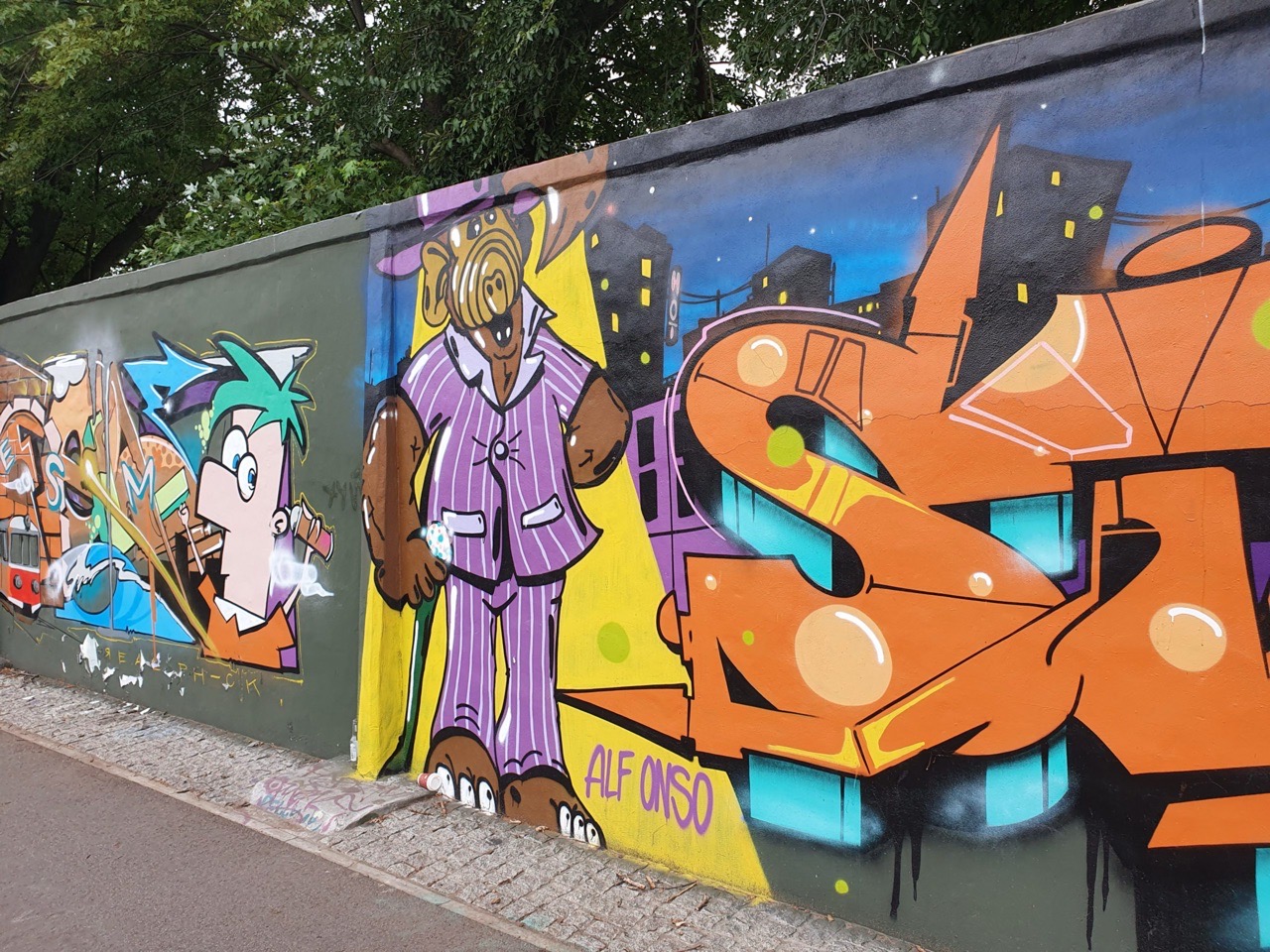
I don’t understand a lot of the background of this graffiti, but some of it looks of a really high quality. The artworks are on ul. Puławska and I have no idea whether they’re supposed to be there or who has done them….


The latest Accor promotion is something I’m surprised they haven’t tried a little earlier, which is using their hotels as day rooms. Similar to the whole Deskdog theory from Brewdog.
Their e-mail reads:
“The hotel office is your home office. But better.
It turns out if you mix children and your home office, things can become… challenging. And with that lesson learnt, here comes half term.
So we’ve got the perfect solution: the hotel office.
It’s all the home comforts of the work-from-home era, but with none of the housework. Or children. Think spotless welcome and check in, clear desk, comfy chair, great coffee, intelligent lighting, room service. The hotel office is your home office. But better.
PJs, slouchies, suit? Make your own rules. Escape to your new office.”
It’s a great idea, although after trying numerous searches, but the prices are quite spiky, a day room costs £66 in Cambridge and around £50 to £100 in most London hotels. And just to show there’s a potential problem with the pricing, that same room in Cambridge on the same day in late October to stay overnight costs £61.75. I’m not sure the take-up is going to be huge here….
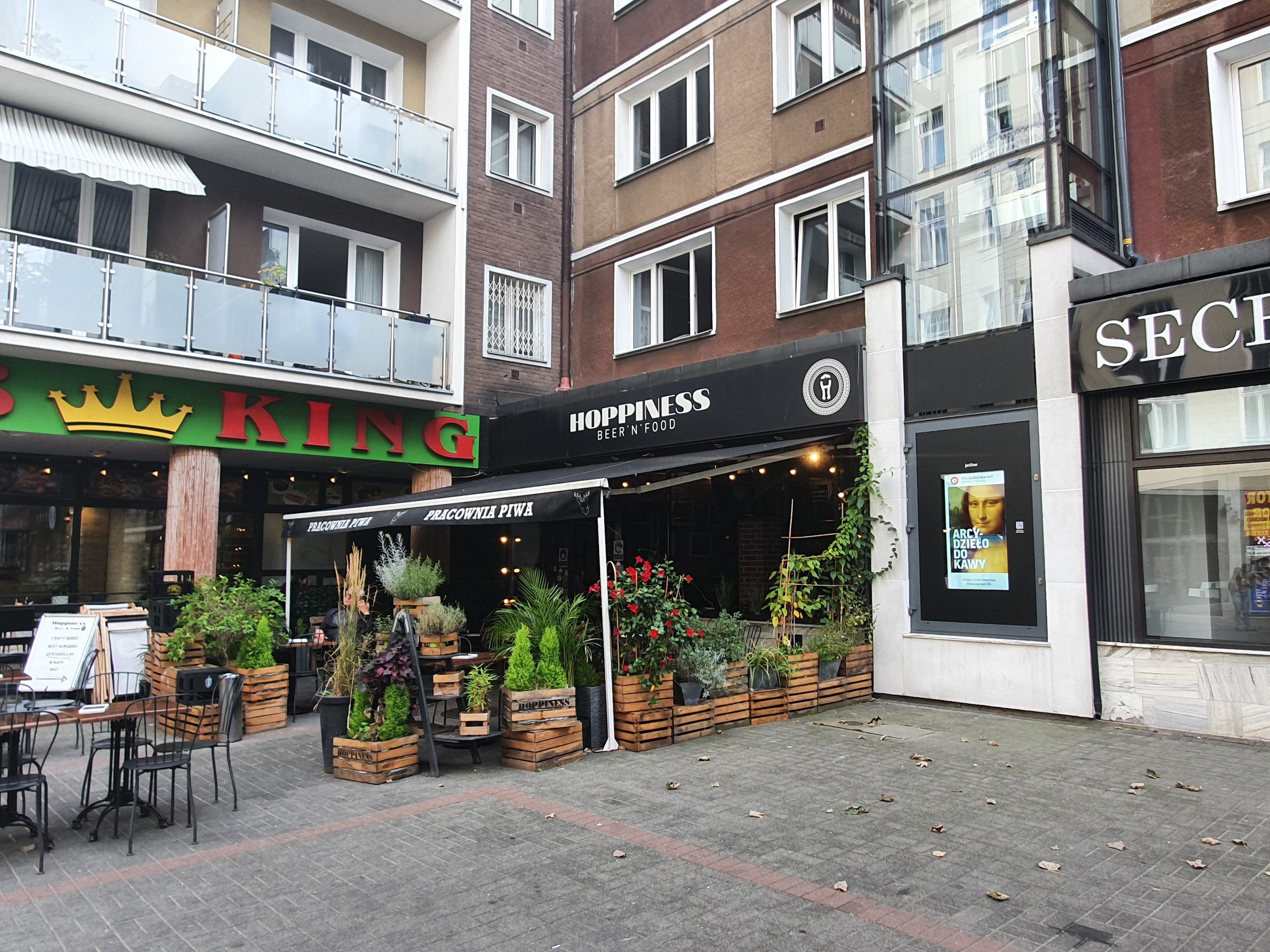

I think that I was quite thorough when visiting craft beer bars earlier in the year as I’ve now had to start going back to some of them, having run out of new locations to visit. But this certainly isn’t a bad thing. Anyway, I won’t add much here, it’s still an excellent bar as I pointed out in my other post about Hoppiness.

The beer list, all balanced with some interesting options on there, with the current list always available at http://hoppiness.ontap.pl/.

This time I went for the Volcano Burger, which they did make clear when I ordered was very hot. And it was. But, tolerably so (although only just and I have a relatively high tolerance for these things) and the burger was served medium, which is perfect. All of a very good quality again and nicely presented.
Onto the beer, I had the Orzechowy Fes from Warkot Brewery, which had a rich and obvious taste of nuts, the strongest I’ve had since a peanut butter nitro stout in the United States I think. Very moreish and drinkable, an excellent choice of the bar to have in stock (and for me to buy).
The service wasn’t quite as engaging as before, but things are harder with masks and it was still a welcoming and comfortable environment. Everything was clean and organised, with the beer and food being as good as I remember from my last visit. So, at some stage I’d better make a third visit…..
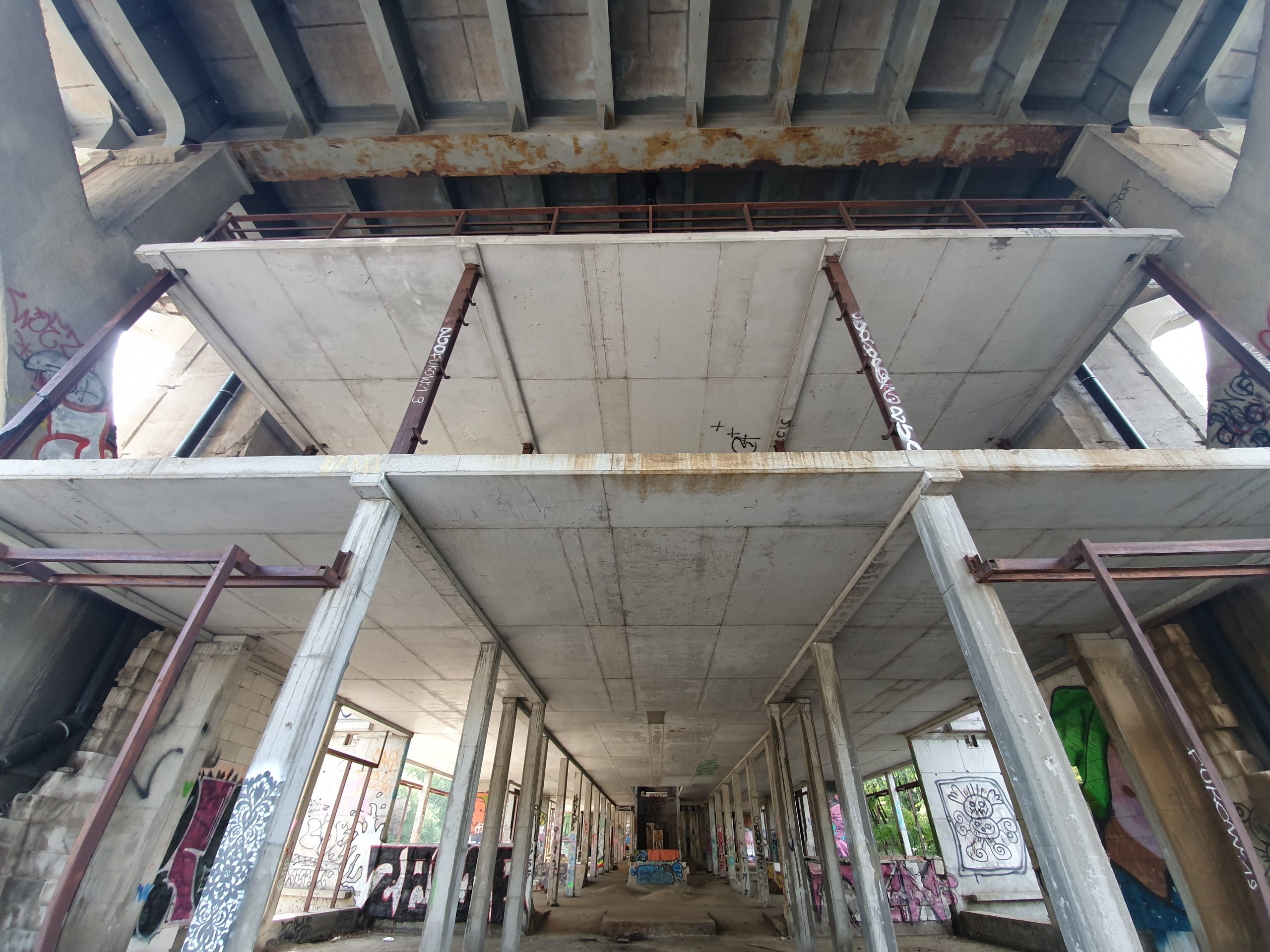

I say urban exploration in the title, but there wasn’t much exploration involved here, it’s accessible from the road at al. Jerozolimskie, near to the river. There doesn’t seem to be that much of Warsaw that is derelict, such is the development that seems never-ending here, so this sort of stood out.
For those who do want to urban explore, and that doesn’t include me as I find these things just too frightening, there’s an extensive web-site at https://urbexy.pl/.
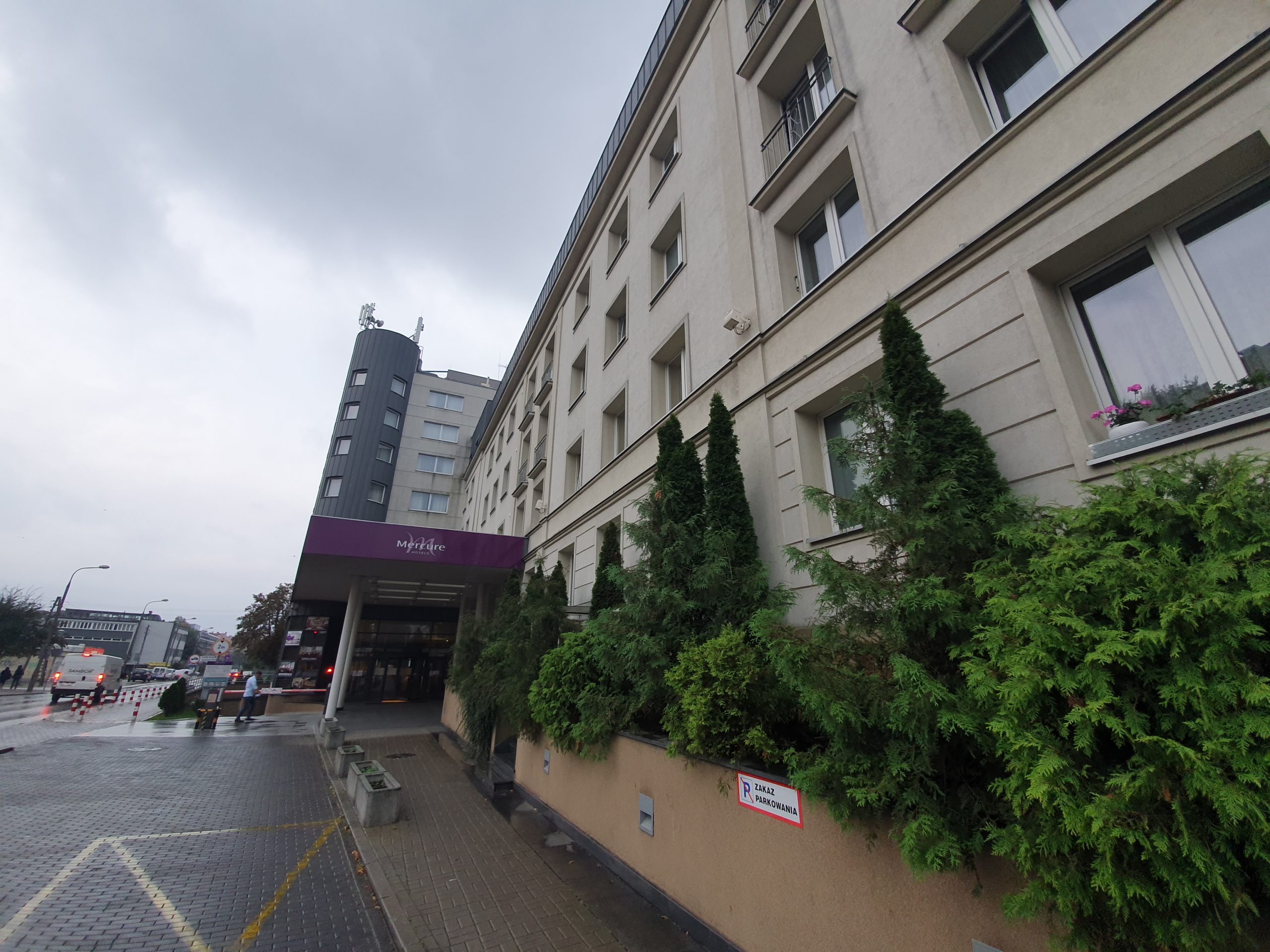

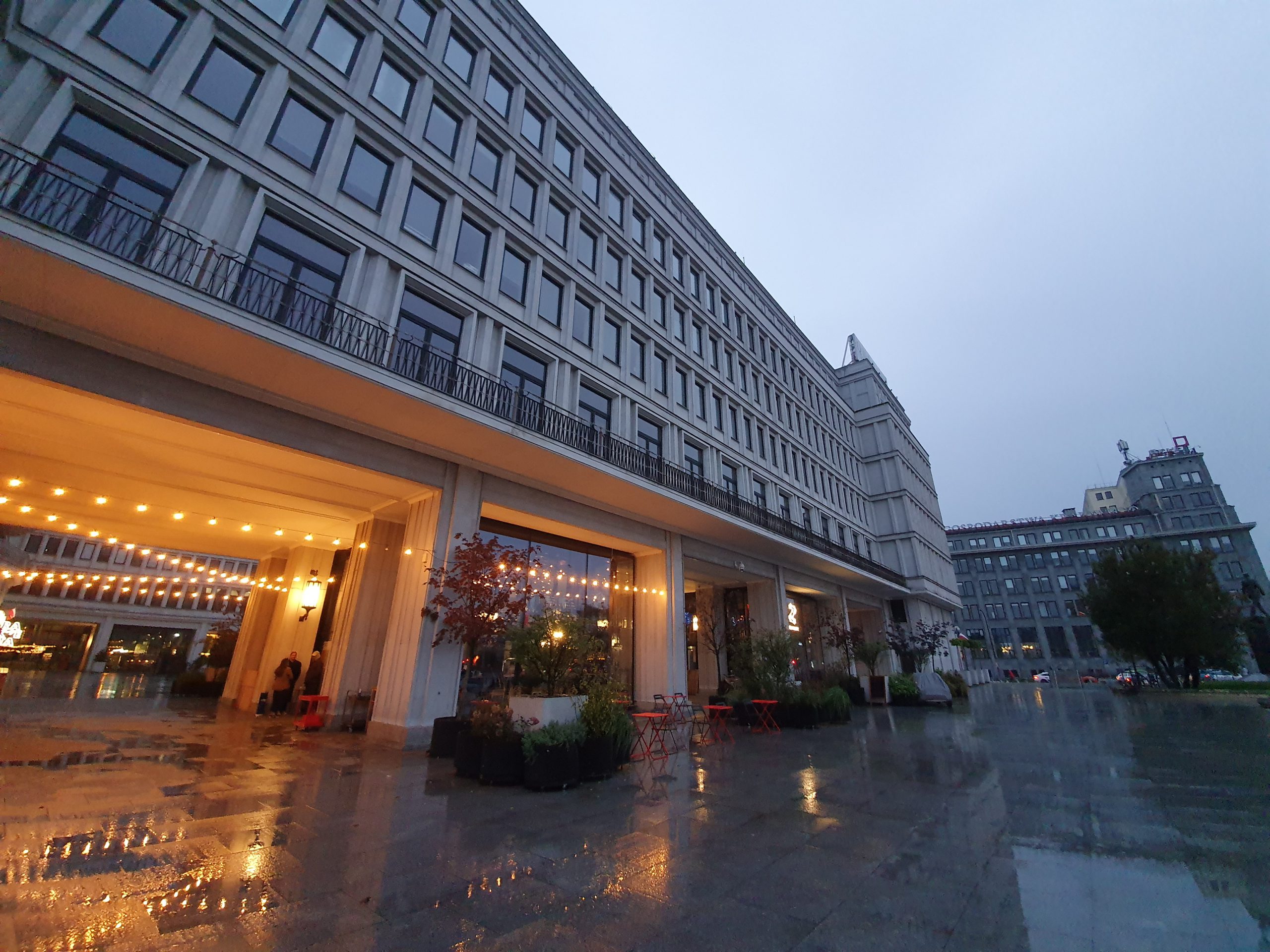
Not through any deliberate plan of action, but more through what’s cheaply available, I’ve been working around Accor hotels in Warsaw that I haven’t visited before. To be fair, there aren’t many left now that I haven’t been to, other than the most expensive ones such as Raffles Warsaw and that’s a bit decadent for me. Anyway, this hotel is relatively near to the airport and also right next to a tram line, which is very handy. When approaching the hotel, I hoped to be in the circular tower bit on the left, as I thought that might give better views.

My room, which I was delighted to see was in the circular tower, but it took me a moment to spot where the room numbers were. I’m not entirely sure that’s the best place for them, but there we go….

The room, which the hotel had very kindly upgraded, which I much appreciated. It felt slightly more old-fashioned than some of the other Mercure, and indeed Accor, hotels, but it was clean, comfortable and entirely met my needs.

The coffee tray selection and it did take me some time to figure out that coffee machine. There’s a switch on the side which is a bit hidden away and it produces more coffee than can fit in the cup, which wasn’t ideal.

And a free welcome gift, I’m very easily won over by chocolate, so I decided at this point that I liked the hotel.

The reception area did lack atmosphere, but this was no doubt down to the current health situation. There didn’t seem to be that many guests and it wasn’t really a place that anyone needed to linger for long. Other than me when I wanted my drink that is.

My welcome drink, which was the Zywiec Porter that I so very much like. I did wonder whether this would be seen as a restricted drink, but the staff member said the voucher included all beers. She’s right, that’s exactly what the voucher says, but the view on this seems to vary in a couple of hotels. But I won’t start on that again….
The staff member at the bar was friendly and seemed quite pleased she had something to do when I turned up, as I was the only person there and indeed the only person that I saw in the bar area at all at any time. The receptionist was also personable and engaging, but that was my limit to seeing any staff in the hotel.
This hotel had gone further than the others in presenting documentation in the room as to what was going on. Everything was laminated and this information was actually quite useful, including some new times for the bar and restaurant. I didn’t have breakfast at this hotel, but there were instructions on what to do and how to order it. There were some strange policies like the hotel announcing they’d removed all the “safety procedures in case of fire” from the rooms, which they actually hadn’t and I’m not sure that the current health crisis demands that they should.
Anyway, the hotel was spotlessly clean and I very much liked it, I think it’s one of my favourites in the city. There’s some road noise, although nothing major, but, internally, I didn’t hear anything. It was easy to control the temperature in the room, it was comfortable and I got a free chocolate bar and Zywiec Porter, so what more could I need?
The Dictionary of the Vulgar Tongue was first published at the end of the eighteenth century, and given that the current health crisis is giving too much time to read books, I thought I’d pick a daily word from it until I got bored….
Lawful Blanket
Unfortunately, this is another term that I have nothing useful to add to Grose’s definition, which is simply “a wife”. I’m not sure that this is the most suitable term for a man to use to describe his wife, but no doubt it was seen to be more acceptable at the beginning of the nineteenth century. The phrase is listed in numerous locations relating to etymology, but none of them has any clue where it comes from…… I can’t see it coming back into the English language either.
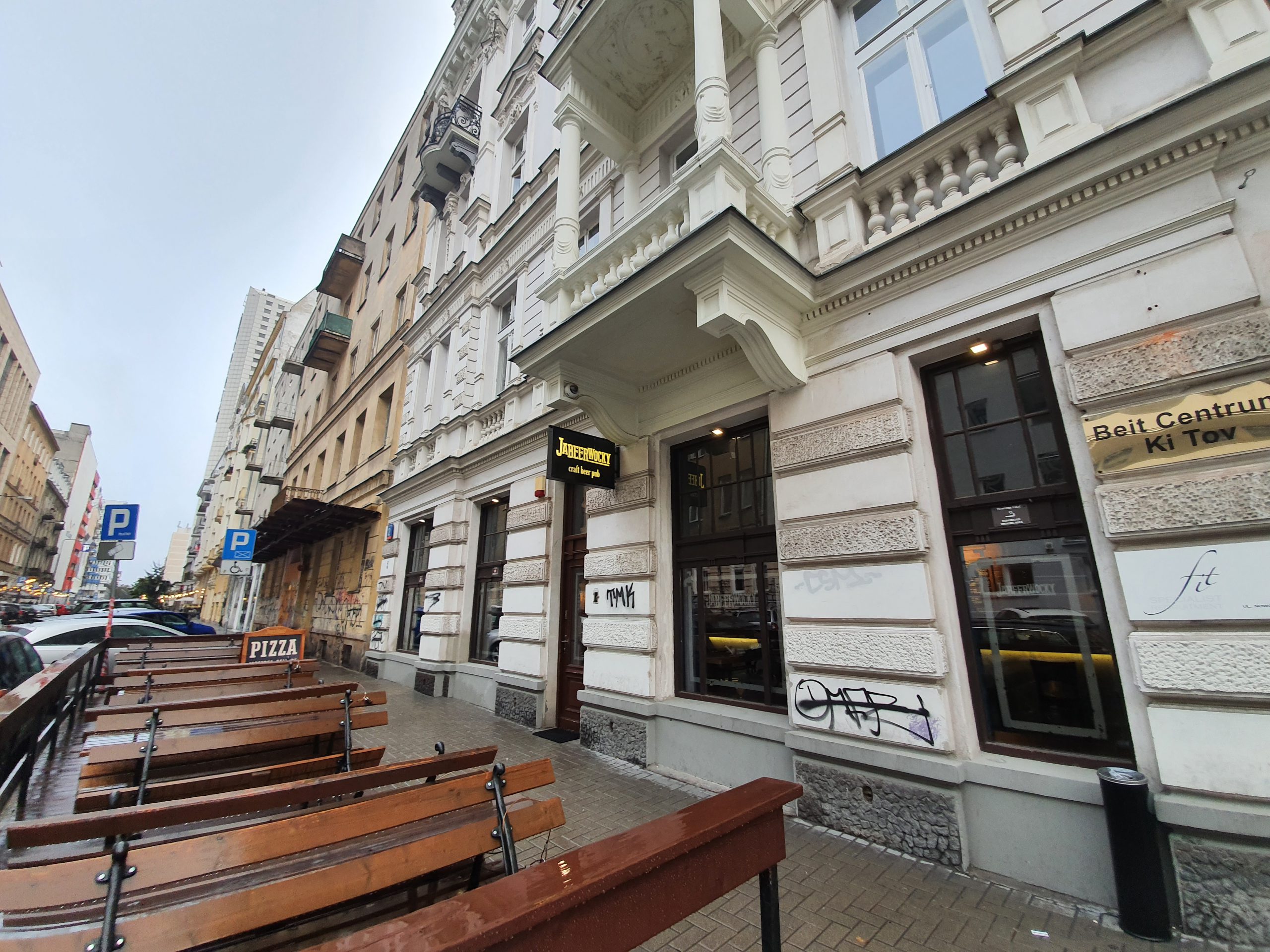

This is my second visit to this craft beer bar on ul. Nowogrodzka and I first visited there in January. I didn’t get chance to have their pizza then, but the bar was a decent one, so a return seemed sensible….

The pub’s tap-list is available on-line and there’s a camera that takes a photo of this board every ten minutes, a perfectly innovative way of keeping everyone informed of the options.

This is the back room of the bar, which I didn’t pay much attention to on my last visit. The bar was relatively busy this time, but it’s a large location with plenty of tables, so there was still space.

I had two drinks, which was firstly the oatmeal stout that I realised I had last time I visited, which is produced by Jabeerwocky themselves. I also had the Almond Coffeecat from Browar Rockmill, a stout which did indeed taste of both coffee and almonds, so the beer name wasn’t misleading. I like almonds and I’ve decided I like almonds in a beer as well, it’s got quite a smooth but long-lasting taste. The drink was suitably rich, but entirely drinkable, and I liked that the brewery ‘toasted’ my check-in on Untappd shortly after I left it. I’m easily pleased, but I’ve mentioned that before…..

This time I did get to have the pizza, going for the chorizo one. This was rather lovely as it was large, hot and tasted excellent. And they are quite handy things to have in a pizza… It was thin and so wasn’t too stodgy, all rather pleasant.
I think I preferred this visit to my previous one, as there felt more of an atmosphere this time, although that was probably just because there were more people in and it wasn’t lunch-time. But, it remained friendly and welcoming, with a broad selection of different beer types. So, all rather lovely….

I’m not sure whether I’ve just never noticed this craft beer bar before, or whether it’s new, but, either way, it’s a new one for me to visit. I had hoped that a Sunday evening would be relatively quiet, but it was a busy bar and it had a laidback and welcoming atmosphere. The bar name of Cuda Na Kiju is probably something of a colloquialism, as Google says it means literally “Miracles on the Stick”. Not that this would be a bad name in itself…..

The full beer list is at http://cuda-na-kiju.ontap.pl/ and it’s a well thought out selection. I asked the friendly staff member what dark beers they had and she suggested the Czarny Minister from Browar Minister. This was fine, at the appropriate temperature and it had some suitable coffee and chocolate flavours to it, although it wasn’t quite as strong in taste as I’d have ideally wanted. I’ve only just noticed on the beer list, and it’s been on for a few days, that they currently have the WRCLW Baltic Porter, with Palo Santo and coconut, and this sounds simply marvellous. I’m not sure I’ll go back just for that, but it is tempting and I’m surprised the locals haven’t snapped that one up a little bit quicker.
I was a little distracted whilst being served as the bar looked quite full, so I wasn’t quite sure where I was going to go with this drink that I had acquired. Fortunately, I found the last remaining table and all was well, it’s certainly a popular place. They were serving pizzas (which I still insist is the new national dish of Poland) but I managed to resist, primarily as I’d just had a pizza in the previous bar. There are three storeys to the building, with the top one being a mezzanine level and the lower level the toilets, but the ground floor is reasonably large.
Anyway, this is a nice addition to the Warsaw beer scene and I suspect it’s popular with the local office workers, with a more upmarket feel to the whole arrangement than some bars. In terms of price, my 0.5 litre beer cost around £3, which I think is marvellous for such a drink, but is inevitably towards the higher end of the scale for a beer in Poland.
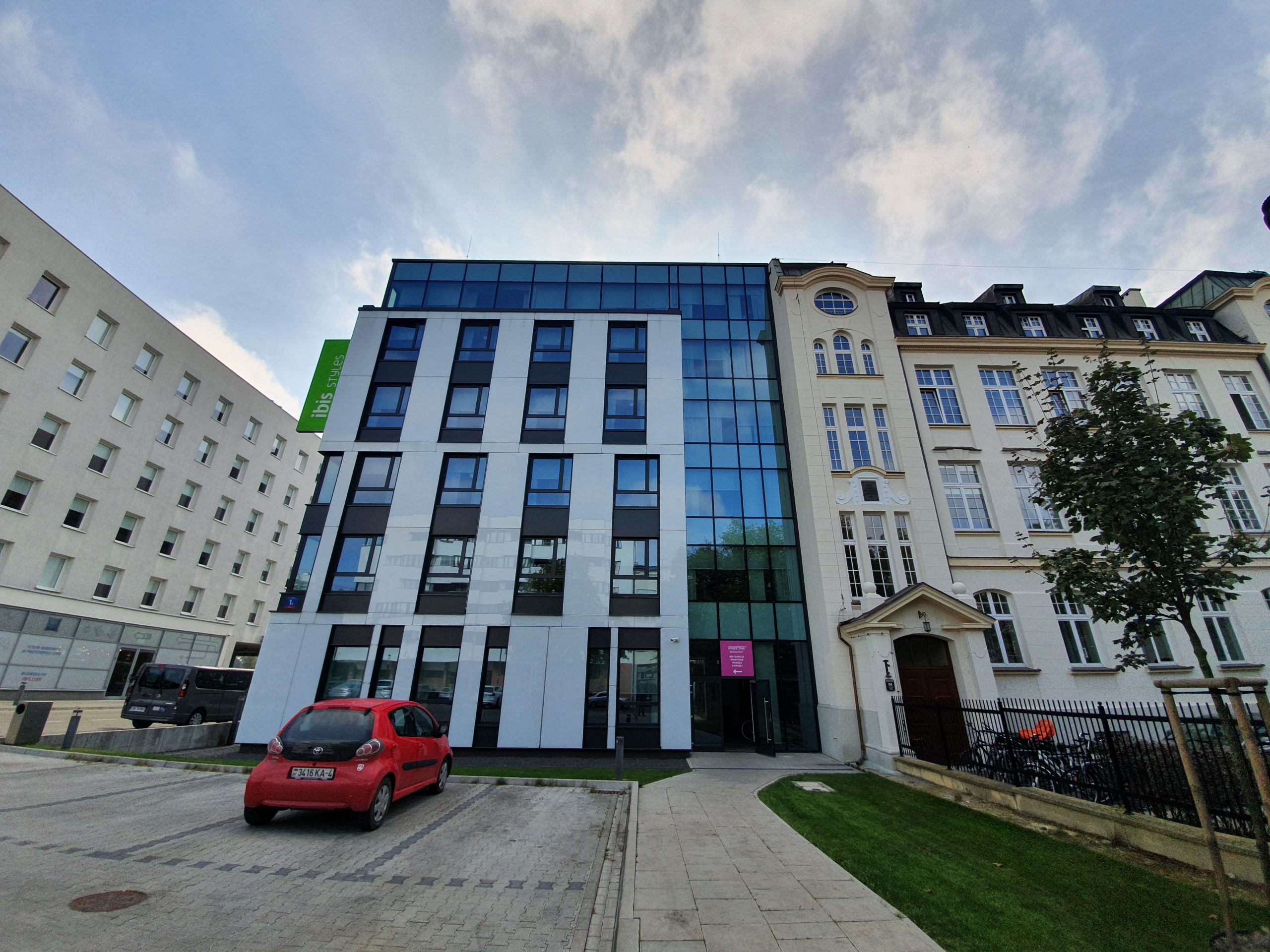
[as a footnote, albeit at the top, I commented about the lack of beer choice in this hotel in 2020, but they now have five craft beers, so I love the hotel more now]

Firstly, I wonder whether this is the ideal name for this hotel, as it’s not really in the centre of Warsaw and might cause a little confusion for travellers. There is an Ibis Styles which is much more central, known as Ibis Styles Warsaw City, which is nearer to the Old Town. Anyway, it was central enough for me and was in walking distance of the city centre.
The last time I came to this site it was to an Ibis Budget (which is still there, just a few metres away) and at that time, this Ibis Styles was just the twinkle in the eye of a hotel designer. I’m actually a little confused as to the design of this hotel, it seems very clunky, with a smallish reception area leading on uncomfortably to the restaurant area, something which I’d assumed was forced by the limitations of the building.

Until I remembered that it was a new building…. The doors here aren’t the entrance doors, this space would make more sense if they were, as they’ve got the reception desk shoved to one side and this space doesn’t really seem used. Usually, there would be free unlimited coffee here, but the health situation has meant that the machine is out of action. There are though coffee making facilities in the room.

The corridors are bright.

The room I was given and it’s fair to say that it’s colourful. I like this playful nature to Ibis Styles, it’s modern and on-trend. I think the theme was canoeing or something similar.


More of the theme.

This is bold from the hotel, which is a bathroom which is visible from the bed. The curtain to close this off is also on the bed side, so the person in the shower doesn’t have much control here. I was in the room alone, so it didn’t much matter whatever happened, but it’s an interesting concept.

There was no welcome gift in the room, or so I thought, but then a staff member came to the door to give me cake. It was much better than this photo suggests and much appreciated. I’m easily pleased.

I don’t really like the Winestone restaurant theme which Accor used, something I’ve complained about separately. But, Warsaw Mercure Ursus managed to get around the problems with the theme and delivered a perfectly decent experience, so I was tempted again at this hotel. I didn’t get very far, the restaurant is too formal for my liking (even with the introduction of bright lights, weird seating and swinging chairs, which is all too formulaic for me) and they had the exciting option of just lager in terms of the beer offering.

So with no beer of interest, I abandoned any effort of eating there and I just had a Pepsi as my free welcome drink. Although that was served slightly warm in a glass with no attempt to put ice or lemon in it, so I have to admit to leaving most of that. I gave up at that point and just left…..

The breakfast was included in the room rate and I must admit to getting a bit muddled up how the whole thing worked. Some things were served by staff, some seemed to be served by staff or help yourself and some other things were just help yourself. So, I likely got something wrong, but I did my normal thing of following other people when unsure. I don’t do that because they might be right, just because the hotel staff are likely to be less annoyed if it seems multiple people are confused. In the above photo, it’s possible to see the ham and cheeses all pre-served on plates.

And, my little effort, which tasted fine and entirely met my requirements. The hotel wasn’t expensive, so this breakfast was a perfectly decent start to the day. And the staff were doing their best, with everything being clean. Actually, everything in the hotel seemed clean and organised, they were taking the current health issue seriously.

I liked the lift.
All told, this was a perfectly well run hotel and the staff were welcoming and helpful. Not that I’m going to get too concerned about the design of the building, but it was a bit cobbled together, although the modern design of the rooms made up for that. It’s quite a brave theme for a hotel to run with, but I think it suits the Ibis Styles theming well. The welcome drink was a waste of time, but I was satisfied enough with the room and the free cake, that made me feel sufficiently welcome. For those who don’t mind a little bit of walking to get to the centre, then this is ideal, although it’s by no means the closest Accor to the centre of Warsaw.
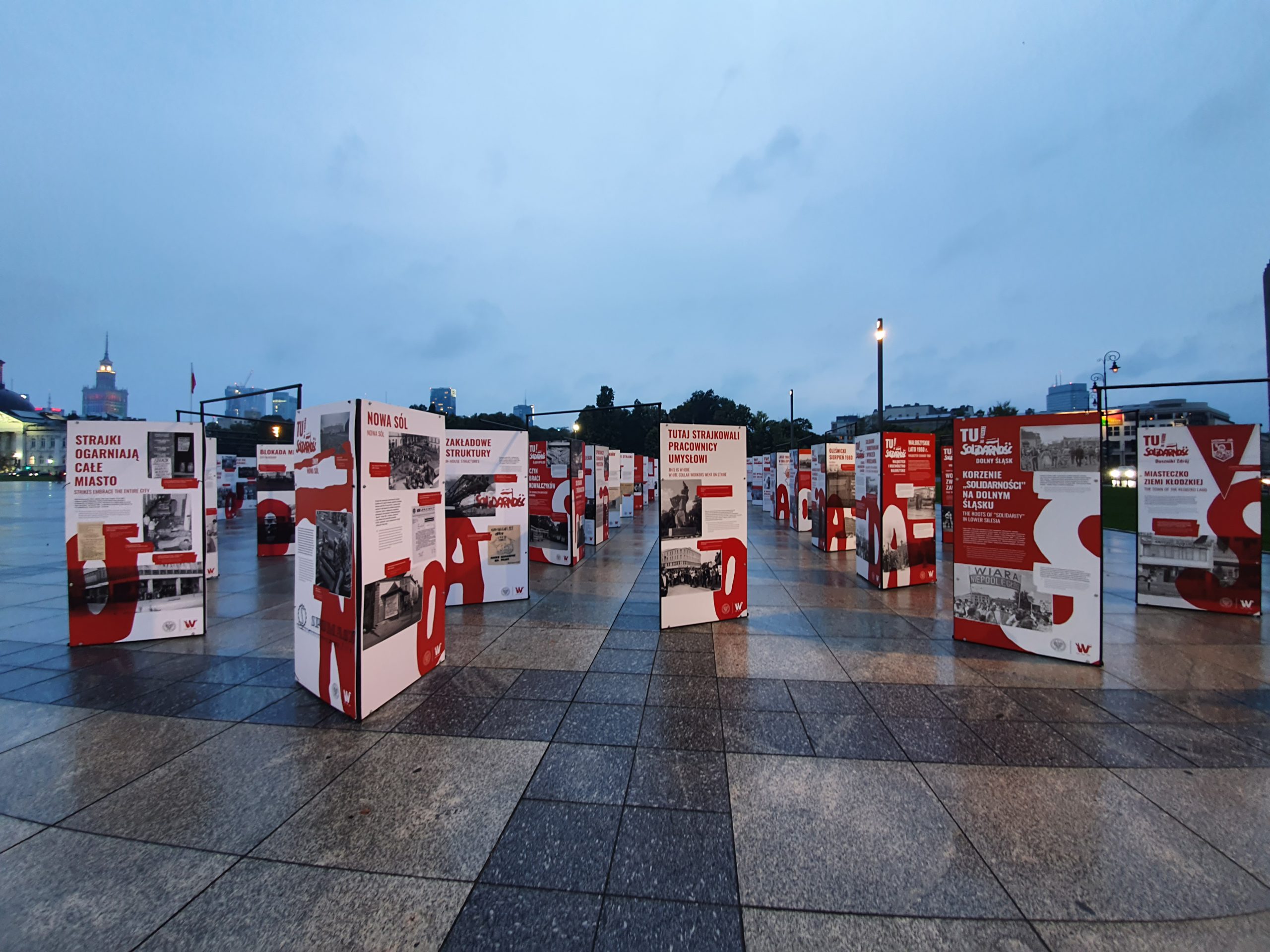

I liked this, which is a large outdoor display on the history of Solidarity (Solidarność) throughout Poland. The posters are in Polish and English, which is handy, and they cover a wide variety of regions of the country and with plenty of photos on them.

The installation was unveiled at Piłsudski Square, an important location in Warsaw, on 28 August 2020. On that day, numerous awards, known as Crosses of Freedom and Solidarity, were granted to some of those who had opposed communism between 1956 and 1989.

If I understand the Government press release correctly, there are also similar activities across Poland to mark the 40th anniversary of the founding of Solidarity. Andrzej Duda, the country’s President, has been supportive of this installation as part of the “Centenary of Regaining Independence” series of events.