This was our thirteenth walk in preparation for the 2021 LDWA 100.
WALK NUMBER: 13 (The Marriott’s Way Meander)
DISTANCE COVERED: 29.8 miles
NUMBER OF NATHAN’S FRIENDS WE “ACCIDENTALLY” BUMP INTO: 0
SUFFICIENT BEER CONSUMED: No (all the pubs are shut)
PUBS VISITED: 0 (not through choice)
WEATHER CONDITIONS: Dry and surprisingly warm
ATTACKED BY ANIMALS: No (but some dogs looked at us aggressively)
NUMBER OF SNAKES SEEN: 0

And on this rather lovely day, my first morning stop was at Pret for a coffee. Nathan was meant to meet me there, but was still asleep when I was bravely getting ready for the day’s walking. It’s not entirely obvious from the photo, but there were eight people queueing inside and a few outside, it was a popular place not long after it opened at 08:00.

This is Barn Road, where Norwich City railway station used to end. It’s now a roundabout, and behind that is the start of the Marriott’s Way footpath.

A reminder of the former track.

And, we got going along the Marriott’s Way route, which we planned to walk as far as we could be bothered and then turn round to come back. The LDWA 100 is in a few weeks for us, so we’re running short on training time and Covid restrictions mean we have to stay local and can’t use public transport. Our aim was to get 30 miles in today, some other training walks and then also a 50 mile walk next month. If we’re being honest, we’re only looking to hit 60 miles on the actual LDWA 100, because we’re not entirely confident that we’ve done enough training. But, if we can go further then we will, so there’s always a slight chance we might actually finish. Doubt it, but positivity is the key.

The newly reopened section of Marriott’s Way, which has been shut for the last few months. They’ve done a really good job on the new section, putting tarmac down and it’s nice and easy to walk on. There was a bridge here until it was blown up after the railway line closed.

The former Hellesdon railway station (and the new tarmac visible on the right), which was in use for passengers between 1882 until 1952, closing before the rest of the line. This means that as of next year, it’s been closed for as long as it was ever in operation. This is also where Nathan had to stop to rest his broken foot on the walk back.

Some work has been done recently to tidy the area up and there’s more information about the railway station at http://www.disused-stations.org.uk/h/hellesdon/index.shtml. I’ve said it before, and I’ll say it again, but closing this line was a mistake.

One of the restored distance markers.

Plodding on towards Drayton. It’s fair to say that we made good progress during the morning and the miles fell away, one of the joys of walking along a former railway line.

After Nathan got muddled up about where Taverham was and we had a dispute about whether One Stop was the same as Tesco (it is as far as I’m concerned) we decided to get lunch here. I went for a meal deal with Mini Cheddars and Dr. Pepper, whilst Nathan spent time looking at olives. He’s becoming quite decadent and middle class if you ask me, but I decided not to comment.

Well, how lovely. I bought the last pack that Tesco/One Stop had. Surprisingly, I managed to make these last hours. Often they last about 140 seconds.

A broken bench along Marriott’s Way, which is also where we had our second lunch on the way back to Norwich. Not on the broken bench obviously, but nearby.

Trees and mud. The route isn’t too bad, but there are some moist patches along the way.

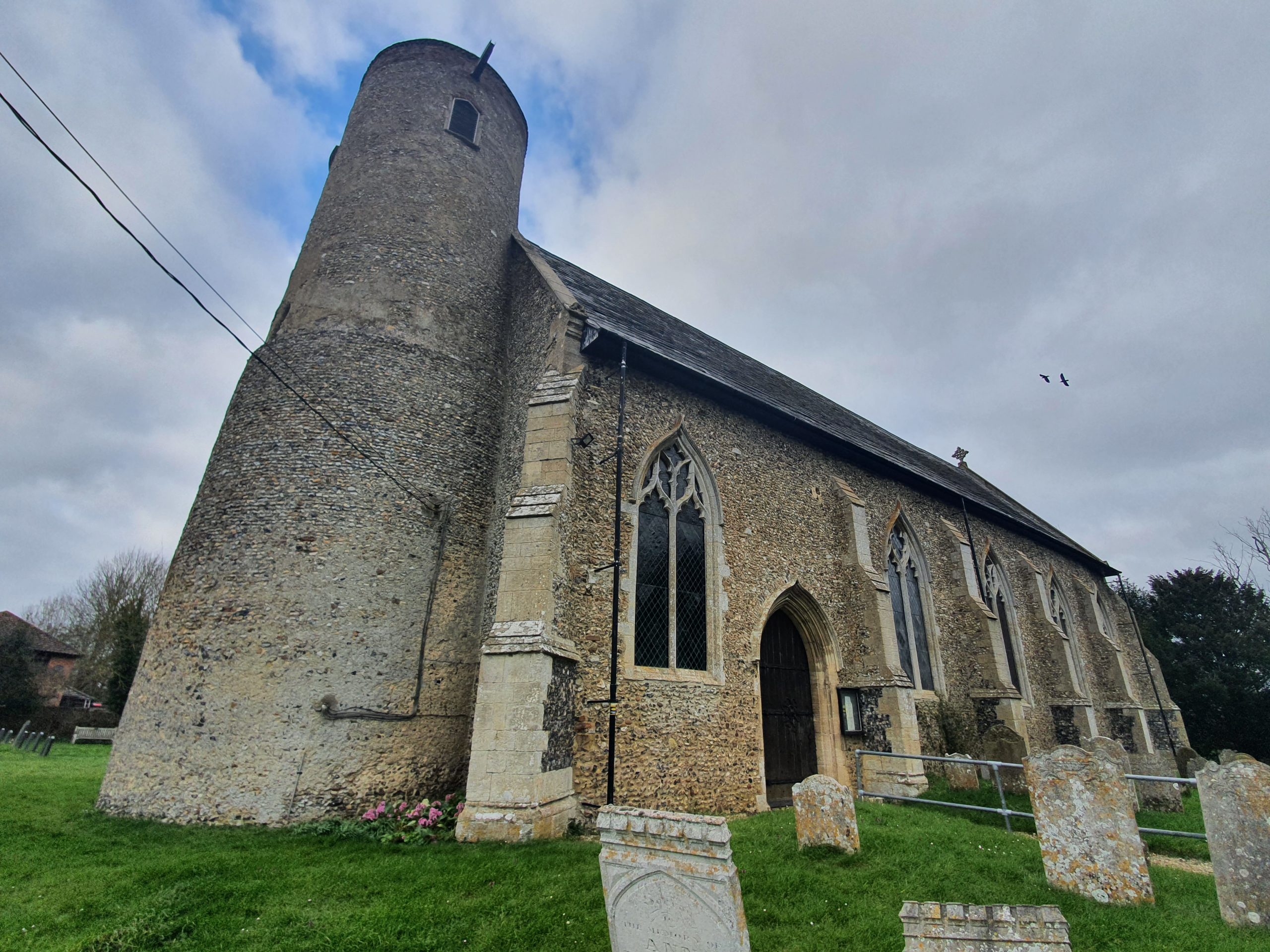
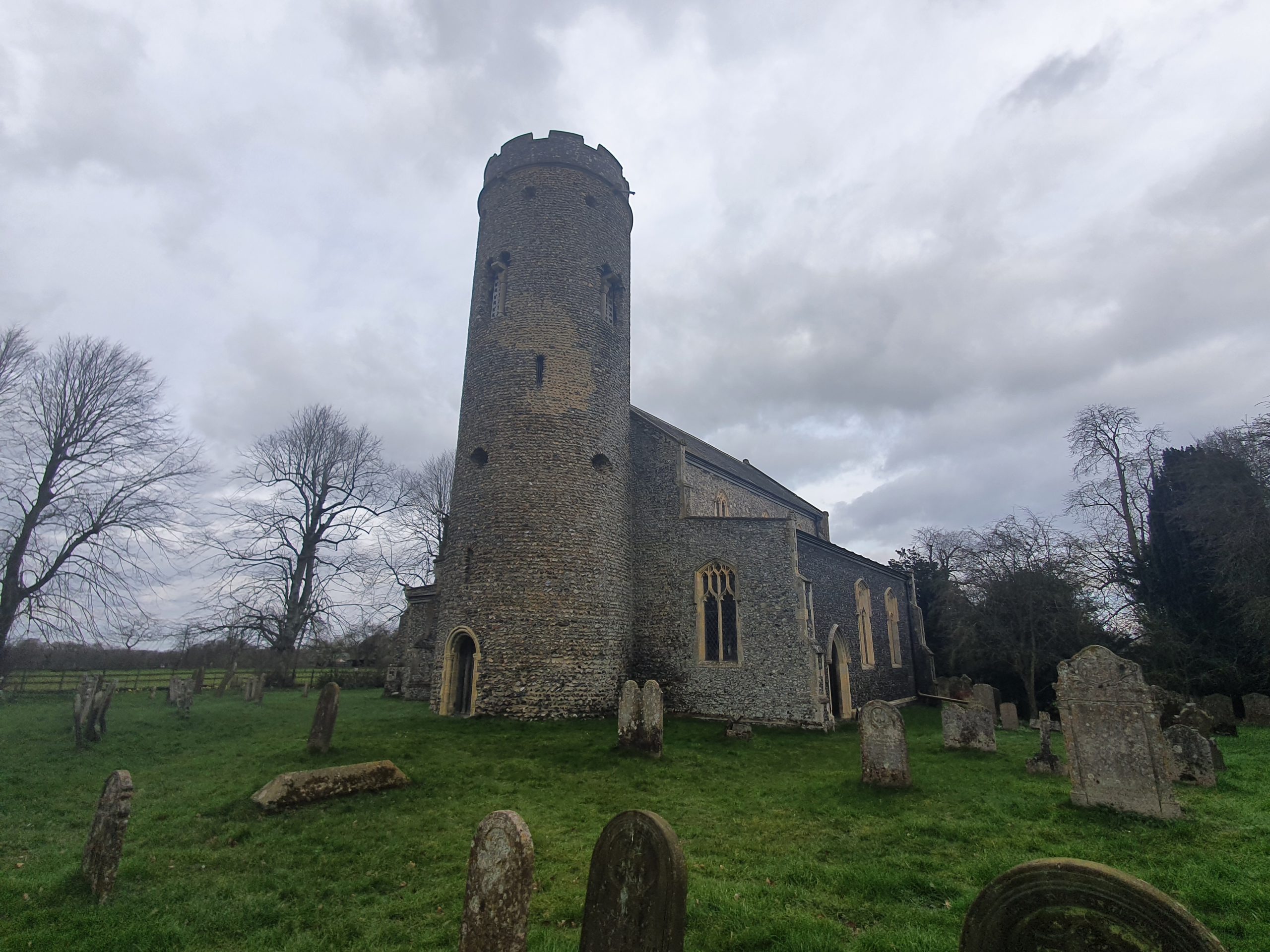
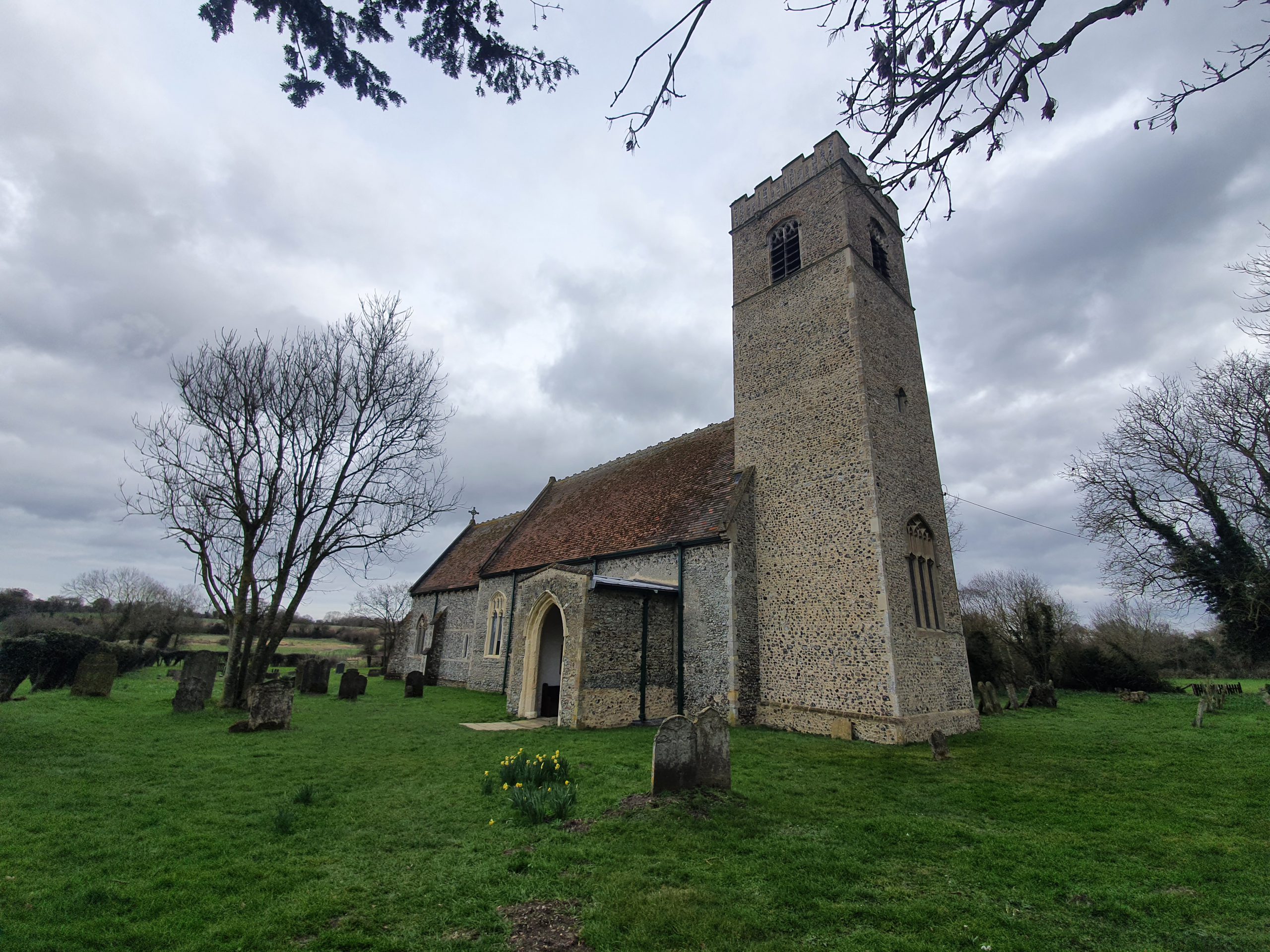
It’s now a residential property, but this is Attlebridge railway station, in usage for passengers between 1882 and 1959. It’s not far from St. Andrew’s Church in Attlebridge (well, obviously, it’s the same village)…..

A river.

This pack of wolves was roaming in Lenwade, just a short distance from the Dinosaur Adventure Park. Nathan tried to outstare one of the wolves, whilst I judged the fence to be quite low so I rushed off to let him be savaged by them if they got out. I’m no hero.

They have these markers every mile, there’s a description of them at https://www.marriottsway.info/assets/MW-Mile-Markers-I.pdf. That page also notes some other artistic things lining the route, which notes an ugly granite slab with the word ‘Kaah Kaah’ on it. Slightly embarrassingly, I thought someone had fly-tipped it there, so I was pleased to note that it was deliberate.

This is a railway gate (I’m not sure it’s original, but I don’t suppose it much matters) where Marriott’s Way meets Porter’s Lane at Lenwade. I like these regular reminders that this was once a railway line, and I even got interested in some concrete posts along the route. Nathan was quite tolerant of my deciding to try and age the concrete posts, but I then realised I don’t know anything about the history of concrete. So I made a date up which satisfied me and then we moved on from that subject.

Only another 14.5 miles to Aylsham, and we did think about going that far. We didn’t think that for long though to be honest. The sign also pointed towards Wensum Way, which we’ll cover when we complete the next instalment of our Wensum series.

A willow tree thing. This blog will probably never be noted for its nature, I’ll have to accept that. Actually, I’m not sure it’ll be noted for anything, but that’s a different matter.

More path with a few moist bits. As I understand, and I might be wrong, there wouldn’t have been anywhere near as many trees lining the route when it was a railway line.

Some sheep and they didn’t look too aggressive (I seem to keep find sheep that stare at me angrily, which annoys me).

This is really quite lovely, and I’ve never noticed it before (not least as I haven’t been here for years). At the bottom the text reads “the rail network was used for the mobilisation of troops joining their battalions that went onto fight on the battlefields of the First World War”, with many of these battlefields listed on the memorial. All very nicely done.

The railway station at Whitwell, in use for passengers between 1882 and 1959. It was going to be sold a few years ago by the council for use as a travellers’ site, but instead it’s been turned into something of a tourist attraction, and they’ve done a good job. I’ve yet to go to one, but they have gala days and the like, it’s all quite innovative. I note they got a 1/5 review which read:
“I am very concerned after my last visit after witnessing the driver of the train drink a pint of beer before then taking out a train full of passengers for a train ride.”
The train only goes about 75 metres, I’m not sure what exactly could really go wrong, but there we go….

The end of the line, and the start is at the other end of the railway station, so this isn’t exactly HS2 for people to be worried about a drunk train driver.

One of the trains at the railway station. I don’t know much about trains, but it’s quite old. I’m not sure that helps much.

As a little negative amidst my sea of positivity, this pre-annoyed me after I was initially delighted and excited that the shop was open. It sells various food and drink options, but it’s a slight secret what they have as there’s no signage. They sell hot food items, but there’s no price list so it’s all a bit random. I don’t like set-ups like that, because I’m not sufficiently clever to work the whole arrangement out. I managed to be more annoyed to discover later on from reviews that they had burger and chips which are quite reasonably priced, as I would have had that. Instead, I didn’t have anything.
Nathan is less prone to get pre-annoyed than I am (although it’s a close call if I’m being honest), so he bought a can of lemonade for £1.50. It transpired that it was two months out of date, which meant that he was post-annoyed instead. Perhaps, all things considered, it was best I didn’t have anything. Anyway, the staff member was friendly and I’m sure that it’s all very lovely, but I do struggle to understand places that make things as difficult for customers as they can. But, I applaud the work they’re doing tidying up the railway station, it’s all quite lovely, so I’m glad that they’re there doing good work.
Ending this little moan on a positive, look at http://www.disused-stations.org.uk/w/whitwell_and_reepham/index.shtml to see how much things have improved here. I wonder if Greggs could open something up here…. Anyway, I digress.

I rather like this, an alternative way to travel on the rails.
Anyway, this is the point that we stopped walking along Marriott’s Way and turned back since we were getting on for 15 miles away from Norwich. We could have perhaps gone a little further, but a 30 mile walk was all that we were intending to do, which is longer than many LDWA challenge walks.

I didn’t take many photos on the way back as I thought I’d get confused given that we took the same route. This situation isn’t ideal, but we were just trying to get the distance in without needing to walk through fields and the like.

It was at this point Nathan hurt his foot. This was caused by not very artfully avoiding a muddy patch, but it’s important to be sympathetic, so I was. Well, to a point. He bravely carried on walking, although he did mention getting the bus home which I ignored. Fortunately, Nathan’s broken foot managed to be much better as we got into Norwich, so he was able to hobble home. But, I’d say he was brave during this incident and did keep going, which is very notable indeed. I asked regularly how his foot was, to show how caring I was. I’m not sure I bothered to listen to the answer half the time, but it was a nice gesture on my behalf anyway.

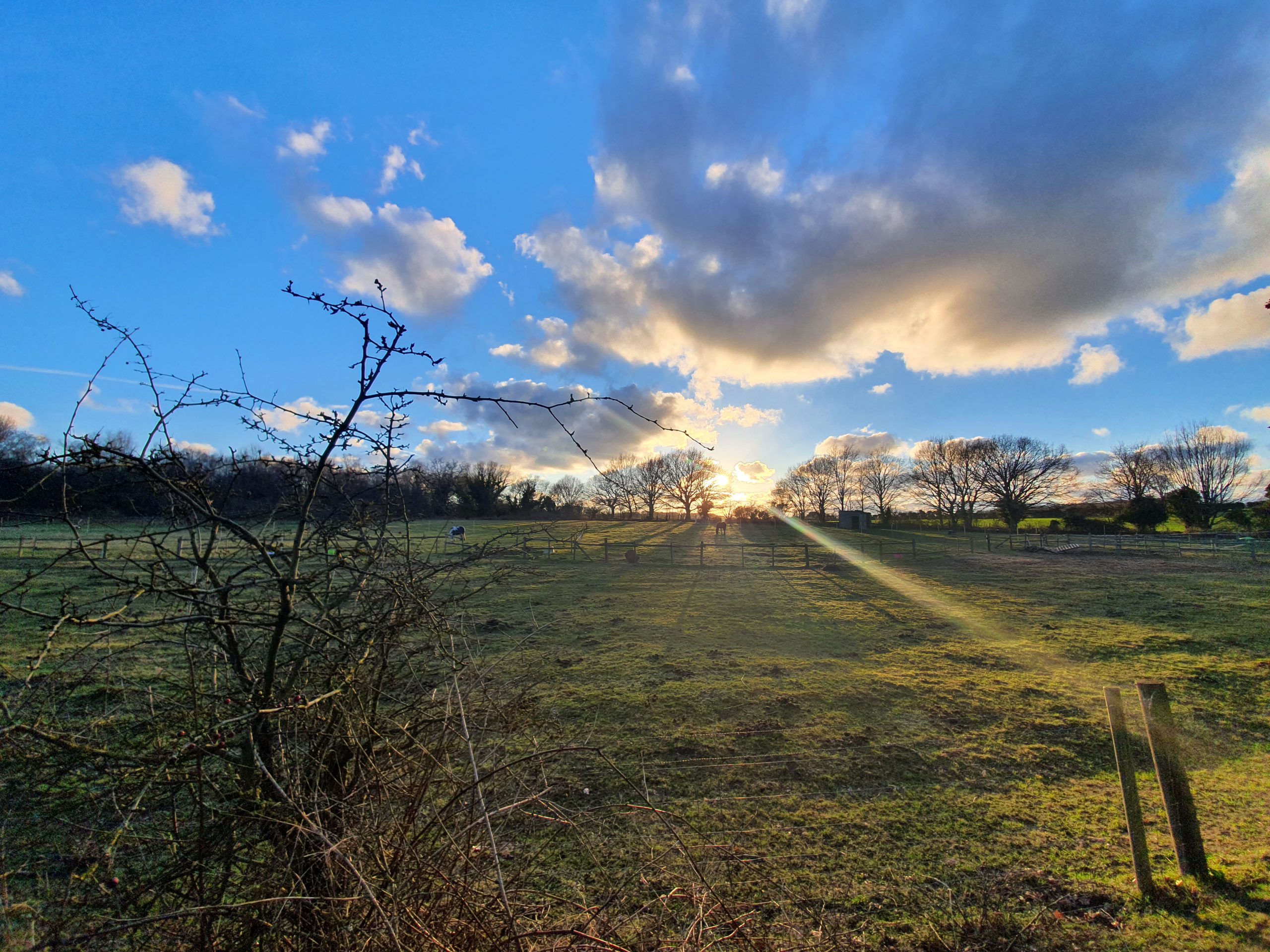
The sun setting…. We were fortunate with the weather, it was warm all day and there was no rain. But, I know that chat about the weather isn’t very exciting, so that’s enough comment about that.

And back in Norwich, with the bright lights of Halfords still shining to guide adventurers home. I was planning my bacon sandwiches when I got home after remembering that although I had no sweets in my flat, I did have bacon.
Really, this was quite a lovely day, and other than Nathan’s broken foot which had healed by the time he got home, we didn’t really have any issues during the day. There are some minor footcare issues that we’ll have to look at, but that was really the point of today’s walk. As a final positive note, Nathan is quite good walking company really, which meant that the miles started to eat away. That is perhaps the only way that we’ll finish the 100, by gossiping about people so much that we get distracted and walk further than we’ve realised.