Blog

  • Ashby St. Mary – St. Mary’s Church

    Ashby St. Mary – St. Mary’s Church

    We visited this church in Ashby St. Mary towards the end of an eighteen mile walk, just as the sun was starting to set. This was a primarily agricultural area in the past and not much has changed, it still feels quite remote and the nearest town is Loddon, a few miles away.

    The churchyard feels neat and tidy and that paved area leads not just to the porch, but also to a Portaloo type arrangement around the back. It’s hard not to note though that the church itself feels a little out of proportion given the height of that tower compared to the nave.

    There’s a single structure nave and chancel, dating to the twelfth and thirteenth centuries.

    The church tower is later, from the fifteenth century and perhaps there were plans to increase the size of the church as well.

    At the east end, it’s possible to see that the window arrangement has changed, there was once a wider window which was located a little higher up. Judging from that buttress on the side of the church, perhaps the larger window was causing some structural problems.

    It wasn’t possible to get inside the church, although I will hopefully return in due course when the building has re-opened. Not least because there’s a rather impressive twelfth century Norman door inside that porchway.

    Dating from 1697, this memorial commemorates the life of Thomas Badley who died at the age of just 40.

    There is a list of burials on the church’s web-site, but it doesn’t unfortunately seem to include this grave. I try and take photos of late eighteenth century graves and this looked like one to me, although it has at some stage been placed back into the ground at a different height as perhaps it broke. Anyway, looking through the burial lists of the late eighteenth century, this is I think the burial of John Pratt from 1778.

    These are rather eye catching, the graves of George Basey and his wife Ann Basey, with George and his turkey rearing and Ann with her geese rearing. These are two of the most ornate graves that I’ve seen and they’ve lasted well since they were placed here in 1868 (Ann) and 1876 (George). With some sadness, it’s hard not to note that three children who died in infancy are buried here, all named Joseph Basey Fisher and these were the children of George Basey Fisher and his wife Jane. The headstones were designed by William Stanley who was a stone and marble mason who worked in Norwich.

  • London – Kensington and Chelsea (Borough of) – Victoria and Albert Museum (Soul at Death)

    London – Kensington and Chelsea (Borough of) – Victoria and Albert Museum (Soul at Death)

    Well, this is, er, frightening. And, that was actually the aim of this sculpted piece from the 1620s, designed by Giovanni Bernardino Azzolini. Individuals bought these items for devotional purposes, to remind them that prayer would ensure that they didn’t end up in hell or purgatory. This wax sculpture depicts what happens at the time of death, when the soul makes its journey into what is hopefully heaven after judgement day has taken place.

    I’m really not sure that I’d want this, I would have thought there are more inspirational pieces to encourage one to engage in a life of prayer. There’s an inscription on the back which reads ‘Mors malis vita bonis’ or ‘Death to the bad, life to the good’. This whole ‘Memento mori’, or being reminded of death, seems to have been much more common in previous centuries and I’m not sure whether it’s because families were more reminded of death or because we’ve become somewhat afraid to tackle the subject today.

  • Dictionary of the Vulgar Tongue – Day 263, 264 and 265

    Dictionary of the Vulgar Tongue – Day 263, 264 and 265

    The Dictionary of the Vulgar Tongue was first published at the end of the eighteenth century, and given that the current health crisis is giving too much time to read books, I thought I’d pick a daily word from it until I got bored…. And to catch up after getting behind with these posts, and because I’m getting towards the end of the book, I’m doing three days at once now. How lovely….

    Prigstar

    This feels like a more modern word, defined by Grose as “a rival in love”. The word is from the seventeenth century and the word ‘prig’ at the time could mean a cheat, with ‘ster’ just being a suffix used in forming nouns. As an aside, the ‘ster’ used to be the suffix given to a job that a woman did, such as a ‘brewster’ for a female brewer and a ‘baxter’ for a female baker.

    Although Grose used the ‘prigstar’ spelling, it was more commonly ‘prigster’. It’s not rarely used and has become archaic.


    Prittle Prattle

    There’s perhaps a hint at the sexism shown at society at the time with this phrase being defined as “insignificant talk: generally applied to women and children”. The phrase was first recorded as being used in the middle of the sixteenth century and is just a linguistic extension of the word ‘prattle’, meaning to talk in an inconsequential manner.

    Unlike the not dissimilar ‘tittle-tattle’, this phrase has now fallen entirely out of usage.


    Puff or Puffer

    This is defined by Grose as “one who bids at auctions, not with an intent to buy, but only to raise the price of the lot; for which purpose many are hired by the proprietor of the goods on sale“. Now probably more commonly referred to as shill bidding, the word origin is just puffing or pumping up the price.

    In 1965, Nicholas Ridley said in the House of Commons in a debate on the registration of auctioneers:

    “Lastly, I believe that we should have a rule that when a lot does not reach its reserve no commission is chargeable. This would help to encourage people to put a proper reserve on their goods and to encourage auctioneers to get a proper price for what they are selling. I think that this is know in ancient parlance as “puff-bidding”, whereby a lot is withdrawn before it reaches its reserve. As far as I understand it, some auctioneers charge if goods are knocked down below the reserve price and others do not. I suggest that it should be made one of the rules of the trade that no charge is made where goods do not reach the reserve price.”

  • LDWA 100 – Training Walk 8 (Finding the Source of the River Wensum Part 1)

    LDWA 100 – Training Walk 8 (Finding the Source of the River Wensum Part 1)

    This was our eighth walk in preparation for the 2021 LDWA 100.


    WALK NUMBER: 8 (Finding the Source of the River Wensum Part 1)

    DISTANCE COVERED: 15.1 miles

    NUMBER OF NATHAN’S FRIENDS WE “ACCIDENTALLY” BUMP INTO: 1 (they didn’t recognise Nathan)

    SUFFICIENT BEER CONSUMED: No (all the pubs are shut)

    PUBS VISITED: 0 (not through choice)

    WEATHER CONDITIONS: Sun

    ATTACKED BY ANIMALS: No

    NUMBER OF SNAKES SEEN: 0


    Finding the source of the River Wensum. It’s not exactly the exploration of the Amazon I will admit and I’m not sure that Michael Palin will be making a television series of this. But, travel is limited at the moment and so Nathan and I had this plan to walk to the source of the Wensum which is off somewhere near Fakenham.

    However, it became apparent that using public transport or getting a lift back from Fakenham isn’t really within the current rules on travel. So, we decided to split the walk up into different sections and today we followed the River Wensum from Norwich, where it ends when it meets the Yare, to a point a few miles away and then we planned just to walk back. I thought we saw more history and river than we had anticipated, so it was a useful exercise. It means that there will be a part two (and maybe part three) to this plan, but it won’t be until we’re allowed to use public transport again.

    This was the starting point of the walk, part of the city wall and it’s actually not far from the River Wensum. We didn’t follow the Wensum for the first part of this walk, instead joining it further along as we wanted to avoid the city centre at the moment.

    These photos are all from the river section at Wensum Park, which looks rather beautiful in the morning. Best known now as where Nathan dumps his unwanted bread into the river, this stretch of land was purchased by the city council in 1907. This was rather forward thinking of them, a useful amenity for the people of Norwich and they built a swimming pool, paddling pool and wading pools for the locals to use. The locals responded to this by using the swimming pool as a refuse tip, so a new plan was put forwards by the council to use the area as a public park. Designed by Captain Sandys-Winsch and constructed with unemployed labour, the park was opened in 1925 and it remains in use for that purpose today.

    Just a little further along the river, this looks quite remote, but it’s actually next to the Recycling Centre at Mile Cross.

    We did plan, many years ago, to come to the Gatehouse Pub at some point, partly as it’s on the CAMRA Regionally Important Historic Interiors list. Now that we finally get here the damn thing is of course shut, but we’ll go back when pubs re-open. The pub has a large beer garden which stretches down to the Wensum and it’s built on the site of a former toll-house.

    A stretch of the Wensum just off Hellesdon Road. It was around here that I started to try and break the iced up sections at the side of the river like some kid…. I got bored of that quite quickly when I realised that I might fall into the mud.

    I read the other day in the newspaper that there are parakeets flying about all over England, which is giving some concern as they’re not a native species. And there were several in the trees here, I think they’re rather interesting birds which add some character, but maybe their invasive behaviours upset seagulls or something. Nathan used his wooing skills, which seemed to be similar to the random noises he makes to his cat, to charm the parakeets down. It didn’t work. I pretended that I thought Nathan was like Bill Oddie and it was very surprising to me the birds didn’t flock down.

    A little collection of cut down trees.

    This is the river at the junction with Hellesdon Road, near to where Marriott’s Way is. We didn’t walk on Marriott’s Way (the former railway line that got shut down in the 1960s) on the way out, instead remaining on the other side of the river bank.

    This was rather lovely for Nathan, back to where he got married last year.

    The medieval standing cross in the churchyard. The lower section is thought to have been in situ for over 700 years.

    The village sign.

    It’s now been converted into residential properties, but this was Hellesdon Mill, a formidable building.

    We did have a plan to investigate this area as it’s by the river, but it’s owned by the Environment Agency and they’ve kept their bridge firmly locked to discourage anyone from crossing it. We didn’t try.

    These photos are of Drayton Green Lanes, an area of walking that we hadn’t noticed on the map, but which let us get close to the river. It’s really nicely looked after and some volunteers from Norwich Fringe Countryside Management Project recently fixed some damaged boardwalk under the supervision of Drayton Parish Council. This bit of land, which it appears no-one ever claimed ownership of, was a quite welcome surprise.

    The walk into Drayton along Low Road, which meant that we could see the river on our left. I must admit to getting quite into this whole project by this point as although I live near to the River Wensum, it suddenly seemed to be quite magical as we walked along it towards its source. To be honest, I think I need to get out more……

    I had hoped that E Pratt and Co were doing some delicious sausage rolls as their reviews looked rather positive. They’re a local butcher, but the situation was confused (well, I was confused, which doesn’t take much) and I came to the conclusion they weren’t selling hot food as despite a carvery sign the menu boards were all for raw meat. Delicious as that probably was, I thought better of it. Marginally disappointing, I was hoping it’d be as good as Greggs.

    I did try and find some food in the Applegreen petrol station instead, but it appeared to me from the pricing that Harrods had done a take-over of the premises. There was a Tesco next door, but I didn’t want to go shopping for the sake of it at the moment when all I had wanted was chips or a sausage roll. So, I bravely left Drayton with no food.

    This is the stretch of the Wensum between Drayton and Costessey Mill. The river has been diverted, likely a very long time ago, so there are two stretches here, one which is likely the original course of the Wensum and another which is what powers the mill.

    The mill here has gone, destroyed in a fire in the 1920s.

    Nathan navigating a minor tributary of the Wensum.

    This is St. Edmund’s Church in Costessey, which I visited briefly on Steve’s walk last year. The building’s history puzzled me, I’ll have to read up about it as there seem to be numerous additions from different periods. In short, there has likely been a church here since Saxon times, but the current one is mostly from the thirteenth century, albeit with a Victorian restoration.

    I hadn’t noticed this before, in memory of 10 members of 564 Bomb Squadron who crashed in Carr’s Hill Wood in Costessey on 7 March 1945. There was a campaign for the footpath to this site to be kept open, as it was on permissive land and the owner wanted it closed off. I don’t know what came of that, as the permissive path ceased in 2017, but I’ll find out.

    An unusual positioning of some of the older graves.

    Nathan was fascinated with the grave of Wandering Wal, and it sounds like this man had an eventful and interesting life.

    I assumed when walking by this building that it was a Victorian school, but it’s actually a hall which I think is linked to the Our Lady and St Walstan Roman Catholic Church which is located opposite.

    Although we had to walk back to Norwich at this point, nothing of huge interest happened although we discovered just how many people are walking along Marriott’s Way. And, the point of this walk was to follow the route of the River Wensum, so in a future blog post, we will continue our trail from where we finished and pick up the story again as we head off from the Taverham area. For anyone who looks on a map, they might notice that we didn’t get very far along the River Wensum, but there’s no need to rush adventure….

    As for our training for the LDWA 100….. This seems to be creeping up on us if I’m being honest and I’m not entirely sure that we’re filled with optimism. We’re confident of completing 60 miles, but more than that will be down to the Gods. Well, I say Gods, but I more mean our feet. Anyway, we’ll see what happens, but we’ve been very brave so far. There were no injuries today, other than Nathan’s slightly dodgy knee, and at least that bodes well (the no injuries part that is)

  • British Airways – Return to Free Drink and Snack in Short-Haul

    British Airways – Return to Free Drink and Snack in Short-Haul

    I received a missive from BA’s press office today and it contained details about the new collection from Tom Kerridge, which are primarily sandwiches, for the Euro Traveller (or economy) cabin.

    The delights are:

    Warm Steak & Ale Pie – £4.50
    The Ham Hock & Smoked Cheddar Sandwich – £4.10
    The Spiced Cauliflower Tortilla Wrap (Vegan) – £4.20
    The Chicken, Bacon and Celery Brioche – £4.50
    The Brie Ploughman’s Sandwich (Vegetarian) – £4.20

    These prices aren’t too bad, although now customers have to pre-order to ensure availability. And this is a very good idea (well, it is for organised customers who manage to work that element out) as it ensures that anyone relying on buying food in Euro Traveller won’t be let down. The food also looks to be of a decent quality and although I’m suspicious of that cauliflower wrap, the rest sound rather lovely.

    But, and at last, there is a return to free food and drink for all passengers in Euro Traveller. This was knocked out a few years ago and replaced by Buy on Board, which I always thought was chaotic. The crew couldn’t get through the whole cabin, there were stock issues and it often seemed badly managed. The necessities of 2020 saw British Airways give every customer a snack (such as crisps) and a bottle of water, and this looks like it’s set to remain. It’s not as generous as it once was, as all drinks used to be free, but it’s a step in the right direction. It ensures customers get free water, something to eat and they can order something more substantial if they require it.

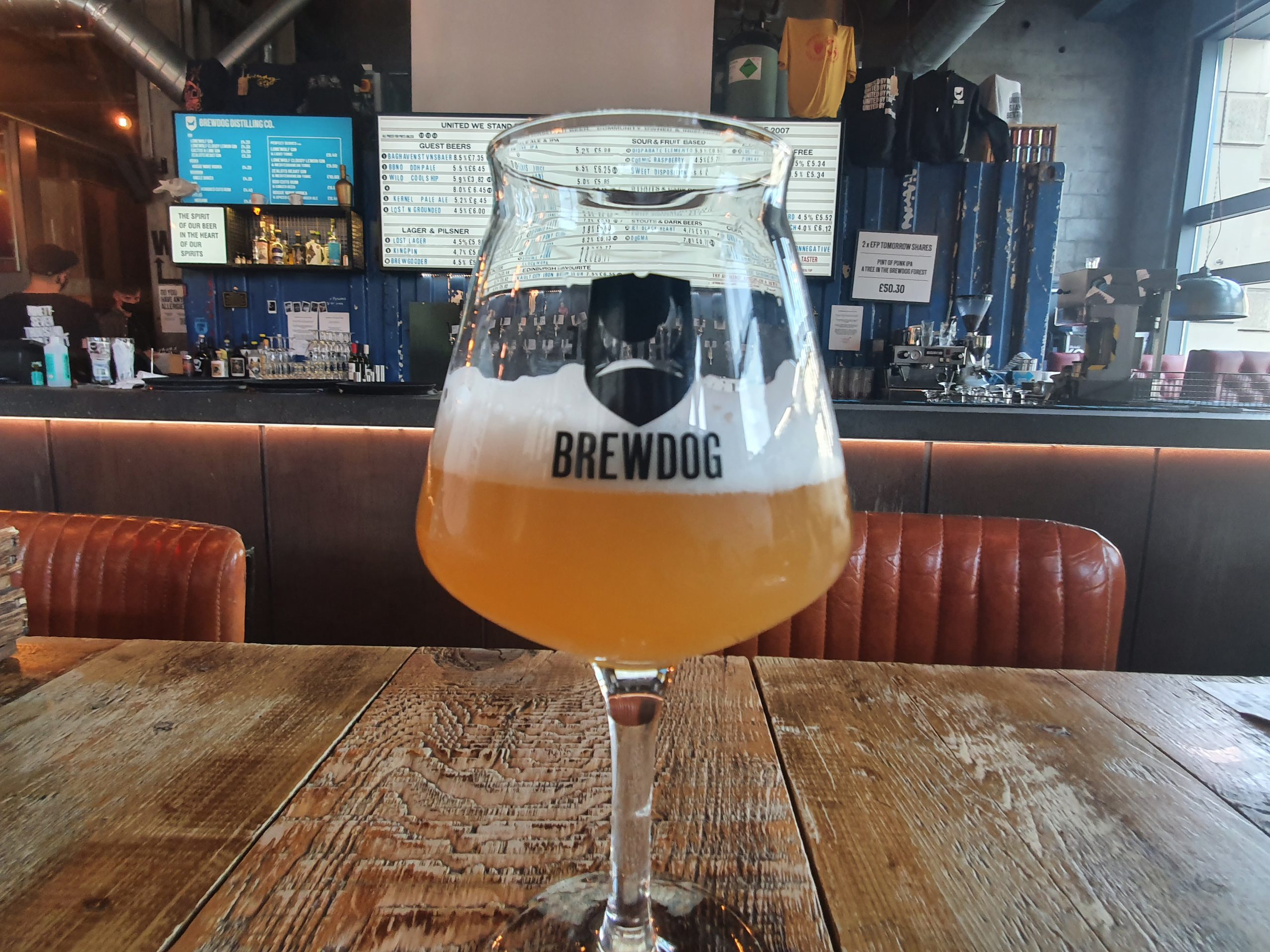
    And, also announced is Brewdog Jet Stream, following up from Brewdog Speedbird, which I very much liked. Some cans have been released already and it’s not doing brilliantly on Untappd, but I look forwards to trying it in a BA lounge sometime. I also like that BA have continued with their Brewdog partnership, it’s a nice tie-up I think.

    Hopefully it won’t be long before I can board a plane again….

  • Framingham Earl – St. Andrew’s Church

    Framingham Earl – St. Andrew’s Church

    Although located near to Poringland, the church of Framingham Earl feels remote and peaceful.

    The locked thirteenth century porch, hiding the view of the Norman doorway within.

    The round church tower, probably dating from the early Norman period.

    I’ve read what a few historians have made of this and I’m not sure that I’m any the wiser as their assessments vary. Ignoring those later windows, this does look old, both in terms of the wall and what looks like a Saxon window on the left. Unfortunately, my architectural knowledge isn’t good enough to be able to add much else here, but I like to think that those who say this part of the church is Saxon are correct.

    There is definitely something magical with knowing this structure is over 1,000 years old, although at least it’s known that there has been a religious building on this site for at least that period. And investigations completed in 1984 do suggest that there was likely a Saxon apse at the end of the chancel, although that was unfortunately taken down long ago.

    An historian writing in the Eastern Daily Press back in 1876 said that he suspected there was once a Saxon apse because the wall was much more modern at the end of the church. His hunch was entirely correct, but he also noted that he was present when these circular Saxon windows were examined. He found evidence of an old grove where a wooden frame would have been, which protected against birds or weather at a time when there might not have been any glass to do that job.

    On the other side of the chancel, I think that’s another Saxon window. I note that George Plunkett also thinks it’s Saxon and I’m pleased at that, as he seems to very rarely be wrong.

    One of the church’s two mass dials.

    This one doesn’t make sense to me, it’s a mass dial but it’s upside down. Unless I’ve misunderstood its purpose, this is likely the result of the Victorian restorers.

    The grave of one of the most respected writers of the late twentieth century, Winfried Georg Sebald (1944-2001) who was killed in a car crash and is buried here as he lived nearby.

    The churchyard.

    And, on a personal note. I didn’t meander around many of the graves here, as they were mostly too modern to have much historic interest to me. I did note one particularly nice gravestone that I went to look at, before realising that it was someone in the same school year as me who died young. I didn’t know that he was from this part of Norfolk, but his gravestone and its message is beautiful. I can think of very few modern gravestones which have intrigued me, so for it to transpire to be someone I knew made it quite poignant. God bless his soul.

  • Norwich – King Street Letterbox

    Norwich – King Street Letterbox

    I might mention now that I can’t pretend that this is necessarily my most interesting blog post, but this letterbox is Grade II listed so there is definite heritage value to it. It dates to around 1870, so it’s only around a decade later than the first post boxes to be introduced in the UK, and it has only been closed up recently. It’s located on Howard’s House (97, King Street) in Norwich, a remarkable survival in itself which has so nearly been demolished on a few occasions.

    George Plunkett once again doesn’t let me down, the post box is visible (just) in this photo from 1934. Even given that it has recently been closed up, there’s something quite intriguing about anything that has remained in use for so long, this would have served the postal needs of thousands of local residents in the Victorian period.

  • Poringland – The Fish Inn

    Poringland – The Fish Inn

    The Fish Inn in Poringland, one of our destinations for the day. As can be seen, there was no shortage of customers waiting to get in.

    The chip shop is attached to the Royal Oak pub (which for reasons unknown has recently decided to rebrand as the Poringland Oak, but will no doubt confuse many people). This is extension is relatively new (1980s perhaps) and there are some interesting old photos of the pub at http://www.poringlandarchive.co.uk/poringland/the-royal-oak.

    I was pleased that the chip shop was open when we went, as there was no information on-line and we thought we’d just take a chance. The opening times are quite limited, but this is a temporary arrangement given current events. The lack of card payment always slightly annoys me (although I was prepared for that here as they’ve picked up some negative reviews already for this decision), but is harder to justify given the current health situation. I haven’t seen anyone paying by cheque for some time, I was moderately surprised to see that.

    Lack of contactless payments aside, the operation seemed very safe inside with only one customer allowed in at a time and large protective screens. The service was efficient and friendly, it all seemed well managed.

    The battered sausage and chips was £2.50, which is pretty reasonable. The chips were excellent and had a sufficient depth of flavour without being greasy, with the battered sausage being generic but still entirely acceptable. Sauces are extra, but salt and vinegar is available and is added by the staff member.

    The reviews for this chip shop aren’t that positive at all, but that seems a little unfair. The limited opening hours probably make this easier to run at the moment as they don’t need to have food sitting around drying up, but I had no complaints about the service or food. I probably won’t go back (although since I’d have to walk over 5 miles to get there and then 5 miles back, I was never going to be their biggest customer) as cash only places are becoming ever more rare, but perhaps they’ll change that in due course. At the moment they just have to have numerous signs up saying they don’t accept cards, no doubt because it’s such a common request.

  • Dictionary of the Vulgar Tongue – Day 260, 261 and 262

    Dictionary of the Vulgar Tongue – Day 260, 261 and 262

    The Dictionary of the Vulgar Tongue was first published at the end of the eighteenth century, and given that the current health crisis is giving too much time to read books, I thought I’d pick a daily word from it until I got bored…. And to catch up after getting behind with these posts, and because I’m getting towards the end of the book, I’m doing three days at once now. How lovely….

    Post Master General

    Grose’s definition here is interesting as it gives some guidance about the evolution of the role of Prime Minister and that person’s control over the formation of the Cabinet, which was developing when the dictionary was written. Grose noted the phrase meant “the prime minister, who has the patronage of the all posts and places” and that would have been a relatively new thing.

    The role of Postmaster General had rather changed by the time that political figures such as Tony Benn were given the job. It was originally a powerful role as only the Postmaster General or his agents could authorise those who could handle the sending of mail, and the Postal Act of 1635 confirmed the monopoly situation. At least today there is little question of how much power the Prime Minister has, although it certainly not always been so.


    Prate Roast

    Following on from the previous definition, this is “a talkative boy”, but also meant anyone who was talkative or a chatterer. It’s a seventeenth century term, which lingered on into the nineteenth century before falling out of use. Someone who ‘prated’ was guilty of just talking for too long and too much, and although that word is still in usage I’m not sure that it’s particularly common.


    Priest-Linked

    This is a self-explanatory definition, just meaning “married” although it’s a shame that this isn’t much used today. I’d like someone to say “I’m Priest-Linked to her” rather than just say they’re married, it adds a touch of grandeur to the statement. Well, and perhaps slight contempt.

  • Norwich – Flint Wall of Bridewell

    Norwich – Flint Wall of Bridewell

    This pathway doesn’t appear to have a name on either old or new maps, but it separates Bridewell Museum from St. Andrew’s Church. And indeed, it appears that if we could go back 500 years to take a photo, this would look nearly exactly the same. Well, other than for the paving, that might not have been as good.

    OK, this is just a flint wall on the north side of Bridewell Museum, but it has gained a reputation for being one of the finest walls of its type in the country. And I think that deserves a blog post all of its own….

    What is today known as the Bridewell was actually built as a residential property in the late thirteenth or early fourteenth century. It was upgraded by William Appleyard in 1386, and at a guess, I think that this was when this wall was constructed. The building’s use changed after 1583, when it became used to house the city’s poor and unemployed, putting them to work, which is when it became the Bridewell.

    As an aside here, a Bridewell is a prison, and it took its name from one which was set up in London that was next St. Bride’s Holy Well. The name stuck there and was then used throughout the country, although these buildings were often also referred to as Houses of Correction. Anyway, the building was badly damaged by fire in 1751, the prisoners were moved out and it was then used as a factory, warehouse, storage unit and anything else the locals could think of. In the early twentieth century, it was given to the city to be used as a museum and it is now known as Bridewell Museum, the Museum of Norwich.

    The quality of this wall is pretty impressive and I’d hardly call myself a flint expert.

    This intrigued me and I could think of only one person I knew that could tell me what this was, and that’s my fellow NORAH trustee, David Stannard. I hope he won’t mind me quoting him:

    “The Bridewell wall is a classic example of knapped flint, and the picture of the circular feature is just that, flint. Flint is amorphous, i.e. it has no crystal structure to determine the way it breaks, and this block of flint, when broken in half by a hammer has produced this curious bulb…..it is termed conchoidal fracture.

    Curiously, if you look at the picture upside down you get an optical illusion of a hole rather than a cone….so there may be a corresponding ‘hole’ somewhere else on the wall….the courses above and below show similar bulb features.”

    And he’s quite right, look at the photo upside down!