I’m rather sad to hear that Stoneworks in Peterborough has closed. I thought that was the case earlier in the year, but as the furniture and the like was still in place, I hoped that it was a more temporary closure.
Here’s the sales details for anyone interested in letting the venue, the rent is £25,000 a year. That’s not entirely unreasonable for a bar in the heart of Peterborough, but these are tough times for pubs….
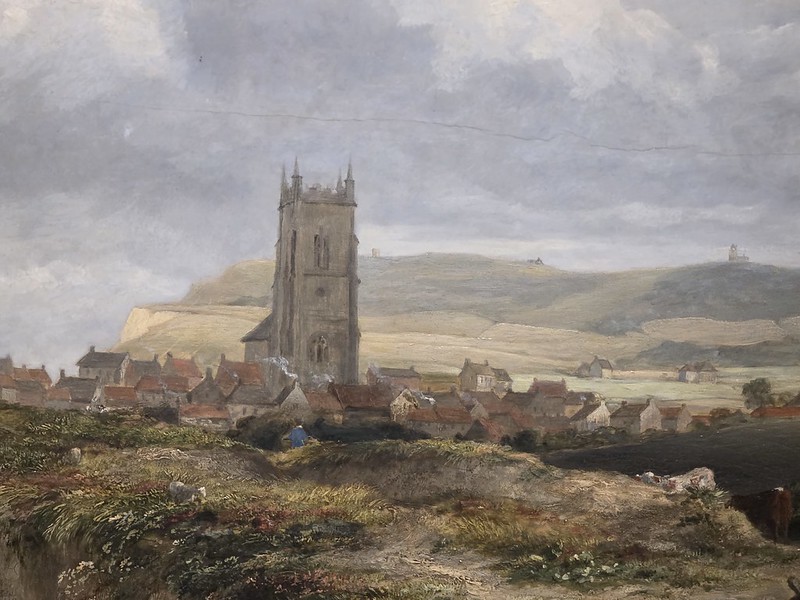
This is an artwork by James Stark (1794-1859) which is in the collections of Norwich Castle Museum. It was purchased for the museum in 1975 with grants from the Art Fund, Watney Mann (I don’t specifically know why the brewery contributed to this) and the Victoria & Albert Museum.
Stark was a Norwich School landscape painter, best known for his big and usually windswept skies along with his slightly melancholy countryside scenes. He trained in Norwich, showed at the Royal Academy, and later taught drawing, including a spell as a master at Queen’s College, Cambridge.
In terms of this rather serene artwork, in the bottom-left of his painting there are some fishermen going about their business in what would have been a very different town. With no bus or train services at this point, this would have likely felt a rather remote destination.
Stark painted this in the mid-1830s, at a time when Cromer was starting to evolve as something of a summer tourist destination for those in Norwich and environs. The railways didn’t arrive here until the 1870s, so the town would remain relatively unchanged for some decades.
Of course, I feel the need for AI to join the party and this is what it believes the scene would look like today if painted in a similar style. I rather like this. The addition of Cromer pier, constructed in 1901, is an accurate one even if some other elements aren’t exactly perfect here.
With apologies that it has been a while since Julian (the older and arguably wiser one) and I have been on one of our study tours, busily visiting every pub in a town. It’s not something we do for public esteem, it’s just as a public service. Julian grew up in this area after the war and so had something of a local knowledge of many of the pubs that we visited, although sadly he was able to point out numerous places that are no longer open.
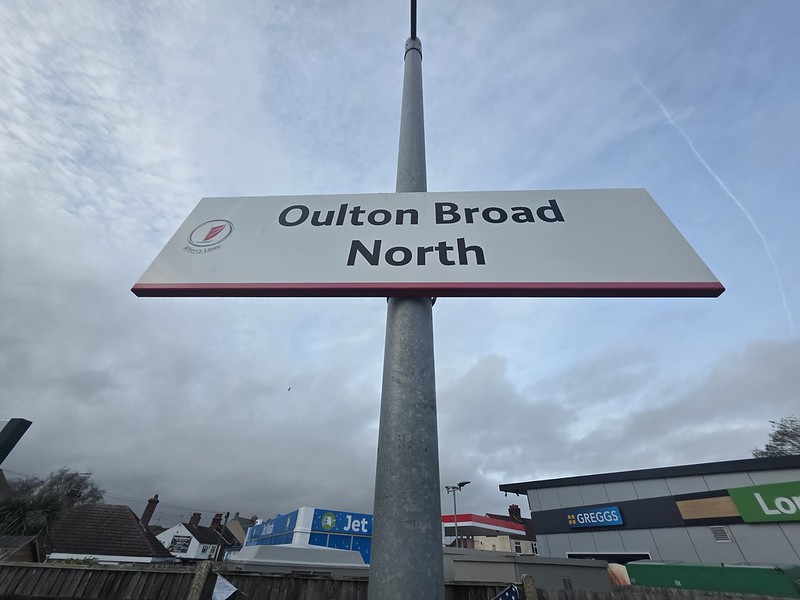
We got the train into Oulton Broad North and I pondered whether I’d been to that Greggs before, I’m not sure if I have. We went into everywhere that was open and defined itself as being a pub or something similar, including the Flying Dutchman into proceedings even though it was a little bit of a walk away.
Everywhere other than the Flying Dutchman had real ale, although the only one that offered a real ale from outside of East Anglia was at Broadview. It was Broadview that surprised and delighted me, it has been there for longer than I realised and it had the widest selection of real ales of the day. The Waveney was the cheapest venue of the day for drinks, it’s a Craft Union pub and I’d say that was the friendliest welcome.
Anyway, my little reviews of each venue are below and, as ever, all credit to the owners and managers for keeping these pubs going. These are challenging times for pubs and they all provide a marvellous service to the local area by being open and allowing people to have a place to visit to get drink, food, meet friends and to just feel part of the community.
The final venue we visited on our study tour was the Wherry Hotel, formerly part of the local Castle Carvery chain and now part of RedCat, the relatively new pub chain started by former Greene King boss Rooney Anand.
There was a licensed premises here from the 1840s, but in 1897 the owner George Mason wanted something that bit bigger and better. By 1900, it was all ready and open with the advert above placed in the local newspapers. They were also advertising that they welcomed choirs and other outings, they were certainly ready for big groups. Not only that they were proud of their electric lighting and also their new billiards table.
There was a rather beautiful view over Oulton Broad.
This is a large venue and there’s a bar area, a more lounge area as well as a substantial dining area. Food and drink is served throughout the day, including a carvery option which is set at a very realistic and affordable price.
I went for a turkey carvery meal and opted against the big plate, which would have disappointed Alan Partridge. The carvery was rather lovely, the meat was tender, the roast potatoes suitably crisp and the gravy suitably meaty (a vegetarian one was available for those who didn’t look want a meaty gravy). The menu is also broad, there are lighter options, vegan options and so on, with the pricing all towards the lower end of the scale.
There were a couple of real ales, including Woodforde’s Wherry and Lacon’s Encore, although I opted for a pint of Guinness. This was served in the way that I would expect and tasted as I had hoped for.
The service here is always friendly and attentive, it’s a comfortable and clean venue which is a reliable option. The food and drink is all of a decent quality and the atmosphere is inviting. For those wanting to stay, there are thirty rooms here and it’s all something of a substantial operation.
Next on our little sojourn of Oulton Broad was Broadview, a venue that I hadn’t heard of before and initially I thought that it might be a little too decadent for me if it was more of a wine bar arrangement.
This is the reason for the venue’s name, they overlook Oulton Broad.
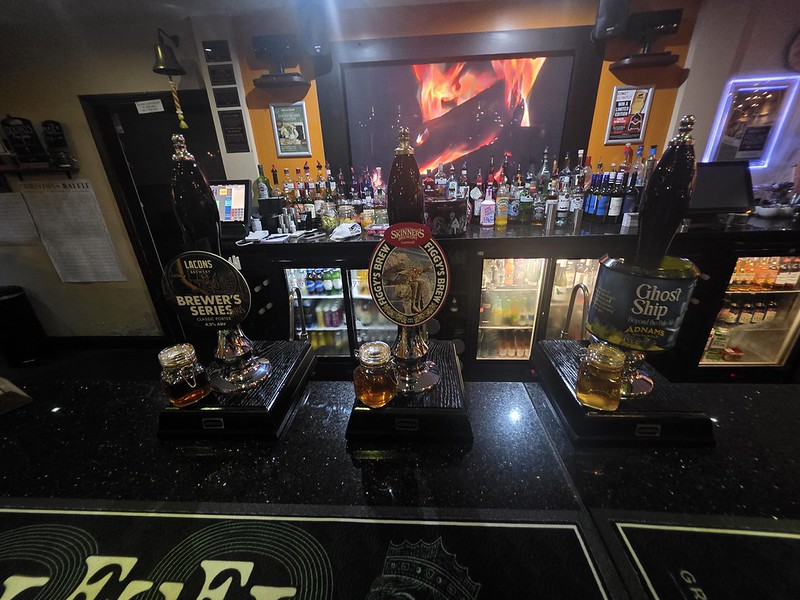
This was the best real selection of the day with a national real ale, a more specialist local ale and a traditional local bitter. This surprised and delighted me. The welcome at the bar was friendly and timely, with the whole arrangement feeling inviting. I’m not overly taken by fires, so this compromise of one on a screen is entirely acceptable to me.
This photo makes it look a little more dreary than it actually was, the venue felt comfortable, inviting and homely.
I went for the Brewers Series classic porter from Lacons and it was well-kept, malty, dark and rich. It’s not what I would consider a traditional porter to taste like and it had more caramel and biscuit tastes, but there’s some heritage to the recipe of this and it’s interesting. The older and wiser Julian went for a Figgy’s Brew from Skinner’s Brewery and I’m pleased to report that he thought it was well-kept, malty and pleasant.
We visited in early November and so there was much excitement of the Christmas decorations being put up.
As the venue felt modern and on-trend, I thought that it was a more recent opening, but it has transpired that it has been going for over fifteen years so I have no idea how I hadn’t heard of it. There are regular music events on weekend evenings and food is also served at lunchtimes and in the evenings.
With friendly service, a clean environment, a decent selection of real ales and an inviting atmosphere, this was a really delightful visit and the prices were reasonable. All very lovely.
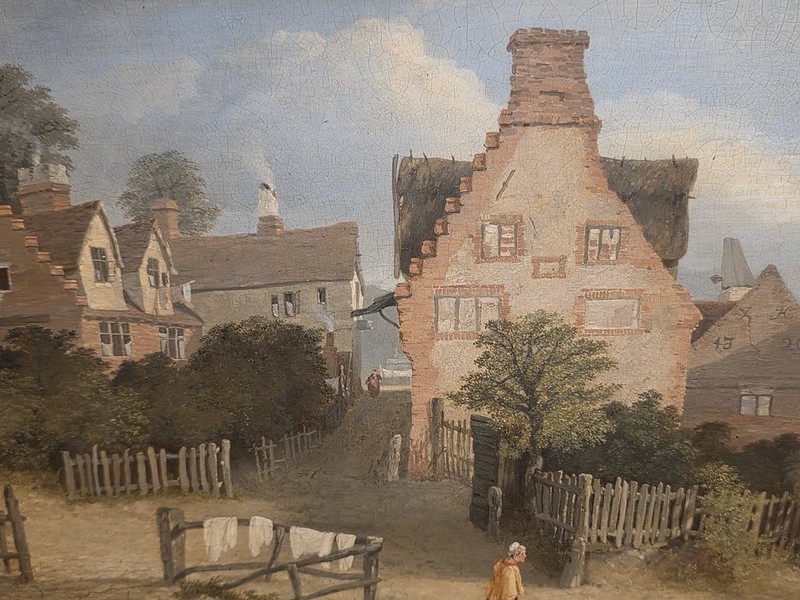
This artwork is in the collections of Norwich Castle museum and was painted by Henry Ninham (1796-1874). The artwork was painted in the 1840s and was donated to the museum as part of the 1946 Russell James Colman bequest. Ninham nearly exclusively painted Norwich scenes and was enormously useful at recording the history of the city in the period just before photography.
The building in the painting is Fuller’s House, also known as Fuller’s Hole, which was a residential property owned by Alderman Fuller, who it is frequently mentioned was the Mayor of Norwich, but I can’t find any evidence of that in the lists.
Unfortunately, this building was pulled down amongst nearly everything else in the area as part of slum clearance in the 1930s. I’m not sure that the area is much better today in terms of architectural merit, it’s the St. Martin’s Close area of the city. If this would have somehow survived, as Elm Hill only just managed to do, it would have been full of character although the splitting of Oak Street in two by the flyover has rather broken this part of the city away.
I’ve felt the need to get AI to bring it to life a little, I think it adds a slightly interesting perspective to matters.
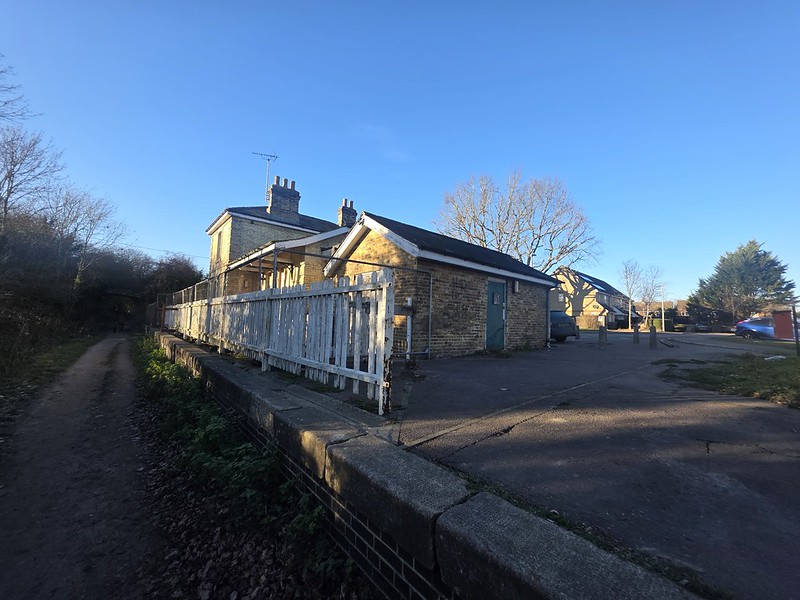
Located near to Stane Street Halt, this is the former Takeley railway station. The railway station first opened its doors on 22 February 1869, part of the Bishop’s Stortford, Dunmow and Braintree Railway.
The railway station welcomed royalty going to Easton Hall, including when the Prince of Wales visited in 1889. They would have likely been greeted by Henry Farnham, the station master, who had been at the station since the mid 1870s. Farnham died in 1893 at the age of just 43, leaving a wife, Mary Jane, and five children. There’s an image of Mary Jane’s grave at https://www.findagrave.com/memorial/178342244/mary-jane-farnham.
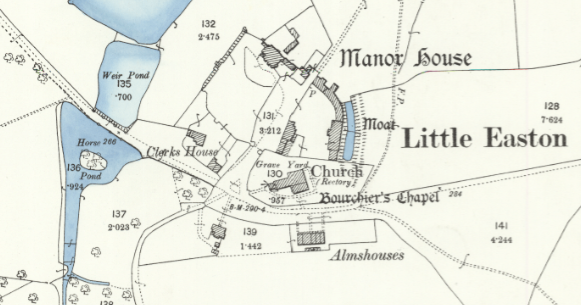
As I mentioned on my Stane Street Halt post, this line never really had enough passengers and so it closed to passenger traffic in the early 1950s. It’s evident from this map from the 1890s that there simply weren’t really enough residents in the local area to support this.
Takeley now has the advantage of having Stansted Airport within its boundaries and so this railway station would have likely been quite useful had it stayed in operation. The station buildings are now used for residential purposes after many decades of being left empty.
I didn’t have the chance to look inside this church, despite being very tempted, as I was on the Stansted Stagger walk so my opportunity for history meanderings were limited. It’s the Grade I listed church which is located to where the manor house Easton Hall was located, sadly one of the country houses demolished in the early twentieth century.
It’s the manor house which is one of the reasons that the church is so decadent. But, going back, the origins of the church date from the early twelfth century and there was likely a Saxon structure here before that.
For centuries, the story of the church was inextricably linked with the Bourchier and Maynard families, the powerful owners of the manor house. The south chapel, often called the Maynard Chapel, is home to a series of magnificent monuments of which one of the most poignant is the tomb of Sir Henry Maynard and his wife, dating to 1610. Below the main statues, their children are depicted in a line; several carry small skulls, a sobering historical shorthand indicating they died before their parents. If I had known about this, I might have quickly rushed in…..
The 19th and early 20th centuries brought a different kind of glamour and social change to the parish, largely driven by Frances Evelyn Maynard, better known as “Darling Daisy” who was the Countess of Warwick. A celebrated Victorian socialite and mistress (one of many) to the future King Edward VII, Daisy was a frequent presence at the church. One more thing that I would have looked out for if I’d have known is that the comedian and actor Mike Reid is buried in the church’s graveyard.
This is the intriguing bit that we noticed when walking by, there’s clearly been some wealth here to end up with so many chapels attached to the church. The central one here is the chancel, with the North and South chapels on either side.
The South Chapel, largely established in the 14th century and later embellished by the Maynard family, is something of a grand ancestral mausoleum filled with elaborate monuments. It houses the stunning 1610 tomb of Sir Henry Maynard and his wife, marking the long-standing influence of the Easton Lodge estate on the parish.
The North Chapel dates back to the 13th century but gained its most modern significance when it was dedicated as a memorial in 1945. It stands as a solemn tribute to the USAAF 386th Bombardment Group, featuring poignant stained-glass windows that commemorate the airmen stationed nearby during the war.
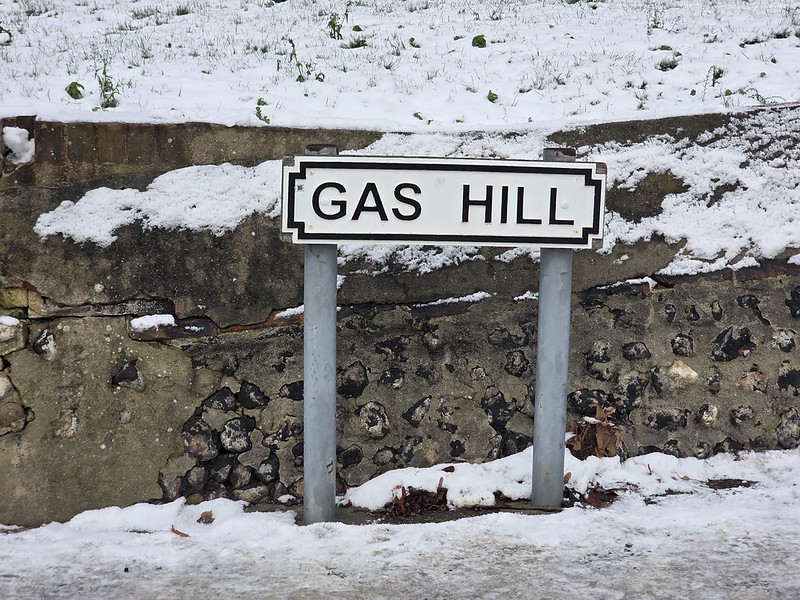
There are some people who don’t realise how hilly Norwich is, Norfolk isn’t the flat county that some expect. And this is Gas Hill Mountain, clearly impassable on its upper slopes and the road has been closed following a car accident. I mean, who would have realised that this might have been dangerous to cars…..
Incidentally, this is one of the very few streets in Norwich where the pavement has been gritted and not the road, rather than the other way around. Not that I’ve been moaning about this.
Gas Hill was named after the gas holder that was located half-way up, but that was demolished a couple of years ago. But, this is just one of the things that we have to bear in this mountain community in which we live, although I’m in the foothills rather than near to the summit.
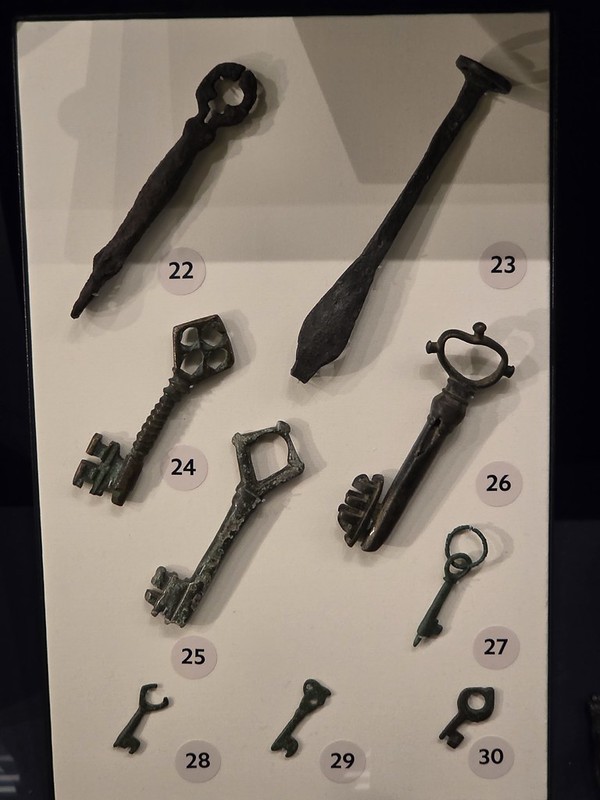
Maybe a heap of old medieval keys in a museum isn’t at first sight very interesting, but there are certainly some stories hidden away here, even if it’s not clear exactly what they are. As a summary of the keys:
22 : From St. Martin at Palace in Norwich (dated between 1000 and 1200)
23 : Found at Castle Acre Castle (dated between 1100 and 1500). This is an iron barrel padlock key that entered the museum collections in 1984.
24 : Found at Snettisham (dated between 1200 and 1300). This is a copper alloy key that entered the museum collections in 1907.
25 : Found at Hardingham (dated between 1200 and 1500). This is a copper alloy key that entered the museum collections in 1999.
26 : Found in Old Buckenham (dated between 1200 and 1500). This is a copper alloy key that entered the museum collections in 1966.
27 : Found on Botolph Street (dated between 1200 and 1400). It is perhaps a little sub-optimal that this street has gone, I moan periodically that the street line of this could be restored with a little thought with the new Anglia Square replacement development.
28 – 30 : Found in Caistor St Edmund (dated between 1200 and 1500)
The museum appears to have put nearly all of their medieval keys on display, so perhaps it’s a little random, but at some point in history these keys would have guarded treasures and resources. There’s a fair amount of engineering that has gone on with some of these and some of them have a fair amount of styling to them.
I’m not sure that much more is known about any of them, but I rather like the snapshot of history they provide even if their stories have been lost to time. And every treasure once had a keeper….