Blog

  • Gothenburg Trip – Day 2 (Gothenburg City Museum – The Plan of Palmanova and the Birth of Gothenburg)

    Gothenburg Trip – Day 2 (Gothenburg City Museum – The Plan of Palmanova and the Birth of Gothenburg)

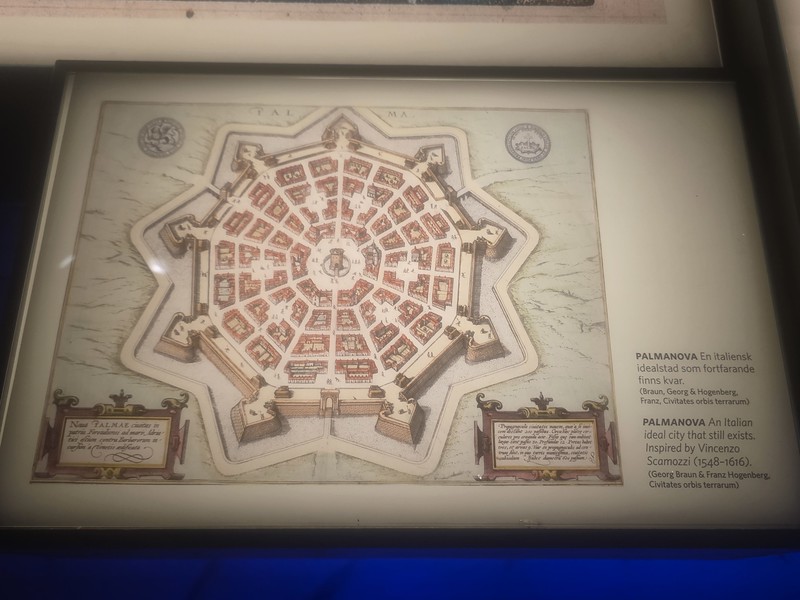
    I discovered two things from this map in the museum. It’s the layout of Palmanova, which stands testament to the Renaissance ideal of the “perfect city”, although I’d never heard of it before. Designed in 1593 by architects like Vincenzo Scamozzi, the Italian city was built as a nine-pointed star with mathematical precision, intended to serve as both a military fortress against the Ottoman Empire and a harmonious utopian society where every road and square had a specific geometric purpose. It’s all still there, I’ve decided that I need to visit it.

    And the other thing I discovered is that this piece of meticulous urban planning directly mirrors the foundation of Gothenburg itself. Founded in 1621, Gothenburg was not a town that grew organically over time, it was also a “planned city”, which was constructed from scratch on marshland by Dutch engineers. Much like Palmanova, the early layout of Gothenburg was defined by its rigid, zigzagging fortifications and a strategic network of canals that provided both defence and drainage.

    Gothenburg over time has developed in a rather less planned way and so the original design clarity has somewhat been lost. However, the organised grid layout is visible today along with the defensive fortifications, it just took the museum to point them out to me.
  • Gothenburg Trip – Day 2 (Gothenburg City Museum – The Hidden Art of Marieholm)

    Gothenburg Trip – Day 2 (Gothenburg City Museum – The Hidden Art of Marieholm)

    This is a Marieholm wall painting and it’s something of a fascinating glimpse into the evolution of Gothenburg. For centuries, the city was surrounded by landed estates, farms owned by the municipality but leased to the wealthy elite who shaped the region’s early economy and no doubt enjoyed their privileged lifestyles.

    Marieholm was one such prominent estate, situated in the Gamlestaden district, an area that holds the historical footprint of the old town, Nya Lödöse. It served as a rural retreat for the urban wealthy, bridging the gap between city commerce and country living. This wasn’t for the workers, it was the growing middle class of the time.

    The panel was nearly lost, the discovery of this artwork was entirely accidental as in 1938, as the main building of the Marieholm estate was being demolished, workers uncovered a hidden treasure which was this painted wooden panel dating back to the 1600s. It had been preserved behind newer walls for generations, surviving the passage of time only to be revealed as its original home was destroyed.

    This does all make me wonder just how much stuff is hidden within buildings today. It’s probably fortunate that I live in a new-build flat as otherwise I might be tempted to see if there were any treasures hiding behind the walls…

  • Gothenburg Trip – Day 2 (Gothenburg City Museum – Äskekärr Viking Ship)

    Gothenburg Trip – Day 2 (Gothenburg City Museum – Äskekärr Viking Ship)

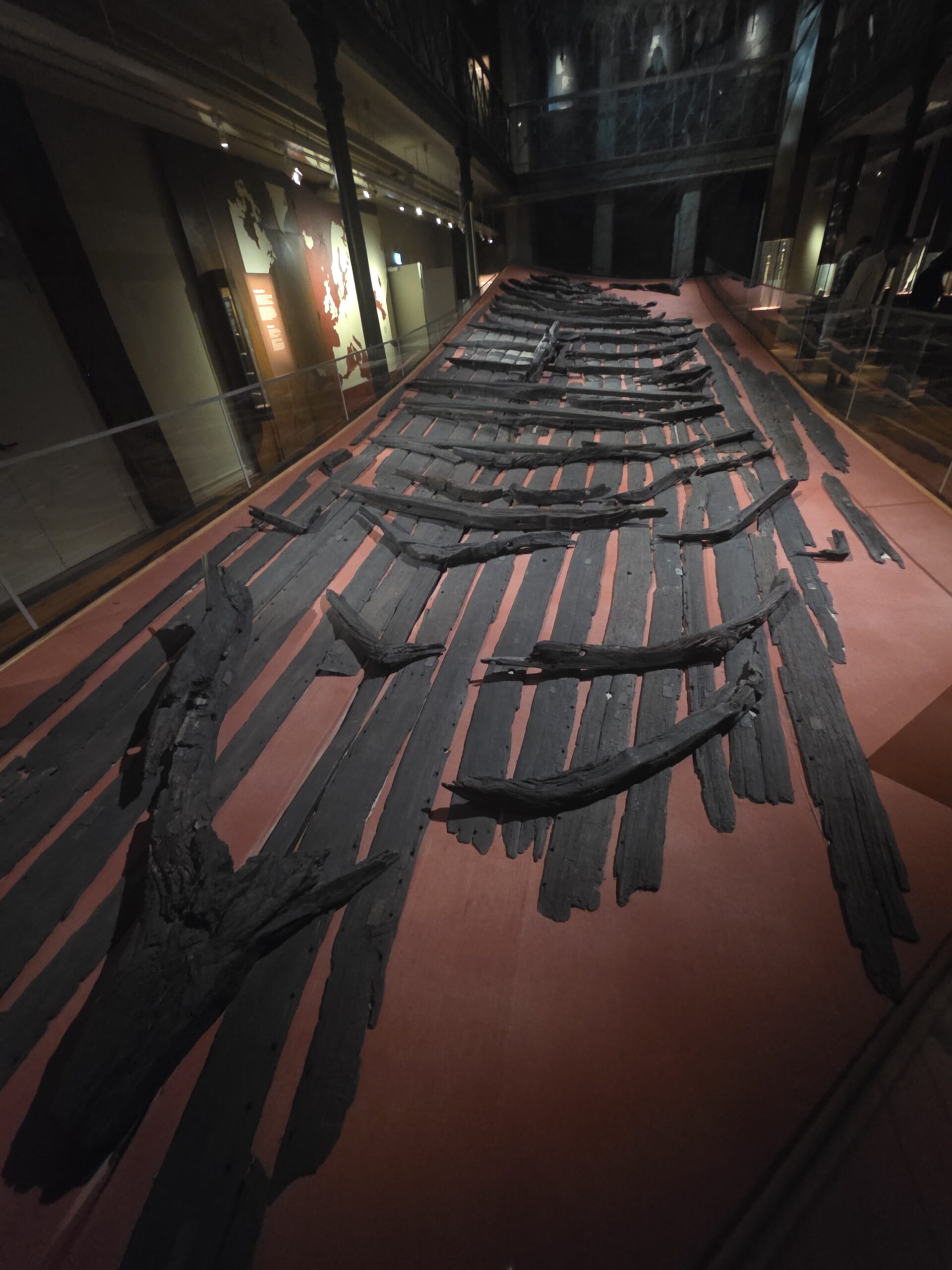
    The Äskekärr ship, proudly displayed at the Gothenburg City Museum, holds the rather prestigious title of being the only Viking-age ship ever found in Sweden. Discovered in 1933 by a farmer digging a drainage ditch in a bog near the Göta älv river, this vessel isn’t exactly one of those sleek warships usually depicted in movies. It is actually a ‘knarr’ which is a sturdy merchant ship designed for hauling heavy cargo across the open seas. Built from oak around the year 930 AD, the ship provides a rare and tangible link to the sophisticated trade networks that were the true lifeblood of the Viking world.

    The timbers show signs of extensive repairs which were made over several decades which rather suggests that it was a beloved workhorse that remained in service for nearly a century before it finally came to rest in the Swedish mud.

    This is one of the flagship exhibits in the museum (notice the clever pun in that sentence) and I liked being able to see an actual Viking ship. I’ve wondered before if my natural bravery (defined by myself only) and ability to tolerate the cold indicated that I have Viking blood, but this appears to be unlikely.

  • Norwich – Anglia Square Demolition (10 March 2026)

    Norwich – Anglia Square Demolition (10 March 2026)

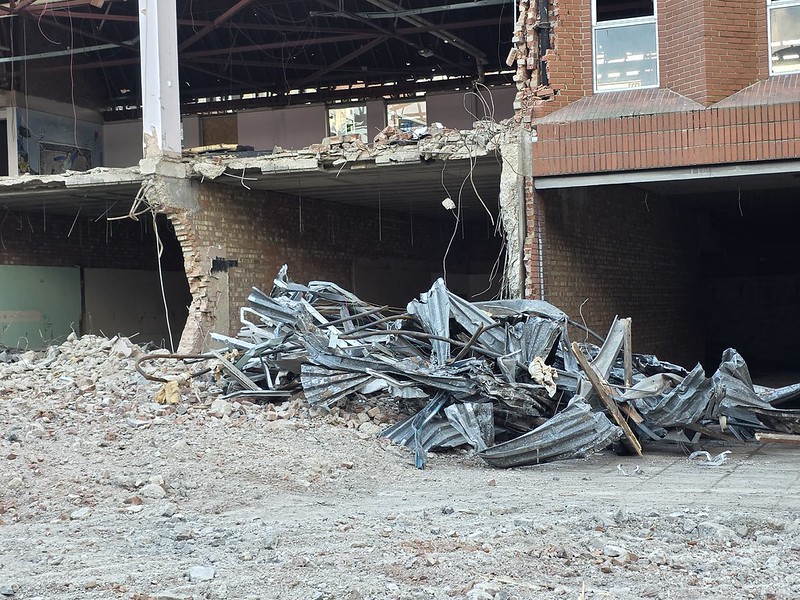
    Some photos from the Anglia Square demolition from 10 March 2026.

  • Gothenburg Trip – Day 2 (Brewers Beer Bar Magasinsgatan)

    Gothenburg Trip – Day 2 (Brewers Beer Bar Magasinsgatan)

    Richard spent much of the afternoon staging a one-man protest for craft beer, so I thought that it was only fair to oblige so we went to Brewers Beer Bar. There appear to be two of them in Gothenburg, this is the one at Magasinsgatan.

    It was a large and welcoming place, with a team member offering us a friendly greeting when we entered.

    The bar area with the soft drinks visible for the more responsible amongst us.

    It was the beer board that was of interest to me and there was a mix of national and international beers. I inevitably ignored the British beers here as although they’re excellent, it didn’t feel entirely appropriate to opt for them.

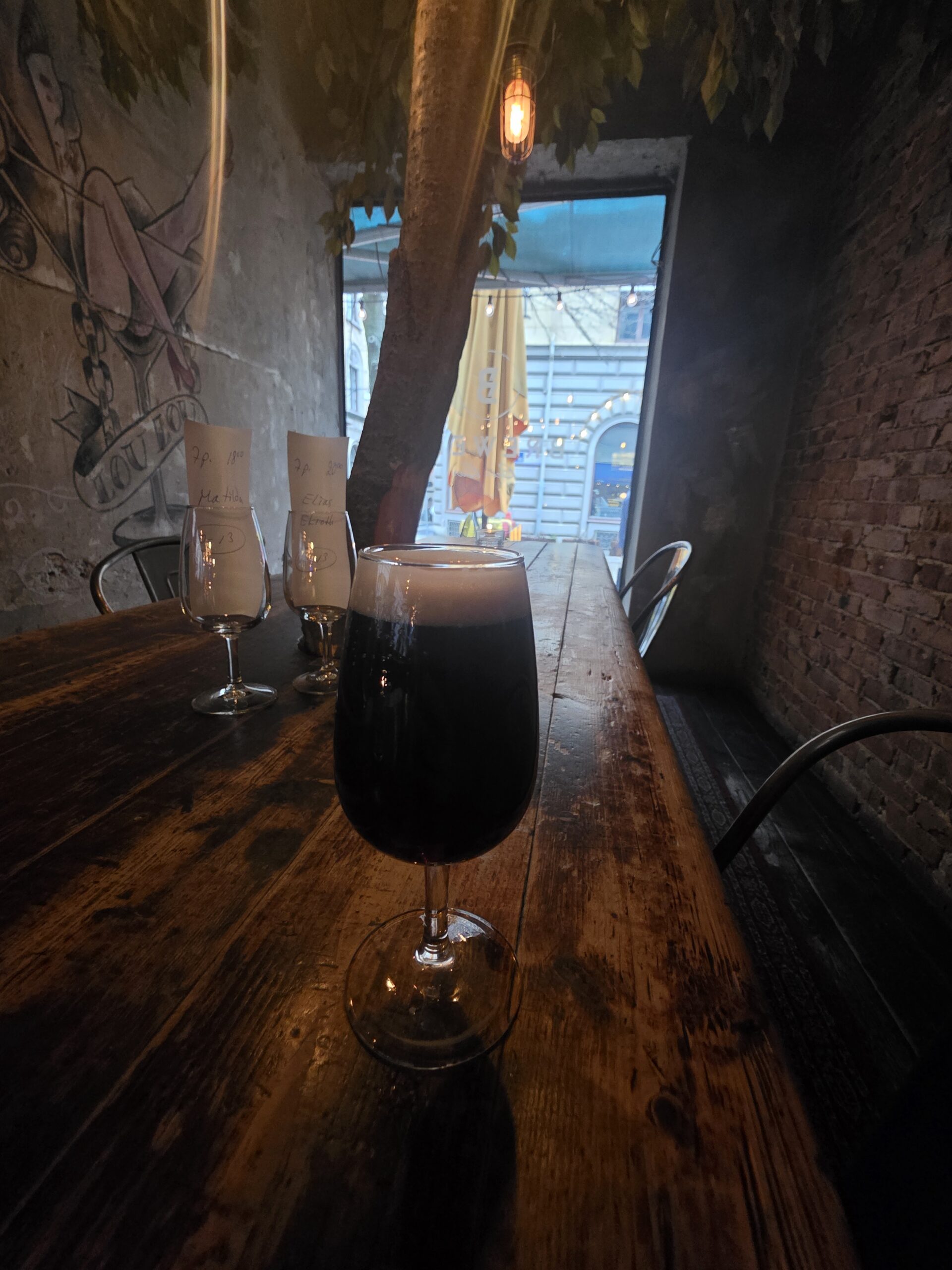
    I opted for the North Sea Porter from To Øl who is a Danish brewery and this is a slightly thin beer with a taste of coffee and roastiness along with a creamy texture. Incidentally, I liked the tree in the middle of the table, like a hip forest.

    And for those interested, here’s the food menu. It was very tempting, but we (well, Richard) were looking for something a little more decadent than pizza. It also appeared to be getting full with most tables having reservations on, so this seems to be a popular venue.

    I liked the atmosphere here, it was friendly, informal and laid-back. The beer prices aren’t cheap in Sweden, but they were reasonable here and there were plenty more choices in the beer fridges. There was some music in the background, but it wasn’t loud enough to annoy me.

  • Gothenburg Trip – Day 2 (Gothenburg Museum of Art – Italian Landscape by Gustaf Wilhelm Palm)

    Gothenburg Trip – Day 2 (Gothenburg Museum of Art – Italian Landscape by Gustaf Wilhelm Palm)

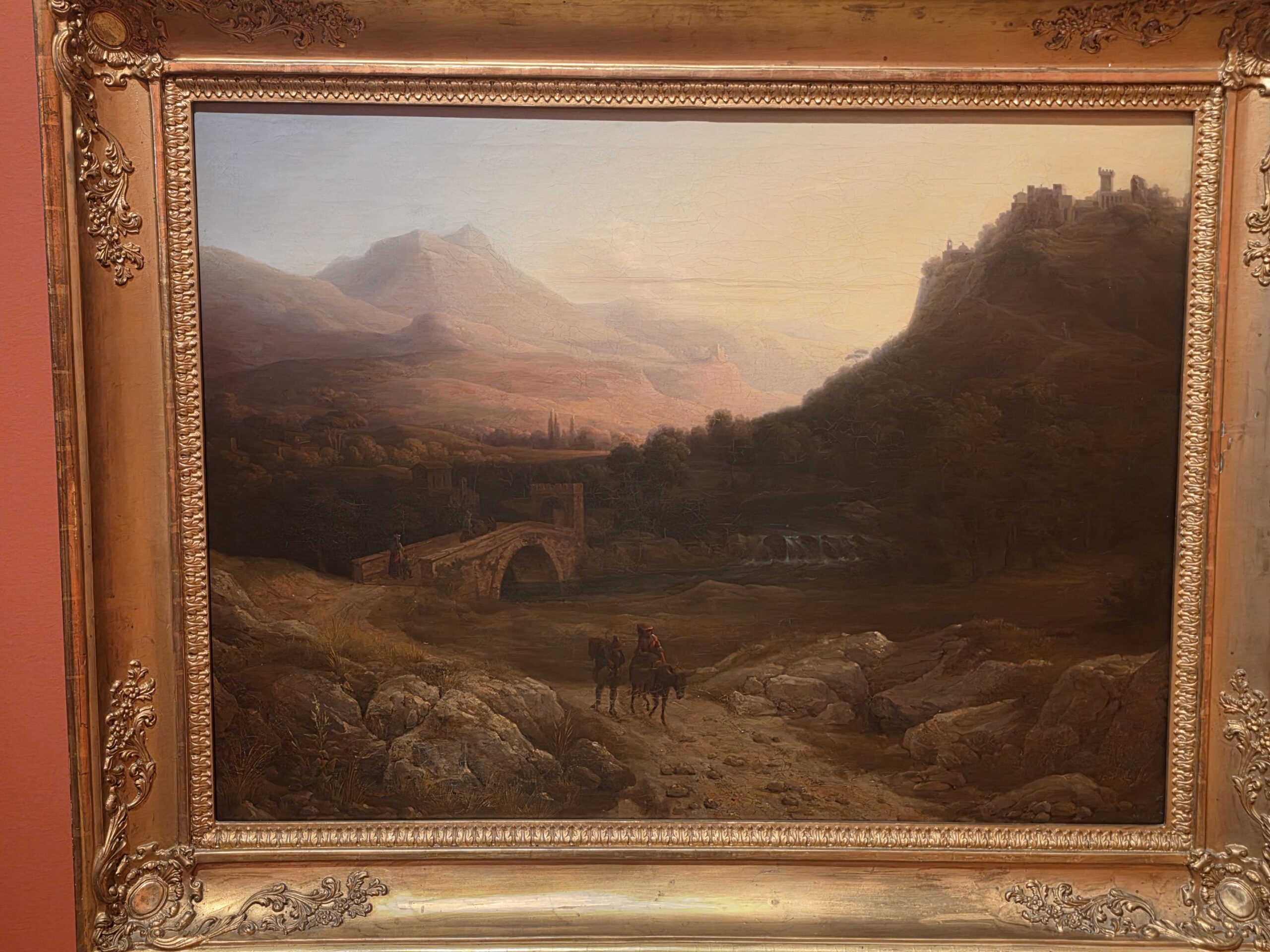
    This painting in the collections of Gothenburg Museum of Art is by the Swedish artist Gustaf Wilhelm Palm (1810-1890). It was painted in 1842 and was later acquired by the museum in 1913. He remained in Italy for eleven years in total although he later went back to Sweden to become an art professor.

    The element that interested me most is that this is likely a painting that was sold to someone on their Grand Tour of Europe. These were coming to an end at this time, primarily as the railways were being built, but it was a way of wealthy young men to travel across Europe with a guide, usually focusing on the country of Italy.

    The painting is likely not a real representation of anywhere that actually exists, it was just a stylistic artwork that would be a souvenir. I like the idea that someone kept the painting as a memory of their travels in the same way that I’ve become reliant on Google Photos to remind me of my trips… Well, and this blog.

  • Gothenburg Trip – Day 2 (Museikortet)

    Gothenburg Trip – Day 2 (Museikortet)

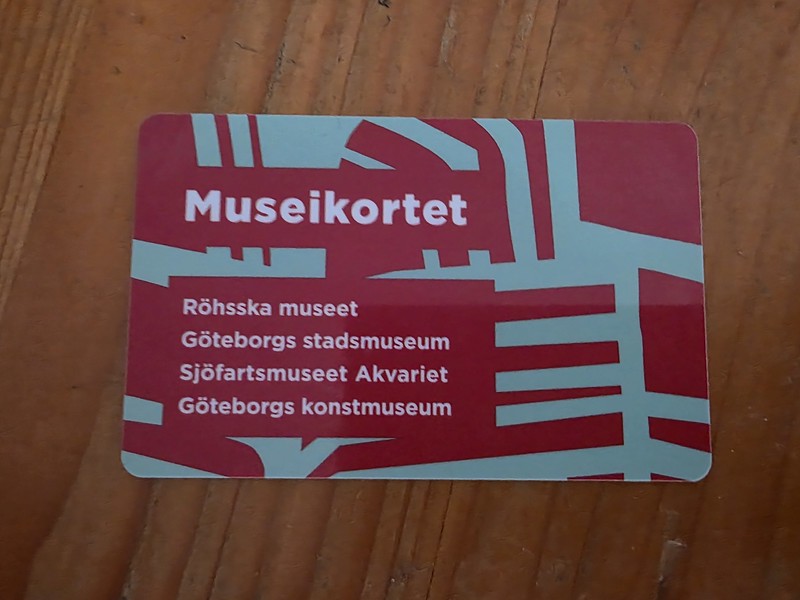
    Gothenburg’s Museikortet is an annual pass which allows for entry into four museums, namely:

    Museum of Gothenburg

    Röhsska Museum of Design and Craft

    Maritime Museum and Aquarium

    Gothenburg Museum of Art

    We each acquired one of these passes as they allow unlimited entry to all of the museums and it lasts until the end of 2026. Given that the pass costs around £13 this represented cheap entry into the museums even just visiting them once, although I hope to return to the city by the end of the year.

    We didn’t visit the Museum of Design and Craft, but we managed to visit the other three museums on our first day in the city. The Museum of Gothenburg is focused on the history of the city, with displays covering the various elements of social, economic, cultural and military heritage. The Maritime Museum was a sizeable building, with the aquarium located in the cellar. And the Museum of Art had substantial collections of artworks, including some internationally important works and some modern art that I didn’t understand.

    It’s definitely worth considering buying the card and it has the advantage that you can scan it yourself at a kiosk to avoid waiting in the queues to buy tickets. Although we spent a couple of hours at the three locations we went to, we could have taken much longer in each of them.

  • Gothenburg Trip – Day 2 (Maritime Museum – Aquarium)

    Gothenburg Trip – Day 2 (Maritime Museum – Aquarium)

    The maritime museum has a substantial aquarium in the cellar and it has the largest collection of live corals in Europe.

    They used 30 tons of coral rocks, 3 tons of sand and there are 400,000 litres of water at 25 degrees Celsius. It was a rather impressive arrangement and visitors can see into from two different sides to watch the sharks and other fish swimming about.

  • Gothenburg Trip – Day 2 (Maritime Museum – Red Wine, Menu and Wood from Vega)

    Gothenburg Trip – Day 2 (Maritime Museum – Red Wine, Menu and Wood from Vega)

    This is a bottle of red wine that was on the Vega sailing vessel which was kept as something of a memento. As indeed were quite a lot of things from the ship.

    The Vega Expedition (1878–1880) was a Swedish-led Arctic voyage, named after the steamship SS Vega and commanded by Adolf Erik Nordenskiöld, that became the first expedition to navigate the Northeast Passage and the first to circumnavigate Eurasia, collecting a fair chunk of scientific material along the way.

    Vega sailed from Karlskrona in June 1878, stopped at Tromsø, reached Cape Chelyuskin in August and then pushed east along Siberia’s coast until it was trapped in pack ice near the Chukchi Peninsula in late September, just short of the Bering Strait, forcing the crew to winter there and making first sustained contact with the Chukchi people. Freed in August 1879, Vega passed through the Bering Strait, paused in Japan for repairs, then returned to Sweden via the Indian Ocean and the Suez Canal, arriving in Stockholm in April 1880 to huge celebrations, an achievement later framed as a high point of Swedish scientific exploration.

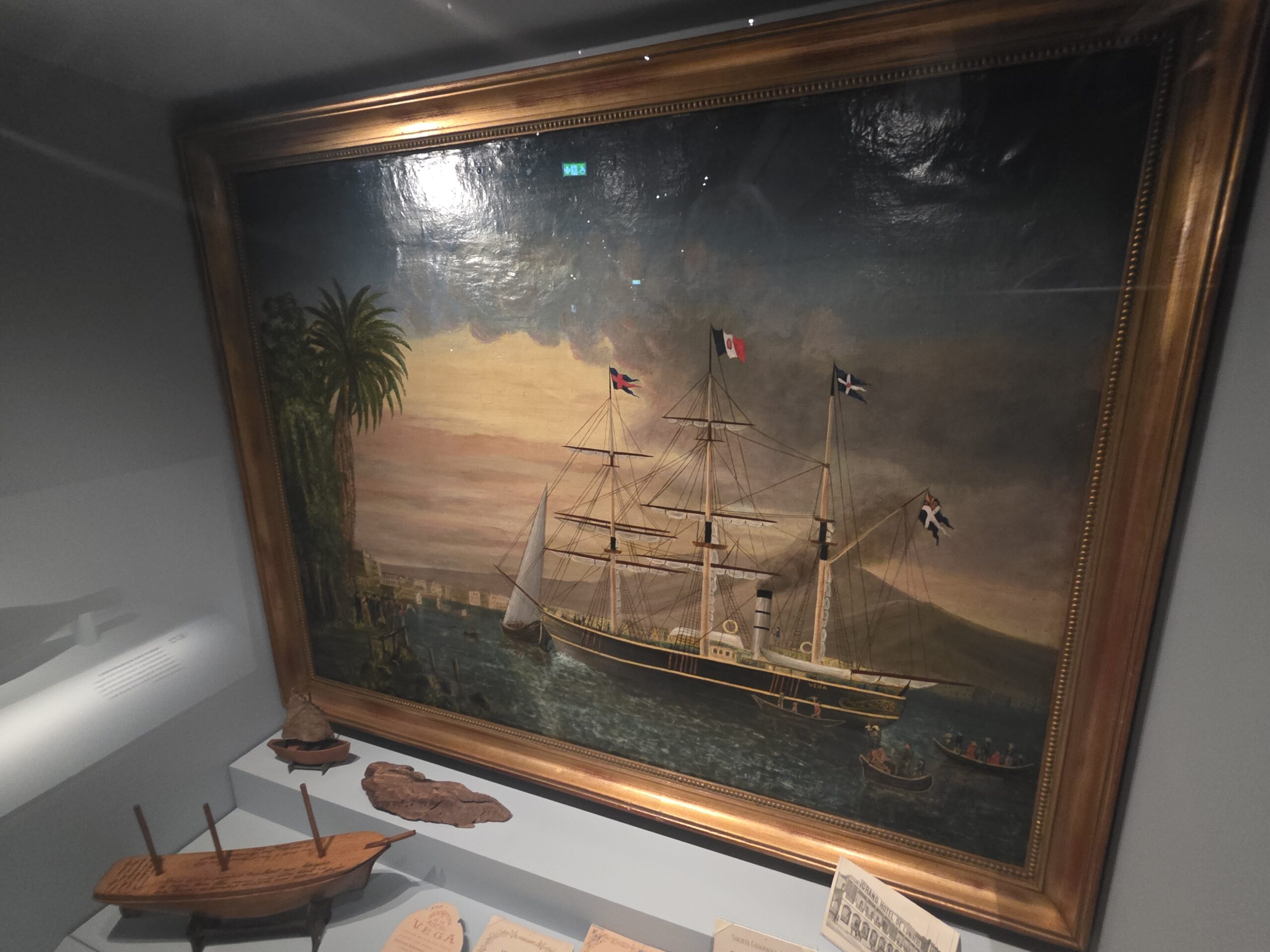
    The above painting is of the Vega when it was parked up in Naples where it arrived on 14 February 1880 and remained for two days amidst some considerable celebrations.

    Always good to have a menu from on board, this one is from 18 November 1878.

    Incidentally, back to the wine, the museum notes that:

    “During the winter the crew drank much more alcohol than the annual average for a Swede at the time”.

    I’m not entirely sure that this would be a surprise to very many people…

    And here’s some wood from the keel that was kept when it was turned into a whaling vessel.

  • Gothenburg Trip – Day 2 (Maritime Museum – Lime Juicers)

    Gothenburg Trip – Day 2 (Maritime Museum – Lime Juicers)

    The exterior of the Maritime Museum.

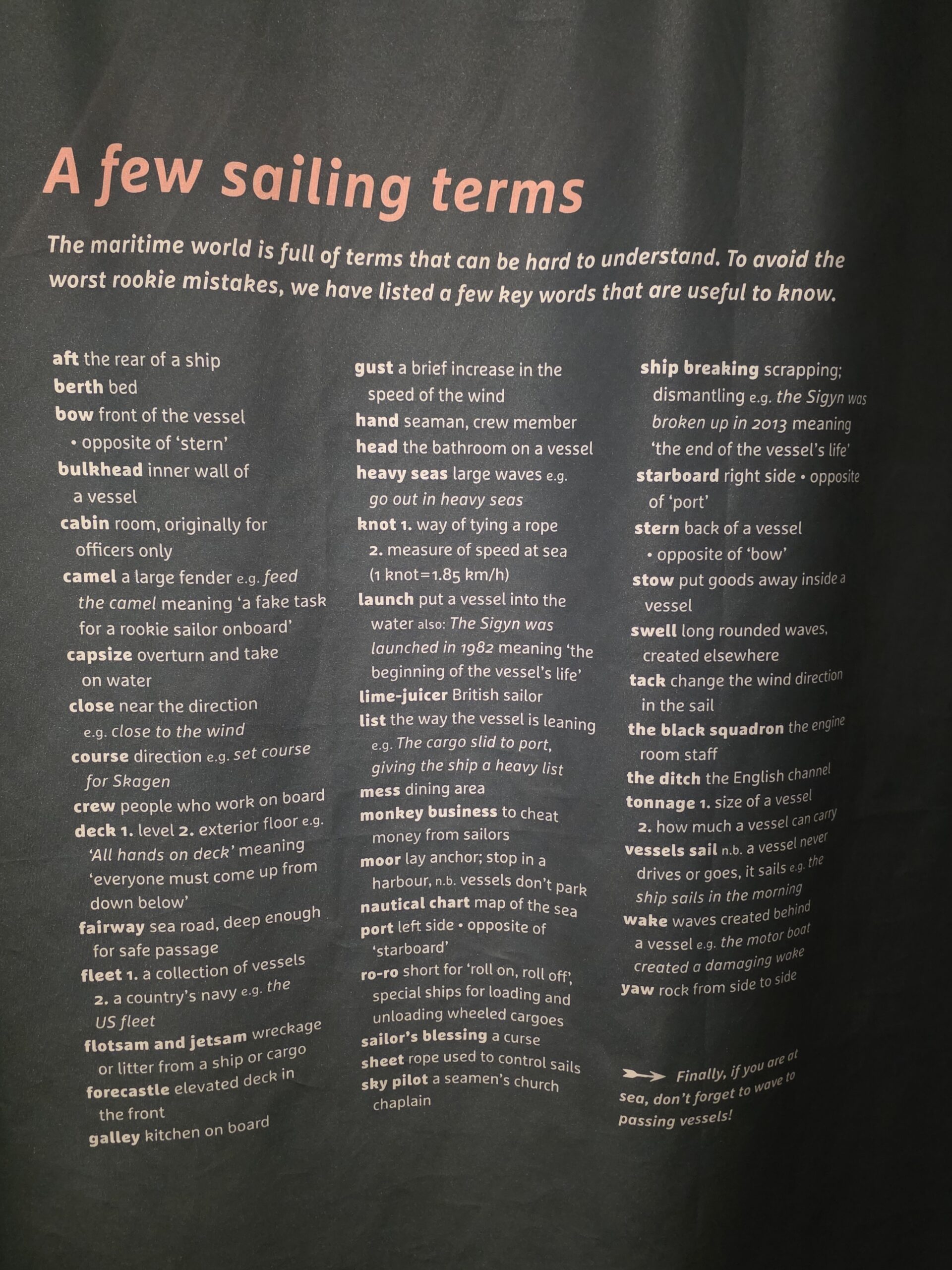
    Some of the slang used by sailors, although it was the lime-juicers bit that interested me. I was aware of the phrase ‘limeys’ for British sailors because of the lime juice (although it was initially lemon juice which actually has much more vitamin C, so the switch wasn’t entirely ideal) that was used to prevent scurvy.

    It transpires that the term was originally lime-juicers and this came to be used from around the 1850s to describe British sailors. The shortening to limeys took place around the 1870s and then it became to be used to describe British people in general in the late nineteenth century and the early twentieth century.