Blog

  • Melton Constable – St. Mary’s (Burgh Parva) Old Church

    Melton Constable – St. Mary’s (Burgh Parva) Old Church

    20250202_135803

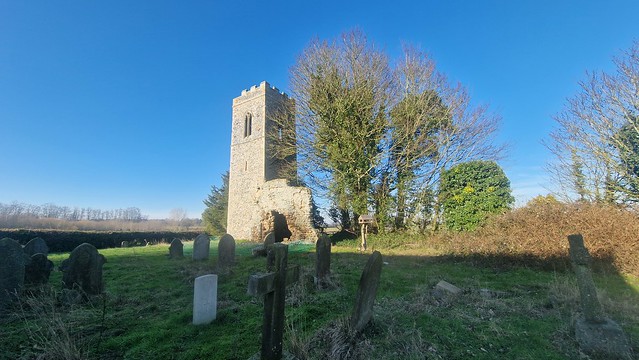
    This is what remains of St. Mary’s church which is located near to Melton Constable, in what was once the parish of Burgh Parva. This medieval village has long since gone and the church was always a relatively small one. It’s thought that the church was constructed during the later part of the fifteenth century and the early part of the sixteenth century. David Kennett in his Norfolk Villages book notes:

    “In 1845, White’s Directory described Melton Constable with Burgh Parva as a fertile parish of 1,700 acres. They had 114 inhabitants in 1831, but only 75 in 1841, several families having emigrated to America”.

    There’s otherwise very little historical text that I can find about this church, just guesswork about the exact building dates.

    20250202_140027

    The Norfolk Heritage web-site mentions that the church was likely ruinated in the reign of King Charles II, but the chancel had likely gone following the Reformation as some of the stone has been repurposed into the nearby hall. The tower is looking remarkably robust given how long it’s been standing, although it’s evident that there have been some repairs over recent decades. As can be seen, an advanced system to keep people out has been erected around the church.

    20250202_135944

    The door had been filled in with stone before the church mostly fell down. I accept that I wonder about strange things, but it would be interesting to know when the last person to walk through that door was (the actual door, not the new hole that has appeared).

    20250202_135359

    The church evidently wasn’t that large judging from the size and there’s no evidence of there being any aisles.

    20250202_135637

    There’s one other section of wall remaining which seems to be near the end of the former nave.

    20250202_135436

    Inside the church tower.

    20250202_135420

    The former roof line is still visible. There have been some Saxon and early Norman finds here and it’s possible that there was a church here at that time, although equally, the stone might have been moved across to this as a new site.

    Due to the substantial increase in the population of nearby Melton Constable, a temporary iron church was constructed in 1903 and it’s still there. But more on that in the next riveting instalment of this blog….
  • Melton Constable – What’s Left of the Railway Station

    Melton Constable – What’s Left of the Railway Station

    20250202_142651

    Richard and I were off back on our church spotting and I had one of my marvellous ideas (which often actually aren’t) to combine that with a visit to Melton Constable. I’ve known this as the centre of railways in North Norfolk, but I’ve never managed to go there. We walked across from the church along the former railway line which led on to Holt and Sheringham. Melton Constable is mostly a planned village built to house railway workers, with the population going from just over 100 in 1881 to over 1,100 by 1911.

    20250202_143153

    The former track which closed to passengers in early 1964. I didn’t expect just how sharp the drop off was at some stages along this line, there were considerable earth movements made to construct this line.

    20250202_144751

    Melton Constable became a railway hub as two lines crossed there and this is the site of where they met. One was the line which went from Bourne in Lincolnshire across to Cromer and Great Yarmouth, whilst the other was the line which ran from Sheringham to Norwich, via Holt. The former of these lines closed in 1959 and the writing was very much on the wall at that point, as only the service from Melton Constable to Sheringham remained and the village became a terminus. In April 1964, that service was brought to an end and the railway station was closed.

    The cursor marks where we were standing.

    20250202_144816

    The village beacon.

    20250202_144905

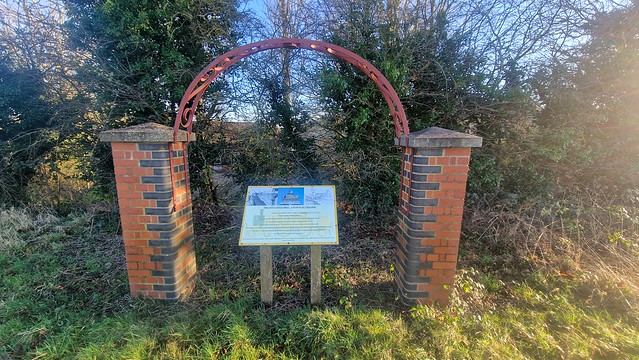
    I was hoping for an information board about the railway’s past and I wasn’t disappointed. The metal structure here is original, it’s the one that’s in the below photo. The brickwork is recreated from the original, more on which in a moment. The road layout has changed a little here, but this is effectively where the railway station itself was located.

    A postcard of the station as it once looked. The station was constructed on land which was owned by Lord Hastings and his involvement was rewarded as he was given a private platform and waiting room, which seems quite a grand arrangement for any individual. Perhaps Elon Musk might try and get himself a private platform at London Waterloo or something….

    20250202_144936

    The steps down to the railway works. These works were a major employer for the area and they were constructed here soon after the railway opened in 1883. The works employed over 1,000 people at their peak and the village became known as “the Crewe of North Norfolk”. The workers here primarily repaired locomotives, constructed carriages and they also provided maintenance for a whole range of railway infrastructure. There was also a concrete works at the site and the still exciting concrete railway sign at West Runton was made here.

    20250202_144940

    This maps shows how the railway station, the railway works and the sidings used to dominate the village. The planned housing can be seen quite clearly here and they have something of a northern industrial town feel to them.

    20250202_145150

    And here’s the original location of the steps, with the original brick pillar still in situ.

    20250202_145211

    They’re not clearly visible in this photo through the foliage, but the original steps down to the railway works are still there.

    20250202_145221

    And this is where the railways buildings were located, with the large engineering shed on the right still there.

    20250202_145322

    And another old railway building.

    It’s disappointing that they’ve demolished so much of the railway heritage here, although the area is quite remote and after they demolished the railways tracks it made it rather hard to get to. In the summer of 1964, a regular bus service was put on for the 30 residents who needed to get to Holt and there remains a service operating to this day. It’s rather quiet now and it’s hard to imagine just how many trains used to come through this station and how many people once worked here.

  • 200 Years Ago in Norwich : Body Snatching in Hethersett (Thomas Able)

    200 Years Ago in Norwich : Body Snatching in Hethersett (Thomas Able)

    Another in my little series of posts from the Norwich Mercury 200 years ago this month.

    “Sirs,

    A great sensation has been occasioned in this neighbourhood, by a body recently being taken from the church-yard of Hethersett. This, though so distressing to the feelings of surviving relations, is an evil which will never be prevented, unless a sufficient number of human bodies can by other means be obtained, for the purpose to which this, no doubt, has been applied, and which, for the advancement of a science, the most important to the welfare of the human race, is indispensably requisite. I have long been of opinion, that the bodies of ALL malefactors who are executed should be delivered to the surgeons: this would operate as a two-fold good—for I am persuaded it would tend greatly to the prevention of crime.

    Hardiment, who was executed here about two years ago for murder, felt, as I have been credibly informed, a much greater horror at that part of his sentence which subjected his body to dissection, than at death itself. Two men were condemned at the same Assizes, for having set on fire some premises in or near Diss. A short time before their execution they expressed a strong desire to see their prosecutor; told him they felt persuaded, that if buried at Norwich, their bodies would be taken up, and requested him to make them a promise that they should be taken to a church-yard they named, at the distance of about twenty miles, which being granted, they became comparatively easy. This account I received from a professional gentleman who had been employed on their trials.

    I would not, however, stop here: I would also give up to the surgeons the bodies of all who execute themselves, excepting those only, who it should be clearly proved, had been under restraint from imputed insanity or lunacy. This would, I have no doubt, greatly tend to prevent self-murder, and I have, almost under my own eye, a much stronger proof in print, than that in the case above stated.

    In the Spring, 1821, R. residing in a neighbouring village, cut his throat, though not so as to occasion death. In the Spring, 1822, L. residing in another neighbouring village, hanged himself: an inquest was held, and, as usual in such cases, it was adjudged that he was at the time insane. Immediately after this, R. said to some of his neighbours, “though L. hanged himself they buried him in the church-yard.” The next morning the body of R. was found hanging and dead.

    Feb 8th, 1825. Your’s, &c. &c. A.B.”

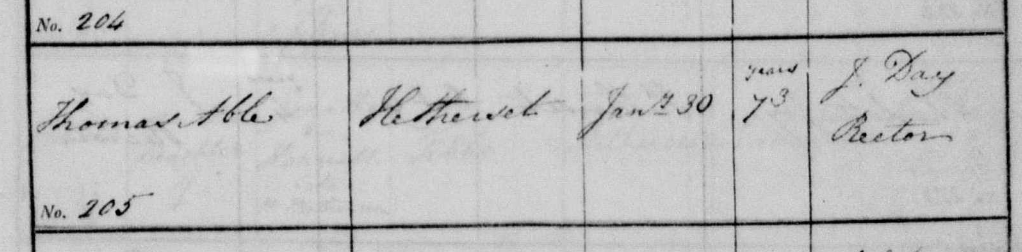
    The church where the body snatchers struck was St Remigius in Hethersett. I was able to find out that the burial was of a “poor old man” on Sunday 30 January 1825 and his body taken on the Wednesday.

    He wasn’t named at the time in the media, but there was only one burial that day at the church which was Thomas Able, a 73 year old man from the village and this fits the description of an “old man”. His wife died on 23 December 1846 and was later buried at the same church, so she must have suffered terribly. At the time, it was thought that a body going to be dissected wouldn’t go to heaven, which is why it was an extra punishment for those condemned to death by the courts and why the letter writer suggested people who committed suicide should have their bodies taken, something which happened in Germany at the time. The theft of a body wasn’t a criminal offence in 1825, as long as any clothing or other items weren’t taken away at the same time, which is why they were left at the site. The matter was mostly resolved by the passing of the Anatomy Act in 1825, legislation which was long overdue as fear of a loved one’s body being removed became a slight national obsession.

  • 200 Years Ago in Norwich : Sentenced to Three Months Tread Wheel for Non-Performance of Bastardy Order

    200 Years Ago in Norwich : Sentenced to Three Months Tread Wheel for Non-Performance of Bastardy Order

    In my little series of posts from 200 years ago, there’s a one line article on the court reports for 1825 that reads:

    “By the decision of magistrates, Charles Smith, for non-performance of an order of bastardy – three months tread wheel”.

    The tread wheel was a relatively new invention at this time, having been designed by Sir William Cubitt and introduced in the prisons of Bury St Edmunds and Brixton. The punishment varied, but Charles was likely on the tread wheel for around six hours a day, which must have been healthy but also tiring and probably rather annoying to say the least.

    The concept of bastardy orders has roots in English common law, where children born to unmarried parents were deemed filius nullius, meaning “child of no one”, which does feel a slightly harsh way for a youngster to start their life. These children lacked legal standing in society and were prohibited from inheriting property from their father unless legitimised, which could be done rather more easily for the landed gentry. These children could not claim support from their parents, and the responsibility for their care initially fell upon monasteries and local councils. The Poor Law of 1733 in England stipulated that the putative father was responsible for maintaining his illegitimate child. Local authorities would issue public funds to maintain the mother and child until the father could assume responsibility.

    The 1834 New Poor Law in England introduced a Bastardy Clause, representing something of a significant shift in social and legal approaches to illegitimacy. This clause shifted the responsibility for illegitimate children from the parish to the mother and this change aimed to deter illegitimacy and reduce the cost of poor relief by placing the burden on unmarried mothers . The Bastardy Clause was rooted in the principle of “less eligibility”, which sought to make workhouse conditions less desirable than even the lowest paying jobs, thereby discouraging reliance on poor relief. A Royal Commission into the changes that became the 1834 Poor Law stated that the existing system gave generous payments for illegitimate children and indemnified the mother against failure to marry, noting:

    “The effect has been to promote bastardy; to make want of chastity on the woman’s part the shortest road to obtaining either a husband or a competent maintenance; and to encourage extortion and perjury.”

    Charles Smith is too common a name for me to be able to work out much about him, but the parish officials would have made an Order which required him to pay for his child and it’s evident that he didn’t make those payments.

  • 200 Years Ago in Norwich : Conman in 1825

    200 Years Ago in Norwich : Conman in 1825

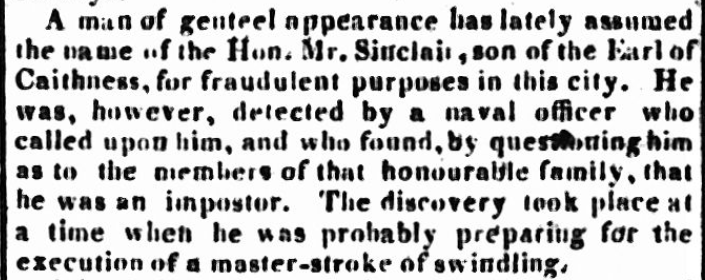
    Back to my little series of posts about the Norwich Mercury from 200 years ago. It’s hardly a surprise that there were conmen operating in Norwich 200 years ago, but it must have been a lot harder back then to actually spot such deceit when it happened. The Earl of Caithness at the time was Alexander Campbell Sinclair, 13th Earl of Caithness, with the fraudulent man pretending to be his son. He was perhaps unfortunate to have discovered a naval officer who was able to ask penetrating questions about the Earl of Caithness, otherwise he might have gotten away with his little scam. It’s a nice little phrase from the newspaper though, “preparing for the execution of a master-stroke of swindling”, as there are some politicians that could be said about today.

  • Rotherham – Ibis Rotherham East

    Rotherham – Ibis Rotherham East

    20241112_161402

    This is now routinely the cheapest Accor hotel venue in the country (although it’s the fifth cheapest tonight, Ibis Lincoln is down to £34), priced even lower than the Ibis Budget hotels. I’ve now stayed here twice and the room rate has averaged £26 a night, which is to be fair not very sustainable. However, they don’t need it to be sustainable as the hotel is coming to the end of its 25 year lease and it’s on the market for £4 million and will cease being an Accor hotel in a few months.

    20250124_201232

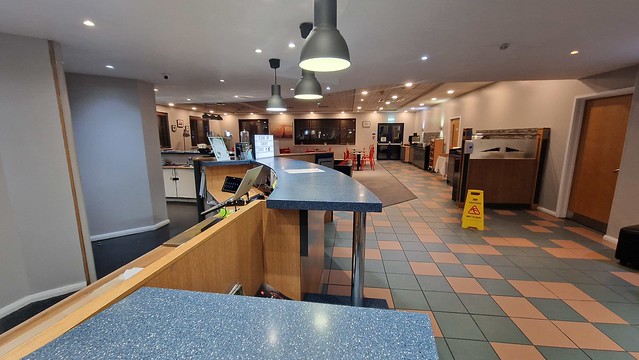
    I had a seven minute wait for check-in as there were no staff visible. It’s never entirely optimal, but I don’t think they were expecting many guests to check-in. I had two bookings, one of four nights and another of one night, but they didn’t have the technology to merge the two bookings and I often think it’s just best to keep them separate to avoid confusion. All the staff members were helpful and personable, it was probably the main thing that was keeping everything together at the moment.

    20250124_201944

    The room is dated, but serviceable. It’s the old style Ibis design which was phased out several years ago, but I imagine there was little point making a large-scale investment at this stage. The broken hairdryer holder in one room had its last electrical safety check in 2007 to show how little has changed here. The bathrooms need a refit and they need to have the traces of mould removing as well, that’s a slightly sub-optimal arrangement.

    20250125_084749

    I was disappointed when I e-mailed the hotel to say I might not be there for the first night (it was the day of the storm) and they didn’t burden themselves with taking the time to reply. I will be disappointed if I have to chase up the 200 points I got from the above ‘skip the clean’ offer, but I suspect I’ll have to. As a comparison, I e-mailed Ibis Budget Warsaw Centrum a couple of weeks ago to tell them I might be arriving at 01:00 (I’m aware they didn’t need to know this, but they do say to let them know) and they responded within three minutes.

    20250126_202651

    They didn’t mention the welcome drink at check-in, but it was willingly given when I asked for it.

    For my purposes, the hotel was generally clean and it represented excellent value for money when taking into account this is boosting my room stay nights at a very low price as I return to Platinum this year. It offers breakfast and meals, but they don’t try very hard to push these, and when I walked by the restaurant area was nearly always empty. It’s a challenge given that they’ve got a McDonald’s literally in front of the hotel, and a Greene King pub next to it. It’s a tired hotel and a country mile behind the standards of Ibis in Poland in particular, but at the price point they’re charging, I was entirely happy. There was some internal noise, but no external noise, with the temperature in the rooms being appropriate. There’s a good chance that I’ll stay here again before they cease being an Accor venue, especially as the regular First buses to Maltby to Sheffield go by the main road adjoining the hotel.

  • Rotherham – Rhinoceros (Closed JD Wetherspoon)

    Rotherham – Rhinoceros (Closed JD Wetherspoon)

    20250129_091846

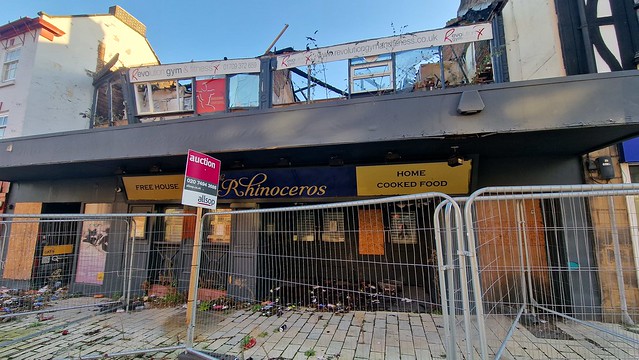
    It’s fair to say that there are a few minor defects that stop this former JD Wetherspoon pub from reopening. I’m not a builder, but I can see some things that I suspect need fixing.

    20250129_091837

    The pub was the first Wetherspoon venue in Rotherham when it opened in 1998, although the Bluecoat was later added and that remains trading. The pub was closed by Wetherspoons in October 2019, when it opened under new owners and they remained trading until an arson attack in December 2021. It’s expected to be demolished later in 2025 and new flats and retail units put up in its place. I hadn’t realised that Rotherham once had a third Wetherspoons venue, which were all open at the same time, named the Corn Law Rhymer although that’s now looking permanently closed as well.

    20171203_140018

    A few of us visited the pub back in 2017 and these were the glory years when they sold the pastrami bagels. This is the only photo that I took inside the pub, so that’ll just have to do as my memory of the Rhino.

    Luckily, the Google reviews for the venue are still visible, so some of the complaints live on even if the building doesn’t. A fair chunk of the reviews were about other customers, including a male who used the female toilets and a customer who kept licking the window.

  • Thionville – Altar to the Homeland

    Thionville – Altar to the Homeland

    [I originally posted this in May 2018, but have reposted it now to fix the broken image link. And, whilst I’m here, I can add to what I wrote at the time]

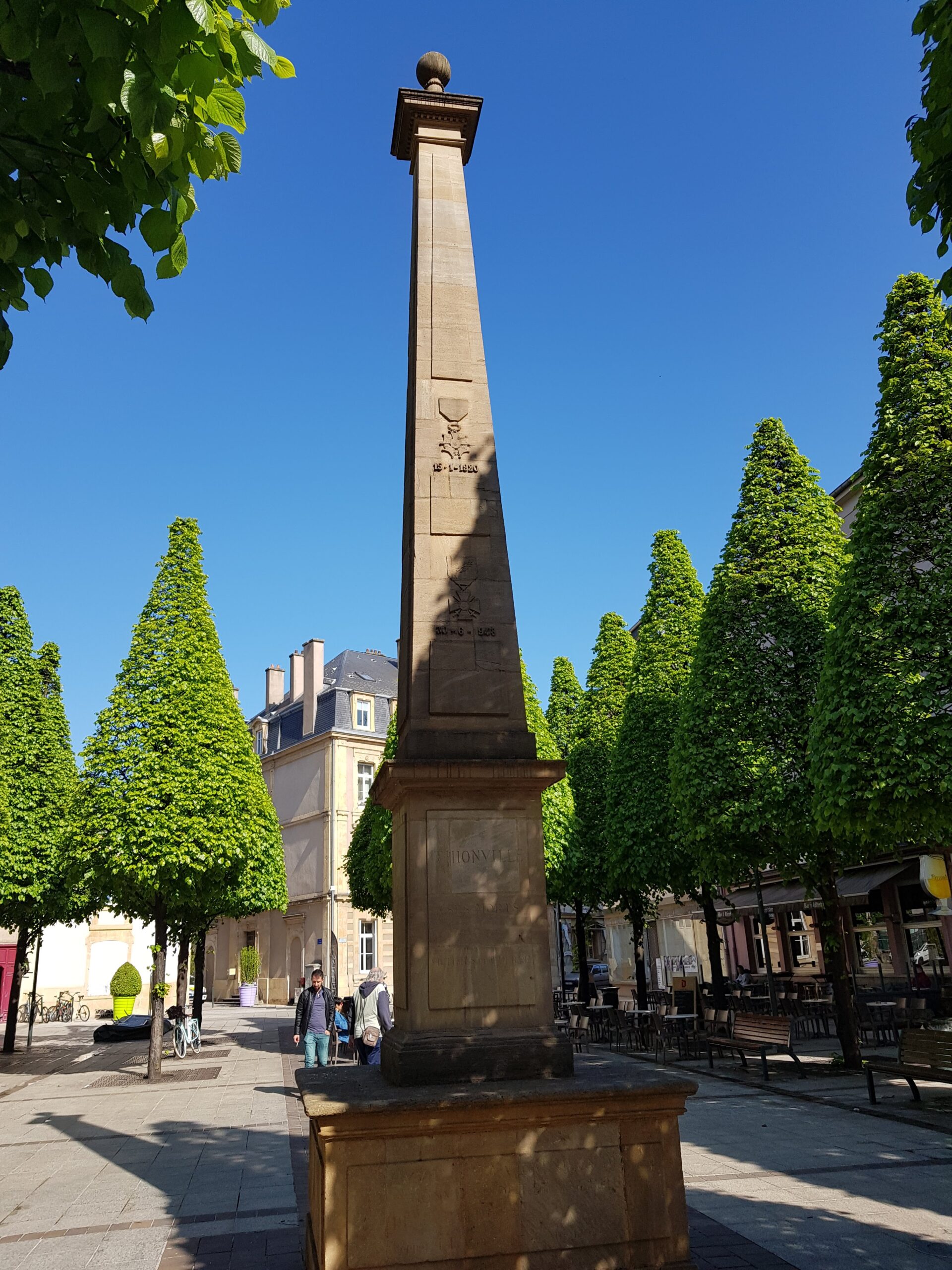
    The Altar to the Homeland in Thionville was constructed on 22 September 1796, during the fervour of the French Revolution. There were many of these altars erected during the Revolution, but they were usually built of wood and many were lost under Napoleon’s rule, with this being the last stone one left in the country. It was intended initially to be a focal point for patriotic gatherings, with this one later being relocated to a cemetery and repurposed as a war memorial before being brought back here].

    Apparently this is the only one of the 36,000 ‘Altars to the Homeland’ which still stand in France. Which sounds a little unusual and I haven’t yet ascertained as to why just this one exists. But it’s very lovely and the town is apparently very proud of it.

  • Thionville – Little Statue Things

    Thionville – Little Statue Things

    [I originally posted this in May 2018, but have reposted it to fix the broken image links]

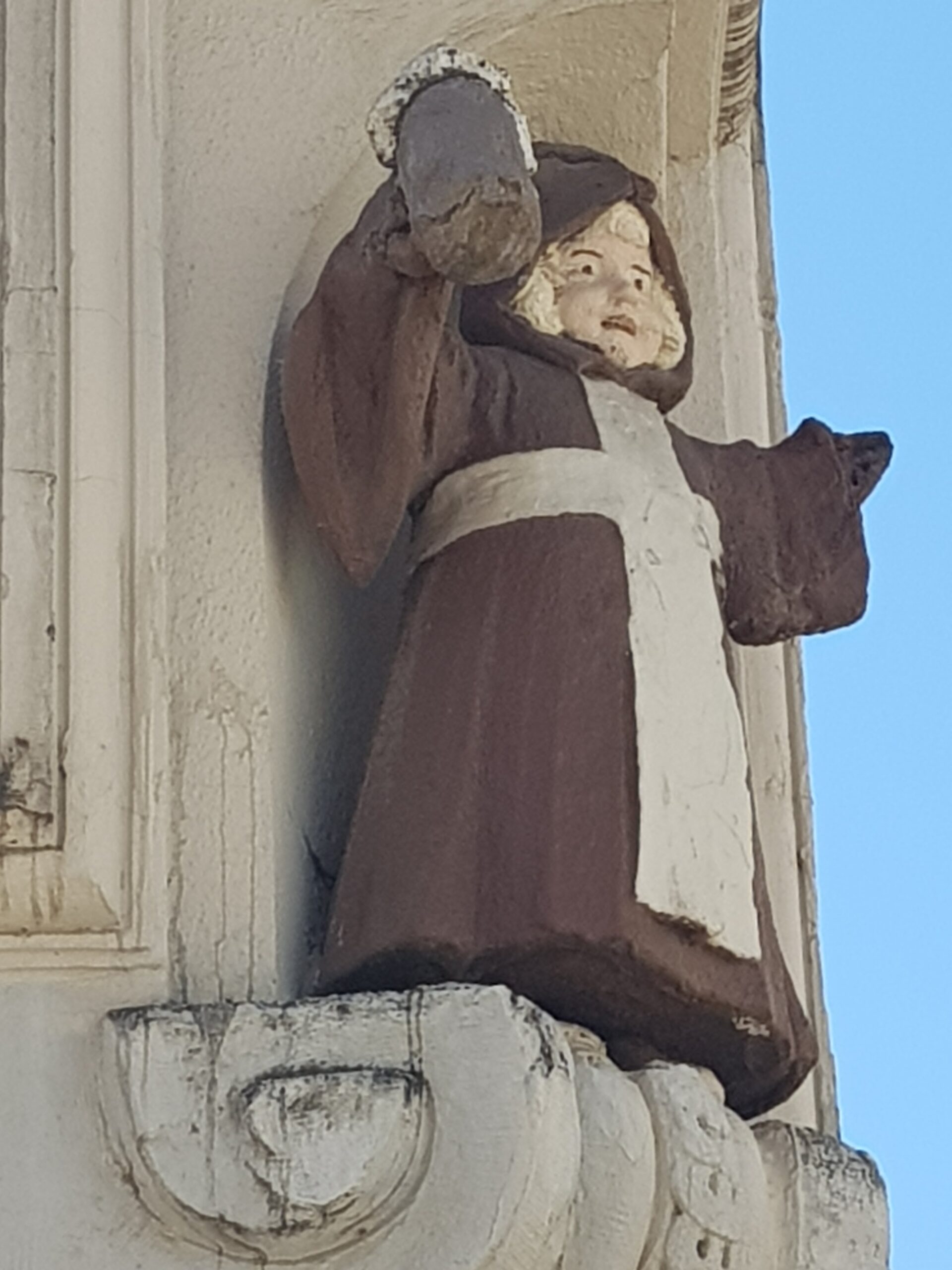
    I’m not quite sure what the technical word is for these little statue things, but they’re located above the doors of shops. These are the two that the historical walking leaflet they gave me at the tourist information office mentioned to visit.

    20180504_121328

    This is a sign that was once used by the local brewery.

    20180504_104754

    This is the sign that once indicated a tobacconist’s shop, for which they used a representation of a slave sitting on tobacco and smoking a pipe (long since gone).

  • Thionville – Rue de la Tour

    Thionville – Rue de la Tour

    [I originally posted this in May 2018, but have reposted it to fix the broken image links]

    20180504_110355

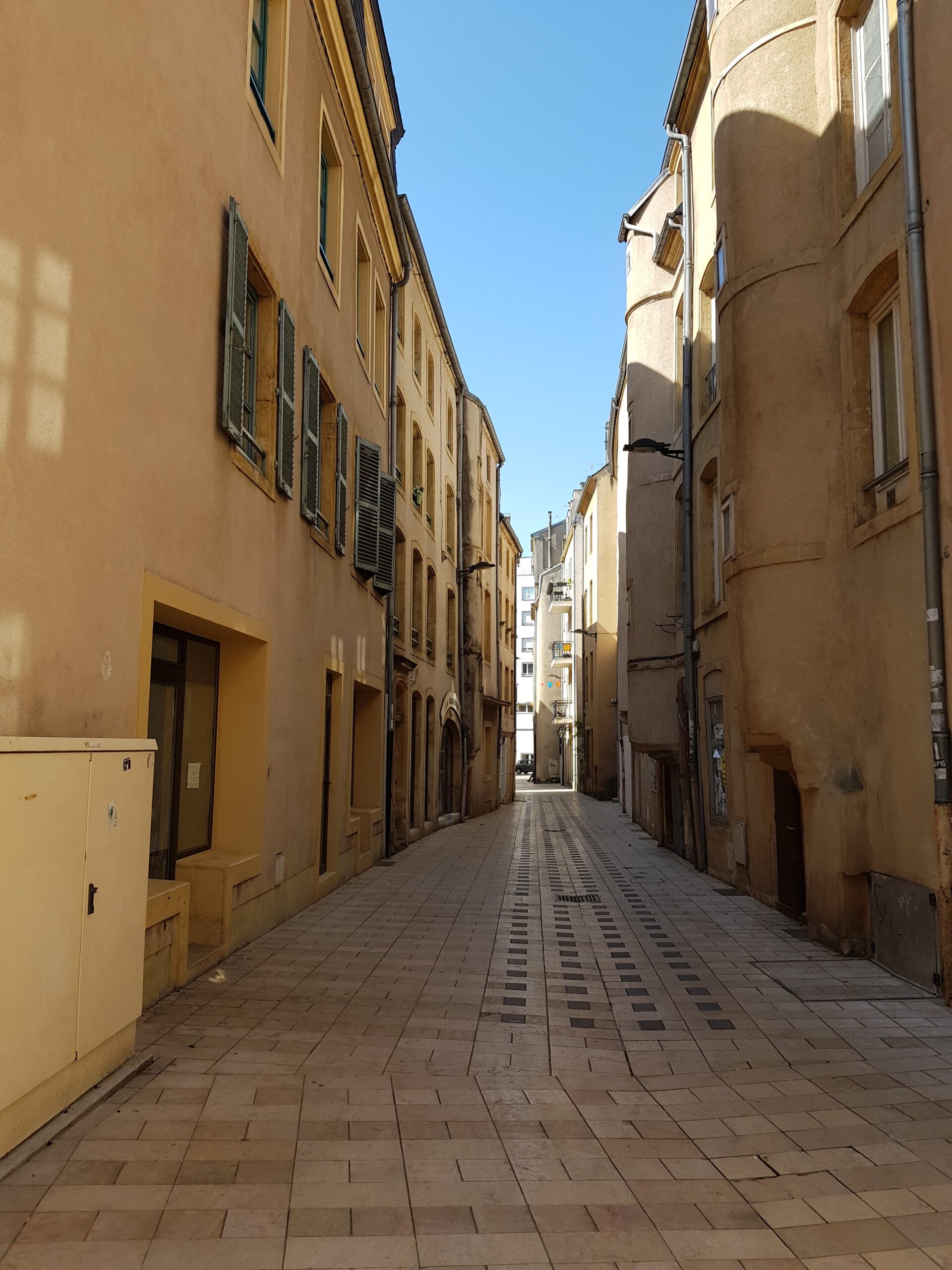
    This street dates from the fifteenth and sixteenth centuries, with the staircases apparently being a legacy of the occupation of Thionville by the Spanish in the sixteenth century. Very pretty little street, right near to the town centre.

    20180504_110439

    20180504_110320