Author: admin

  • Streets of Norwich – Redwell Street

    Streets of Norwich – Redwell Street

    Part of my Streets of Norwich project….

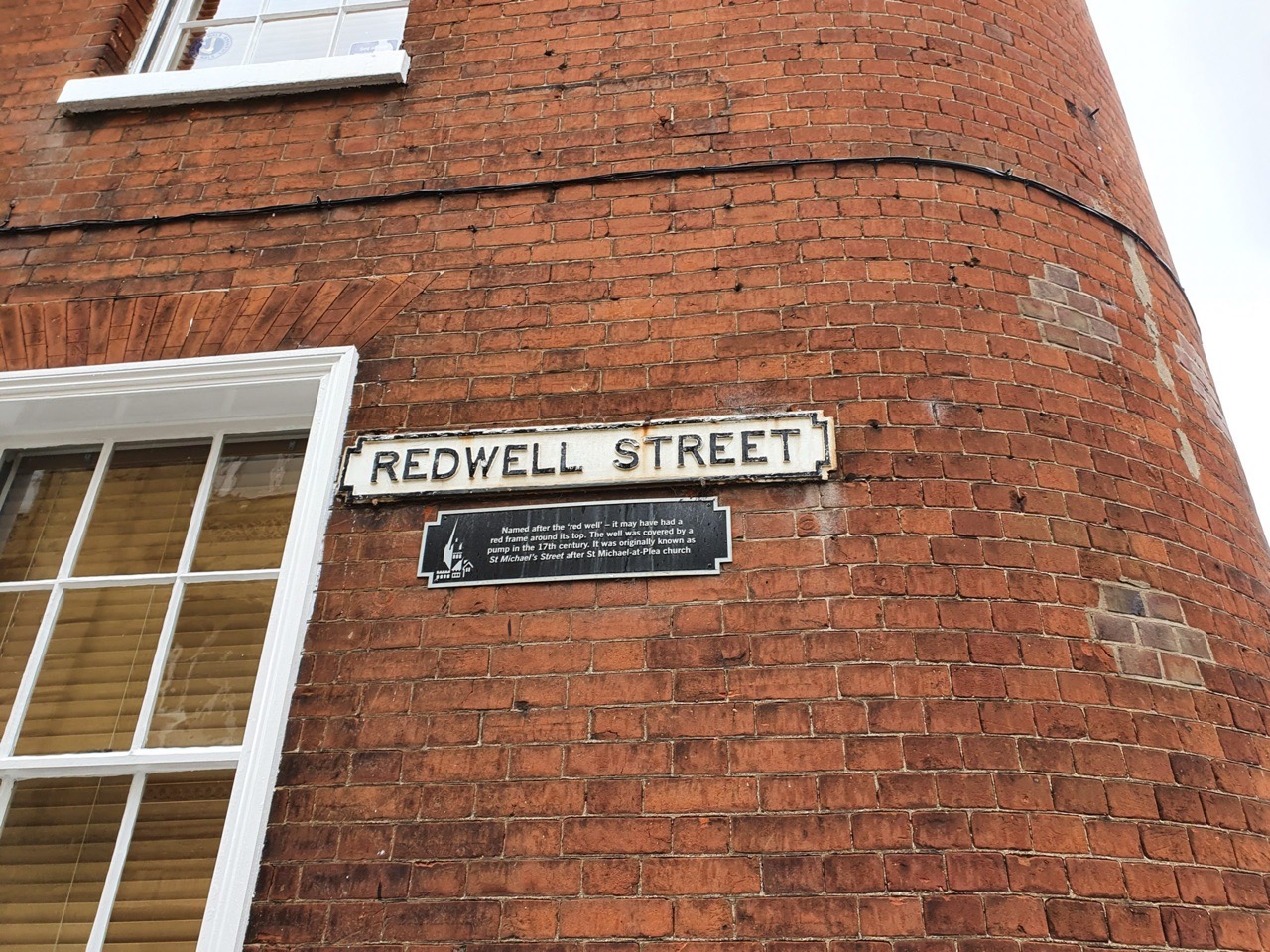
    Redwell Street today doesn’t quite make sense, it goes from Princes Street at the top of the above map, down to Queen Street, which is where Brewdog is located.

    Redwell Street makes more sense in this map from the 1880s, as some buildings were demolished to allow for St. Andrew’s Street to be extended, allowing trams to use the road. This cut Redwell Street in two and the lower half is really now part of St. Andrew’s Street in terms of the road layout.

    The street used to be known as St. Michael’s Street, because of St. Michael-at-Plea Church which is located here. In the seventeenth century a pump was added to an existing well by the church, which likely had a red covering and surround, and it became known as Red Well Street. That, over time, became corrupted into the current name of Redwell Street.

    This is Boardman House, which has a Redwell Street address, but its frontage and a connected building is on Princes Street, so more on that another time.

    Not much of huge historic interest here, although the building on the far right is 8 Redwell Street, which retains its nineteenth century frontage.

    The building on the right-hand side was built in 1957 for the Norfolk News Company, sadly demolishing a fair chunk of its heritage during the process. Given that the first provincial newspaper was published here at the beginning of the eighteenth century, it’s a shame that there’s nothing more than a plaque to mark the event.

    This is the building to the right-hand side of Jackson-Stops, the entrance to Clement Court.

    The signs show where Bank Plain and Redwell Street meet. The building on the right is interesting, this is 2 Redwell Street, which has a fifteenth century undercroft. The shopfront is original from the nineteenth century and the undercroft and cellars project underneath the Redwell Street pavement.

  • Fasthosts – Quite Marvellous

    Fasthosts – Quite Marvellous

    And, in a break from my usual blog posts, just a big thanks to Fasthosts for their help in fixing another web-site I run (http://www.ukpol.co.uk/), which managed to collapse yesterday. Even in what we might now call more normal times, I’m not sure that I’d expect a hosting company to fix broken WordPress web-sites late at night, especially when I manage to break them again, requiring another fix. But, even with this virus, Fasthosts have gone above and beyond and fixed the problem, so that the web-site is working again.

    This isn’t an affiliate link, and I can’t imagine more than about fifty people will ever read this, but for anyone who wants web hosting, I’ve used Fasthosts for the best part of a decade and they’ve yet to let me down. They’re at http://www.fasthosts.co.uk/.

  • Norwich – Romani DNA

    Norwich – Romani DNA

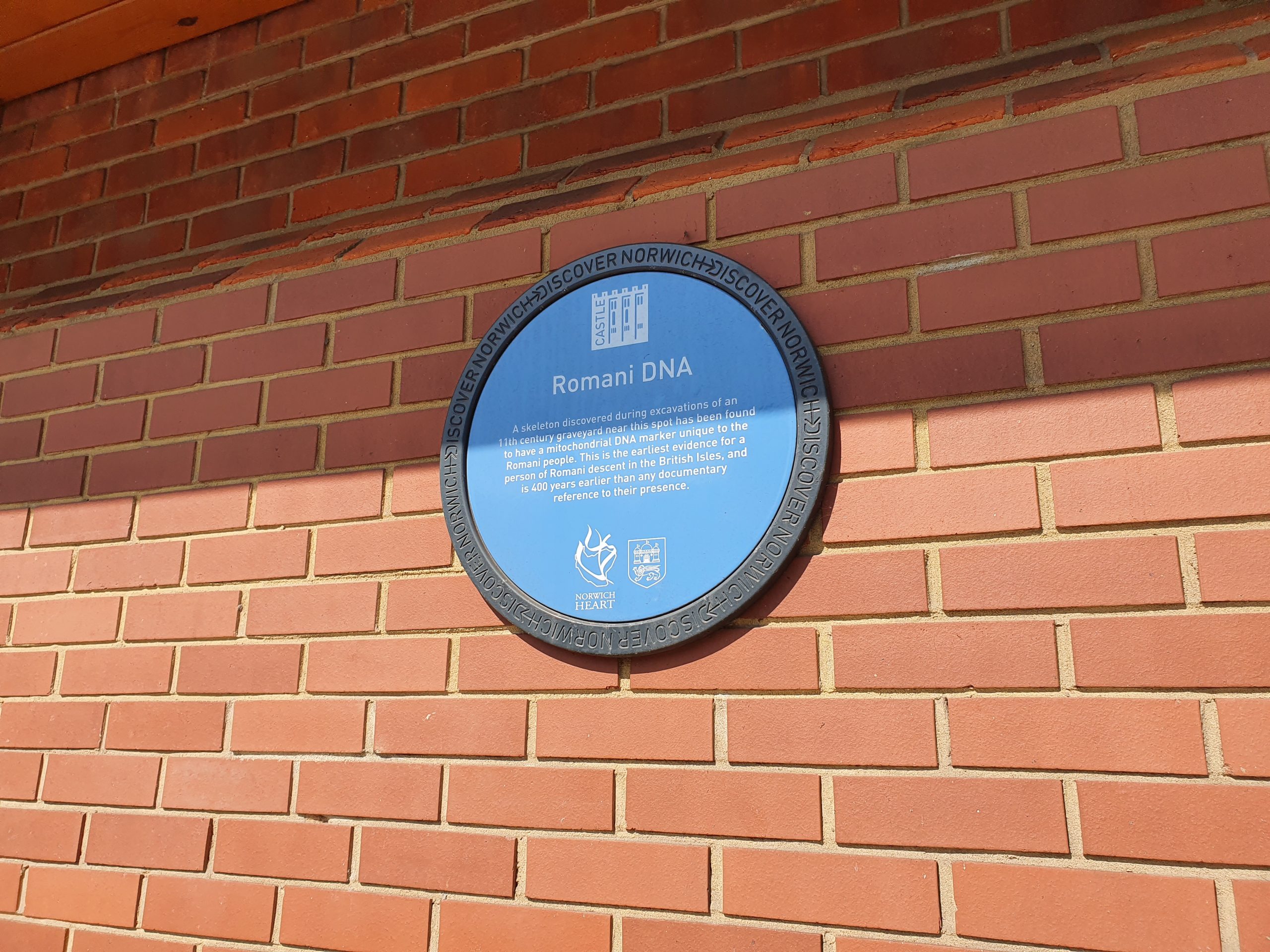
    This is the sign on the back of the Castle Quarter (or Castle Mall as I’m still calling it), opposite the Woolpack pub. It notes a discovery in the 1990s during the Castle Mall development when archaeologists excavated what transpired to be an eleventh century graveyard. It was important as it found Romani DNA, which is much earlier than anything else that had been discovered in the British Isles, around 500 years earlier than previous evidence.

    There were 118 dental extractions from 59 skeletons which were sampled during the 1990s, although the results weren’t published until 2006. They took the DNA from tooth pulp, as the enamel on the teeth had helped to preserve it. Those buried had been Saxon Christian and the original report noted:

    “If the rare TA haplotype found in ancient Britain instead suggests the presence of people of Romani ancestry in tenth century England, this is in surprising contradiction to historical evidence indicating that the Romani first left India—as mercenary soldiers or camp followers—at around AD 1000 (Hancock 2002). Some suggest that emigration from India could have been as early as the sixth century (Fraser 1992; Hancock 2002), and others have proposed much earlier routes via Egypt (see Kendrick 2000), but these theories are much less well supported.

    One possible explanation would be if Romani women were enslaved by Vikings during trade expeditions to the Byzantine Empire, or formed liaisons with them during common association in Varangian army camps (in Byzantium) in the ninth and tenth centuries (Graham-Campbell 1994; Hancock 2002). These associations could also have been with Anglo Saxons, though known associations of Anglo Saxons with Varangian camps began only in the late eleventh century (Hancock 2002; Shepard 1973). Second generation Varangians are also known to have returned north (Hannestad 1970), and the mtDNA haplotype could have been introduced in this way. The gravesite at Norwich is typical of late Saxon, Christian sites with no grave goods and an east–west orientation, but this does not necessarily exclude Norse burial (Hadley 2002), and Viking artefacts were found nearby.”

  • Streets of Norwich – Church Alley

    Streets of Norwich – Church Alley

    Part of my Streets of Norwich project….

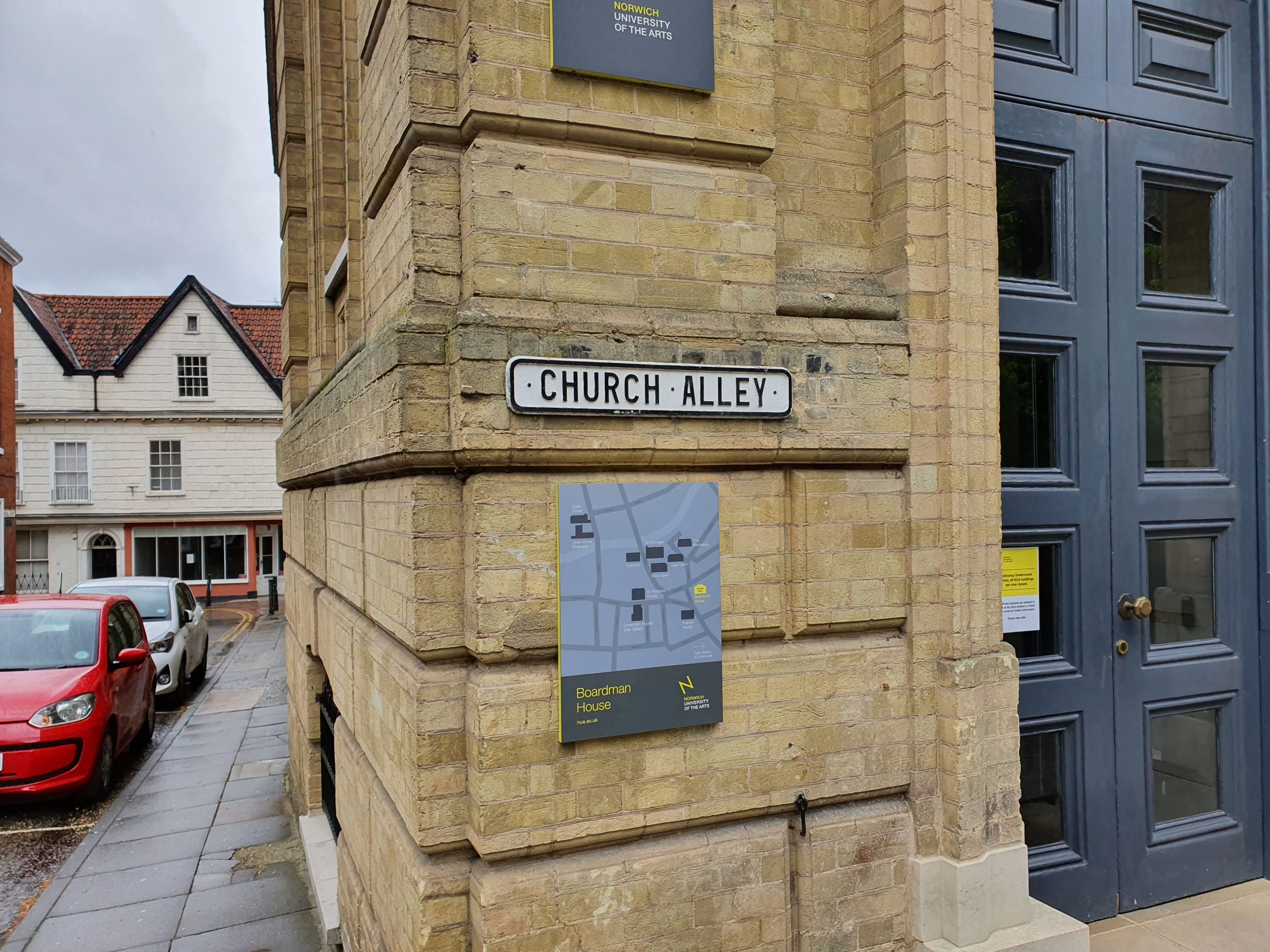
    Church Alley is a small street, or well, alley, which is located off Redwell Street and is behind St. Michael-at-Plea Church.

    On the left is Boardman House, which I have some internal photos of somewhere as I toured this on a Heritage Open Days weekend a couple of years ago. On the far left, not really visible in the photo, is the rear of the United Reform Church. On the right is St. Michael-at-Plea Church and it’s possible in theory to walk down this alley and through another courtyard, coming out on Tombland (I resisted on this occasion given the Coronavirus situation).

    The road goes between the old Sunday School (now Boardman House) and the church, with the boot and shoe manufactory now demolished. On a side note, the word manufactory used to be a common word for a factory, but it’s pretty archaic now.

  • Streets of Norwich – Chalk Hill Road

    Streets of Norwich – Chalk Hill Road

    Part of my Streets of Norwich project….

    Chalk Hill Road is located roughly between the S and V of Wensum, going from the river and meeting Rosary Road in this 1830 map.

    By the 1880s, the street still didn’t exist, it is located just on the bend of Rosary Road, behind Aspland House.

    The street today, which was built at the end of the nineteenth century, looking towards the Wensum River.

    Looking back to 1939, the register of the street revealed:

    1 – Vacant

    2 – Bullock household

    3 – Anderson household

    4 – Morter household

    5 – Vacant

    6 – Vacant

    7 – Vacant

    8 – Nutt household

    9 – Ducker household

    10 – Holdstock household

    11 – Sadler household

    12 – Nickalls household

    13 – Lynes household

    14 – England household

    15 – Wilson household

    16 – Woodrow household

    17 – Sexton household

    18 – Hannant household

    19 – Knowles household

    20 – Westland household

    21 – Fisher household

    22 – Frostick household

    23 – Rudd household

    24 – Wright household

    25 – Bridgens household

    26 – Vacant

    27 – Jermy household

    28 – Norton household

    29 – Reeve household

    30 – Cooper household

    31 – Rumball household

    32 – Hill household

    33 – Howes household

    34 – White household

    35 – Benison household

    36 – Amers household

    37 – Coombs household

  • Dictionary of the Vulgar Tongue – Day Forty-One

    Dictionary of the Vulgar Tongue – Day Forty-One

    The Dictionary of the Vulgar Tongue was first published at the end of the eighteenth century, and given that the Coronavirus crisis is giving too much time to read books, I thought I’d pick a daily word from it until I got bored…..

    Break-Teeth Words

    This is a humorous little phrase, meaning “hard words, difficult to pronounce”. Unfortunately, I can’t find much evidence in books or papers that this was ever in common usage, but I still like it…..

  • Streets of Norwich – Clement Court

    Streets of Norwich – Clement Court

    Part of my Streets of Norwich project….

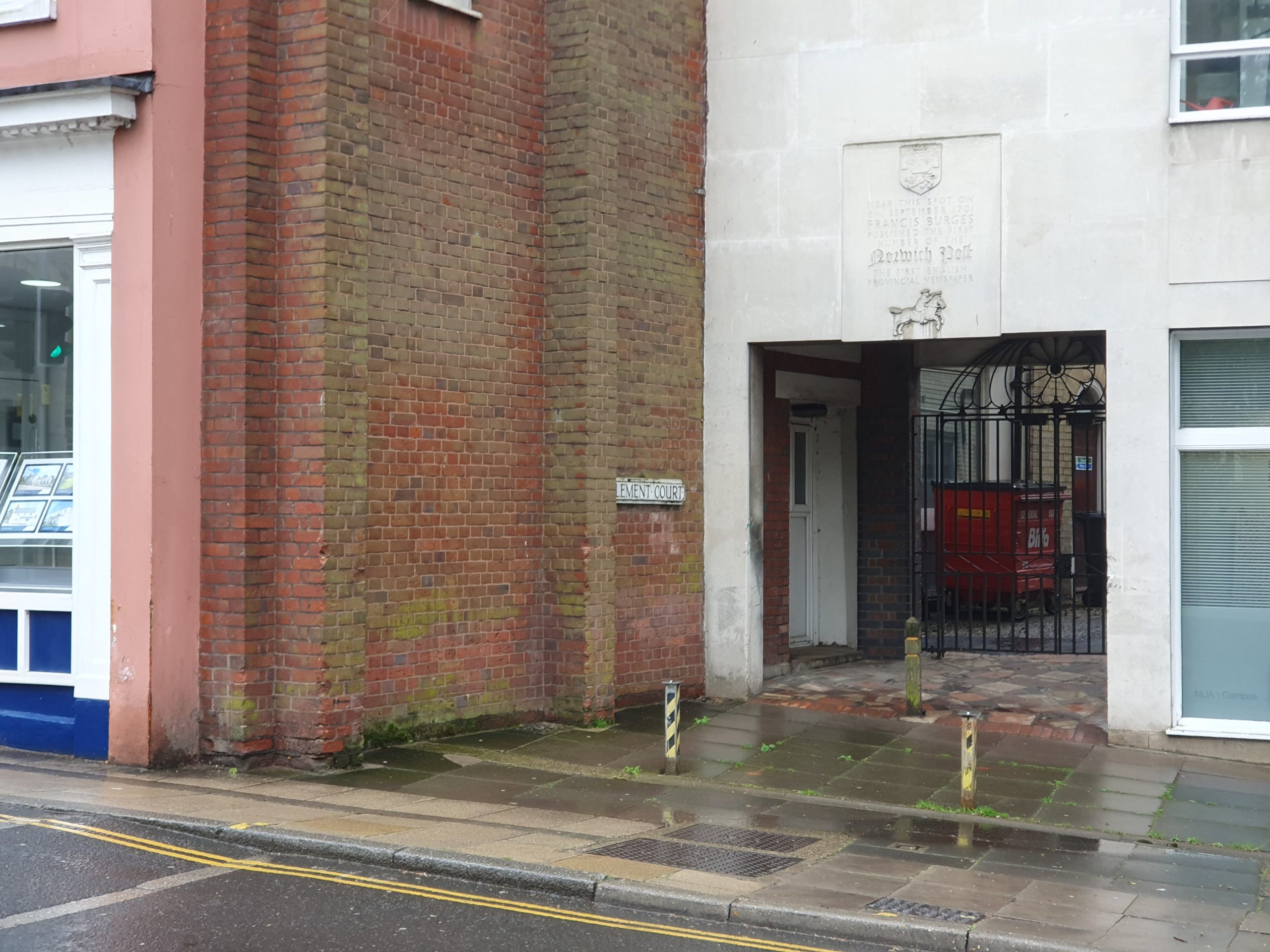
    There’s not much history left in Clement Court, but it does still exist behind the locked gates and the street name by its entrance remains.

    One of the most important pieces of history here is that Francis Burges published the first English provincial newspaper on 6 September 1701, the Norwich Post. The newspaper was published between 1701 and 1713, although unfortunately the earliest surviving copy is from 1707.

    This map from the 1880s shows that there was a Plymouth Brethren meeting room in the court, which could seat 260 people. The buildings around the court were mostly destroyed in 1957 when the Norfolk News Company extended their premises.

  • Florence – Uffizi Gallery (1470s Sculpture of an Evangelist)

    Florence – Uffizi Gallery (1470s Sculpture of an Evangelist)

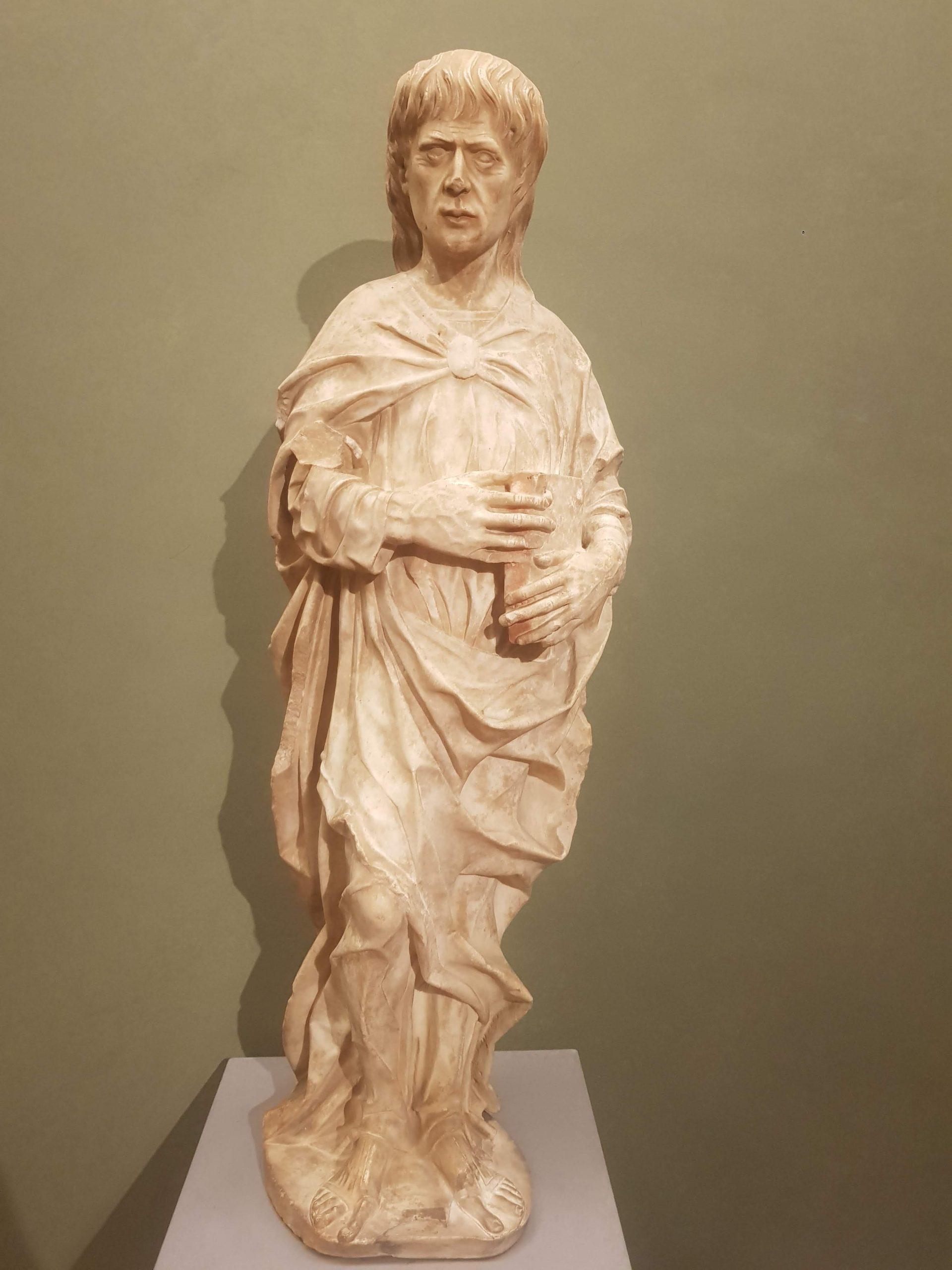
    Another part of the legacy provided to the Uffizi by the controversial Count Alessandro Contini-Bonacossi, there’s not a vast amount known about this marble sculpture. However, experts have managed to pinpoint it to likely being from between 1475 and 1480 because of the style, they suspect it’s of St. John and it’s likely from the circle of artists linked to Giovanni Antonio Amadeo. Certainly an impressive piece of deduction by the curators to ascertain all of that. And, other than a dent to the nose, it’s in a pretty good state of repair given it’s over 500 years old.

  • Dictionary of the Vulgar Tongue – Day Forty

    Dictionary of the Vulgar Tongue – Day Forty

    The Dictionary of the Vulgar Tongue was first published at the end of the eighteenth century, and given that the Coronavirus crisis is giving too much time to read books, I thought I’d pick a daily word from it until I got bored…..

    Bray

    The dictionary defines this as “a vicar of Bray; one who frequently changes his principles, always siding with the strongest party: an allusion to a vicar of Bray, in Berkshire, commemorated in a well-known ballad for the pliability of his conscience”.

    I hadn’t heard of this phrase, although a film was made with the title of ‘Vicar of Bray’ in the 1930s, telling the story. Like most of these things, there are differing tales from other the centuries, it likely refers to Simon Aleyn who served as the Canon of Windsor between 1559 and 1563. He managed to shift from being a Catholic to a Protestant and then back to a Catholic, before finally changing back to Protestantism. I can think of some politicians like him….

    The text of the ballad is at https://en.wikipedia.org/wiki/The_Vicar_of_Bray_(song).


  • Florence – Uffizi Gallery (The Supper at Emmaus by Vincenzo Cateno)

    Florence – Uffizi Gallery (The Supper at Emmaus by Vincenzo Cateno)

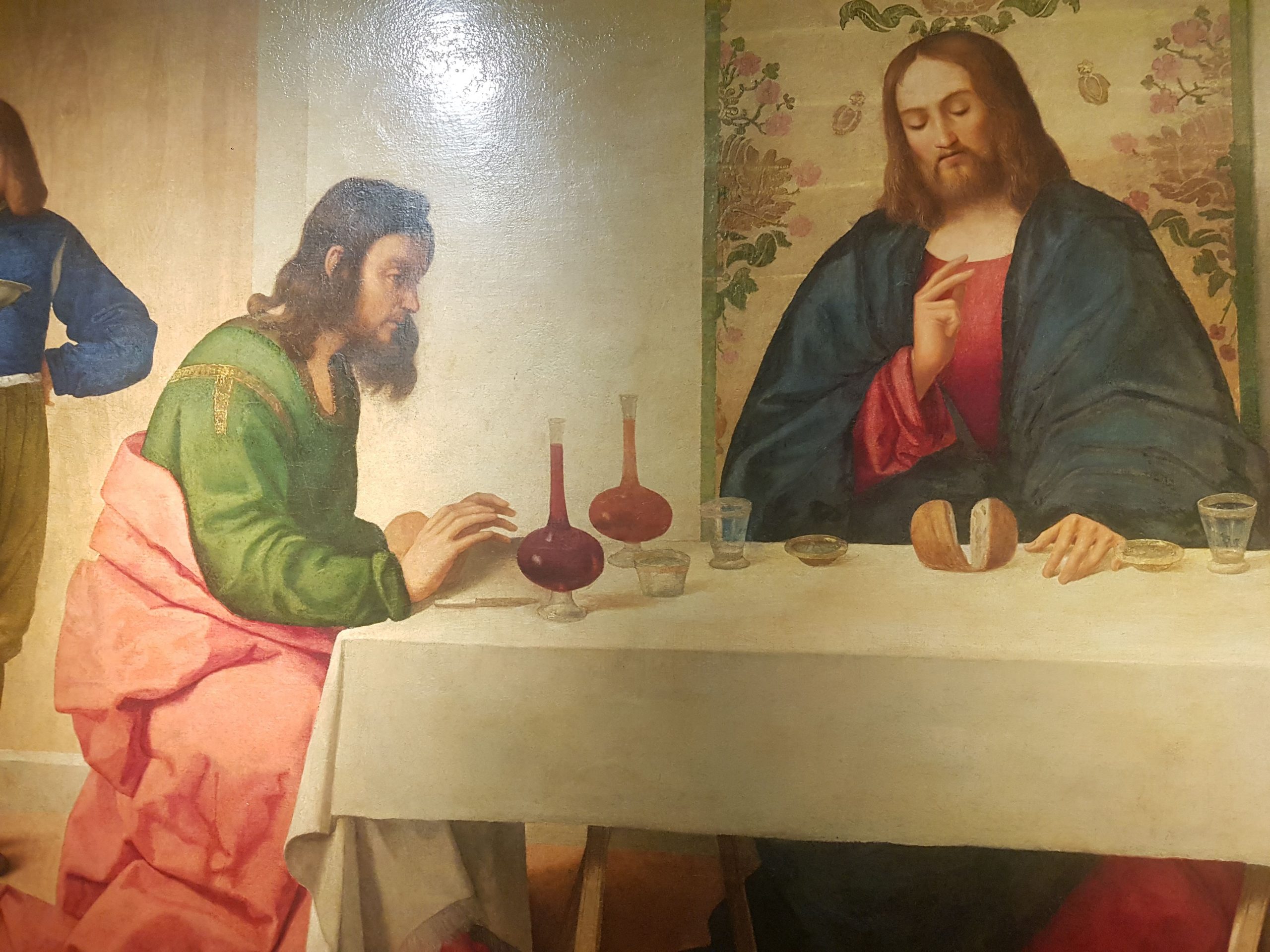
    Painted at some point between 1515 and 1520 by Vincenzo Cateno, the artwork shows the two apostles meeting with Christ after He has risen. The information by the painting notes that the figure in black was likely the patron who funded the artwork.

    The information also notes that “the two apostles recognise their Master when Christ blesses and breaks the bread just as He had done at the Last Supper”. The artist was Venetian and lived between 1480 until around 1531, with this painting being part of the legacy provided by Count Alessandro Contini-Bonacossi (who appears to have been an enormously controversial figure) who died in Florence in 1955.