Author: admin

  • Dictionary of the Vulgar Tongue – Day Forty-Four

    Dictionary of the Vulgar Tongue – Day Forty-Four

    The Dictionary of the Vulgar Tongue was first published at the end of the eighteenth century, and given that the Coronavirus crisis is giving too much time to read books, I thought I’d pick a daily word from it until I got bored…..

    Brewes or Browes

    The dictionary defines this as “the fat scum from the pot in which salted beef is boiled”, which sounds quite delicious…. The word likely comes from the French ‘breu’ meaning broth, which is also where the word brewis comes from, which is bread soaked in broth or a stew.

    On the subject of fat scum, here’s a recipe for cabbage soup from the 1930s…..

  • Heathrow – Flying Chariot

    Heathrow – Flying Chariot

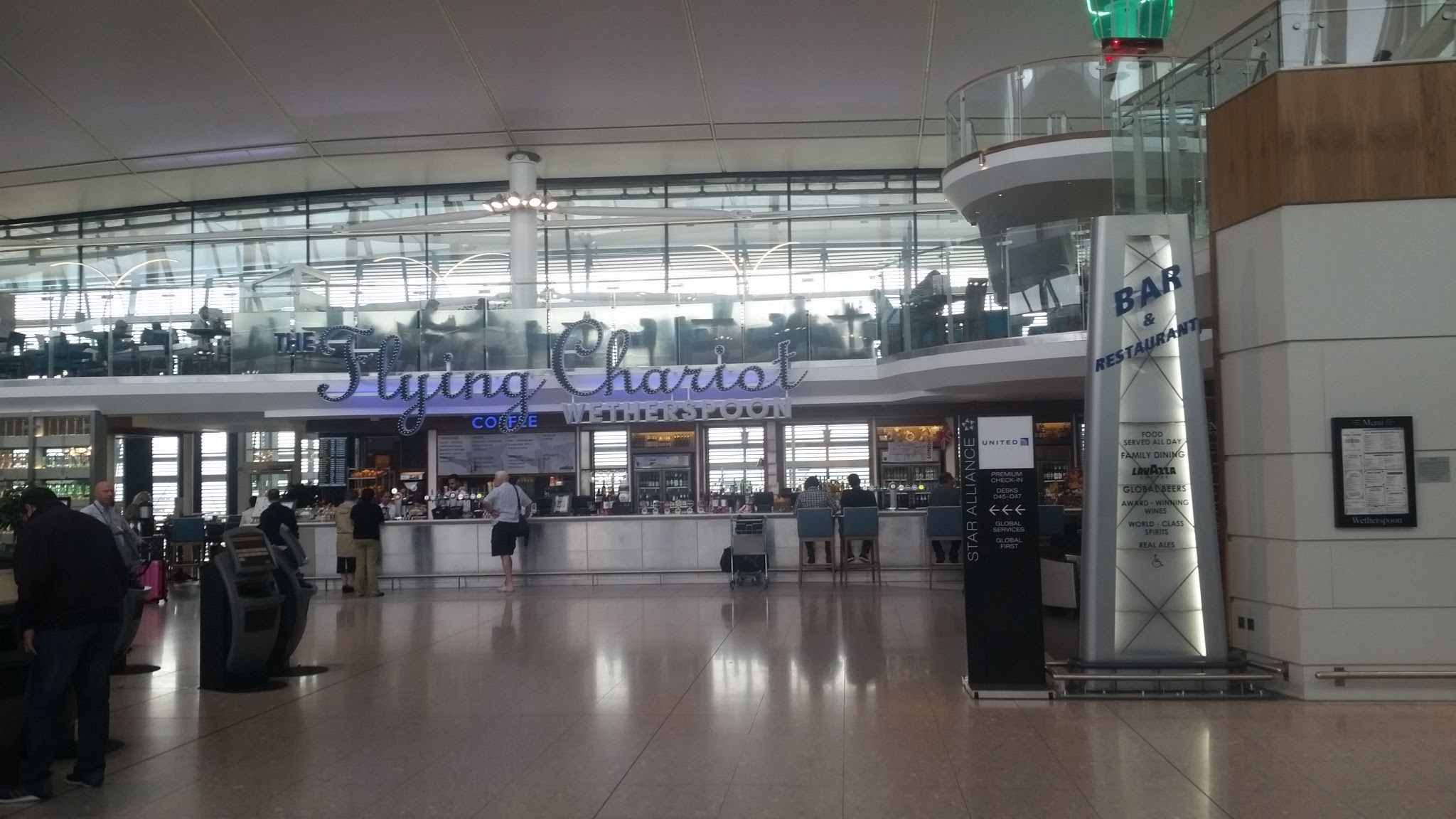
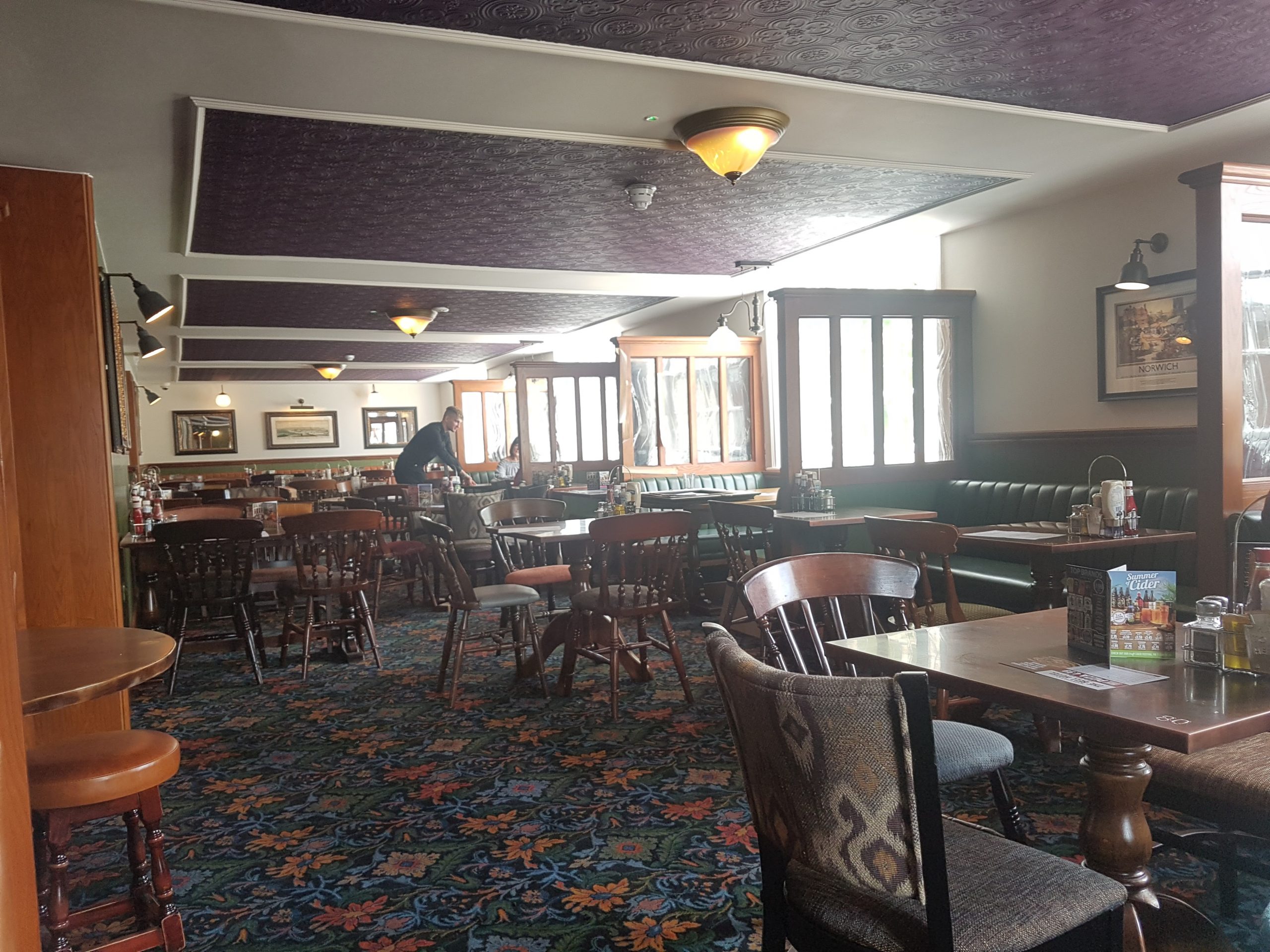
    This was one of the few times that I’ve ever visited Heathrow T2, and I still haven’t flown from that terminal, my experiences being limited to the Oneworld airlines who are at T3 and T5. The Flying Chariot is the JD Wetherspoons that is located landside and it takes its name from John Wilkins, who was a vicar at Cranford Parish Church, who predicted in 1638 that it was possible “to make a flying chariot, in which a man may sit, and give such motion unto it, as shall convey him through the air”.

    Anyway, this was one of JD Wetherspoon’s more exotic meals that they attempted, their Thai green chicken curry with rice on a bamboo leaf arrangement, which was perfectly acceptable. I assume that their efforts at presentation didn’t help sell the dish, since it didn’t seem to spend much time on the menu. It’s quite a large Wetherspoons over two floors, with the usual airport prices for their food and drink. Since my visit was back in 2015, my memory of the experience has suitably faded, although I do remember that the service was all friendly and professional.

    My favourite response to a TripAdvisor review was:

    “We were told by the staff that they would call security because my boyfriend was resting his head on the table! The pub is on the airport for god sake and we woke up 3am to catch our flight so yes we were tired an 7am. I felt so humiliated. I won’t be visiting any Wetherspoon again.”

    I like it when some facts are allowed into the debate to shed some light on the original review….

    “We remember your visit and based on my discussions with the team, and CCTV footage, I’d like to take this opportunity to clarify events. I can see that you arrived at 06:37. By 06:39, your boyfriend had removed his shoes and was lying on the sofa. It took 20 minutes before you were approached by a member of staff, who tried to explain that sleeping/feet on the furniture was not permitted.

    At 07:24, a Team Leader approached you, as your boyfriend now had his head on the table for 5 minutes or so and to all intents and purposes, appeared to be sleeping. When she was told that your boyfriend didn’t feel well, she offered to call security (something we do regularly, for people who are feeling under the weather), as they can be quicker to attend than paramedics and are able to take control of any situations. I apologise for any embarrassment or distress this may have caused you both, but unfortunately we cannot allow people to sleep within the premises, as we are an operator who pays rent to the airport, in order to provide food and drink to passengers. This is a policy within all JDW pubs, and does not change at the airport. Also, at the time of your visit there were people sat on both tables adjacent to yours, and it can make people uncomfortable to be in this situation.”

  • Baltimore – The Walters Art Museum (Hindu Snake Charmers)

    Baltimore – The Walters Art Museum (Hindu Snake Charmers)

    Taken in 2015 on a phone and the image compressed by Google hasn’t done much for this….

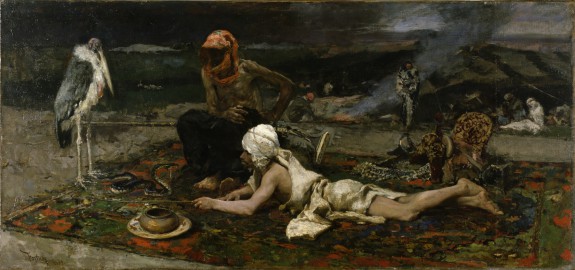
    Fortunately, the museum allows free use of their images, so this one is rather more useful.

    Painted by Marià Fortuny (Mariano José María Bernardo Fortuny y Marsal) in 1869 (he lived from 1838-1874), it was inspired by the journey that he made on General Prim’s military expedition to Morocco in 1860. The gallery notes about this painting:

    “The artist, a collector of Islamic decorative arts, includes such accessories as a copper bowl, luster plate, and saddle.”

    Anyway, it looks like an angry cobra which is being charmed by a turbaned man, with what I think is a stork looking on excitedly.

    But, what I still think is exceptional is the sheer amount of information that the museum has provided about this painting. It was revarnished in 1951, had its condition checked in 1980, was examined for a loan in 1988 and then subjected to a technical study in 1989. And the provenance of the painting is also detailed, acquired by DH Foll of Geneva, sold in an art sale auction in New York in March 1887 to William Thompson Walters and then acquired by inheritance in 1894 by his son, Henry Walters. The painting was then given to the new museum in 1931 by Henry Walters, where it has remained since. I find this depth of information about a painting to add so much to understanding it, it’s a shame so few museums offer this level of detail.

  • Norwich – Line of River Cockey

    Norwich – Line of River Cockey


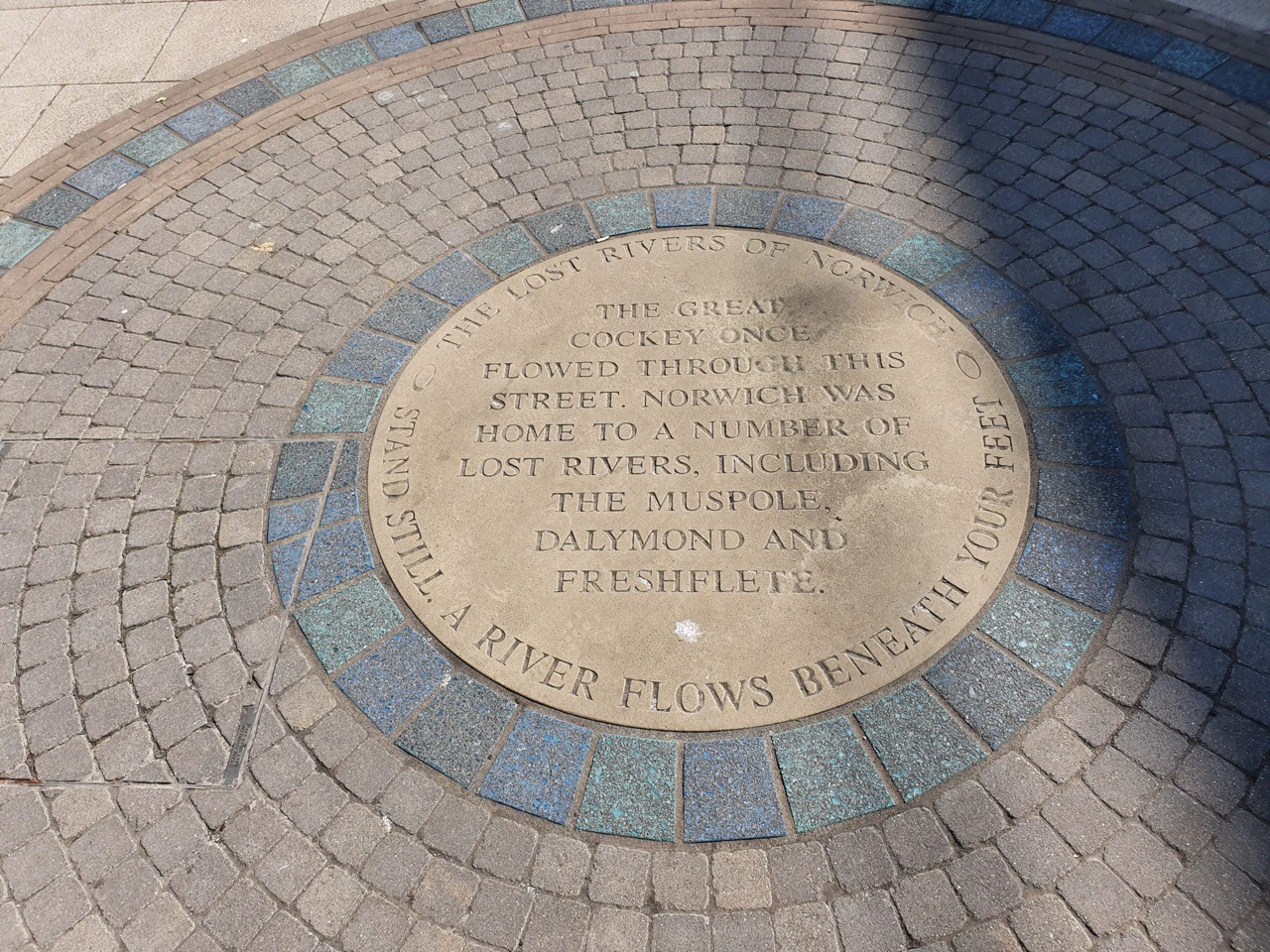
    Located at the top end of Westlegate is this stone marker which notes the former route of the Great Cockey river, but also mentioning the now lost Muspole, Dalymond and Freshflete rivers in Norwich.

    The blue stones start at the marker and then head off down Westlegate. The river once started at what is now All Saints Green, which is at the end of Westlegate, down Westlegate and then flowed down under Bedford Street and joined the Wensum River opposite where Norwich Playhouse is located today.

    Flowing down….

    There’s the site of the former McDonald’s on the right-hand side, and the blue carries on to the lower end of Westlegate. I hope that road reconstruction doesn’t cause chunks of the blue to go missing over the next few years, as it’s a rather lovely idea. There was a small nearby river, called the Little Cockey, which ran pretty much parallel, but didn’t join the Great Cockey.

  • Dictionary of the Vulgar Tongue – Day Forty-Three

    Dictionary of the Vulgar Tongue – Day Forty-Three

    The Dictionary of the Vulgar Tongue was first published at the end of the eighteenth century, and given that the Coronavirus crisis is giving too much time to read books, I thought I’d pick a daily word from it until I got bored…..

    Bristol Milk

    The dictionary defines this “a Spanish wine called sherry, much drunk at that place, particularly in the morning”. This term is first recorded back in 1634, and it’s also mentioned in the diaries of Samuel Pepys. This still exists in a derivative form as the branded drink of Bristol Cream, which is produced by John Harvey & Sons who had a base in Bristol. It’s thought to have become popular in Bristol as this was the main port that sherry was imported into and some mothers gave a little of it to their teething children.

    Thinking about it, I’m not sure that I’ve ever tried Harvey’s Bristol Cream, which I’m not entirely sure is widely stocked in British pubs anyway.

  • Streets of Norwich – Haymarket (East Side)

    Streets of Norwich – Haymarket (East Side)

    Part of my Streets of Norwich project….

    I’ve already posted about Haymarket, but there are some buildings on the east side which are of particular interest.

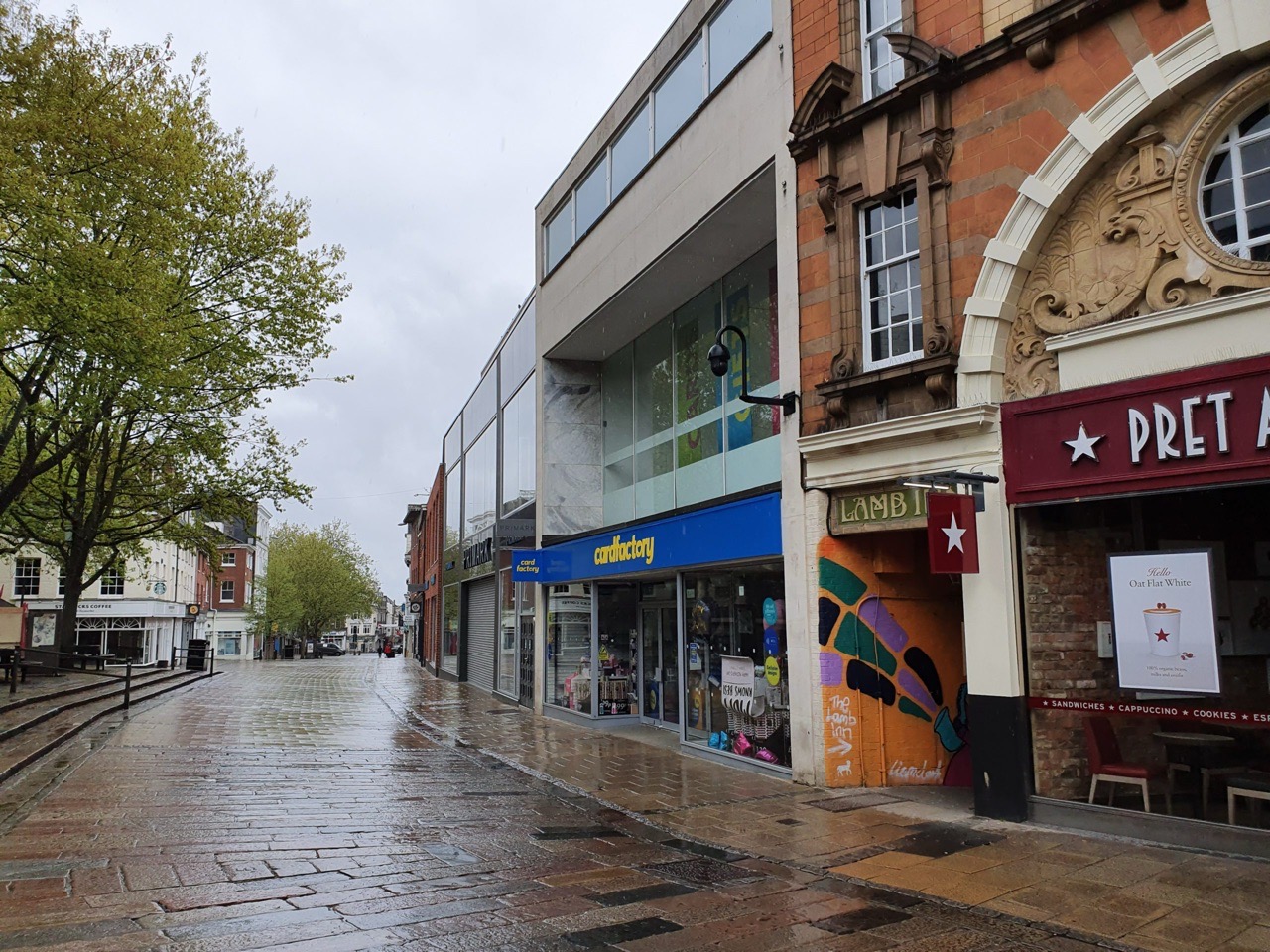
    The Haymarket Chambers building, designed by the local architect George Skipper. Now one of the two Pret outlets in the city, it was previously used by Snob, a clothing retailer.

    Looking down towards the Market Place, the rest of Haymarket is on the left-hand side of this photo.

    The entrance to the Lamb Inn, which is one of the oldest pubs in the city and some argue that it might be the second oldest in Norwich (the Adam and Eve on Bishopgate dates back to the mid-thirteenth century).

    The original part of the Primark building, once used by BHS when they were in the city.

    The new Primark extension on the left, which has been open for a few months. Well, it’s shut now with the virus, but, other than that….. The archaeological report from that process is an interesting read as well. There was no real loss with the building they pulled down, a bland modern affair, which was used by Wallis and Dorothy Perkins.

    This is number 3/4 Haymarket, now used by Fatface, but it has a substantial heritage and it retains its fifteenth century undercroft. I haven’t yet got to go on one, but there are tours of the building as part of the Heritage Open Days Weekends (and there’s a series of photos on-line at http://www.oldcity.org.uk/norwich/tours/curathouse/index.php). There are still oak panelled rooms inside from when this was a residential property, lived in at one stage by John Curat in the sixteenth century, with the building now often referred to as Curat’s House.

  • Norwich – Bell Pub Re-Opening

    Norwich – Bell Pub Re-Opening

    Unfortunately, rather than this being about the pub’s opening after the lockdown, this post relates to the re-opening of the Bell pub in 2017, when they had just completed a major refurbishment. This saw one of the downstairs seating areas removed and turned into toilets, some of the former hotel rooms (long before Wetherspoon operated the location) being turned in seating space and the closure of the second floor toilets.

    The pub was open only for training purposes, with every visitor allowed a free meal and two drinks.

    The training menu.

    The information sheet given to customers.

    The food I ordered, the half chicken and chips, with coleslaw and peri peri sauce. Unfortunately, Wetherspoons don’t sell this any more. Or indeed the pastrami bagel, but I won’t start about that again.

    The new part of the pub, which I think is in the former hotel bedrooms as the windows suggest a series of smaller rooms. More recently, this area was used by the bank below for offices.

    The same room as above, but looking the other way.

    A long seating area and looking back into the same room as in the above two photos.

    I liked this area, as there are power points along here, but last year they removed the seats, I assume to give staff better access. Shame though, it was a quiet area to sit.

    One of the booths, complete with power points, USB chargers and a dimmer for the light.

    Another view of the new area of the pub.

    And the outdoors seating area.

    The trial opening was all very smooth, the food and drink was served as expected and I was particularly delighted at the very cheap price of free….. Although it gave the pub more seats, it still isn’t enough as it’s hard to get a seat at lunch-time such is its popularity. I have no idea when it’ll re-open after the virus, but I imagine it’ll be popular again soon enough.

  • Norwich – Wagamama

    Norwich – Wagamama

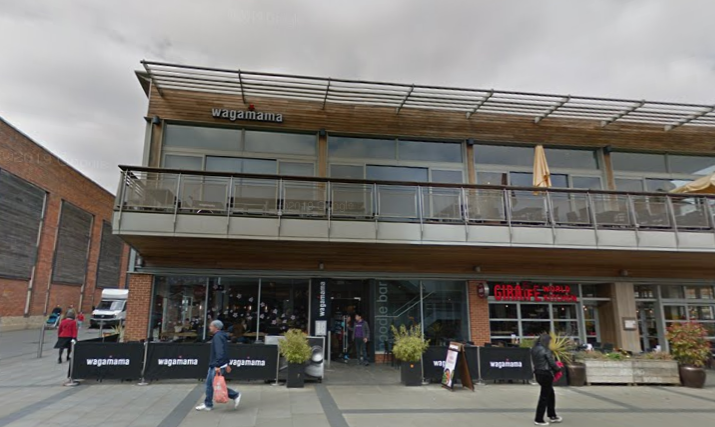
    This post circulating on Facebook reminded me that I haven’t posted much about wagamama in Norwich. Incidentally, the correct answer is Greggs, JD Wetherspoon (despite their boss) and wagamama……

    Anyway, back to a Norwich before the virus….
    wagamama freshly made juices do have a richness of flavour, but they don’t always look the most amazing.

    My usual dishes in wagamama are firecracker chicken and chicken katsu (and perhaps the tori kara age as a starter), but this is the spicy bream donburi which I think only usually appears as a special. And, beautiful fish which was tender and soft, with a heap of pea sprouts which added texture. Slightly hidden away in the photo are the shredded carrots and rice, with a side of kimchee sort of visible at the back of the photo.

    Seating in wagamama can be a little bit communal and, despite the slightly highly prices, it usually seems busy. It’s one of those restaurant chains which doesn’t have a huge amount of competition, unless the seemingly endless number of Italian dining options. The food usually arriving at different time is usually the cause of complaints at the restaurant, with the service being perhaps their strongest element.

    This is all making me hungry again, but I’m sure that wagamama will be back open soon….

  • Dictionary of the Vulgar Tongue – Day Forty-Two

    Dictionary of the Vulgar Tongue – Day Forty-Two

    The Dictionary of the Vulgar Tongue was first published at the end of the eighteenth century, and given that the Coronavirus crisis is giving too much time to read books, I thought I’d pick a daily word from it until I got bored…..

    Breeches Bible

    The dictionary defines this as “an edition of the BIble printed in 1598, wherein it is said that Adam and Eve sewed figleaves together, and made themselves breeches”. The first edition of this bible actually appeared in 1560, with the appropriate passage in Genesis reading:

    “Then the eies of them both were opened, and they knew that they were naked, and they sewed figge tree leaves together, and made themselves breeches”.

    Today, this instead reads:

    “Then the eyes of both of them were opened, and they realised they were naked; so they sewed fig leaves together and made coverings for themselves.”

    Certainly a strange turn of phrase even for the late sixteenth century.

  • Streets of Norwich – Redwell Street

    Streets of Norwich – Redwell Street

    Part of my Streets of Norwich project….

    Redwell Street today doesn’t quite make sense, it goes from Princes Street at the top of the above map, down to Queen Street, which is where Brewdog is located.

    Redwell Street makes more sense in this map from the 1880s, as some buildings were demolished to allow for St. Andrew’s Street to be extended, allowing trams to use the road. This cut Redwell Street in two and the lower half is really now part of St. Andrew’s Street in terms of the road layout.

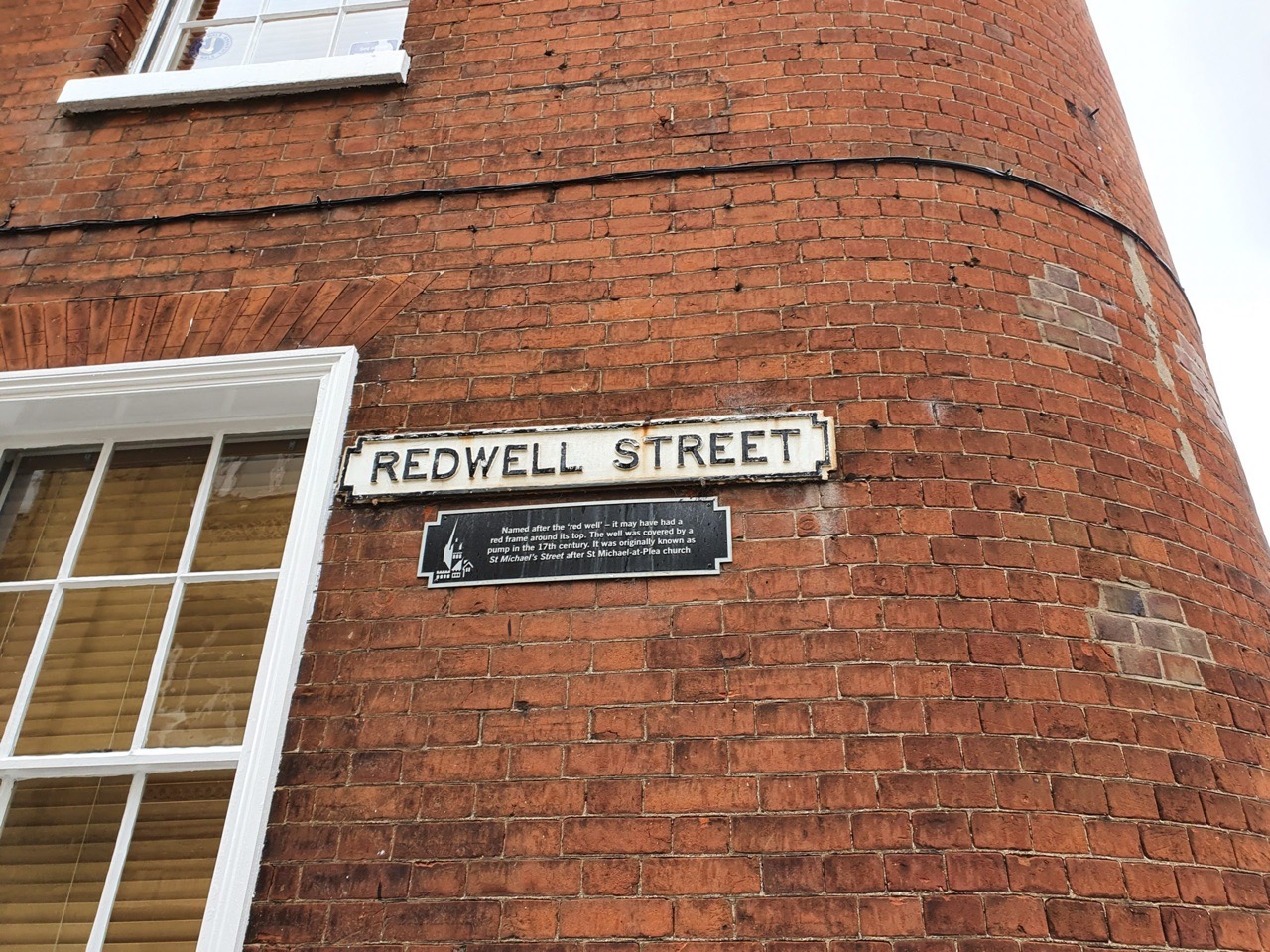
    The street used to be known as St. Michael’s Street, because of St. Michael-at-Plea Church which is located here. In the seventeenth century a pump was added to an existing well by the church, which likely had a red covering and surround, and it became known as Red Well Street. That, over time, became corrupted into the current name of Redwell Street.

    This is Boardman House, which has a Redwell Street address, but its frontage and a connected building is on Princes Street, so more on that another time.

    Not much of huge historic interest here, although the building on the far right is 8 Redwell Street, which retains its nineteenth century frontage.

    The building on the right-hand side was built in 1957 for the Norfolk News Company, sadly demolishing a fair chunk of its heritage during the process. Given that the first provincial newspaper was published here at the beginning of the eighteenth century, it’s a shame that there’s nothing more than a plaque to mark the event.

    This is the building to the right-hand side of Jackson-Stops, the entrance to Clement Court.

    The signs show where Bank Plain and Redwell Street meet. The building on the right is interesting, this is 2 Redwell Street, which has a fifteenth century undercroft. The shopfront is original from the nineteenth century and the undercroft and cellars project underneath the Redwell Street pavement.