Author: admin

  • Dictionary of the Vulgar Tongue – Day 122

    Dictionary of the Vulgar Tongue – Day 122

    The Dictionary of the Vulgar Tongue was first published at the end of the eighteenth century, and given that the current health crisis is giving too much time to read books, I thought I’d pick a daily word from it until I got bored….

    Fire Shovel

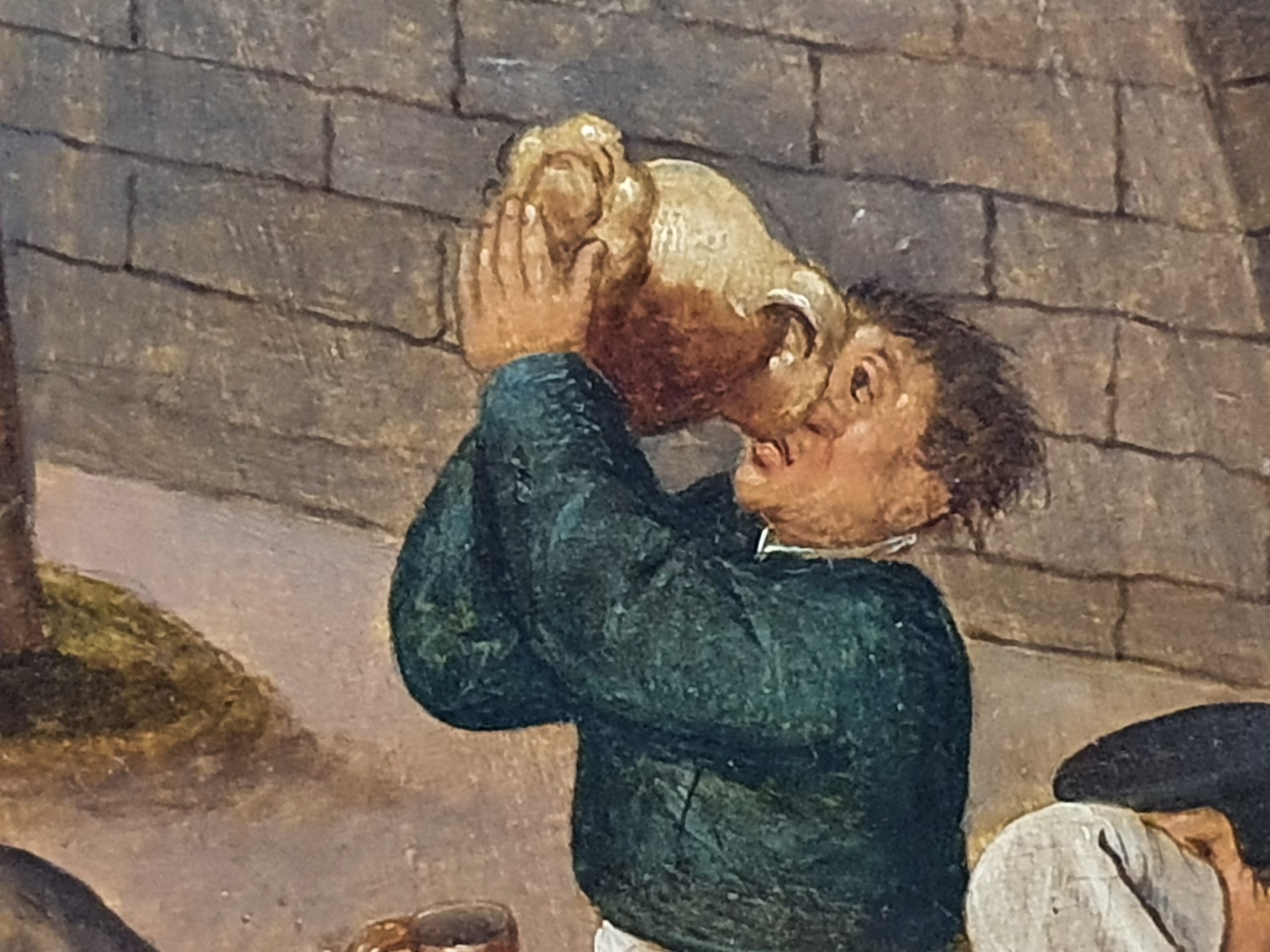
    This charming phrase is defined by the dictionary as “he or she when young, was fed with a fire shovel; a saying of persons with wide mouths”. I can’t find much evidence of this phrase being in common usage, but I still like it, an elegant way of describing a coarse person.

  • Oxborough – Oxburgh Hall (Limited Re-opening)

    Oxborough – Oxburgh Hall (Limited Re-opening)

    Oxburgh Hall was in the first wave of National Trust houses to re-open after the enforced period of closure and the only one in Norfolk. It was essential to pre-book, and non-members needed to pay, in advance on the web-site although this was an easy process to navigate.

    Signage was suitably clear and there was an engaging staff member at the entrance to the property checking names and explaining what was happening.

    Gateways such as this were one-way only, with visitors routed around to ensure sufficient space.

    There was a one-way system through a few parts of the gardens where there was limited space, such as the herbaceous border. Visitors could also enter the house itself and I was warned there might be a queue for this, although it transpired that I was able to walk straight around with no wait.

    After crossing the bridge over the moat, visitors are met at the entrance to the house and another friendly guide explained where to go. It was all rather relaxed and I didn’t have to queue at any point, the National Trust hadn’t tried to cram too many people in.

    Visitors need to go through the courtyard, where there are also toilet facilities, and then enter the rooms at the far left. Only a few rooms were open, but there’s probably a limit to what they can do given the nature of the historic property that they have. More on these rooms, and indeed other elements about Oxburgh Hall, in other posts though.

    All told, this was very well-organised, although most things involving the National Trust usually are, albeit perhaps sometimes a little over-managed in some areas. Their one minor issue which was probably only temporary, they had run out of maps and they knew that they had more, but couldn’t work out who had them. But, they kept everyone safe and had managed to open up something, so that seemed a positive result to me.

  • Walcott – Walcott Beach

    Walcott – Walcott Beach

    Just photos in this post, from Walcott Beach this evening.

  • Shingham – Name Origin

    Shingham – Name Origin

    I diverted off my route a little to go and have a look at Shingham Church, but there’s little else in the village which seems to have depopulated over the centuries. The Concise Oxford Dictionary Of English Placenames still has something to say about it though, noting:

    Shingham, Norfolk. Scingham in Domesday Book, Sengham in 1207, Shengham in 1254. Means the ham of Scene’s people.

    ‘Ham’ in this content is a settlement or homestead, with records suggesting that this used to be a much more important village.

  • Oxborough – Name Origin

    Oxborough – Name Origin

    The spelling of Oxborough is, if I’m being honest, a bloody nuisance as it differs from Oxburgh Hall which uses an old spelling of the village. So, that gives lots of room for error in writing about the National Trust property. Anyway, The Concise Oxford Dictionary Of English Placenames says:

    Oxborough, Norfolk. Oxenburch in Domesday Book, Oxeburg in 1194. Where oxen were kept.

    A burgh, or borough, in this context means a settlement, so a settlement which had oxen. The spelling has varied over the centuries, including Oxburgh, Oxborough, Oxborrow and many others.

  • Oxborough – Oxburgh Hall (Diary of Thomas Marwood)

    Oxborough – Oxburgh Hall (Diary of Thomas Marwood)

    This is the diary of Thomas Marwood (?-1718), a private tutor to Henry Arundell Bedingfield (1689-1760). The diary was written between 1699 and 1703, with the pair often travelling in Europe under the guise of meeting family members. A ruse was needed because Marwood, who went by the alias of Henry Nelson, was a Catholic at a time when providing a child with such a religious education was not permissible.

    The National Trust have noted that the diary is opened out onto September 1700, with the entry of 1 September:

    “I measured the Esquire’s height without his shoes and find him just 4 feet 4/6 English measure, ie, 4 feet 8 inches. And that he has grown a full inch since June 12 last. One inch”.

    Marwood gained a reputation for his theological work and his ability to understand and interpret the Bible, rejecting what he felt were the errors of the Reformation and its impact on the text. It was once thought that the above painting was of Marwood and his charge, the young Henry, although apparently this might not be the case.

    Marwood’s diary was used extensively in the early twentieth century in research papers, so it has been carefully examined and most of it has been published. And Marwood seemed to have had a marvellous time travelling throughout Europe, seeing travel, theatre and culture as part of the whole learning experience.

    The diary entry for 19 November 1700 is for when Marwood went to visit Dunkirk, where he stayed for six weeks. He was particularly taken with the kitchen, which he noted was “the neatest contrived I ever saw; it would roast three spits with a little charcoal and bake small things by two ovens with the same fire”. To be fair, it’s the sort of things that I would have written excitedly about if I had been there then.

    But what a learning experience this was for the young Bedingfield, visiting important political figures around Europe. There were also a couple of meetings with Jacobites, perhaps this is what influenced Henry later on in his life to produce his secret drinking glasses.

  • Oxborough – Oxburgh Hall (Under the Floorboards)

    Oxborough – Oxburgh Hall (Under the Floorboards)

    Oxburgh Hall is going through a substantial restoration programme at the moment, caused by things falling off the building, which means that they’ve been lifting some floorboards. Their discoveries might look mundane, but there’s something quite compelling about the random things that have been found. So far, some masonry, half a plate, a paper money bag, bits of newspaper and a cigarette box.

  • Cockley Cley – Name Origin

    Cockley Cley – Name Origin

    I had a little wander through Cockley Cley yesterday, en route to Oxburgh Hall, and here’s what The Concise Oxford Dictionary Of English Placenames had to say about it.

    Cockley Cley, Norfolk. Claia in Domesday Book, Cochkleye in 1324. Clay, clayey soil. The additional Cockley is obscure, perhaps it is a plural noun meaning cock wood, wood frequented by wild birds.

    And that is about as far as anyone else has got with working out the name origin. The Cockley bit might have been otherwise dropped over time, but there’s another Cley in Norfolk, so perhaps a differentiation made things easier.

  • Drymere – Name Origin

    Drymere – Name Origin

    I walked through Drymere, near Swaffham, yesterday and I have to say, lovely as it was, there wasn’t an abundance of facilities. The Concise Oxford Dictionary Of English Placenames also doesn’t list Drymere as a location, the first such village I’ve come across that isn’t listed.

    And, this is probably why, the map from 100 years ago shows there’s no such place as Drymere. It wasn’t a village, there was just a pit which had the name that just means a ‘dry hole’. So, a handy way of naming a location where there are a few houses, but it seems there’s not much heritage beyond that.

  • Dictionary of the Vulgar Tongue – Day 121

    Dictionary of the Vulgar Tongue – Day 121

    The Dictionary of the Vulgar Tongue was first published at the end of the eighteenth century, and given that the current health crisis is giving too much time to read books, I thought I’d pick a daily word from it until I got bored….

    Finger Post

    This is one of the dictionary’s wry observations on life, with particular reference to the church at the time. The definition is “a parson: so called, because he points out a way to others which he never goes himself. Like the finger post, he points out a way he has never been, and probably will never go, ie, the way to heaven”. There’s not much to be added to this definition, probably reflecting Grose’s views to a degree, although there were questions about the morality of church officials at this time.