Author: admin

  • Greater Anglia : Norwich to London Liverpool Street

    Greater Anglia : Norwich to London Liverpool Street

    My last train journey was from Chesterfield to York in March 2020 and I didn’t expect it would take until August 2020 for me to make another. Norwich railway station looks different to when I last used it, with the ticket gates now left open and unmanned. There’s now directional signage around the concourse and a couple of the food outlets, West Cornwall Pasty and Starbucks, haven’t re-opened, nor has Marks & Spencer. It felt moderately busy, but nowhere near what I would have usually expected for a Monday morning.

    Waiting at platform 2, the new style train which serves the Norwich to London line.

    There was plenty of space for customers on board, just a handful of passengers in each carriage. The power points and on-board screens worked on the train, although it wasn’t doing a very good job of air conditioning and not for the first time this week I muttered to myself that it was too hot.

    Safely at London Liverpool Street railway station, the train arrived dead on time.

    The barriers were operating as usual at the station, with revenue protection officers and police questioning a couple of people as I walked by. So, although there’s no ticket barrier at Norwich and tickets aren’t checked on board, there are still mechanisms to ensure people have paid their fares. The concourse was relatively quiet and someone asked me how they could get out of the railway station, something I didn’t think was particularly challenging, but there we go. Once outside, it became evident to me just how quiet London currently is….

  • Matlock – St. Giles’s Church (Thomas Kirwan)

    Matlock – St. Giles’s Church (Thomas Kirwan)

    Thomas Kirwan was the son of Patrick Kirwan and Bridget Kirwan. He married Mary Patricia Kennedy in 1936, at the Roman Catholic Church in Matlock and they moved to 30, Lynholmes Road in the town. He served as a Serjeant in the King’s Regiment (Liverpool) in the 70th Battalion, which was a young soldiers group disbanded in September 1943. Thomas doesn’t appear on the 1939 register, so he was likely already in the military at that point. Thomas and Mary did though have a child, Ann Teresa Kirwan, who was born on 7 April 1939. Unfortunately, Ann Teresa died in the Isle of Wight in 1959, at the age of 21.

    Thomas died on 9 April 1945, aged 44 years. I don’t have a sufficient knowledge of military history to understand what happened here, although the King’s Regiment were involved with the attacks on Kiel in Germany. And on the day of Thomas’s death, there was a heavy bombing on Kiel which destroyed the last two major German warships, the Admiral Hipper and the Admiral Scheer.


  • Matlock – St. Giles’s Church (Edward John Loverock)

    Matlock – St. Giles’s Church (Edward John Loverock)

    Edward John Loverock was born in Uttoxeter, Staffordshire, in 1922, the son of Frederick Loverock and Mabel Victoria Jubilee Loverock (nee Bagshaw), who later moved to Matlock.

    He joined the 61st Squadron of the Royal Air Force Volunteer Reserve as an air gunner, service number 950159. This was a bomber squadron which launched several attacks on targets in Germany. Edward was trained in an Avro Lancaster Mk I aircraft and he would have been based at RAF Syerston, near to Newark in Nottinghamshire.

    Edward died on 18 February 1943, at the age of just 21. A night-time training flight in the Lancaster went wrong and the engines caught fire, causing the aircraft to crash with all seven men killed. The crash site was near to Staunton-in-the-Vale in Lincolnshire and there is a memorial at St. Mary’s Church in the village to commemorate the seven men who died.

    The inscription on Edward’s grave reads:

    “You did your duty, your life you gave. You rest with many who died to save”.

  • Dictionary of the Vulgar Tongue – Day 143

    Dictionary of the Vulgar Tongue – Day 143

    The Dictionary of the Vulgar Tongue was first published at the end of the eighteenth century, and given that the current health crisis is giving too much time to read books, I thought I’d pick a daily word from it until I got bored….

    Gold Droppers

    There’s a relatively long definition for this phrase, a reminder that confidence tricks have been taking place for centuries. The dictionary notes “sharpers who drop a piece of gold, which they pick up in the presence of some unexperienced person, for whom the trap is laid, this they pretend to have found, and, as he saw them pick it up, they invite him to a public house to partake of it: when there, two or three of their comrades drop in, as if by accident, and propose cards, or some other game, when they seldom fail of stripping their prey”.

    This phrase, or a version of it, dates back to the mid-seventeenth century and this particular terminology for the technique lingered on until the late nineteenth century. Although the phrase might have fallen out of usage, the confidence trick is still performed today on the unwary.

  • LDWA 100 – Q & As with Ken Falconer

    LDWA 100 – Q & As with Ken Falconer

    This page is all part of my effort to walk the 2021 LDWA 100.

    This is part of my little series in asking those who have completed the 100 just how they did it, and whether it’s an entirely good idea. Adam Dawson wasn’t perhaps sure after his one and only completion, but Ken Falconer, a stalwart of the LDWA, certainly is given the number of 100s that he has completed. As Ken notes below, he’s completed 34 of these events, which makes him just about the most qualified person to ask about the 100s.

    Everyone walks these events differently, but the thought of not having the GPX to rely on frightens me just a little, but Ken has coped perfectly well without it. Assuming that next year’s event goes ahead, Ken is doing the marshals’ version of the walk, which is the same one that Nathan and I are completing. I suspect Ken will be quite a bit faster than us, although I also think that everyone else will be quite a bit faster than us so this isn’t really saying much.

    There are a few questions I didn’t ask Ken, but this is because he’s put together a marvellous post together about how to walk the 100, which is at https://www.ldwa.org.uk/library/hundredsurvival/hundredsurvival.php, which is essential reading for all potential entrants.

    Q. When was your first 100?

    Snowdonia 100, 1983

    Q. When you finished your first 100, did you think you’d do another?

    Not for the week after finishing my first, but after that I never looked back.

    Q. How many 100s have you now completed?

    34, of which 21 were Marshals’ 100s

    Q. What would you pick at a checkpoint, two sausage rolls, one chicken bake or one steak bake?

    Probably the chicken bake.

    Q. Is there any part of the UK where you haven’t walked a 100 but would like to?

    The 100s I have done have provided a pretty good geographical coverage of the nicest walking parts of the UK.

    Q. How important are the marshals to you at checkpoints on longer challenge events?

    Very important – their care and encouragement really spurs one on.

    Q. Are there moments that you’ve nearly retired from a walk only to then finish? How do you get that mental strength?

    No. But there was one 100 (the 2017 North York Moors) when I should not have retired at 80 miles and have regretted it ever since. I ignored my own advice that I should rest for a time and then seen how I felt. As soon as I got back to HQ I was walking again without difficulty.

    Q. Have you had a walk where it has rained nearly constantly? How did you deal with that practically and mentally?

    The one that I remember as particularly wet was the 1985 Yorkshire Dales 100 – I don’t think that it stopped raining much at all and it was also windy. The 1983 Snowdonia was also rather wet. Apart from these it has rarely rained for more than about 12 hours in all. At the other extreme I suffered considerably from heat on the 1992 Invicta and the 2018 Cinque Ports.

    Q. Have you hallucinated towards the end of a walk?

    No, though I know several people who have. It’s usually on the second night that walkers start to hallucinate – and I have never gone into the second night, though I can see this coming in the future!

    Q. Are you more reliant on the route description or the GPX file?

    I’ve never used GPX files. I carry a map case to display the route description on one side and the 1:25,000 OS map on the other.

    Q. Do many people have a thirty-minute or so sleep at checkpoints? Do you recommend that?

    I know that some people lie down for a while – if people feel they need it they should do so. I would not personally try sleeping unless I was in fairly bad shape.

    Q. Have you been scared of a sheep / cow / snake / pig / seagull or similar on a challenge walk?

    On the 2013 Camel-Teign I (and others) were attacked walking through a farmyard by an aggressive turkey! On another 100 I had to move slowly through a herd of cows that were blocking the exit gate to a field.

    Q. How long do you take physically, and mentally, to recover after completing the 100?

    I’m usually a bit stiff for a day or two, but no blisters since my first 100 when I wore heavy boots. My mind ceases to be fogged after a good night’s sleep.

    Q. To those people who are thinking about taking part in their first challenge event, maybe just 18 miles, what advice would you give them?

    Think of the walk in stages, keep in mind that it’s just 3 miles to the next checkpoint and not that it’s 14 miles to the end. Above all enjoy it: the views, the wildlife, the company, the checkpoints – and the satisfaction of finishing.

  • Camping – Day 1 (Night Hike)

    Camping – Day 1 (Night Hike)

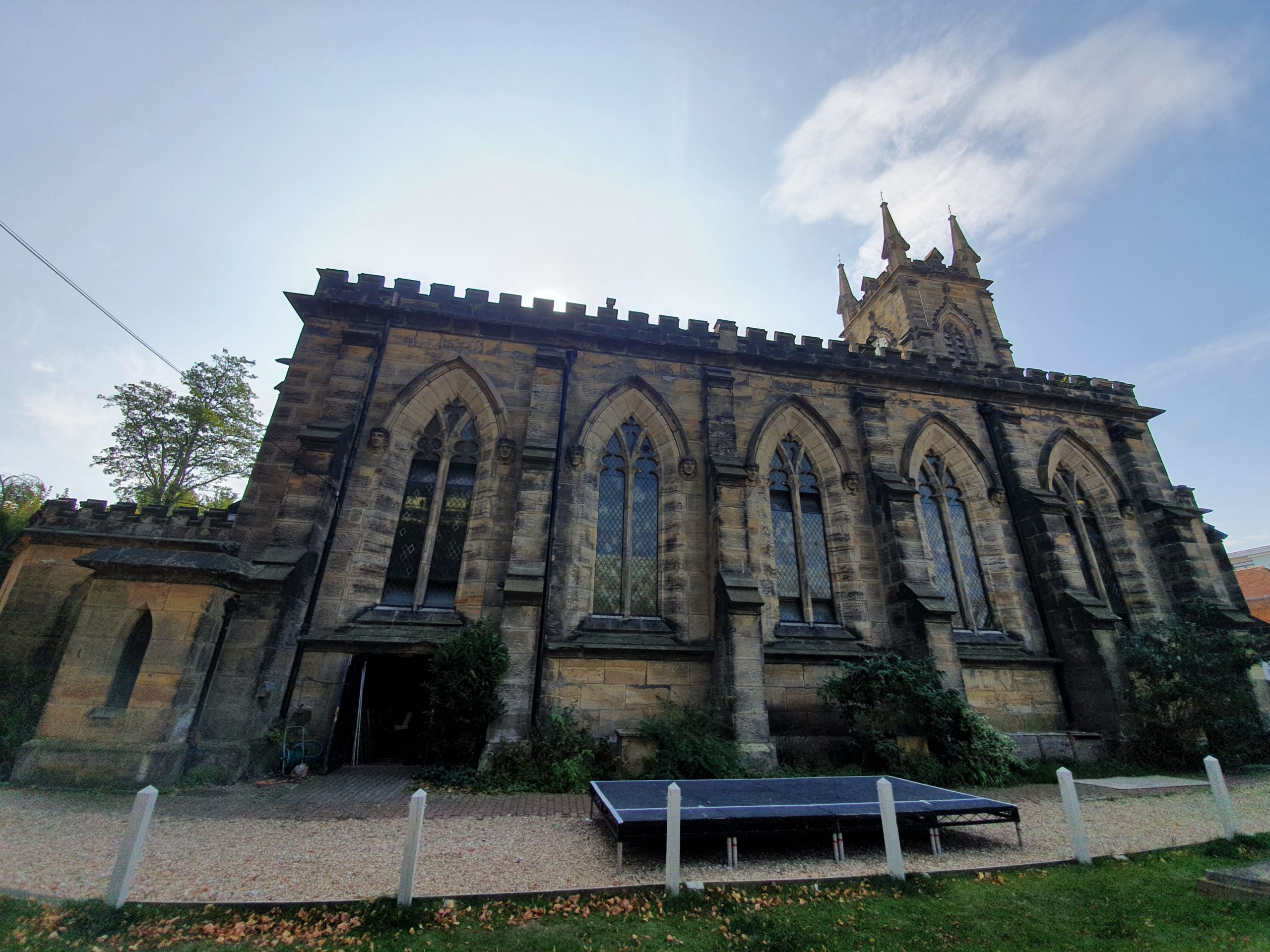
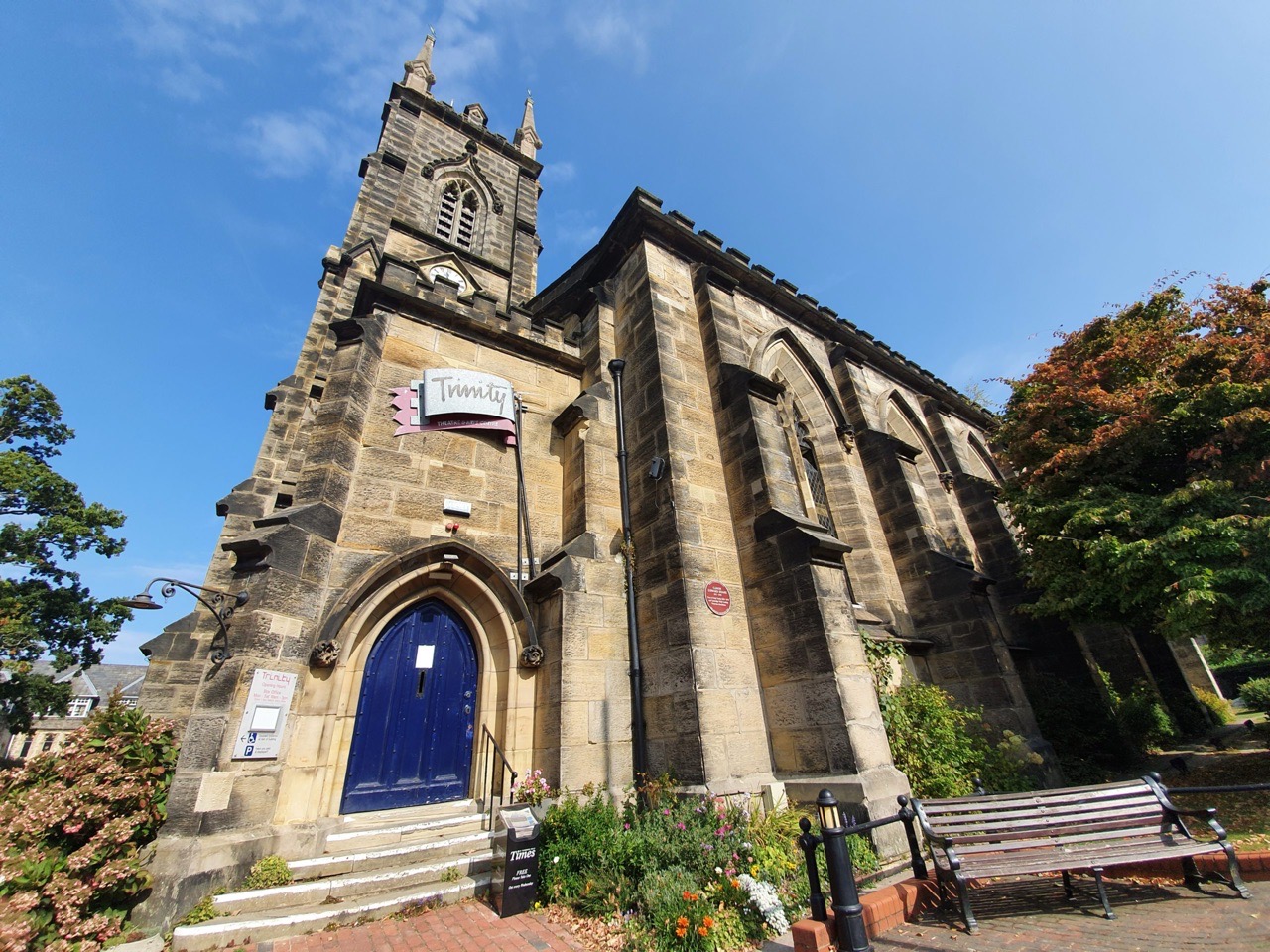
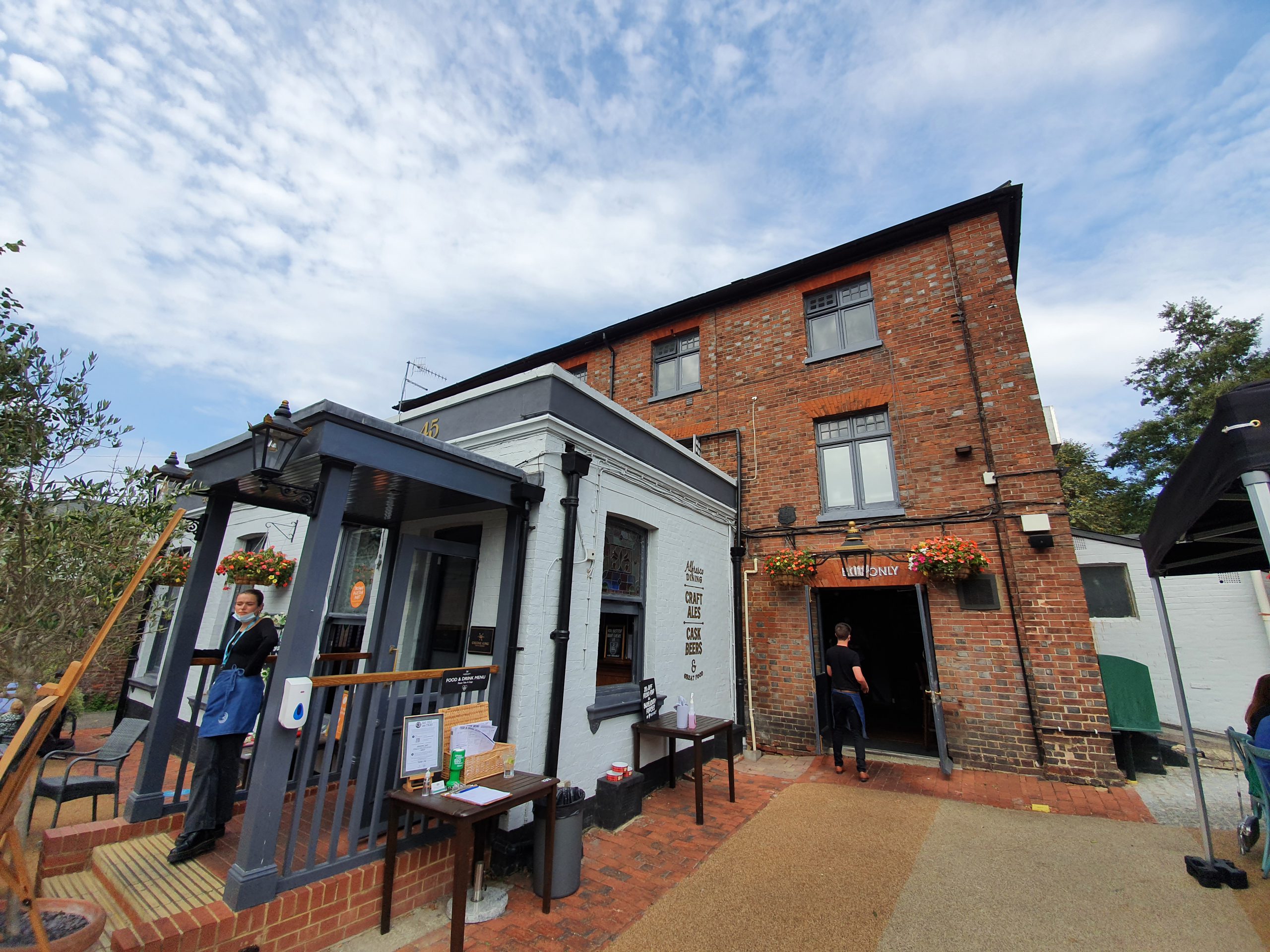
    Just photos again, these are of our relatively short night hike from the camp-site we were staying at. Fortunately, some people had a stronger headtorch than me, as mine definitely need a battery change. We were politely asked by a land-owner what we were looking for near to the start of the walk and he keenly pointed us towards a pub as he assumed that’s where we’d be heading. We weren’t, but it was useful to get our bearings and he didn’t seem to think we were going to rob his house or pinch his sheep.

    It was a relatively uneventful walk, although the road we were walking along was closed and we discovered why when we found a series of enormous cracks in the surface. These were probably caused by mines underneath and the road could have given way at any time, but we lived to tell the tale. It’s quite relaxing to walk at night-time, although there seemed to be more cars on the road than at a Formula 1 track, and some were going at a similar speed.

    It may have only been a walk of a few miles, and I missed the ideal time to take photos when there was a little more sun out, but it’s another happy memory of Derbyshire.

  • Battlefield Tours in 1919

    Battlefield Tours in 1919

    This is another one of my random posts, but it never occurred to me that tours of the Belgian battlefields were being operated just a few months after the end of the First World War. I assume that relatives would want to go and see where their family had fought, and perhaps died, but it must have still been very much a scarred landscape.

  • Matlock – St. Giles’s Church (Cyril Walthall)

    Matlock – St. Giles’s Church (Cyril Walthall)

    Cyril Walthall was born on 31 July 1912, in Bakewell, Derbyshire, the son of Harry Walthall and Ada Walthall (nee Britland), of Matlock Bath. Cyril married Phyllis Birch, who had been born on 2 October 1912, in 1937 at the Farley Hill Congregational Chapel. By the time of the 1939 register, Cyril was living in Matlock with Phyllis and he was working as a fine gauge knitting machine operator at a hosiery manufacturer.

    During the war, Cyril was an aircraftman, service number 2202724, in the Royal Air Force Volunteer Reserve. He died on 4 February 1944 and was aged just 31. His estate was worth £1,166 when he died, and this went to Phyllis, who at this time was living at Glen Mona on Jackson Road in Matlock. Phyllis died in Matlock on 8 August 2007, at the age of 95 and 63 years after her husband died.

  • Matlock – St. Giles’s Church (Mary Crossley)

    Matlock – St. Giles’s Church (Mary Crossley)

    This is the grave of Mary Crossley (nee Lovatt), the wife of Thomas Crossley and the couple married on 11 November 1804 in Mickleover, Derbyshire. Mary died on 24 September 1816, aged just 36 and she was buried on 27 September 1816. The other sad story is that Elizabeth, “the daughter of the aforesaid Thomas and Mary” died on 7 November 1816 when just an infant and she was buried on 10 November.

    Thomas Crossley went on to marry Harriet Caithness in Crich, on 9 March 1825. He’s listed on the 1840 census, being 60 years old, whilst Harriet was just 40 years old, so I wonder if that was a controversial marriage. They had several children, including Elisa, John, Edwin, Josiah, Emma, Hannah and Elizabeth. That must have also been an emotional time for Thomas, having another girl named Elizabeth, 25 years after the first died.

    There are so many stories to be told here, but they’re likely lost to time. It’s not clear why Mary died, perhaps complications from childbirth and that might explain the death of the child a few weeks later. Then for the husband to find a young bride and start what turned out to be a large family, it can only be left to the imagination to know how much he missed Mary and what impact her death had on his life.

    But, this gravestone is neatly carved and over 200 years on it remains readable and standing proud in the churchyard.

  • Dictionary of the Vulgar Tongue – Day 142

    Dictionary of the Vulgar Tongue – Day 142

    The Dictionary of the Vulgar Tongue was first published at the end of the eighteenth century, and given that the current health crisis is giving too much time to read books, I thought I’d pick a daily word from it until I got bored…. And I’ve now caught up after getting behind last weekend when on a camping expedition.

    Gog and Magog

    The dictionary defines this as “two giants, whose effigies stand on each side of the clock on Guildhall, London; of whom there is a tradition, that, when they hear the clock strike one, on the first of April, they will walk down from their places”. I’m relying on Wikipedia to tell me that “in Ezekiel 38, Gog is an individual and Magog is his land; in Genesis 10 Magog is a man, but no Gog is mentioned; and centuries later Jewish tradition changed Ezekiel’s ‘Gog from Magog’ into ‘Gog and Magog’”.

    There were carved depictions of Gog and Magog at London’s Guildhall from the medieval period, with the legend saying that they were originally giants who were chained by Brutus to the gates of the building. The carvings were unfortunately destroyed during the Great Fire of London in 1666, but replacements were installed in 1708, designed by Captain Richard Saunders. It is these that Grose refers to in his dictionary, but, sadly, these too were destroyed when fire damaged the building in the 1940s during the Blitz. New replacements were installed in 1953, carved by David Evans and these remain there today, but have yet to walk down from their places.