Author: admin

  • London – Newham (Borough of) – Stratford – Tap East

    London – Newham (Borough of) – Stratford – Tap East

    This is the only Good Beer Guide listed pub in the Westfield Centre at Stratford, with the only other in the area being JD Wetherspoon’s Goldengrove in the town centre. It’s bright, open and slightly hard to find for those who aren’t used to Westfield. I’d add that I visited just before the second lockdown, they haven’t found some exemption to stay open.

    The beer list with a suitably interesting range of beer types. It’s not the cheapest, but it’s also not unreasonable and the unit that they’re located in can’t be the lowest priced either.

    A moderately decadent choice, this is the Export Stout Raspberry from the Kernel Brewery. This was rich, beautifully fruity and slightly bitter, but very moreish. Given the price, I limited myself to half a pint, but it was smooth enough to last for some time. This is the second beer I’ve had from this brewery, I had the Dry Stout Centennial Mosaic when I visited Mikkeller Bar. I preferred this one, the raspberry gave it that extra edge.

    Service was timely, friendly and welcoming, so this was a relaxed environment. It’s not the largest location and I’m sure that this must get busy at times, but there were sufficient tables inside and outside when I visited. They have a fair few bottles and cans in the fridges as well for those who want more choice. There’s a food menu, which looked quite tempting, with hot dogs and the like available.

    It’s all slightly quirky as outlets like this aren’t normally available in shopping centres, not withstanding the Craft Beer Co outlet at the Broadway Centre in Hammersmith. But, they’ve been going for a few years and have won several awards, not least being mentioned in the Good Beer Guide. Since it’s at the side of the shopping centre, it’s not too loud, it’s a helpful hideaway for anyone who needs to escape the retail demands of the rest of the site….

  • Dictionary of the Vulgar Tongue – Day 211

    Dictionary of the Vulgar Tongue – Day 211

    The Dictionary of the Vulgar Tongue was first published at the end of the eighteenth century, and given that the current health crisis is giving too much time to read books, I thought I’d pick a daily word from it until I got bored….

    Monks and Friars

    I’ve never heard of this before, defined by Grose as “terms used by printers: monks are sheets where the letters are blotted, or printed too black; friars, those letters where the ink has failed touching the type, which are therefore white or faint”. The origins of this phrase date back to Joseph Moxon in his 1683 book titled ‘Mechanick Exercises’. Although he’s referring to the white and black of the dress worn by monks and friars, it’s also rather appropriate, as this period of printing was not that long after private printers, following in the footsteps of Gutenberg and his presses, had taken over from monks in the preparation of religious books.

  • London – Hammersmith and Fulham (Borough of) – Margravine Cemetery (Thomas Austin)

    London – Hammersmith and Fulham (Borough of) – Margravine Cemetery (Thomas Austin)

    This is the grave of Thomas Austin, located at Margravine Cemetery in London, which looked interesting due to the mention of Queen Victoria.

    He was born in 1816 and joined the army, although there’s lots more information about him (and a photo) at https://www.soldiersofthequeen.com/OldSoldiers-YeomanoftheGuardThomasAustin.html which it’s easier for me to just link to….. But, in short, since his army records are on-line, he served in the Coldstream Regiment of Guards, joining on 16 September 1833 and being given military service number 1666.

    Thomas died at the age of 79 on 17 February 1895, with his wife Frances Ann being buried at the same spot on 17 December 1903.

  • London – Hammersmith and Fulham (Borough of) – Margravine Cemetery

    London – Hammersmith and Fulham (Borough of) – Margravine Cemetery

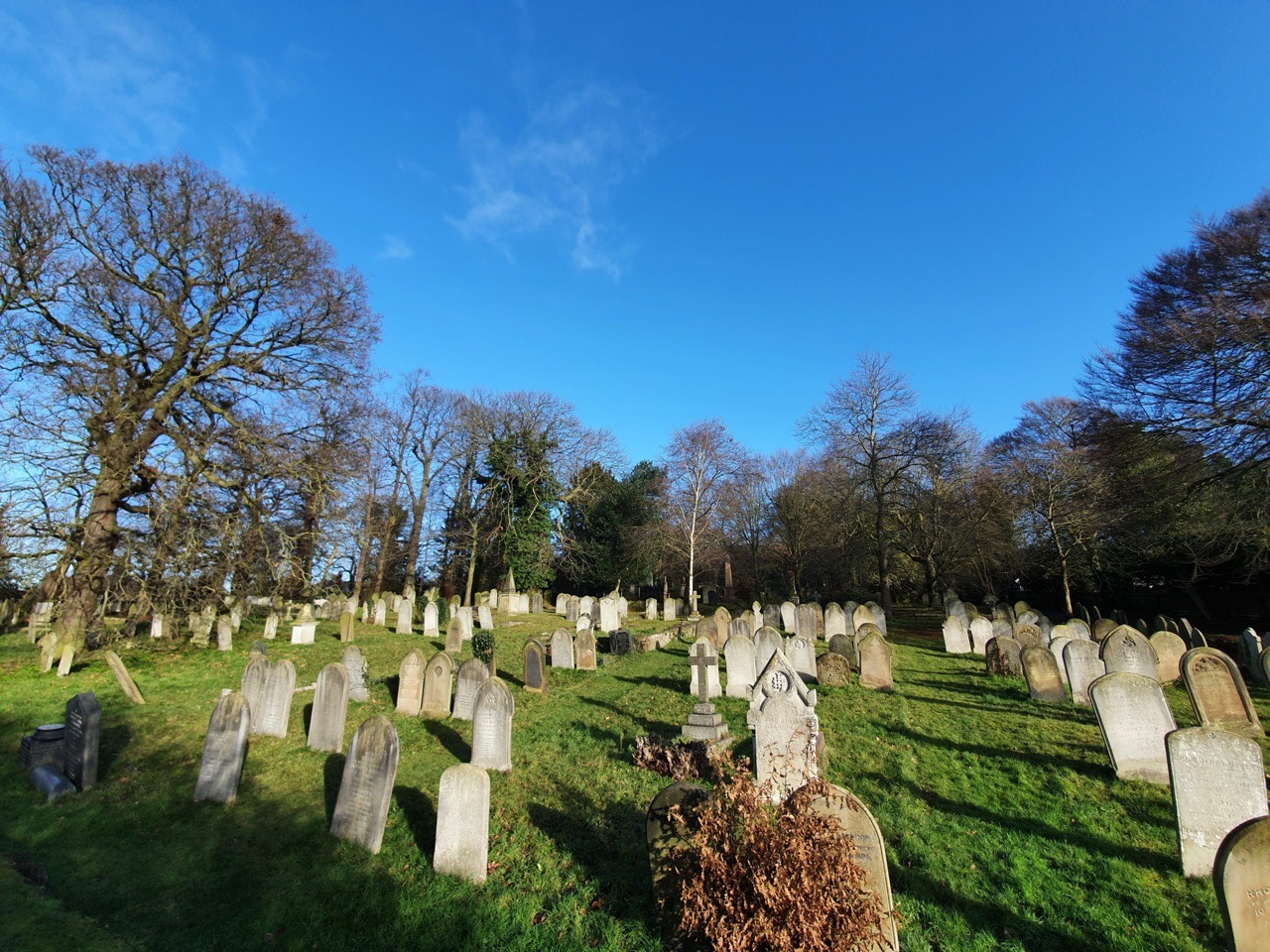
    This London cemetery was laid out in 1868, designed to relieve pressure on churchyards in the area, and the first burial took place here on 3 November 1869. It has also been known as Hammersmith Cemetery and there was an area for Church of England burials and another area for non-conformists.

    Burials continued here until 1951 and at this point the site was taken over by the council who termed it as a ‘garden of rest’. What this really meant is that the council took down a large number of gravestones and buried them, leaving what I think looks like a slightly disjointed and confused cemetery, albeit it in beautiful surroundings.

    The friends of the cemetery seem quite active and their web-site has an interesting take on the history of the site. They mention how sluggish the borough were in opening their burial ground, but an outbreak of cholera in the area speeded things up somewhat. The friends also note that the cemetery saw:

    “A superintendent’s drunken foul mouthed wife upsetting visitors and creating “a crowd” on Christmas Day 1879, belligerent gravediggers demanding higher wages and having fist-fights in the tool house, the nonconformists’ objections, the battle with Sir William Palliser and a fair amount of wheeling and dealing when acquiring or exchanging land”.

    Although I didn’t find his grave, George Wimpey of construction fame is buried at the cemetery. There are 83,000 burials at the site, although when it opened the cemetery was only designed to hold 12,000.

    This squirrel followed me for quite some time, but annoyingly was unwilling to pose for photos.

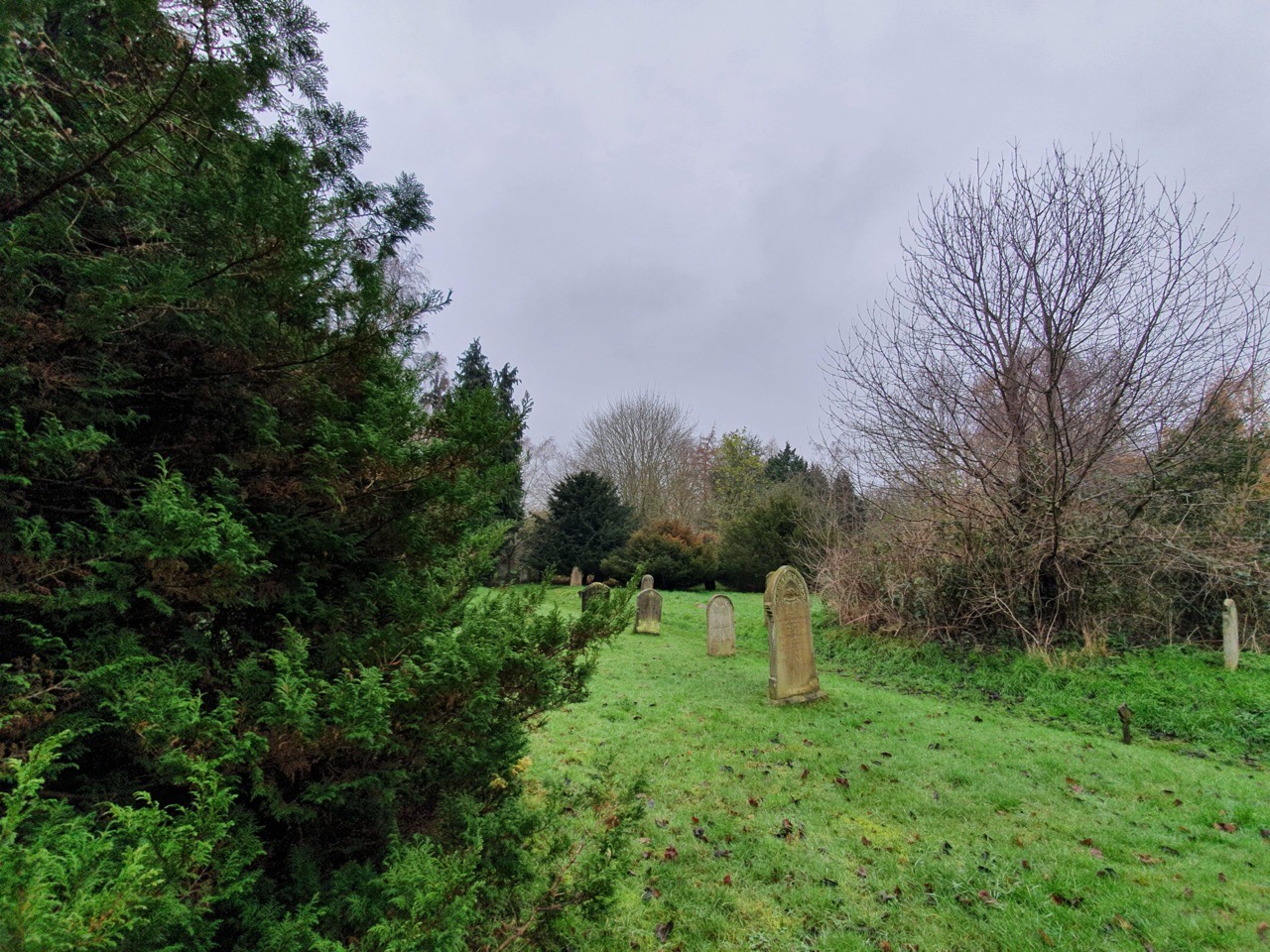
    There were a large number of dog walkers using the cemetery when I was there, but there’s plenty of space and it looked generally well cared for. Well, other than for the empty beer cans dotted about the site.

    The cemetery’s chapel, which was designed by the local architect George Saunders, who was also responsible for pretty much everything at the site. There was a second chapel at the cemetery, but this was demolished in 1939.

    I visited shortly before the cemetery was due to close, so my meandering was limited and I missed the “ghoulish” Victorian reception house. This building, where bodies were laid to rest, has now been listed and is the only one of its kind left in London. I’m not sure why Historic England thought it was ghoulish, it’s a place to store bodies in a cemetery before they were buried, but there we go….

  • Chelmsford – Disgusting Offence

    Chelmsford – Disgusting Offence

    As an aside, and not one of the most decadent things that I’ve written about, this type of story is alarmingly common in nineteenth century newspapers. The crime relates to the village of Margaretting, which is a few miles to the south of Chelmsford, but which was tried in the city’s courts. The exact nature of the crime it’s best to leave to the imagination, although it was one punishable by the death penalty.

    The Chelmsford Chronicle reported this in January 1860:

    “George Brazier, labourer, was charged with committing a disgusting offence at Margaretting on the 23rd December. The evidence not being sufficient to support the capital offence, the case was dismissed. Brazier was then charged upon the same evidence, with cruelly treating a donkey, and was convicted in a penalty of £2 10s and 8s costs, or six weeks’ imprisonment”.

    £2 10s is worth around £150 in today’s money, so George got off quite lightly given what the potential punishment could have been.

  • Chelmsford – Chelmsford Cathedral and 1832 Great Reform Act

    Chelmsford – Chelmsford Cathedral and 1832 Great Reform Act

    I quite liked this story from the Chelmsford Chronicle in 1832, which was written after the passing of the Great Reform Act, a bit change for the entire country. I can imagine the clash between the characters at what is now Chelmsford Cathedral, although was a parish church back then, when some thought the bells should be used as part of the exuberant celebrations.

    “On the receipt of the news here on Tuesday morning, of the passing of the Reform Bill by the Lords, the flag was hoisted upon the Church, and the ringers were set to work. The bells were going merrily round, and the firing was performed with more than usual precision, when the ringers were ordered to desist by a churchwarden in person, who, with his usual courtesy, ejected the Bob-Majora and the TrebleBobs from the church, and the flag was taken down.

    A request was, however, made for a renewal of the harmonious peal, not only to the Churchwarden but also to the Rector, and the circumstance of the bells having been permitted to ring in October last, when the Bill was rejected by the Lords, was advanced in justification of such a request, and as a proof of inconsistency if denied.

    The Churchwarden not only refused, but declared that so long as he remained in office, the bells should not again be rung to celebrate any political event! The Rector received the party with much courtesy, and after hearing their argument in favour of the application, acknowledged that the example adduced was a sufficient excuse for what had already occurred, and to the ringing of the bells on the present occasion he should not individually have objected, had the consent of the Churchwardens been obtained, but he felt bound to support the parish officers, although, the Rev. Gentleman intimated, the bells were strictly under his control. The result of the application disappointed many of the inhabitants.

    In the course of the day the ringers ventured to resume their amusement, and the flag was rehoisted, but the Rector came into the town, and finding that the consent of the Churchwardens had not been obtained, he interferred his authority and these rejoicings were frustrated. The Rev. Gentleman at the same times very politely wrote a note to one of the applicants, repeating the original objections. Thus disappointed, the Reformers dispatched a messenger for the Baddow musical Band, who in the evening arrived and played many loyal and constitutional airs, whilst the ringers paraded another part of the town with their musical hand bells, in which they are allowed to excel. The two bands played in different parts of the town, and were each followed by a great number of persons, who appeared to take a lively interest in the event. The whole passed off in the most peaceful and creditable manner.”

  • London – Newham (Borough of) – Stratford – Kotch!

    London – Newham (Borough of) – Stratford – Kotch!

    My friend Richard had come to London for the evening to escape Norfolk, so we decided after visiting Wetherspoons for their 99p pints of real ale (well, I had that, he had decadent and expensive gins) to go for a restaurant meal. Incidentally, the evening had started off well as I discovered Richard’s hastily booked room wasn’t as large as the one I had at the Holiday Inn Express at Stratford, so that was some positive news for everyone.

    Being a millennial (well, I’m not, but I pretend to myself that I am) I try to avoid using the phone, so Richard phoned up the restaurant to check if there was space. The restaurant is small and got busier as the evening progressed, so having the reservation was quite useful. The service was attentive, polite and friendly, so all positive there. The restaurant was clean and it had quite a homely feel to it. There’s a toilet at the rear of the restaurant and I’m grateful that the staff members noticed there was a problem, which was that it had locked itself, as otherwise I’d have been standing outside the door for some time waiting for a non-existent person to leave.

    Richard’s pizza, which looked horrible but was apparently delicious, is at the rear, whereas the much nicer Ndjua sausage pizza of mine takes pride of place in the photo. It was cooked in a woodfire pizza oven that’s visible from the seating area, giving the food that nice blackening to the sides. The base was thin and had a decent crunch to it, with the sausage having a pleasant slightly spicy taste. I liked that there wasn’t too much cheese (unlike Richard’s cheese ridden affair) and was more tomatoey, which is all more authentic Italian in my view. Since the dough wasn’t too thick, it also meant that the meal was light and not too stodgy.

    There are difficult times ahead over the next month for restaurants, although at least this Italian should be able to do plenty of takeaways and deliveries. The reviews for the restaurant are positive (which is why we went there), it was relaxed and the staff were friendly. All very lovely.

  • London – Islington (Borough of) – Brewdog Clerkenwell

    London – Islington (Borough of) – Brewdog Clerkenwell

    I’m slowly working my way around the Brewdogs of the world, although unfortunately my attempt to go to Brewdog in Gothenburg this month has rather fallen through. So, I visited the one in Clerkenwell instead.

    This isn’t a great photo, the layout makes it a bit difficult to take photos without walking about and that’s not an ideal situation given the current health climate. It’s a spacious Brewdog which is split over a couple of floors, with the usual range of different seating types.

    This is two thirds of a pint of Breakout Space from Full Circle, although I only ordered a third. I did query that, since this is an expensive beer, but they kindly just gave me the extra third. I suppose since their beer stocks will be thrown away on Thursday, it perhaps matters a little less. The bar didn’t have as many darker options as they usually would, so I veered into this hoppy IPA and it was quite decadent for this beer style. Very fruity, smooth, slightly sweet and an aftertaste of pineapple, this is about as tropical as I’ll be getting for some time.

    Since Brewdog were so gracious with the free third of a pint they ended up giving me, I ordered their own doppelbock of Weizen Up (which was also over-poured, although that’s a useful side benefit of ordering thirds). I’ve never quite understood what the difference is between a doppelbock and a dunkel (my friend Nathan will tut, as he’ll find that obvious no doubt) so I’ve finally looked it up, and apparently “with alcohol concentrations of 4.5% to 6% by volume, dunkels are weaker than Doppelbocks, another traditional dark Bavarian beer”. So with that mystery now solved, back to the beer, which had a caramel and toffee taste, it was likely being back in Germany. Well, without the McRibs.

    I had noted that Brewdog were doing this as it was featured on Untappd and it seemed an interesting collaboration with that many breweries taking part. Unfortunately, that weekend is now lost for Brewdog, but hopefully they can do something similar in the future.

    I had a look on TripAdvisor and this bar has done well to only get two very low scores over the years that it has been open, one which was about it being busy when football was on (the manager seemed confused as the bar doesn’t show football) and the other complained he wasn’t asked if he wanted fries. I’d say that they’re doing pretty well if that’s all people can complain about.

    The staff here were friendly and pro-active, although it was very quiet on a Monday afternoon. They were serving food, although I’m not sure they were selling much, but the bar environment was clean and everything seemed ordered. It’s not the cheapest location, but the range of beers is usually well balanced and there are also some decadent and tempting options in the fridges. Slightly strange to see that Wetherspoons are selling off pints of Brewdog Punk IPA for £1.50, whilst they were nearly £6 here, but such is the strange world of alcohol retailing….

    Anyway, I liked this outlet of Brewdog, calm and welcoming. Goodness knows when I’ll next be in a Brewdog though…

  • Greater Anglia : London Liverpool Street to Norwich

    Greater Anglia : London Liverpool Street to Norwich

    The Prime Minister’s announcement at the weekend meant that I abandoned my travel plans for the month, and indeed the rest of the year, so this was my trip back to Norwich. It was another £10 fare even though I booked it quite late.

    It wasn’t the busiest of trains, just a few people in each carriage. Everything functioned as it was meant to, the power worked and this was a train with tables (Greater Anglia sometimes operate Stansted Express trains on the London to Norwich route, which are annoyingly missing tables).

    And back into Norwich at 23:30, just a couple of minutes late. The railway station was quiet, the barriers were open and I imagine there will be few passengers over the next month.

    At least the next few weeks gives me some time to finish all the blog posts that I never quite got around to writing over the last few months……

  • London – Kensington and Chelsea (Borough of) – Brompton Cemetery (Alfred George Auger)

    London – Kensington and Chelsea (Borough of) – Brompton Cemetery (Alfred George Auger)

    Sapper Alfred George Auger was born in 1924 and was the son of Joseph Auger and Ellen Gertrude Auger. Alfred joined the Royal Engineers and was part of the Bomb Disposal Company, not a role that was ever going to be anything other than risky. He died on 18 April 1945, alongside Sappers George Raymond Lewis and Mark Pierce, although I’m not sure what this incident was.

    The inscription on his grave is “gone from my home but never from my heart, mother” which is one of the more personal that I’ve seen. Alfred’s mother lived until 1981, when she died in London at the age of 95.