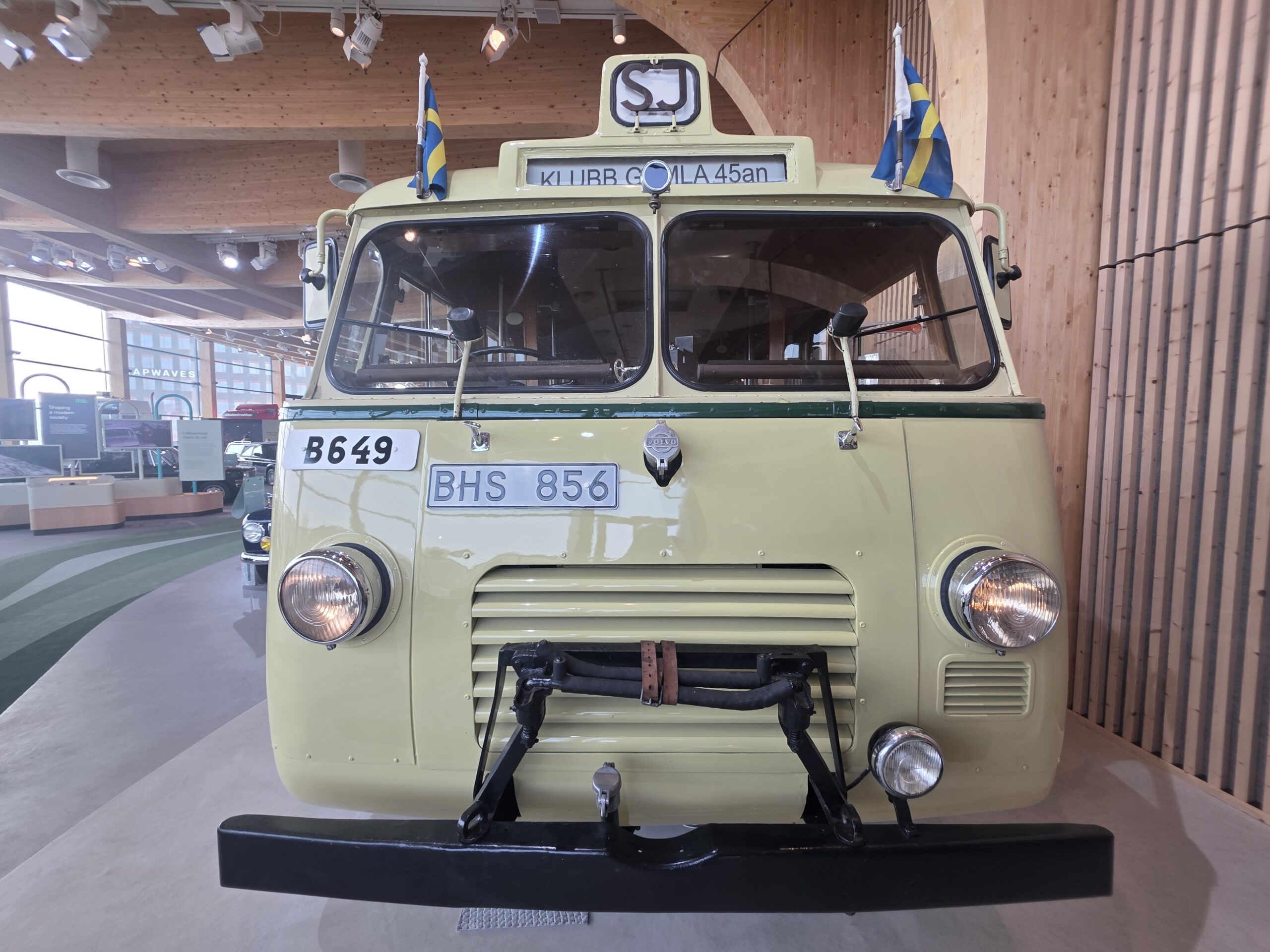
The Volvo B513 was a bus chassis introduced by Volvo in the mid-1940s, part of the company’s early post-war range of commercial vehicles designed for public transport and regional services. First appearing around 1946, the B513 was typically used for single-deck buses built by independent body manufacturers, which meant the final vehicles could look quite different depending on the coach-builder and their particular favourite arrangements. These buses were widely used in Sweden and Scandinavia for local routes, school transport and rural services, and some versions could seat around 35 to 40 passengers.
This particular bus had a little accident in the late 1950s, but it was fully restored before being left unloved in the Swedish Railway’s garage in Dalsjöfors, near to Borås. It was forgotten about until it was restored some considerable time later and returned to pristine condition.
My own view on these things is that I would have rather they wheeled in the bus which had been left unloved and with bits falling off it. Personally, I like authenticity and to see the bus as it last was, with all of its faults and missing bits. I rather feel that I’m looking at a modern copy with these things, although I’m sure huge amounts of work got it to look as it currently does.
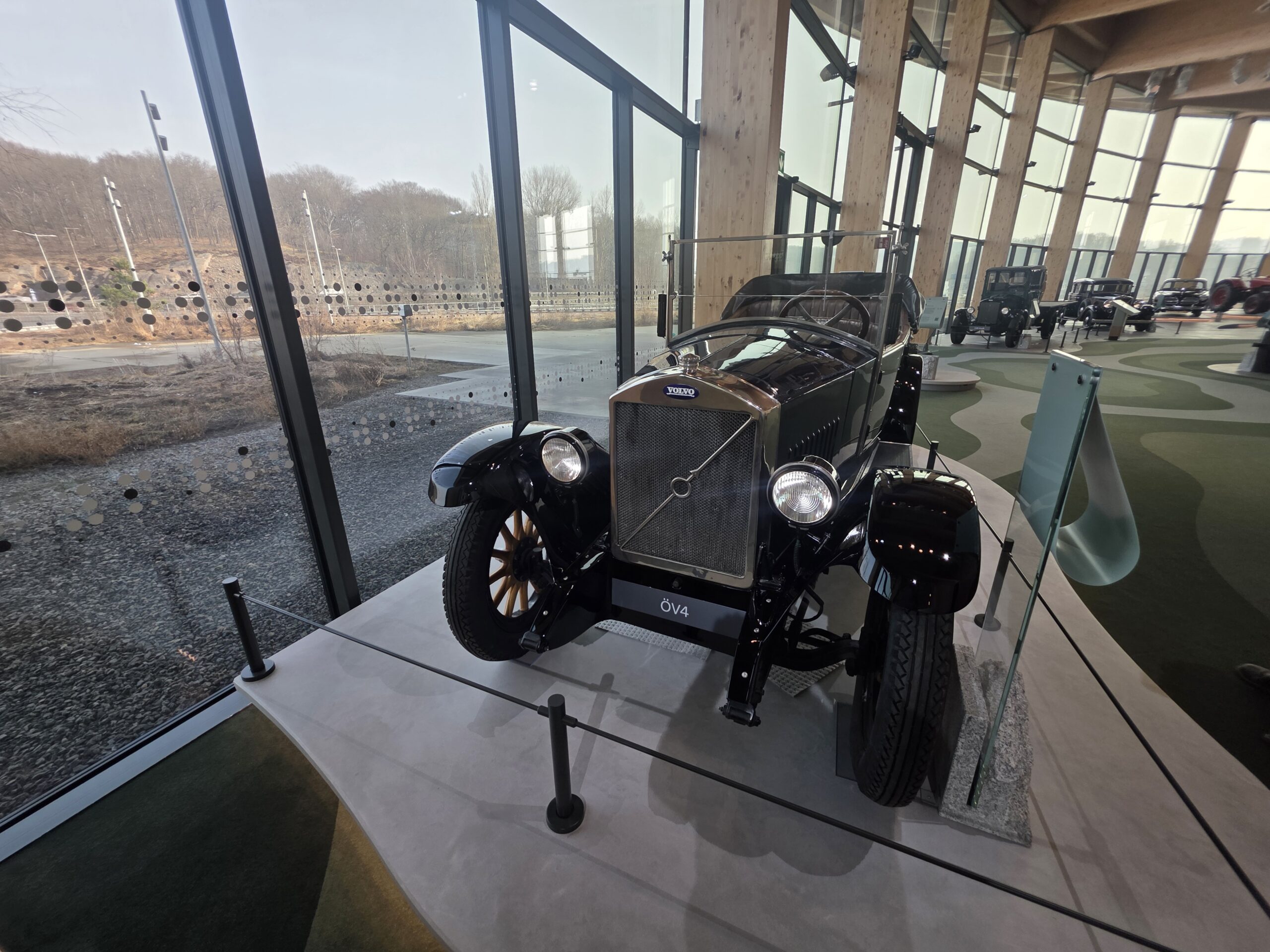
This is one of the first Volvo cars, the ÖV4, one of 205 cars that were produced between 1927 and 1929. It had a four-cylinder engine and 28 horsepower which might not have been the most powerful in the world, but it was the first mass produced car in Sweden.
The first car came rolling off the factory line in Gothenburg on 14 April 1927, a date regarded as the birth of the company’s car manufacturing. The name comes from the Swedish Öppen Vagn 4 cylindrar, meaning “open car, four cylinders” and the model was a four-seat open tourer designed to cope with Sweden’s rough roads.
Built with a wooden body frame covered in steel panels and usually finished in dark blue with black wings, the car was sometimes nicknamed “Jakob” after an early prototype. The premiere of the car went a bit wrong, a rear axle gear was installed incorrectly and the car only drove in reverse. It was a sub-optimal situation for the inaugural test drive, but the museum notes that from then on “Volvo moves forward”…..
After a long day of meandering around a lake, or part of a lake as it transpired, we realised that there were limited food options. I found this restaurant in Jönköping, a town we’d been earlier in the day, but I wasn’t sure how long they’d be open for and so we thought we’d just have a main course so as not to be annoying.
There was a friendly welcome and the server didn’t seem to be hurrying us at any point, and we realised we had enough time to have two courses before the restaurant’s closing time.
Richard likes fine dining and I like cheap dining, but it’s only fair that I find him somewhere decent to go on these trips. This menu had looked appropriate for his demanding needs and I liked the look of a few things.
Firstly, this is Richard’s main course, he opted for the cod loin with Pommes duchesse and a bacon & lobster sauce. He was tempted by the Wienerschnitzel, but wanted something a little more local. I didn’t pay much attention to what he said, but he liked it.
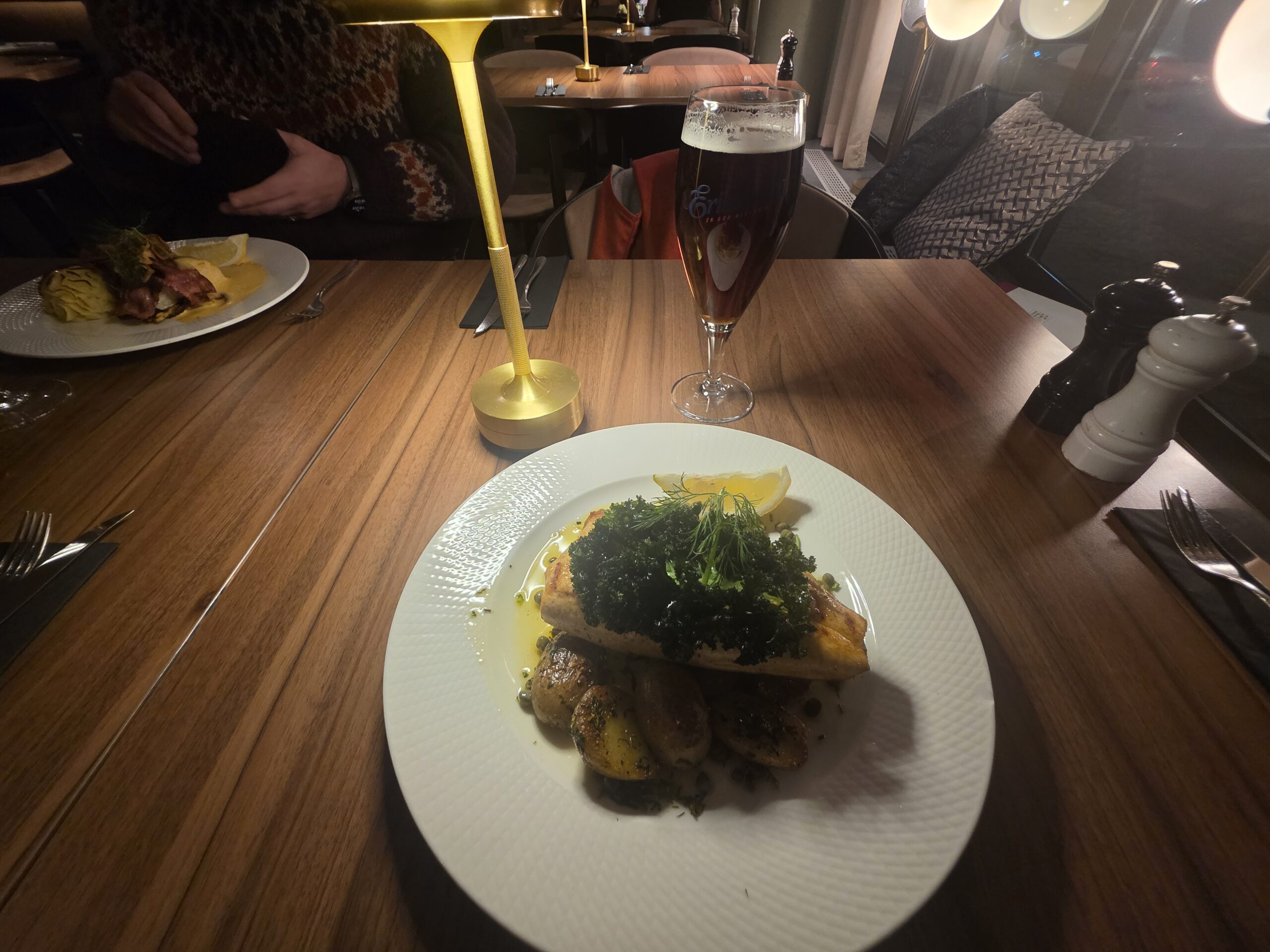
This photo isn’t as clear as I’d like, the restaurant was quite dark (I think low lighting is fashionable in venues like this) but I had moved the table light in the hope of it being clearer. Anyway, it’s the Arctic Char served with crispy kale, herb-roasted potatoes and a browned butter infused with lemon and capers.
I’ll confess that Arctic char was new territory for me, it’s not something that tends to appear on the JD Wetherspoon menu, but it sits somewhere between trout and a particularly rich salmon, with a delicate but satisfying flavour. The fish was nicely cooked, the browned butter bringing a lovely nutty depth while the lemon kept everything fresh. The capers were a particular highlight, popping up with little bursts of salt and acidity that lifted the whole plate. There were more herb-roasted potatoes than the photograph suggests and the crispy kale added a pleasantly savoury crunch so that the whole arrangement felt balanced and comforting without being heavy.
I also had a glass of Eriksberg Karaktär, a Carlsberg produced lager that might be technically mass-market but was actually rather agreeable, it was malty, clean and refreshing enough to cut through the richness of the butter sauce without getting in the way of the food.
Richard’s fried Camembert, which was a treat whilst undertaking his latest diet, with cloudberry jam. I didn’t know what a cloudberry was until I looked it up, as I’ve never had that in KFC, but it was very agreeable.
I’m generally far more of a starter person than a dessert person, but this lava cake made a very convincing case for changing allegiances. This lava cake was cooked perfectly so that the liquid chocolate poured out when I cut into the thin outer sponge. The ice cream was clean and smooth, this was really rather decadent and just a little elegant.
The restaurant wasn’t busy, but this was towards the end of the Sunday service. The venue was clean, tidy and well presented, with the server always being attentive, polite and helpful. He also spoke perfect English which was handy as my Swedish isn’t coming along very far at the moment. We were pleased with the restaurant selection and I’m now pleased that I know what an Arctic char is.
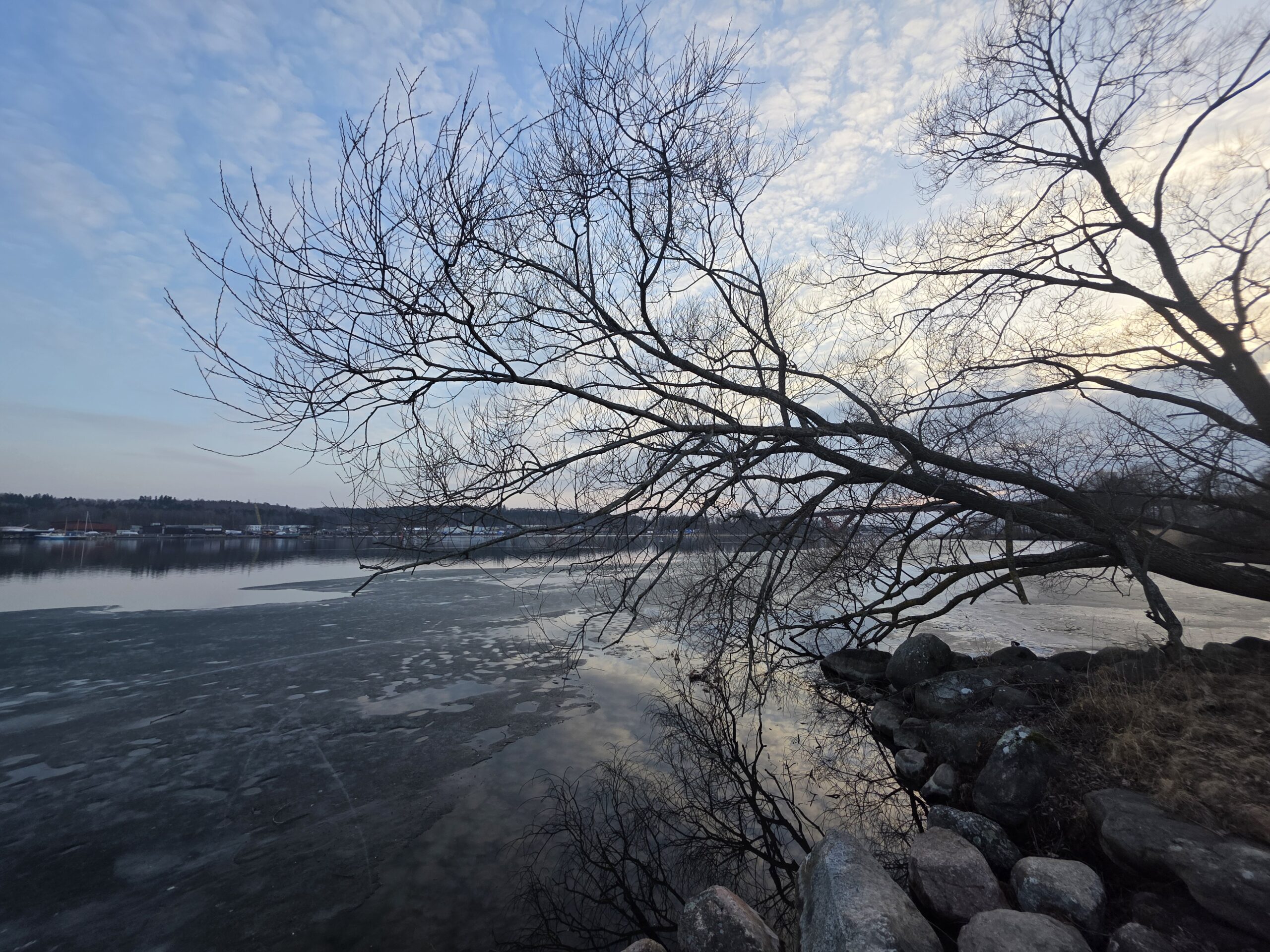
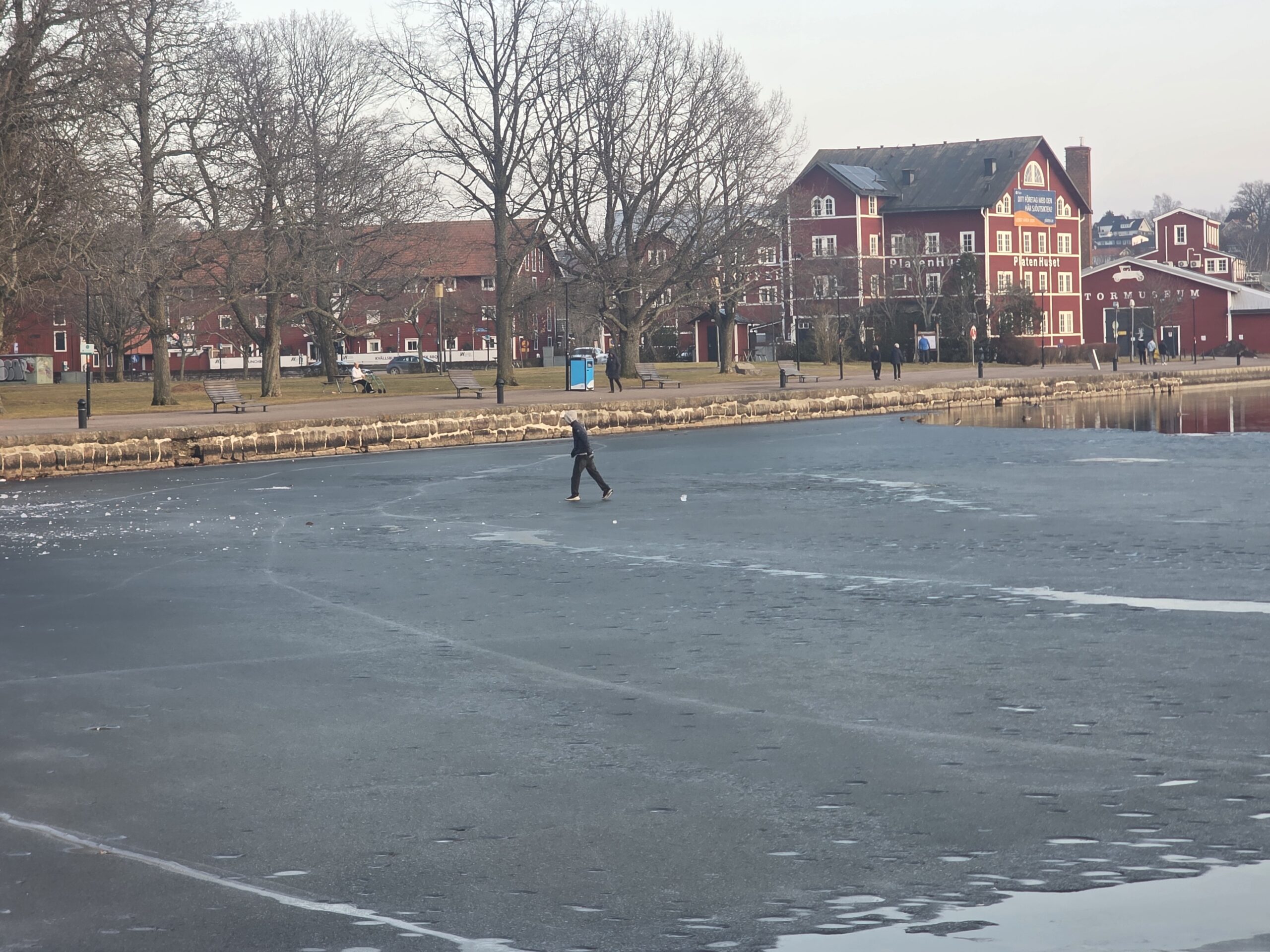
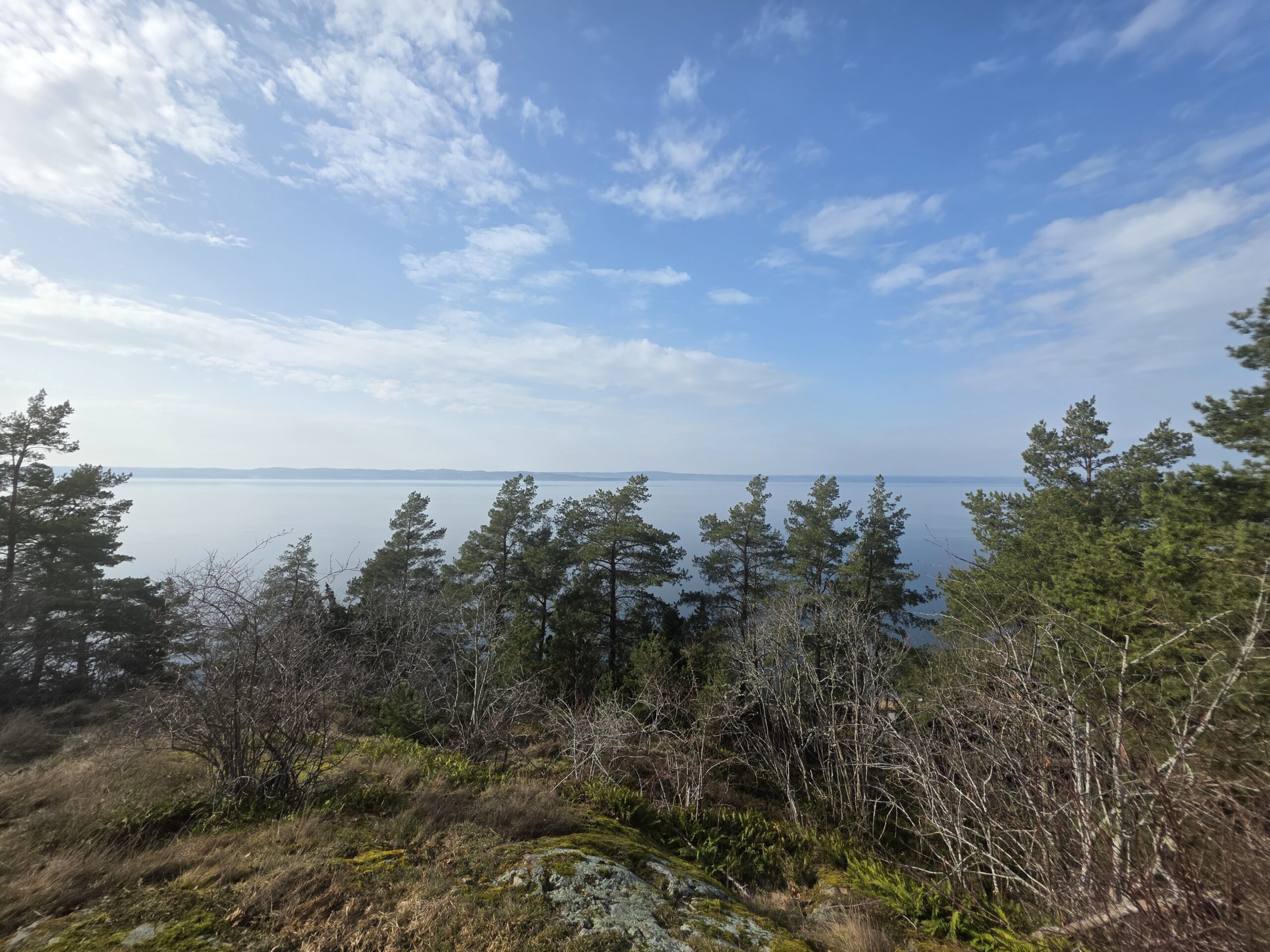
And just photos of Lake Vättern, it was all very peaceful and the lad meandering out onto the ice was ultimately unharmed. It’s possible to see how clear the lake is here and the water is actually drinkable, although it’s probably best to try some a little further out.
Continuing on our expedition around Lake Vättern, we reached the town of Motala and that’s as far as we actually went before deciding we’d better get back to Gothenburg.
Richard and I had spent some time during the day assessing how dangerous it must be to walk on the lake now. We also agreed that it would be impossible to walk on this part of the lake as it would be too thin.
But then we saw this lad, who was actually trying to smash through the ice at some points, bravely meandering out. Richard and I agreed that this felt very brave and the sort of thing that my friend Liam would do, as he’s a bit reckless. I assume the lad was local and knew what he was doing, but there were a couple of older people who looked a bit worried for him. Although not his mates, who were encouraging him on, but that’s what friends are for.
Vista Kulle serves as the perfect spot for anyone who enjoys a breathtaking view and isn’t wearing shoes that slide everywhere. Located just south of Gränna, this high-altitude plateau offers a panoramic look at Lake Vättern although Richard’s ten year old shoes made it hard for him to walk without falling over. I didn’t say anything and I was very sympathetic as I’m sure he’ll testify.
So here are some photos of the part of the walk that we did make and I’d like to do some more walking in this area.
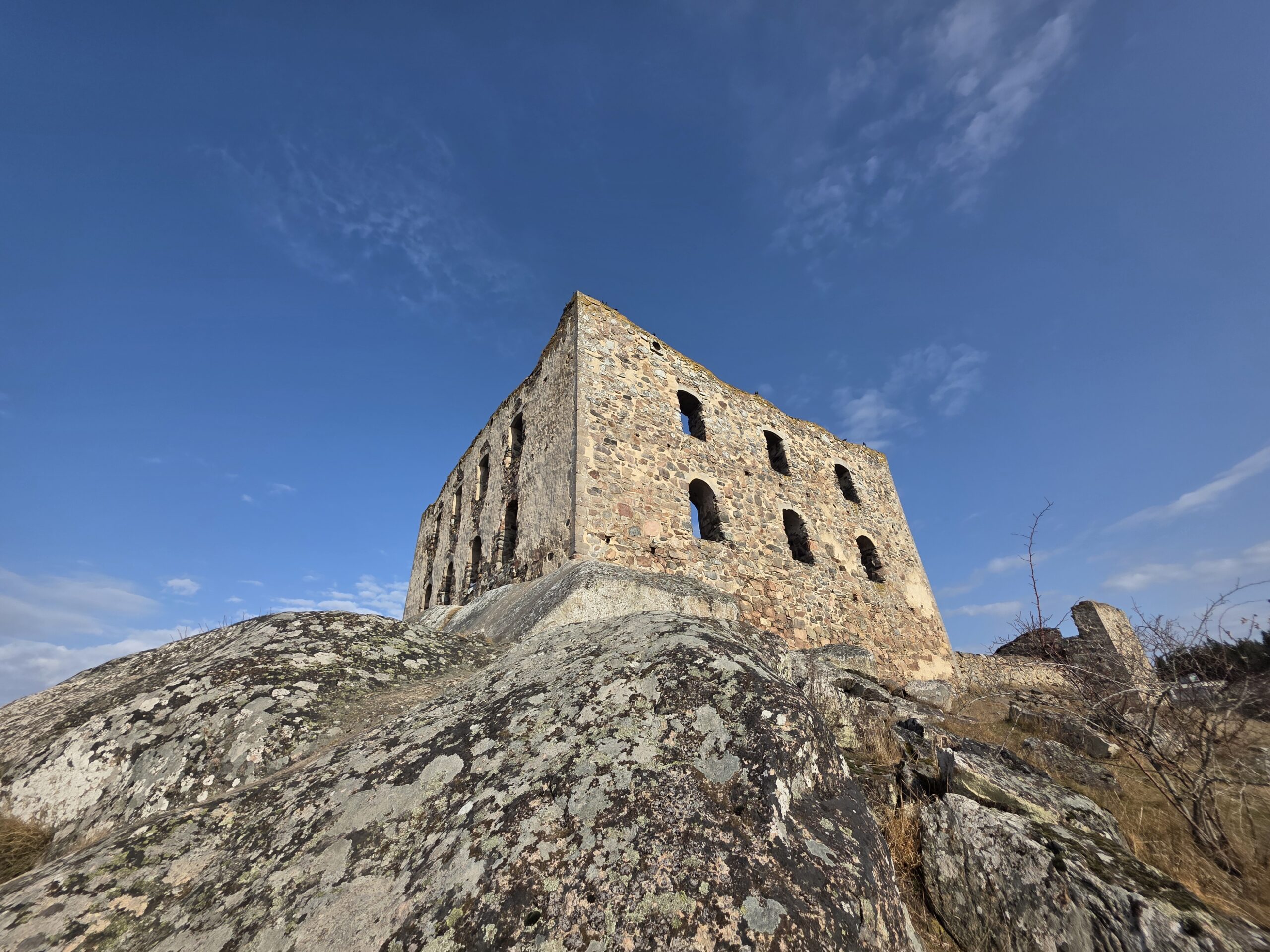
Perched on a limestone cliff four hundred feet above Lake Vättern, Brahehus was a fancy holiday home and never actually meant to withstand a siege, which is lucky because its main defensive strategy seems to be “hoping the enemy is afraid of heights.”
Built in the mid-seventeenth century, the castle was intended as a grand manor for the Count’s wife, Christina Catharina, though she unfortunately passed away before she could enjoy the privilege of bracing herself against the chilly winds from the lake.
The whole arrangement eventually came to a crashing halt after the Count died in 1680. The Swedish Crown decided they quite liked the look of all that noble land and reclaimed it, leaving Brahehus to face the elements without a dedicated cleaning crew. A forest fire in 1708 finished the job, gutting the wooden interior and leaving behind the skeletal stone shell that remains today. It’s been fixed up a few times, but it’s still open to the elements and anyone can freely access the site at any time.
The interior of the castle.
The castle is now next to a service station which is effectively a very scenic leg-stretch while driving the E4 motorway. It’s a beautiful thing and it was helpful that there were a number of interpretation boards around the site to explain it.
There are two symmetrical side towers in front of the building.
And inside one of these towers. I couldn’t work out the floor line as there appear to be two former floor levels.
The view from the window, it was certainly a rather decent holiday home with this sort of outlook out the front.
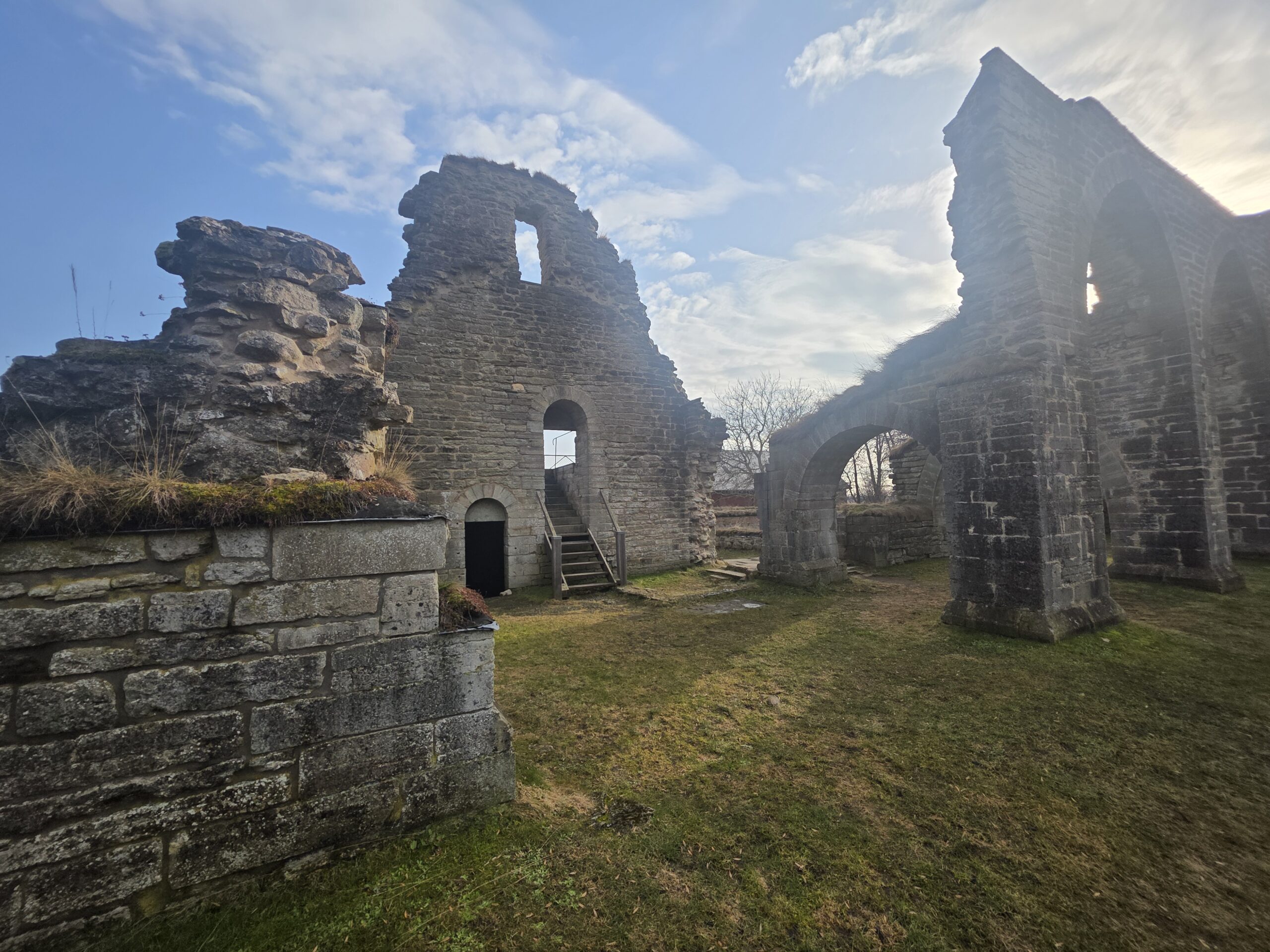
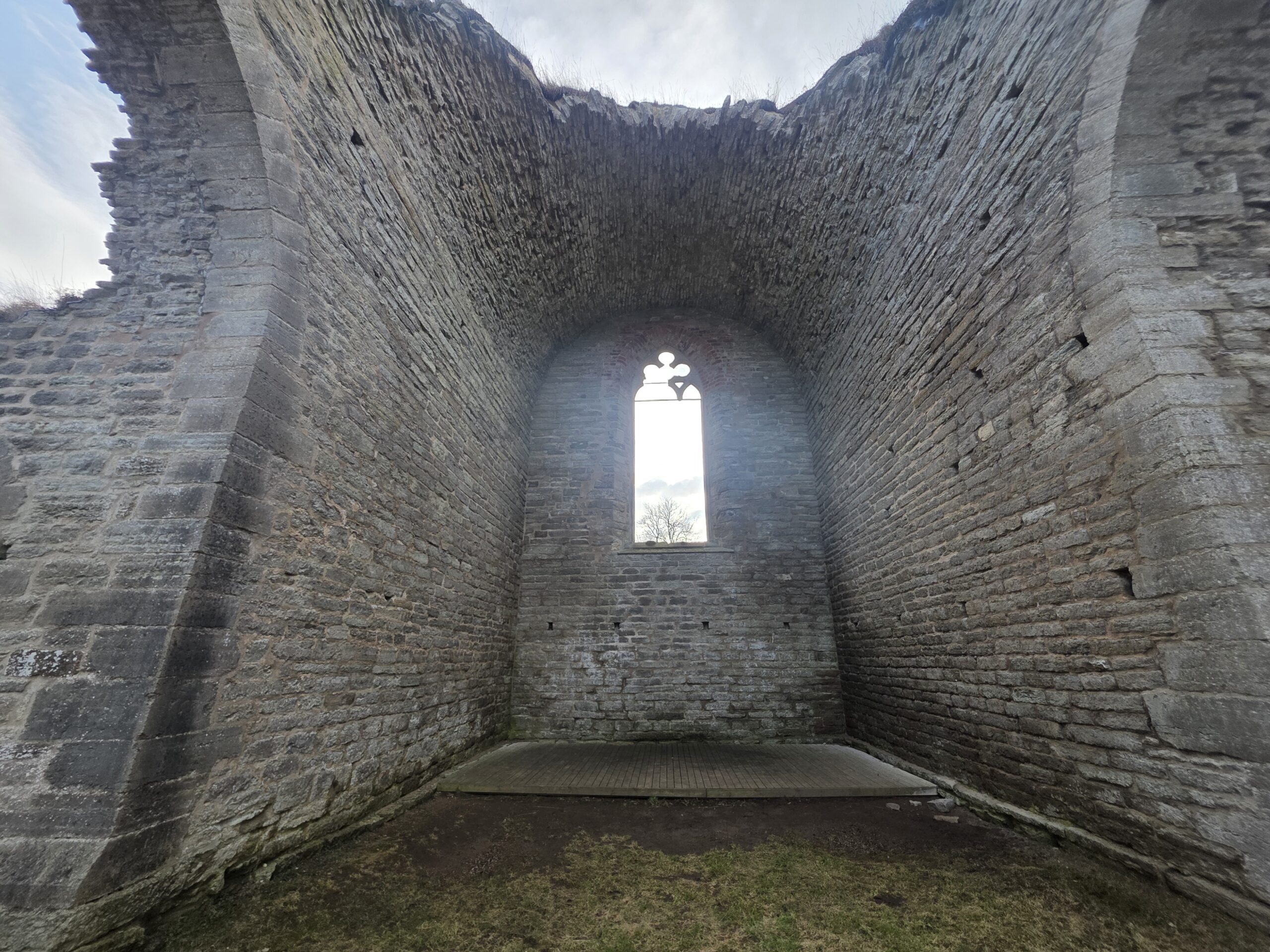
That’s the formal chancel at the end, although I’m not sure whether this was a monastery solely for the monks or whether local parishioners were able to use it. At the crossing, so not far in front of where this photo was taken, were the graves of Kings Sverker I, Carl I, Sverker II and John I. The graves weren’t swept away after the Swedish reformation as they were found when the abbey was cleared by an archaeologist in 1827.
And the nave. If the Reformation hadn’t of taken place, or if this church would have continued in use, the link with the former Kings of Sweden that were buried here would have likely given it some considerable status.
I have no idea how so much of that roof has survived over the centuries….. Decent builders is all I can think.
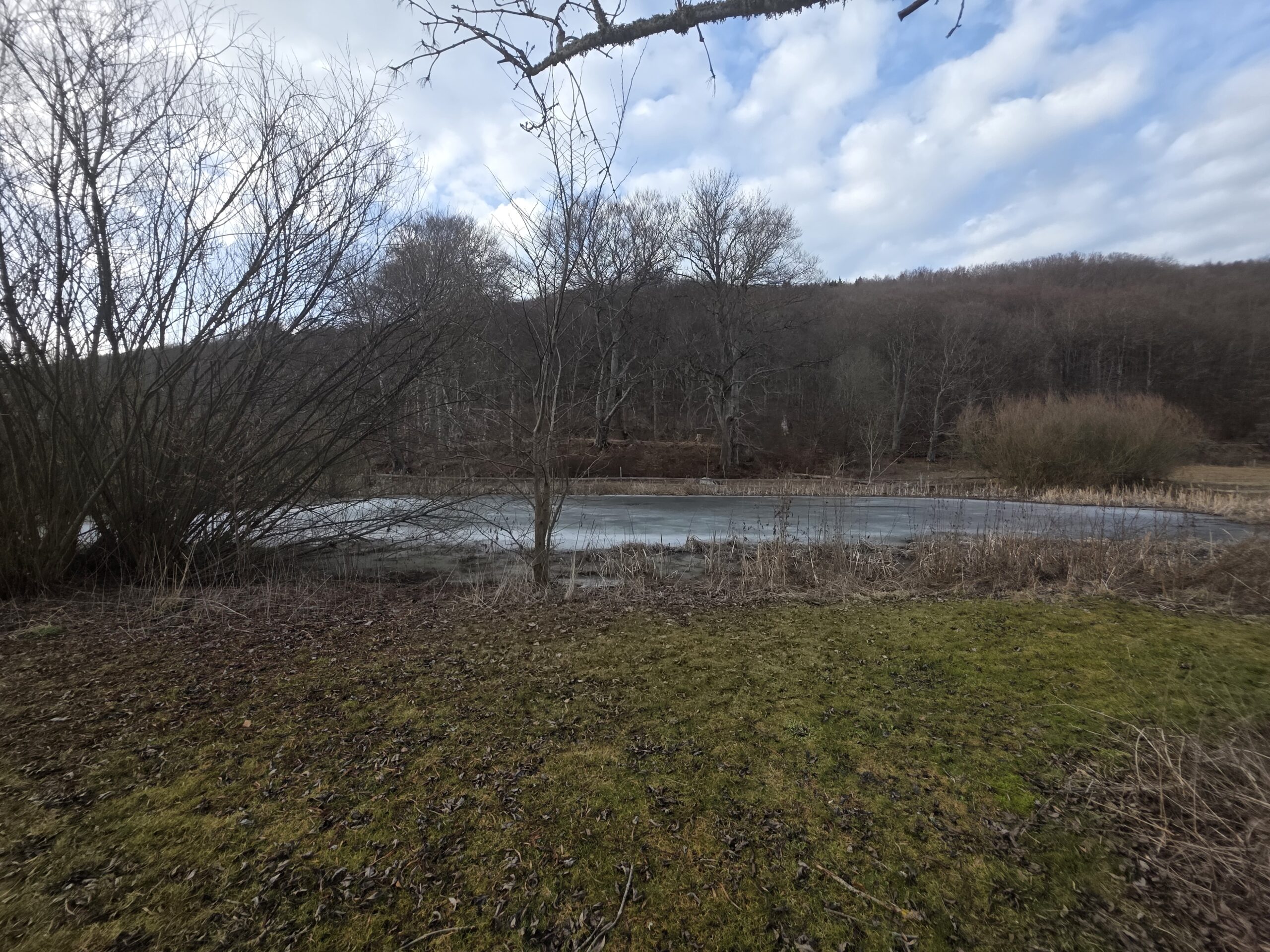
These ponds at Alvastra Abbey are something of a glimpse into the resourceful and disciplined lifestyle of the twelfth century Cistercian monks that once lived here. Since their strict religious statutes mostly forbade the consumption of meat these monks became pioneers of river engineering to create complex systems of dams and canals to cultivate roach, perch and bream. The ponds today look at first sight like a river, but they are free-standing pools of water which were once supplied by Lake Vättern.