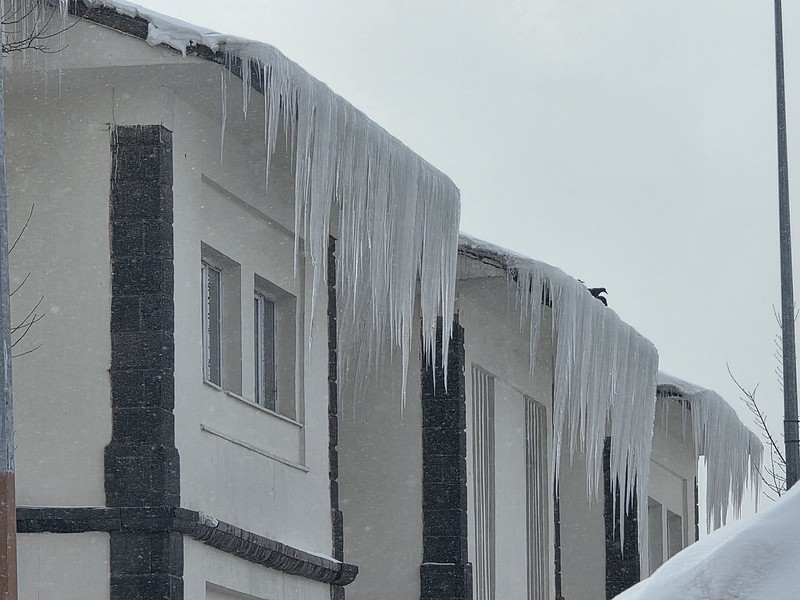
In numerous areas across Erzurum, there were bits of pavement that were closed off. This was because of the ever threat of icicles and I saw a couple of near misses, and there were some property owners warning of the danger from these potentially highly damaging spears of ice falling.
I wouldn’t want to be standing underneath one of those…. I had a look on Google and there have been some serious injuries in this area of Turkey over the years. Anyway, that’s the end of my health warning….
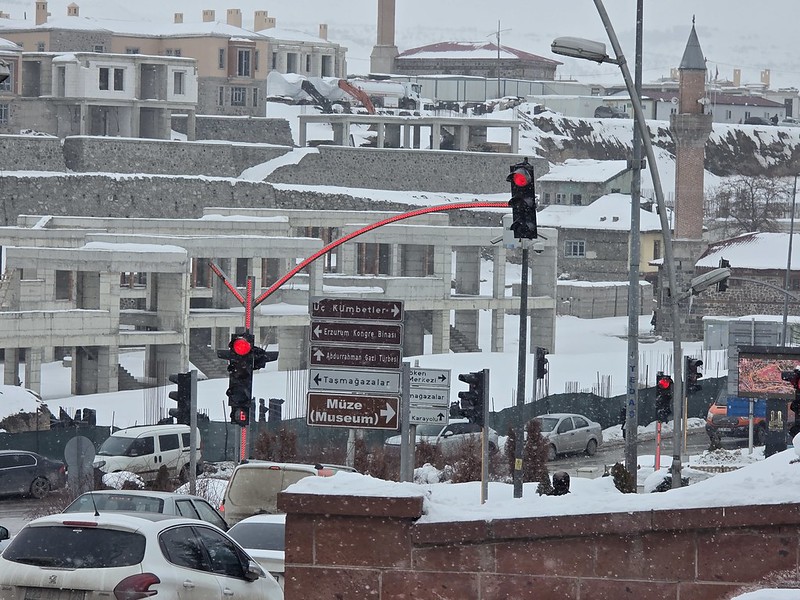
I know I’m easily pleased by things, but this did surprise and delight me. The traffic pole and the surrounds have lights attached so it’s very easy to see when the signals change. I’m sure that this is common in many places around the world, but it’s the first time that I’ve seen it.
And a red light version, it’s visual and makes it safer for pedestrians to see when to cross. I should probably get out more…
For our evening meal in Erzurum, we opted for a fish restaurant as Jonathan’s vision of trying some sort of fatty lamb dining option (a local delicacy, but seemingly all those restaurants sell) seemed just a little too decadent to me as I don’t like fatty food and I don’t usually eat lamb.
As an aside, it was a beautiful walk to the restaurant. The Google location was slightly wrong and so we thought we had got muddled up, but it transpired it was just one street over. We arrived at the restaurant and there was a friendly welcome and we were shown to a table immediately.
It was a cosy and warm environment, despite the snow outside. It was also relatively busy, with a large group in the centre of what is effectively a posh marquee.
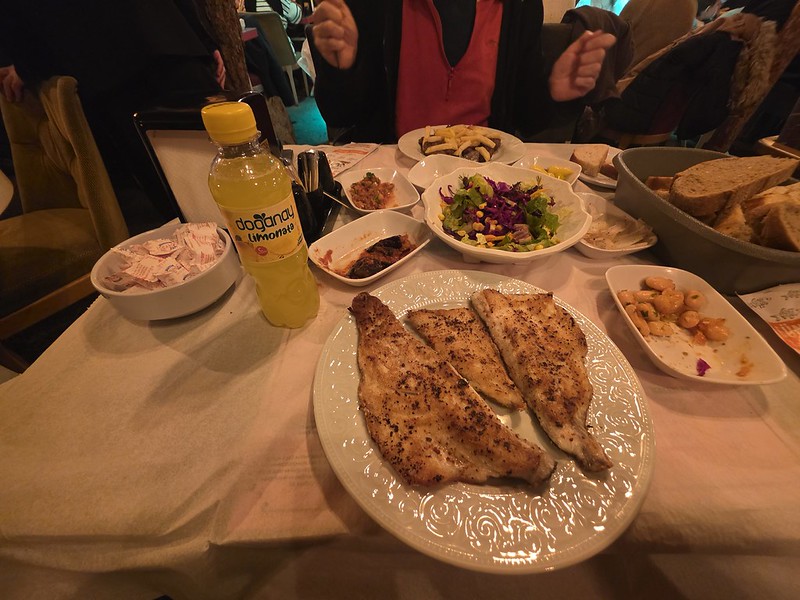
This was the free meze selection that is placed down at the table, it’s really rather agreeable.
I went for the sea bass which had a pleasant and slightly sweet flavour, with a peppery coating from the seasoning, with the meat being tender. It went well with my lemonade, especially since I put a fair amount of lemon on the fish (from lemons, not the lemonade). Jonathan went for meatballs which seemed to surprise and delight him in a positive way.
We had the desserts of the Kabak Tatlısı and the Güveçte Tahin Helva. The first, on the left, is the pumpkin dessert which had a slightly firm texture and the nuts added extra texture, with the whole arrangement being sweet. The second, on the right, is a hot halva dish which was very sweet and quite rich, it’s apparently usually served after fish dishes and so that felt appropriate.
The exterior of the restaurant and the area where nearly everyone was seated is in the area to the side on the right. The main part of the restaurant wasn’t used, I think that they rather liked the cosiness of their marquee arrangement.
This was a pleasant visit, it was a vibrant and welcoming location and the prices were moderate. The staff were polite and helpful, speaking decent English which made ordering much easier as our Turkish isn’t exactly fluent at the moment. It offered something different to kebabs and there was a wide range of fish available to choose from.
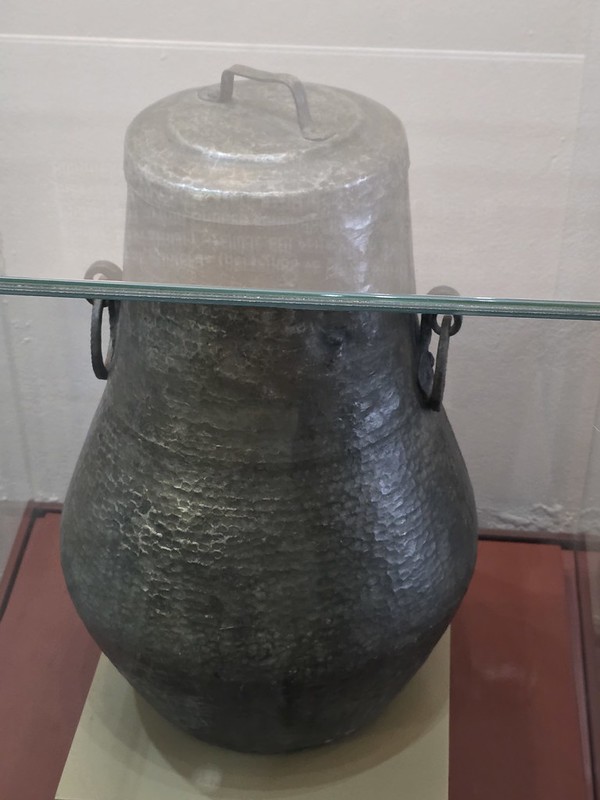
Located at the Çifte Minareli Medrese, this is an imaret boiler from the sixteenth century. It’s from the nearby Lala Mustafa Pasha mosque which was constructed in 1562. The boiler was likely used to cook food, likely wheat soup or pilaf, which would probably feed travellers, the poor and students.
In itself, this is perhaps just a routine exhibit in a museum, but it has a deeper significance and that’s why I’m treating it to its own blog post. There’s a human connection here, this would have been used to be a public good to feed those who needed help at a very different time in history. At some point in time, there would have been someone in need looking at this boiler with hope and excitement.
Erzurum had been part of the Ottoman Empire since 1514 and so this boiler was likely from not long after that. This was a period of great Ottoman power, something which lasted ultimately until the First World War, and this simple boiler is some connection with that vanished world.
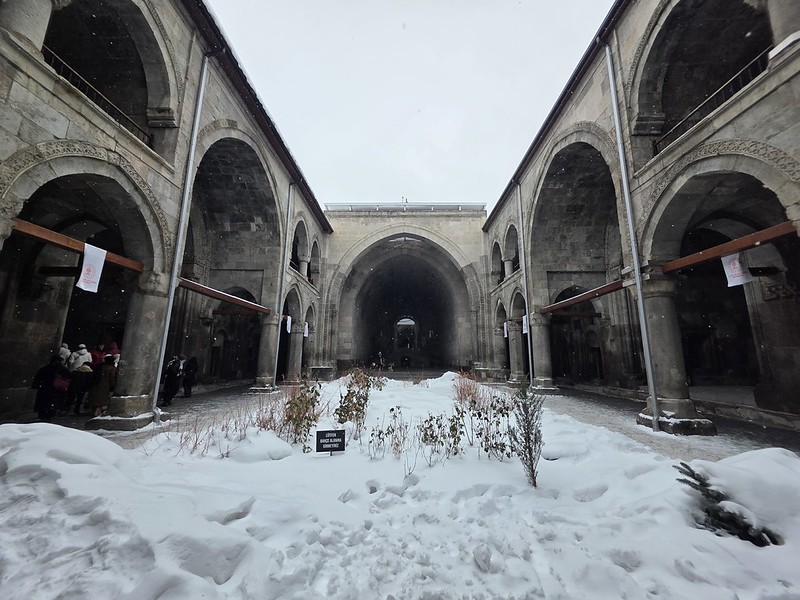
This is the Çifte Minareli Medrese, built in the late thirteenth century as a theological college. Over the centuries, the building transitioned from a centre of religious learning to a gun foundry in the seventeenth century and an arsenal during the nineteenth century Russo-Turkish Wars. Following a comprehensive restoration completed in 2016, the madrasa now functions as a free museum.
The interior of the building, which the Russians have attacked on more than one occasion and some of the treasures of the structure remain in Russian museums to this day.
The grand arch that is the entrance.
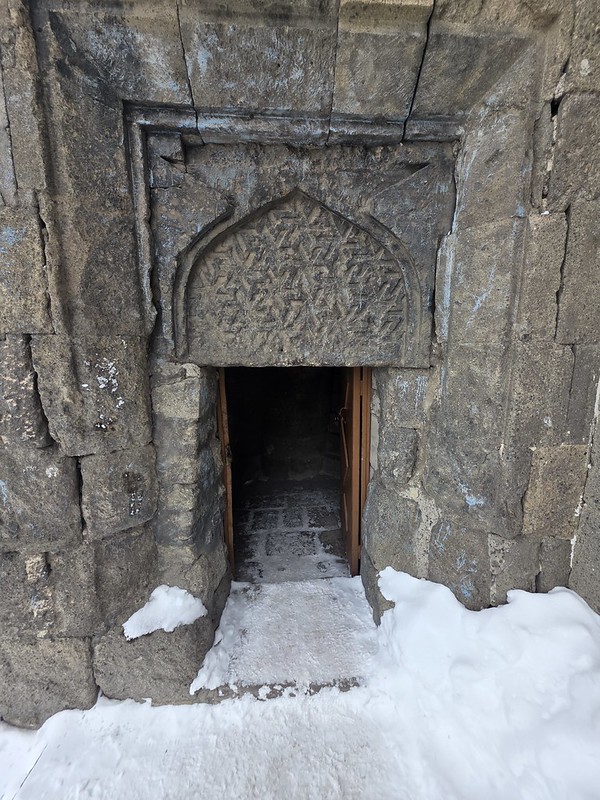
There are nineteen of these small rooms on the ground floor, they would have been used as student accommodation or for classrooms. They are now museum rooms and there might now be a few posts about some of the exhibits that I thought were particularly interesting.
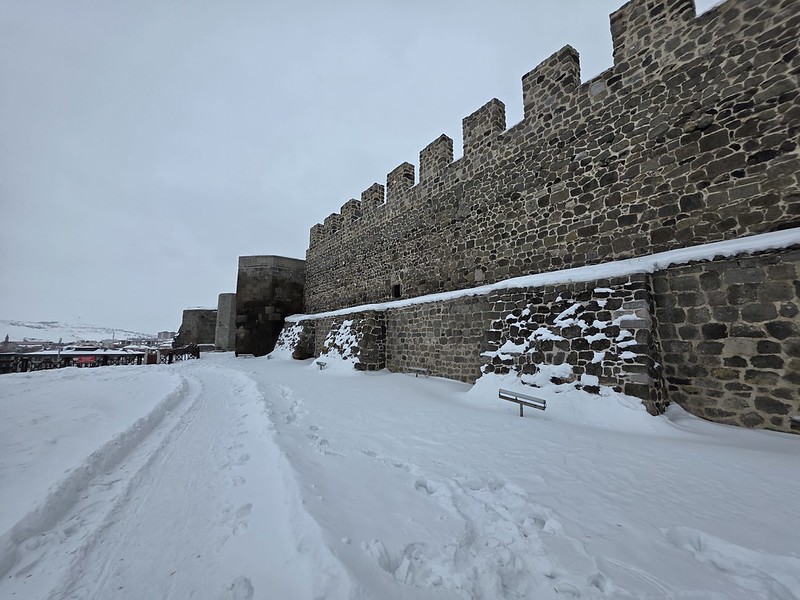
After we had looked around inside Erzerum Castle, we walked around the structure to get views of the surrounding area. This post is mostly just photos.
As some background history about Erzurum. The city has served as a pivotal crossroads of civilisations for millennia, owing to its strategic and optimal position on the high Anatolian plateau. Originally known as Theodosiopolis during the fifth century Byzantine era, the city functioned as a vital frontier fortress against eastern incursions.
Following the Battle of Manzikert in 1071, it became the capital of the Saltukid Principality. The city subsequently transitioned through the control of the Seljuks, Mongols and Safavids before being integrated into the Ottoman Empire in 1514 under Selim I. Throughout the nineteenth and early twentieth centuries, Erzurum gained further prominence as a site of significant resistance during the Russo-Turkish Wars and played a foundational role in the Turkish War of Independence, most notably hosting the Erzurum Congress on 23 July 1919.
Fortunately, we could walk around the other way as I didn’t fancy trying to navigate these danger steps (or that’s what I considered them to be).
Erzurum Castle stands as a formidable testament to the strategic military architecture of Eastern Anatolia, perched on a central reasonably sized hill that has dominated the landscape for nearly 1,600 years. Originally established by the Byzantine Empire under Emperor Theodosius II in the fifth century, the fortress served as a vital bulwark against eastern invasions and transitioned through the hands of various powers, including the Seljuks and Ottomans.
There was a charge of €3 for foreign visitors, it was less for locals, but that was a reasonable cost. I paid with a note that I had, receiving the change back in Turkish lira.
The entrance gate.
Inside the castle complex.
This is the masjid, or mosque, which the sign notes dates from the twelfth century and has been repaired on numerous occasions. I’m not an expert in Turkish architectural history, but it looks rather new to me.
Inside the mosque.
The clock tower which was constructed between 1124 and 1132. It was commissioned by Emir Saltuk, the ruler of the Saltukid Principality, to serve the dual purpose of a minaret for the Castle Masjid and a military watchtower for the inner citadel. The transition from a religious and military tower to a clock tower occurred in the mid-19th century. During the reign of Ottoman Sultan Abdülmecid, the top of the minaret was damaged, and a wooden, Baroque-style room was added to house a clock mechanism. This clock was reportedly a gift from Queen Victoria to the people of Erzurum which was a lovely gesture from the British, so they must have wanted something.
The entrance to the clock tower.
The steps up, all very manageable for me.
I’m scared of heights, so I wasn’t doing icy sloped steps up, especially when I saw someone else struggling. Jonathan went up and told me about the view, which I decided wasn’t much different from the one I could see from outside.
I could cope with these steps to get back down and I decided that I was brave enough and didn’t need to push matters….
Another view of the interior although it was a little hard to make out what was happening architecturally given the amount of snow. It was an interesting way to spend around forty minutes as there’s not a huge amount to see here, but it’s a very important part of the city’s heritage.
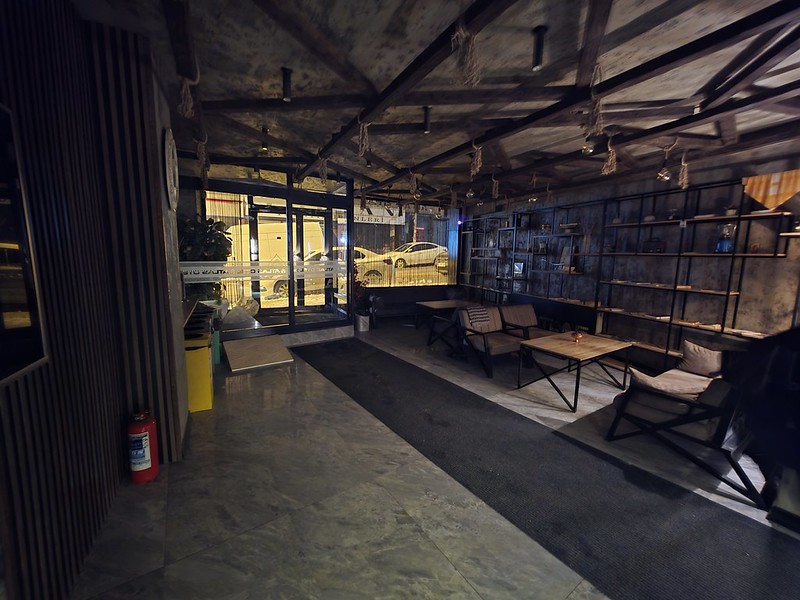
I mentioned in my last post about just how pleased I was with the Atlas Hotel having a 24 hour reception, it made our lives much easier. This is the rather nice entrance area to the hotel, which looked clean and inviting. The room price was towards the lower end of the scale and so I hadn’t expected very much here, but I was pleased with the whole arrangement.
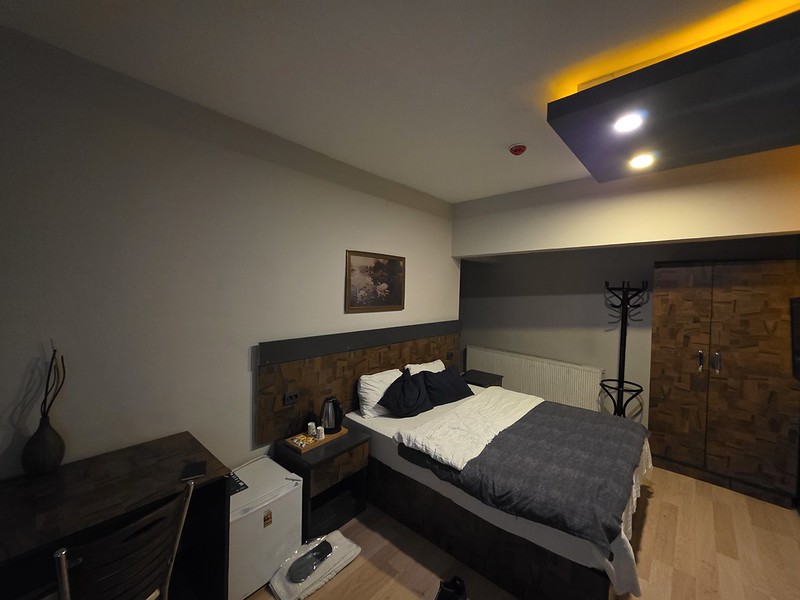
The room was cosy, warm and quiet. I like cold air circulating so I opened the window and I slept well. It wasn’t clear to me whether we had breakfast included, but I decided that I’d rather sleep, although Jonathan went to get something.
I was too distracted to take an exterior photo when we arrived at night, so here’s one from the morning when we left the hotel. We were both disappointed that we couldn’t stay another night, but the hotel was booked up. However, I have very fond memories of this hotel who did everything that they could to ensure we were comfortable.
After a very long train journey (more of this here), we arrived into Erzurum in 04:30 and we were ready to walk to the hotel. It wasn’t as cold as we had expected and we did consider getting a taxi, but there weren’t any.
We decided that Jonathan would lead the taxi search and if that failed, which it did, then I’d navigate us to the hotel.
Apologies that it’s blurry, but I was a little distracted with navigation and wondering if I should contact someone about not having had access to the Internet for 36 hours.
I have an inability to walk on ice, so I lingered behind faffing about whilst calling out the directions to Jonathan, the intrepid explorer.
We approached the hotel and it looked dark inside, which wasn’t surprising given that it was 04:45. Jonathan and I were very pleased to discover that the main door was open and after just thirty seconds, a chirpy and helpful staff member came down to check us in. We did have a back-up hotel option, but it was a considerable relief that we could check into our rooms and try and get some sleep. And I quickly spent an hour on the Internet to calm my nerves.
After a significant delay, we were off again….. This is the railway station at Bostankaya, which is only a small village but has a nice transportation arrangement. Regardless of whether it was on the timetable, we tended to stop at every station en route before a staff member gave us the go ahead to continue.
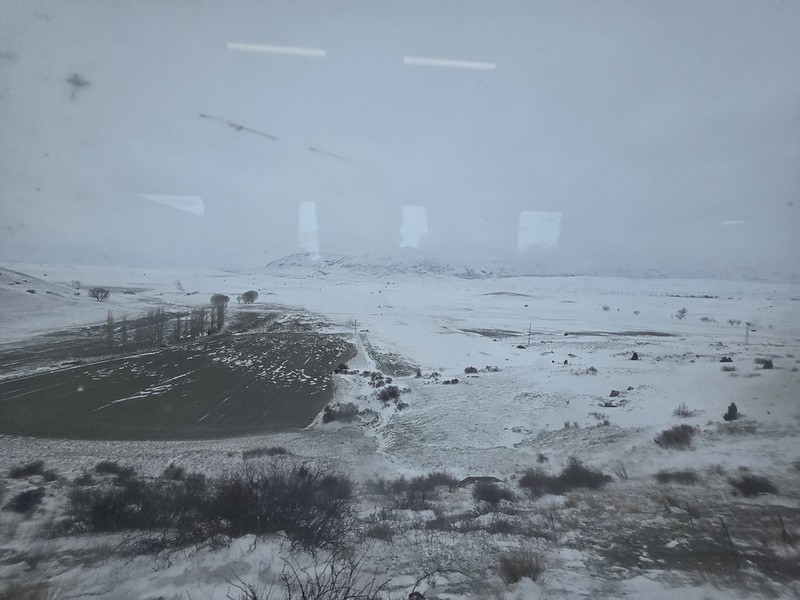
The views were beautiful along this stretch of the route, although I was working out that an arrival time of midnight was now too optimistic, it was looking more like 01:30 and that felt sub-optimal. Especially as the initial arrival time was 16:00.
It was something of a surprise that there was actually any rail service in operation, the snow was over two feet deep here.
At 17:10, we rolled into New Kangal railway station which opened in 2012.
And at 17:35, the train arrived into Çetinkaya railway station, the last one of the journey that we would see in daylight.
As it was getting dark and there was nothing to look at out of the window, Jonathan and I went to the buffet car.
This is Bağıştaş railway station and at some time in the future, it would be nice to visit these locations to explore them. It was now 21:00 and it was evident that we wouldn’t be in before 02:00, but Jonathan and I thought that was reasonable and just hoped for no more delay. In retrospect, that was aspirational.
Another delay.
Excuse the poor quality photo, but at 22:07 we arrive at Kemah, the site of atrocities where thousands of Armenians were murdered during the First World War.
Arriving into Tanyari railway station at midnight, so we had now been on the train for 30 hours. Without Internet.
A cross between a dog and a polar bear.
Into Aşkale railway station for 02:30 and the train decided it would stop here for thirty minutes. This didn’t surprise and delight me.
Ilica railway station at 03:55, but we were getting there….
At 04:25, we arrived, over 12 hours later. We were safely in Erzurum and now just had to hope that we could get into our hotel.
It was a delight to be in Erzurum, as my loyal readers won’t be surprised to hear after these three blog posts….. I did enjoy the railway journey, but would have enjoyed it a lot more if I had worked out data on my phone in advance or got an e-sim. Either way, it had been a proper adventure. Videos and the like will follow…