
In the Gnomes of Wrocław collection, this is Farmaceut, the Pharmacist Dwarf, with his own pill blister pack. It’s linked to the Boehringer Ingelheim, a German pharmaceutical company with strong connections to Poland.

HOME · LATEST 100 POSTS · BAR BILLIARDS · GOOD BEER GUIDE · NORWICH MARKET · FLIGHTS · RAILWAYS · INDIAN MEALS · CONTACT
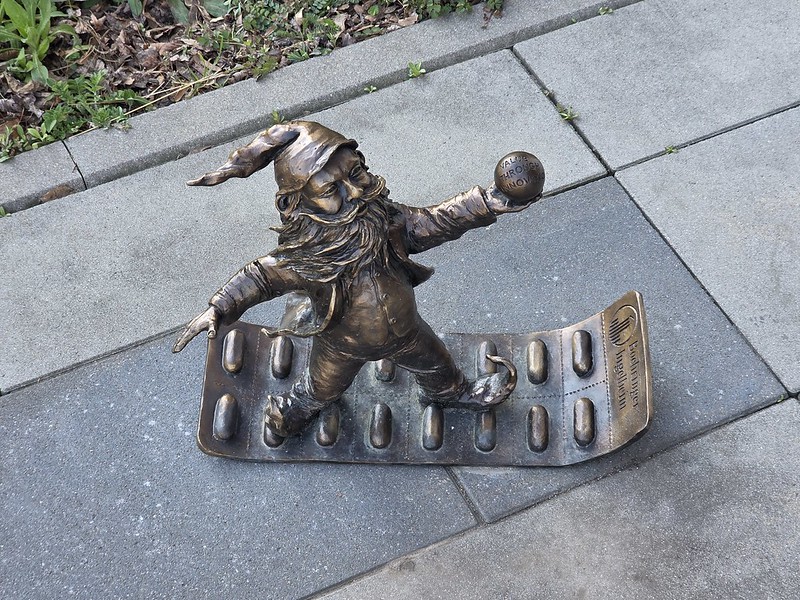
In the Gnomes of Wrocław collection, this is Farmaceut, the Pharmacist Dwarf, with his own pill blister pack. It’s linked to the Boehringer Ingelheim, a German pharmaceutical company with strong connections to Poland.
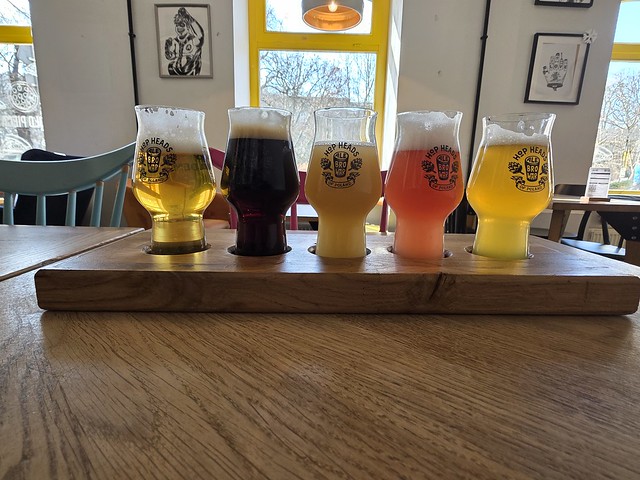

I’ve had quite a few beers from AleBrowar over the years and I’ve also been to their taproom in Gdynia. They do flights of any five beers for 40zl and that felt a suitable way of trying a number of them. The brewery was established in Lębork in 2012 and they were one of the earliest craft brewers in Poland, most focusing on hoppy beers although they brew a variety of different styles.

The interior in the early afternoon when the bar wasn’t exactly as its busiest. The service was friendly and I liked that the server gave me a printed receipt of the five beers that I ordered to ensure no confusion on what was what on the flight.

The beers on the flight and from left to right:
(i) Rowing Jack from AleBrowar, an IPA with a bitter ending, with a bit of pine and general tree, quite a punchy beer.
(ii) Tower of Cats from AleBrowar, a porter which had a dark chocolate taste, a bit of coffee and was smooth with some roastiness to it.
(iii) Coco Monkey from AleBrowar, a hazy IPA which I thought had more stone fruit than coconut, quite sweet and hoppy.
(iv) Baile de Rosas from AleBrowar, a red IPA which was more like grapefruit juice than anything else, although it was still pleasant.
(v) El Fruto from AleBrowar, an 8% DIPA which had no shortage of mango flavouring, so all that juiciness must be healthy.
This was rather a lovely little bar which is well-reviewed on-line, I imagine it can get quite busy during the evening and the prices were reasonable. I didn’t eat anything as I was heading back to the airport, but they do offer pizzas and they look suitably tempting from the reviews.
[I originally posted this in January 2020, but have reposted it to fix some broken image links]

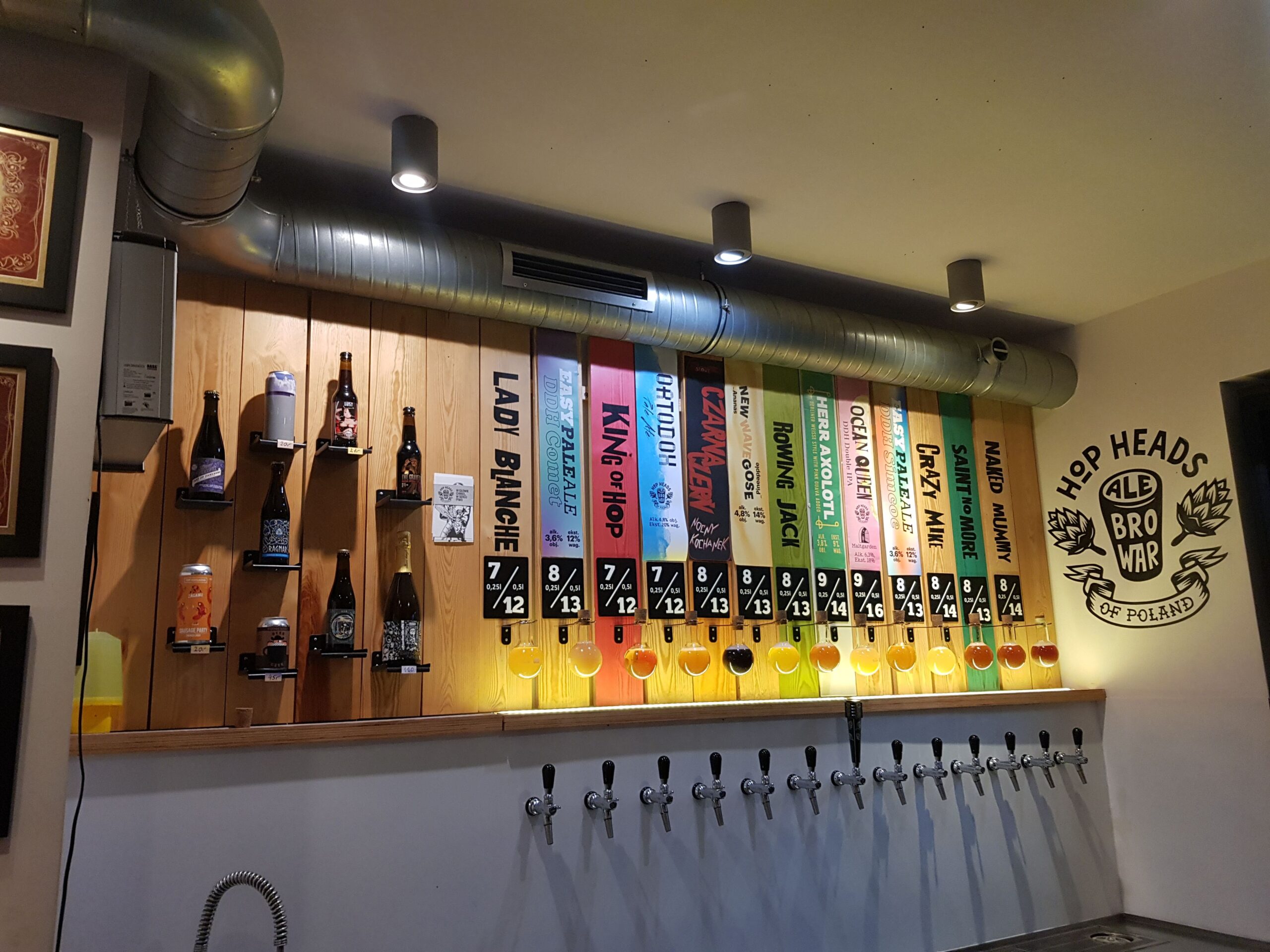
This bar is owned by the AleBrowar brewery who are based near Lebork, which isn’t far from the Tricity. The bar is located in the centre of Gdynia, just a short walk from the railway station. The brewery has also been going for some time, it started brewing all the way back in 2012, so relatively early for the Polish craft beer scene.

There’s a nice feel to the bar, which is modern and contemporary in design and the beers are clearly presented behind the counter. The bar wasn’t particularly busy when I entered, although it got a little busier as the evening progressed. The prices were reasonable and there’s also an upstairs area for when it’s a bit more packed, although that wasn’t open when I visited.

However, the choice recommended to me wasn’t a draft option, it was the Smoky Joe bottled beer which is produced by the brewery. I can’t recall having a whisky stout and although I’m not really into whisky, I don’t dislike the flavours which it has. So, this was a perfect compromise, a stout with the notes of whisky, but still at heart a stout. There was a pleasant, and not too harsh, aftertaste of whisky, but the initial taste of the beer was quite moderate and it isn’t overly rich. As a beer though, this is excellent, as it’s creative, interesting and has some depth to it.
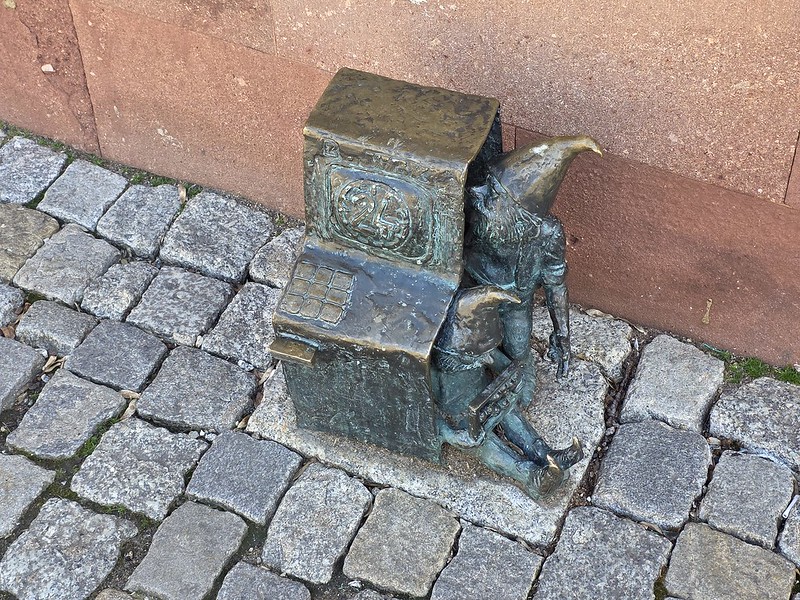

In the Gnomes of Wrocław collection, this is the Bankomatnik gnome, located next to an ATM. I’m not sure whether they’re repairing it or robbing it though….
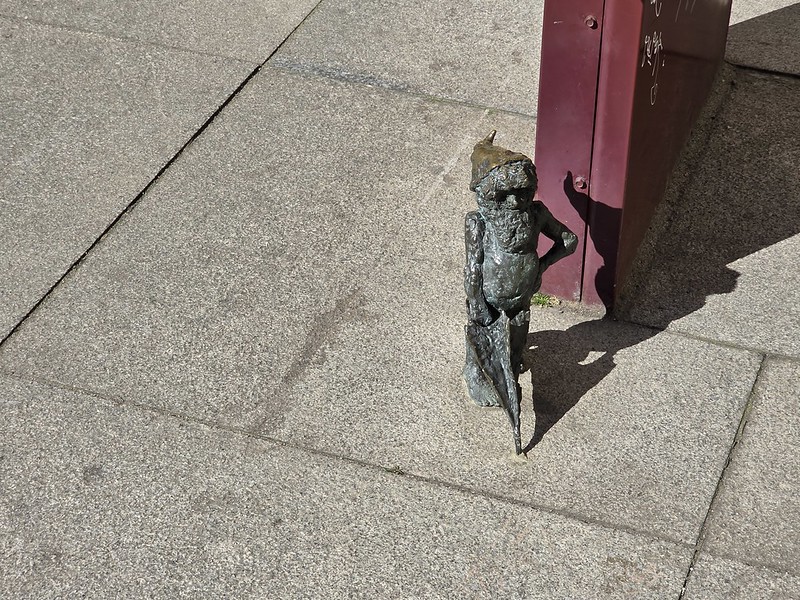

The Umbrella Gnome, also known as the Fencer, from the Gnomes of Wrocław series, located outside the university at pl. Uniwersytecki. As if it’s not hard enough to find all of these gnomes, some have split personalities, so this one is either seen as holding an umbrella as a defence against the rain or holding a fencing foil. I mean, it looks like an umbrella to me, but the official name is the Fencer, so there we go to add to the confusion.
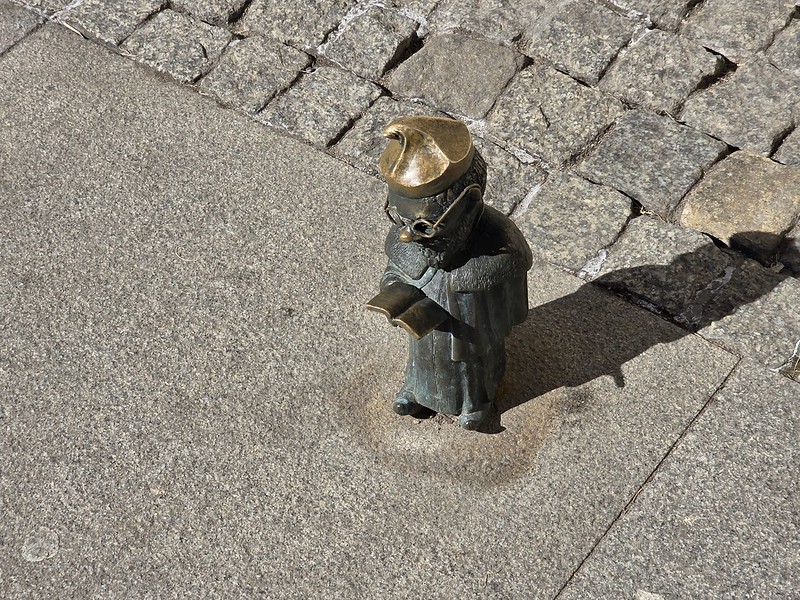

The Professor Gnome from the Gnomes of Wrocław collection, identifiable with his glasses, book and mortarboard. He is located by the University of Wrocław and shows his love of education and academia.
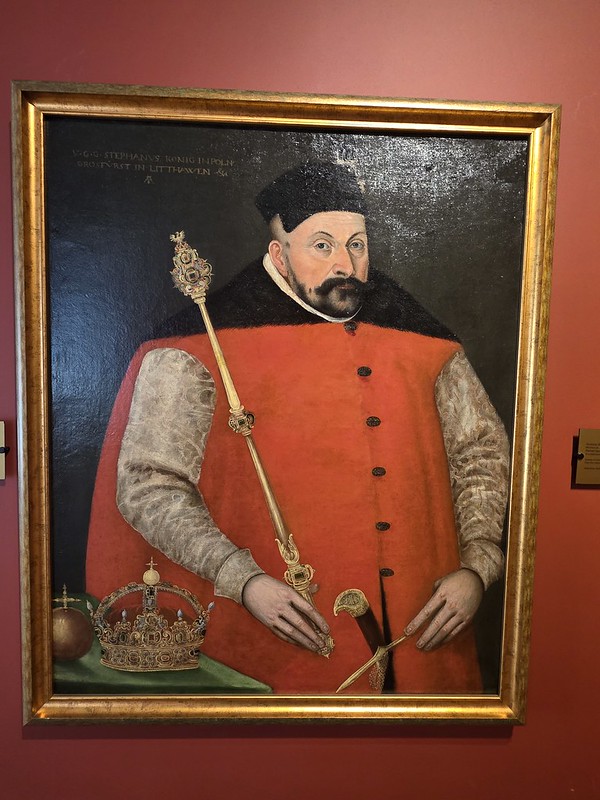

This artwork is located at the National Museum in Wrocław and this imposing chap is Stephen Báthory (1533-1586, also known as István Báthory in Hungarian, Stefan Batory in Polish), a significant historical figure who was Prince of Transylvania, Voivode of Transylvania (1571–1576), and later King of Poland and Grand Duke of Lithuania (1576–1586). The text at the top reads “By the grace of God, Stephen, King in Poland, Grand Duke in Lithuania”. Báthory was a skilled military leader who led successful campaigns against Ivan the Terrible of Russia, recovering territories lost in the Livonian War, much to the annoyance of the Russians. He also strengthened the Polish-Lithuanian army and reformed its organisation, whilst also implementing reforms in the administration and judiciary of the Commonwealth, aiming to strengthen the central government and improve the efficiency of the state.
He was also a skilled dancer, which I’m not entirely sure that I expected from the portrait, but it’s best not to judge. It is also said that he kept a pet bear at his court, which is certainly brave and at least it wasn’t a polar bear. On top of that, he was a master swordsman and he apparently kept on fencing into his later years. Before the Second World War and also since the fall of communism, he has become something of a hero in Poland. The Russians didn’t like him though and his historical role was downplayed during the communist years, it wasn’t really the done thing to celebrate someone who had fought successfully against the Russians.
As for the artwork, it was painted by Andrea Riehl (1551-1613) in about 1600, so after Stephen’s death. He was a German painter, but there’s not much known about his life and this is one of his most important works.
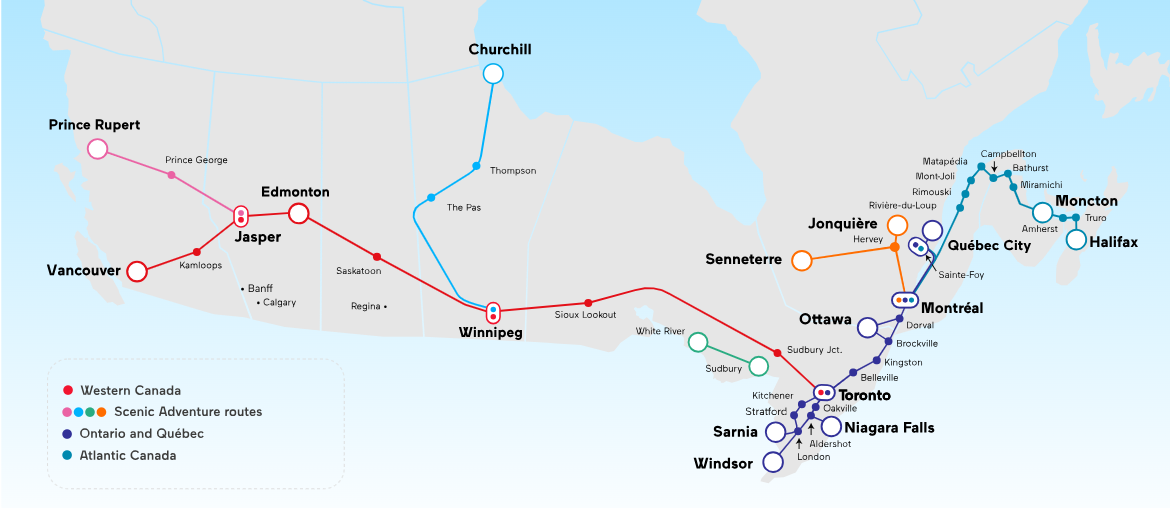

With some sadness, I’ve ditched my plans to complete the next stage of my Amtrak adventures in the United States when I wanted to go from Chicago to Seattle and then back down the west coast to Los Angeles. I’m not confident that I would be safe under the current political leadership, but, instead, I’m switching my attention to Canada and seemingly they have something called Via Rail which is the equivalent of Amtrak.

Here’s the route map and it all looks rather lovely, so I’m now on the lookout for a cheap flight to Canada….
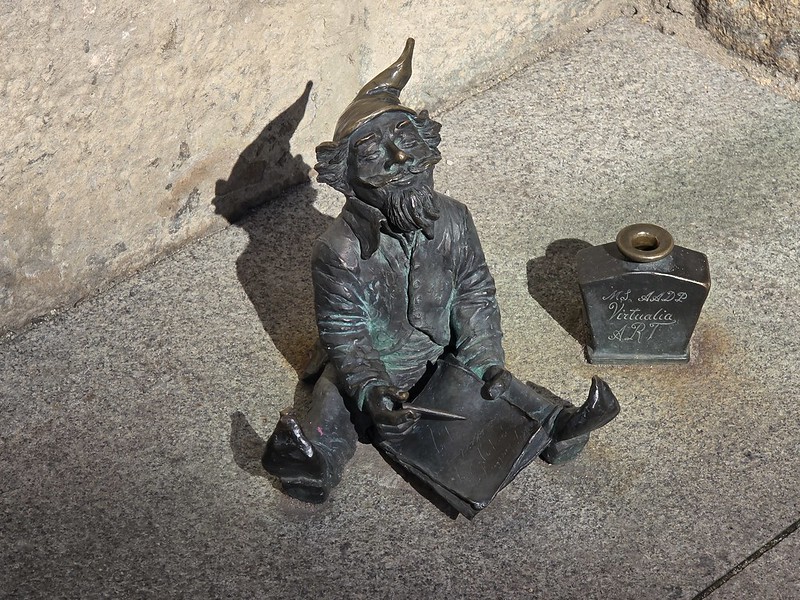

Wrocław has become well-known as being the city of gnomes (or dwarfs) and there are now an estimated 800 of these little things dotted around the city. There are so many of them that I’m not even sure that there is a complete list available (although the map at https://visitwroclaw.eu/wroclawskie-krasnale is likely as complete as anywhere), which makes completing a task to visit them all rather difficult. There’s a city map available listing hundreds of them (Dwarfs in Wroclaw_map), so I’ve now decided that I’ll have to start finding some of them because that’s what happens when I’m left alone in a city without any adult supervision……
Anyway, my two loyal blog readers can now expect some random posts about gnomes every time I find one (and, so far, I’ve found under 30 which is a rather amateurish effort I accept).

PINTA are one of my favourite breweries and they’re based in Warsaw where they have a taproom which I’ve been to several times. I’ve also been to their now closed taproom in Sopot, but I didn’t know that they had one in Wrocław and when I realised, I thought I’d better rush there. As for the Sopot outlet, I’m not entirely sure why that closed.

The beer boards and they’re also on-line at https://pinta-wroclaw.ontap.pl/. The service was friendly, personable and welcoming, with the atmosphere being laid-back and comfortable. It’s all rather on-trend, but in my desperate attempt to pretend to be a millennial, that suits me. I asked about flights and they’re reasonably priced and there are four different beers on each board of whatever the customer so desires.

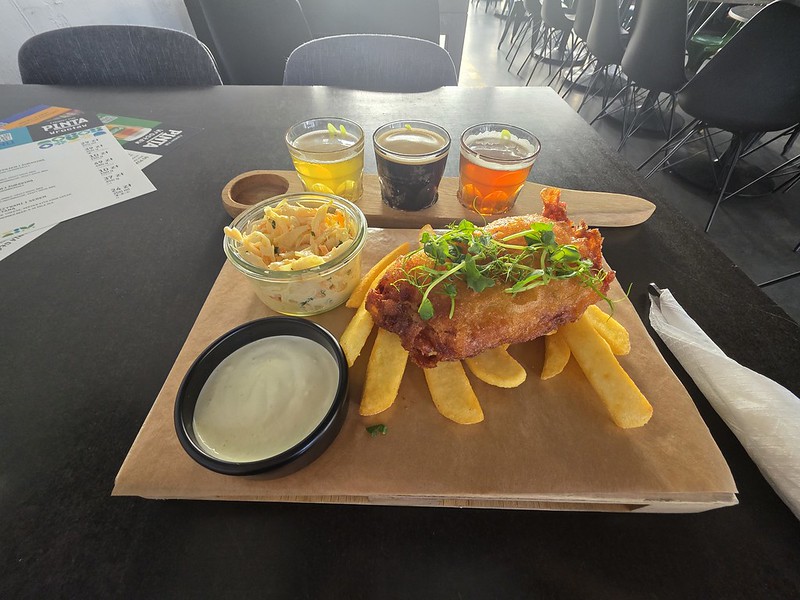
The flight of beers and from left to right:
(i) Sourtime Mango Imperial IPA from Maryensztadt Brewery, which is a sour that had mango, so they nailed that. There was a sharp citrus edge, handy as I wanted my fruit in my diet.
(ii) Break Point from PINTA Brewery, which was clean, dry and with a taste of grapefruit, quite punchy at 6.5%.
(iii) Lublin to Dublin which is a collab from O’Hara’s Brewery and PINTA Brewery, this was very creamy and a joint Irish/Polish delight. Rich flavours of milk chocolate and coffee, this was my favourite of the four.
(iv) Atak Chmielu from PINTA Brewery, which was malty, resinous and definitely had a taste of forest in it.

The interior was light and open, although as it is evident, it wasn’t the busiest lunchtime haunt for locals.

The fish and chips which was well presented, at the appropriate hot temperature and served as a generous portion size given the price. The fish had a richness of taste, the batter was quite crisp in places, but it was all suitably moreish and it went well with the beers.
As mentioned, I was pleased to discover that this bar existed, not only because it let me try more beers from PINTA, but also as it’s a comfortable space and I hope that they open up more of them around the country. I suspect, and hope, that it’s rather busier in the evenings and at weekends. The prices were moderate, the entire food and drink cost £11 and I thought that was reasonable. If I come back to Wrocław, which seems likely, then I’d be surprised with myself if I don’t come back here. All really rather lovely.