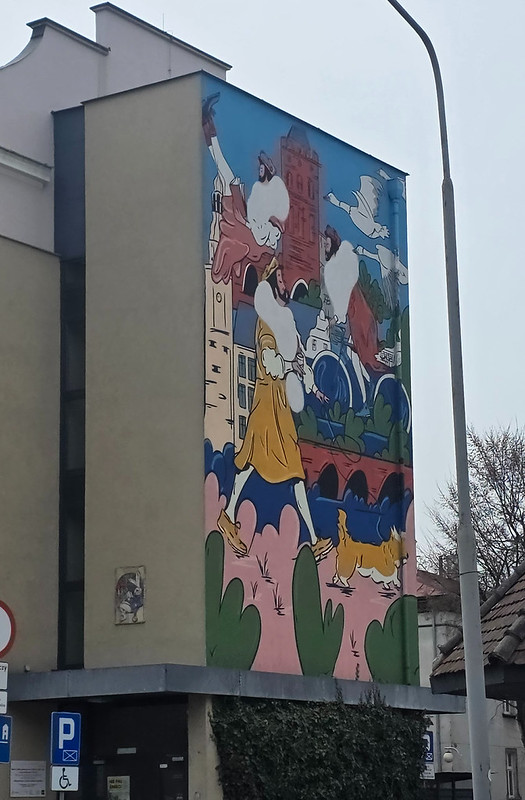
This whimsical little arrangement is on the Mikołaj Rej library and the mural was created to mark the 75th anniversary of the library. It depicts Mikołaj Rej in three different forms, namely reading a book, riding a bicycle and walking a dog. He appears against a backdrop of the city’s distinctive towers to add some local charm.
As an aside, that whole section of wall is new, it’s possible to see where it all joins onto the original building. Above is Google Street View of the same location in 2011 and I’m not entirely sure why I’ve felt the need to look back at this, but yet here we are. The mural has certainly perked the area up a little.
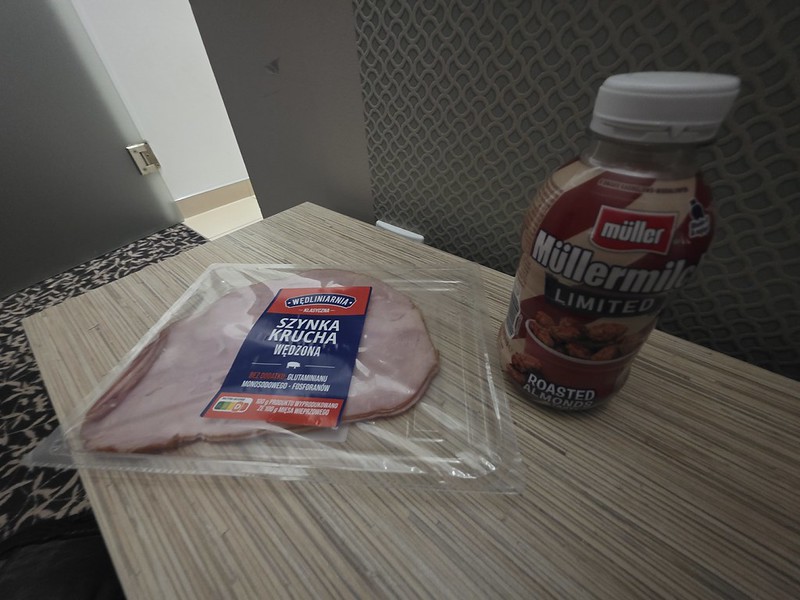
Rather than have a decadent meal out, I went for a few little things from Aldi. Although that was really just an excuse to see what flavours of Müllermilch they have, since I appear to have accidentally got a series of posts on this blog about them.
This one has a creamy milk base with the warmth of toasted nuts and sweet caramel. It paired well with the ham and I’m aware that I should probably get out more…..
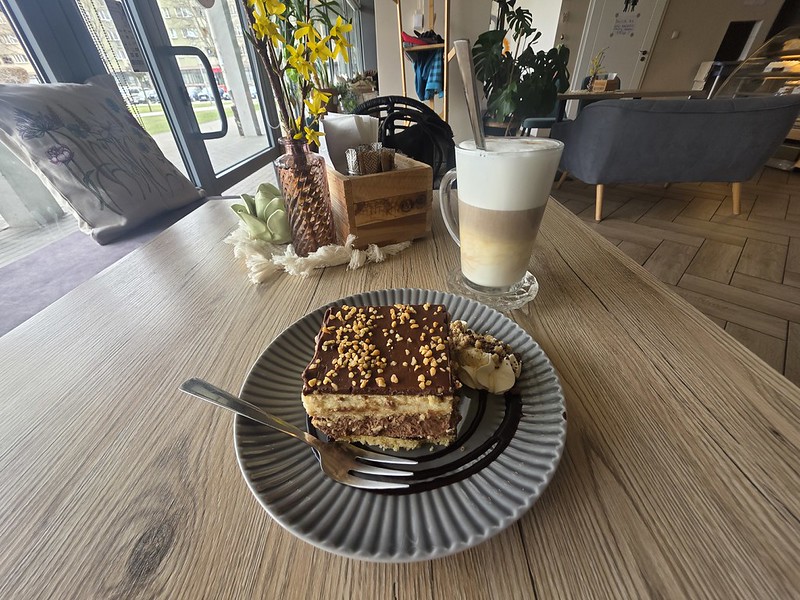
I thought that I should get myself a cup of coffee and this was the best rated cafe that I could find in Oleśnica.
It was clean and comfortable inside, with a refined and relaxed atmosphere. I’d note that it was busier than this for most of the time that I was in there.
I don’t have a particularly sweet tooth, but I thought I’d have a little something whilst I was there. The team member was friendly and engaging, with my attempts to order entirely in Polish actually working out this time. I’d suggest she did well to understand what I was saying, but it all worked out.
The cake was as rich and decadent as it looks, as well as being nicely presented with the cream and nuts. Very filling, very sweet and it complemented the latte nicely. I’m not entirely how healthy this is, but there we go, I had done a lot of walking.
The prices were towards the higher end of the scale for Poland, the coffee and cake was £7, but the quality was high and the surroundings were comfortable and inviting. And I was able to people watch for half an hour, well, and look at my phone as well obviously.
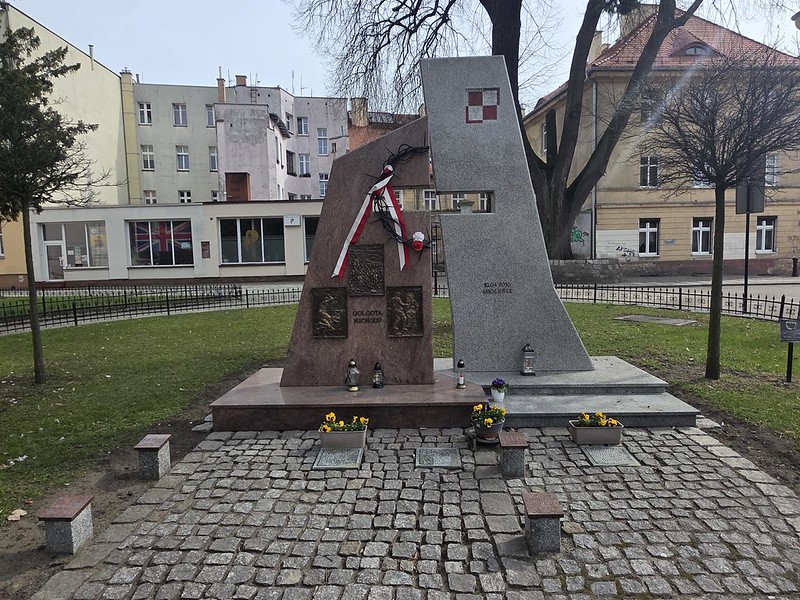
Standing near the Basilica of St. John the Apostle is this two part memorial.
The left side, adorned with bronze reliefs and a crown of thorns, is the Golgotha of the East (Pomnik Golgota Wschodu), unveiled in 2003 by the local artist Wiesław Piechówka. It is dedicated to the victims of the Katyn massacre and those deported to the Soviet interior during the Second World War. Small stone plinths at its base act as silent anchors, each bearing the name of a site, namely Siberia, Katyń and Charków, where thousands of Polish officers and civilians met their end at the hands of the terror regime of the Soviet Union.
In 2015, the memorial was expanded to include a second granite wing on the right, dedicated to the Smolensk air disaster of 10 April 2010 which killed 96, including the country’s President. The design, by the same local artist, uses the negative space between the two halves to form a symbolic cross, visually linking the original 1940 tragedy with the crash of the presidential plane seventy years later.
It’s one of the cleverest put together monuments that I’ve seen, with no shortage of meanings that might not be evident at first glance.
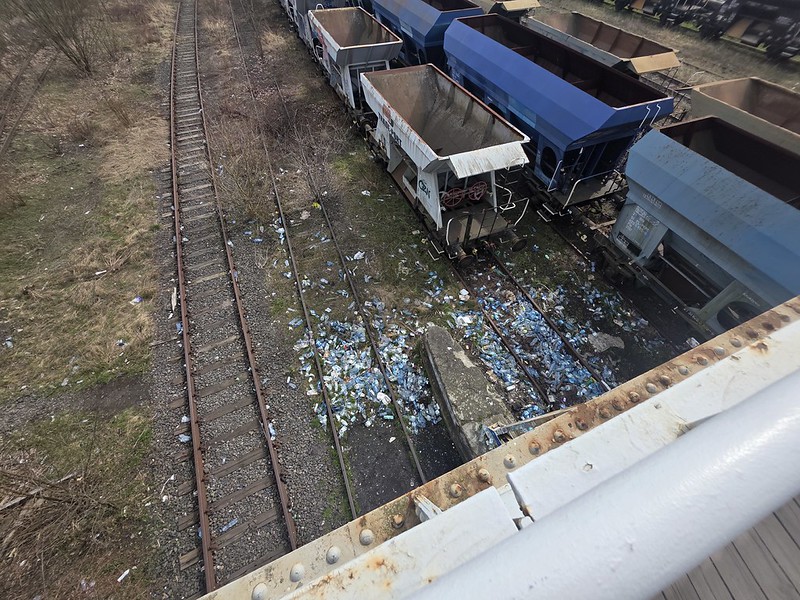
In a city, and indeed a country, which has very little litter, this seemed a little bit odd. Either someone has fly tipped a heap of water bottles onto the tracks, or one of the containers has had a sub-optimal situation and disgorged its recyclable materials onto the track….
Having been to Wrocław many times before, including four times over the last year, I thought that I’d get the train to somewhere new as I move across Poland to get to Warsaw Beer Festival. Here’s Wrocław Główny railway station looking rather lovely in the morning sun.
Wrocław Główny was originally constructed between 1855 and 1857 according to the Neo-Gothic designs of royal architect Wilhelm Grapow. At the time of its completion it stood as one of the largest and most architecturally ambitious railway structures in Europe and served as the primary gateway for the Upper Silesian Railway. Throughout the twentieth century the station underwent several significant expansions and survived the Siege of Breslau in 1945, being comprehensively restored in 2012. It now also has a rather lovely shopping mall attached to the back of it, which is also home to the city’s coach station.
And there’s my train, which is a regional service.
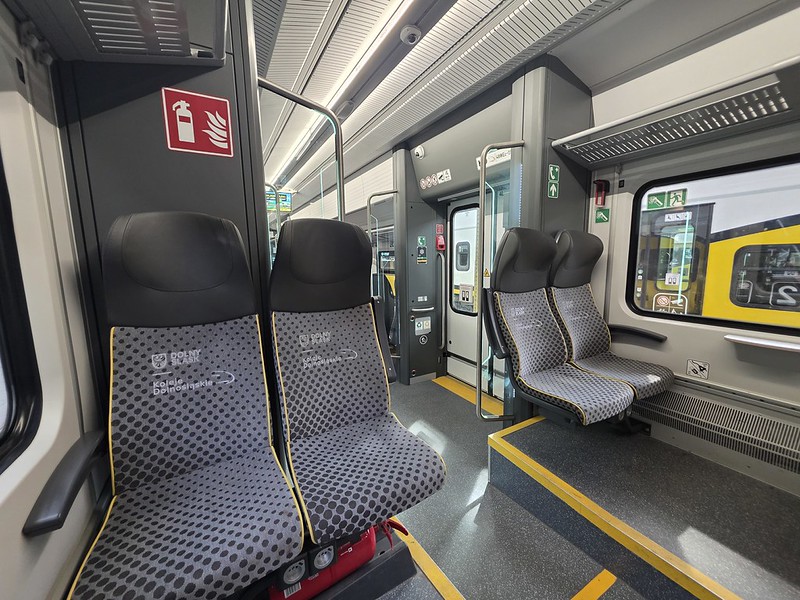
Very shiny, this is part of the Koleje Dolnośląskie (KD) fleet.
The journey to Oleśnica takes around forty minutes and costs around £3.
I bought my ticket at the railway station as it was a short and regular regional service, I normally buy them in advance. The train was clean and comfortable, with power points available under the seats. My ticket was checked by a cheerful guard as she meandered down the train.
It’s a reasonably beautiful journey across the Polish countryside.
Safely into Oleśnica railway station which officially opened on 28 May 1868 as a key stop on the new line connecting Wrocław Nadodrze with the industrial regions of Upper Silesia. Its arrival marked something of a transformative era for the town, prompting the removal of medieval city gates to accommodate increased transport and establishing the station as a major Prussian transport hub between the Oder River and Greater Poland. This reminds me of the hole in the city wall that they punched through in York for the city’s railway station, then promptly built the new railway station outside of the city walls…
Like seemingly many things in Poland, the railway station has received a large investment and the building is being restored back to its grand former past.
And this is what it’ll look like when the work is completed.
And at just after 02:00, I arrived at Ibis Centrum in Wrocław, which is in the same building as the Novotel. The hotel had sorted out the payment earlier in the day (well, the previous day) for me and so the check-in was prompt and efficient. Accor in Poland, as I’ve mentioned several (hundred) times are operated by Orbis and they are a reliable option to stay at.
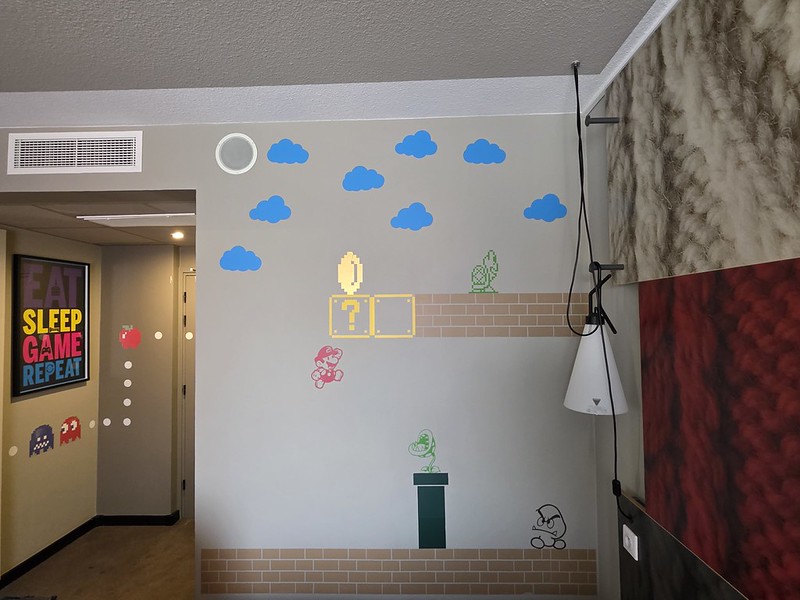
The hotel has some themed rooms and I was in the Game Room for this visit.
The room decoration and they’ve put some considerable effort into this.
Not that I had time to play it, but there was a games console in the room.
And some board games.
Very nice.
There was also a welcome drink of a decadent apple juice and some ginger biscuits which were rather lovely. There were also teas and coffee, it all proved reasonable value at under £40 for the night. Given the relatively small amount of time that I had in the hotel, I opted against getting breakfast as I didn’t want to get up too early.
I’ve stayed at this hotel, both the lower floors which are Ibis and the higher floors which are Novotel, before and had views over both sides. This is looking out the front and they’re making progress on that building to the right as they were digging the foundations out when I was last here.
I didn’t have any noise disturbances either internally or externally, but the hotel is ready for the construction noise.
Anyway, this was a rather lovely stay once again with everything being trouble free and as expected. Arriving at 02:00 meant that the welcome drink wasn’t an option, as not unsurprisingly they don’t want to keep the bar open that late, and I wanted to get going to my next stop early the following morning. The team members were friendly and it’s just a slight shame that I didn’t have time to play on the games console or the city’s version of Monopoly.
I wasn’t intending to write this bus journey up, so I’ll admit that the photos aren’t quite as professional as I’d like. The bus stop is located by turning right after leaving the airport terminal, it’s right at the end although is clearly signed.
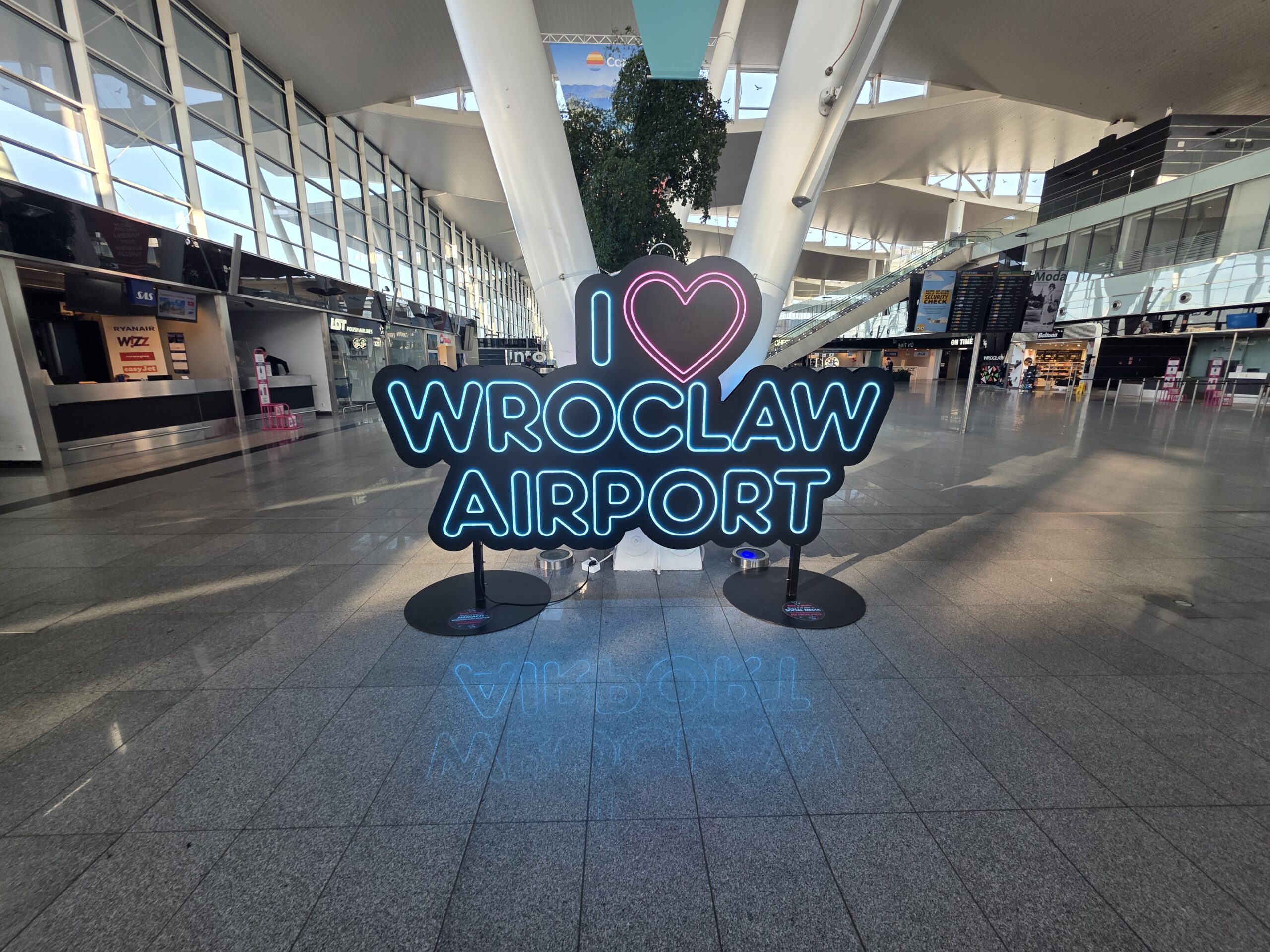
Given the poor quality of the imagery in this post, here’s a better quality photo from last year to add to proceedings.
Anyway, I digress. It’s possible to buy tickets on the bus, but there’s also a ticket machine and I prefer to use this when there’s time available to do so. It accepts cards and can be switched to English, with everything being self-explanatory.
One single ticket costs about 80p and it’s rather lovely that the authorities have made the decision not to take advantage of passengers here by surcharging the airport route. Other airports could perhaps make a similar decision….. I wasn’t intending to use an Uber, but I checked to see how much a journey would cost and it would have been around £8 which is probably a lot less hassle for those with luggage.
The bus was really quite busy on this occasion and although I got a seat as other passengers were faffing about buying a ticket on board, there were some left standing for the journey. It’s around a thirty minute journey to the city centre and the route ends up at the city’s railway station.
And the centre of Wrocław at around 02:00 in the morning. I wasn’t particularly trying to take a photo of the McDonald’s signage, just a night-time shot that came out blurrier than I wanted. I decided not to faff about any more, so that means this is another blog post that isn’t entirely optimal.
Anyway, this all meant that I arrived at the Ibis Hotel the earliest that I could have expected and I was once again delighted by the city’s transportation system. And I might take better photos next time.
Safely at Luton Airport nice and early, as usual. The security process was smooth and efficient, taking less than five minutes from when I scanned my boarding card.
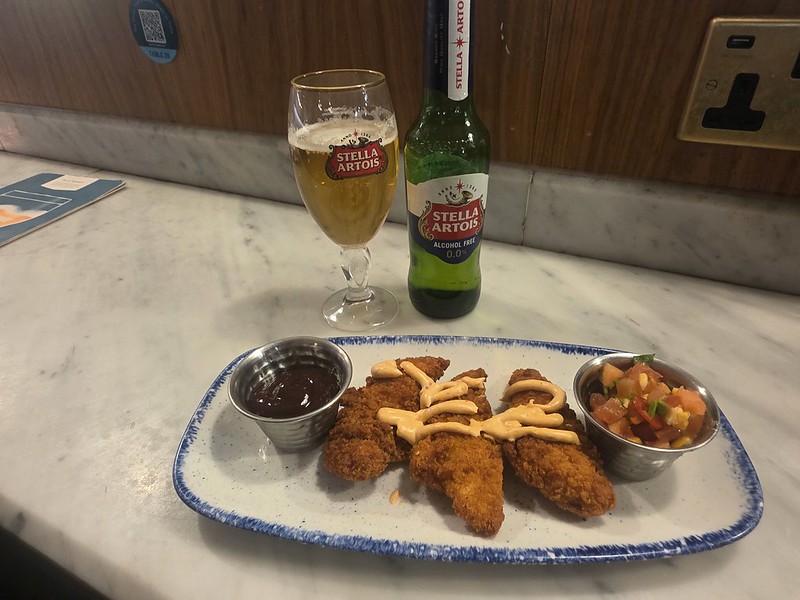
I popped into Big Smoke with my Priority Pass card and had the usual delicious chicken tenders and a slightly less delicious alcohol free Stella. The service is always friendly and efficient here, with plenty of power points to ensure I didn’t have to stress about that.
And then into Nolito for a healthy snack with pineapple juice. It’s quite pricey and I’m not sure that the quality here quite justified the price, but as it was free, I decided that I’d cope.
By then, it was getting nearer the time when boarding started, with my flight being the penultimate out of the airport that day. I rather like days such as this with an evening flight, I get a chance to get on top of everything work wise and nothing feels rushed.
The boarding process was smooth, well managed and everything was clear. The staff here were friendly and personable, it was all efficient and organised.
And then the boarding, I was towards the back of the aircraft and boarded via the rear doors.
The aircraft was HA-LGM, which is yet another one that I haven’t been on before. It was newly delivered to the airline in July 2024 and inside everything was clean and in a decent state of repair.
I have little to report about the flight, as once again, it was operated by Wizz Air with professionalism and efficiency. The seating Gods had given me an aisle seat with no-one next to me, the announcements were clear, the crew were friendly and it was all peaceful and organised. We landed on time and the pilots kept us informed of what was going on.
The one negative, which wasn’t the fault of the airline, is that they had expected steps to be brought to the back of the aircraft in Wrocław, but they instead used a jet bridge. That meant it took a bit longer for me to disembark with a wait of nearly fifteen minutes on board. This isn’t a problem, but there’s one bus an hour that departs the airport at night and I didn’t really want to miss it as it was already late enough.
I’ve mentioned this before, but one of the advantages of flying on Wizz Air as a passenger with a British passport is that there aren’t generally many of us (and that is obviously a generalisation). Indeed, despite disembarking almost last, there were only two people ahead of me in the queue at border control. This meant that I was able to get through the border quicker than most holders of EU passports, a rare treat, although I’d still quite like an EU passport once again…
Anyway, the efficiency here meant that I was outside the airport with fifteen minutes to spare before the night bus turned up. Another rather lovely flight and a bargain for just £8.99. And it’s lovely to be back in Poland.
After visiting ten pubs with Roy and Jen, it was time to plan the week’s adventure which was to work out how to get to Warsaw Beer Festival. This will be my third time going and my first challenge was to find a £8.99 with Wizz Air’s Multipass. Fortunately, there was a flight to Wrocław on Monday evening and Liam kindly agreed to take me to Luton after I had a quick hour rest in Norwich which gave me time to think about packing.
And the journey was suitably luxurious with Liam’s decadent car ensuring that my seat was chilled, whereas his was heated for reasons unknown. Safely in Luton after faultless driving, although I could perhaps have done without the ten minutes standing at the reception desk waiting for a team member to come and check me in. I also had a strong suspicion, for reasons I won’t go into here, that the team member had been asleep, but, I can’t imagine being the night porter at a Travelodge in Luton is always the more inspirational place to be.
Anyway, there were no issues with the hotel, it was a cheap Sunday night room and I woke up ready for the three mile walk into the heart of Luton.
This was pretty much the highlight of the three mile walk, it’s not really the most scenic. Listening to podcasts makes it just fly by though.
Then, after a quick free meal and also a heap of coffee at the White House, which is the JD Wetherspoon pub in the town, it was time for the forty minute walk to the airport. Arriving five hours early for the flight felt just right in terms of timing….. Another adventure begins.