Author: admin

  • Madrid – Thyssen-Bornemisza Museum (Floor 2)

    Madrid – Thyssen-Bornemisza Museum (Floor 2)

    [I originally posted this in July 2018, but have reposted it to fix some broken image links]

    I spent rather longer at the Thyssen than I had anticipated, as I felt that there was such a depth to the collection. That this gallery has been established from a private art collection marks that even more remarkable.

    As I mentioned in the above post, the gallery has information on nearly every artwork on its web-site, which added an extra dimension to many of the paintings. I also could have downloaded photos from the gallery’s web-site rather than use my own photos, which are often not quite level, but it didn’t feel quite as personal…

    20180716_122746

    Canaletto’s Grand Canal from San Vio which was painted in 1723. The gallery has seven artworks by Canaletto, one of the largest collections of his works in the world. The gallery acquired this artwork in 1958 from the Liechtenstein collection, which slightly confuses me, as I’m not sure why it was sold. But other works by Canaletto were also sold at the same time, and at least has been bought back by the Liechtenstein collection. Their collection is housed in Vienna, although it can only now be accessed by going on a tour, there’s no standard access to the public any more.

    20180716_124837

    Edgar Degas’s Race Horses in a Landscape which was painted in 1894. The gallery has four works by Degas and this painting was once owed by Louisine Havemeyer. I confess my knowledge of artwork is rather limited, but I liked the description that the gallery has of this work, “it is also interesting to note the brilliant hues that Degas used as if they are spices in an exotic visual stew”.

    20180716_124819

    Edgar Degas’s The Pond in the Forest which was painted in 1867. The gallery doesn’t give any information on the history of this painting, but relying on the web-site again, they note “Degas laid his dark browns and greens onto a white primed canvas with large brushes and proceeded to use the palette knife to scrape the surface, revealing the canvas weave and the white priming throughout the painting”. I also like how Degas mocked those artists who painted outside, instead of sitting inside a Greggs to complete their artwork (I’ve obviously modernised the exact location of where Degas completed his paintings, but I’m sure it’s broadly accurate).

    20180716_122724

    Back to Canaletto, and this is the 1748 artwork of the South Facade of Warwick Castle. I hadn’t realised he had painted so many artworks in England, I had rather thought he had mostly concentrated on Italian scenes. Referring again to the level of depth on the gallery’s web-site, they’re able to share the information that this artwork was in Warwick Castle’s billiard room in 1853 and in the breakfast room by 1893. Warwick Castle, and most of its contents, were sold in 1978 and that is when this gallery purchased the work.

    20180716_122235

    Jan Brueghel I’s Christ in the Storm on the Sea of Galilee which was painted in 1596. The colours of this painting are bright and vivid, not quite what I would expect of an artwork which is over 400 years old. The oils are painted onto copper and there are similar artworks painted by the artist in numerous galleries.

    20180716_124731

    Claude Monet’s The House among the Roses which was painted in 1925. Painted just a year before the artist’s death and this artwork is one of a series of six. To my hopelessly untrained eye, I didn’t even notice the house (which I’m assuming is quite an important of the artwork given the title of the piece) until standing back a little.

    20180716_130918

    Raphael’s Portrait of a Young Man, painted in 1518 and for some time thought to have been painted by Giulio Romano. The face is beautifully painted, but I think it’s fascinating to read about the lengthy process of art experts deciding who painted it. It appears that it was painted by more than one person, following the analysis of the various brushstrokes and styles across the artwork. On the bright side for these art historians, it seems unlikely that whatever their decision is that they can ever be proved wrong…

    20180716_124800

    Pierre-Auguste Renoir’s Wheatfield, painted in 1879. The artwork was painted at Wargemont, in Normandy, and is an early impressionist piece.

    20180716_122056

    Peter Paul Ruben’s Portrait of a Young Woman with a Rosary, painted in 1609. It is known who the sitter is, which is unfortunate, and it’s thought that the painting remained in Ruben’s family until 1853. It was then owned by numerous private collectors before being purchased by the gallery in 1979.

    20180716_130952

    Hans Holbein of Joven’s Portrait of King Henry VIII, painted in 1537. This is the younger Holbein, and perhaps the best known for his paintings of members in the Tudor court. It’s not entirely clear whether this portrait was in the King’s private collection, but it was later owned by the Earl of Sutherland. It was then sold privately before being purchased by the gallery, and it’s one of the highlights of the collection.

    20180716_121720

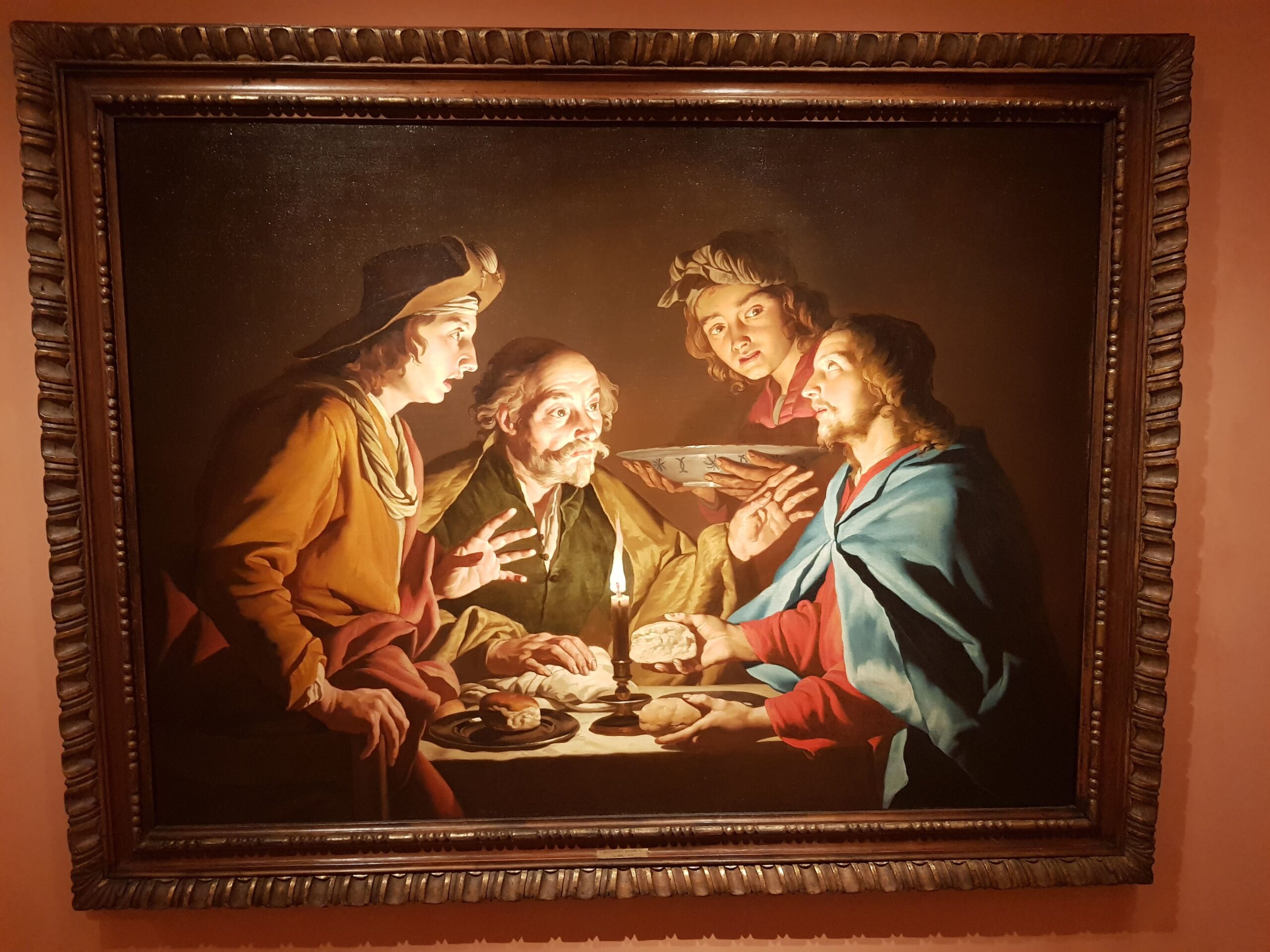
    Matthias Stom’s The Supper at Emmaus, painted in the 1630s. I hadn’t heard of the artist, but I did really like the colours which were used, it did feel that a light was being pointed at the centre of the canvas. For some time this painting was located in the West Indies, before being owned by a family of wine-growers in Bordeaux.

    20180716_125544

    John George Brown’s Tough Customers, painted in 1881. This was another artist that I’d never heard of, but I thought his artwork was particularly interesting. Reading more about him, apparently he’s popular, but art critics aren’t too impressed by his work. But I like him anyway  🙂   He liked painting street urchins and those with no money because he felt that he related to them. He was mainly painting children in New York, but he was actually a British artist who originally came from Durham.

    20180716_125654

    Another work by John George Brown, this time entitled The Bully of the Neighbourhood and this was painted in 1866. The gallery’s web-site notes that the artist liked to tell a story, which is clearly evident in this painting.

    20180716_130832

    Correggio’s Portrait of a Man, painted in 1520. It’s not quite agreed whether this painting is by Correggio or by El Greco, but it spent much of its time located in Brussels. It isn’t known who the sitter was, but it is currently thought that he had a role of a magistrate.

    20180716_124621

    Alfred Sisley’s Evening in Moret, painted in 1888. I always thought Sisley was a British artist, which is technically true, but he spent most of his life in France. The painting is of the River Loing in central France, and the artist painted numerous similar scenes in different seasons of the year.

    20180716_130752

    Wolfgang Beurer’s Portrait of Johann von Rückingen, painted in 1487, which makes this one of the earlier portraits in the collection. There was some detective work to ascertain who painted this work, and it was only established in the twentieth century.

  • Madrid – Thyssen-Bornemisza Museum

    Madrid – Thyssen-Bornemisza Museum

    [I originally posted this in July 2018, but have reposted it to fix some broken image links]

    I had a lot planned for today, which included walking around Madrid to understand the layout a little more, then an art gallery and then some churches and restaurants. Unfortunately, I got a little hot walking about so didn’t manage more than about a mile and then I visited Thyssen-Bornemisza Museum.

    The Thyssen, as it is known to friends (their friends, not mine), is an art gallery which I read had a manageable number of artworks, as opposed to the nearby Prado. I visited today as it was free entrance, which was sponsored by Mastercard. There was a long queue to get in, but it moved quickly and so it took under ten minutes for me to get in, which was very reasonable.

    I thought that two hours would be enough time for me to look around and I was aware that on Mondays the gallery opened from 12:00 until 16:00. So, I start my walking around the gallery at 12:10, and before I know it, it’s 15:45 and they’re starting to clear everyone out.

    The free entrance policy is a really good one, but it did inevitably make the galleries rather busy. But it wasn’t excessively crowded, and I do always fear for those galleries with nearly no-one in them, as they lack atmosphere. I also liked that they let visitors take photos, as that seemed to increase the level of engagement.

    Frankly, I thought that the gallery was impeccable in its presentation, design and flow. What I really liked is that their web-site has extensive details on just about every artwork in the gallery. So, a visitor can read in depth about any painting they like, as well as read more about the artist. I can’t begin to understand how long that took them to create, but it added substantially to my visit.

    Given that I haven’t managed to do much else today, I will write about some of the artworks that interested me, split over the three floors (floor 0, floor 1, floor 2 ) that there were located in the gallery. I’ll add links to those when they’re written, but I’d certainly recommend a visit here, even at the full admission price.

  • Madrid – Thyssen-Bornemisza Museum (Floor 0)

    Madrid – Thyssen-Bornemisza Museum (Floor 0)

    [I originally posted this in July 2018, but have reposted it to fix the broken image links]

    And in the last of my three part series which has shaken the art world (ahem) is the ground floor of the wonderful Thyssen gallery. Artworks I liked from the other two floors are at floor one and floor two.

    20180716_150653

    Francis Bacon’s Portrait of George Dyer in a Mirror which was painted in 1968. I hadn’t realised that Bacon died in Madrid in 1992, although this is his only artwork that the gallery has. George Dyer was Bacon’s partner, and he killed himself in 1971 by taking an overdose of drugs.

    This artwork went a little over my head, so I’m again reliant on the gallery’s web-site to try and explain what it’s all about. They note that “the violence and brutality of the image, focused on the distortion of the main figure whose face is contorted by a spasm, as if being subjected to a number of forces from which he cannot break free, is heightened by a circular halo of light from a source located outside the painting”.

    20180716_151052

    Pablo Picasso’s Head of a Man which was painted in 1913. I have no idea what this represents, and reading the gallery’s description, I’m not sure that they have either. They mention that elements of a face are visible and that it gives “a certain impression of reality”. I’m not entirely clear what that means, but then again, perhaps art isn’t always created to mean anything.

    20180716_150459

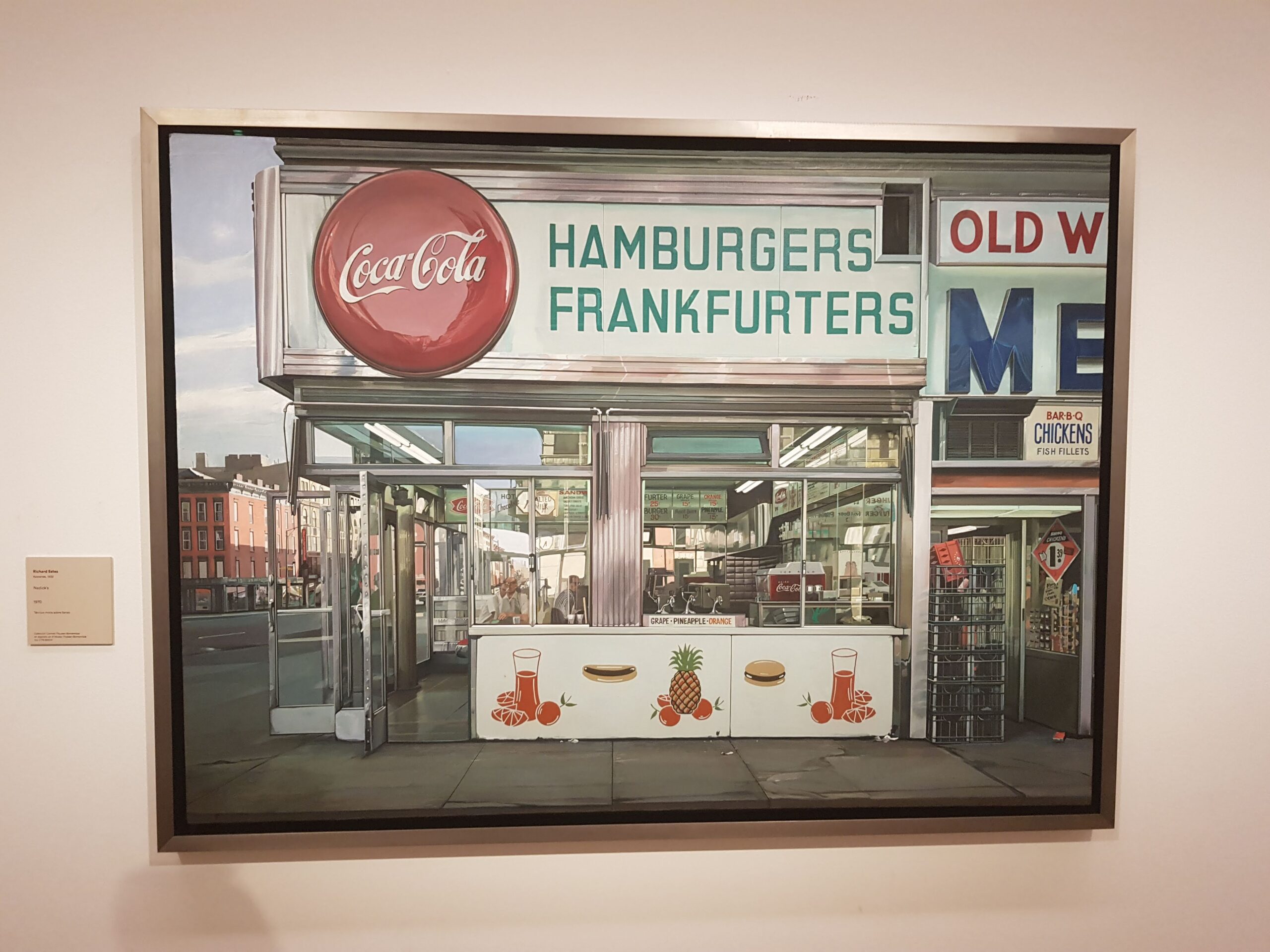
    Richard Estes’s Nedick’s which was painted in 1970. It’s apparently part of the photo-realism, or hyper-realism, and this is something that I can better understand. The content is obviously rather close to my heart, but the clarity of the painting and the clarity I thought is rather beautiful.

    20180716_150924

    Kurt Schwitters’s Merzbild Kijkduin which was painted in 1923. The gallery has five artworks from this German artist and this particular one takes its name from a village near the Hague. Until 1957 this artwork was owned by Hannah Höch, whose work was labelled as degenerate by the Nazis, and she buried her entire art collection, which I imagine locally includes this one, in a well in her garden.

    20180716_150441

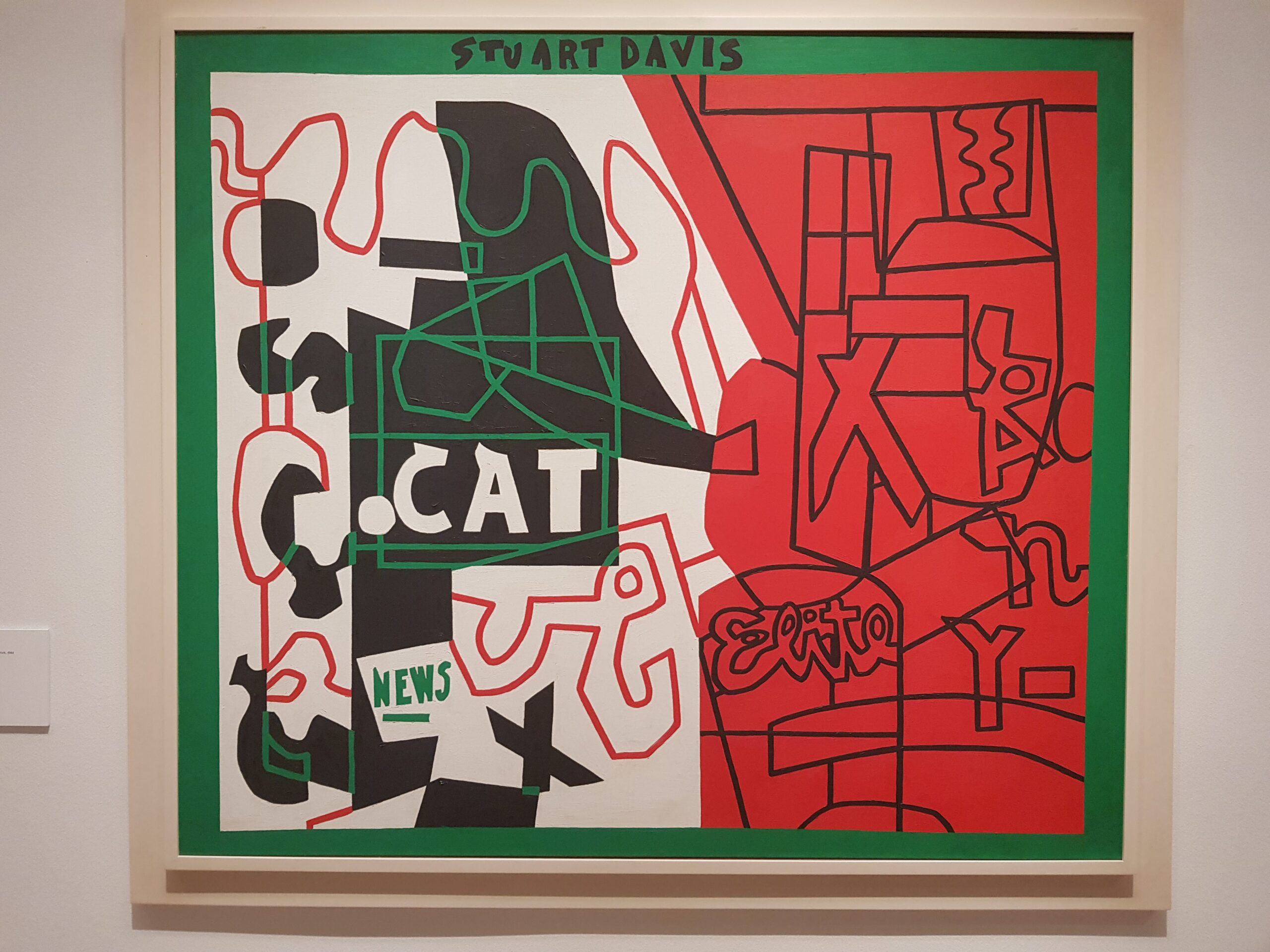
    Stuart Davis’s Pochade which was painted in 1956. I’m becoming ever more intrigued into how art experts explain artworks such as this, which don’t seem to mean anything. The gallery description of the artwork is interesting, but can’t explain what the point of it is, or any meaning behind it.

    The Wikipedia article about the artist notes “with the belief that his work could influence the sociopolitical environment of America, Davis’ political message was apparent in all of his pieces from the most abstract to the clearest”. I’m at a loss as to how this artwork influences the sociopolitical environment of the US, but I’d be interested to know what thinking lay behind it.

    20180716_150824

    Marc Chagall’s The Cock which was painted in 1928. This seemed a popular artwork when I visited, it seemed to attract people to come over. I can’t add anything much to it, other than to quote the gallery’s description that “Chagall depicts a loving embrace between the animal and a female figure that is generally identified as a harlequin”.

    20180716_150421

    Roy Lichtenstein’s Woman in Bath which was painted in 1963. This is the only artwork the gallery has by the artist, and it’s one they are proud of given their coverage of it in promotional material. To me, this sort of painting rather defines America in the 1960s. Apparently artworks by Lichtenstein reach tens of millions of pounds, quite remarkable given that it’s only fifty years old.

    20180716_150057

    Edward Hopper’s Hotel Room which was painted in 1931. This was another popular artwork with a queue of visitors waiting to take a photograph of it. The gallery has four of Hopper’s works and the theme of this painting is to show loneliness in a hotel room in a city. I rather like hotel rooms, but for those who don’t, there’s a lot of depth in this.

  • Madrid – Almudena Cathedral

    Madrid – Almudena Cathedral

    [I originally posted this in July 2018, but I’ve reposted it to fix the broken image links]

    20180715_124656

    Madrid hasn’t always been the capital of Spain, and it took some considerable time for the church to arrange to build a cathedral in the city. It built many in the Americas during the seventeenth and eighteenth centuries, but this one took it a little longer.

    20180717_141044

    The construction work started in 1881 when the foundations for the building were started. Land was given to the church by the neighbouring Royal Palace, meaning that it had an important city location. So, the civil engineers got going to build the cathedral, and then the money ran out. It took until 1911 to construct the crypt, but that was sufficient for services to at least be held.

    20180717_141130

    Work didn’t progress any faster after they finished the crypt. The Spanish civil war started and very little work was undertaken during that period, but in 1950 it was decided to speed things up again. So, it had taken 70 years for the civil engineers and the church to manage to build anything other than the crypt.

    But, with the help of the local council, it all started happening again. The nave was covered and completed by 1961 and the city residents looked forwards to having a cathedral that they could be proud of. Then the politicians of Madrid City Council got themselves involved with the process, and then the project stopped again because it ran out of money.

    It wasn’t until 1984 that work started again to complete the building, more than a century after they had commenced the construction. With a huge burst of energy, it was completed nine years later and in 1983 Pope John Paul II consecrated it.

    20180717_134325

    The impressive bronze doors.

    20180717_134142

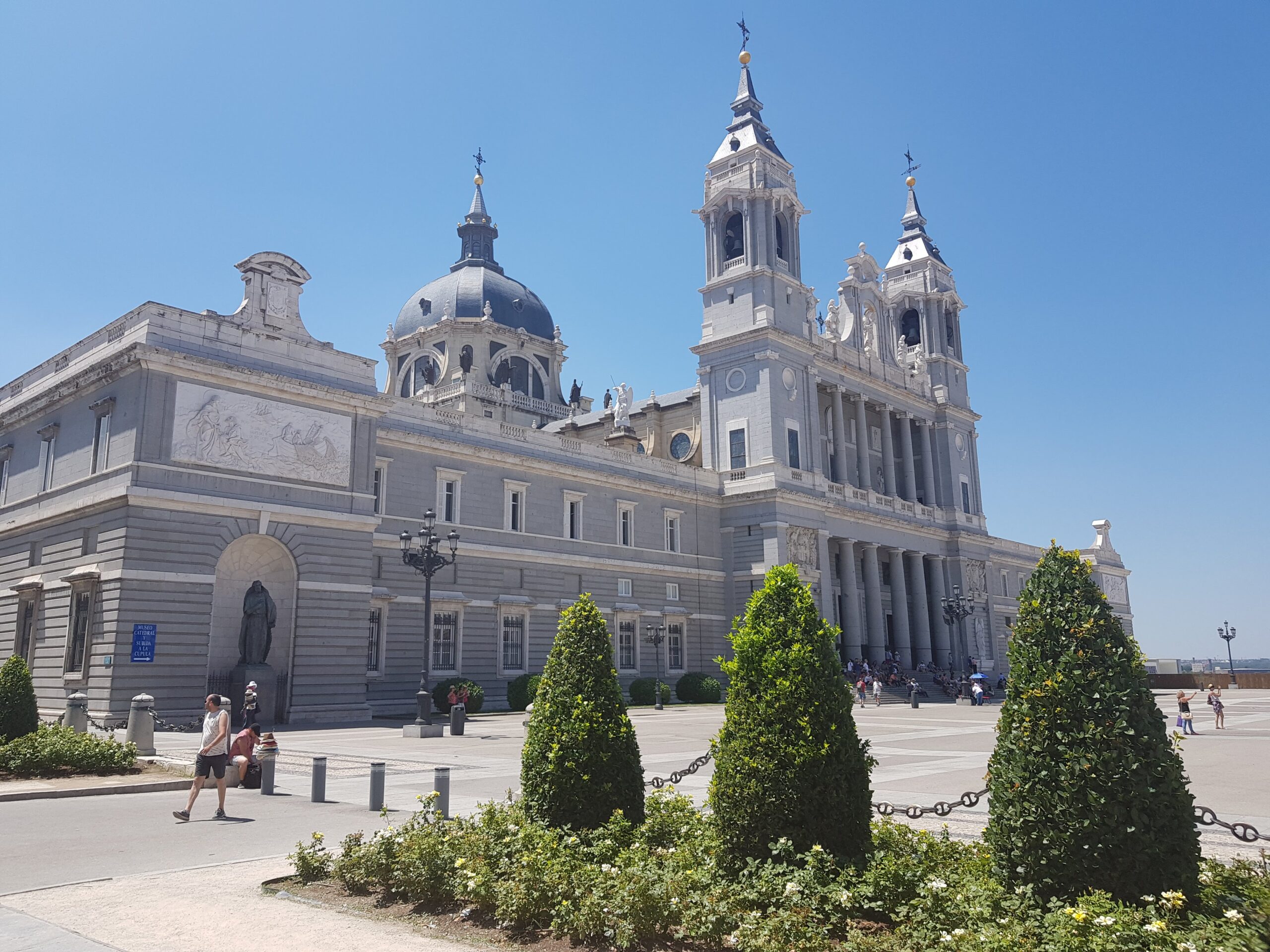
    The exterior of this building is beautiful, this is the view from the Royal Palace side of the cathedral.

    20180717_141712

    The cathedral’s grand nave, which is filled with light.

    20180717_135827

    The altar of Virgen de la Almudena, which is an altar dating back to the fifteenth century.

    20180717_134444

    The organ, which was built and put together by Gerhard Grenzing.

    20180717_141206

    The Gothic chest of Saint Isidro, which dates from the thirteenth century and came from the Archbishop’s Palace.

    It’s certainly a very grand building, and surprising that it took so long for the work to be completed, although it was at least finished before the Sagrada Família in Barcelona, which they’re still faffing about with (although that’s a basilica and not a cathedral).

    There’s no entrance charge, although a donation of €1 is requested, and a reasonable number of people seemed to be paying it. I particularly liked the display boards that gave some of the history of the building, it helped put numerous elements into perspective.

    There were also private areas for those wanting to go to pray quietly or who wanted to go to confession. It felt very much a working cathedral and there was a relaxed and calm atmosphere to the interior of the building, although that was slightly marred by someone with the loudest camera I’ve heard in some time.

    I didn’t unfortunately get the chance to visit the adjoining crypt on this occasion, I’ll have to hope that I get to come back to Madrid at some point in the future.

  • Madrid – Oven Restaurant

    Madrid – Oven Restaurant

    [I originally posted this in July 2018 but have reposted it to fix the broken image links]

    20180717_130636

    Located opposite the city’s history museum was this Italian restaurant, which is part of a small national chain. As it was hot and I didn’t feel the need to walk very far, I thought that it looked a pleasant place for lunch. The heat outside also made the restaurant’s name of Oven feel just that bit more appropriate as well.

    20180717_123353

    The restaurant had no other customers when I entered. Nor indeed did they have any customers whilst I was in there, so I was the sole diner. That did mean that I could choose the table I wanted, so I picked the window seat so that I could people watch. Although, since there was scaffolding up, I spent half the time people watching and the other half scaffolding pole watching.

    20180717_123543

    Nicely presented menu, which as the flag suggests, is available in English.

    20180717_123752

    When in Spain it’s only sensible to have, er, an Italian beer. I was brought over some olives whilst I waited for the pizza.

    20180717_124603

    The diavolo pizza, which looks a little burnt, but it wasn’t, it was perfectly cooked. The beef was similar to that in a bolognese sauce, and that worked nicely on the pizza. There was some pepperoni and the base was thin and crispy, just as I liked it. It was clear that the pizza had been wood-fired and it was all at the appropriate hot temperature.

    20180717_124640

    The pizza cutter seems a bit superfluous with a pizza they had sliced, but the chilli oil added extra spice. The service at the restaurant was attentive and friendly, with the staff member speaking excellent English. All very friendly, the pizza and beer cost around £11, which wasn’t the cheapest in the city, but it was central and I liked the dining environment.

  • Madrid – Álvaro de Bazán Statue

    Madrid – Álvaro de Bazán Statue

    [I originally posted this in July 2018, but have reposted it to fix a broken image link]

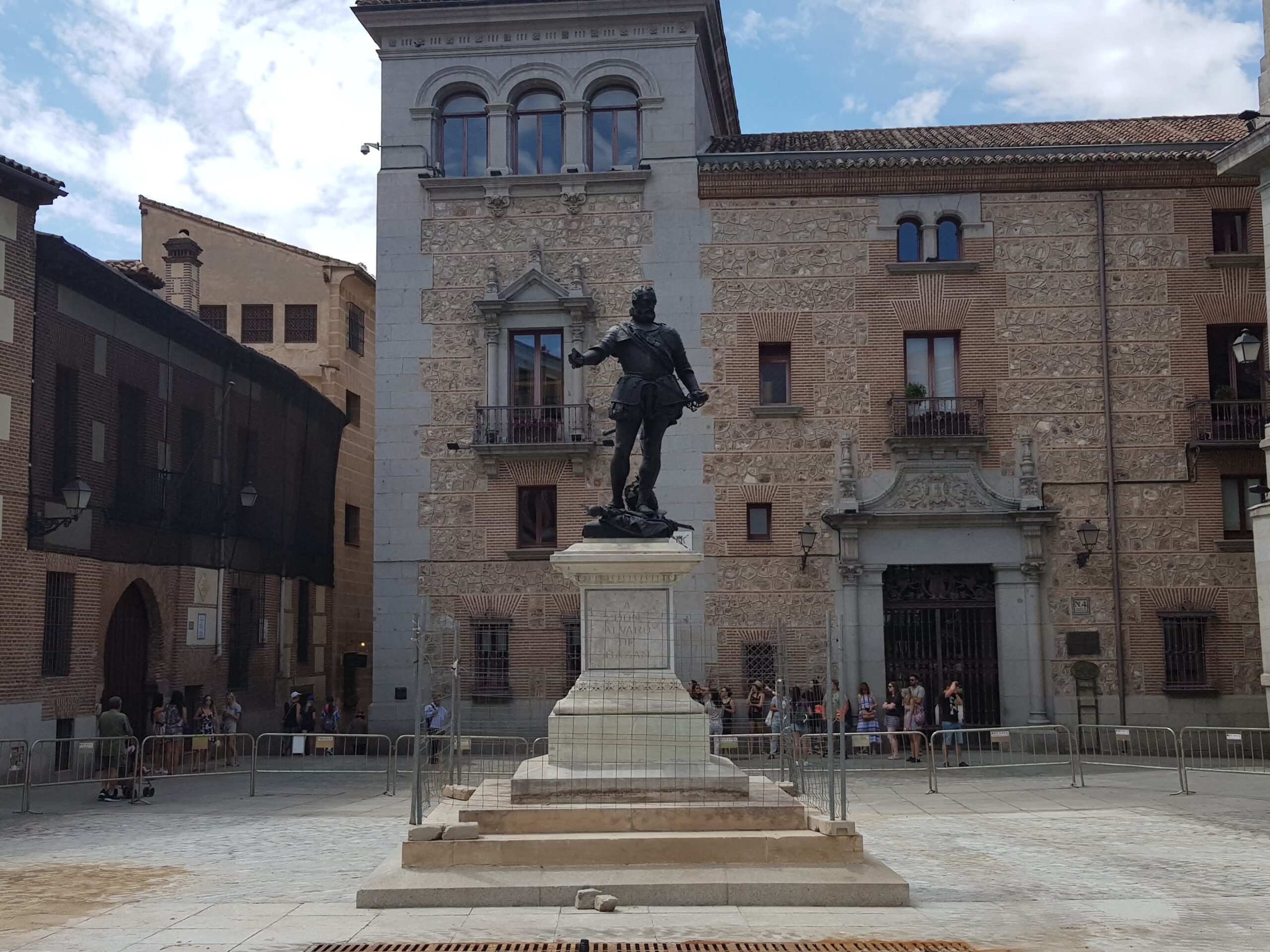
    20180717_152324

    Located in the city’s historic Plaza de la Villa is this statue of Álvaro de Bazán. The square is currently being restored and so it’s not possible to get closer to the statue. It was added to the square in 1891 and was sculpted by Mariano Benlliure, who was also responsible for numerous other statues in Madrid.

    Álvaro de Bazán lived from 1526 until 1588 and was one of the country’s most famous sailors, responsible for the Spanish Armada. It is said that he was never defeated in his time as an admiral and the navy still has ships named after him today.

  • Madrid – R Line (Ópera and Príncipe Pío)

    Madrid – R Line (Ópera and Príncipe Pío)

    [I originally posted this in July 2018, but have reposted it to fix some broken image links]

    20180717_152329

    My favourite underground line in London is the Waterloo and City line as I’ve always liked that it’s such a quirky little route which serves just two stations. So I was rather pleased to discover that Madrid has a similar set up, with the R Line which connects Ópera and Príncipe Pío.

    20180717_151857

    20180717_151854

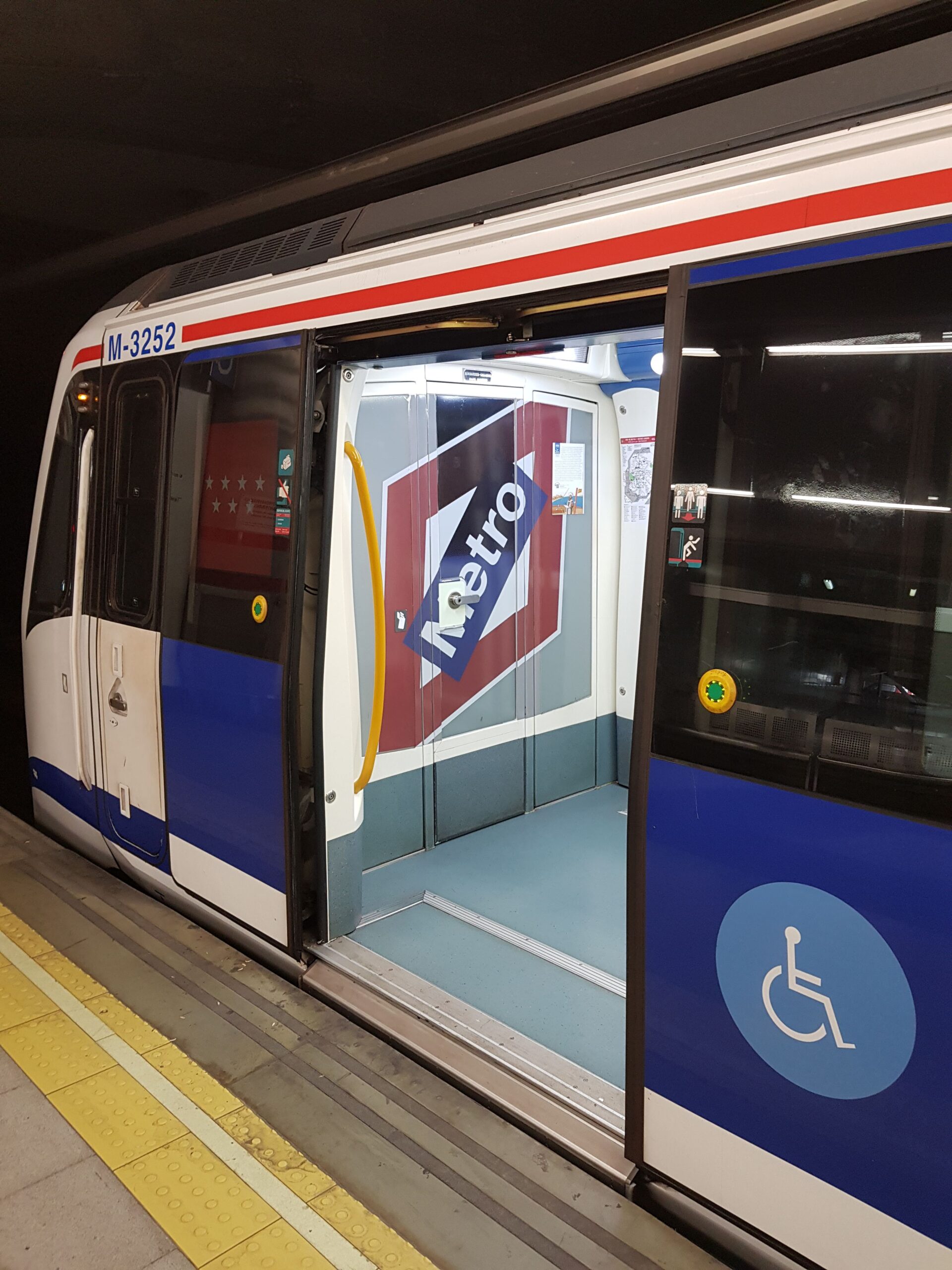
    Inside the carriage, which is similar to many of the other trains on the underground network. It was relatively busy when I used it, which was at 15:00 on a Tuesday afternoon, with no empty seats remaining. Apparently the line was originally an extension of Line 2, which is why it has that route above the doors.

    It’s the only line on the Madrid underground which has a letter, as the other lines are all identified by their number. There are two trains which run to and from the stations, and there is one track at each station. The journey takes around two minutes to travel the entire length of the track, which is just over a kilometre.

    20180717_152324

    And the doors open after my exciting journey… Admittedly this journey isn’t exactly something akin to trekking the foothills of the Himalayas, but it intrigued me.

  • Madrid – Beer in McDonald’s

    Madrid – Beer in McDonald’s

    [I originally posted this in July 2018, but have reposted it to fix some broken image links. Mahou has now been brought to the UK, although by brought over, I really brewed here as another generic lager stripped of any real authenticity]

    20180715_144405

    I admit that going to McDonald’s in Madrid is hardly sampling the local food. But it was hot, I needed wi-fi (actually, I can’t use that excuse any more, I have a large data package to use across the EU, so I’ve lied here) and most importantly of all, I’m sure that Dylan and Leon would want to see photos. It’s of course crucial to educate these two young and impressionable young minds about the importance of travel.

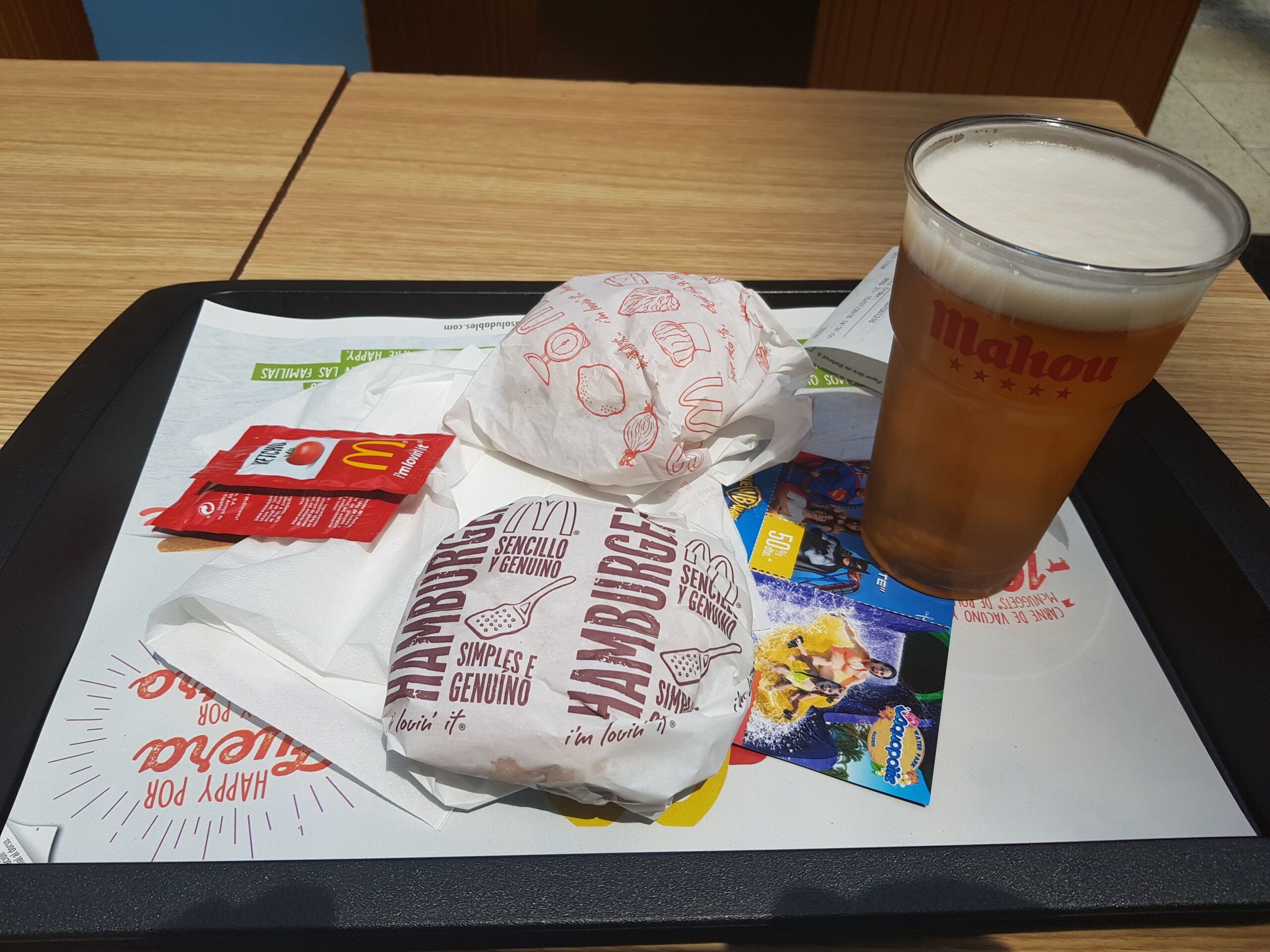
    20180715_143924

    I’ve had beer in a McDonald’s in Porto, Portugal, but I haven’t in Spain, so I thought that I should correct that omission. The beer here is Mahou, which is a Spanish beer which has been brewed in Madrid for over a century (by that I mean that they’ve been brewing beer for over a century, not that they’ve had this particular beer resting for that length of time). The quality was fine and it was at the appropriate slightly chilled temperature.

    As for the quality of the rest of the meal, it met my expectations for McDonald’s……

  • Gdansk – Labeerynt

    Gdansk – Labeerynt

    [This was a post from June 2018 early in my craft beer adventures, so excuse the lack of details. I’ve reposted it to fix some broken image links]

    20180623_164147

    This craft beer bar came well recommended, and although it was nearly empty on my arrival, it soon got busier.

    20180623_164158

    I asked if they had any dark beers, and they located two different bottles in the fridges. One of the beers they found was milk stout, which perfectly matched my requirements.

    20180623_164144

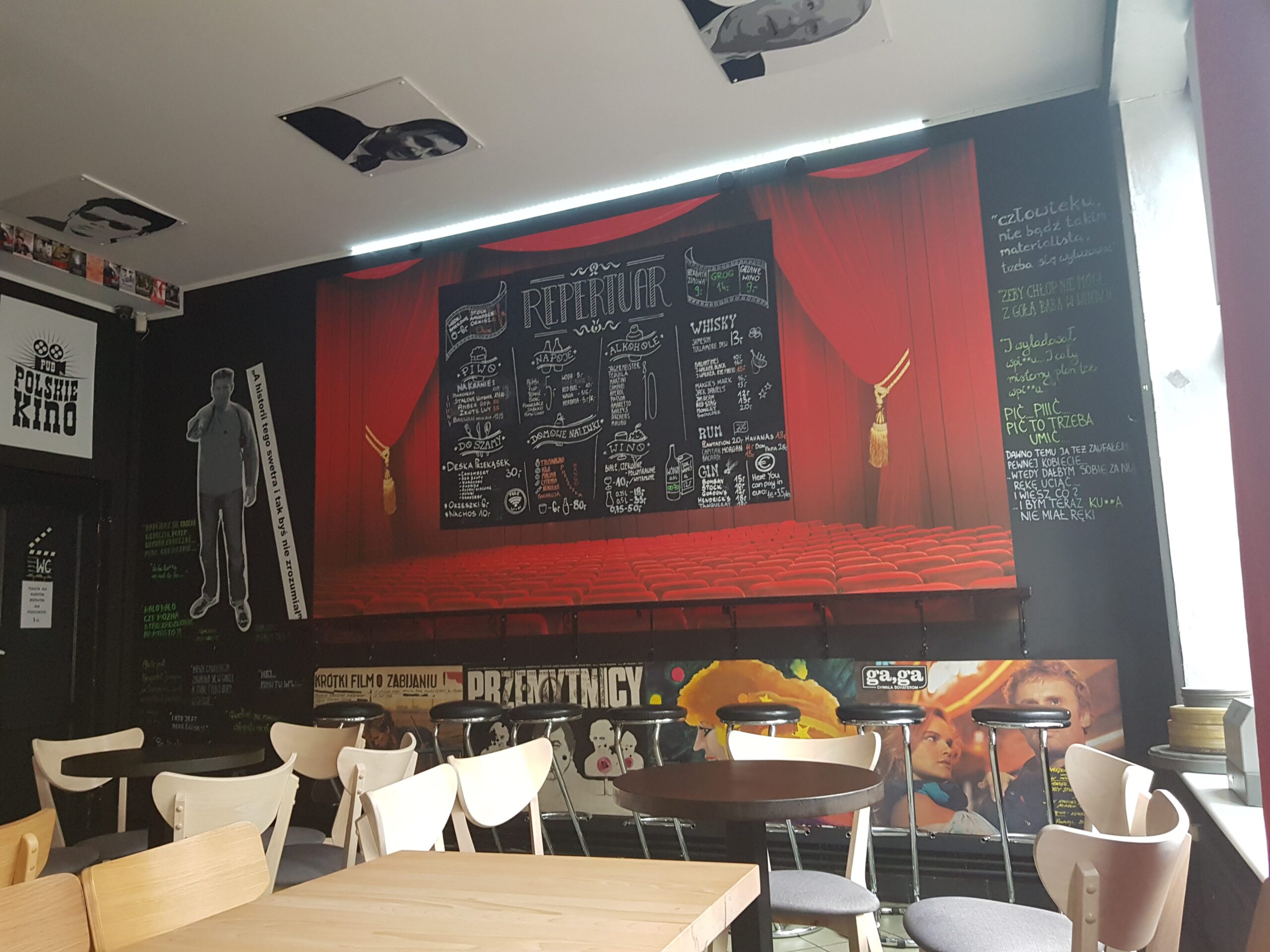
    The drinks selection on a large chalkboard.

    20180623_171609

    The bar got busy when the World Cup match started. It’s Mexico against South Korea and I hope it finishes soon….

  • Luxembourg – Ibis Budget

    Luxembourg – Ibis Budget

    [I originally posted this in July 2018 but have reposted it to fix the broken image links]

    20180708_110942

    Since I’ve been coming to Luxembourg relatively frequently, I’ve tried to find a hotel which is near to the airport. And this, Ibis Budget, is just a five-minute walk from the terminal, although they also operate a shuttle vehicle for those with luggage (or who can’t walk, or are too lazy). The Ibis and Ibis Budget are in the same building, the Budget part to the left, and the standard hotel to the right.

    20180708_110958

    Ibis Budget is cheaper, so I obviously stay there. It’s also cheaper at weekends, which I will remember for future trips where I can be flexible with dates. This is also because bus travel in Luxembourg is free on Saturdays.

    20180708_072320

    There is a corridor on the first floor, as well as on the ground floor, which links the Ibis and the Ibis Budget together. On higher levels, there is a fire door which seems to stop hotel guests from doing that, although I’m unsure why. Often there are no staff members at the Ibis Budget desk, but it’s possible to check-in at the main Ibis reception.

    20180627_202612

    For those with Accor status, they can claim a free drink, even with Ibis Budget. This is something else I’ve never quite understood, as Ibis Budget often don’t provide a free drinks voucher. The voucher mentions beer and soft drinks, not making any reference to wine. This is the beer that can be acquired though in the ground floor bar of Ibis.

    20180627_191830

    The room is basic, but having stayed in different room types, this appears to be the refurbished looking room. They have twin and double rooms, usually with the bunk bed arrangement above.

    20180708_110035

    I’ve stayed in many Ibis Budget hotels around Europe, and they have the shower in the main part of the room. That’s absolutely fine when alone, but is a rather more challenging situation if you’re with someone and want privacy. I’ve noticed several reviews over the years about how people don’t like it.

    20180708_110032

    I mention the shower in the room thing because for the first time in an Ibis Budget, I’ve noticed that they’ve put a curtain up between the shower and the bedroom area.

    20180708_073208

    The breakfast room is downstairs next to reception, and is clean and serviceable.

    20180708_072413

    20180708_072505

    The selection is reasonably wide, with cereals, breads, meats, cheeses, hot drinks and fruit juices.

    20180708_072746

    And my little selection.

    I’ve stayed at the hotel around six times now, and I’ve never encountered any issues with noise either internally or externally. As mentioned, it’s a short walk to the airport, and there is also a bus stop outside the hotel which takes around fifteen minutes to get to the railway station in the city centre.