Tag: Tower of London

  • London – Tower of London (Wild Flowers)

    London – Tower of London (Wild Flowers)

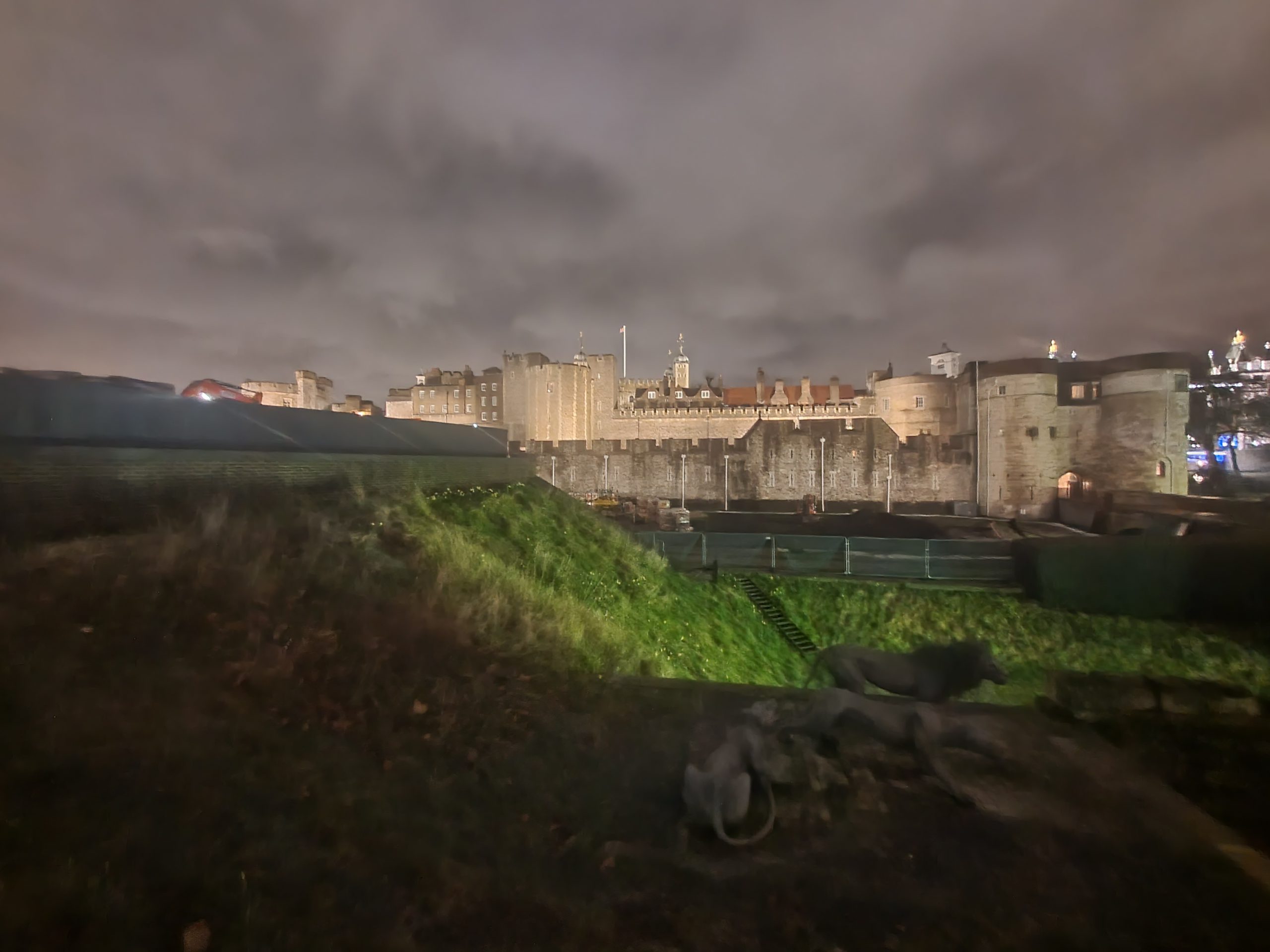
    Last year I went to look at the poppies that they put in the moat of the Tower of London, this year they’ve dug the moat up to grow wildflowers. As an aside, I still think it’d look better with water in it, but it’s been a dry moat since it was drained during the nineteenth century.

    The Tower authorities are making some big holes around the place as they’re planting 20 million seeds this spring so that they flower from June to September, to mark the Queen’s Platinum Jubilee celebrations. There will be chance to walk amongst the wildflowers, but I imagine that’ll be expensive, so I’ll just return in a few months to take photos from the same elevated position. I’m sure it’ll look impressive when the flowers grow (and probably play havoc with my hayfever), it certainly looks like they’re going to a lot of trouble to get it right.

    And as an aside, here are a few more photos of the exterior of the Tower of London at night whilst I was meandering around it.

  • London – Tower of London (Poppies)

    London – Tower of London (Poppies)

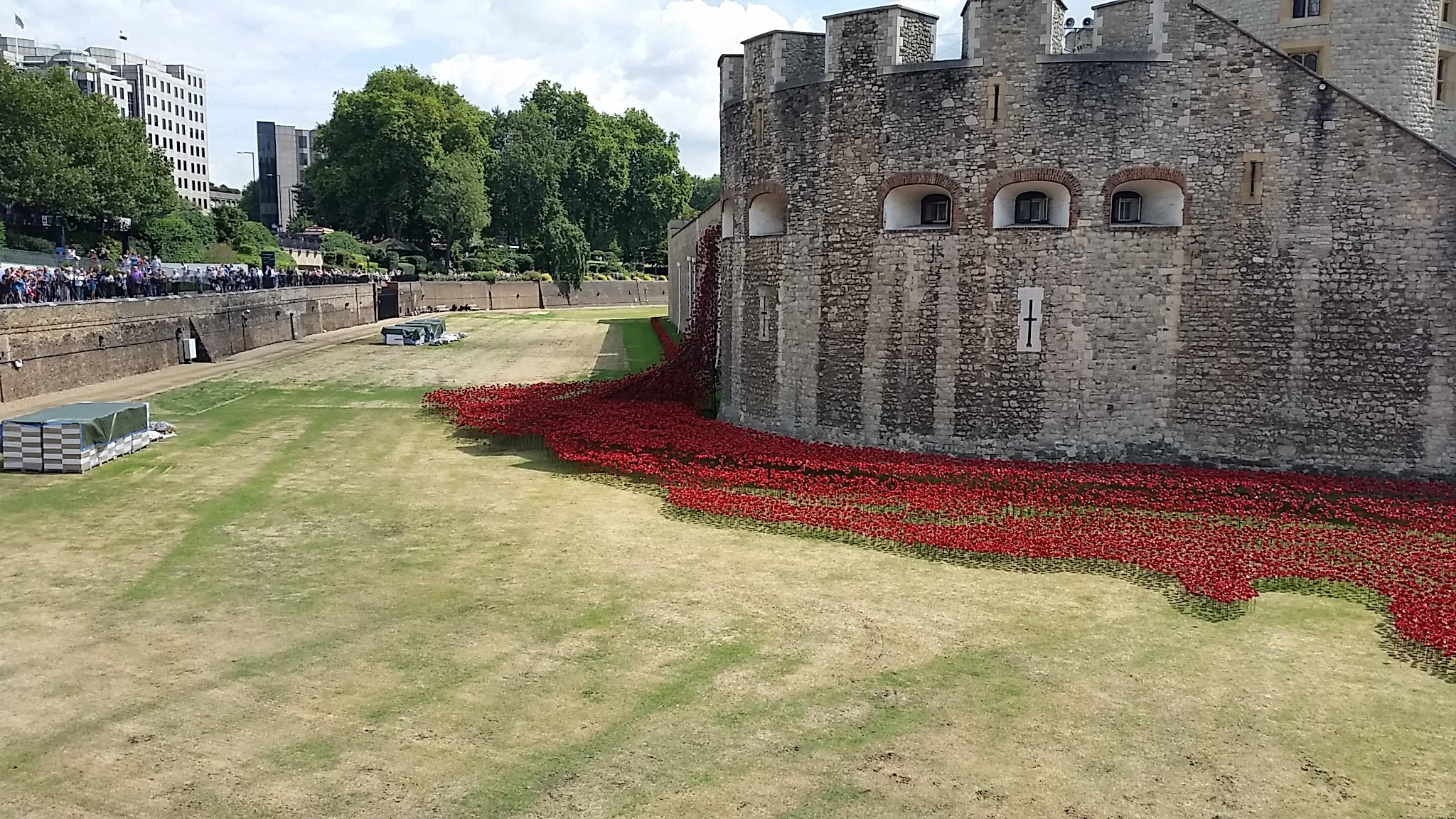
    This is how the Tower of London’s moat looked when I visited back in August 2014, a sea of poppies to mark the centenary of the start of the First World War.

    The installation was called ‘Blood Swept Lands and Seas of Red’ and it remained in place between July and November 2014. Paul Cummins was the artist and Tom Piper designed the concept behind it, which was a magnificent sight in the Tower’s moat.

  • London – Tower of London (1961 Guide Book)

    London – Tower of London (1961 Guide Book)

    Tower Of London Guide Book

    This (it’s in .pdf format) is apparently out of copyright and it’s the guide book published by the Ministry of Works in 1961. Quite a lot has changed over the last sixty years and I hadn’t realised that the Crown Jewels at the time were in Wakefield Tower, which must have been quite a challenge in crowd management, although not so much in centuries gone by when they were in the Martin Tower.

    Also, the Tower of London used to be free of charge on Saturdays and Bank Holidays (although there was a small charge to see the Crown Jewels), it’s now much more expensive and I’m not sure that they ever have any free admission days. The description of the rooms in the various buildings is now so different that I’ve been unable to even ascertain which room is which.

  • London – Tower of London (Then and Now)

    London – Tower of London (Then and Now)

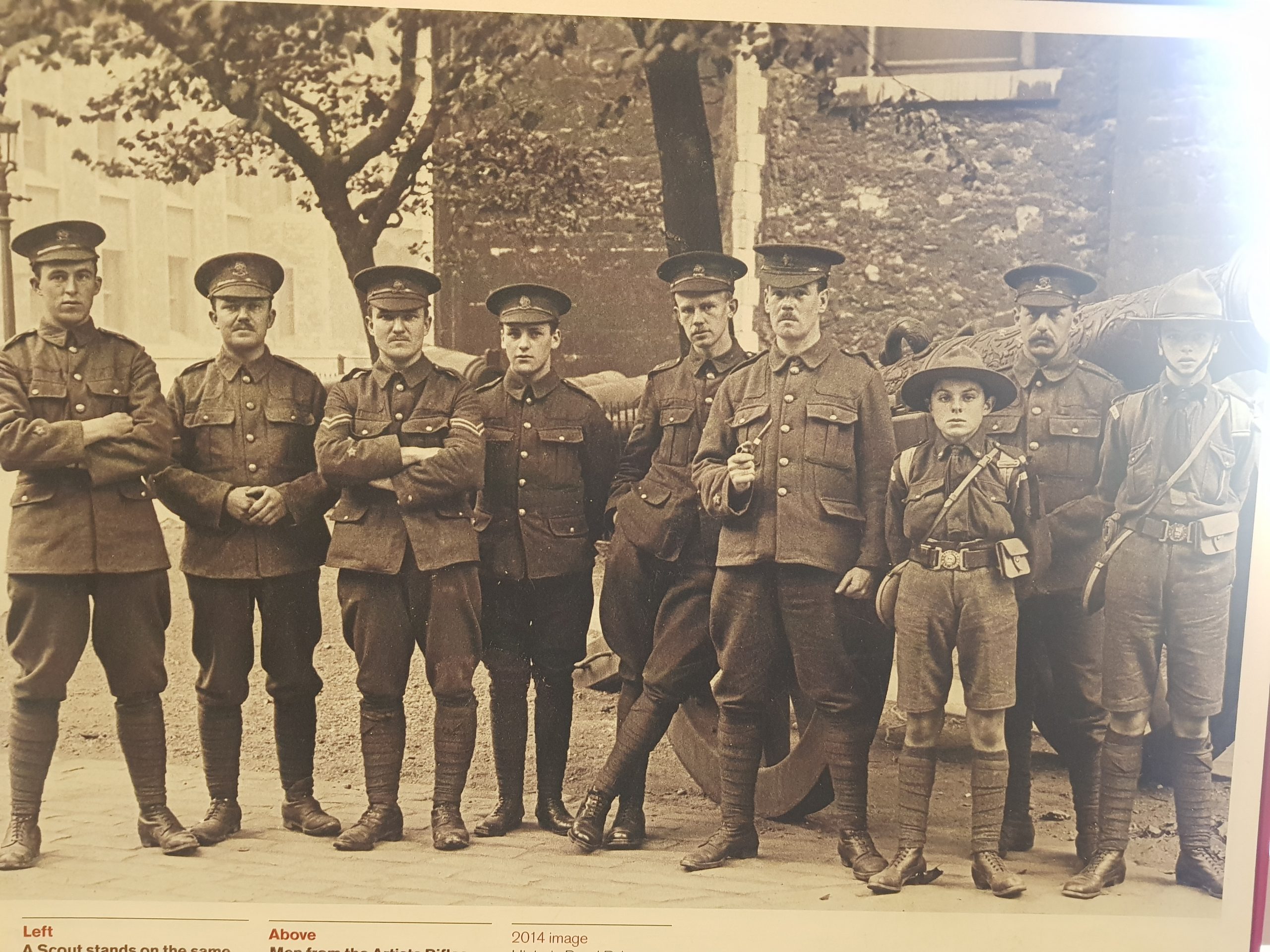
    The Tower of London has an interesting concept to mark the contribution of those who had fought in the First World War, which was to merge photos from the time with a recent and symbolic image. The above image is the original and the idea is to take a modern photo at the same place, but with a different person, although someone connected with the original image.

    This is the modified image, with a boy scout taking the place of the boy in the original photo, but he’s standing in the same location.

    I was sufficiently intrigued to go and take my own photo at the same site. This really brings to life the past when museums do this, a reminder that the very ground that visitors are standing on has so much history from across so many generations. Not least, because of the contribution that these men and boys gave, there’s a feeling of ‘standing on the shoulders of giants’.

  • London – Tower of London (Traitors’ Gate)

    London – Tower of London (Traitors’ Gate)

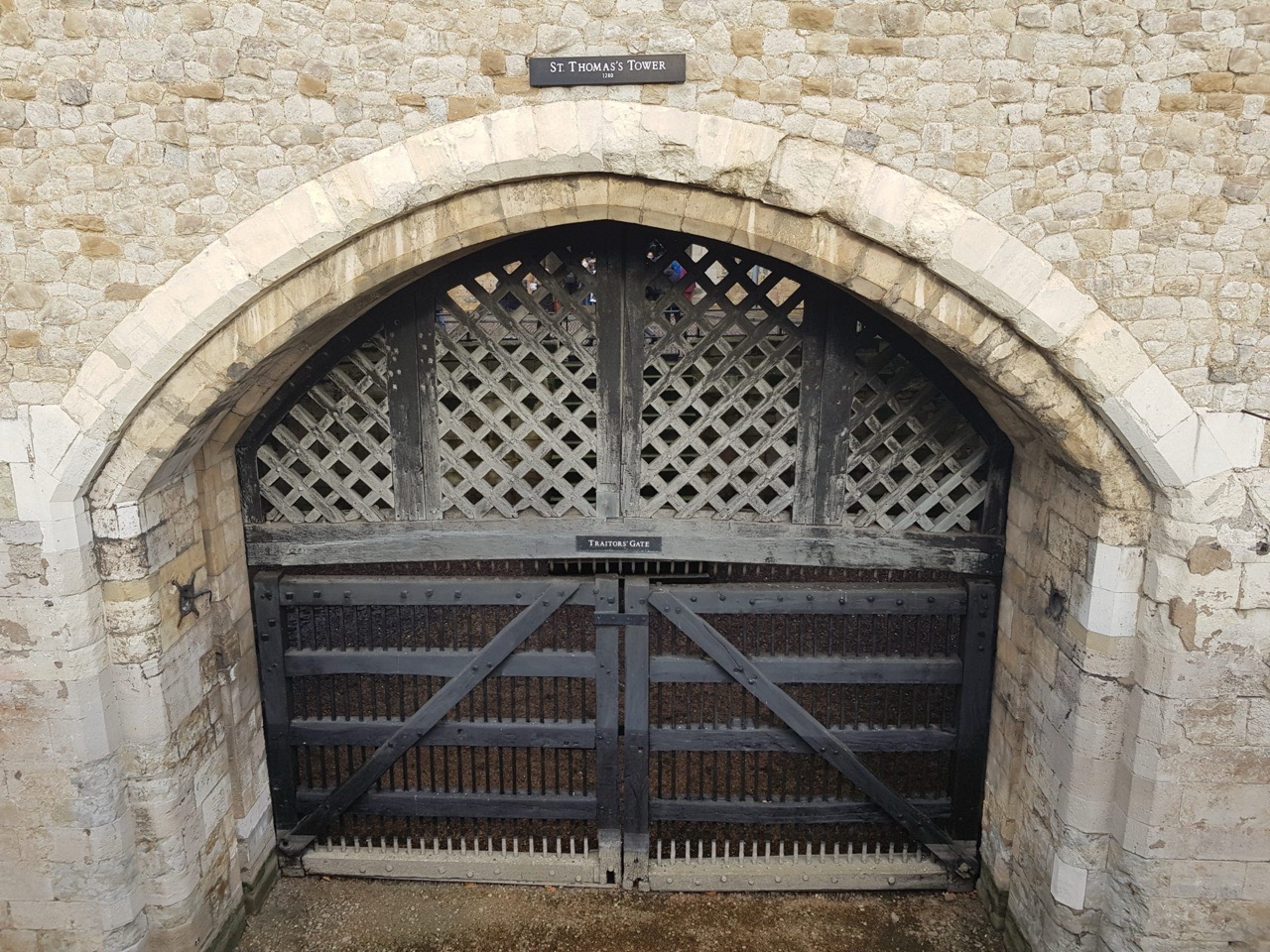
    This notorious water gate was added to the Tower of London in the 1270s, at the instruction of King Edward I. It takes its current name from around the 1530s, based on the stories that traitors were brought into the Tower via this gate.

    Above is the gate from the River Thames side.

    This is the gate from the inside of the Tower of London, looking out to where the water would have lapped up against the wall. I’m unsure how much of this has been rebuilt relatively recently, the stonework doesn’t quite match that from the late nineteenth century, so there must have been some minor reconstruction over the last century. Not to mention that the stonework here is from different periods anyway.

    The steps down into an area where various machinery relating to the gate has historically been located, although it has since all been removed.

    There was an article in the press in February 1866 which reported that “one of the most famous antiquities in London has just disappeared.The gate, through which condemned prisoners passed from the Thames into the Tower, has for some time past been in the course of demolition, and has in the last few days been entirely removed”. This relates to the element of the gate that still remains walled up, so it is no longer possible to get to the gate from the River Thames.

    The story that the gate was used by Anne Boleyn when she was transported to the Tower of London also appears to be false, she was brought in at the Byward Tower. However, it remains nearly certain that this gate was used for political prisoners and it still has a slightly haunting feel to it.

  • London – Tower of London (Salt Tower and Hew Draper Graffiti)

    London – Tower of London (Salt Tower and Hew Draper Graffiti)

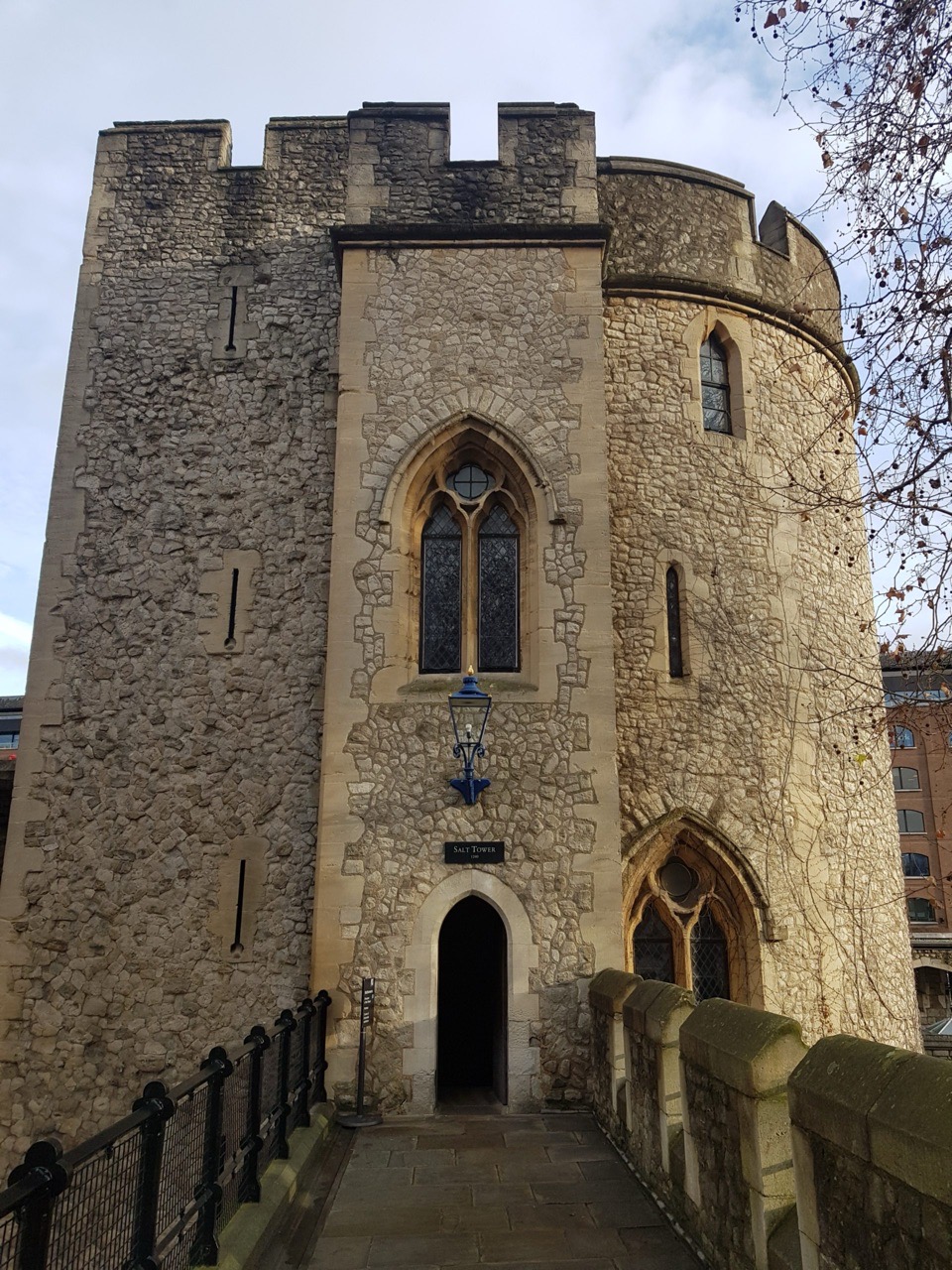
    There is quite a lot of graffiti on the walls of the Salt Tower, much of which was created by those who were imprisoned here, although a little unfortunately seems to be rather more recent.

    This is one of the most impressive pieces of graffiti I’ve seen though, credited to the brewer Hew Draper of Bristol, who conveniently dated it to 30 May 1561. By this time Draper had already been imprisoned in the tower for fourteen months, for the alleged crime of sorcery. The information panel notes:

    “The sphere is surrounded by the signs of the zodiac. The grid on the left shows the planetary influence over every hour of every day of the week”.

    A photo of the same graffiti, taken in 1898 by Sir Benjamin Stone, when the tower was used by Yeoman Warders for their accommodation. The fate of Draper isn’t known, with the Tower’s records not giving any information on whether he died or was freed. Missing records are hardly rare, but this hasn’t stopped some people suggesting that Draper managed to spirit himself away to avoid punishment. This graffiti was mentioned in the media as early as 1810, so it appears to have puzzled and intrigued many generations.

  • London – Tower of London (Cradle Tower)

    London – Tower of London (Cradle Tower)

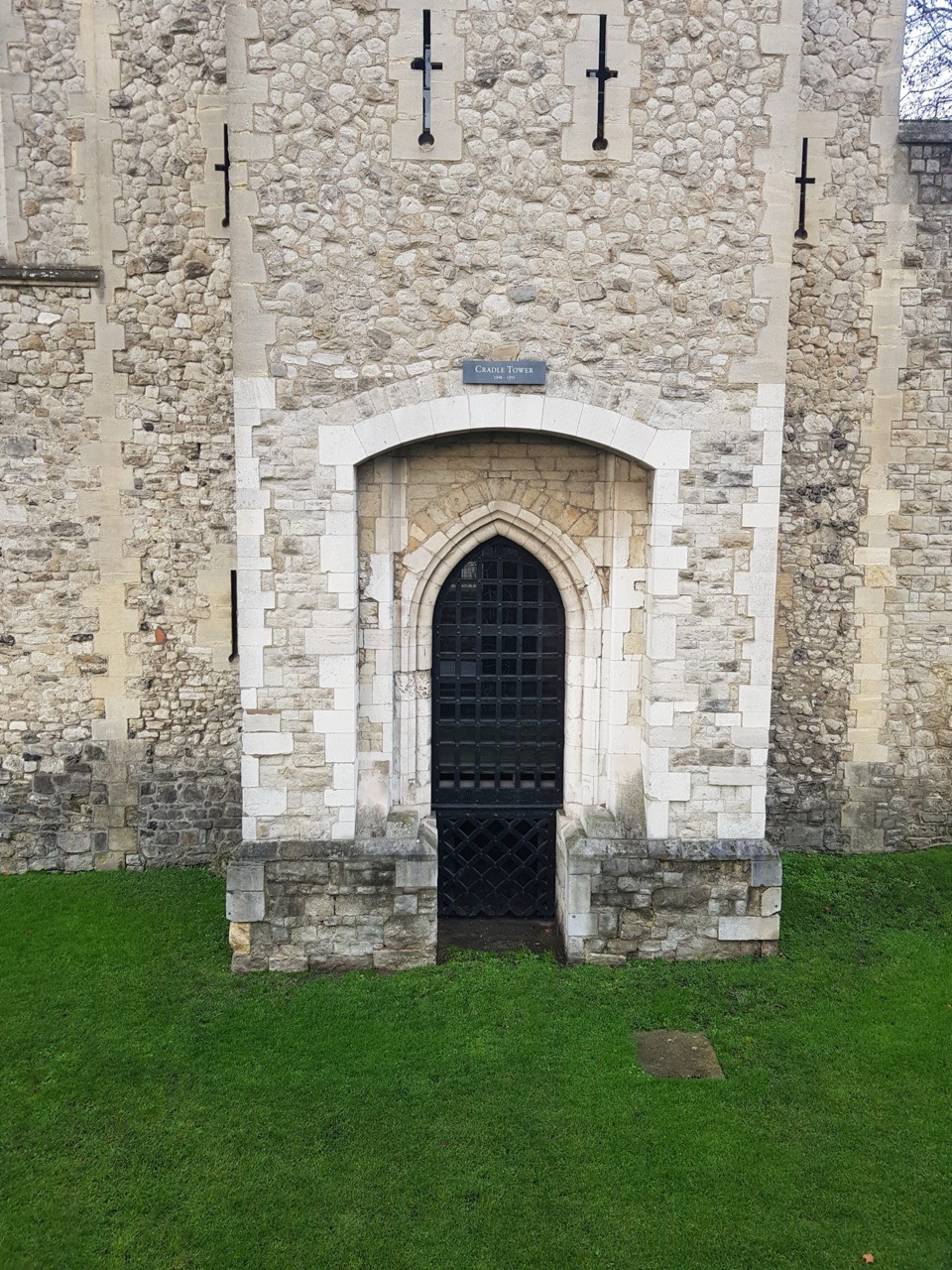
    The Cradle Tower was built between 1348 and 1355 on the instructions of King Edward III, who wanted it to be used as his private water gate to enter the Tower of London. The exterior of the gate is in the photograph above, with two rooms either side of the entrance, where porters were accommodated. The King used the gate frequently and it was protected by a drawbridge and two portcullises, of which the traces of one are still visible in the stonework.

    The gate, from inside the Tower of London.

    A fireplace in one of the porter’s rooms, which had a view to the front so they could see if anyone was trying to enter that they either needed to welcome, or repel.

    The other porter’s accommodation has been turned into a recreation of what the room may have looked like in the late sixteenth century, when it was used to imprison John Gerard. He was a Catholic priest, at a time when this wasn’t acceptable to the Monarchy, who was tortured in a bid to get him to reveal the names of other Catholics, but he never gave anything away. In association with John Arden, who was imprisoned nearby within the Salt Tower, they managed to escape from the Tower in October 1597, in a quite spectacular fashion via the moat and River Thames. Gerard faced intimidation throughout much of his life, and he did well to survive to the age of 72, dying in July 1637.

    Also imprisoned here was Anne Askew, who was punished for being a Protestant, the reverse of what Gerard suffered from just a few decades later. She may have been the only women tortured at the Tower of London for her Protestant beliefs, as well as the only female burned at the stake. The story is enormously gory, she was imprisoned here in June 1546 and was tortured on the rack, with her joints being forced apart, so her shoulders and hips were dislocated. She still didn’t reveal any information and she was burned at the stake at Smithfield, at the age of just 24. She was brave even at that point, screaming only when the flames were nearly at her head, but despite the efforts of others, she refused to recant.

    There was a large fire at the Tower in 1841, with the Cradle Tower used to throw vast amounts of explosives from, in a bid to minimise the damage to the site. The media reported at the time that, “it is stated that no less than 9,084lbs of powder and ball cartridges were thrown into the moat by the tower”.

    The upstairs of the tower is inaccessible to the public, but is less interesting historically as it was entirely rebuilt in the nineteenth century, although the upper portions had been derelict and damaged for at least a century before that. There was a report in the media in 1961 that the tower had been cleared of the armoury that was being stored there, which was being moved to the new armouries museum.