
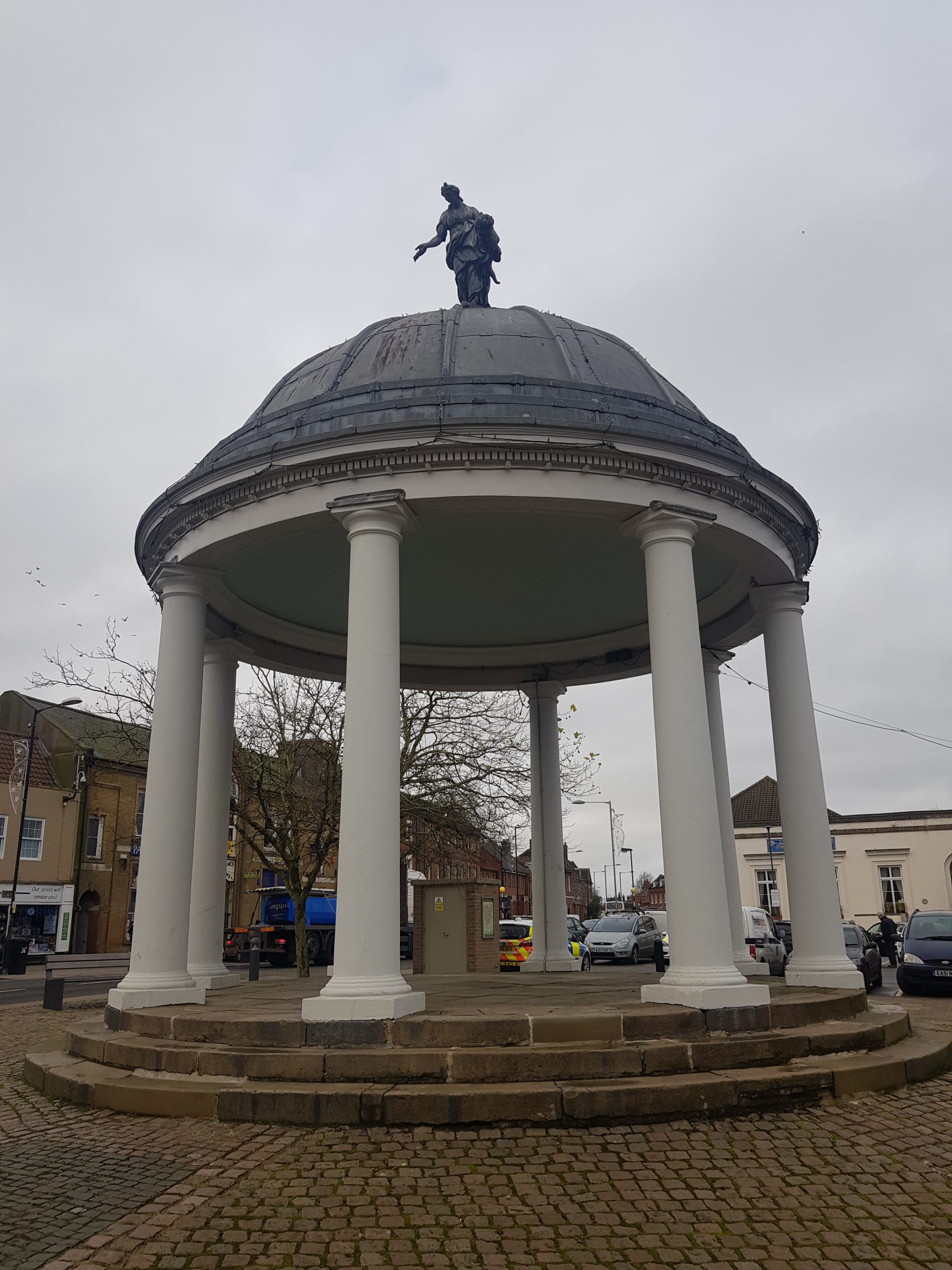
The town’s market cross, erected for the Earl Orford between 1781 and 1783 (I’m not sure why it took two years, civil engineers and cups of tea again I suspect…) and designed by James Wyatt. On the top is Ceres, the Roman Goddess of agriculture (there’s a bookshop in the town called Ceres Bookshop as well).
Tag: Swaffham
-
Swaffham – “I Doubt He’ll Find That in his Swaffham Indian”

I was a little amused by this article about a cruise in Saga Magazine (don’t ask) about Swaffham. I suspect that the author might be right about Noel….
-
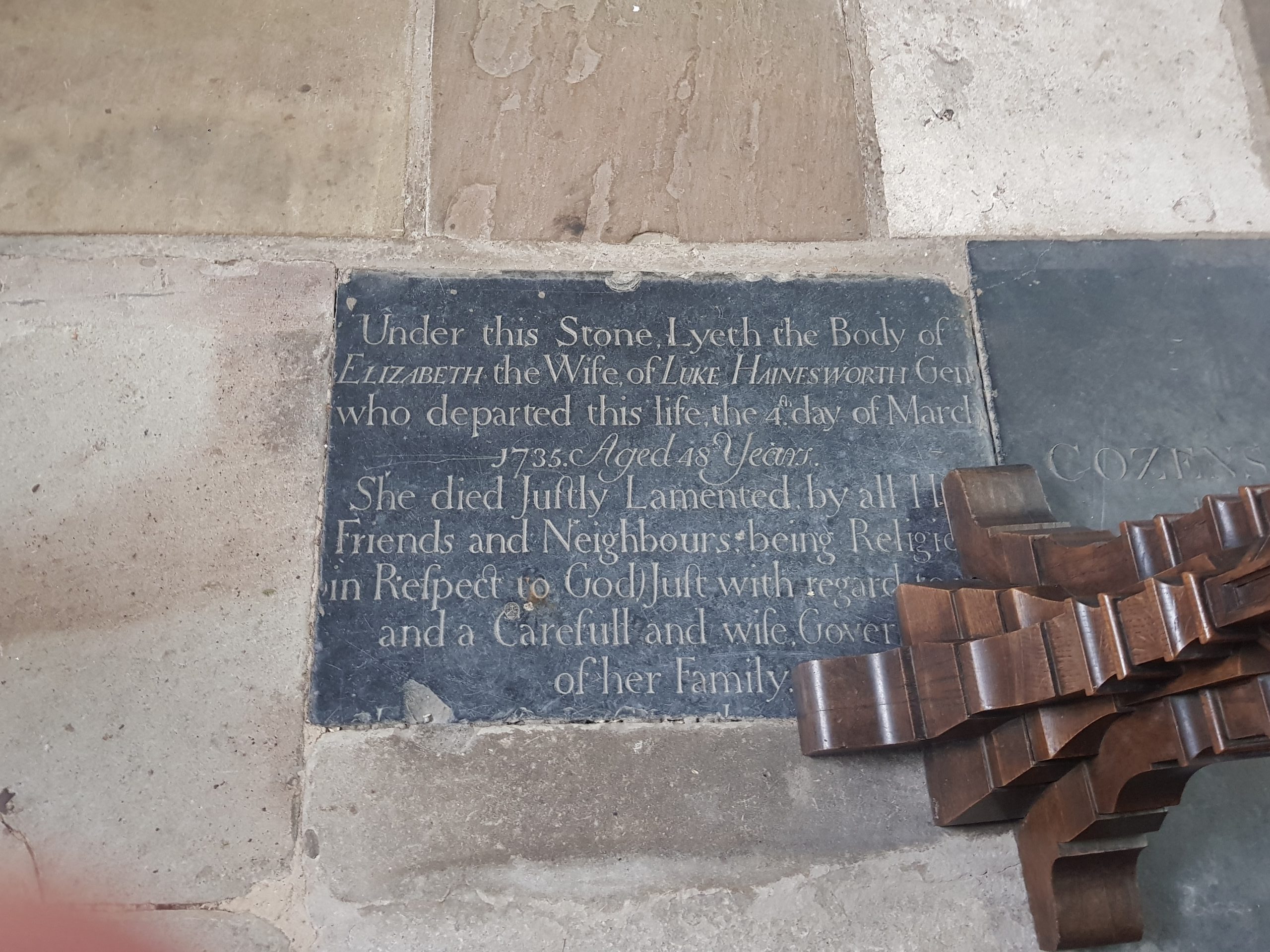
Swaffham – St. Peter and St. Paul Church (Elizabeth Hainesworth)
Judging from the furniture placed on it and the rearrangement of stones, the church interior at Swaffham Church has no doubt changed somewhat since Elizabeth Hainesworth was buried here in 1735. There’s not much of a story here that I can tell, as there isn’t much information that I can find out. As the stone says, Elizabeth died on 4 March 1735, aged 48 years old.
Her husband Luke does appear in a few registers from the early eighteenth century from when he employed apprentices. He was a grocer and a mercer (dealer of fabrics) in Swaffham and there’s little doubt that he would have been comfortably off. They had at least one child between them, John Hainesworth, who was baptised on 25 May 1726. But, other than that, the on-line databases are producing nothing more. But I liked the stone, in a rather good state of repair for its age.
-
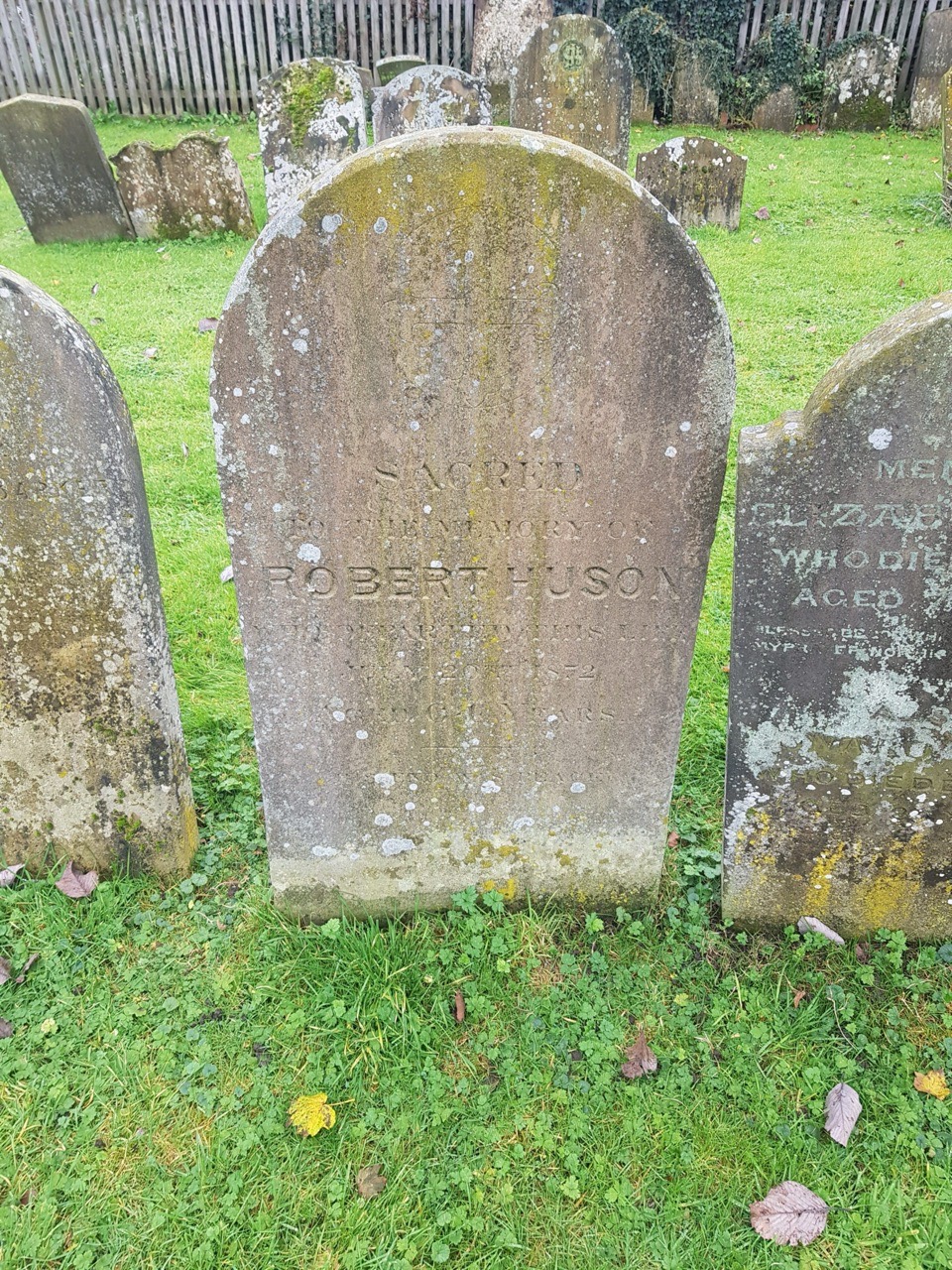
Swaffham – St. Peter and St. Paul Church (Robert Huson)
There’s no logic to these posts, just some graves of people at St. Peter and St. Paul Church in Swaffham which seemed intriguing.
Robert Huson was born on 26 July 1808 and was baptised on 14 August 1808 in Swaffham, the son of Robert Hudson and Susan Allen. He married Mary Huson, who was 14 years younger than him, and he worked as a carpenter. He had a son, Arthur Huson, when he was aged 50 and by the 1871 census he was living with his wife and Arthur on Lynn Street in the town. He died in 1872 at the age of 64, with his son Arthur becoming a grocer, going bankrupt and starting over again. Relatives of Robert and Arthur still live today, but unfortunately, I can’t find out anything more about Robert Huson’s life. He rather disappeared off the radar, or at least the radar visible to me, for some decades and I can’t make out what he did with his life. One day I’ll solve some of these random little mysteries….
-
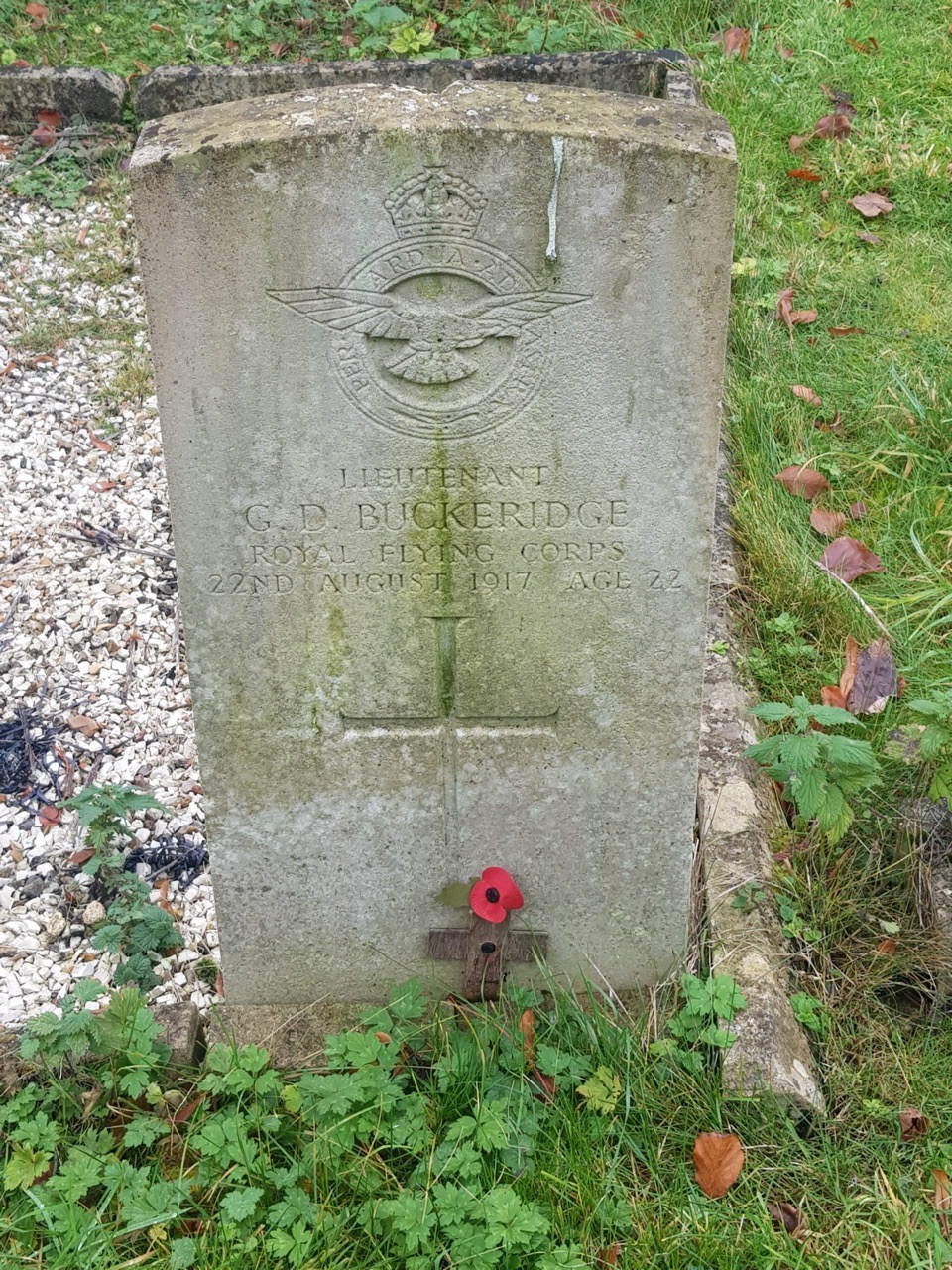
Swaffham – St. Peter and St. Paul Church (Guy Dennis Buckeridge)
This grave is located within the churchyard of St. Peter and St. Paul Church in Swaffham.
Guy Dennis Buckeridge was born in Johannesburg in 1895, the son of Alfred Dennis Buckeridge and Amy Buckeridge, but they moved to the UK at some stage and lived at 8, Cardigan Road in Richmond-on-Thames. He appears on numerous passenger lists though, returning to South Africa frequently. He joined an air force unit in Reading in 1916 and in early 1917, he began training as a night-time pilot.
Lieutenant Buckeridge flew his last sortie on 21 August 1917 when he flew from RAF Marham in Norfolk. During his flight his aircraft got trapped in a spinning nose dive and he died the following day, at the age of 22. His next of kin, which was his wife, was duly informed and he was buried at Swaffham, which was near to where the aircraft had crashed and not far from RAF Marham.
Norman Frank Dennis, who was Guy’s older brother, died on 26 April 1940, killed whilst serving in the Royal Air Force during the Second World War.
-
Swaffham – St. Peter and St. Paul Church
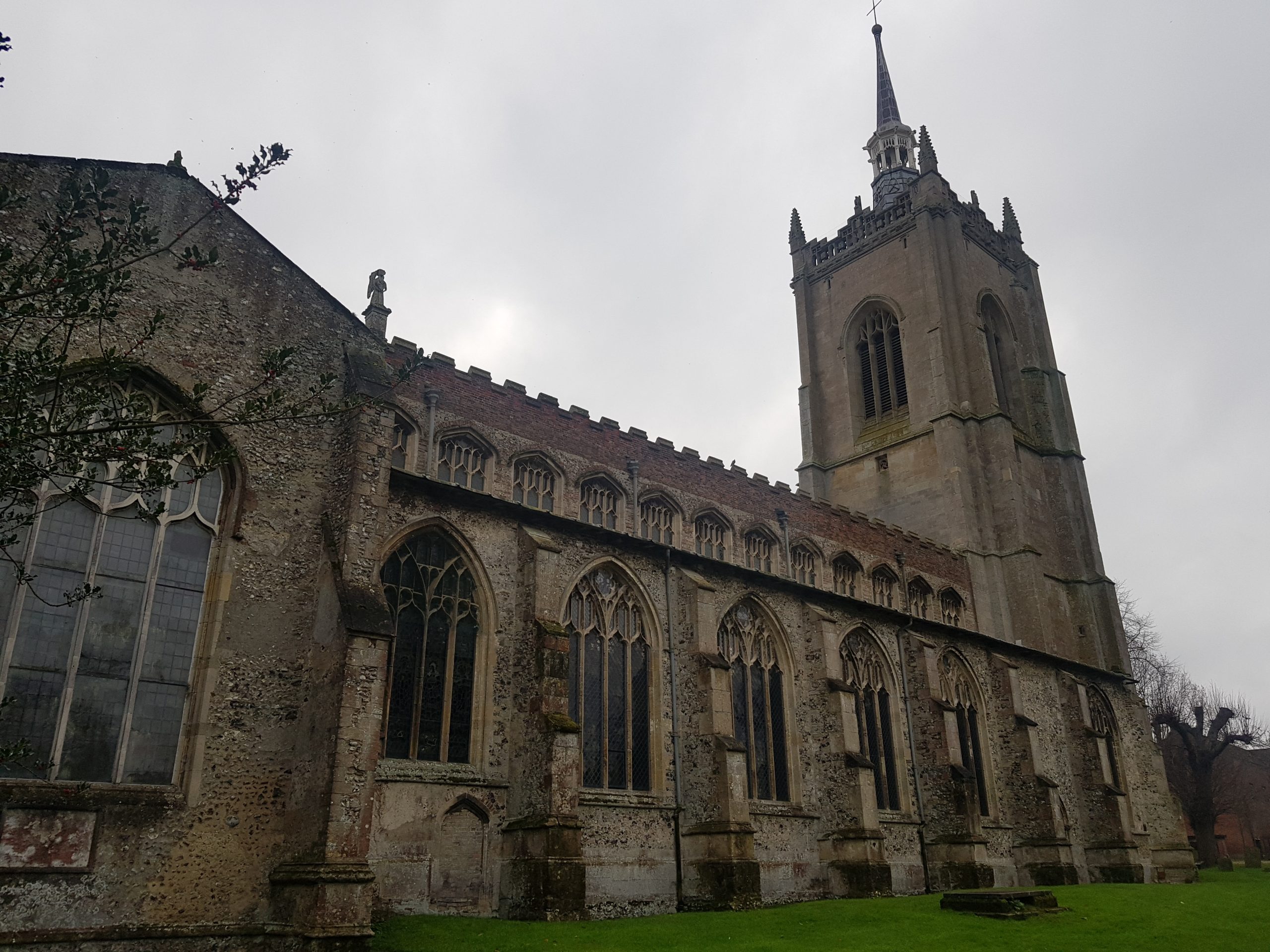
The bulk of Swaffham’s main church was constructed between 1454 and 1490 and was built on the site of the previous church, of which nothing now remains.

The main entrance to the church is at the west door. The tower took longer to build, not being completed until 1510.

Looking towards the altar.

And looking back towards the west end.

The impressive hammer-beam roof, which dates to when the church was built.

The war memorial window, which was designed by William Morris & Co.

The pews in the main part of the nave date from the nineteenth century, having replaced the earlier box pews. These pew ends in the choir area are survivals from the earlier period, somewhere around the sixteenth century.

The Pedlar of Swaffham and his dog, which are from an old folkstory, the details of which I’ve pinched from Wikipedia:
“At last it happened that a shopkeeper there, hard by, having noted his fruitless standing, seeing that he neither sold any wares nor asked any almes, went to him and most earnestly begged to know what he wanted there, or what his business was; to which the pedlar honestly answered that he had dreamed that if he came to London and stood there upon the bridge he should hear good newse; at which the shop-keeper laught heartily, asking him if he was such a fool as to take a journey on such a silly errand, adding: “I’ll tell thee, country fellow, last night I dreamed that I was at Sopham, in Norfolk, a place utterly unknown to me, where methought behind a pedlar’s house in a certain orchard, and under a great oak tree, if I dug I should find a vast treasure! Now think you,” says he, “that I am such a fool to take such a long journey upon me upon the instigation of a silly dream? No, no, I’m wiser. Therefore, good fellow, learn wit from me, and get you home, and mind your business.”
The pedlar observing his words, what he had say’d he dream’d, and knowing they concentred in him, glad of such joyfull newse, went speedily home, and digged and found a prodigious great treasure, with which he grew exceeding rich; and Soffham (Church) being for the most part fallen down, he set on workmen and rectified it most sumptuously, at his own charges; and to this day there is his statue therein, but in stone, with his pack at his back and his dogg at his heels; and his memory is also preserved by the same form or picture in most of the old glass windows, taverns, and alehouses of that town unto this day.”

This brass was part of the memorial to Sir John Audley of Swaffham and it was moved to the wall to protect it from damage, although the brass dedicated to his wife had gone missing by 1781.

I hadn’t realised that there was a connection to Oliver Cromwell in Swaffham, but this is the memorial to Catherine Steward, his maternal grandmother. Steward was born at Castle Acre in 1545 and died in 1590. The Scotsman reported in 1911 that Queen Mary, Prince Albert and Princess Mary had come to visit the church, and spent some time looking at this memorial. Not that the Parliamentarian troops of Cromwell showed the church much mercy in the seventeenth century, they fired guns at the wooden angels in the roof, smashed windows and destroyed some statues.
On the subject of the local media, there was an announcement in the Bury and Norwich Post which has an interesting turn of phrase:
“The banns were published in Swaffham Church between Robert Savage and Mary Avey, but two days later the young woman was attacked with a cold and inflammation and on the following Saturday she was a corpse”.
I didn’t see anyone else whilst visiting the church and I can’t imagine it gets a lot of visitors at this time of the year, so it’s marvellous that they’ve kept it open during the day. The door is also an automatic one, which makes it more accessible than the arrangement (albeit a necessary one, as automatic doors don’t come cheap and often don’t exactly fit into the decor) in some churches.
All rather lovely.
-
Swaffham – Red Lion
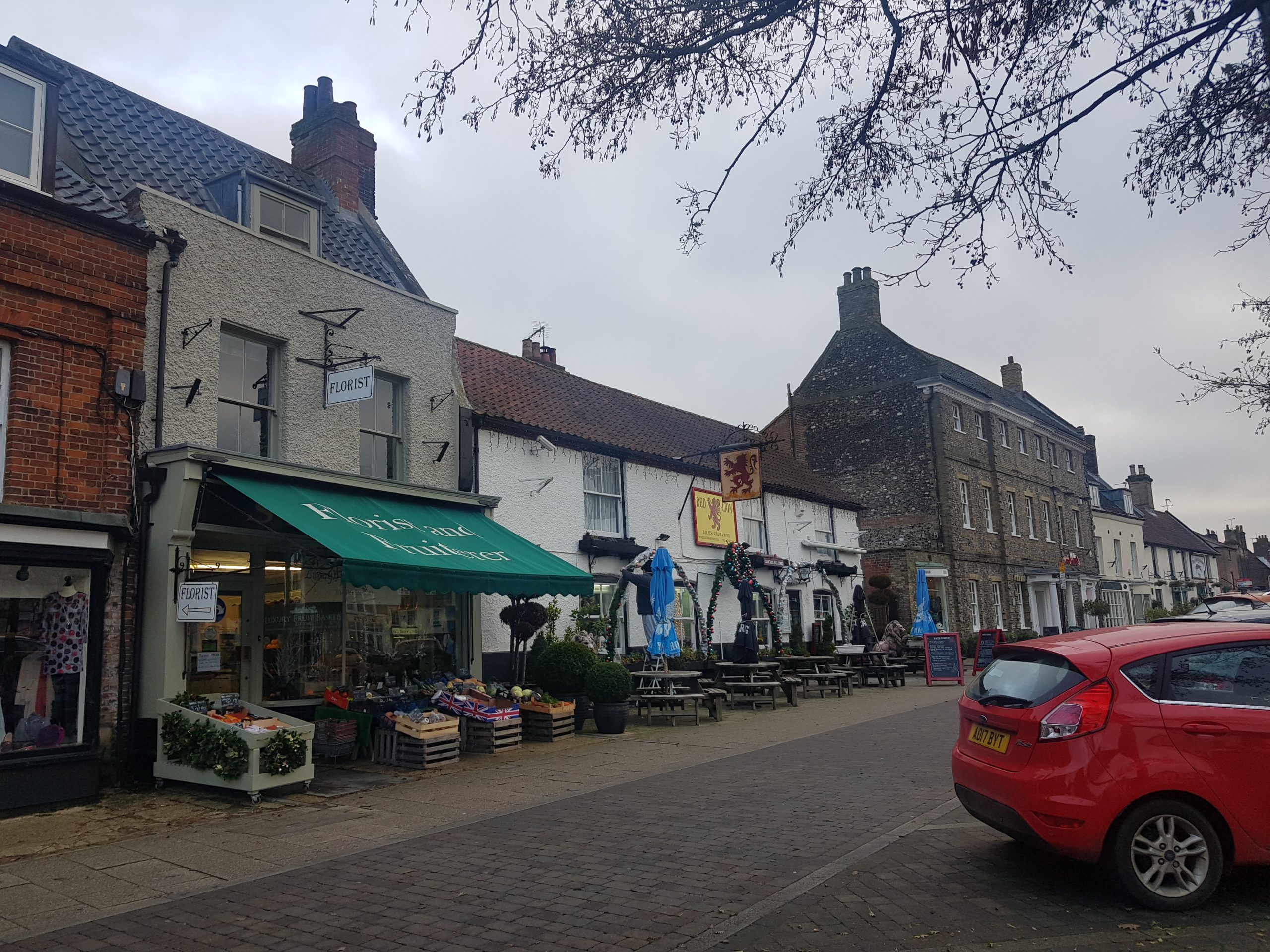
The Red Lion has been selling beer to the people of Swaffham since the late seventeenth century and there are also rooms at the rear of the pub for those wanting accommodation. The landlady at the Red Lion from 1896 until 1956 was Emma Dickerson, that’s certainly some stint working at any location. There’s a nice vibe about the pub, with the service being friendly and it feels like a community pub which is welcoming to all.
In August 1761, someone pinched a “badly engraved and bruised on the foot” silver pint mug from the pub, with the landlord putting up a reward of half a guinea for its return. There’s such a sense of history about locations like this, albeit a crime that took place 258 years ago isn’t an inspiration for the future, it’s intriguing to think what this pub looked like back then.
There were six real ales, which was a number that surprised me slightly, with a varied choice available. Unfortunately, my half pint of Elgoods Blackberry Porter was on the turn, although it remained drinkable. I suspect the staff would have happily changed it, but it wasn’t unpleasant, although the flavour was wrong, so I just kept it (I probably wouldn’t have been so forgiving if it was a pint). I’m moderately surprised that what appeared to be their only dark beer hadn’t sold a little quicker.

All told, it’s a friendly little pub and the staff were cheerfully putting up Christmas decorations to make it feel festive. Not sure I like the positioning of the pool table there as it has taken out some of the space for seating and distorted the atmosphere somewhat, but if that’s what the customers like then I suppose it has to go somewhere. I didn’t order food, but it’s well reviewed and seemingly unpretentious. The owners seem to be working on improving the look and feel of the building, with everything being clean and well maintained. Hopefully, it’ll merrily on serving for customers for another few hundred years….
-
Swaffham – The Future of Banking
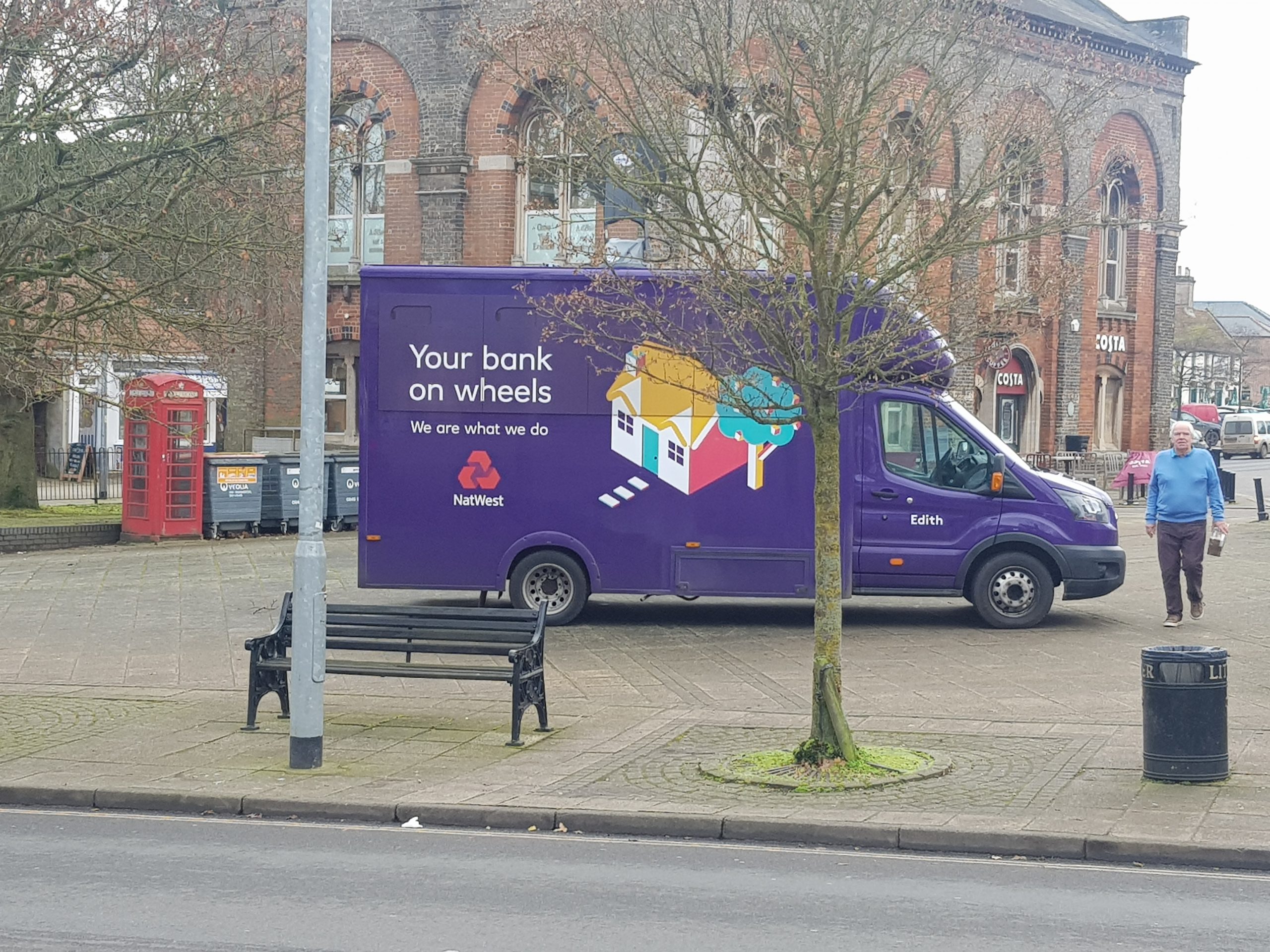
Welcome to the future of banking…… Barclays closed their Swaffham branch in 2018, Natwest have closed theirs and the couple that remain look like they might go as well. But, this exciting van has replaced the Natwest branch, with the extensive hours of 13:30 until 15:00 on Mondays and Thursdays, this has certainly got the people of Swaffham comprehensively covered…..
-
Swaffham – Swaffham Library
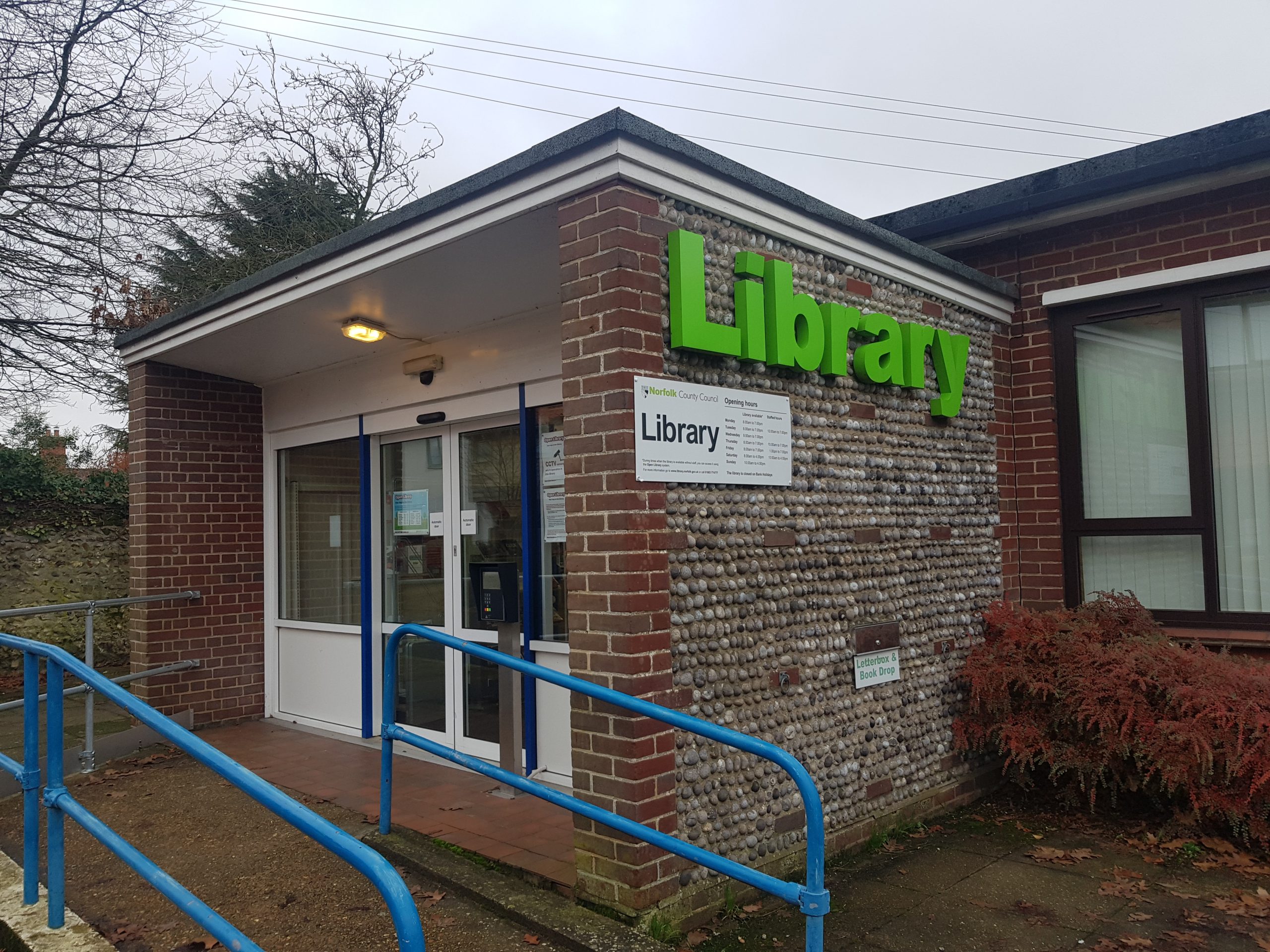
I had this marvellous idea during my trip to Swaffham that after a couple of pubs and a visit to the church, I’d quickly read Pevsner in the library and then do a little perambulation as he’d call it, before visiting the museum. Anyway, the library is closed if you don’t have your library card. I don’t. So, I abandoned Swaffham, its library and its museum. It’s not for me to comment on who is responsible for inaccessibility of public libraries, but it can’t be good for the future of the library service.


