Tag: St. Mary’s Church

  • Attleborough – St. Mary’s Church

    Attleborough – St. Mary’s Church

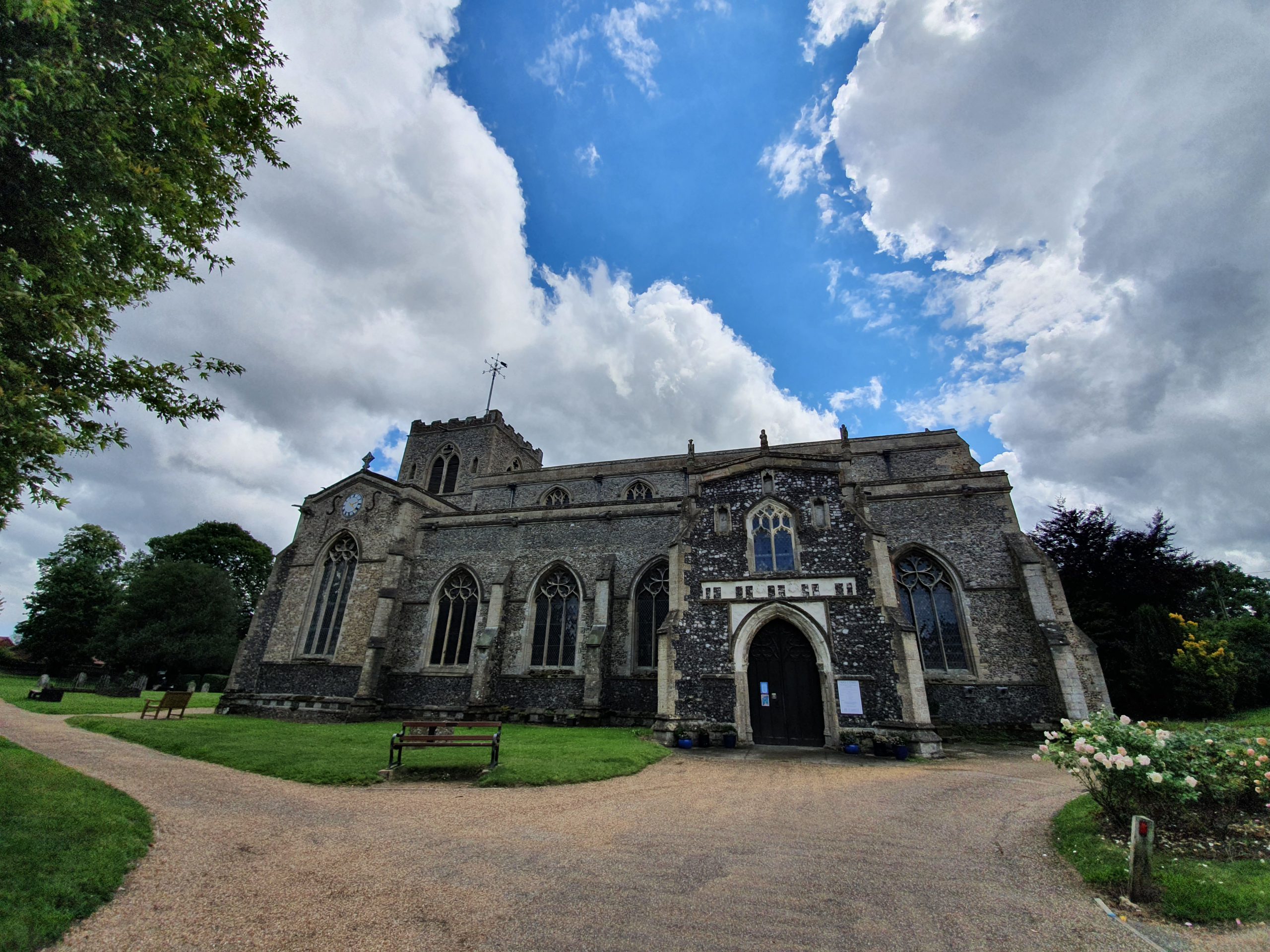
    One advantage of looking at medieval churches in remote villages is that the buildings make some sort of sense to someone such as myself, who has a limited understanding of the architecture and evolution of the structures. St. Mary’s in Attleborough makes, at first sight, very little sense with all of its all additions and removals over the centuries. There has been a church here since Saxon times, likely the ninth century, although the current structure is mostly from the eleventh century onwards.

    Unfortunately, this plan isn’t the clearest in terms of the quality. But it’s indicative at least, the north porch is visible on the left and Mortimer’s Chapel in the top-right.

    This is the north porch and work started on this in the late fourteenth century and it was completed early on during the fifteenth century. Unfortunately, all of the statues which once stood in the niches are no longer present.

    The west end of the church.

    The area between the north porch and the west end of the nave.

    Back to the north side of the building, this is the outside of the north aisle, which was a later addition.

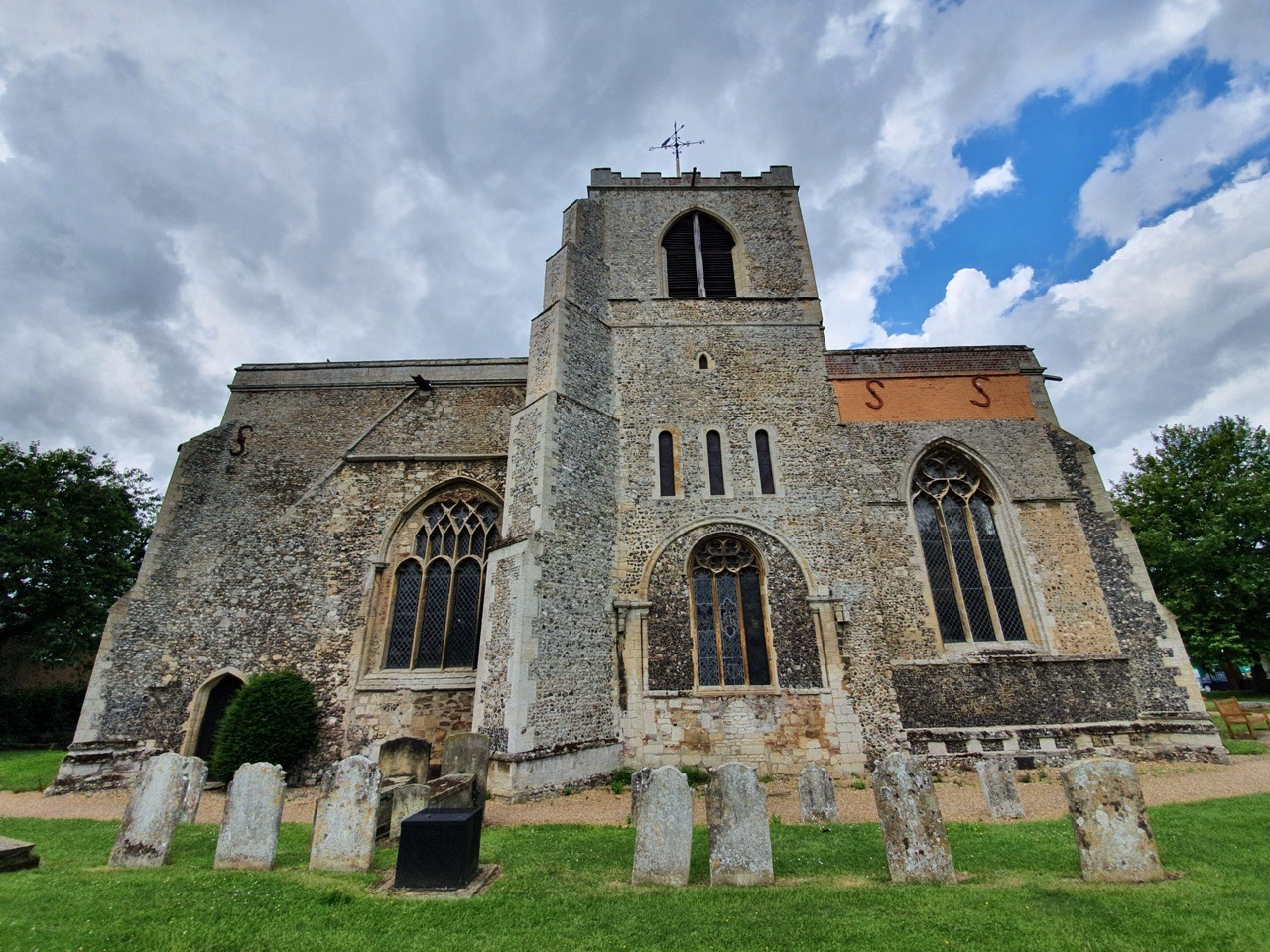
    The church’s complexity is evident here, it looks more like a closed down priory converted into a new building. But, this is where the chancel once stood, which was taken down in 1541. The tower, which dates from the twelfth century at the base and the thirteenth century at the top, then became the east end rather than the central tower that it once was. It also left a rather muddled appearance, although it all adds character. The tower did once have a spire that was built in around 1300, but that fell down in around 1700. Which isn’t entirely ideal.

    An illustration of the church from the mid-nineteenth century.

    An old doorway in the base of the east end of the church.

    This is the south side of the church, where a new extension was added in 1994 to house a community centre.

    Given the current health situation, the interior of the church wasn’t open, but I understand it’s worth seeing with numerous old treasures, including wall paintings and the rood screen. So, I’ll meander back at some point.
  • Attleborough – St. Mary’s Church (Overgrown Grave)

    Attleborough – St. Mary’s Church (Overgrown Grave)

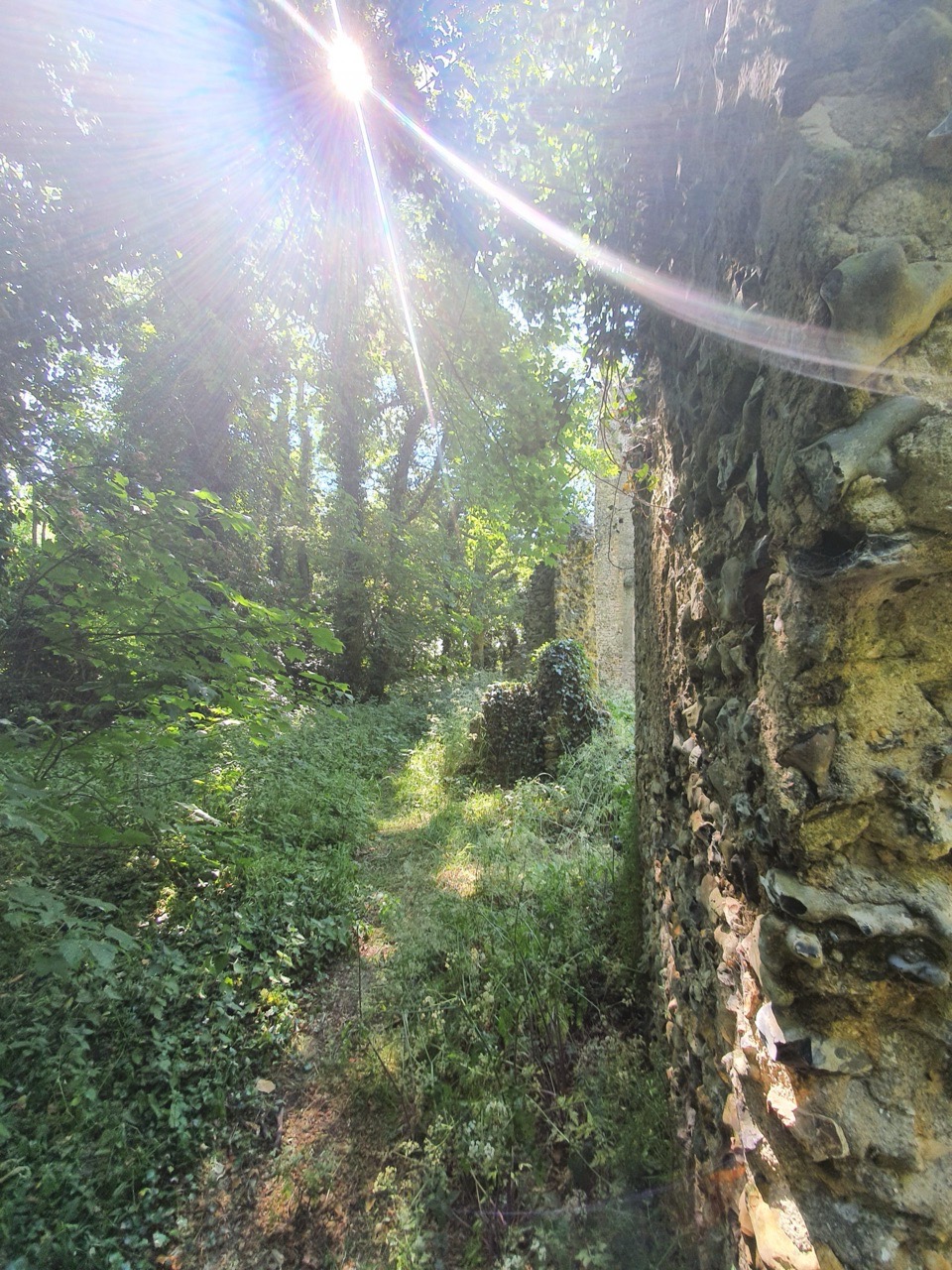
    I’m not sure that I can recall seeing such a neatly overgrown grave (is that a thing?), but this one stands out at St. Mary’s in Attleborough.

  • Stalham – St. Mary’s Church

    Stalham – St. Mary’s Church

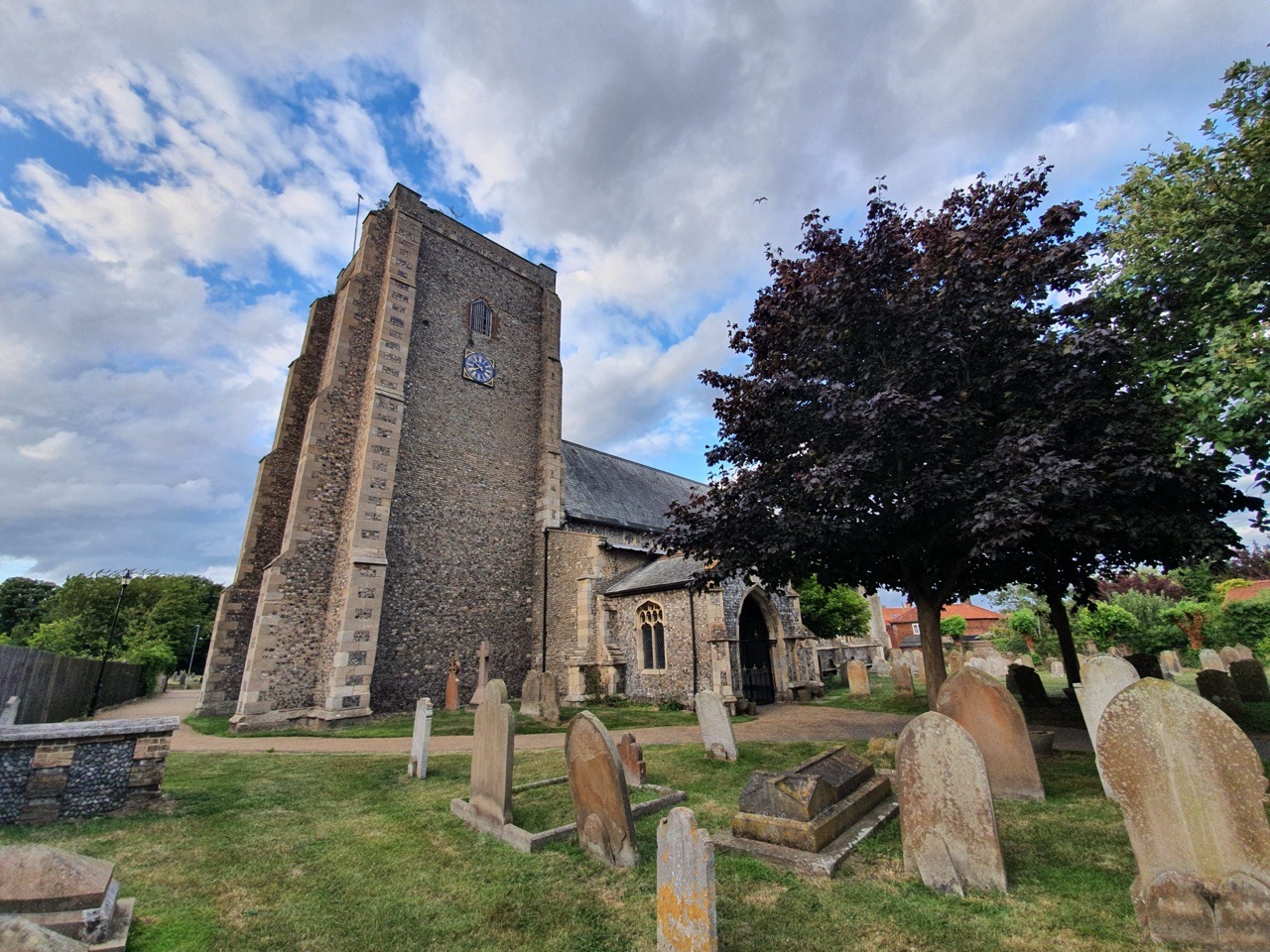
    St. Mary’s Church in Stalham dates to the fourteenth century.

    The chancel in the south side is rather devoid of windows, but there are at least some on the north side. The chancel was entirely reconstructed in 1827 (and the rood screen was removed), with the nave and aisles also restored in the 1850s. The west porch was reconstructed in 1872 and the chancel was once again amended in 1886 when the roof was raised.

    The 70-foot high west tower once had a belfry on top, but that fell down. Which isn’t ideal.

    The tower, impressive in height as it already is, was never finished to its originally intended height thanks to the Reformation and the upheaval in the church. The window was amended and patched up, with the remains of that handiwork still being clearly visible, and perhaps there were once dreams that it would one day be completed.

    This is probably one of the few churches which had a fire engine unit in its churchyard, but more on this in another post. Also rather interesting, or to me anyway, is that the Maid’s Head pub was built in the town in 1380 so that the builders of the church had someone to go for a drink. I look forwards to going back to see the church when the interior is open, for numerous reasons, but partly to see the font which was hidden in the floor to prevent it being destroyed during the Reformation and was only rediscovered in 1964.

  • Martham – St. Mary’s Church

    Martham – St. Mary’s Church

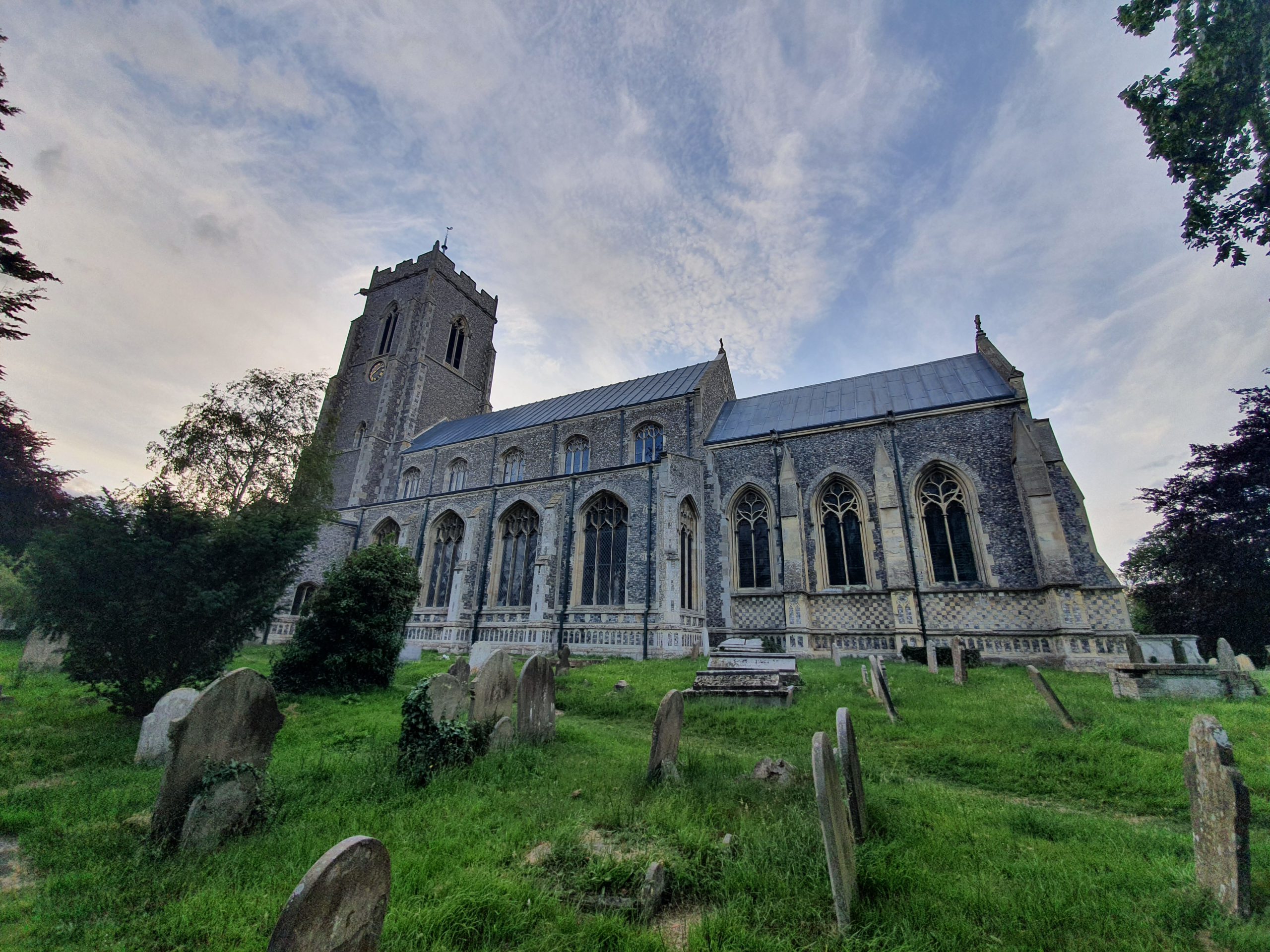
    There was probably a church on this site in late Saxon times and a recent archaeological dig discovered the foundations of a round tower from the twelfth century. What stands today though is primarily from the late fourteenth and early fifteenth centuries.

    I must admit to being a little unimpressed with the printed ‘NO ENTRY’ paper signs that the church has placed on the locked porch doors. For those who had hoped to see when the church might be once again open for prayer, they weren’t informative nor did they offer any guidance to parishioners. Given that their web-site is telling people that the rector is once again available daily in the church, it all felt a bit unwelcoming.

    Known as “the Cathedral of the Fleggs” as it’s the grandest church in the area, the tower stands over 100 feet in height. The church’s original chancel was completed between 1456 and 1469 by Robert Everard, who also designed the spire of Norwich Cathedral. I would have liked to have seen this, but as it was falling down by the nineteenth century, it was replaced with an entirely new chancel between 1855 and 1861 which was designed by Phillip Boyce. Pevsner was impressed by the quality of the workmanship completed by Boyce, so that’s good enough for me…..

    It’s a slight shame that this red-brick building is stuck here under the tower.

    The tower itself has four stages and the floor was lowered in 1999, which must have been an interesting project and a chance to see the hidden history of the building.

    There’s an interesting article from 1858 about the restoration of the church, which gives a perspective of why the modernisation of the building was seen as important.

    “Martham church was once, many generations ago, a fine, indeed an extraordinary structure even amongst the many noble village churches of Norfolk, but the hand of time, and the still heavier hand of man, did much to impair its beauty, and to render nugatory that which art and taste had constructed. Massive, ill-contrived boxes, gradually usurped the place of seats, simple and light in appearance, and many exquisite productions of art, treasures in tracery, and beautiful specimens of carving, were ruthlessly buried amidst rubbish or covered over with the ‘improvements’ of some modern Goth, and lost, too many of them, for ever.

    Old seats were swept away, and cumbersome and heavy galleries soon disappeared. It was found that the original seats had been built over and upon and fine old relics in carving and tracery were recovered, and no less than fifty ancient and beautiful poppy heads were taken from their hiding places and set in their proper positions.”

    Much as I like seeing box pews, which can add much character and some depth to a church, the argument to remove them is also strong. Some of the poppy heads which had been damaged were altered during their repair process and they’re all still visible in the church today.

    This is another church that I’ll have to come back to in order to see the interior….

  • Hassingham – St. Mary’s Church

    Hassingham – St. Mary’s Church


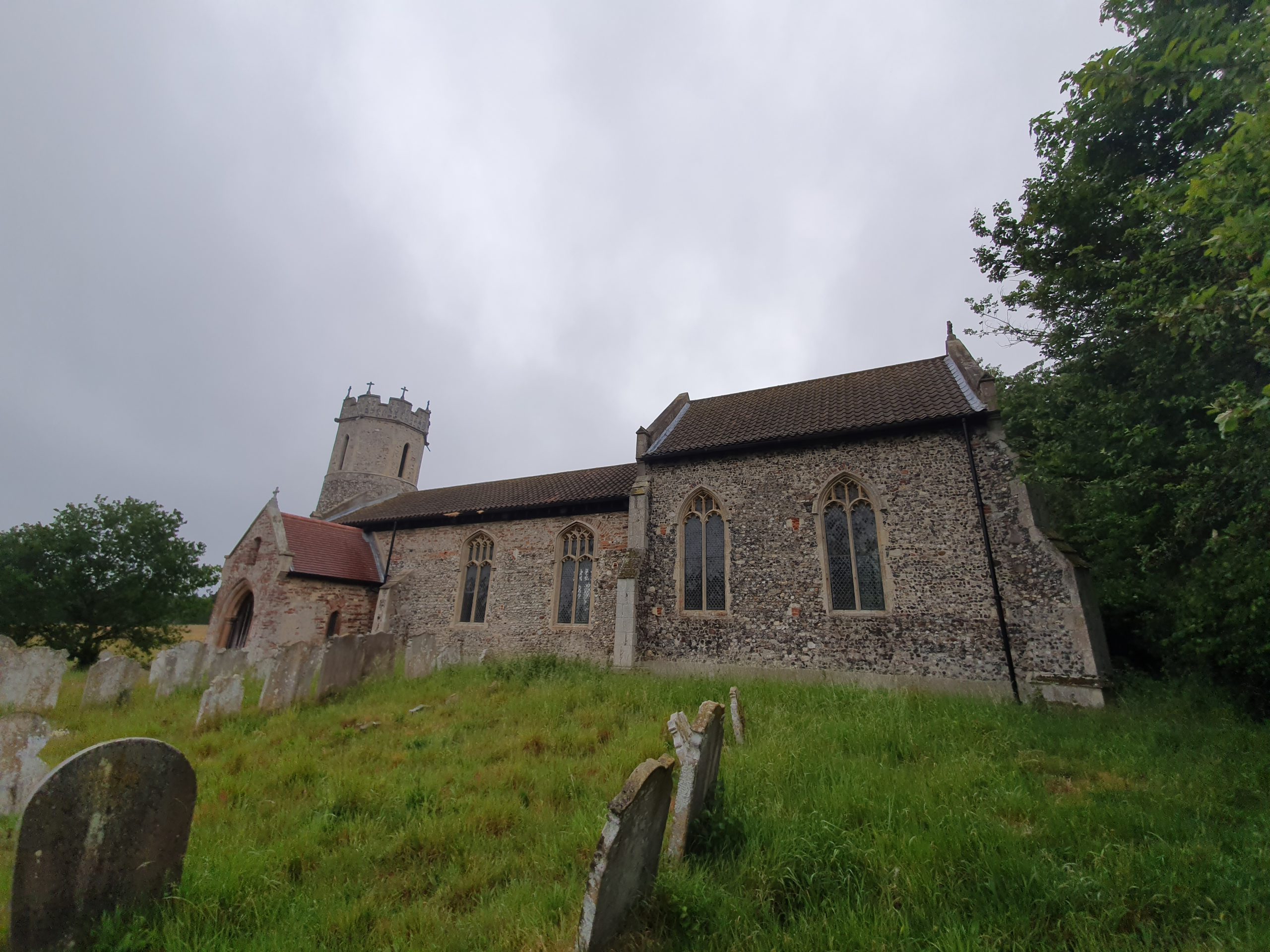
    We visited this church at the end of a walk a few days ago, just as the weather started to look a little bleak. Perhaps that added to the majestic beauty of this rather remote church though. There was probably some sort of Saxon religious building here, although the structure now dates primarily to the twelfth and fifteenth centuries.

    Some of the church looks modern, but this is because of a serious fire in the late 1960s which meant that nearly everything inside was lost and the roof was also destroyed. Fortunately, the situation at Bixley was avoided and the church was rebuilt, but this time no longer with a thatched roof.

    The round tower is from the twelfth century if the listed building record is accurate, and they usually are, although it just looks a bit older to me. The top bit of the tower, which I’m not entirely sure fits in, was added in the fifteenth century.

    Wikipedia notes, so it must be true, that William Haslam was the vicar here in the 1860s and he managed to be converted into a more evangelical approach by listening to his own sermon. That’s one persuasive vicar…..

    There is also the beginning of an interesting story which was repeated in the Norfolk News in 1888 from times long past, which is that the notorious criminal Bartholomew de Devonshyre killed Adam Wyre in Hemblington and then rushed to Hassingham to seek sanctuary at St. Mary’s Church. Unfortunately, there was no mass media at the time and details on this story are somewhat hard to find.

    Not relating to the church, but instead to Broad Farm opposite, there was a huge invasion of coypu in 1960. The local farmer, Wesley Key, said “we catch coypus at the rate of fifty a week, but they still multiply as fast as ever”. Fortunately for the farmer, these have now been eradicated from the British countryside, but I have visions of the coypu over-running the church as well…..


  • Tunstead – St. Mary’s Church

    Tunstead – St. Mary’s Church

    I can’t remember visiting this church before, but it’s a substantial building and way out of proportion for the size of the settlement that exists today. All churches are currently closed at the moment, but the interior of this seems to have some mystery to it, so this is another building I’ve put on my list to visit again. I’m getting quite a long list…..

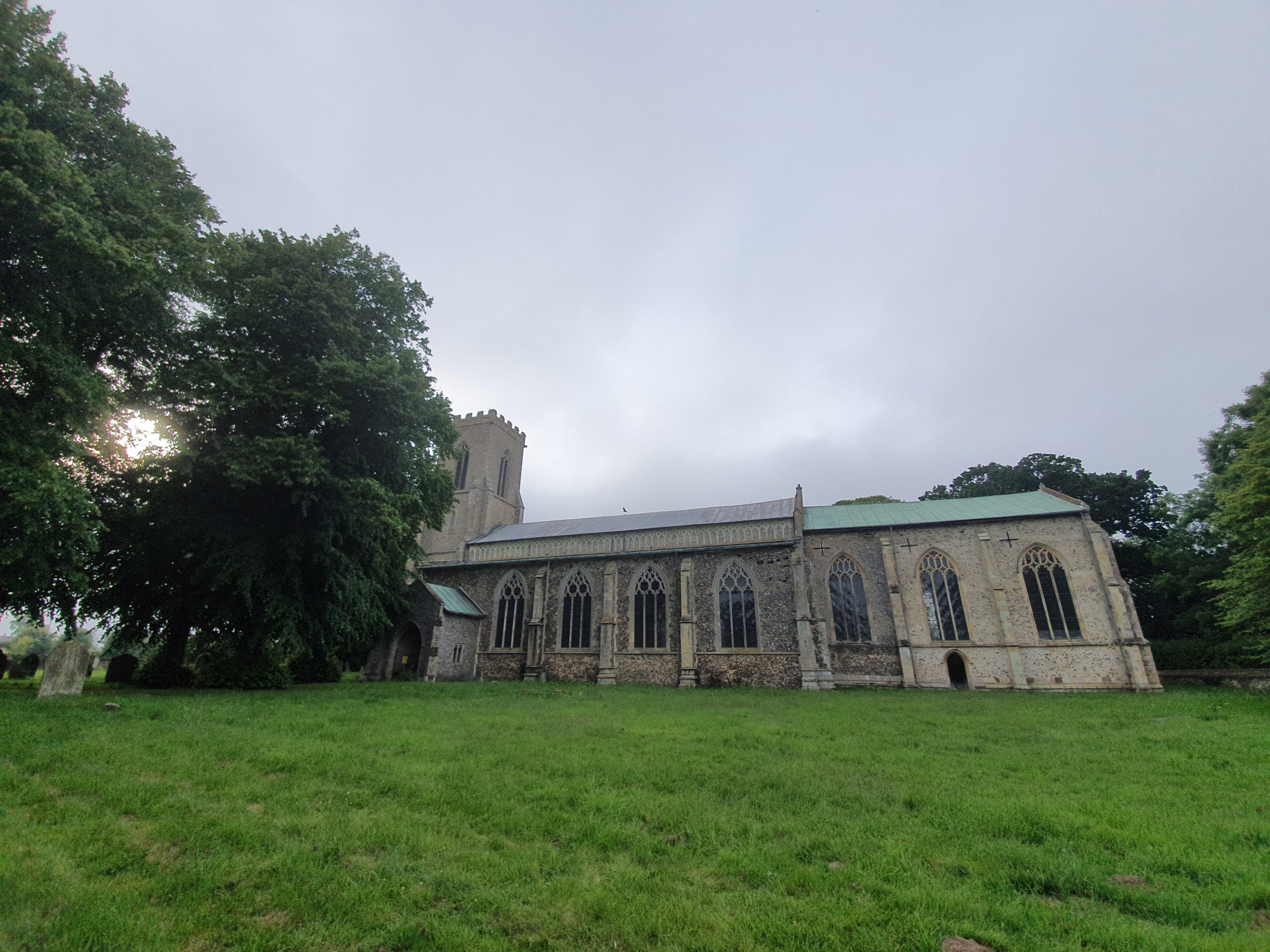
    Anyway, the bulk of this church dates to the fourteenth century and most of it was already completed before the Black Death caused so much death and suffering across the country. But the Black Death is probably the reason why there aren’t that many nearby homes and it seems possible that the church was funded by the woollen industry, in a similar manner to nearby Worstead Church.

    The base of the tower and it’s worrying to see that the building is on the Historic England Heritage at Risk register, so hopefully this will allow them to gain funding to fix some of the problems. The register mentions that plaster is flaking off the walls internally and the medieval rood screen is suffering from damp problems.

    The entirety of the east window is also blocked and I couldn’t work out why this was, but there’s an article dating back to the early nineteenth century that the glass was being smashed so often by local children that this was seen as the best solution by the church-wardens at the end of the eighteenth century. The author noted “our beautiful churches are continually being spoilt by the ignorance of peoples utterly unfit to be their guardians”. There’s sometimes a view that people always treated churches with great respect in the past, but stories like this show that this isn’t the case.

    As an aside, the same author notes that “the clearstory [clerestory] walls, instead of being pierced with windows, are beautifully panelled with flint and stone”, and they do look a little unusual in their arrangement.

    The north-east chancel window is also blocked, probably for the same reason as the east window.

    This iron working on the door is quite expansive and it’s original, dating back to the fourteenth century. Havelock Ellis wrote in 1920 that this ironwork was so well-formed that it seemed more modern than this, but its heritage seems beyond dispute and is of national importance.

    I’m assuming that this is the outside of the rood screen steps, since it’s located where the chancel and nave meet.

    Anyway, a rather beautiful church and I look forwards to being able to visit the interior.

  • Saxlingham – St. Mary’s Church

    Saxlingham – St. Mary’s Church

    I’m going to lump the Saxlinghams together for the purposes of this blog, but this ruined church is in Saxlingham Thorpe.

    St. Mary’s was first built in around the tenth century, although the tower dates from the fifteenth century and was one of the last parts to be added. The tower, which once had two bells, retains most of its original height and like the rest of the church is constructed using flint with brick dressing.

    Looking towards the end of the church at the chancel, which was extended in the late medieval ages and it’s still evident where the building was extended by the change of stonework.

    Repairs to the church stopped in 1684 and it soon started to fall down. Some interiors and structural elements were taken to the nearby St. Mary’s Church in Saxlingham Nethergate. Now surrounded by trees, there was a medieval village around here, but people moved away for agricultural needs and it was that population movement that led to the church falling out of use.

  • Gdansk – St. Mary’s Church (Soviet Troops and the Floor)

    Gdansk – St. Mary’s Church (Soviet Troops and the Floor)

    These are tombstones on the floor in St. Mary’s church in Gdansk, lying damaged and smashed. There’s a story that Soviet troops smashed into these tombs during their invasion of the city during the Second World War in an attempt to loot the bodies underneath. I’m unsure whether these stories are true as I can’t find any contemporary mention of that happening, but it’s certainly true that the Soviets did loot the city of Gdansk (or Danzig as it was). It’s also possible that the stones were damaged when parts of the roof collapsed on top of them during the Second World War, but whatever the story, at least some portions of them remain.

  • Gdansk – St. Mary’s Church (Astronomical Clock)

    Gdansk – St. Mary’s Church (Astronomical Clock)

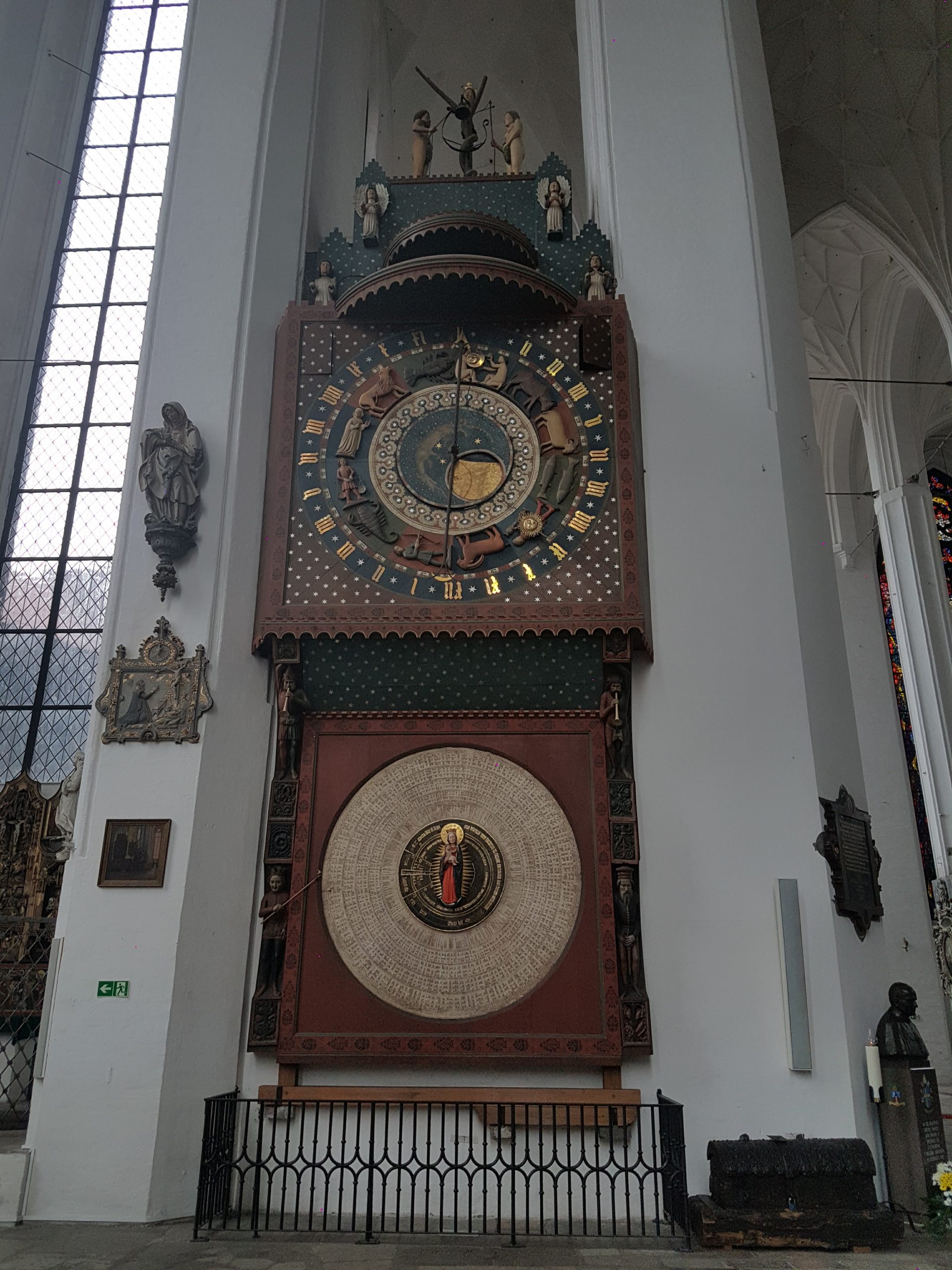
    This impressive clock, located within St. Mary’s Church, was the largest in the world when it was put together between 1464 and 1470. It’s 14 metres in height and was designed by Hans Düringer, a clockmaker who had workshops in Nuremberg. Despite the huge expense lavished on it, the clock had stopped working by 1554, likely because no-one knew how to repair it.

    There is a myth, which is presented as fact in some places, that Düringer was blinded after making the clock as the authorities didn’t want him to make such a beautiful item for any other church. I can’t quite imagine that there’s any truth in this, particularly as he managed to make more clocks after this one was installed.

    The clock was damaged during the Second World War, with efforts made in the 1980s to reconstruct it. It’s a complex item as it doesn’t just tell the time, but it also tracks the position of the sun and the moon, as well as having a saints calendar and zodiac face.

  • Gdansk – St. Mary’s Church

    Gdansk – St. Mary’s Church

    In preparation for my next visit to Gdansk in a couple of weeks, I’m trying to refresh my memory of where I’ve actually been. Unfortunately, the photographs from my visit here four years ago aren’t exactly, well, very good, but they’ll have to do for the moment…..

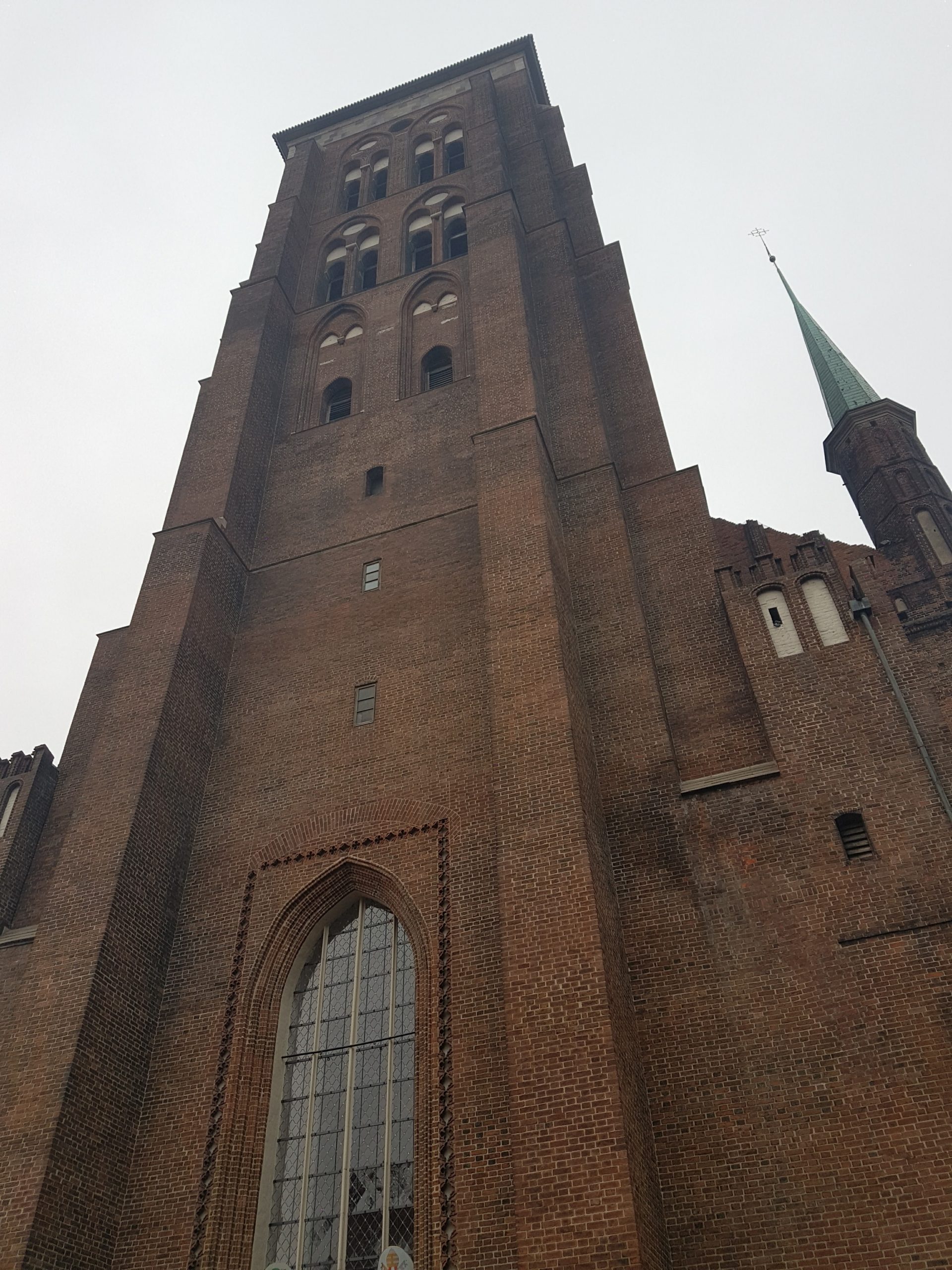
    It’s a grand church and work commenced on it during the mid-fourteenth century. Constructed as a Catholic church, it was used between 1536 and 1572 for both Protestant and Catholic services, although that situation inevitably changed over the following centuries. The building survived relatively intact until March 1945, when the Soviets attacked it, although the church was swiftly reconstructed after the end of the Second World War. There’s also a story that the Soviets smashed tombstones in a bid to loot the bodies underneath, although I’m unsure as to the veracity of that. In 1965, the church was elevated to the status of a minor basilica and it remains the largest church in the city centre of Gdansk.

    There are seven portals, or doors, to the church, which makes it exciting when trying to work out how to get in.

    The interior, which is modern due to the reconstruction necessary after the Second World War. It’s a little plain inside, but the height of the nave adds to the atmosphere and it’s possible to climb the tower. The tower climb was closed when I visited before, although having seen photos of the stairs I think I’m glad that I didn’t try and get to the top.

    The beautiful astronomical clock is also still in the church, a fifteenth century wooden clock which was the largest in the world when it was installed.

    Another highlight of the building is the Maria Coronation Altar, an enormous five metre high altar from the early sixteenth century. It’s located in the presbytery and it weights three tonnes, dominating the space in which it’s housed.

    An impressive building and it’s one of the largest brick churches in the world. The reviews are very positive on-line, other than for the:

    “The churchbells rings all day AND all night. We lived nearby and the bells woke us up several times every night.”

    How inconsiderate of the church, they should perhaps stop ringing bells which they have done for centuries…. And, this one:

    “I appreciate the church is currently undergoing a renovation but I thought the interior was bland and was a bit of a dump.”

    A bit of a dump…. A building with that much heritage, but perhaps they could install something to amuse visitors, such as strobe lighting or maybe some arcade machines if that would help some visitors. I do sometimes suspect that people forget that many old churches are primarily religious buildings used by the congregation rather than historic relics which should cater for the whims of tourists.