Tag: St. Edmund’s Church

  • Acle – St. Edmund’s Church (Robert Aldous Faulke)

    Acle – St. Edmund’s Church (Robert Aldous Faulke)

    This grave stands out in the churchyard because of its design, but it was the content that was the saddest, the death of a five-month old boy. Robert Aldous Faulke was baptised in the church on 13 September 1860 and he was the son of Robert Cooper Faulke and Anna Maria Faulke. Robert Cooper Faulke worked as a miller and farmer, employing three men and one boy, looking after 98 acres. There must have been some wealth, as the cost of such a headstone would have been relatively substantial.

    Robert died on 20 February 1861 and was buried on 25 February 1861 and the bottom of his beautiful gravestone reads “he died for Adam sinned, he lives for Jesus died”. It must have made for a painful census for the family, as the 1861 national register was taken on 7 April, just a few weeks after the death of Robert. One notable thing is that the census lists 7-month old Fanny Elizabeth as the only child, which made me realise that Robert was a twin (I had otherwise missed that his sister was baptised on the same day).

  • Acle – St. Edmund’s Church

    Acle – St. Edmund’s Church

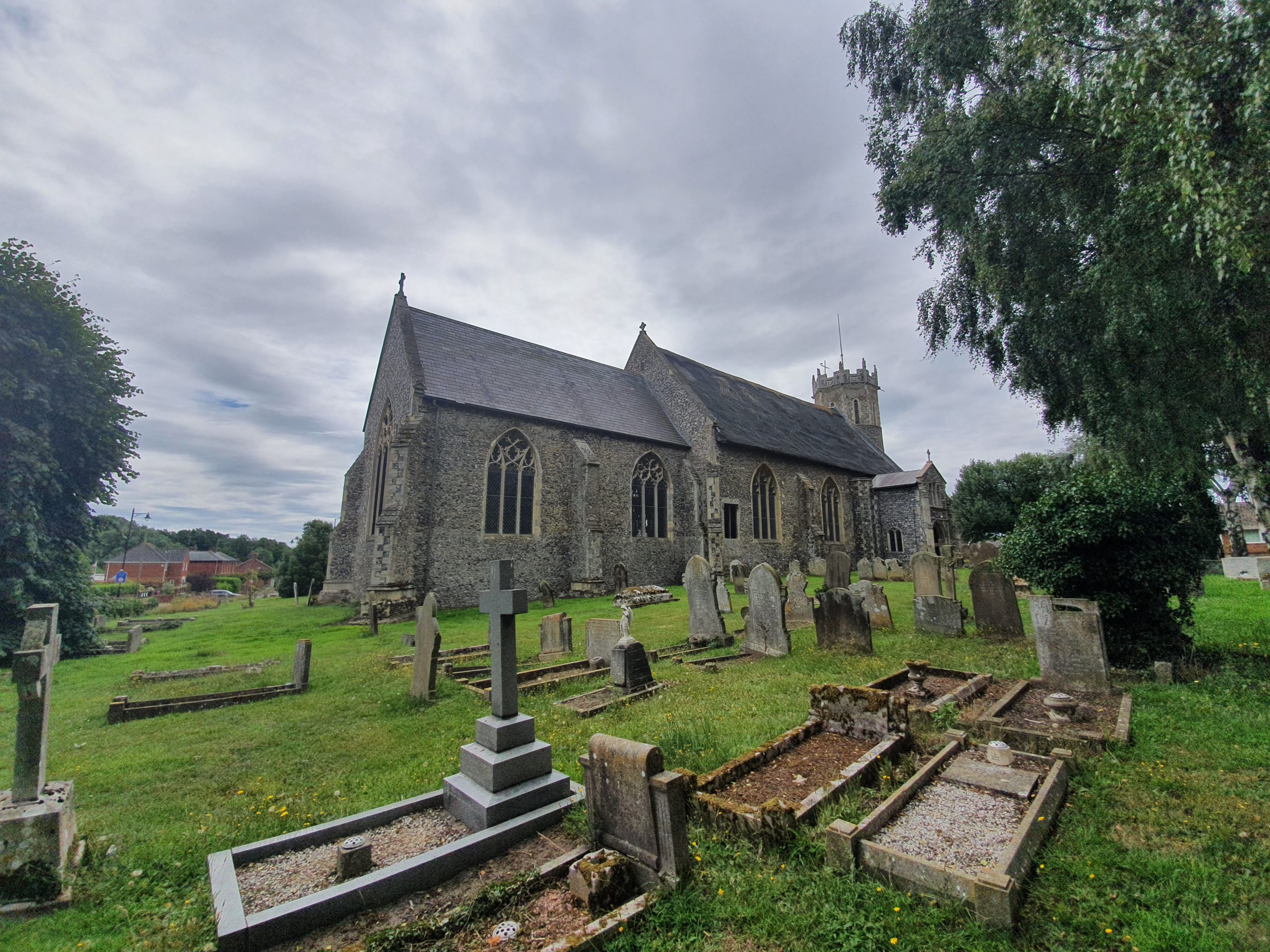
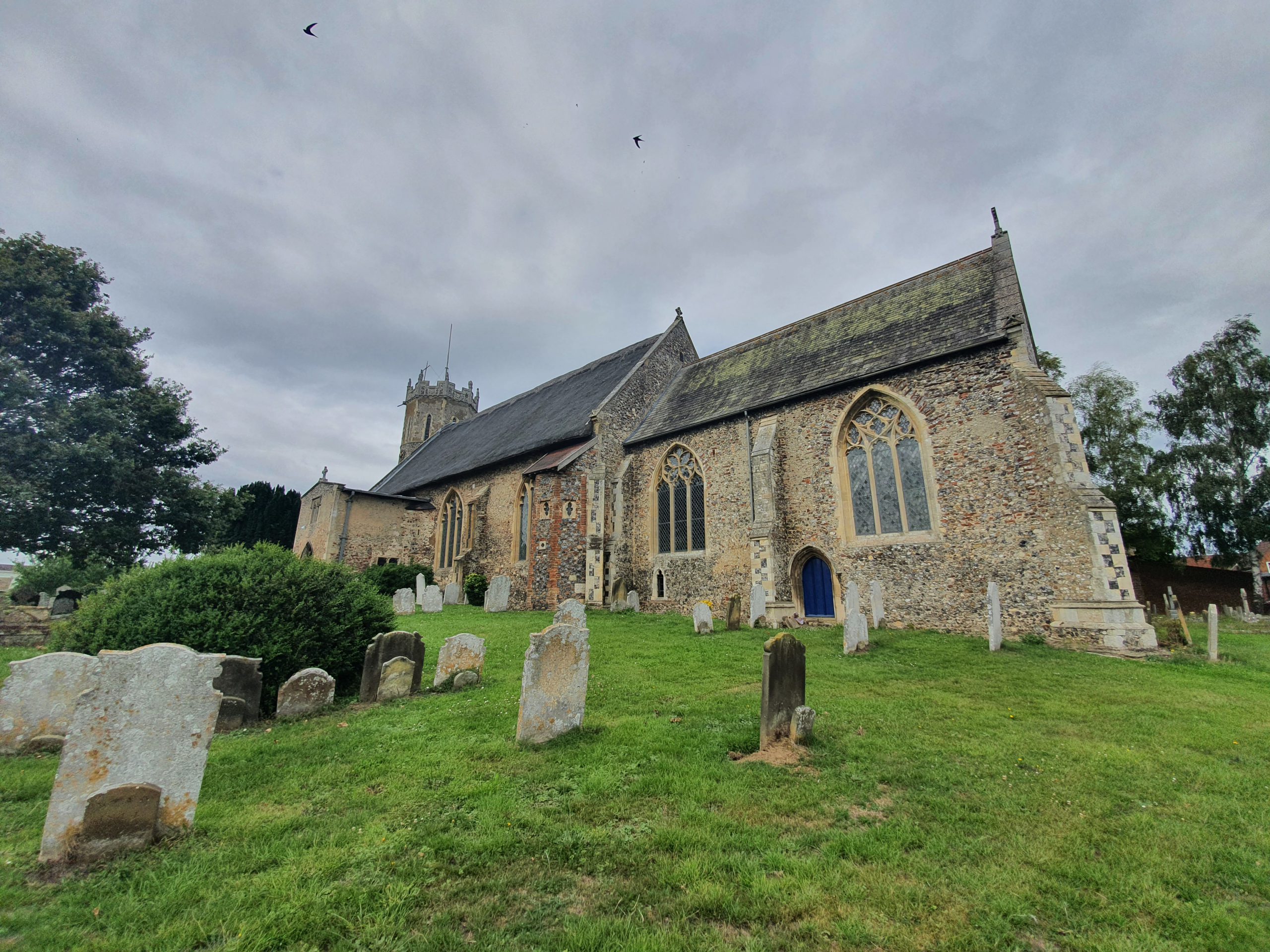
    The round tower of St. Edmund’s Church in Acle is from the twelfth century, although most of the rest of the structure is from the fourteenth century. The look of the church from this southern side shows the exterior of where the rood stairs were located, as well as the different heights of the nave and chancel.

    The building was restored internally in the 1860s, with Richard Phipson (perhaps best noted for his work on St Mary-le-Tower in Ipswich) working on the nave and Ewan Christian (perhaps best known for designing the National Portrait Gallery and restoring Southwell Minster and Carlisle Cathedral) working on the chancel.

    There was another major restoration that was completed in 1904, which primarily dealt with the roof, with the work being overseen by Herbert Green, the Diocesan surveyor. It was noted that before this restoration that the underside of the roof was plastered, but this was removed and replaced by oak boarding. Some work was also done to fix the floor of the nave, which had become dangerously uneven by this point. I’m not actually sure what happened to Richard Phipson’s 1866 plans, as he had planned to remove the plastered ceiling to show the oak cradle roof.

    The thatching is in need of some repair on the north side (and the church is mid-way through a fund-raising campaign to sort this out, as well as to see what damage lies below), but I hope it’s rethatched rather than covered in something looking much more modern, as happened at Potter Heigham.

    The north porch, which is now the main entrance to the church.

    The south porch, which like its northern counterpart, also has a room above it.

    The twelfth-century round tower, although that top section is later, probably from the thirteenth century. The tower is listed as being older by some sources, perhaps as early as the ninth century. Whatever its age, it is likely that there was a church here in around the ninth or tenth century.

    Unfortunately, as with many churches at the moment, the interior wasn’t open to visit, so that’s yet another building that I’ll have to return to when some form of normality returns.


    The church in 1955.

  • Caistor St Edmund – St. Edmund’s Church (Exterior)

    Caistor St Edmund – St. Edmund’s Church (Exterior)

    It’s good to be back walking longer distances, and today’s ten-mile round trip was to Caistor St. Edmund. It’s a complex village because of its long history, so there might be quite a few posts and repeat visits for me to work it out to my own satisfaction. And probably to no-one else’s…..

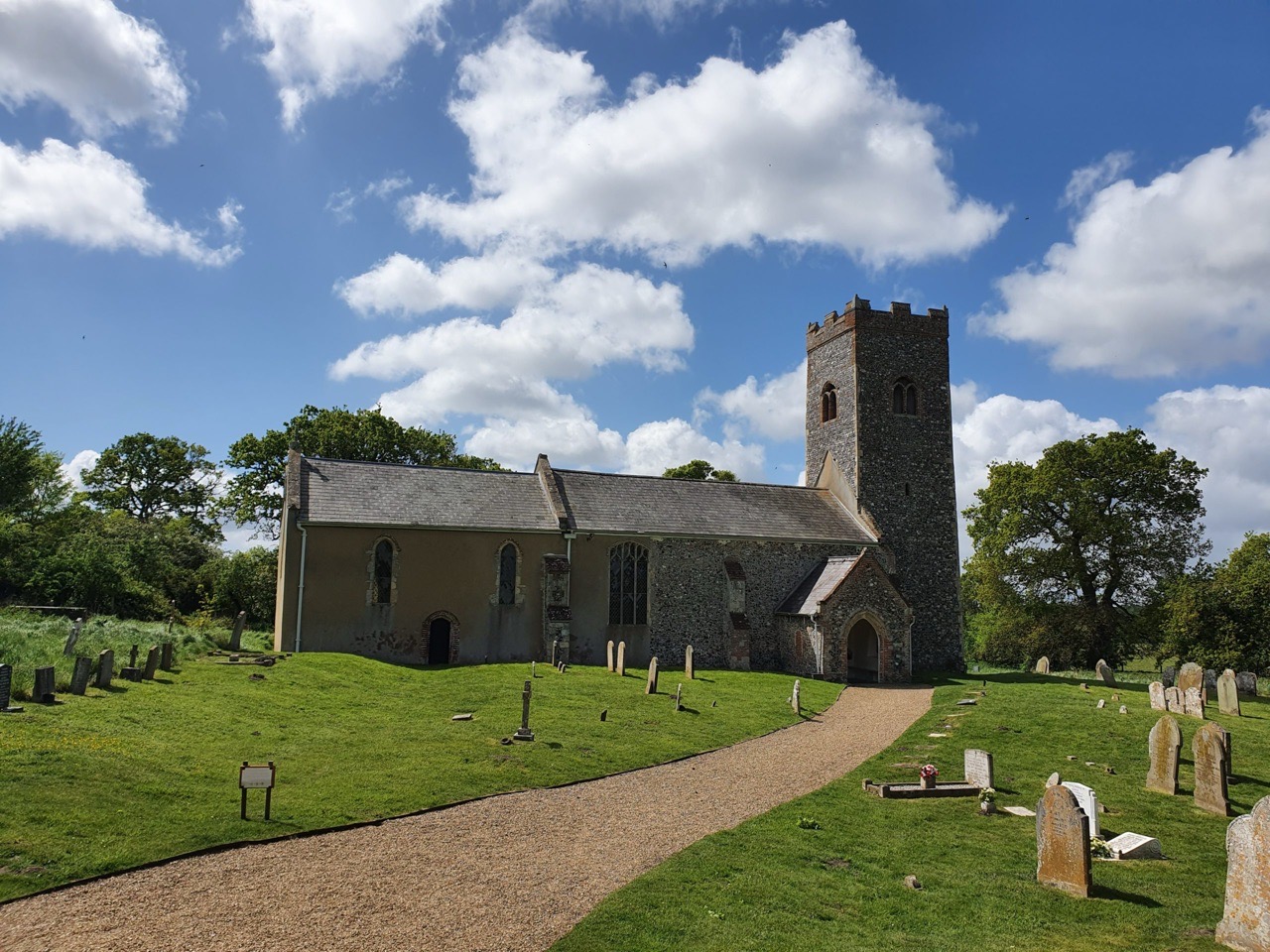
    I’ll have to come back so that I can find out more about this church, as due to the virus, they’ve closed off the whole churchyard. The church itself is of interest as it’s next to the remains of the Roman town of Venta Icenorum and there is Roman brick used in the repair and construction of the structure.

    There was a church on this site from around the ninth century, which the Anglo-Saxons placed near to Venta Icenorum and on top of the Pye Road, which was the Roman road from the fort all the way to Colchester.

    There’s a helpful information board by the entrance, which makes dating the different elements of the church much easier. The main part of the nave was built in the late eleventh century, with the chancel added in the thirteenth century. The porch and tower were added in the fourteenth century and the tower was crenellated in the sixteenth century. There was a thatched roof until 1800, when it was replaced and the roof-line was also lowered a little at this time.

    The church is dedicated to Edmund the Martyr, the King of East Anglia between 855 and 869. What a wonderful honour being the King of East Anglia would be today, but I digress. He was killed when the Vikings attacked the country, but I prefer the Anglo-Saxon named for these invaders, which was the “Great Heathen Army”. He is buried at Bury St. Edmunds, which I still think is one of the most gloriously accurate of all place names in the area.