Tag: Science Museum

  • London – Science Museum (MONIAC)

    London – Science Museum (MONIAC)

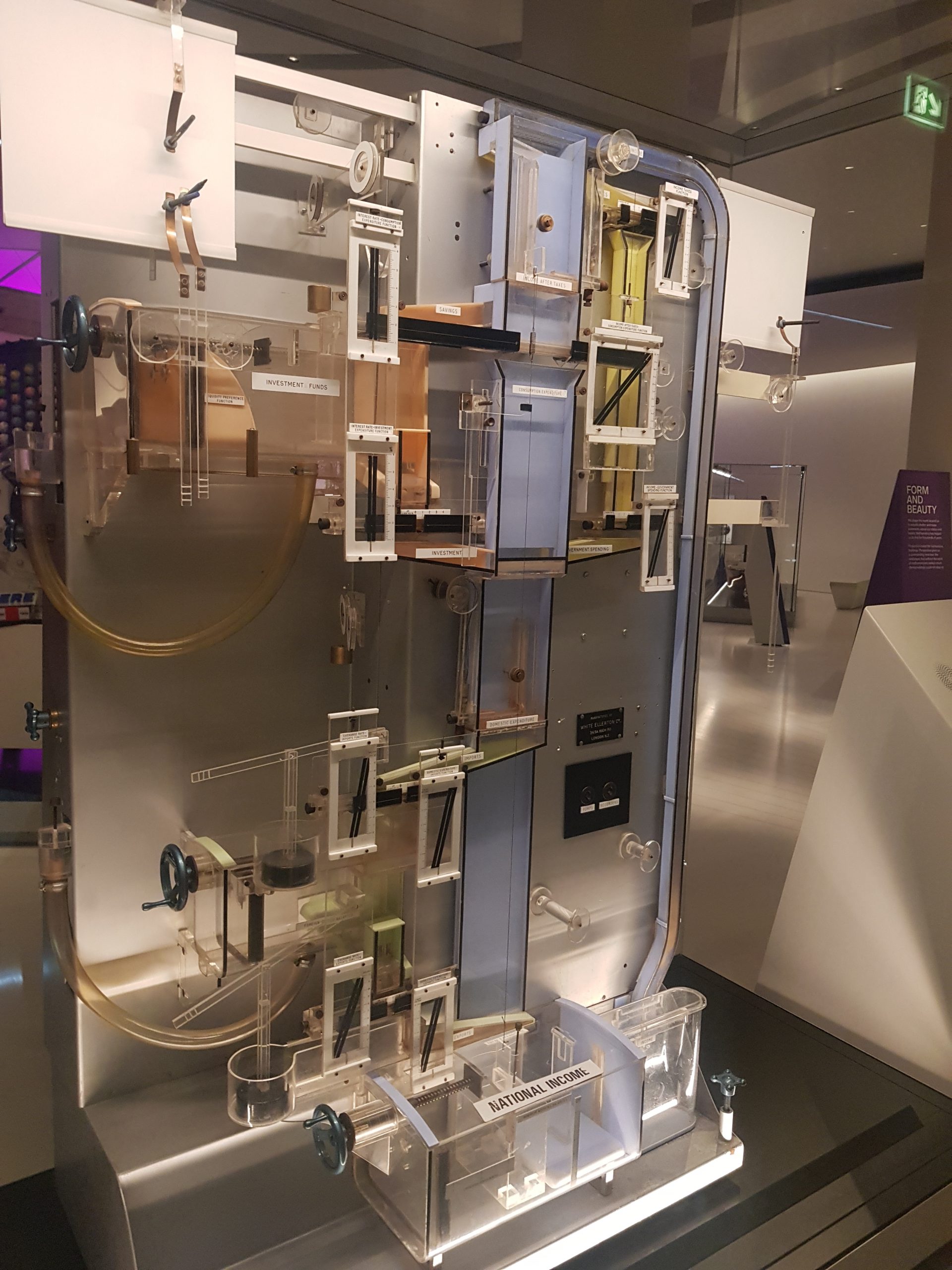
    If there was any doubt that I really need to get out more, it’s my excitement at this, one of the MONIAC (Monetary National Income Analogue Computer) machines. I’ve seen photos of this numerous times before back when studying economics, and it’s a pre-computer method of measuring how the UK national economy functioned by changing various inputs. It was designed by William Phillips, the same man for which the Phillips curve is named (a link I hadn’t realised until I was enlightened by Wikipedia).

    Wikipedia also tells me that there were around twelve to fourteen machines built, most of which appear to have survived and are dotted around the world. The one at the Science Museum is located in the mathematics sections and was donated to them by the LSE in 1995.

    Water would flow through the machine and it was possible to work out how to try to get an equilibrium in the economy, with these models apparently being surprisingly successful.
  • London – Science Museum (Door Case from 56 Lincoln’s Inn Fields)

    London – Science Museum (Door Case from 56 Lincoln’s Inn Fields)

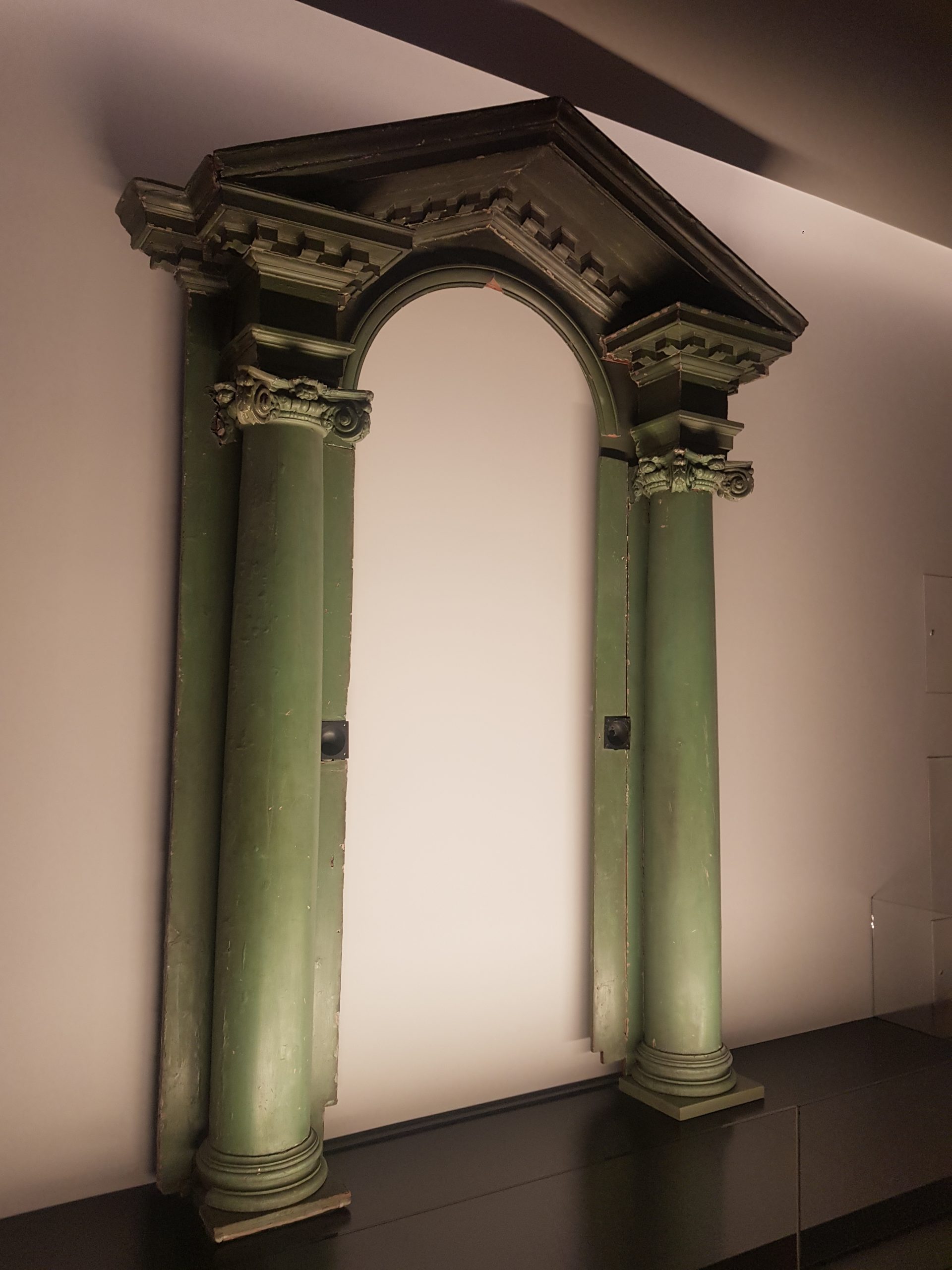
    There seemed to be a fair few exhibits at the Science Museum which had a rather tenuous link to, well, science. This door case seems to be something better suited to the Museum of London, but it’s here as the museum say that it’s a mathematical shape following the rules of proportion.

    The door case dates from the eighteenth century and it was saved before the building was demolished in 1912, to be replaced with a larger and more substantial property. The London County Council, who were the ground landlord, noted in the early twentieth century:

    “In the case of No. 56, no part of the original building is in existence. The only external feature of interest is an 18th-century door case, constructed in wood (illustrated in Plate 72). The designer has effectively used Roman Ionic columns with entablatures, to support a bold pediment, below which has been placed a semi-circular fanlight to give light to the passage. The interior is uninteresting.”

    They also published a partial list of residents of the building:

    In 1700 and 1703 Sir Thos. Millington.
    In 1708 and 1723 John Richardson.
    Before 1730 to 1731. Geo. Baker.
    1732–1739. Dr. Thos. Rundle.
    1740–1755. “W. Murray.”
    1756–1758. “Chas. Pratt.”
    1759–1761. John Rayner.
    1762–1769. Thos. Kinnaston.
    1770–1784. Sir Walter Rawlinson.
    1785–1788. S. Ewer.
    1789–1793. — Heyman.
    1794–1802. Mrs. Lee.
    1803– Jas. White.

    I’m assuming that the Thomas Millington was the physician, notable for being one of those who dissected the body of King William III in 1702. Millington died in 1703, but I have no idea whether he was responsible for the addition of the door case to the property, which I suspect he might have rented (the property, not the door case). Anyway, science or not, it’s an interesting reminder of the London which is no longer there.

  • London – Science Museum (Merman)

    London – Science Museum (Merman)

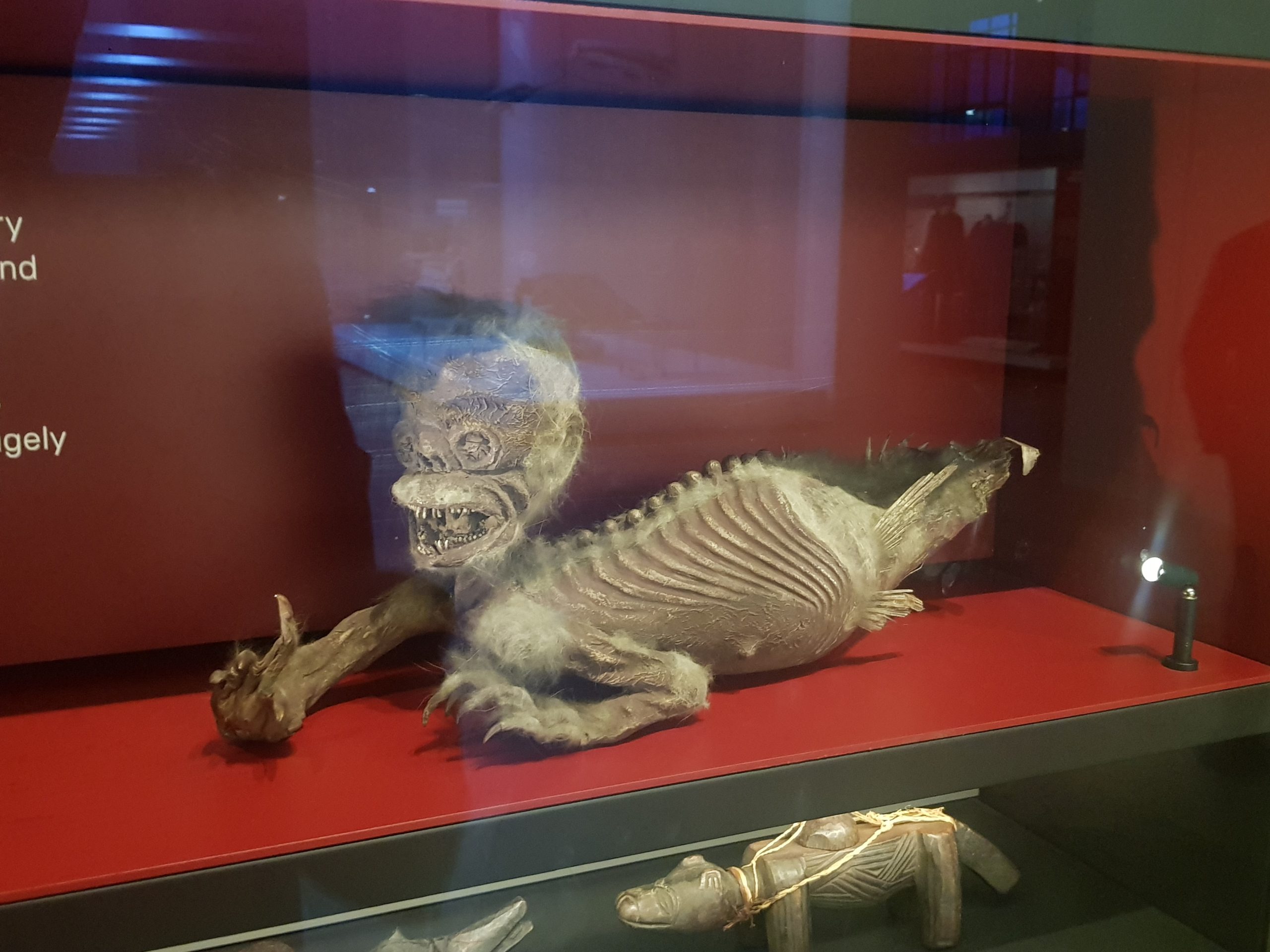
    This gorgeous little number at the Science Museum is a Merman, which is a cross between a fish, a bird and a monkey. It dates from around the nineteenth century, although its origins are unclear, it might be Dutch or Japanese. A merman is a male mermaid, so the variety of items that come into this definition are quite broad.

    It’s not an uninteresting exercise to look back on old newspapers, where stories were still circulating from supposedly credible sources that mermans did exist. Reported throughout the national media in May 1739 was this story:

    “In Vigo, in Spain, some fishermen lately took on that coast a sort of monster, or merman, five foot and a half from its foot to its head, which is like that of a goat. It has a long beard and mustachoes, a black skin, somewhat hairy, a very long neck, short arms and hands longer and bigger than they ought to be in proportion to the rest of the body, long fingers like those of a man, with nails likes claws, very long toes joined like the feet of a duck and the heel furnished with fins.”

    Sounds a lovely thing to find….

  • London – Science Museum (Lotus 1-2-3)

    London – Science Museum (Lotus 1-2-3)

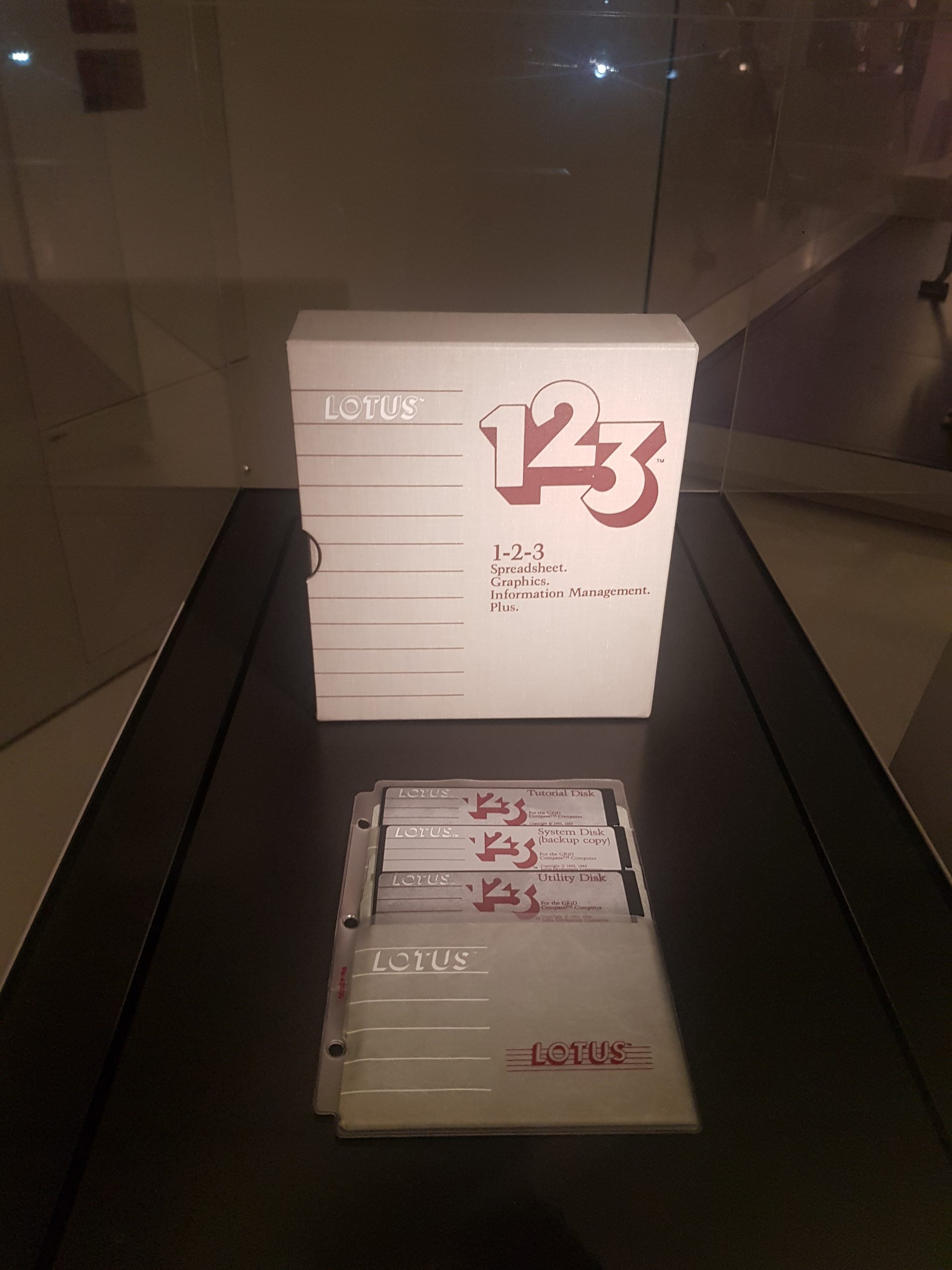
    Lotus 1-2-3 dates back to the early 1980s and was early spreadsheet software which was important in the development of IBM computers. Anyway, that’s a story for elsewhere to be told by people who know much more about it than me. The only reason I’ve posted this is that I remember using this software at school, and remember the packaging of the box. I really do need to get out more. And, I’m realising that I’m definitely ageing slightly if I’m seeing software that I once used in a museum.

  • London – Science Museum (Fire Damaged Stones from St. Paul’s)

    London – Science Museum (Fire Damaged Stones from St. Paul’s)

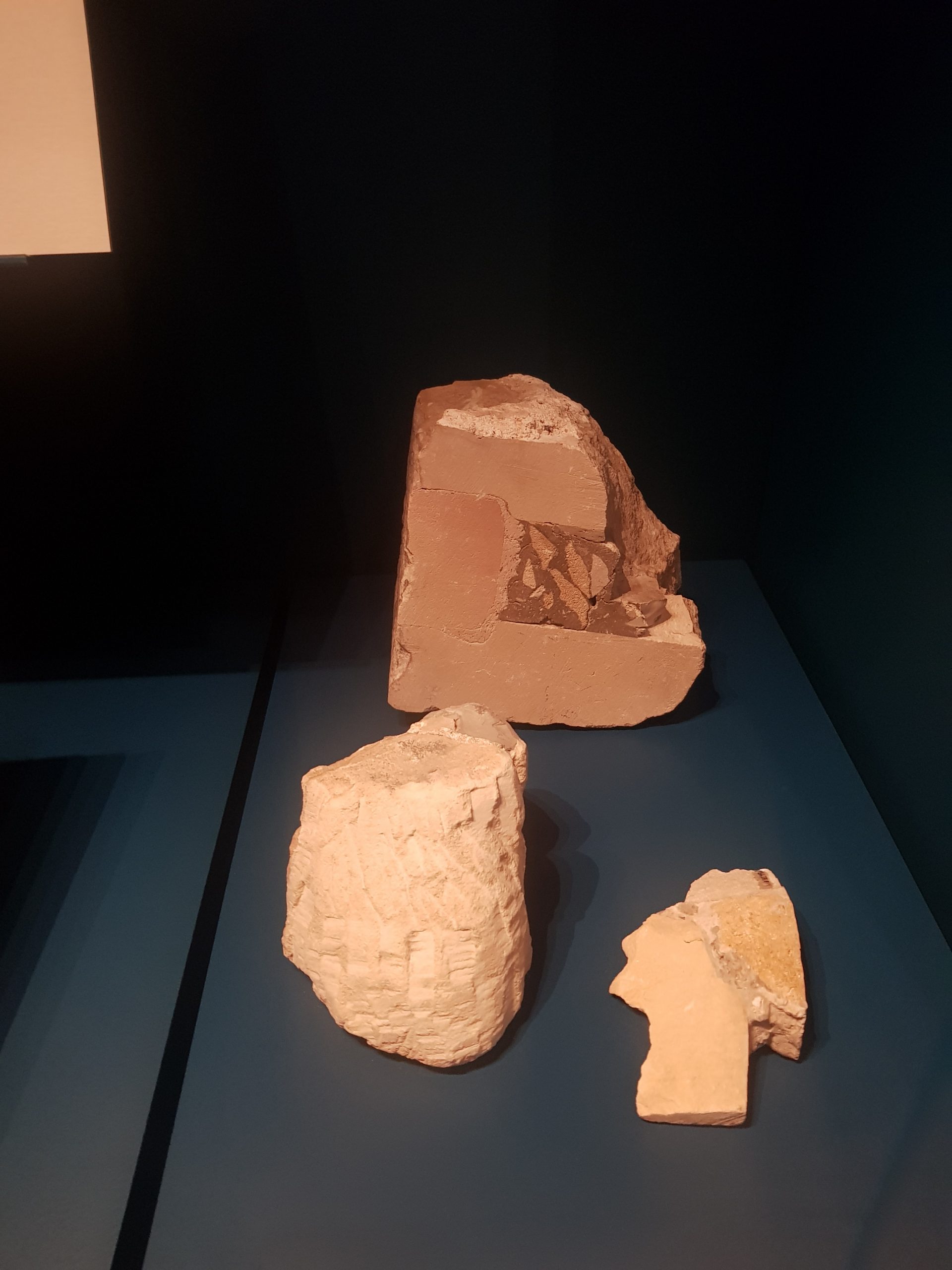
    I sometimes look at exhibits in museums and feel that I find them unusually interesting, although I assume that so did a curator at some stage. In this case, it’s some old bits of stone. There’s a slightly tenuous link in my mind to the Science Museum, but these are fire damaged stones from St. Paul’s Cathedral. The building was destroyed in 1666 during the Great Fire of London, being replaced in the late seventeenth century by the current cathedral, designed by Sir Christopher Wren.

    There was talk of repairing the previous Cathedral following the fire, with some remedial repairs being undertaken. But, it was felt that a modern and new design was needed, although demolishing the building was challenging since the stone had become fused together by molten lead. So, the authorities had a great idea to use gunpowder to blow the remaining parts of the cathedral up, making the removal much easier. Anyway, to cut a long story short, after several deaths, many noise complaints and damaged neighbouring buildings, Wren had enough of the chaos and brought battering rams onto the site to attack it that way.

    I’m not quite sure at what stage the museum’s bits of stone were taken away from the site, or where they’ve been over the centuries. But, they’re very lovely, as I like history in science museums, as they can be a bit science orientated otherwise…

  • London – Science Museum (Guinevere)

    London – Science Museum (Guinevere)

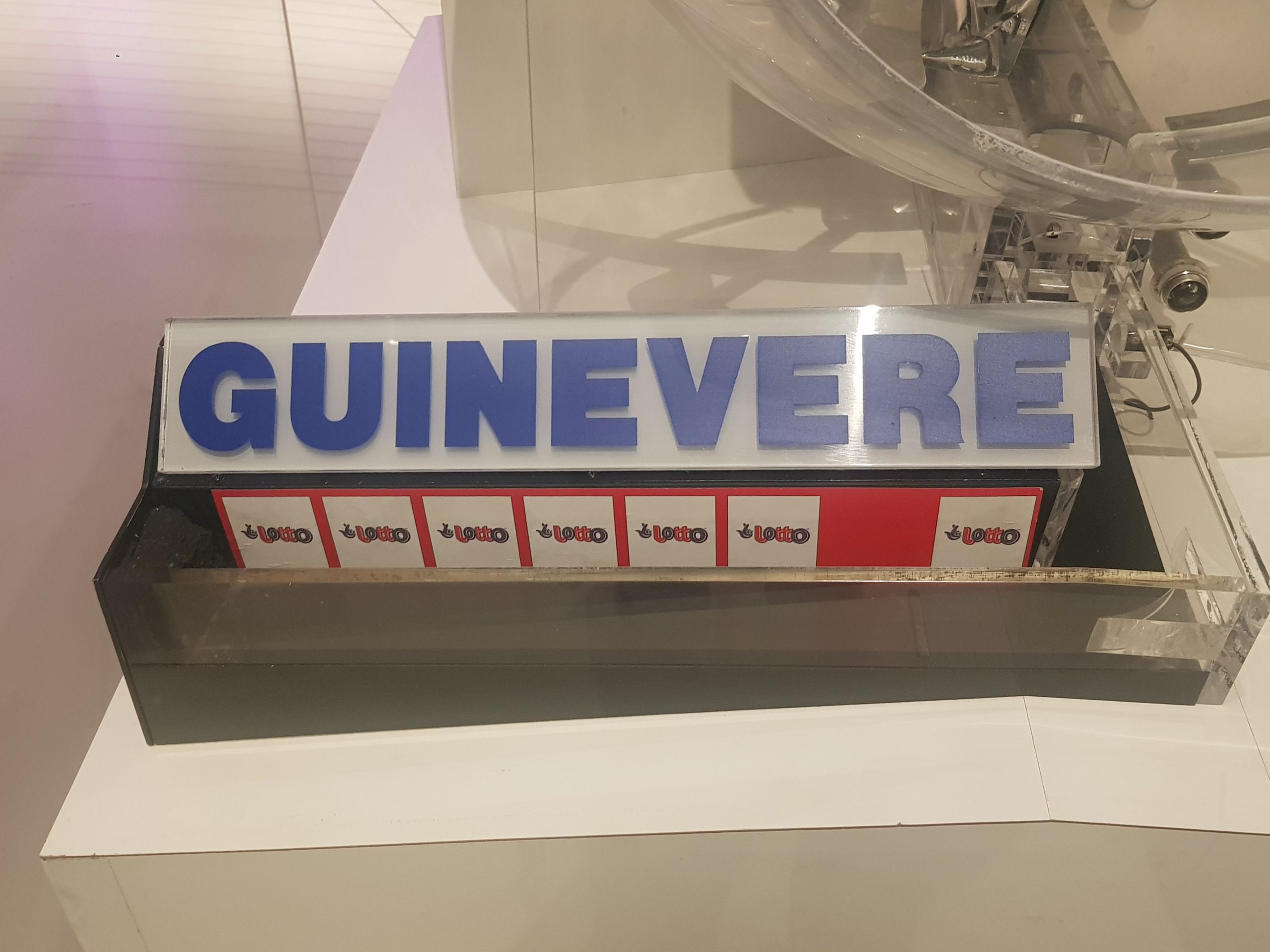
    I remember seeing this on the television in the 1990s, one of the original machines used to draw National Lottery numbers randomly. It was brought into use in 1994 following the introduction of the lottery by the then Prime Minister, John Major.

    The machine was kept in use until 2004, at which point it was replaced by a shinier machine, although they kept the name Guinevere. It entered the Science Museum’s collections in 2006 and is one of those things that I’m pleased someone thought to keep. The museum reminds visitors that devices have been used for many hundreds of years to produce random results, with this being a more modern version of the technique.

    I’m not sure why some of the balls appear more faded than others. I heard some other visitors also overly excited to see Guinevere, perhaps the machine had been helpful to them in the results that it produced…..

  • London – Science Museum (Slide Rule)

    London – Science Museum (Slide Rule)

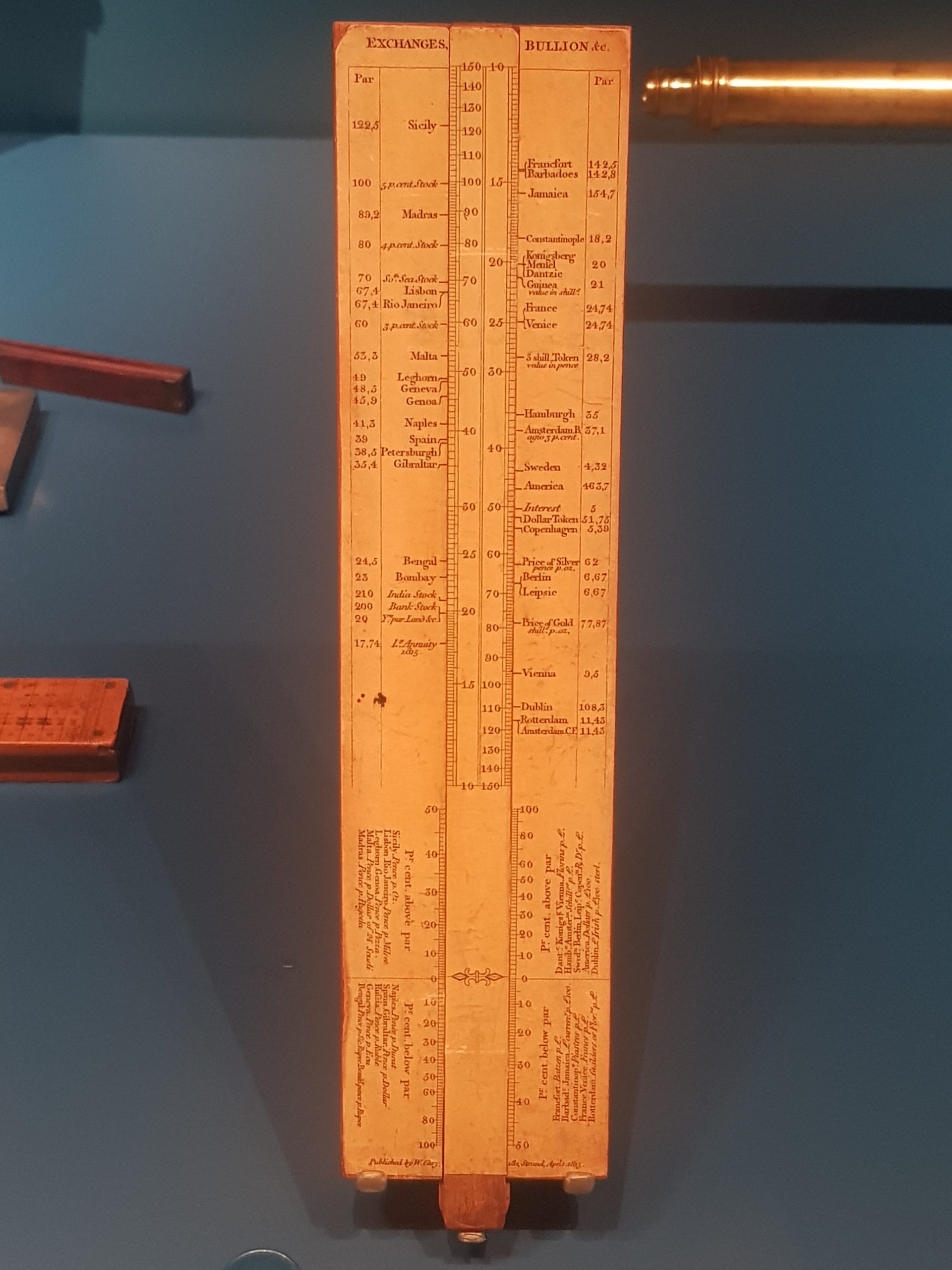
    I definitely need to get out more, since I now find myself posting about slide rules.

    But, it’s an interesting slide rule, as much as these things can be. It was made by William Cary of The Strand in London in 1815 and is a slide rule for weights, measures and currency conversions. It’s made from wood, but the front is made from paper, with these apparently being popular in the early nineteenth century (I didn’t know that, the Science Museum web-site helpfully told me this little titbit).

    It makes me pleased to have a smartphone though, I can’t imagine having to traipse this sort of thing around and it has limited entertainment value….

  • London – Science Museum (King George III’s Mural Arc)

    London – Science Museum (King George III’s Mural Arc)

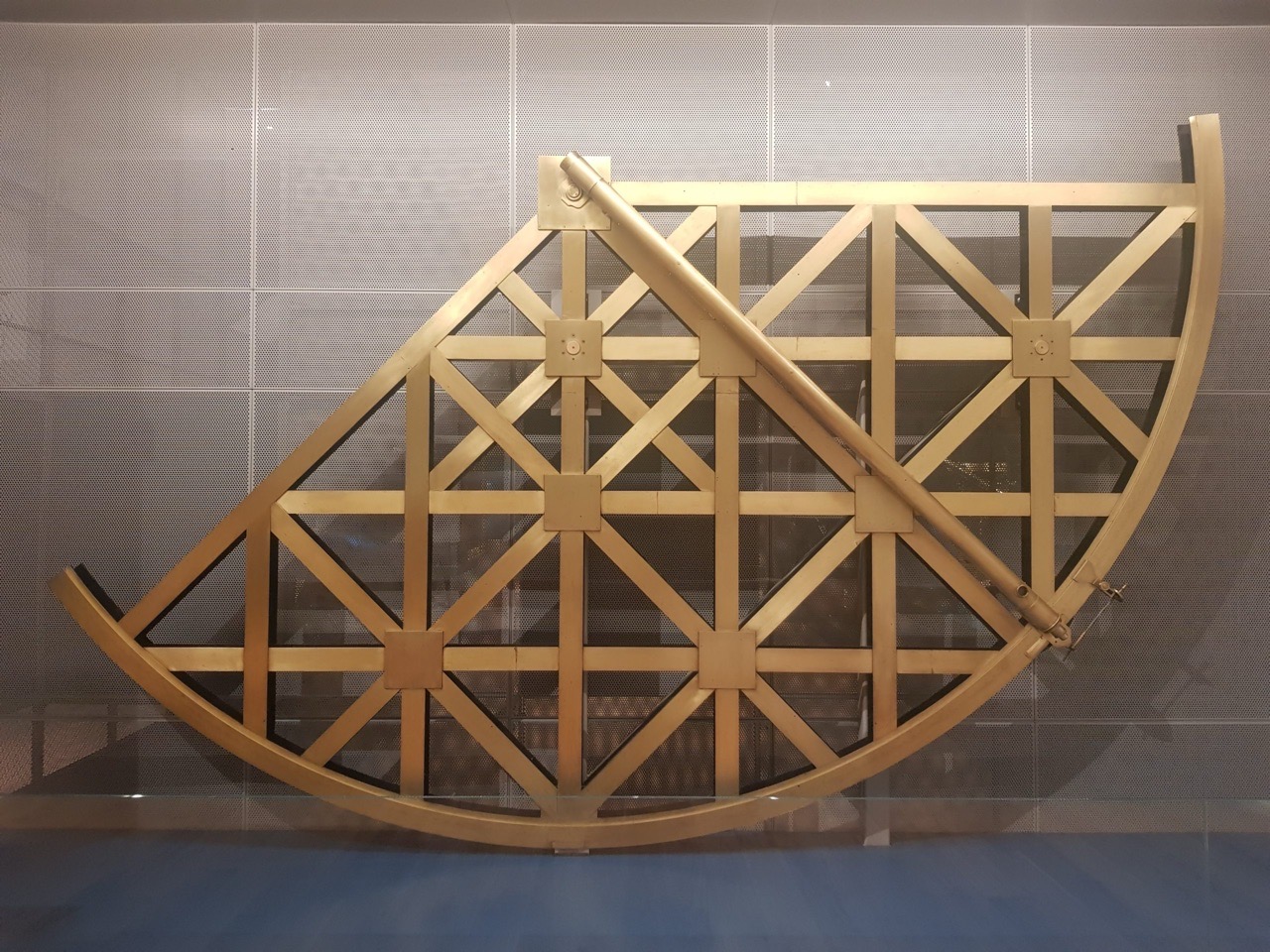
    This sizeable instrument was designed to be used in King George III’s private astronomical observatory in Richmond. Designed by Jeremiah Sisson of The Strand in London in 1770, it’s still owned today by the Crown Estate Commissioners. It’s nearly three metres in height and over four metres wide and it was used to make astronomical measurements. Sisson might have been a fine maker of instruments, a skill he had inherited from his father Jonathan Sisson, but he wasn’t as successful financially.

    The museum’s blog mentions that one of the challenges was moving it from storage into the museum itself, as it weighs around 450kgs and needed a sling around it when it was being hoisted into place. It was also restored so that it looked like new and Sisson’s signature could once again be seen, although personally I prefer to see these things in their dilapidated state as it feels that bit more authentic.

    There are some old books which give lots of detail on how the mural arc was originally used, but it’s all a bit complex for me to understand. It’s an impressive piece of apparatus though, with an interesting heritage.