Tag: Royal Monastery of Sant Francesc

  • Palma – Royal Monastery of Sant Francesc (Capilla de San Buenaventura)

    Palma – Royal Monastery of Sant Francesc (Capilla de San Buenaventura)

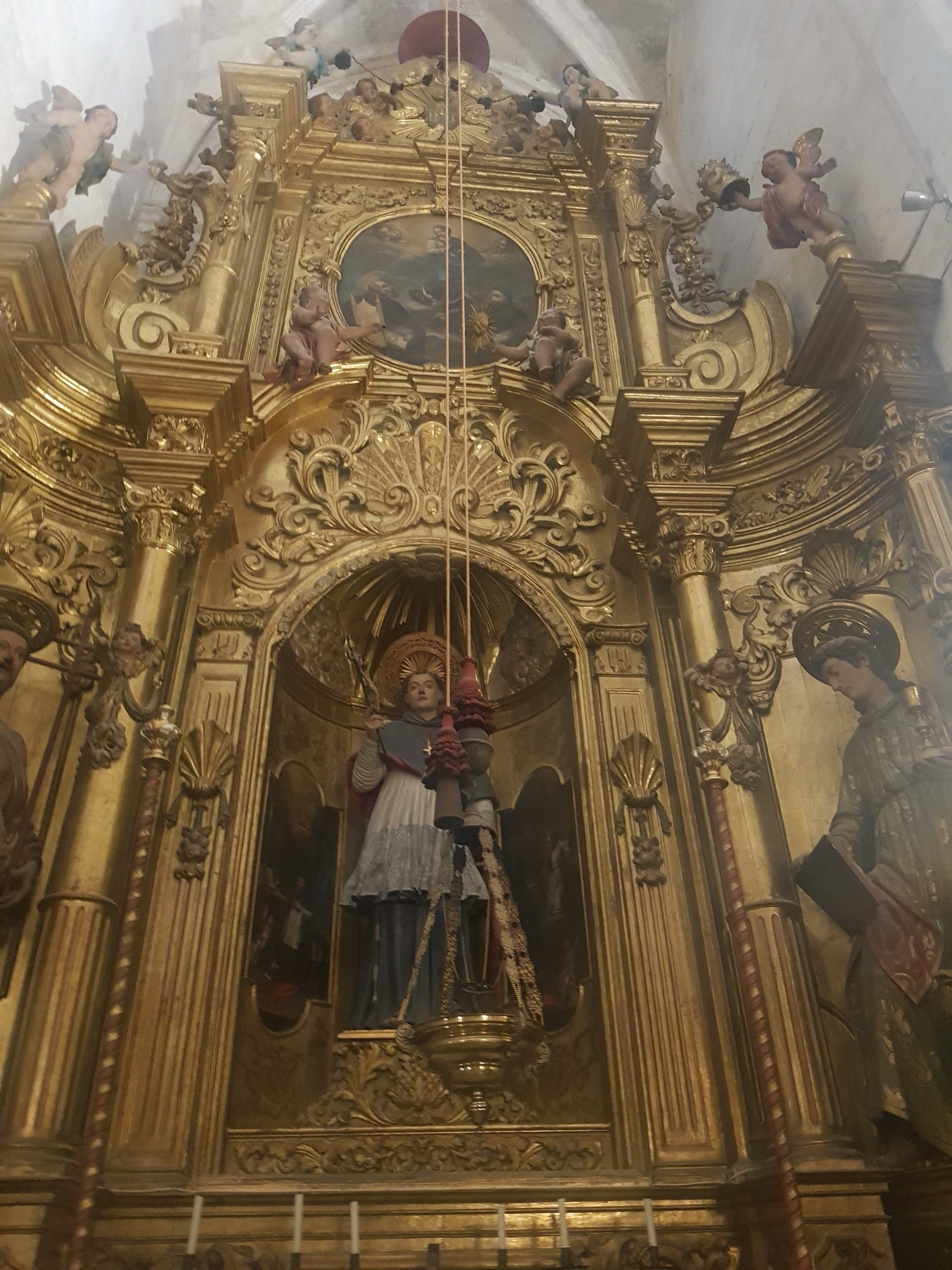
    The Chapel of St. Bonaventure is located within the Royal Monastery. The chapel was restored in 1742 and it was re-dedicated at this stage, having previously been the Chapel of St Esteban (St. Stephen). St. Bonaventure is intriguing, as he was an Italian who later studied in France and became Minister General of the Franciscans, before being chosen as the Archbishop of York. He was never consecrated in this role, but he remains listed as one of the Minster’s Archbishops.

    Figures at the base of the chapel.

    The chapel’s information board.

  • Palma – Royal Monastery of Sant Francesc (Capilla de San Berardo)

    Palma – Royal Monastery of Sant Francesc (Capilla de San Berardo)

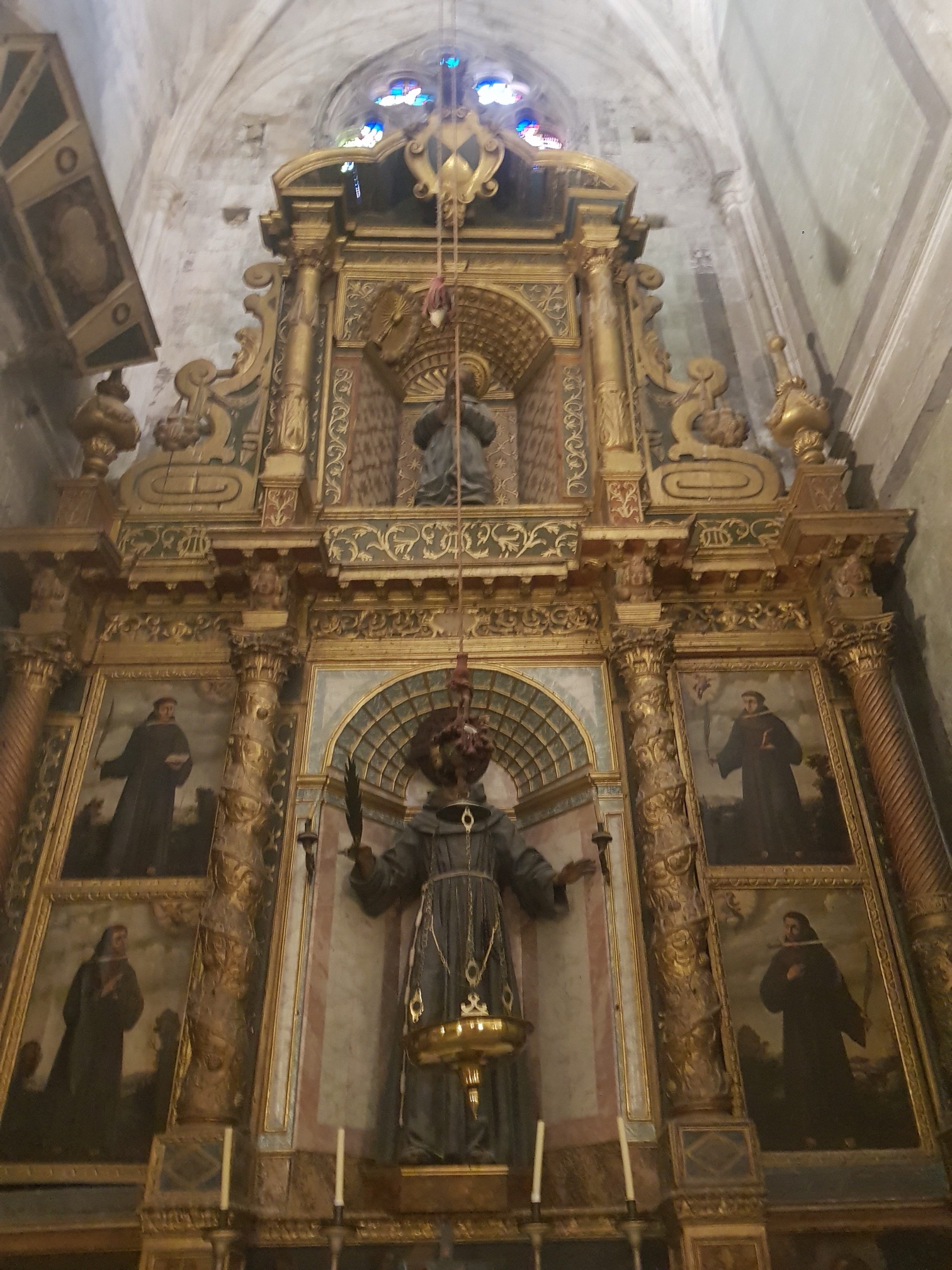
    Following on from my main post about the Royal Monastery, this is the chapel of San Berardo within the church.

    There’s a lot of blood and gore in the annals of religious history. This is a depiction of St. Berardo, who was canonised by Pope Sixtus VI in 1481 after dying in Morocco when trying to preach the Christian gospel. The story goes that the local Sultan told Berardo, and four other people with him who were Peter, Otto, Acursio and Adyuto, that if they converted to the Muslim faith that they would be given women and money. The five said no, so the Sultan had a blade put through the mens’ heads.

    The plan of the chapel.

  • Palma – Royal Monastery of Sant Francesc (Sacristy)

    Palma – Royal Monastery of Sant Francesc (Sacristy)

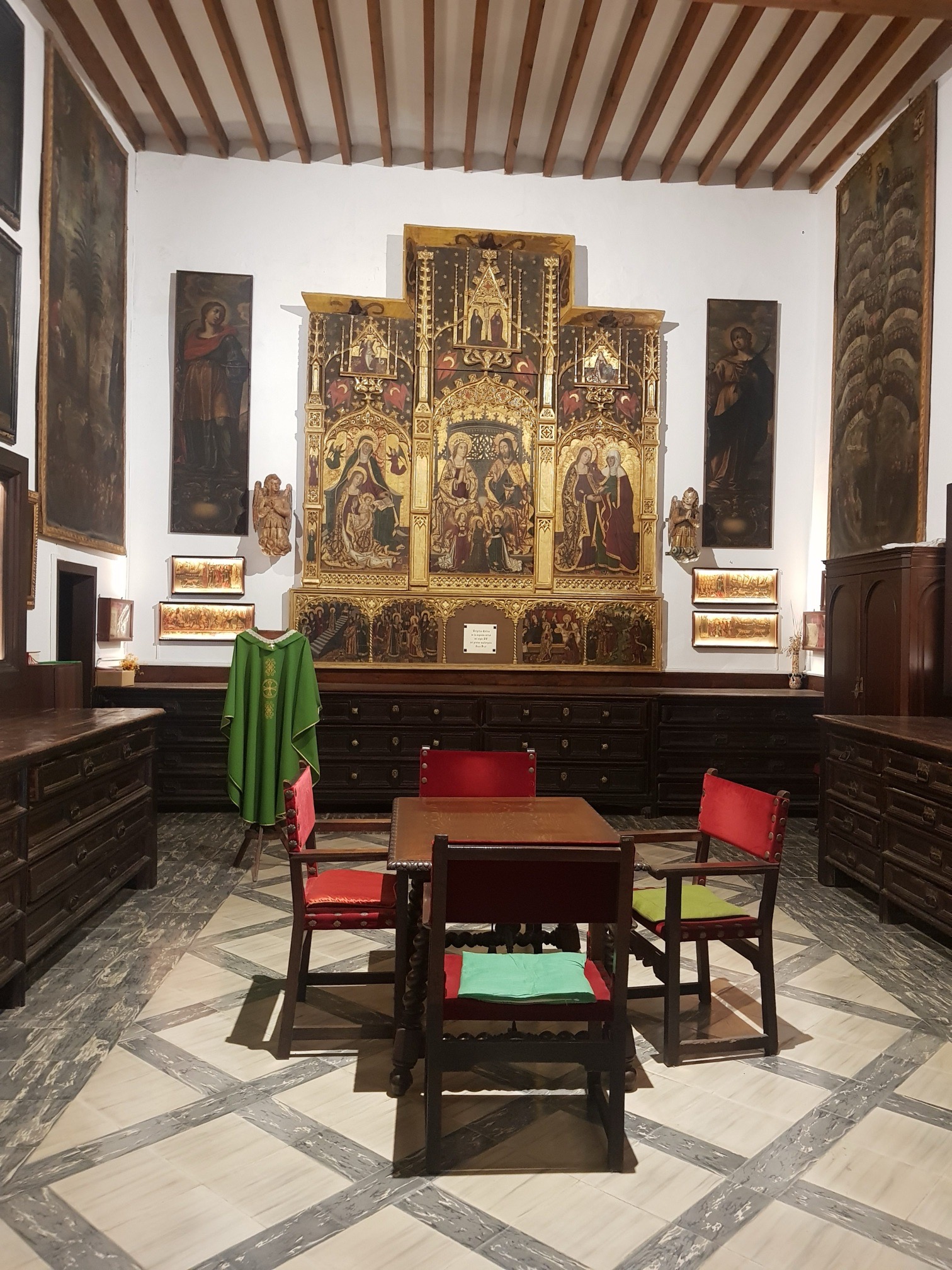
    Further to my main post about the Royal Monastery, there was much more to see within the complex of religious buildings. The sacristy, where the priest prepares themselves before the service, is a spacious room which is located just off the main church, through a short passage.

    There are two elements of particular interest here, with the first being the large Gothic style altarpiece which dates to the fifteenth century. Secondly, located underneath this, are four paintings which show the life of St. Ursula from the late thirteenth century. As an aside, there’s only church in the UK which is dedicated to St. Ursula, which is at Llangwryfon, in Wales.

    A selection of some of the vestments which were once used during services in the church itself.

  • Palma – Royal Monastery of Sant Francesc

    Palma – Royal Monastery of Sant Francesc

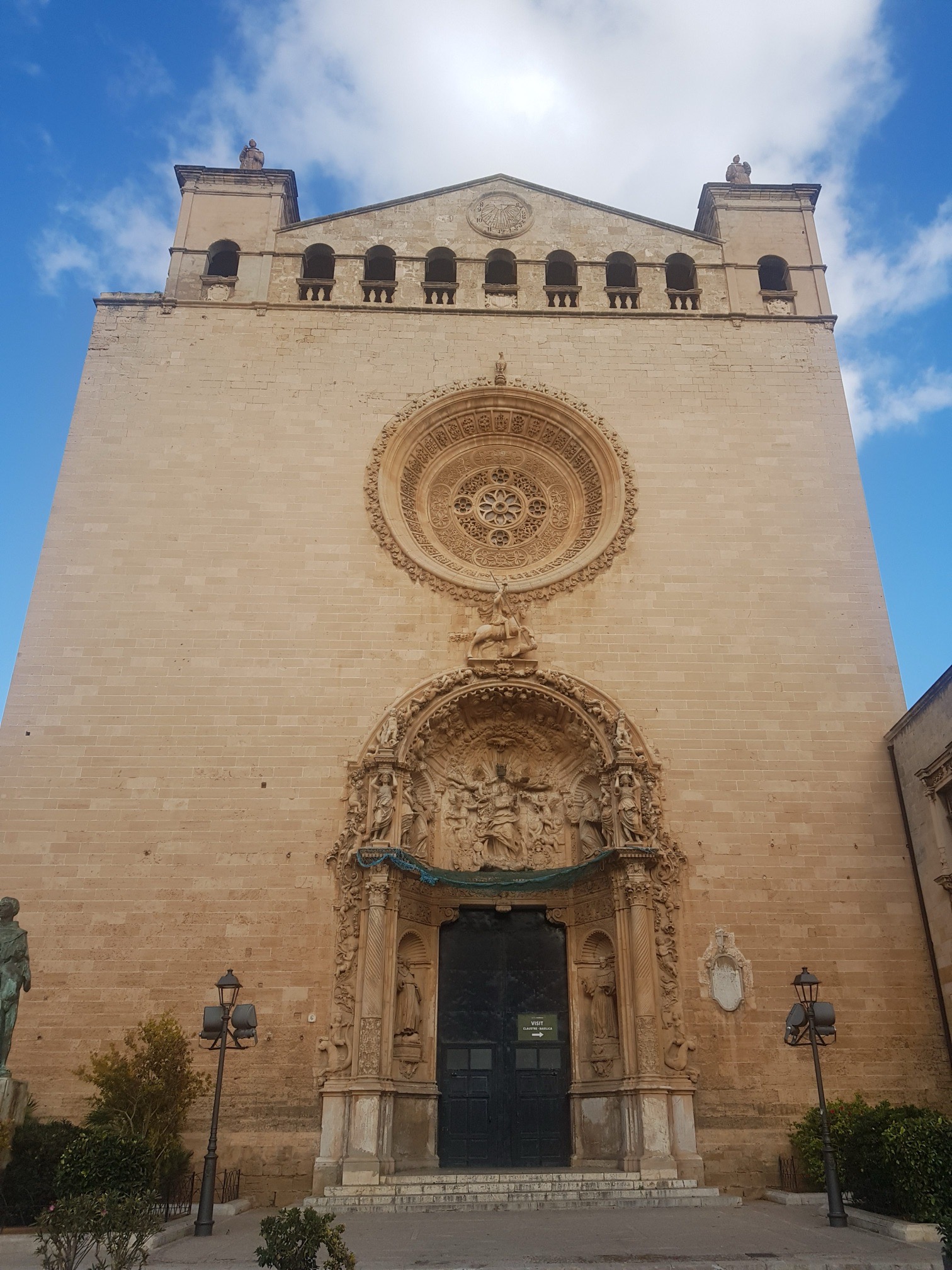
    I was hovering around the entrance to this former monastery in my very best confused manner and I was pleased that a kind lady came out to tell me that I could come in, even though it looked closed. She was a real ambassador for the church, welcoming, friendly and engaging. It also meant that, to all intents and purposes, I had the monastery building to myself for some time.

    The entrance to the church is via the cloisters, with the lower Gothic designed section dating from the fourteenth century, although a second tier was added in the seventeenth century.

    A view of the church from within the cloisters.

    The altarpiece was installed here in 1739.

    A look back along the nave of the church, which is larger than this photo perhaps suggests. The church is the second largest in the city, behind only the Cathedral, with its Royal designation as King James II of Majorica laid the foundation stone on 31 January 1281.

    But, the experience was heightened for me by being the only one in the church and that’s quite a rare feeling in such a large and impressive religious structure. I could hear the clock in the sacristy, which was a little distance away, with the church itself being entirely still and quiet. Without sounding overly trite, it did seem possible to imagine what it must have been like for the monks when the construction of their monastery ended and they took over control of such a peaceful and contemplative location.

    The way that the building has been used has changed many times over the centuries, so there are numerous blocked off doors around the site. This door leads to the exterior of the building, with an extension visible on the left hand-side, I assume made to create one of the private chapels.

    This church was home to Franciscan monks until 1835, when the 140 members of the order were all expelled and the building confiscated. This was all due to Spain’s Prime Minister of the time, Juan Álvarez Mendizábal, who decided to close all the monasteries in Spain and seize their assets without compensation. After this, the building was used for numerous purposes, including as a private residence, a military barracks and also a court. The Franciscans were able to return in 1906 and they converted many of the buildings to be used as a school, which opened in 1952.

    Anyway, more on this building in separate posts as it sufficiently intrigued me.