Tag: Rosary Cemetery

  • Norwich – Rosary Cemetery (William Webster + Maria Webster)

    Norwich – Rosary Cemetery (William Webster + Maria Webster)

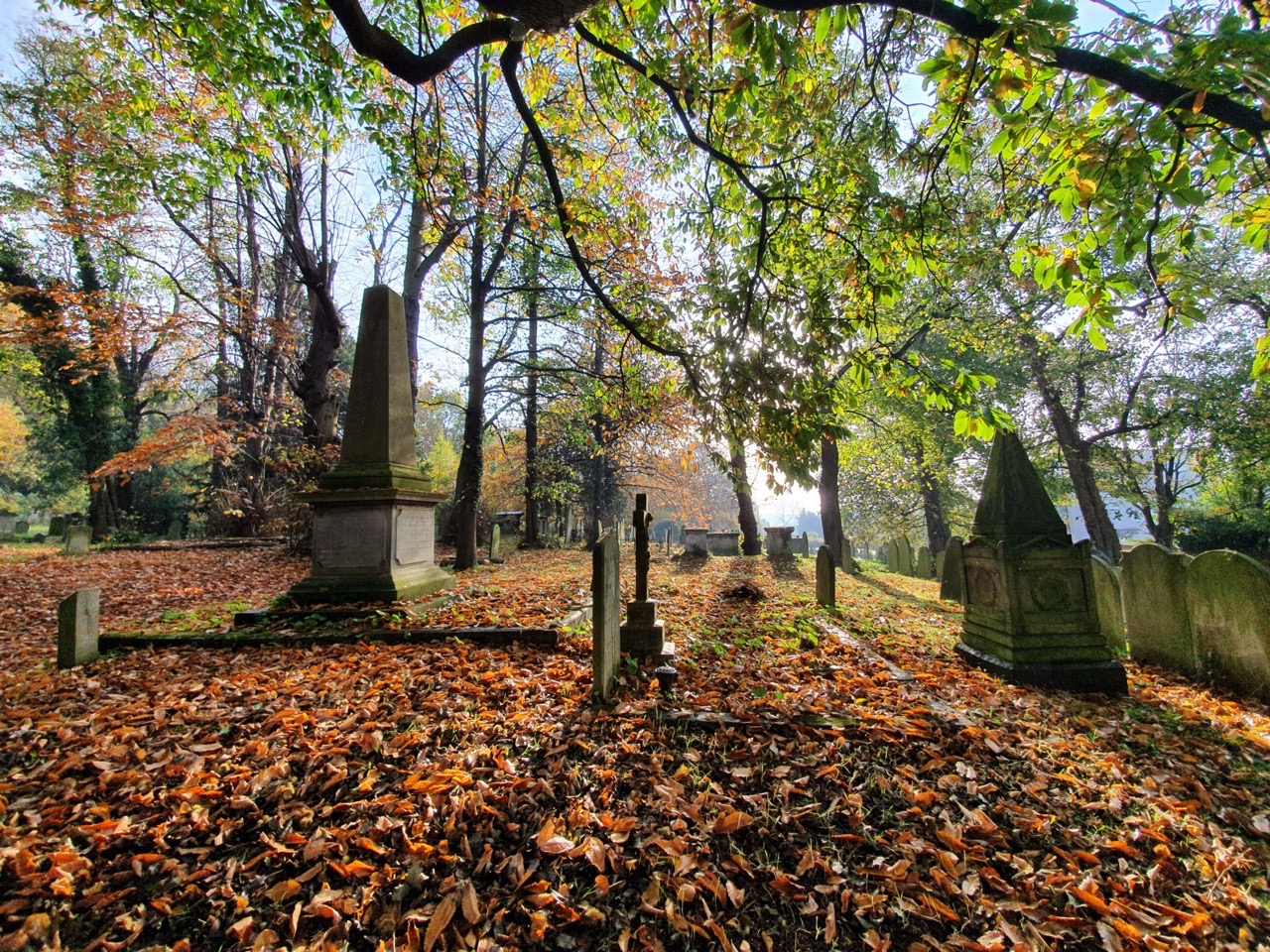
    Since I’ve been grounded again by the Government, I thought I’d meander around the Rosary Cemetery located near to me in Norwich, in an attempt to see what stories lie there. It might not be the most fascinating blog content, but it’ll keep me quiet for a few weeks….

    This grave intrigued me because it’s likely that it’ll be impossible to read in a few years if the damage to the stone continues, with some of the writing already unreadable.

    The grave is, I think, that of William Webster who was born in 1779 and died on 19 February 1834 at the age of 55 years, being buried on 26 February 1834. He married Maria Baston in London in April 1826.

    He was the master of the Maid’s Head hotel (which is still trading) in Norwich in the parish of St. Simon, although the hotel is located opposite Norwich Cathedral. It seems that William had taken over in the late eighteenth century and he held the role at the Maid’s Head until his death in February 1834. He had been ill in 1812, with his son, also named William, taking over the running of the Maid’s Head. The licensing records show that the hotel was then taken over by Andrew Webster, who was William’s son, and Maria, but they held the license only until October 1834, when it passed to Edward Howell following Maria’s retirement. The younger William Webster took some form of running of the pub later on in the 1850s and 1860s.

    Maria, William’s wife, died on 4 February 1851 at the age of 70 years.

    I’m sure there’s a lot more to this story, and the references to William Webster at the pub are hard to unpick as father and son shared the same name (and job), with information about Maria being hard to find.

  • Norwich – Rosary Cemetery (Amey Goldsworth + Edmund Goldsworth)

    Norwich – Rosary Cemetery (Amey Goldsworth + Edmund Goldsworth)

    Since I’ve been grounded again by the Government, I thought I’d meander around the Rosary Cemetery located near to me in Norwich, in an attempt to see what stories lie there. It might not be the most fascinating blog content, but it’ll keep me quiet for a few weeks….

    There are three names on this gravestone, that of Amey Goldsworth at the top (c.1822-1878), her husband Edmund (1819-1890) and their son Edmund (1846-1926). Edmund, son of Edmund and Susan, was baptised on 18 May 1819 in St. Mary in the Marsh church in Norwich, which is interesting as this parish church was pulled down some centuries ago. Instead, baptisms and the like took place in St. Luke’s Chapel within Norwich Cathedral (this is the chapel next to Edith Cavell’s grave site).

    This name of Amey is rare, few children are called this, and it has been mis-spelt by numerous organisations during her lifetime and by transcribers since.

    At the 1841 census, the family lived at Number 10, Granby Yard located on Bishopgate Street in Norwich. I can’t find this yard on the map, but it’s very likely that it’s the one next to the Marquis of Granby public house. This has long since been demolished and this yard probably lies underneath what is now Cotman Fields. At this time there were four in the family, Edmund Goldsworth and Amey Goldsworth, along with their 2-year old child Susanna and their new-born baby boy, also called Edmund. At this time, Edmund was working as a bricklayer and Amey was the housewife.

    At the 1851 census, the family were still living at Granby Yard and Edmund was still a bricklayer. He had been a little busy though during the intervening years, since he now had a 2-year old son Frederic and a new-born baby girl, called Sarah, as well as his older two children who were still at school.

    I can’t find the older Edmund or Amey listed in the 1861 or 1871 censuses, which isn’t ideal…. But Edmund, the elder, was certainly doing OK for himself financially, he was listed as being a freeholder from 1863, which entitled him to vote in elections. The younger Edmund married Ann Maria Elliott on 27 December 1869, at St. Peter Parmentergate Church, which is now sadly redundant although work is in hand to get tenants.

    In 1864, Edmund was in court (there will be a theme of this) when Frederick Hall, a butcher on King Street, summoned him to court complaining that Edmund had threatened to “smash him up”. It transpired there was a dispute between Hall and Edmund about the bricklaying work which he had done for the shopkeeper. He was found guilty and Edmund had to provides two sureties of £10 and £5 to keep the peace for three months.

    There was a strange case in May 1868, when the older Edmund accused William Tooley, a waterman of Bishopgate Street, of stealing his property. The case was dismissed when the magistrates decided that Tooley owned the items in question.

    The older Edmund managed to find himself in court again in May 1877, summoned to attend by John Mackley jnr of Barrack Street. Edmund was found guilty of abusing and threatening behaviour, but it seems to have been a family affair, as the younger Edmund was found guilty of the same crime against Mackley. The older Edmund was ordered to find sureties and keep the peace for six months, whilst the younger Edmund was fined £1 with costs of 18s 6d. Amey died the year after, in 1878, I’m not sure what she would have thought about the behaviour of her husband and son, although I get the impression that she was used to it.

    Family arguments continued here though, when Edmund the younger was summoned to court by his sister-in-law, Sarah, who was married to Frederic, for physical assault. By all accounts, it looks like the older Edmund pulled his son away from the incident, with the younger Edmund hitting his head when falling. The younger Edmund was fined 1 shilling for his behaviour and promised that he would be well behaved.

    Trouble continued though with the younger Edmund, but in 1882, it was him who summoned a Richard Mackley to court for an unlawful assault. Edmund said that he want to Mackley’s garden to retrieve some gardening implements, but the defendant refused to give them to him and instead hit Edmund and knocked him down. After hearing evidence, the case was dismissed as there was some confusion about whether Edmund had any right to take the implements that he wanted.

    Not that this debacle finished here, in 1897, the younger Edmund was assaulted again, this time he summoned a special constable to court, a man called John Watson. Frederic, who was Edmund’s brother, and Edmund testified that he had done nothing wrong and that Watson had shown aggression. In this case, Watson was found guilty, but the magistrates said that he had faced a lot of provocation from Edmund. Next to be heard in the court was Edmund, who had been summoned by John Watson for using threatening language. This case was ultimately dismissed, as was a separate case made against Edmund.

    I would say, if not being rude, that there’s a pattern of behaviour taking place here that wouldn’t seem out of place on Jeremy Kyle. Bishopgate is today a serene and peaceful street, goodness knows what it was like in the late nineteenth century with all this going on.

    The older Edmund is listed in the 1881 census and is listed as living at the Goldsworths Building on Bishopgate. This is rather appropriate in terms of his surname, although I’m unsure of whether there’s any link in terms of the name. He’s listed as still working as a bricklayer, now living alone and it’s mentioned on the census that he’s a widower.

    I didn’t expect this gravestone to tell quite the story of crime and drunken behaviour that it has, although I was disappointed not to find out as much about Amey as I would have liked. I wonder whether she was supportive of her husband and his issues, or whether she was annoyed at his drunken behaviour.

  • Norwich – Rosary Cemetery (John Carsey)

    Norwich – Rosary Cemetery (John Carsey)

    Since I’ve been grounded again by the Government, I thought I’d meander around the Rosary Cemetery located near to me in Norwich, in an attempt to see what stories lie there. It might not be the most fascinating blog content, but it’ll keep me quiet for a few weeks….

    John Carsey was born in 1776, marrying Ann who was born in Mulbarton in around 1767. As to where their marriage record has gone, I have no idea. There’s something quite intriguing about looking at graves of people who were born before the United States was independent. Well, there is to me….

    John was the sole executor of the will of Jabez Chittock (1805-1831) in 1831 and he also showed potential purchasers around properties in the Lakenham area. I’m assuming from these two facts that John worked as a solicitor or something similar, but he did amass some money.

    At the time of the 1841 census, John and Ann were living alone at 3 Grove Road, West End Place in Lakenham. As a freeholder, John was entitled to vote, and at the July 1847 General Election, he voted for the Marquis of Douro (Tory) and Samuel Morton Peto (Liberal). Peto was one of the great railway engineers of his time and this was the first time that he was elected to the House of Commons (he later represented Bristol and Finsbury) and he held this seat until 1852.

    John died on 24 August 1849, at the age of 78. Beckwith, Dye and Kitton, the solicitors for John’s estate, advertised in the Norfolk News in December 1849 asking for anyone who had a claim on his estate to contact them. John’s wife, Ann, died on 7 May 1851, at the age of 84. She had remained living at the same property in Lakenham following John’s death, living just with her servant Sarah Parnell.

    There’s some link, which I might come to understand later on, between this grave and the neighbouring grave of Alfred Spooner. Spooner’s sister married Timothy Chittock and they had a child in June 1838 which was named John Carsey Chittock.

  • Norwich – Rosary Cemetery

    Norwich – Rosary Cemetery

    The Rosary Cemetery was founded in 1819 by Thomas Drummond (1764-1852), a Presbyterian minister who recognised that churchyards had become overcrowded and there was a need for more space. The first section of land was five acres in size and had previously been used as market gardens. The first burial took place in 1824, the reinterring of the remains of Drummond’s wife, moved from the Octagon Chapel in the city.

    Initially, the cemetery wasn’t much used and the Church of England were none too keen on it, it was all a bit non-conformist for them. There was also the problem, until the 1832 Anatomy Act, of bodies being stolen by body-snatchers, especially so at this slightly remote location. As the nineteenth century progressed, the cemetery became more popular and there had been 18,000 burials by 1884.

    The project was inspirational, as the Rosary was the first non-denominational cemetery in England and many more followed the model which was established here. Drummond was sensible enough to appoint a body (no pun intended) of trustees to look after the affairs of the cemetery and he insisted on the land being freehold, so that it would be much harder to change its usage later on.

    The mortuary chapel, redesigned by Edward Boardman in 1879, replacing a previous building which had been erected here in 1830.

    This is some of the older part of the cemetery, but an extension was purchased in 1903, although wasn’t brought into use until 1924.

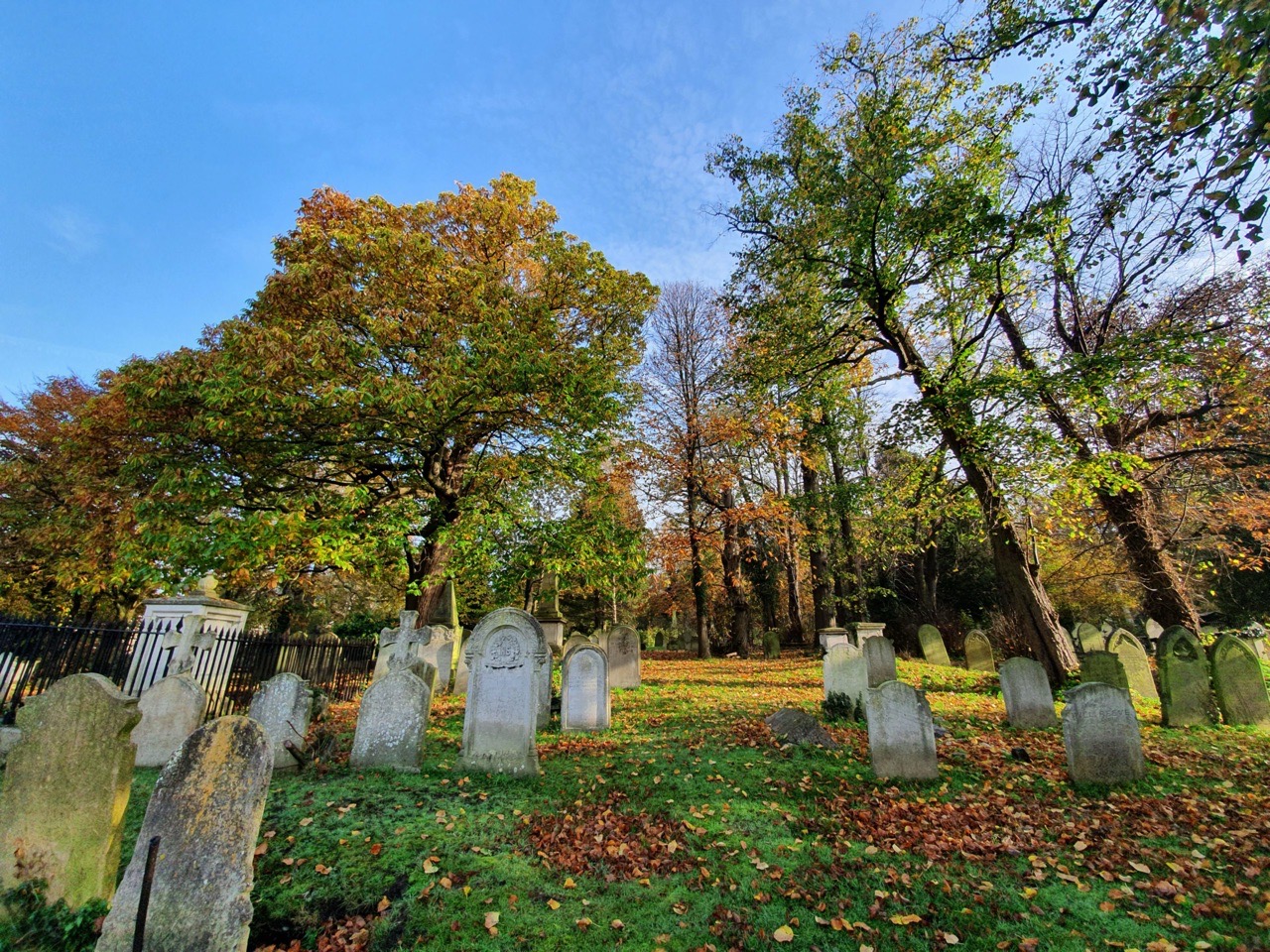
    In 1954, the oldest part of the cemetery was taken over by Norwich City Council and they decided to abandon it, or, as they called it, returned it to nature. I’m not sure whether this stone was damaged by their efforts, but there are a few gravestones which have unfortunately been damaged in this manner. Fortunately, there’s an active Friends of Rosary Cemetery which was established in 1998 and they have helped to transform the site and they hold numerous walks, site clearances and events to highlight the history of the cemetery.

  • Norwich – Rosary Cemetery (Alfred Wilmot Spooner)

    Norwich – Rosary Cemetery (Alfred Wilmot Spooner)

    Since I’ve been grounded again by the Government, I thought I’d meander around the Rosary Cemetery located near to me in Norwich, in an attempt to see what stories lie there. It might not be the most fascinating blog content, but it’ll keep me quiet for a few weeks….

    This is the grave of Alfred Wilmot Spooner, located in one of the oldest parts of the cemetery. He was baptised on 6 January 1813 at St. Andrew’s Church in Norwich and was the son of Edward Spooner and Sophia Spooner (nee Gunton) and they had married at St. Peter Mancroft church in April 1807.

    Edward is listed on Alfred’s baptism record as being a straw manufacturer, although I’m not entirely sure what that entailed, with Sophia being a bonnet maker. I can’t be certain, as there are multiple names, but I suspect Edward had been baptised in the same church on 29 August 1784, himself the son of Edward Spooner and Eliza Springale. Edward (Alfred’s father) died at the age of just 49 and was buried at St. Peter Mancroft church on 3 June 1834.

    Alfred died on 21 August 1840, at the age of 27 years old. Unfortunately, for the purposes of my writing this post, this means that he didn’t appear on the first national census which took place in 1841. At this point, his mother was still alive though (now aged 60), living on Day’s Yard in St. Peter Mancroft, which was also called Day’s Court. This yard has long since gone, it’s now pretty much under the treasury counters in Norwich City Hall. She lived with Hannah Bensley, aged 65, and Matilda Stratford, aged 14.

    And, that’s as much as this story as I can find. I don’t know what happened to Alfred during his life. Sophia, Alfred’s mother, died in 1860, having moved to Lakenham to live with the Chittock family, with Hannah Chittock being Edward and Sophia’s daughter. Hannah (so Alfred’s sister) and Timothy married in St. Peter Mancroft church on 8 March 1837.

    So, using my imagination a bit here. The burial of Alfred took place at Rosary Cemetery, at that time still relatively empty, and was likely attended by his mother Sophia, his sister Hannah and his brother-in-law Timothy, amongst others. It might have been a communal effort to pay for the gravestone, as it’s a nice one which has lasted well. The family had gone through the sadness of Alfred’s father dying in 1834, the excitement of Alfred’s sister’s wedding in 1837 and then this sadness in 1840. Quite why Alfred died at such a young age, I sadly don’t know….