Tag: Reading Museum

  • Reading – Reading Museum (Arm Bone)

    Reading – Reading Museum (Arm Bone)

    And another post about things that interested me in Reading Museum.

    A bit of bone this time. This is what most people do on a Saturday isn’t it? Go and look at bits of bone in provincial museums? If they don’t, then they probably should.

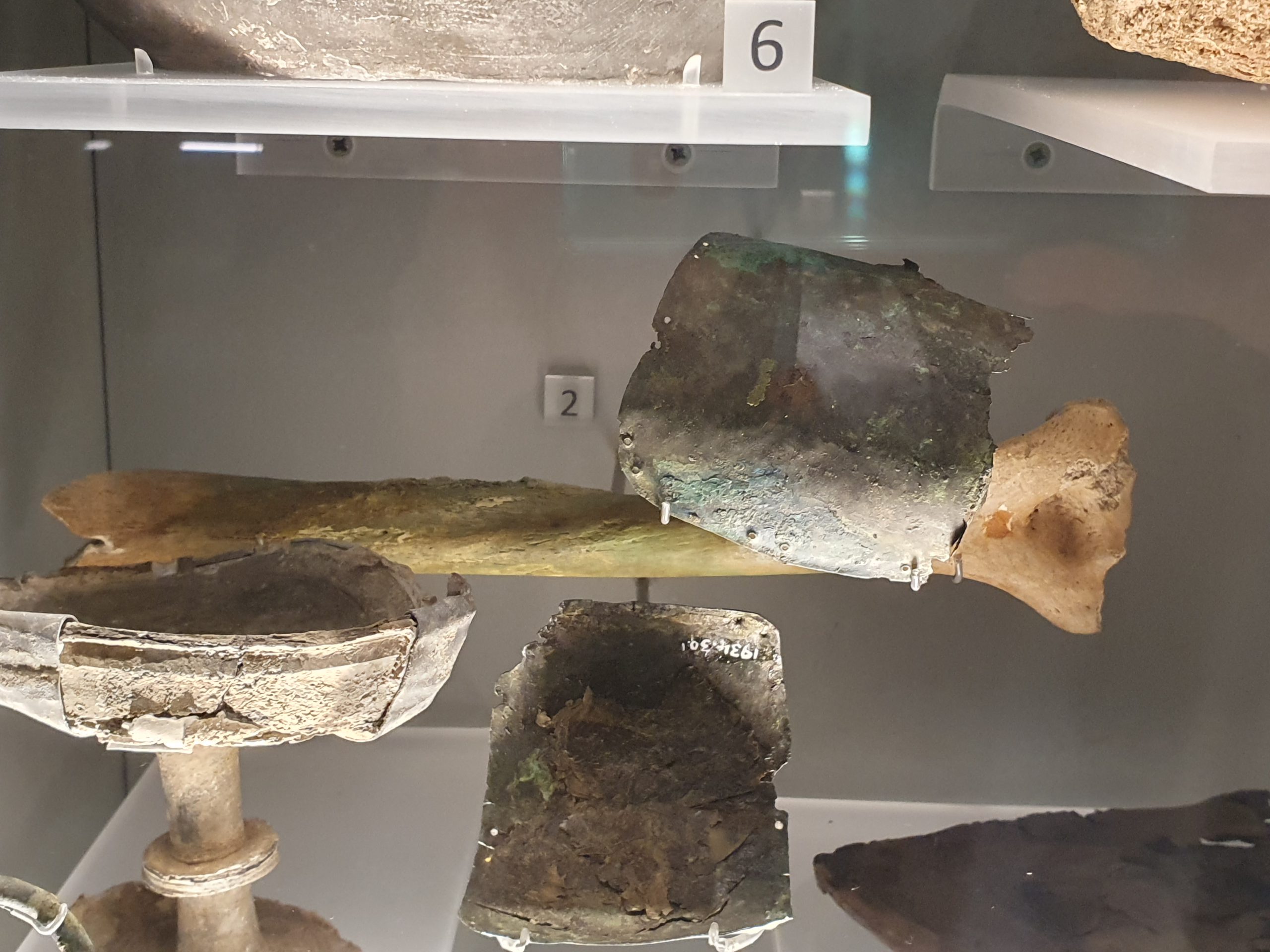
    It’s a woman’s arm which dates to the medieval period that was found in the 1890s, near to where King’s Road and London Road meet in the town. I’ve managed to spend (or waste, depending on how you look at it) thirty minutes discovering that there is a lot of nonsense written about where the leper hospital was in Reading, as it wasn’t in the abbey precincts as numerous writers have suggested. It was likely located to the east of the abbey, near to where the Hope & Bear public house is located today and the hospital was constructed between 1131 and 1135.

    There’s already a problem though, it was thought that the leper hospital was for men only, so they shouldn’t be finding a woman’s arm here, but the cemetery might have been for those suffering from a wider set of ailments. The copper had been bent around the woman’s arm which have likely been covered with an ivy leaf dressing.

    But, all that aside, I thought that this was quite intriguing, the bone of a woman from 800 years ago or so, likely who only coped because of the generosity of the abbey who felt that they should assist those with leprosy (although help them from some way away, as there was a fear of it spreading).
  • Reading – Reading Museum (Crossrail Helmet)

    Reading – Reading Museum (Crossrail Helmet)

    And continuing with my irregular series of posts about what I liked in Reading Museum.

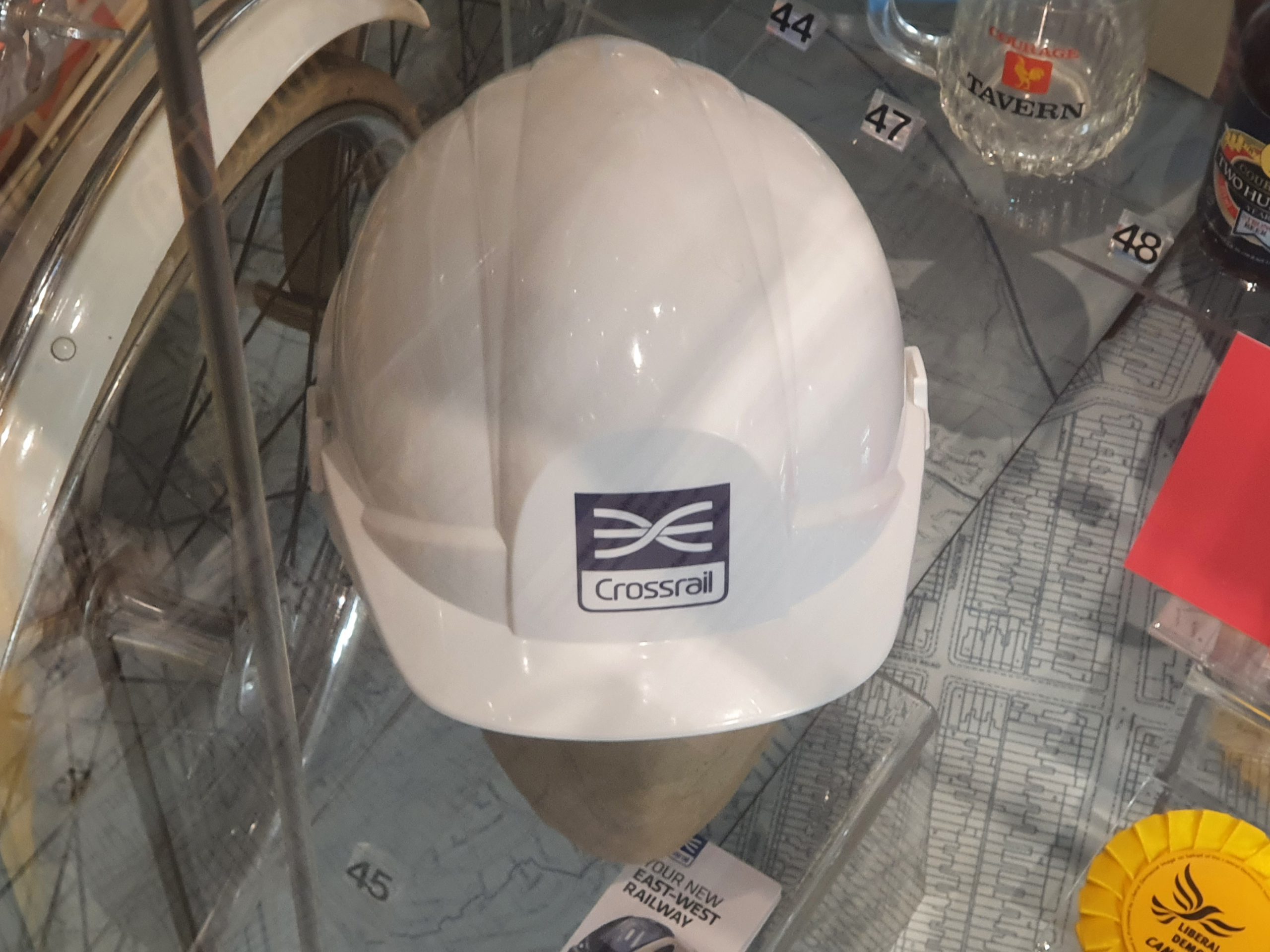
    Yes, it’s a helmet and I’m justifying an entire post about this, and not even to please my friend Liam who I think craves more content about civil engineering. But this is what will likely transform Reading and although Crossrail trains already reach Reading, the full service across London isn’t yet in operation as it stops at Paddington Station. There was no inevitability about the line going to Reading and that was only confirmed in 2014, with earlier plans having the service terminating at Maidenhead.

    I’ve seen a lot of exhibits relating to railway mania in the middle of the nineteenth century and items were often kept by forward thinking individuals as they knew they would be seen as important for future generations. The National Railway Museum in York has huge piles of such exhibits in their stores and the railway did transform many towns and cities. Crossrail reaching Reading will also likely mean that the authority can justify another wave of house building in and around the town, given how easy it will be to get the service into the centre of London and beyond.

    So, although this might be one of the most intrinsically dull exhibits in the museum, in 100 years I’ll wager (and I’m not at risk of paying out here) that this helmet is still in the collections as a reminder of the transformational moments in Reading’s transportation history. This post is definitely a flight of fancy, but there we go…..

  • Reading – Reading Museum (Boar’s Head)

    Reading – Reading Museum (Boar’s Head)

    The delightful Reading Museum, and this will be the start of a short series of posts about exhibits which I found quite intriguing.

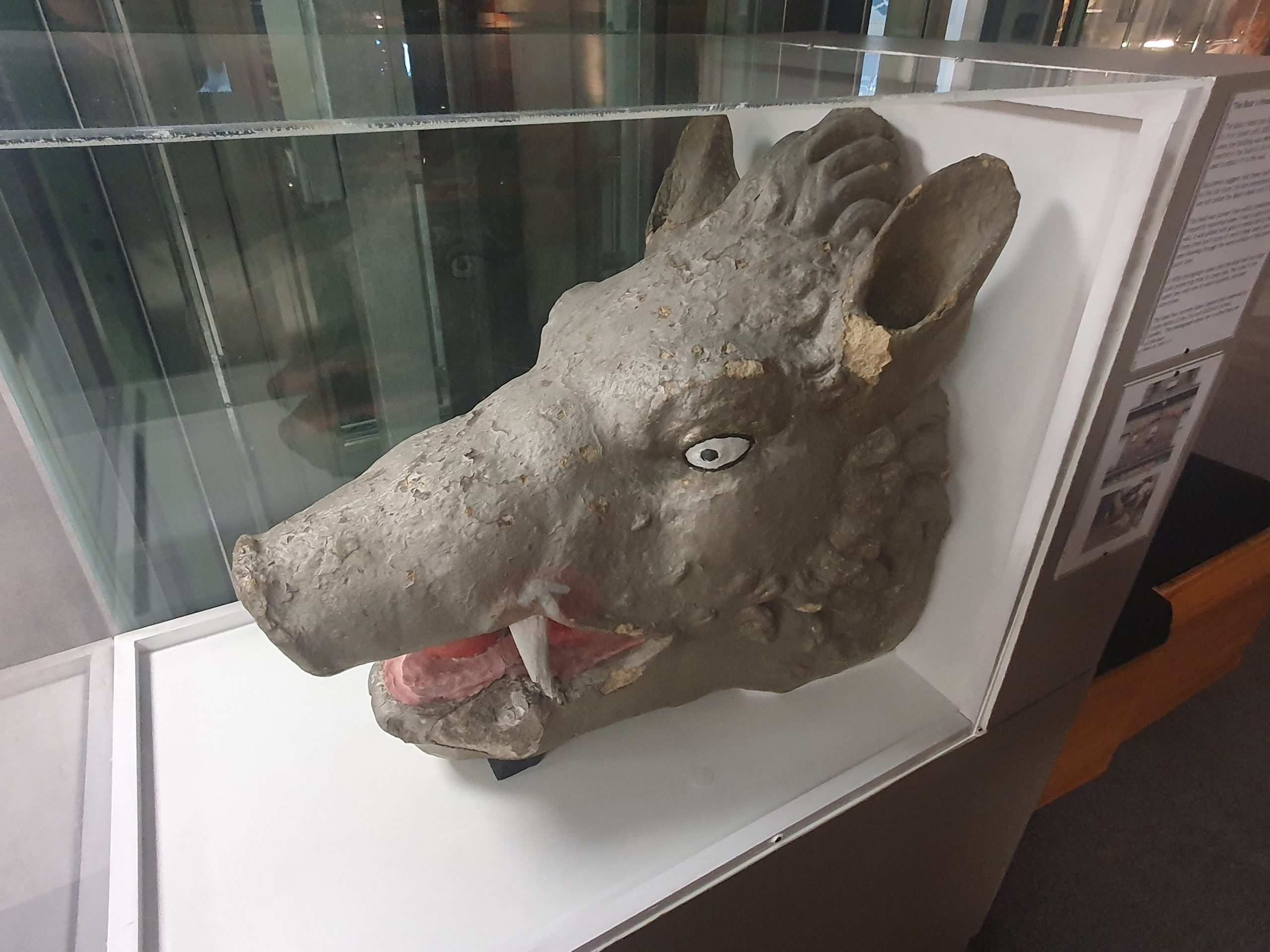
    I very much like that this has been saved, it’s the Boar’s Head from the pub of the same name which was a licensed premises from the late seventeenth century until it was demolished in 2003. Once attached to its own brewery, there are some photos of how it looked at http://www.closedpubs.co.uk/berkshire/reading_boarshead.html. English Heritage refused to list the structure in 2002 and looking at it, I can see why, it does appear to be much knocked about and lacking any obvious historical charm. And I can’t much complain about the building that replaced it, as it’s the Novotel and Ibis that I stayed at earlier on this week.

    Back to the head though, it’s made from limestone and it’s unclear when it was made, but it has several layers of paint on it and it was gilded on at least three occasions. That it was made of limestone was a surprise, which suggests that it might be from the nineteenth century. It was removed in October 2003 and then sent for repair as it wasn’t in the best condition by the time of the building’s demolition, then brought to Reading Museum.