Tag: Reading Abbey

  • Reading – Reading Abbey (Burial Place of King Henry I)

    Reading – Reading Abbey (Burial Place of King Henry I)

    Monarchs have had a variety of outcomes with their burial surroundings, as many found themselves buried in buildings that were torn down following the Dissolution of the Monasteries. Several are buried in France, such as William I, and some such as William II were fortunate that their burial location in Winchester Cathedral has been left relatively intact. Richard III ended up under a car park before his recent move to Leicester Cathedral and some such as Richard II got lucky and are at Westminster Abbey.

    King Henry I, the son of King William I, died in France and was brought back to Reading Abbey, which he himself had funded. He died on 2 December 1135 and it’s said that this was because he ate too many lampreys, which isn’t an ideal way to go. His body took some time to be brought back to Reading, but the grand funeral took place on 3 January 1136. The great and the good turned up for this, including the Archbishop of Canterbury, the Bishop of Winchester and the Bishop of Salisbury to name just a few. And he would have remained buried here with some grandeur if it wasn’t for the Dissolution of the Monasteries and the ultimate destruction of the abbey buildings.

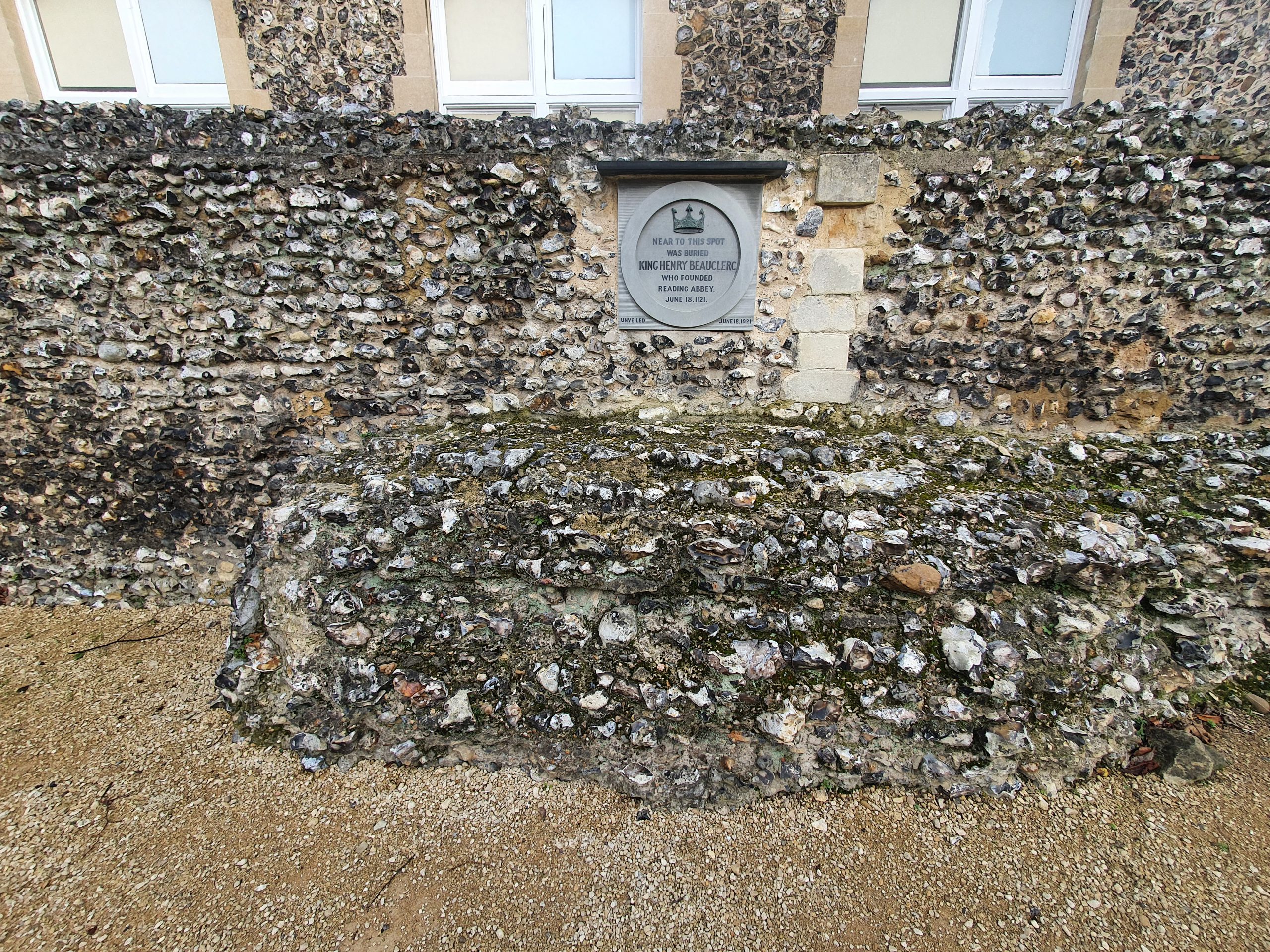
    And there’s no happy story here about finding King Henry’s remains in a car park, although that’s actually potentially where he is. His burial site is now used by a school and there is a car park, so stranger things have happened. People have looked for his grave, but it’s likely long gone, probably shattered soon after the Dissolution from pesky locals wanting to have a peer into what remained. There’s a stone plaque here now which is dated 1921, although was heavily restored recently so it looks modern. During the recent restoration work the archaeologists did think they might have found the former Monarch’s grave, but it transpired to be a religious burial that was from a later period. There’s a chance that King Henry is under the Victorian school, but it feels excessive to take the school down to have a quick look, although I suspect some historians would think it was a sacrifice worth making.

    If King Henry could look down on the current arrangements, I think he’d be annoyed. He financed one of the grandest abbeys going, bigger than some cathedrals today. His grave would have been pride of place if the building had survived, something of a tourist attraction and it would have likely been given a lovely big slab of some expensive marble to put him under. But, history went another way, and his remains are lost, but at least not forgotten. But I don’t think that he’d think that the situation is ideal.
  • Reading – Reading Abbey (Chapter House)

    Reading – Reading Abbey (Chapter House)

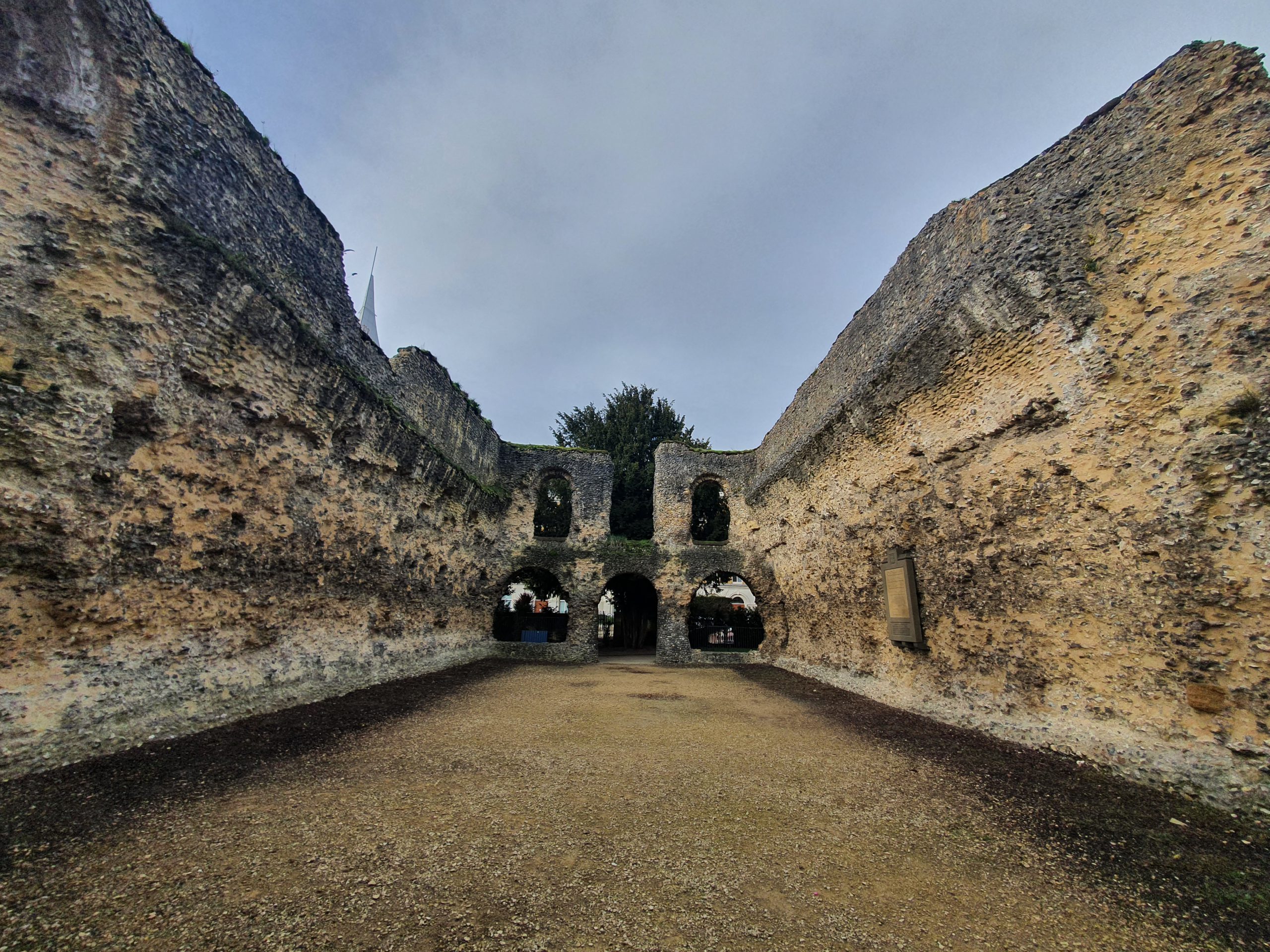
    I was disappointed yesterday when Storm Eunice meant that the abbey ruins were closed, but relieved that they had reopened today, with this being my favourite part of the remaining structures. It is perhaps somewhat unnecessary to have a favourite part of a ruined building, but the history that is encapsulated in just this relatively small area is substantial. It was once the chapter house of Reading Abbey, and this is a sizeable space which was once around twelve metres in height. Norwich Cathedral, which I use to compare sizes, has lost its original chapter house, but the footprint wasn’t anywhere near as large as this.

    Within this space the House of Commons met on more than one occasion when the Royal Court was in Reading and that alone makes it feel quite a special area. I accept politics has changed somewhat, but when the King was here and the Commons and Lords met at the Abbey, this was the centre of all power in the country. The remains of the vaulted ceiling is visible towards the top of the wall, it must have all looked quite grand when it was standing.

    And if that wasn’t enough, this is also where King Henry II met Heraclius of Jerusalem in 1185. By this time the religious institutions had pretty much forgiven Henry for his role in the execution of Thomas Becket, and Henry had apologised for going to Canterbury Cathedral and letting the monks hit him (I wonder if that’s a precedent for rogue political figures, but I won’t stray further into politics and I doubt that the Archbishop of Canterbury would fancy getting involved in that). However, Heraclius wanted Henry to send an army to Jerusalem, preferably led by himself, but the Monarch wasn’t having any of that. And that decision, likely a very sensible one, was announced in this space. I like that.

    This stone represents the ‘Sumer is icumen in’, a thirteenth century tune (although I think it’s called a round, but medieval music isn’t one of my strong points). The document with the musical score is in the British Library and comes from Reading Abbey, although it likely wasn’t originally written here. The modern English version of this little ditty is:

    “Summer has arrived,
    Loudly sing, cuckoo!
    The seed is growing
    And the meadow is blooming,
    And the wood is coming into leaf now,
    Sing, cuckoo!

    The ewe is bleating after her lamb,
    The cow is lowing after her calf;
    The bullock is prancing,
    The billy-goat farting,
    Sing merrily, cuckoo!

    Cuckoo, cuckoo,
    You sing well, cuckoo,
    Never stop now.

    Sing, cuckoo, now; sing, cuckoo;
    Sing, cuckoo; sing, cuckoo, now!”

    Lots of cuckoos, apparently this is a very important tune though.

    This relief marks the appointment of Hugh of Amiens as the first Abbot of Reading Abbey, a role which he held from 1123 until 1130, when he went off to be the Archbishop of Rouen until his death in 1164.

    Since the first Abbot is commemorated, it’s only right to do the same for the last, Hugh Cook of Faringdon, who refused to surrender his Abbey. He was taken to the Tower of London for annoying King Henry VIII, but was brought back to Reading for a show trial and he was executed at gallows near to the abbey’s gateway.

  • Reading – Abbey Gateway

    Reading – Abbey Gateway

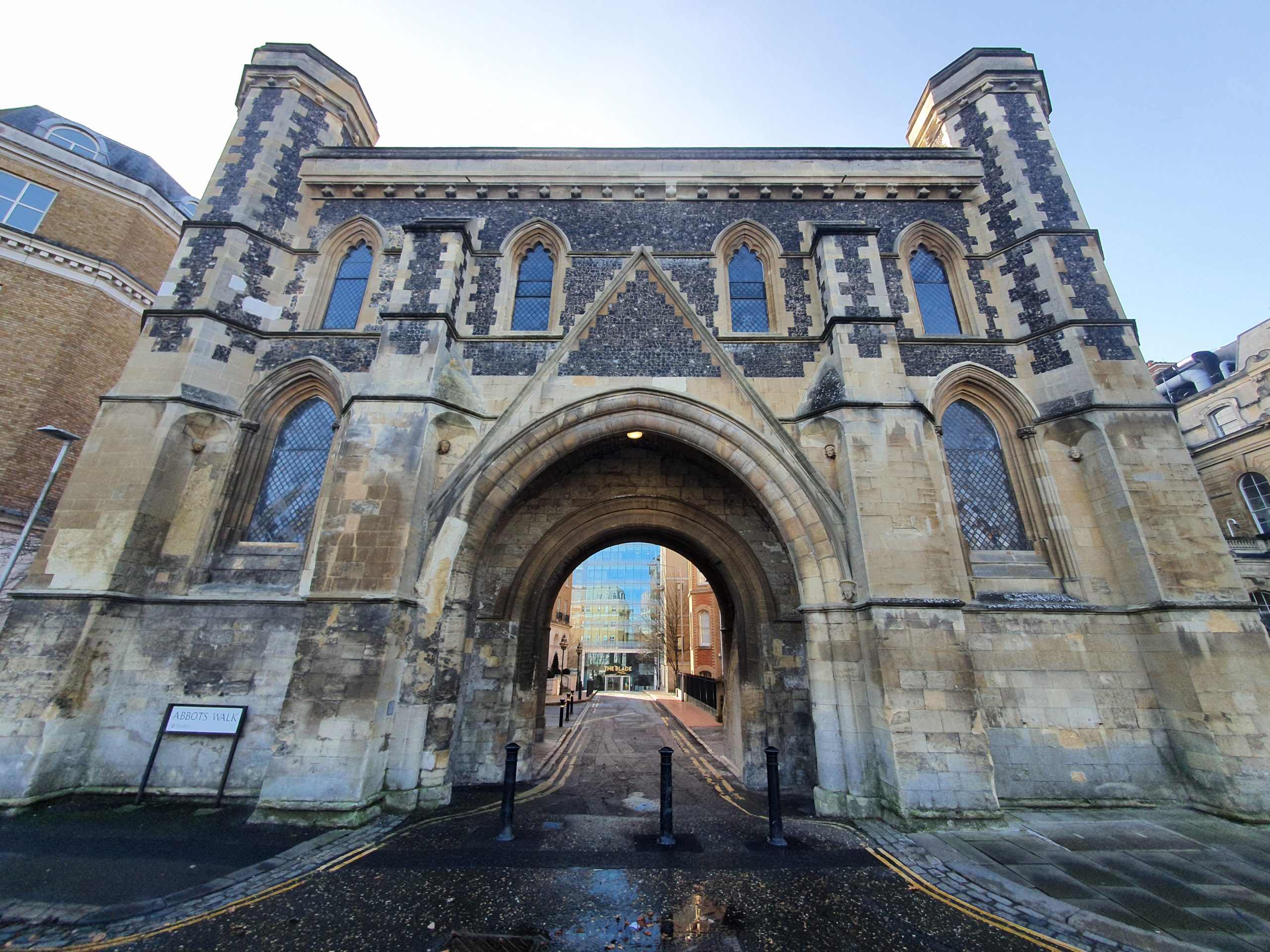
    This gateway is one of only two buildings that have remained intact from the vast complex that was Reading Abbey, with the other survivor being the Hospitium of St John the Baptist. This is what was once the inner gateway, separating the area that was used by the public from that section which was used by the monks.

    Following the Dissolution of the Monasteries, the structure was used as the gateway to the new Royal residence as the Monarchy had taken over the abbey buildings. It was also where Hugh Faringdon, the last Abbot of Reading Abbey, was executed on the charge of high treason as he didn’t accept the terms demanded of him by Henry VIII and his new order.

    The Reading Mercury had reported in 1860:

    “For several years this fine specimen of medieval architecture has been rapidly falling to decay. With the view of staying its further progress, some time since the Reading Local Board of Health entered upon negotiations with the owners for its purchase.”

    Then there was a little incident. The gateway fell down in a storm in February 1861 (fitting since I’m writing this on one of the country’s largest storms in recent years, also in February) and it was agreed locally that this wasn’t ideal.

    The repairs and restoration were led by Sir George Gilbert Scott, who already had plans on how to repair the gateway. There has been another restoration over the last few years to the gateway and the rooms above the arch are used by Reading Museum for school visits. I’m not sure that there’s any access to the general public, although I suspect that the most interesting bits architecturally are all external anyway since it had to be rebuilt.