Tag: Oxburgh Hall

  • Oxborough – Oxburgh Hall (Queen Mary and Sir Henry Bedingfield)

    Oxborough – Oxburgh Hall (Queen Mary and Sir Henry Bedingfield)

    I like an old document… And this is one where Queen Mary is referring to the appointment of Sir Henry Bedingfield to the role of the Lieutenantship of the Tower of London in October 1555. This would have been a tricky time to hold such a role, there was much political intrigue and willingness to overthrow the Monarch and it’s hard to see how the role wouldn’t have involved creating enemies and being in charge of methods of torture.

    One of Henry’s relatives, of the same name (1586-1657), found himself in a different role in the Tower of London in 1647, when he was arrested and imprisoned there. All turned out well for him in the end, he was released and ultimately his loyalty to the Crown saw him rewarded financially. Always good to back the right horse…..

  • Oxborough – Oxburgh Hall (Portrait of Queen Elizabeth)

    Oxborough – Oxburgh Hall (Portrait of Queen Elizabeth)

    The National Trust seem to have placed this seventeenth-century painting, of artist unknown, on display here to make the point that “the pressure to make yourself look beautiful without understanding the consequences is not just a twenty-first century issue”. They’re making reference to the makeup that Queen Elizabeth I (1533-1603) used to look pale, which was made of what transpired to be poisonous white lead which caused hair loss.

    I’m not entirely sure that the first thing I thought about when looking at this painting was the Monarch’s make-up, and perhaps the National Trust have fallen into the same trap of managing to say nothing about her achievements, but it is undeniable that Elizabeth’s appearance changed over the decades.

    When she was young it was said about her that:

    “Her figure and face are very handsome; she has such an air of dignified majesty that no-one could ever doubt that she is a queen”.

    However, by the time she was in her sixties, another correspondent noted:

    “Her face is oblong, fair but wrinkled; her eyes small, yet black and pleasant; her nose a little hooked; her teeth black (a fault the English seem to suffer from because of their great use of sugar); she wore false hair, and that red”.

    Ignoring the Monarch’s appearance, Queen Elizabeth I certainly knew how to control her court, and was able to maintain her position on the throne from 1558 until her death in 1603. She was able to maintain the Protestant faith, albeit making slight concessions to Catholicism, and her foreign policy was to a large part successful.

    But, back to the National Trust’s focus on appearance, it’s true that Elizabeth was concerned about this. It is reported that it could take four hours a day to dress and undress the Queen, which seems to be an unreasonably proportion of time. In addition to the white lead and vinegar skin-care, she also spent time coloring her lips with beeswax and plant dye.

    Elizabeth I also suffered from depression and significant health problems throughout her life, with one of her better-known quotes being:

    “I know I have the body of a weak and feeble woman, but I have the heart and stomach of a king, and of a king of England, too.”

  • Oxborough – Oxburgh Hall (Sir Henry Bedingfeld)

    Oxborough – Oxburgh Hall (Sir Henry Bedingfeld)

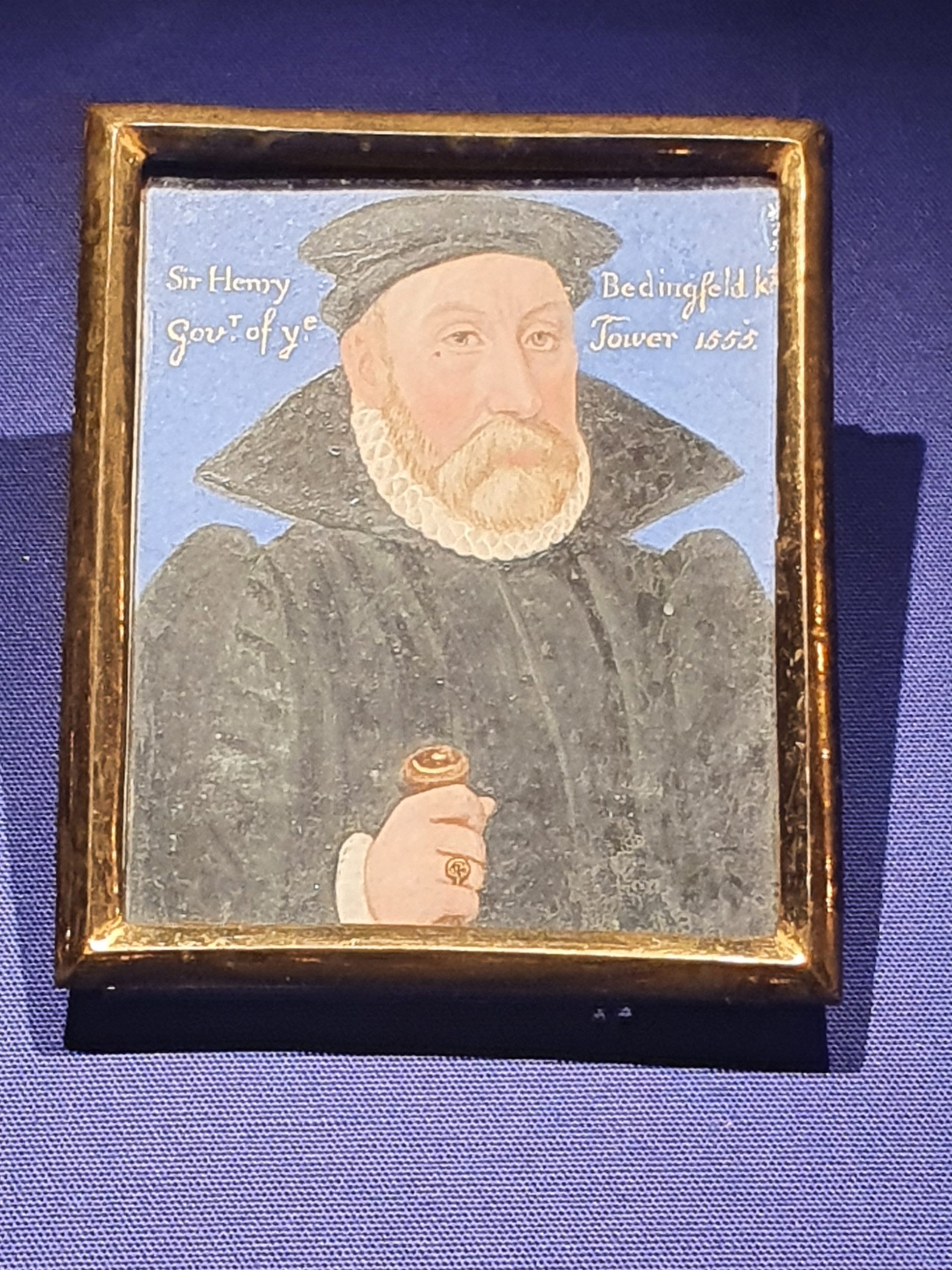
    This is Sir Henry Bedingfield (1509-1583) who was the eldest son of Edmund Bedingfield, who had been entrusted with the care of Katherine of Aragon. Henry was also trusted with positions in the Royal Court, providing protection for Mary I (also known as Mary Tudor, 1516-1558) and then also being entrusted with the care of Queen Elizabeth I. Henry was rewarded for this loyalty, being made the Constable of the Tower of London and he was given a large pension for his support towards Mary I.

    His reputation suffered during later years due to a smear campaign, but it’s likely that this was more fake news. Bedingfield was known as the ‘gaoler’, which was likely a tongue in cheek reference made by Queen Elizabeth to the role which he had at the Tower of London. Bedingfield found himself in a difficult position, as he was a Catholic now in the administration of a Protestant monarch. It was known what he was doing, he received fines for non-compliance and failure to attend church, whilst finding his property searched on numerous occasions.

  • Oxborough – Oxburgh Hall (A Boy, a Girl and a Page)

    Oxborough – Oxburgh Hall (A Boy, a Girl and a Page)

    The artist of this painting is unknown, and the entire thing is something of a mystery as it’s also not known who any of the people in the artwork are. All that is known is that it was painted in 1658, but the black servant on the right-hand side might not be contemporary to that.

    The National Trust explains that black servants were often painted, or over-painted, onto artworks to show that their masters (the word used by the National Trust) had global connections and substantial wealth. There’s no other evidence that the Bedingfield family ever had a black servant, so it’s likely that it is entirely symbolic. The addition of this figure also appears clumsily done, so it’s probably a later addition.

  • Oxborough – Oxburgh Hall (Limited Re-opening)

    Oxborough – Oxburgh Hall (Limited Re-opening)

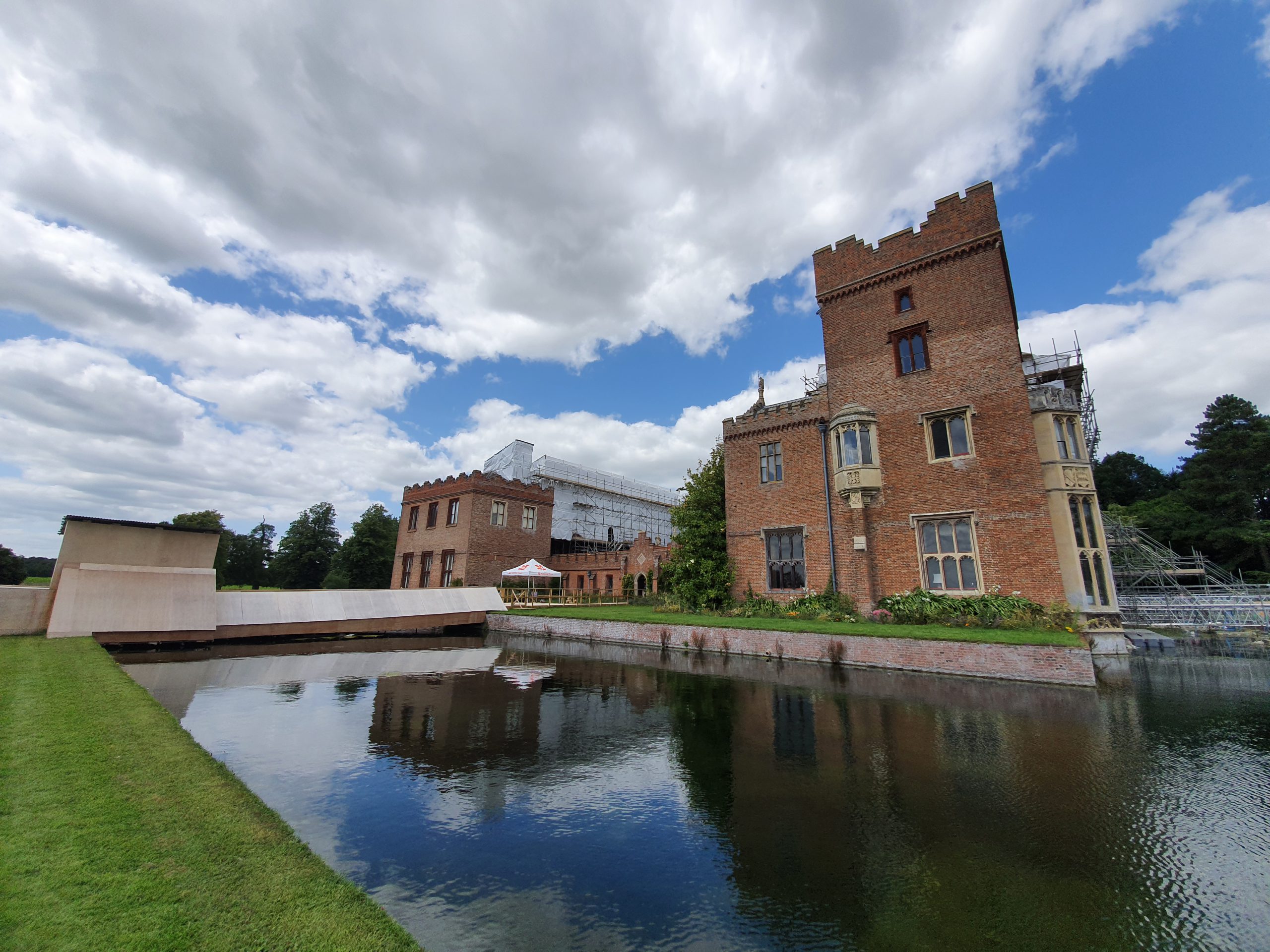
    Oxburgh Hall was in the first wave of National Trust houses to re-open after the enforced period of closure and the only one in Norfolk. It was essential to pre-book, and non-members needed to pay, in advance on the web-site although this was an easy process to navigate.

    Signage was suitably clear and there was an engaging staff member at the entrance to the property checking names and explaining what was happening.

    Gateways such as this were one-way only, with visitors routed around to ensure sufficient space.

    There was a one-way system through a few parts of the gardens where there was limited space, such as the herbaceous border. Visitors could also enter the house itself and I was warned there might be a queue for this, although it transpired that I was able to walk straight around with no wait.

    After crossing the bridge over the moat, visitors are met at the entrance to the house and another friendly guide explained where to go. It was all rather relaxed and I didn’t have to queue at any point, the National Trust hadn’t tried to cram too many people in.

    Visitors need to go through the courtyard, where there are also toilet facilities, and then enter the rooms at the far left. Only a few rooms were open, but there’s probably a limit to what they can do given the nature of the historic property that they have. More on these rooms, and indeed other elements about Oxburgh Hall, in other posts though.

    All told, this was very well-organised, although most things involving the National Trust usually are, albeit perhaps sometimes a little over-managed in some areas. Their one minor issue which was probably only temporary, they had run out of maps and they knew that they had more, but couldn’t work out who had them. But, they kept everyone safe and had managed to open up something, so that seemed a positive result to me.

  • Oxborough – Oxburgh Hall (Diary of Thomas Marwood)

    Oxborough – Oxburgh Hall (Diary of Thomas Marwood)

    This is the diary of Thomas Marwood (?-1718), a private tutor to Henry Arundell Bedingfield (1689-1760). The diary was written between 1699 and 1703, with the pair often travelling in Europe under the guise of meeting family members. A ruse was needed because Marwood, who went by the alias of Henry Nelson, was a Catholic at a time when providing a child with such a religious education was not permissible.

    The National Trust have noted that the diary is opened out onto September 1700, with the entry of 1 September:

    “I measured the Esquire’s height without his shoes and find him just 4 feet 4/6 English measure, ie, 4 feet 8 inches. And that he has grown a full inch since June 12 last. One inch”.

    Marwood gained a reputation for his theological work and his ability to understand and interpret the Bible, rejecting what he felt were the errors of the Reformation and its impact on the text. It was once thought that the above painting was of Marwood and his charge, the young Henry, although apparently this might not be the case.

    Marwood’s diary was used extensively in the early twentieth century in research papers, so it has been carefully examined and most of it has been published. And Marwood seemed to have had a marvellous time travelling throughout Europe, seeing travel, theatre and culture as part of the whole learning experience.

    The diary entry for 19 November 1700 is for when Marwood went to visit Dunkirk, where he stayed for six weeks. He was particularly taken with the kitchen, which he noted was “the neatest contrived I ever saw; it would roast three spits with a little charcoal and bake small things by two ovens with the same fire”. To be fair, it’s the sort of things that I would have written excitedly about if I had been there then.

    But what a learning experience this was for the young Bedingfield, visiting important political figures around Europe. There were also a couple of meetings with Jacobites, perhaps this is what influenced Henry later on in his life to produce his secret drinking glasses.

  • Oxborough – Oxburgh Hall (Under the Floorboards)

    Oxborough – Oxburgh Hall (Under the Floorboards)

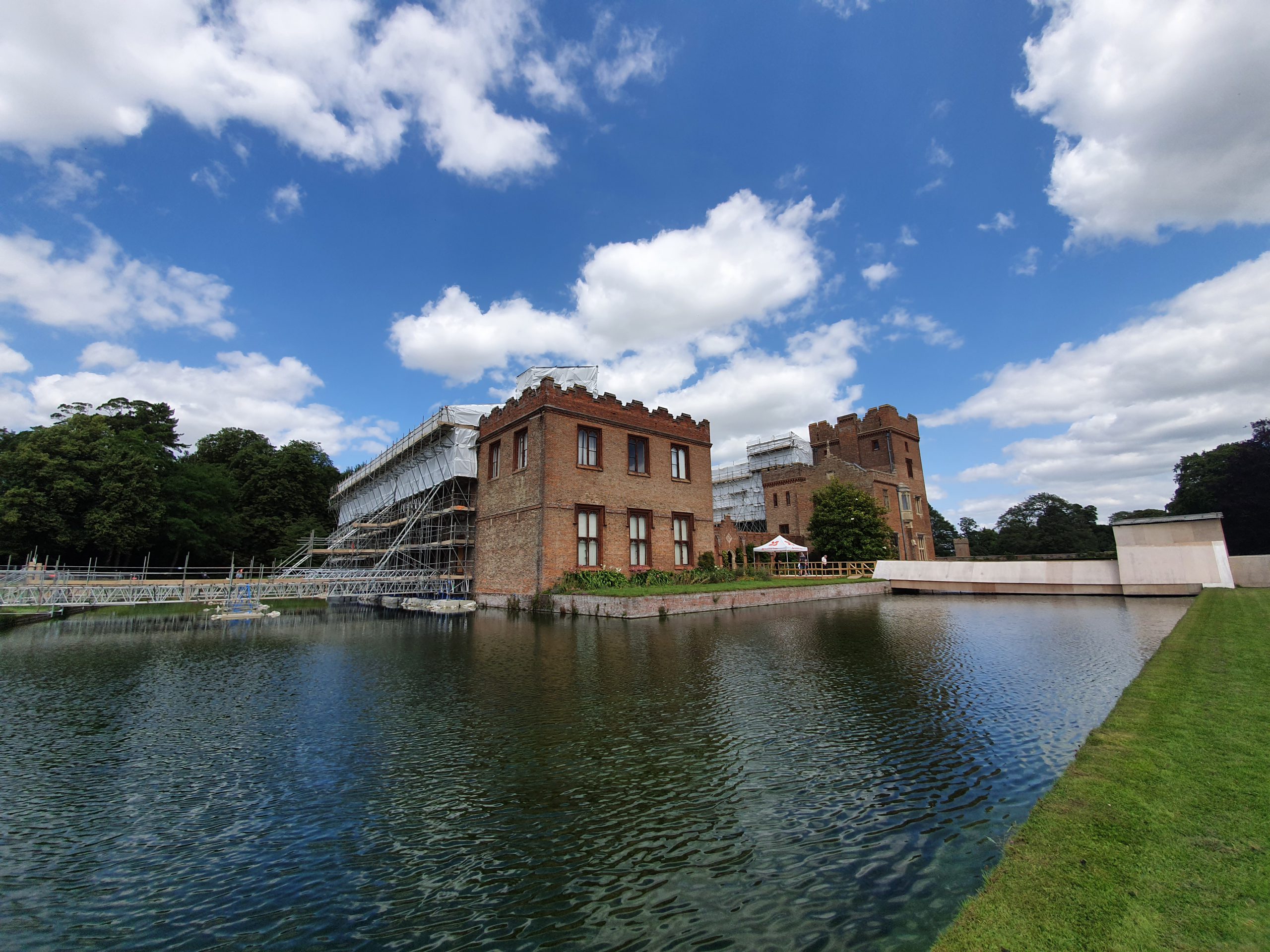
    Oxburgh Hall is going through a substantial restoration programme at the moment, caused by things falling off the building, which means that they’ve been lifting some floorboards. Their discoveries might look mundane, but there’s something quite compelling about the random things that have been found. So far, some masonry, half a plate, a paper money bag, bits of newspaper and a cigarette box.

  • Oxborough – Oxburgh Hall (Secret Jacobite Drinking Glass)

    Oxborough – Oxburgh Hall (Secret Jacobite Drinking Glass)

    This is one of eleven glasses that were commissioned by Sir Henry Arundell Bedingfeld (1689-1760) and the National Trust has done a fair chunk of research on what the glass represented. As an aside, the glasses were all sold in 1908 and all bar this one has gone missing. This particular glass is on temporary loan from the Drambuie Collection and the research conducted received some widespread media attention earlier on in the year.

    It seems that Bedingfield was a supporter of the Jacobite movement, a plot to return the House of Stuart to the British throne. James Francis Edward Stuart (1688-1766), who was for a few months the Prince of Wales and would have been King if it hadn’t been for the Glorious Revolution of 1688 which placed William III on the throne. Bedingfield supported the restoration of the Catholic James Francis Edward Stuart, which meant opposing the Kingship of the Protestant King George II.

    The glasses were probably made in the 1750s, when it was prohibited for anyone in the country to drink to the health of the Stuarts. So, the glasses were made with hidden messages such as the rose and twin buds, which were meant to represent James Francis Edward Stuart, along with the inscribed ‘fiat’, meaning ‘let it come to pass’.

    As for the other ten glasses in this collection? I imagine most people wouldn’t have ever even begun to have recognised the significance of the glasses, so they could be anywhere today, even supposing they’ve survived. It’s a nice find, but without the National Trust offering an explanation and background, I wouldn’t have had a clue what it represented.

  • Oxborough – Oxburgh Hall (Herbaceous Border)

    Oxborough – Oxburgh Hall (Herbaceous Border)

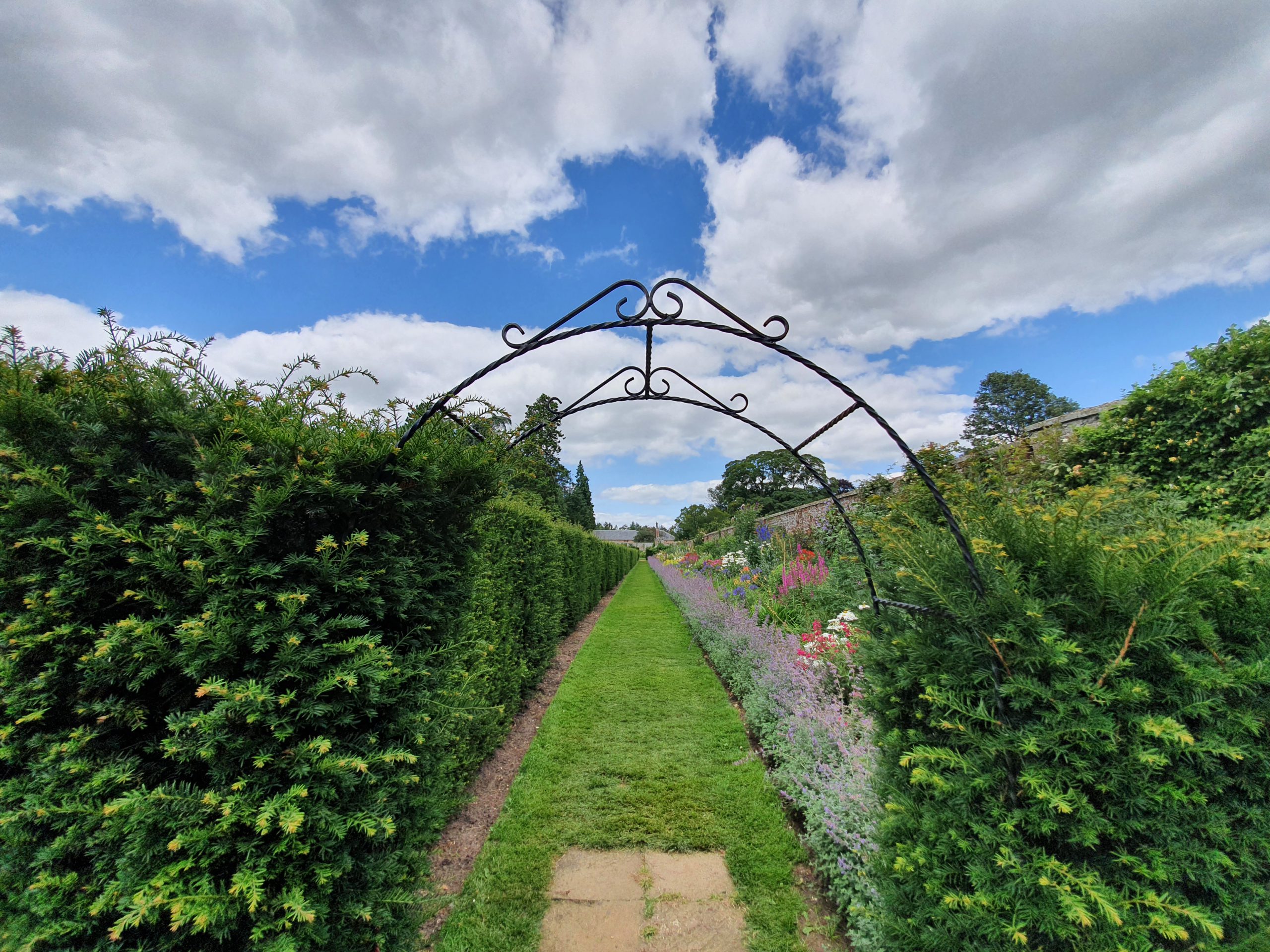
    Just photos here, as I have no knowledge about herbaceous borders or the plants in them. And this most certainly is not going to be a gardening blog…..

    There was once a high hedge on one side of this path and this gave the garden some privacy, making it a peaceful location for Lady Augusta Bedingfeld to walk down when she was pregnant (and likely when she wasn’t pregnant, although the National Trust note she had eleven children, so I’m not sure how much other time she had). There were also doors at either end, but now these have gone and the hedge has been lowered.