Tag: Norwich

  • Norwich – Rosary Cemetery (William Ford + Emily Ford)

    Norwich – Rosary Cemetery (William Ford + Emily Ford)

    Since I’ve been grounded again by the Government, I thought I’d meander around the Rosary Cemetery located near to me in Norwich, in an attempt to see what stories lie there. It might not be the most fascinating blog content, but it’ll keep me quiet for a few weeks….

    I nearly gave up with my researches into this family, as I was struggling to find anything of much interest relating to William Ford and his wife Mary Ford. That is, except from the very sad nature of the lives mentioned on the gravestone. Mary Ford, William’s wife, died in 1845 at the age of 58, having already lost their daughter Lucy in infancy, but then their children Hannah and Marianne both died in 1846, at the ages of 18 and 17 respectively.

    I also struggled to work out where this couple lived in 1841, as I found a census record, but Mary was listed as Lucy, so I assumed it was a different family as there were no children and they only lived with their housemaid Emily Stacey. Although, everything else fitted together. William Ford worked as a shoemaker in Norwich and had premises at Colegate Street, St. George’s and he lived at Heigham Cottage.

    Given the lack of obvious story, I thought I’d abandon this one, until I paid attention to the name of Emily Ford at the base of the gravestone. Emily was born in 1823, which didn’t quite make sense to anything in terms of being a child or sister of William. It then transpires that she was William’s second wife, marrying him in 1852 and living with him until he died on 23 October 1858.

    Emily died on 20 December 1881, at the age of 59, and she appeared in the 1861 and 1871 censuses with her occupation being listed as living off property income. But then, something about that strange 1841 census came back, namely I realised that William had married his much younger housemaid. That’s quite impressive, marrying someone who is thirty years younger, but I wonder what Mary Ford would have thought about this arrangement.

    Emily died when living at 32 Queen’s Road in Norwich, where by all accounts she lived a life of such comfort. Her death was reported in the local paper, noting that she was the relict (the archaic word for widow) of William Ford, but giving no more information. And, once again, I do wonder what Mary would have thought that her former housemaid would end up sharing a grave with her.

  • Norwich – Rosary Cemetery (Emma Jane Sendall + Herbert Sendall)

    Norwich – Rosary Cemetery (Emma Jane Sendall + Herbert Sendall)

    Since I’ve been grounded again by the Government, I thought I’d meander around the Rosary Cemetery located near to me in Norwich, in an attempt to see what stories lie there. It might not be the most fascinating blog content, but it’ll keep me quiet for a few weeks….

    This grave tells a story immediately, the death of a mother aged just 21, with her baby dying shortly afterwards at just a few months old. It commemorates the life of Emma Jane Sendall, born as Emma Abel and baptised on 27 July 1851. She was the daughter of James and Martha Abel of the Cranworth with Letton parish and she had a sister.

    At the age of 9, she was listed on the 1861 census as living at Gressenhall, as a pauper in a workhouse. She was with her father and sister, with her father being an agricultural labourer. That children were living in workhouses was ridiculous, but she was there just too early, as it wasn’t until the late 1860s that Thomas Barnardo started to open homes for impoverished children to live.

    This couldn’t have been a pleasant life for Emma Jane, but by the time of the 1871 census, she was living at Hammond’s Yard with her grandparents and sister, back in Cranworth, near to Mitford.

    In the late 1860s, a man called James Sendell married a local lady in Mitford, and I wonder whether Emma Jane somehow met his brother at that time, Arthur Sendall (born in around 1847). She married him in 1872 and perhaps this was looking like a new start for Emma Jane, something a little more positive. She had a child with Arthur in early 1873, named Herbert Sendall. Unfortunately, Emma Jane died in April 1873 and her only child died on 11 June 1873, with both being buried in the same grave.

    It’s perhaps possible to think of Arthur standing by this grave, mourning the loss of his wife, with perhaps their child also present. And then Arthur would have been back just weeks later, to bury their child. There was never much chance of any information being available about Emma Jane given that she spent much of her life as a pauper. And she would have likely remained anonymous, had it not been for her marrying Arthur, who seemed to have had at least a little money so that he could pay for a gravestone.

  • Norwich – Rosary Cemetery (Thomas Swindell)

    Norwich – Rosary Cemetery (Thomas Swindell)

    Since I’ve been grounded again by the Government, I thought I’d meander around the Rosary Cemetery located near to me in Norwich, in an attempt to see what stories lie there. It might not be the most fascinating blog content, but it’ll keep me quiet for a few weeks….

    This grave commemorates the lives of three people, Hannah Swindell, her husband Thomas Swindell and his second wife, Caroline Swindell.

    Thomas Swindell was born on 1 February 1815 and was baptised at the Baptist Church in Knutsford on 26 February 1815. He was the son of Thomas and Elizabeth Swindell and he married Hannah Witter on 4 February 1843. They had five children, which I’ve listed on the post I wrote about Hannah, with Thomas working as a Primitive Methodist Minister.

    There’s a mass of material on Thomas, not least that provided at https://www.myprimitivemethodists.org.uk/content/people-2/primitive_methodist_ministers/s-2/thomas_swindell where there’s a photo of him. There’s no point my copying material over from that very useful site (which also has information about his son, Theophilus Witter Swindell who became an important figure in Great Yarmouth), but it’s of note that he travelled around the country with his preaching, including Preston, Bolton, Wrexham, Great Yarmouth, Docking, Upwell, Aylsham, Swaffham, Cambridge, Thetford and ending up in Norwich in 1875.

    At the 1871 census, Thomas was living on Arnold Street in Lowestoft, along with his wife Hannah and three of their children. He had moved to Norwich in the 1870s to live at Bloomsbury Place, before moving to Essex Street in Norwich by the 1881 census, when he lived with his son Arthur Swindell (by then a Professor of Music) and his second wife, Caroline Swindell. Hannah had died on 23 January 1876, with Thomas marrying Caroline Simpson (1828-1899) in the summer of 1878.

    By the time of the 1891 census, Thomas was living with Caroline at a property on Grove Road in Norwich. He was still living at this residence when he died, on 8 November 1897. Caroline was to die a couple of years later, but I can sort of picture her at Rosary Cemetery at what was likely a well attended funeral given the size of Thomas’s family and his reputation in the Methodist Church.

  • Norwich – Rosary Cemetery (Hannah Swindell)

    Norwich – Rosary Cemetery (Hannah Swindell)

    Since I’ve been grounded again by the Government, I thought I’d meander around the Rosary Cemetery located near to me in Norwich, in an attempt to see what stories lie there. It might not be the most fascinating blog content, but it’ll keep me quiet for a few weeks….

    This gravestone, which is leaning forwards hence the slightly strange camera angle, commemorates the life of Hannah Swindell. It’s in rather good condition, other than where the weeds have attacked the base, and also commemorates Hannah’s husband, the Reverend Thomas Swindell and his second wife, Caroline Swindell. More on these two other individuals in separate posts, as I find it a little unusual that they’re all on one grave.

    Hannah was born on 20 March 1819, the daughter of Thomas Witter and Mary Witter. She was baptised at the Baptist Church in Knutsford on 25 April 1819 and she met her husband Thomas Swindell and they were married on 4 February 1843 in the same church (I mean the same church she was baptised in, obviously the husband and wife were married in the same church….).

    Hannah and Thomas had five children, Mary, Thomas, Theophilus (a marvellous name), Frederic and Arthur. Hannah died on 23 January 1876, at the age of 56. The inscription on her grave reads “she was a Christian of unblemished reputation, considerable usefulness and eminent piety, and now sleeps in Jesus till the morning without clouds shall dawn”.

    There’s one thing that’s evident here, which is that there is reams of material on Thomas Swindell, her husband, and his work and contribution to society. There’s nearly nothing relating to Hannah, so I’d say that in terms of who she was as a person, the best we have to go on is that inscription on her gravestone and that she seems rather dutiful. Thomas travelled extensively during his career, and perhaps that “usefulness” was in supporting him with his work. Too often women are a footnote in history, and that’s happened here as well, so hopefully I’ll find out at some point in the future some more information about her as a person. Indeed, I’m quite intrigued as to what she would have thought about Thomas’s second wife being added to her headstone.

  • Norwich – Rosary Cemetery (Richard Andrews)

    Norwich – Rosary Cemetery (Richard Andrews)

    Since I’ve been grounded again by the Government, I thought I’d meander around the Rosary Cemetery located near to me in Norwich, in an attempt to see what stories lie there. It might not be the most fascinating blog content, but it’ll keep me quiet for a few weeks….

    This is the grave of Richard Andrews, and I’m guessing (from the damaged section of the stone) also that of his wife Ann Andrews, the parents of James Andrews whose gravestone is nearby. I don’t feel that I could really tell the story of James, there’s just not enough information I can find beyond when he was born and died.

    Richard Andrews was born in 1786 and I mentioned when writing about their son, James, where Richard and Ann were at the 1841 and 1851 censuses. James was born on 14 August 1814 and died on 18 August 1837.

    I can find details of only one Richard Andrews born anywhere near Norwich in 1786, a child baptised on 12 February 1786 at Great Hautbois church. He was the son of William Andrews, who worked as a farmer, and the christening was probably at St Theobald’s, a church now in ruin. I can’t write with any certainty that it’s the same Richard Andrews though….

    Richard married Ann (nee Long) on 25 November 1812 at Taverham. The actual marriage register, still visible at Norfolk Record Office, notes her name as Anne, but we know from later censuses that the wife of Richard was born in Taverham, and Richard’s home parish is noted as St. Michael Coslany Church, which is where his son was christened a couple of years later.

    Richard died on 11 October 1861 at the age of 75, with this being reported in the Norwich Mercury the week after, noting his address as Lame Dog Road, which matches with the census records. Unfortunately, the newspaper didn’t report anything else about his life, so I feel that this is yet another story where nearly everything of note  is left untold.

  • Norwich – Rosary Cemetery (James Andrews)

    Norwich – Rosary Cemetery (James Andrews)

    Since I’ve been grounded again by the Government, I thought I’d meander around the Rosary Cemetery located near to me in Norwich, in an attempt to see what stories lie there. It might not be the most fascinating blog content, but it’ll keep me quiet for a few weeks….

    I found this grave a little difficult to read (and I can’t make out the bottom section), but it commemorates the life of James Andrews, the son of Richard (born 1786) and Ann Andrews (born 1788). James was christened at St. Michael Coslany Church in Norwich on 14 August 1814, a church which is now redundant but is still standing.

    James died on 14 August 1837 (the same date as his christening), at the age of just 23, and he was buried on 18 August 1837, with his death record noting that he was a dissenter. His burial here was one of the cemetery’s earliest, and his family wouldn’t have had much choice as they weren’t members of the Church of England congregation.

    James died a few years before the first national census, but in 1841, his parents lived alone at Charing Cross, by St. John Maddermarket in Norwich. In 1851, they were living on Pottergate Street in the same part of Norwich, this time with Sarah Ann Cordy, who was listed as their 30-year old daughter and a widow.

    By the time of the 1871 census, Ann was still alive, living at Lame Dog Road in Norwich with her daughter, now listed as Sarah Ann Johnson, and her two grandchildren Richard Frank Johnson and Fanny Johnson. This was because, in 1851, Sarah Ann had married a Francis Johnson, from Redlingfield Hall.

    Something has gone wrong in my telling of this story so far, as I don’t know why Sarah Ann Cordy was living with Richard and Ann in Norwich back in 1841. She wasn’t their daughter, so I had wondered whether she had married their son, James Andrews. But, I can find no record of that. Which gives me a problem in trying to picture who would have stood at this spot when James was buried, certainly his parents, Richard and Ann, but I’m unsure who else might have been there. And, I can find nothing about the life of James, just when he was born and when he died (but no knowledge of why he died), a total lack of a story which I find quite saddening. Hopefully, someone somewhere knows more…..
  • Norwich – Rosary Cemetery (Edward Nursey)

    Norwich – Rosary Cemetery (Edward Nursey)

    Since I’ve been grounded again by the Government, I thought I’d meander around the Rosary Cemetery located near to me in Norwich, in an attempt to see what stories lie there. It might not be the most fascinating blog content, but it’ll keep me quiet for a few weeks….

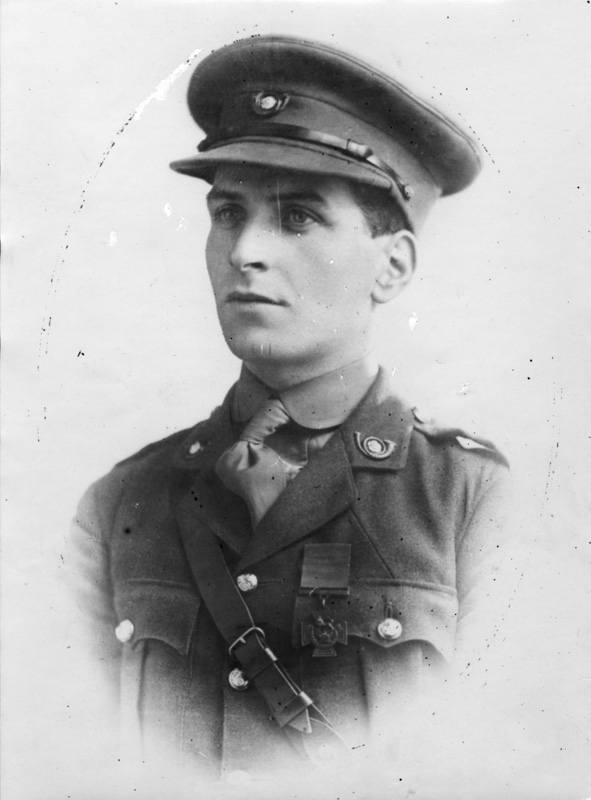
    This gravestone commemorates the life of Edward Nursey, who was born in 1864 and this interested me because of the reference to the Metropolitan Police.

    At the 1871 census, Edward was staying (or living) with his aunt and uncle on Unthank Road in Norwich, along with an Elizabeth Nursey. She is also listed on the gravestone and I think this was Edward’s mother. He seems to have been living with another aunt and uncle at the 1881 census, on Surrey Street in Norwich. He left though to work for the Metropolitan Police and the National Archives web-site shows he started work on 12 March 1883 and was warrant number 67553. It also appears that he was briefly a detective in the Special Branch in 1887, just a few years after that had been started.

    Edward is listed as giving evidence at the Old Bailey a few times, including reporting on the finding of a dead child when he was a sergeant at Hampstead police station in 1890. This was one of the most notorious crimes of the late nineteenth century and Edward was a key police witness in the trial of Mary Pearcey.

    At the 1901 census, Edward was working as a sergeant in the Metropolitan Police and was lodging with Henry and Susan Carey at their house at 59, William Street in Woolwich, London. This street is still there, but is now known as Calderwood Street and the properties along it have been demolished over the last 100 years.

    Edward died on 2 February 1903, aged only 39, at this point still working for the Metropolitan Police. And why he died, I don’t know, although he wasn’t killed in the line of duty.

  • Norwich – Rosary Cemetery (Isaac Wiseman)

    Norwich – Rosary Cemetery (Isaac Wiseman)

    Since I’ve been grounded again by the Government, I thought I’d meander around the Rosary Cemetery located near to me in Norwich, in an attempt to see what stories lie there. It might not be the most fascinating blog content, but it’ll keep me quiet for a few weeks….

    I’m not normally drawn to these larger monuments, as they’re often of wealthier people whose stories have been told many times before. But, this is one of the handful of monuments which the cemetery have placed a little board by, so it would seem remiss to ignore it.

    The memorial is to Isaac Wiseman, who was a wine merchant who died in 1863 at the age of 64. What is perhaps of most note is that he had two wives and eight children who pre-deceased him, a terrible reminder of how high mortality was in the nineteenth century.

    Isaac was born on 25 February 1799, the son of Quakers William Wiseman and Ann Wiseman. Isaac married Sarah Ladell at St. Saviour’s in Norwich on 17 May 1821. In 1830, Isaac became the elected Sheriff of Norwich, beating Charles Middleton to the role and he married Caroline Amelia on 15 January 1856 in Kenninghall.

    But, all of this is already well recorded and can be found on a basic Google search. The story that is more interesting to me is what his brother wrote about him in the Norfolk News following Isaac’s death.

    “He was well known to many as a man of considerable natural abilities, and of scientific attainments and power above the ordinary level of his fellow-men.

    The position which such as one takes in religious matters is of deep interest and importance to all – to those who reject, and to those who receive divine revelation, and for each it has an outspoken testimony. Whatever former days may have produced, the latter days of a man’s life become a test of much significance – so it was with my brother. Whatever were his former opinions, his latter days were marked by a gradual approach to the gospel of Christ; and his last days brought forth proofs of his full and thankful acceptance of gospel salvation.

    I had watched the change which, for several years, was evidently passing in his inner life. This change was noticeable in what he frequently said concerning what he heard at the Sunday morning services at the Cathedral, which services he had attended, with great regularity, for several years before his death.

    During his last affliction I had the pleasure of being with him repeatedly. I watched with deep interest, not only what he said, but the look, and the tone, and the countenance, which accompanied those utterances. On the day that he died I had an interview with him in the morning. I had not seen him for ten days, having been from home. On taking my leave of him prior to that journey, I told him that I should not forget to pray for him. On entering his room on the last day of his life, I found his mind to be clear and vigorous, but his bodily sufferings were intense.

    After the usual salutations of such an interview, he took hold of my hand, and with a marked significance of voice and manner, and with an unmistakeable meaning in the grasp of my hand, he said “I have felt your prayers though I did not hear them; my sins are forgiven”. This all took place in the presence of his two servants, and a sister of his first wife.

    At twenty minutes past eight, on that evening, he closed his eyes upon all earthly things, and passed the barrier by which the dead are separated from the living until the morning of the resurrection.

    I am, dear Sir, yours truly, Samuel Wiseman. Mount Pleasant, Newmarket Road, Norwich”.

    It’s very rare to get such an account of someone’s final few hours, I doubt there will be many more like this amongst the thousands of burials at the Rosary Cemetery. I’m a little surprised that Samuel didn’t really mention the loss that his brother had faced losing two wives and so many children (although perhaps this was hinted at with Isaac moving away from God), but it was a touching letter describing the day. And, I feel that I know much more about Isaac from what his brother wrote than from any number of census reports…

  • Norwich – Rosary Cemetery (William Henry Watson + Ann Watson)

    Norwich – Rosary Cemetery (William Henry Watson + Ann Watson)

    Since I’ve been grounded again by the Government, I thought I’d meander around the Rosary Cemetery located near to me in Norwich, in an attempt to see what stories lie there. It might not be the most fascinating blog content, but it’ll keep me quiet for a few weeks….

    This would have been one of the first burials at Rosary Cemetery, William Henry Watson who lived from 1803 to 1832 and Ann Watson who lived from 1817 to 1844. William was also born into a non-conformist family, with the cemetery being one of the few options to the family at the time given those beliefs.

    William was born on 30 December 1803, the son of John Watson and Susanna Watson, in the St. Clement’s area of Norwich and he was baptised on 24 January 1804 by Samuel Newton who was a long-serving non-conformist minister. William died on 8 March 1832 and was buried on 13 March 1832, still listed as a dissenter.

    Ann Watson was William’s sister, born on 1 December 1817 and baptised on 28 August 1818. This baptism was performed by William Hull, a minister at St. Gregory’s Church who wrote numerous books on religious matters.

    And this story judders to a halt here, in a little run of my struggling to get much of interest beyond birth and death dates. Finding anything on William was always likely to be difficult, he was seemingly unmarried, died relatively young and before national censuses were taken. And there’s not much on Ann either, she died in 1844, but I can’t find her on the 1841 census. In addition, there are two more names on the gravestone, that of Mary Starling and Joseph George Flower, so there some stories here hidden ready to be uncovered at some point in the future….

  • Norwich – Rosary Cemetery (John Beaney + Elizabeth Beaney)

    Norwich – Rosary Cemetery (John Beaney + Elizabeth Beaney)

    Since I’ve been grounded again by the Government, I thought I’d meander around the Rosary Cemetery located near to me in Norwich, in an attempt to see what stories lie there. It might not be the most fascinating blog content, but it’ll keep me quiet for a few weeks….

    Firstly, this surname has presented the enumerators for the census problems in the nineteenth century, as well as modern transcribers. We’ve got Beeney, Beany, Beeny and Beaney as the names here, just to make things more exciting….

    John Beaney and Elizabeth Beaney (nee Candler) married on 18 September 1837 at St. Clement’s Church in Norwich, with Elizabeth having been born in Ringland, Norwich. I can’t find his birth records, although John was born in around 1818. Elizabeth was born on 20 April 1814 and was baptised on 22 May 1814 at Ringland Church, with her parents being James Candler and Ann Candler (nee Collins).

    At the 1841 census, the couple were living with William Collins and William Collins (I assume father and son since one was 71 and the other 50) on Cowgate Street in Norwich. Unless it’s by chance, they would have been living with some of Ann’s relatives.

    For reasons I cannot quite understand, as this would have been quite a distance to move in the nineteenth century, the couple were listed as living alone at 10 Elizabeth Place, Walsoken near Wisbech at the 1851 census. John was listed as working as a lath render. I’m not really a DIY expert, but he would have been the person who constructed the laths on walls ready for a plasterer to, well, plaster.

    Clearly now back in Norwich, John also got himself in the Norwich Mercury in July 1854, although not for fortunate reasons. A Thomas Brooks pinched five bundles of lath from John, which resulted in the offender being sentenced to six months in prison with hard labour. There’s nothing to suggest in the records that John would have had much money, so this would have likely been a significant problem for him.

    At the 1861 census, John and Elizabeth lived alone on St. Faith’s Lane in Norwich, with John still working as a lath render. John died on 15 June 1862 and Elizabeth died in the first quarter of 1863.

    So, this is another gravestone without a huge amount of back story. I can’t find evidence of any children, so the couple likely just lived a quiet life which has mostly been lost to the record. It’s a little strange that the nearest that we can come to knowing a bit more about John from the newspapers is because he was a victim of crime. The stone, which is a little damaged now, was updated following the death of Elizabeth and I wonder who arranged for that to take place.