Tag: Norwich

  • The Museum of Norwich at the Bridewell – Model of Norwich City’s Former Nest Stadium

    The Museum of Norwich at the Bridewell – Model of Norwich City’s Former Nest Stadium

    Museum of Norwich at the Bridewell

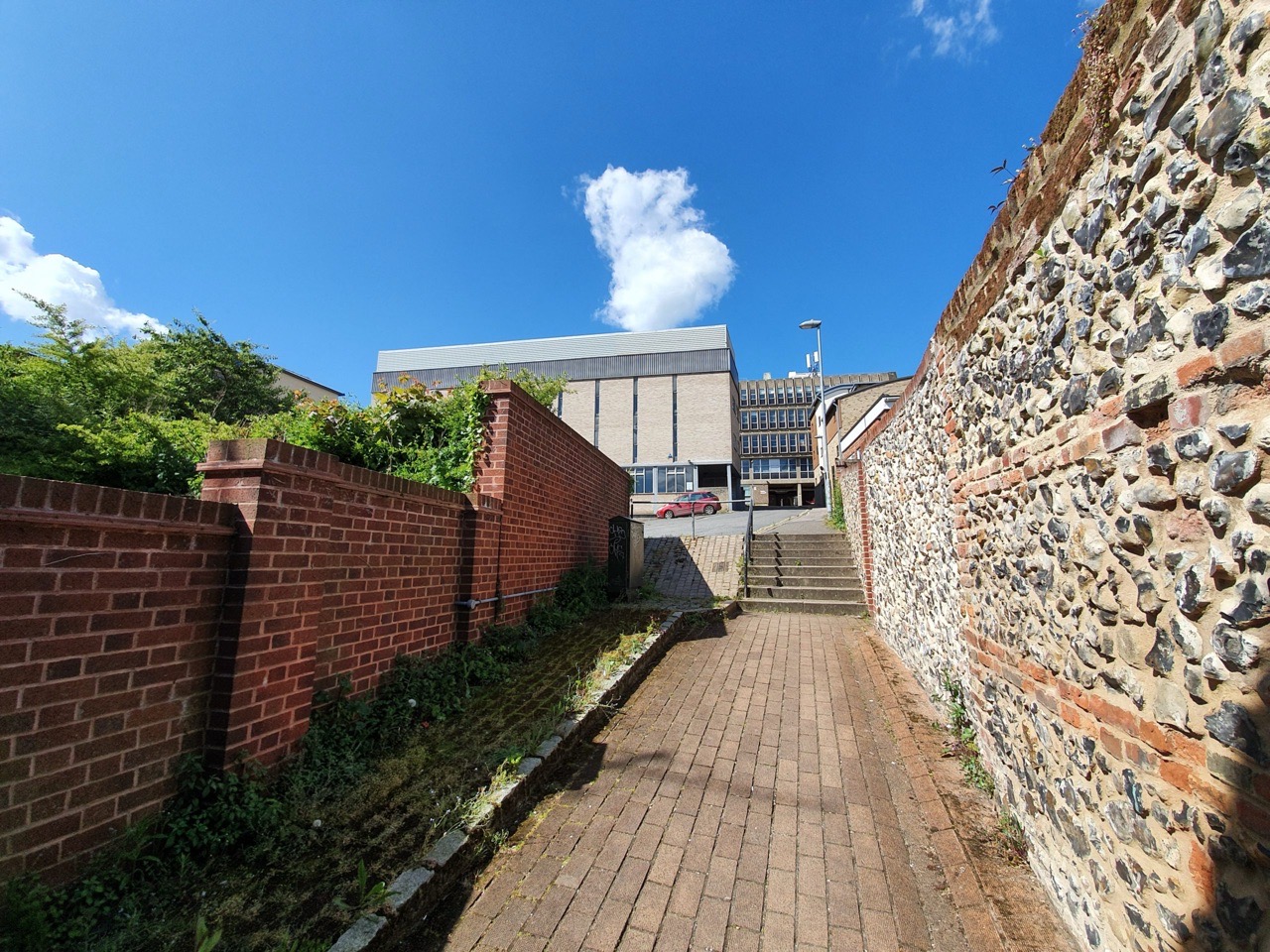
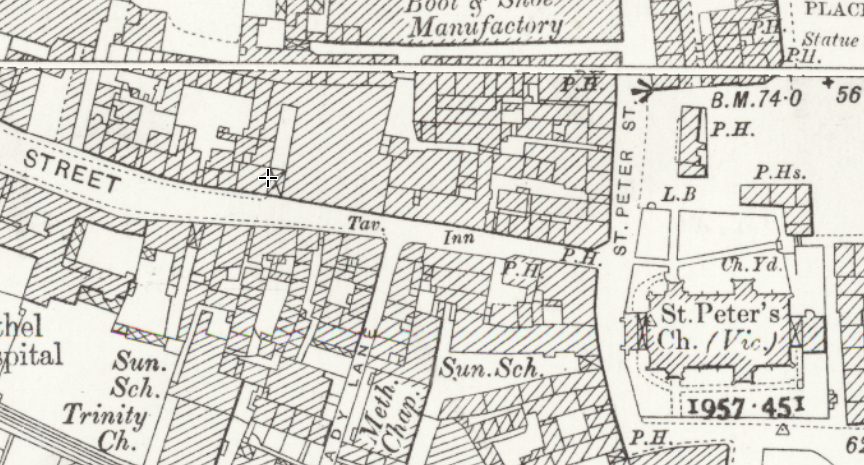
    This the museum’s model of the Nest, which was Norwich City’s football stadium between 1908 and 1935 after they had moved from their previous Newmarket Road site. It was squeezed into a former disused chalk mine site and despite the best efforts of the club at the time to modernise and expand the facilities, it wasn’t large enough and in 1935 they moved to their current Carrow Road ground. After 1935 the site returned to industrial, then became Bertram’s Books and is now a housing development called Bertram Way.

    The rather hilly and bumpy area before Norwich City decided to build the Nest.

    An excited crowd at the Nest in a photograph dating to 1924. The club’s move made a great deal of sense as there’s no way that the site would have been large enough as there was nowhere for them to expand into. If they had continued here they would have ended up with the situation that Luton Town have with their odd entrances in the middle of terraced housing. The Nest site today has a supporting wall on one side where the stand used to be, otherwise there’s no other trace of the site, but there is a statue remembering that the stadium was once here.

    Museum of Norwich at the Bridewell

    The museum’s model shows how the stadium would have looked in 1935, just before their move to Carrow Road. There are surprisingly few facilities, no such treats as the Gunn Club…..

  • Food from Every Stall on Norwich Market – Week 15 and Bodega

    Food from Every Stall on Norwich Market – Week 15 and Bodega

    20230710_130914

    Week 15 was one of the stalls that I had most been looking forwards to visiting on my eating quest around Norwich market. I have eaten here once before and it has one of the best reputations for quality sandwiches, so a return visit was most agreeable for the purposes of this market food eating project.

    20230710_130808

    The breakfast and lunch opening hours.

    20230710_130842

    The menu with numerous tempting options, although I had already decided that in tribute to Katz’s deli in New York that I would go for the pastrami sandwich. The fish finger sandwich sounds delightful as well and that seemed to be the option most ordered whilst I was standing there.

    20230710_131014

    I like the subtle humour dotted around the stall.

    20230710_131424

    The stall uses the strategy of having a staff member outside taking orders so that the counter doesn’t become cluttered up. He was welcoming, engaging and knowledgeable, with the option to pay by card. Service was fast and customer names are taken so that they can shout the order out when it’s ready. The stall was busy, but it was all efficient and organised, with food orders taking around five minutes as they’re freshly made.

    20230710_131850

    I very much like pastrami and so this suitably surprised and delighted me. The pickles and sauerkraut added texture, with the sauce ensuring that the sandwich wasn’t too dry. The pastrami was tender and very peppery, just as I like it to be, with the portion size being generous. It’s not necessary cheap at £7.50, but it is high quality and proved to be filling. James had the same pastrami sandwich and was also pleased, although pointed out that it does require some thought to work out how to eat to avoid any spilling incidents. As an aside, he was also keen to discover where on Norwich market they sold biltong, something we never really resolved.

    The whole arrangement including signage, ordering, service and the food was all impeccable, so it will come as no surprise that I’d very happily recommend this stall to others. And I look forwards to returning and trying some of the other menu options. Definitely a contender for my favourite market stall and writing this has made me fancy another pastrami sandwich.

  • Food from Every Stall on Norwich Market – Week 14 and Jacket Spuds & More

    Food from Every Stall on Norwich Market – Week 14 and Jacket Spuds & More

    20230705_131005

    Next in the little adventure of eating at every Norwich market stall was Jacket Spuds & More. This one was just a little challenging as it’s the only stall I’ve yet encountered, which the exception of Toby’s Beer which is a slightly different issue as it’s a bar, which has customers standing eating where I would usually expect to order.

    20230705_130953

    The menu which doesn’t just have jacket potatoes, but also breakfasts, sandwiches and muffins.

    20230705_131230

    And the drinks menu. The service was polite, but there was little opportunity for the engagement offered by other market stalls as orders have to be shouted over the top of other customers (or at least mine did). I understand it’s a market stall, but it just means that I can’t much comment more here, although they did take cards and everything was polite and welcoming.

    20230705_131237

    I was pleased that they checked if I wanted butter or not, as I’m not keen on it on jacket potatoes. The potato was cooked well, had a crispy skin and there was a generous portion of beans, so everything was as expected. There was apparently black pepper available on the counter, but I couldn’t get to it and nearly every meal is improved with a generous sprinkling of it. James went for a similar menu option, although he went for cheese and beans, as well as having butter. He’s always been much more decadent than me though.

    Overall, I felt that this stall offered decent food at reasonable prices, so I can’t imagine that anyone would be disappointed. I didn’t realise until later on that there was also the option of jacket potato with sausages which sounds suitably exciting. As a comment rather than as a complaint, this was the hardest stall yet to order at but everything looked clean and organised. I’d like to try one of their all day breakfasts next time, to see if they can surprise and delight me.

  • Norwich Castle Museum – Old Carrow Gardens by John Joseph Cotman

    Norwich Castle Museum – Old Carrow Gardens by John Joseph Cotman

    20230624_121746

    This is a watercolour of Old Carrow Gardens painted in 1876 by John Joseph Cotman (1814-1878) and it presents me with a little bit of a challenge of trying to understand where it fits into the current urban environment. The tower in the background is the Black Tower which is accessible up a big hill, one I ascend as infrequently as possible. Anyone who thinks Norwich is flat hasn’t had to traipse up to pubs such as the Rose from King Street.

    I think the the artwork was probably painted from here, on the north side of the River Wensum. That bridge isn’t there any more, they’ve shoved it down the road a bit nearer to the football ground, with Paper Mill Yard now being on the south side of the river where the bridge once met it. Until relatively recently, all the buildings on the south of the river were part of Colman’s Carrow Works Factory, a site that they only finally left in 2020.

    I may well be wrong on this (that does happen frequently), but I know that sometimes the word ‘gardens’ more means an empty space with some bits of foliage as opposed to something more organised, which might be happening here. As a river scene, it has though entirely changed over the last 150 years or so.

  • Food from Every Stall on Norwich Market – Week 13 and Indian Feast

    Food from Every Stall on Norwich Market – Week 13 and Indian Feast

    20230628_132626

    Next on the list of my plan to visit every Norwich market stall with friends was Indian Feast which specialises in vegetarian food from India, although I accept that I likely didn’t need to specify that. It’s very well reviewed and appears to have been trading for several years. The stall refer to themselves as vegetarian and vegan, but every menu items appears to be vegan from what I can understand from the menu.

    20230628_131230

    The food menu and it’s apparent from reviews that one of their most popular dishes is the Samosa Chat. James and I both went for this on the grounds we won’t bother ordering different things for the purposes of this blog post series, we’ll just start again when we’ve gone round and then order something new. I take these research projects very seriously and one visit is never enough anyway.

    20230628_131427

    There are some curry dishes as well, but much of this is just a repeat from the other menu. The service was friendly and immediate, so it felt it was a welcoming environment. The server was engaging and she explained what options were available, with the ordering process being efficient. They accept cards and they also have a seating area of their own, something which always makes things easier. I find limited enjoyment in dodging seagulls and pigeons and they swarm around the area.

    20230628_131610

    The meal consists of two vegetable samosas, chickpea curry, red onion, fresh coriander, a homemade fresh coriander and mint chutney along with a tamarind sauce. Just as an observation, the fork was slightly sub-optimal as it wasn’t strong enough to break into the samosas and it really needed a spoon for the sauce anyway. That minor issue aside, the food was well presented and looked appetising. There was a depth of flavour to the chickpea curry, although it only had the onion to add a little texture. There wasn’t much heat to this dish in terms of spice, but I enjoyed the flavours. The samosas had the suitably crispy exterior which complemented the interior well which was soft and lacking in texture. For my own perfect dish, I’d have quite liked just a little green chilli or something in the samosas to give it some extra flavour, but it was all very pleasant.

    Anyway, this is yet another market stall that I’d recommend as it has a friendly welcome and reasonable prices. The kitchen element looked organised, with the seating area being clean and the surfaces were dry. I enjoyed the food and although would have preferred a little more depth of flavour and spice, it was a light and nutritious lunchtime meal. All rather lovely and probably one of the better options for those looking for a vegan or vegetarian lunch.

  • Food from Every Stalls on Norwich Market – Meat & Co (Permanently Closed)

    Food from Every Stalls on Norwich Market – Meat & Co (Permanently Closed)

    20230628_131058

    Unfortunately, I fear that this market stall has permanently closed relatively shortly after opening. As part of my plan to eat at every Norwich market food stall, we’ve made multiple visits over different days and it has not only been closed but there’s no signage and there’s no social media.

  • Norwich Castle Museum – The Travelling Zoo

    Norwich Castle Museum – The Travelling Zoo

    20230624_123846

    Meandering around the collections of the Norwich Castle Museum, this display of dead stuffed animals is hard to miss and they’re from the Bostock and Wombwell Menagerie. This travelling circus was in operation between 1810 and 1931 and when their animals died on tour, they were often given to local museums. No doubt the menagerie was most exciting at the time, especially for children, as I can’t imagine many people had previously seen big cats, kangaroos, monkeys and even a rhino to name just a few.

    The above animal doesn’t have a name, or at least not one that has been recorded, but it’s an ocelot which did in January 1893 before it was stuffed and brought to the museum. I hadn’t realised, but ocelots can be kept as pets, although I’m hoping that not too many people decide to do that in Norwich as it would feel sub-optimal for too many of these to be wandering around.

    20230624_123901

    As evidence that these displays were educational, this is a binturong and I’ve never heard of them before so that’s something new to me. It’s an Asian bear cat and it looks very odd to me, they’re apparently noted for their strong tail which helps them climb trees. According to Plumpton Park Zoo they are “normally shy in the wild, but very aggressive when harassed and they may urinate or defecate on a threat”. They sound like just the thing you’d want to traipse around in your menagerie.

    20230624_123922

    The museum notes that in 1812, George Wombwell bred the first lion in captivity in the UK, apparently now stuffed and on display at Saffron Walden museum. This lion cub was born on tour in 1887, dying at three months old when it reached Lowestoft. If he had lived longer, he is unlikely to have had a pleasant life, as Wombwell had used the lions to fight dogs, usually a battle which the lion would win but at some cost to its health and well-being. They were controversial even back in the early nineteenth century and Parliament banned them, which is one of the earlier pieces of animal rights legislation.

    20230624_123939

    This male was caught in Australia and used by the menagerie as a boxing red kangaroo. I’m not sure that zoos or the like would get away with that little arrangement any more, he died in Somerset in March 1896. The museum doesn’t note whether he died in a fight or of natural causes. For anyone who wants to read more about this way of exhibiting animals before the establishment of zoos, there’s a Wikipedia page about them.

  • Norwich Castle Museum – Pull’s Ferry Water Gate by Joseph Stannard

    Norwich Castle Museum – Pull’s Ferry Water Gate by Joseph Stannard

    20230624_122012

    In the collections of Norwich Castle Museum, this is a pencil and watercolour by Joseph Stannard (1797-1830) from 1808. My first thought is that this shows just what a heap of dreadful buildings that had been shoved up in front of the historic Pull’s Ferry water gate. But, back to Stannard, who had his first painting exhibited at the Norwich Society of Artists when he was just 14. He suffered from poor health throughout most of his life, dying of tuberculosis at the age of 33, but despite that short life he became an important member of the Norwich School of Painters.

    Here’s what it looks like today, with the River Wensum just visible in the left hand corner. I wonder whether the marks on the right-hand tower, looking like where a window or door once was, once led into the structure that Stannard drew. I rather like looking at how buildings have changed over the centuries during their repairs and reconstructions and this structure has gone through some periods when it was quite unloved.

    By the late nineteenth century, the building had fallen into some state of disrepair and the roof had fallen in which was really all quite sub-optimal. On the bright side at least, the ramshackle arrangement of rickety buildings in front of the gate have been removed, although perhaps it was those that was holding them up.

    In terms of when things improved for the building, George Plunkett, as ever, helps with this as he has a photo from 1949 showing a modernisation taking place and this was overseen by Cecil Upcher. Pull’s Ferry was for centuries used as a ferry house (the ferry operated until 1943), and the gate itself was built in the fourteenth century over the canal that had been used to take stone the short distance down to the cathedral during its construction. The canal was filled in during the late eighteenth century and for a while the building was used as a pub, which strikes me as a useful enterprise.

  • Norwich Castle Museum – Bible Gospels and First World War Soldiers

    Norwich Castle Museum – Bible Gospels and First World War Soldiers

    20230624_120144

    On display at Norwich Castle Museum, these gospels were carried by Private JP Benstead during the First World War, designed to instil confidence and peace into the soldiers who no doubt needed some considerable reassurance. There were nine million Bibles distributed to British troops throughout the war years and the National Army Museum has the full text of one.

    The Gospel of Saint Mark has the following message from Field Marshal Roberts inside it, dated 25 August 1914:

    “I ask you to put your trust in God. He will watch over you and strengthen you. You will find in this little book, guidance when you are in sickness, and strength when you are in adversity.”

    On 14 November 1914, the elderly Roberts was dead, dying of pneumonia in France when visiting Indian troops fighting in the war. The religious texts were evidently important to soldiers though, it’s mentioned by the Bible Society that Professor Michael Snape from the Department of Theology at Durham University said:

    ‘This is a phenomenon that was recorded when soldiers who were killed on 1 July 1916 – the first day of the Battle of the Somme – were recovered and buried, many of them were found dead with the Bible, or New Testament in their hands.”

    Much as reassurance must have been a real comfort, I wonder how many young servicemen pondered how on earth God had let them get into this situation and what exactly He was doing to protect them. Anyway, I don’t digress to much, I just rather liked the exhibit as it would have been a hugely important thing for a serviceman to take into war and that it has survived is likely a testament (no pun intended) to that.

  • Norwich Castle Museum – Foundry Bridge and Railway Station in 19th Century (John Newman)

    Norwich Castle Museum – Foundry Bridge and Railway Station in 19th Century (John Newman)

    20230624_122309

    On display in Norwich Castle Museum, this scene isn’t easily recognisable today as the bridge has been replaced and the railway station shifted a little bit. It’s a print by John Newman dating from the middle of the nineteenth century and shows what was then Norwich Thorpe railway station, now just Norwich as they’ve shut all the others.

    A wooden bridge was constructed to cross the River Wensum in 1810, with the lattice iron arch bridge which is visible in the above print added in 1844 to serve the new railway station. A more substantial replacement was constructed in the yard of the station and in 1886 it was rolled over to use the same abutments as the previous structure. That 1886 structure is still there today and there are people still merrily canoeing and boating under the bridge.

    20230624_122317

    The railway station was first constructed in 1844 and the adjoining current railway station opened in 1886 when a larger building was needed. Which is when they also needed a bigger bridge…. I think it’s quite an attractive railway station and it must have been exciting as it was the first in the city, as Norwich Victoria didn’t open until 1849 and Norwich City didn’t open until 1882.

    The older railway station was initially used as a goods station, but was then faffed about with and a new brick structure added in 1921 which is still standing today.

    And there’s the larger building on the left, which is still the city’s main railway station. The building on the right is the 1921 structure which I think is used by train crew now. Vehicles once entered the railway station on this corner, but that was sub-optimal from a safety point of view, so cars now come through on a road between the two buildings.