Tag: National Gallery

  • London – Westminster (Borough of) – National Gallery (Christ and the Woman taken in Adultery)

    London – Westminster (Borough of) – National Gallery (Christ and the Woman taken in Adultery)

    This cheery little number doesn’t belong to the National Gallery where it is currently located, it’s usually in the collections of the Courtauld Gallery which has been closed for a couple of years due to renovations to the building. They probably chose quite a good time to get the work done, assuming that they’ve been able to progress with it at all this year.

    Anyway, it’s by Pieter Bruegel the Elder and it was painted in 1565. The grey nature of the artwork is deliberate, it’s in the Grisaille style and this is one of the best known paintings which have used this style of having multiple grey colours. The painting shows a number of Jewish sect members who have brought a woman accused of adultery to Christ so that he could condemn her to death by stoning. Instead, he asked if anyone amongst them was without sin, then they could be the first to throw a stone at her.

    It’s the only painting which the artist passed down to his son, Jan Brueghel the Elder. The painting was then passed down to his son, Jan Brueghel the Younger who loved it so much that he flogged it off. It was sold at Christie’s in 1834 and then again in 1952, but was donated to the Courtauld Gallery in 1978. Someone then pinched it in 1982 and that wasn’t entirely ideal, particularly since it wasn’t recovered until 1992.

  • London – Westminster (Borough of) – National Gallery (Visit 2)

    London – Westminster (Borough of) – National Gallery (Visit 2)

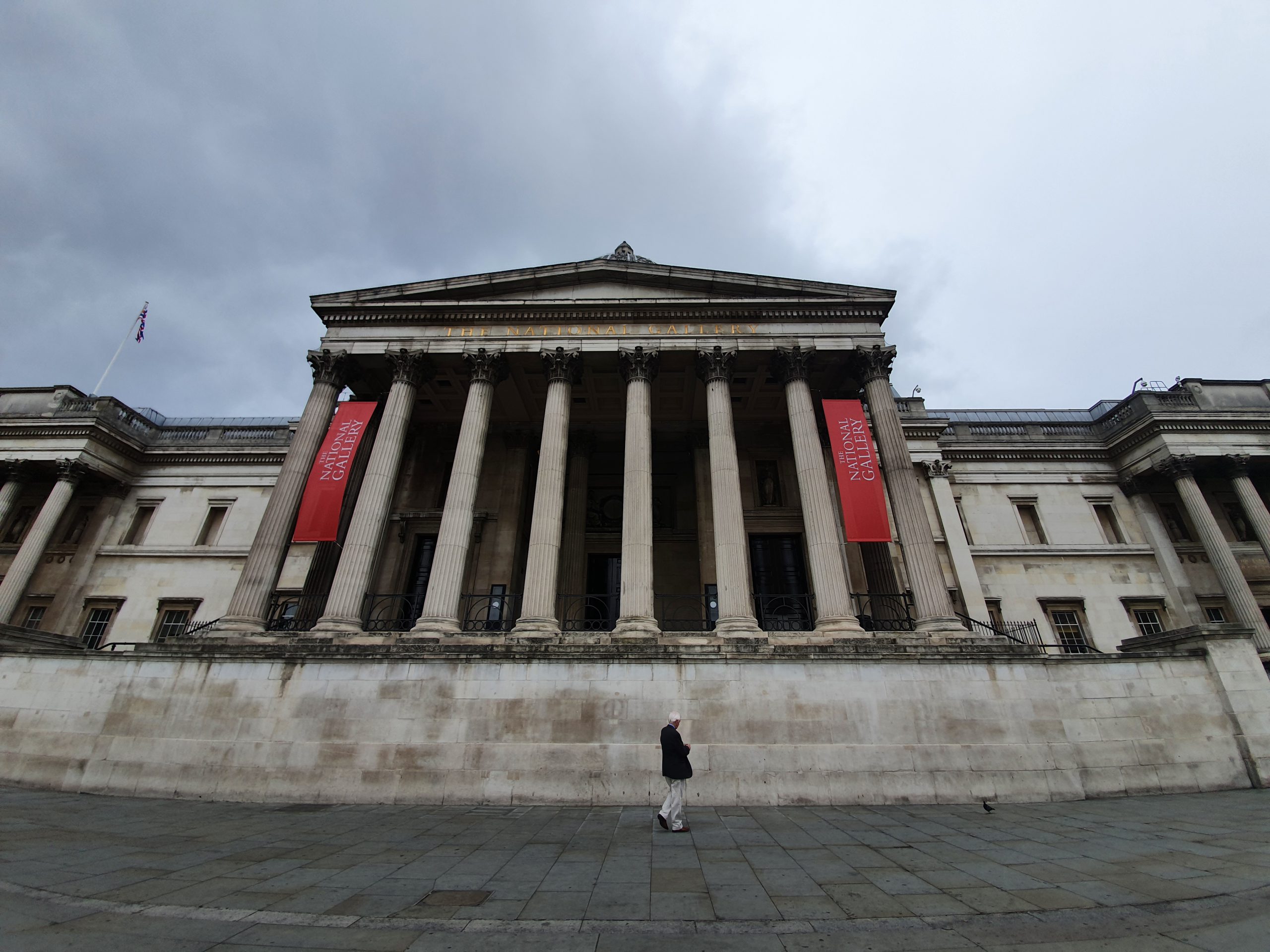
    This is my second visit to the National Gallery under the current restrictions, as there was just too much to see during my first visit. It’s free to get in, although tickets have to be pre-booked and they do enforce that, although someone did try and just sneak in when I was there. As can be seen in the photos below, this wasn’t the busiest of locations, although it got a bit busier during the early afternoon when I was leaving.

    As an aside, this is now rated on TripAdvisor as the top thing to do in London, number 1 out of 2,339 places, which is a pretty impressive effort. Although I noticed a few times on this visit and my last one that the staff struggled to answer questions that other people were asking, and although the staff were polite, I did wonder whether some of them were interested in art at all. I’m not quite sure if art knowledge is part of their required job role and how much of their role is ensuring the security and the safety of the gallery, perhaps that’s their only function. I had no such issues, I have the Internet to answer my questions…..

    Anyway, all rather lovely, more posts to come on this.

  • London – Westminster (Borough of) – National Gallery (Saint Mary Magdalene and Saint Peter)

    London – Westminster (Borough of) – National Gallery (Saint Mary Magdalene and Saint Peter)

    These two Saints (NG4491 and NG4492) are in the collections of the National Gallery, donated in 1930 in honour of Charles D Cumming. The two separate pieces are part of a larger altarpiece which has since been broken up, with other sections in the Palazzo Barberini in Rome and also in private collections. They date from around 1350 and it isn’t known where the altarpiece was from, or when it was broken up.

    The Mary Magdalene image is notable for, and I’ve taken this from the National Gallery web-site (I hardly knew this):

    “The artist has taken great care to paint the ointment jar so that it resembles white marble with pink and blue veins. Its surface has a soft luminosity, an effect achieved by painting a thin layer of white paint over a base of layer of bright colours. This technique is known as scumbling.”

    I’m not sure what look for Mary that the artist was intending, although it appears more grumpy than pensive. Anyway, that’s my contribution to the commentary on these artworks…

    They think that there was a main panel with the Virgin Mary in the centre, with the two pieces in the gallery’s collections having once been positioned to the right of that. The arched panels at the top are more recent, as they were at some stage turned into rectangular artworks, so they could be displayed on a wall.

    Although it’s not ideal from an artistic perspective, I quite like that the individual items that once formed part of a larger artwork are dotted around the world. It makes it more of a treasure hunt to locate them.

  • London – Westminster (Borough of) – National Gallery (Saint Sabinus by Pietro Lorenzetti)

    London – Westminster (Borough of) – National Gallery (Saint Sabinus by Pietro Lorenzetti)

    This artwork (reference NG1113) is in the National Gallery in London and they’ve had it in their collections since 1882, when it was presented to them by Charles Fairfax Murray. The full title of the painting is “Saint Sabinus before the Roman Governor of Tuscany” and the gallery thinks that it was painted between 1335 and 1342. Murray was an artist who spent some time living and working in Siena, in Italy, and it’s thought very likely that this might have been designed originally as part of an altarpiece for the city’s cathedral.

    The gallery’s web-site, which is gloriously detailed, has no end of information about this painting, but I like that there was once one central panel and four altarpieces, of which this is one. The central panel is today at the Cathedral Museum in Siena, two of the panels are at the Uffizi (so, I may or may not have seen them earlier this year) and the other is lost.

    The Roman Governor in the image is Venustianus and he’s sitting down on the seat with the strange-looking lions, demanding that Sabinus sacrifice one of his companions. Sabinus offered a statue, which seemingly wasn’t sufficient as Venustianus ordered his hands to be cut off. Now more commonly referred to as Saint Sabinus of Spoleto, he was later executed by Lucius, the Roman elected official. So, not exactly ideal.

    Pietro Lorenzetti (?1280-1348) is apparently (I’m reading this bit on an art site, I don’t know as I’m not an art historian) an influential forerunner of the Italian Renaissance movement and he was well-known in Siena. Given that he was painting 700 years ago, a surprising number of his works are still in museums and galleries around the world today.

  • London – Westminster (Borough of) – National Gallery

    London – Westminster (Borough of) – National Gallery

    I wasn’t enormously thrilled about how the British Museum handled their visitor flow yesterday, with people clustered together. However, the National Gallery, to quote a phrase of someone I know, surprised and delighted me with their arrangements.

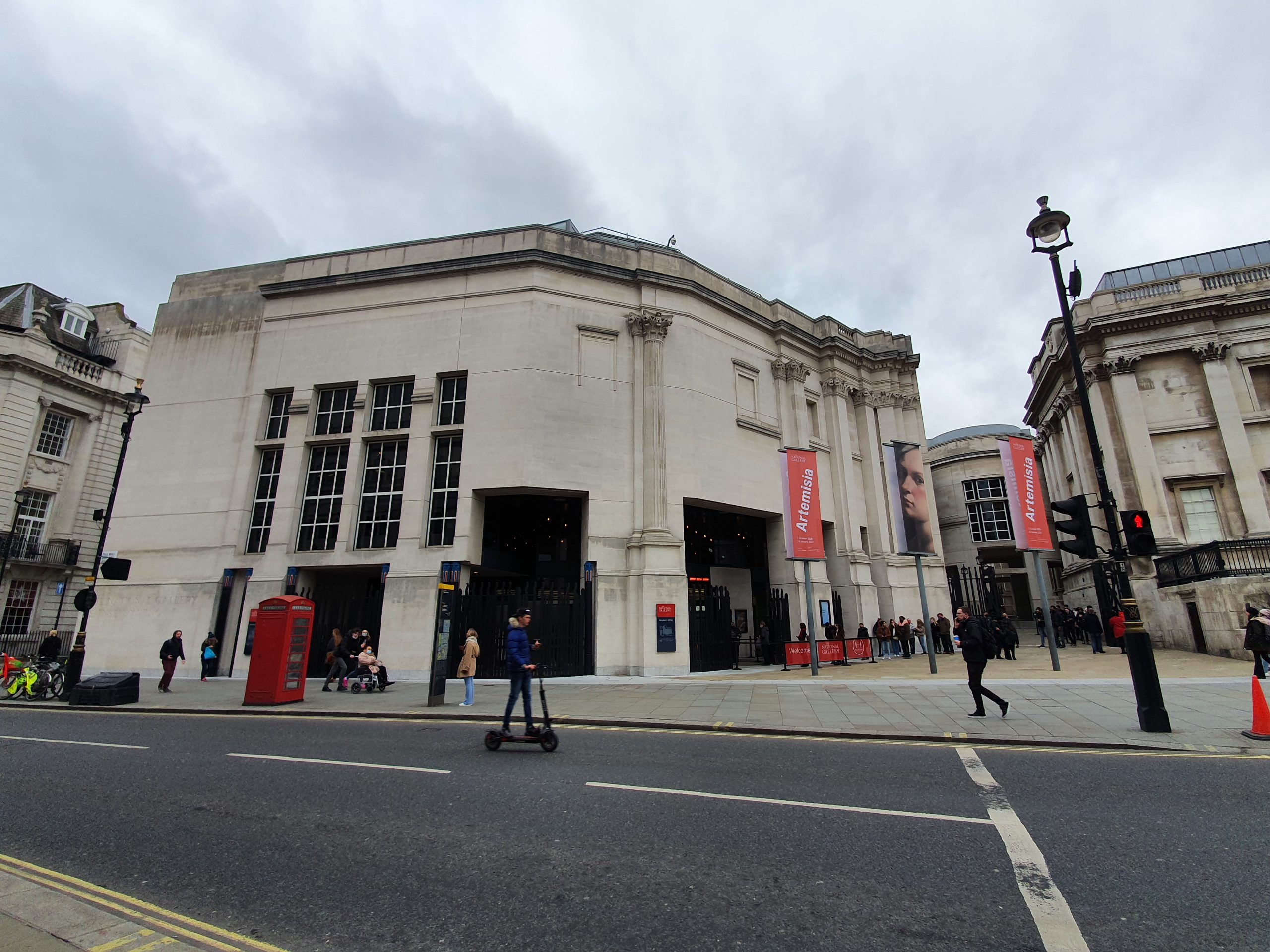
    Visitors go to the Sainsbury Wing Entrance and the time of the ticket is clear, turn up no more than fifteen minutes before. There was a staff member guiding visitors and he was helpful, giving clear instructions to everyone and there was plenty of space for people to wait. I liked this, he was chatty and welcomed visitors with a smile and those without tickets were dealt with politely.

    The member of security staff was humorous, engaged and keen to welcome visitors. I admit that mine was the first bag of the day that he had to check, but nonetheless, he smiled and made conversation. And, the staff at the gallery were all engaging and they looked like they wanted to be there. Two staff were talking to each other about a painting, a moment which it occurred to me that I’ve never seen before. The staff were pro-active and welcoming visitors, giving the impression that their role was that of aiding the visit of someone new to the gallery (or someone experienced wanting help), rather than just being there for security.

    The gallery has information about every one of its artworks on-line, and this is useful and accessible. It added an extra dimension to the artworks, although that had the disadvantage that I stayed for three hours and still didn’t even get half-way round. I’ve booked another ticket on-line for in two weeks, but this experience reminded me that the National Gallery is, along with the Met in New York, perhaps the best gallery in the world.

    Impeccable and a perfect example of how to handle visitors during these uncertain times. And below, some photos of the galleries…