Tag: Museum of Warsaw

  • Warsaw – Museum of Warsaw (Early Map of Warsaw)

    Warsaw – Museum of Warsaw (Early Map of Warsaw)

    I’ve decided that I take too many photos, as is apparent when I’m working through my galleries after a visit anywhere, including Poland where I returned back from two weeks ago. But, I doubt I’ll change that little flaw in my character, so I’ll have to just manage the large amount of data I create…..

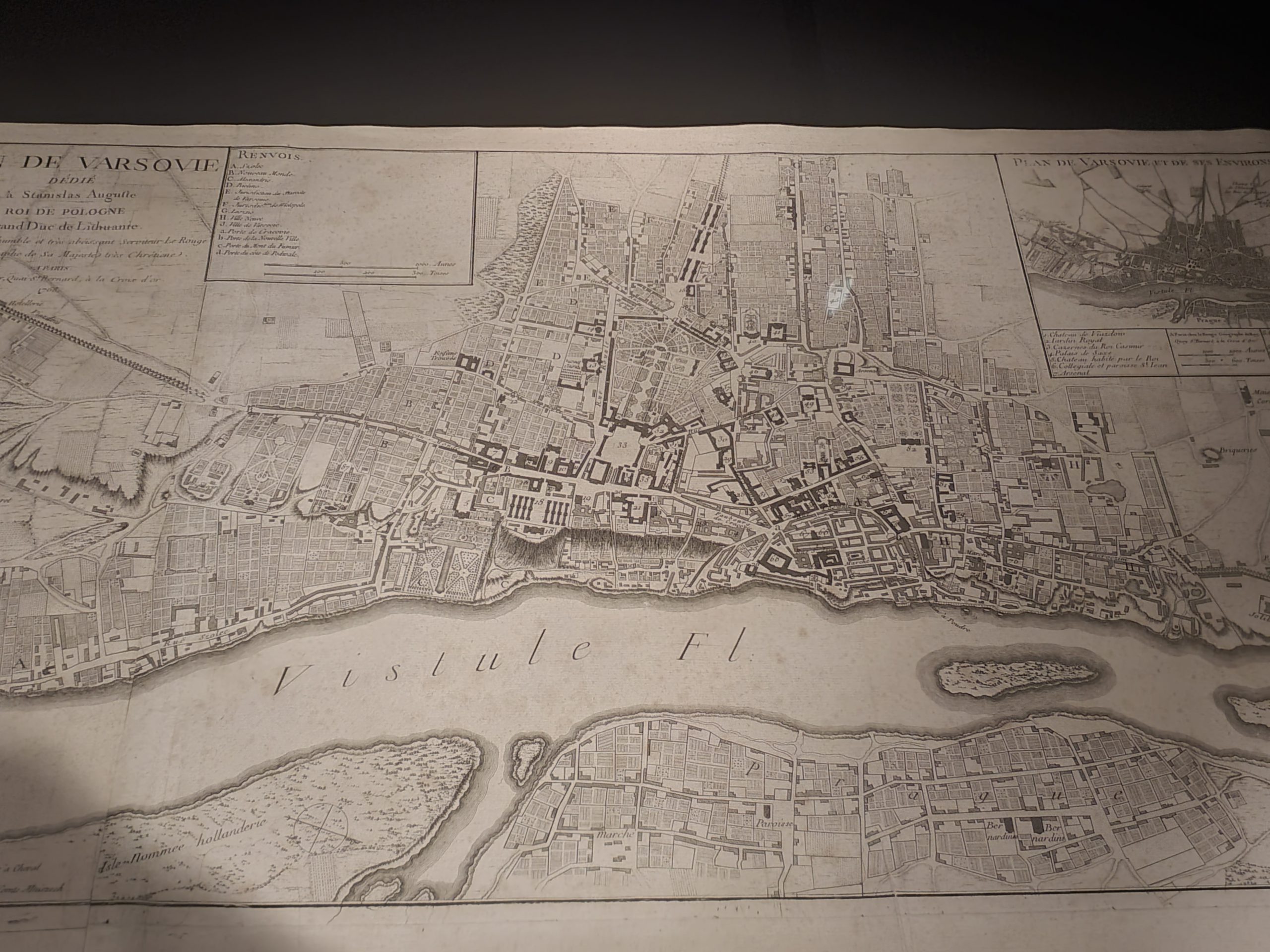
    Anyway, this is one of the many maps which is available in the Maps Room of the Museum of Warsaw. It’s possible to make the map larger by clicking on the image above, which makes it very evident just how much Warsaw has changed. Although it’s possible to make out the Old Town area and a few of the larger streets, so much of the city has changed that it is quite a challenge to tie everything in (or at least, it was for me). I spent quite a while just gazing at this map, fascinated by just how much Warsaw has evolved over the last two centuries, albeit much of it forced because other countries kept damaging it.

  • Warsaw – Museum of Warsaw (Infant’s Identification)

    Warsaw – Museum of Warsaw (Infant’s Identification)

    And another of my posts about things that interested me in the rather lovely Museum of Warsaw.

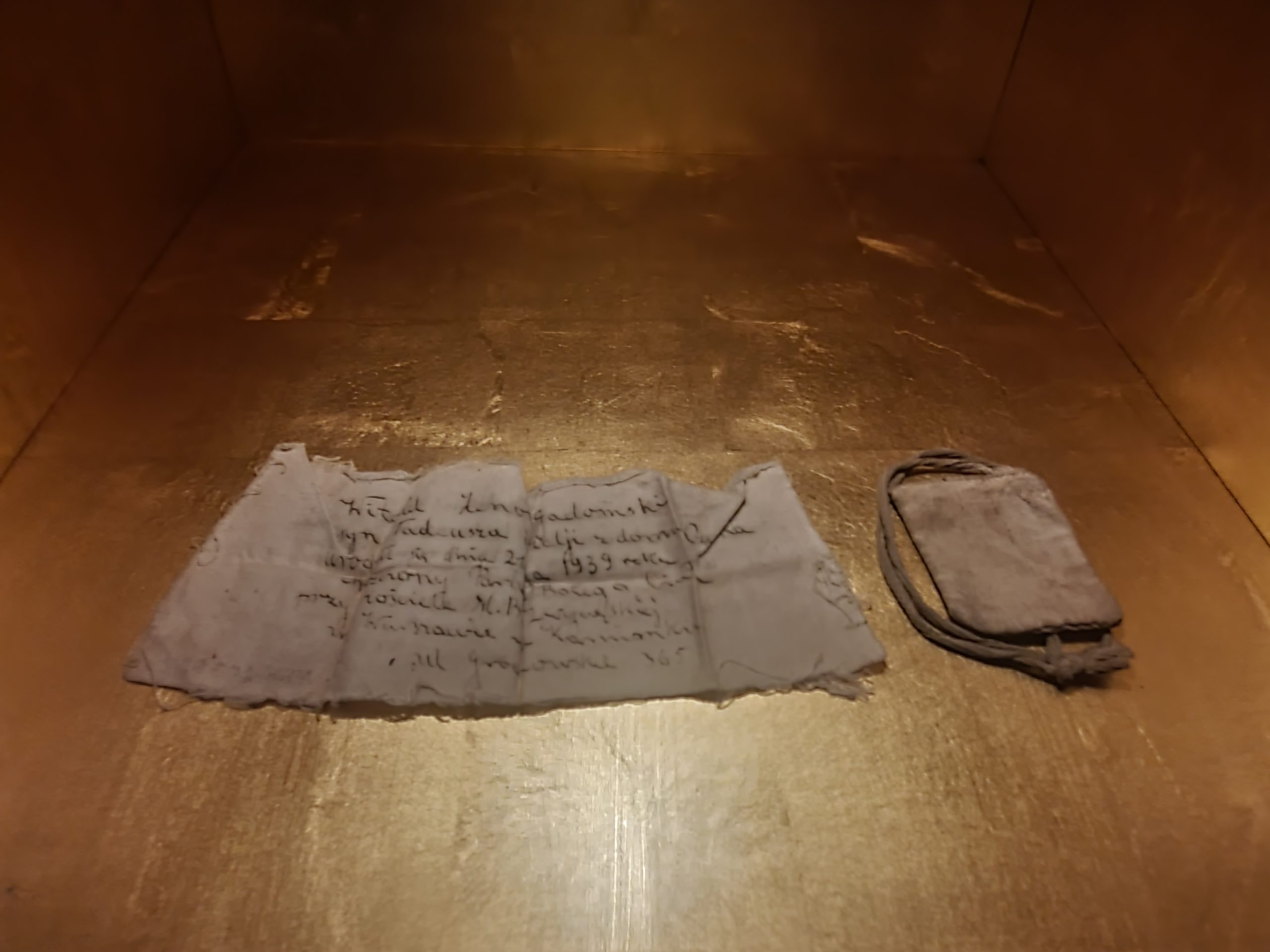
    This is another remarkable survival, it’s a hand-written note on linen which was placed in a pouch that was put around the neck of a child during the Siege of Warsaw in September 1939. Warsaw was initially able to defend itself during the invasion of Poland by the Germans, but despite the bravery of the Polish military, they were simply out-numbered. Over 18,000 people died in the city between 8 and 28 September 1939 and this tag was so that the young child could be identified if he was separated from his mother.

    The young child was Witold Zenon Gadomski, the son of Tadeusz and Rozalia Czerna of ul. Grochowska 365, who was born on 21 May 1939. He survived the conflict and kept his identification until it was given to the museum in the late 1970s. I can only begin to imagine what his mother must have been thinking when she wrote that during the aerial bombardments of September 1939, no doubt complete terror for the future. Whether or not his parents survived the war, I don’t know….

  • Warsaw – Museum of Warsaw (The Construction of the Central Railway Station)

    Warsaw – Museum of Warsaw (The Construction of the Central Railway Station)

    I’m still working through my little collection of photos of things that interested me from my visit to the Museum of Warsaw a couple of weeks ago and this one is an artwork by Edward Dwurnik (1943-2018) which is located in the Room of Warsaw Views.

    Dwurnik managed to paint over 5,000 artworks during his career, including numerous paintings of the capitals of European Union countries. The above artwork was painted in 1974 and shows the construction of Central Railway Station in the early 1970s, with structures built on top of the railway lines which were already there.

    Also in the artwork is the Palace of Science and Culture on the left, which was a relatively new building at the time, as well as what is now the Novotel Warsaw building on the right. It captures a Warsaw in a time of upheaval, although to be fair, it has had quite a lot of those over recent decades. The painting was created for the 5th Festival of Fine Arts in the city and was put on display at the Zachęta National Gallery of Art. It was then acquired by the city’s Art and Culture Department the in 1975, before being given to the Museum of Warsaw in the following year.

  • Warsaw – Museum of Warsaw (Ravensbrück Concentration Camp Uniform)

    Warsaw – Museum of Warsaw (Ravensbrück Concentration Camp Uniform)

    Just a few more posts left about my visit to the Museum of Warsaw a couple of weeks ago.

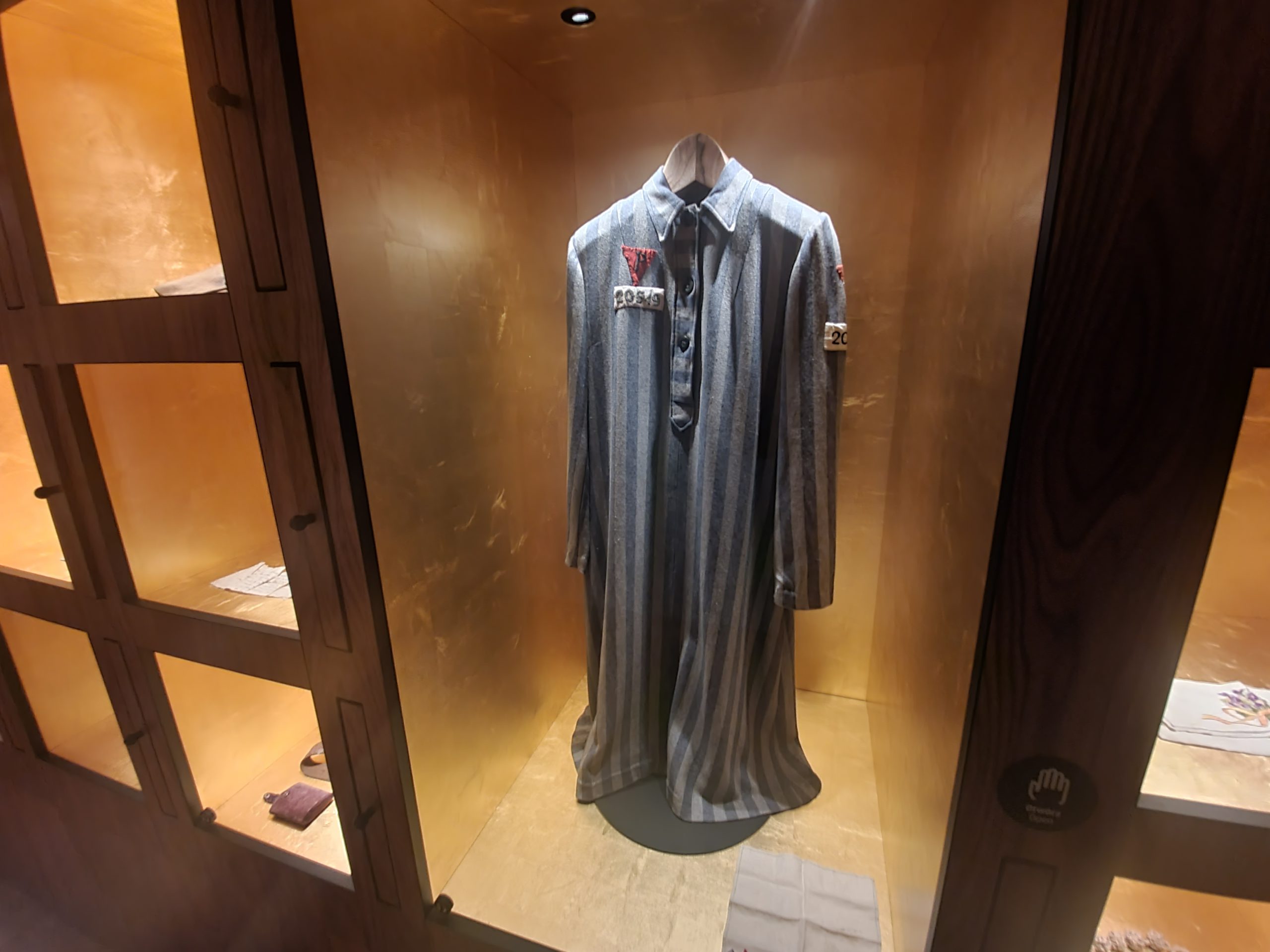
    Concentration camp uniforms are always challenging exhibits for any museum, a tangible reminder of the horrors that took place during the Second World War.

    This uniform is marked with a ‘P’, meaning that the prisoner was Polish and this is from Ravensbrück concentration camp. It was owned by Maria Bortnowska (1894-1972) who was an activist for the Polish Red Cross and also a fighter in the Polish Home Army. Unfortunately, she is an another victim of the Soviet takeover of Poland after the end of the Second World War, as she started to investigate the Katyn Massacre where hundreds of Poles were killed by the Soviets. She was imprisoned, although the authorities had to release her when evidence came in from other survivors at Ravensbrück about her good conduct. Maria’s family donated the uniform to the museum in 1973 and I think it’s one of the most exhibits in their collection.

  • Warsaw – Nine Men’s Morris Board

    Warsaw – Nine Men’s Morris Board

    This exhibit is on display in the cellars of the really quite marvellous Museum of Warsaw. I confess to not having heard of this game before, but it has been played since as early as the Roman period, and appears to have been relatively common. This particular board is made from clay and was discovered during excavations of the Royal Castle in 1971 and it’s thought to date from the seventeenth century.

    For anyone who wants to know the history of the game, there’s more information at https://en.wikipedia.org/wiki/Nine_men%27s_morris. What fascinated me about this game is that they’ve discovered it etched into the cloister seats at Norwich Cathedral, I assume by some youngsters who wanted to amuse themselves during some less than interesting hours sitting and singing. As an aside, it seems that if two experts play the game then it always ends up in a draw, which isn’t an ideal situation.

  • Warsaw – Museum of Warsaw (Jan Połubiński Portrait)

    Warsaw – Museum of Warsaw (Jan Połubiński Portrait)

    Another random post of a painting that I thought was a little different.

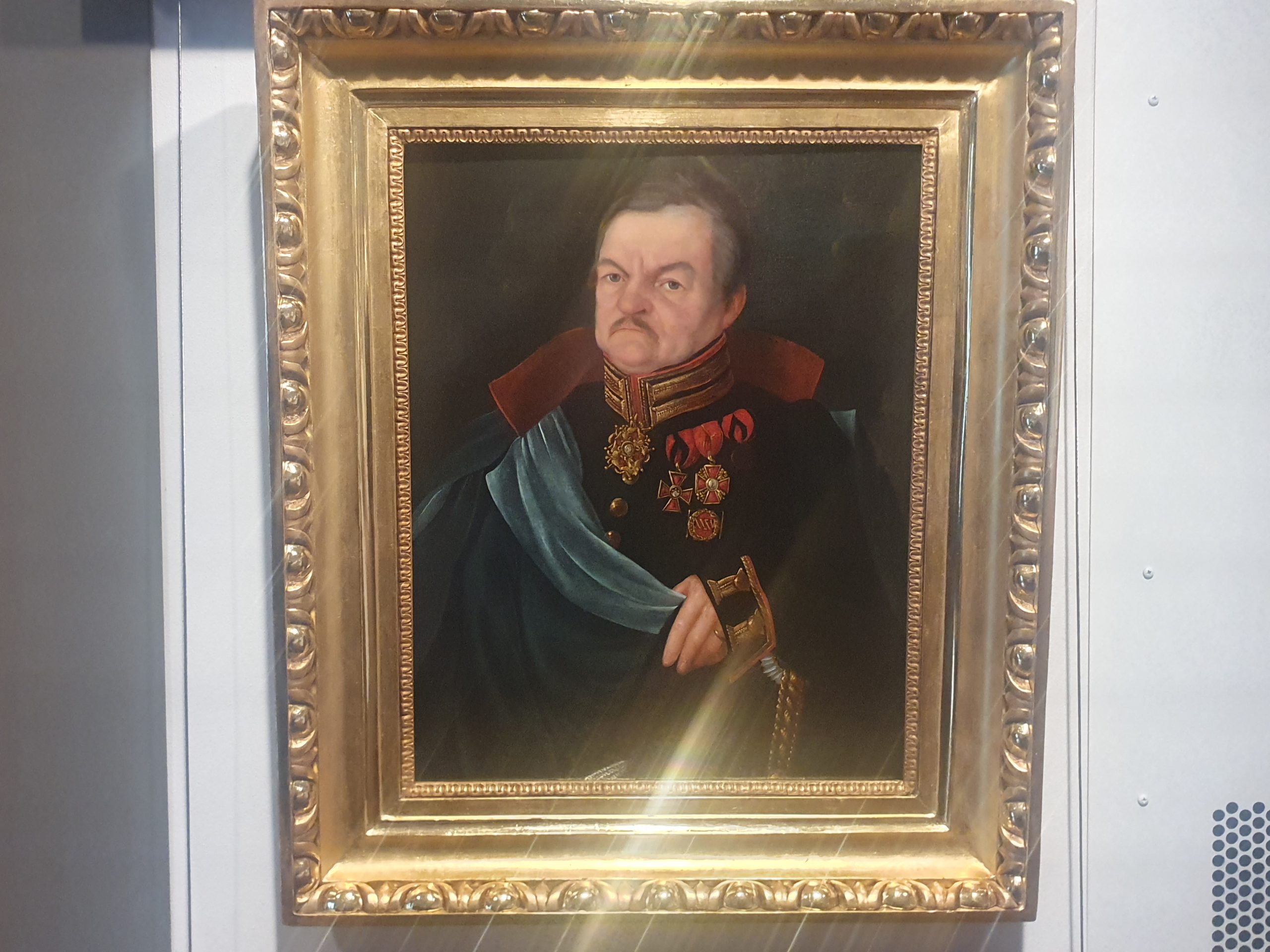
    This is one of the paintings in the collection of the Museum of Warsaw, and it is of the general Jan Połubiński. I wonder exactly what sort of impression that the artist, F. Kiełpiński, was trying to give when he painted this in 1835. I’m not really sure that it paints him (literally in this case) in a particularly positive light. His face doesn’t exactly look full of love and it half gives the impression that he’s in bed, rather than in an important military uniform.

    What I do like is that the gallery have provided a photo of the rear of the painting on their web-site, which often tells an interesting story of its own.

    This painting was completed in the same year by the same artist and the sitter’s name has the same surname, so I’ll guess that this is perhaps the wife of the general. I think she’s come off better of the two here and she doesn’t look like she’s in bed.

    Anyway, I digress.

  • Warsaw – Museum of Warsaw

    Warsaw – Museum of Warsaw

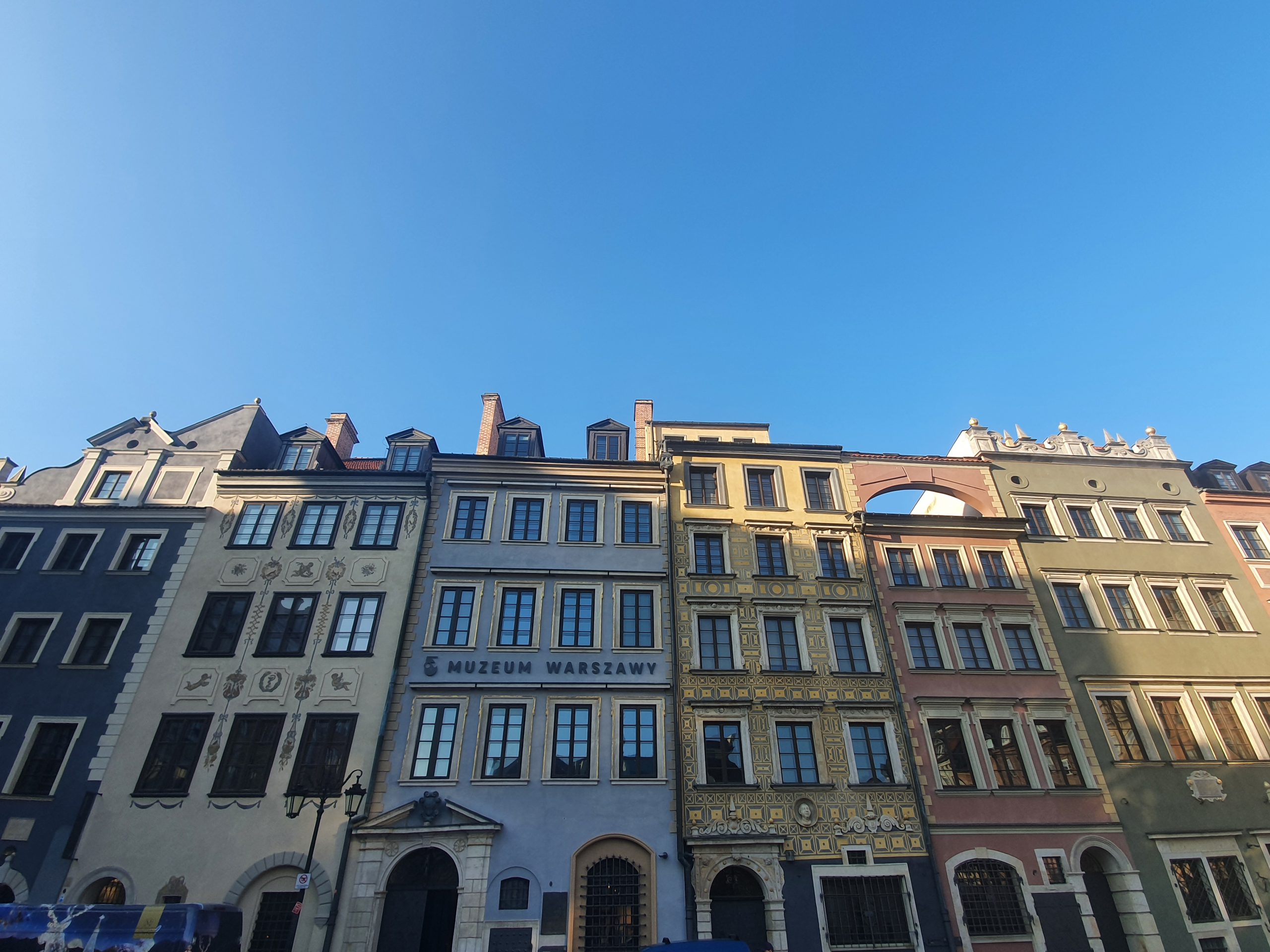
    I’ve never been to the Museum of Warsaw before, as it has either been shut, being refurbished, or closed for some other reason. So, when Richard was here last week, we both went to the museum on the free entry day which is currently on Thursdays. I’ve written separately about some of the individual exhibits, and these posts can be found at https://www.julianwhite.uk/tag/museum-of-warsaw/.

    The museum is formed out of a series of medieval townhouses which have been joined together, all of which is quite evident in the cellars.

    This is what Warsaw’s Old Town looked like after the Germans had finished with it in 1945, nearly completely destroyed. The image can be made larger by clicking on it, with what is now the museum being those buildings to the right of the main square in the centre of the photo.

    The museum tour starts in the cellars of the buildings, which have survived to a large degree although have required substantial repair and renovation. There are plenty of steps like this going nowhere, but which were once access points to the basements of the various properties.

    In the cellar exhibition there are some models of buildings in the city, one of the few sections which addresses post-war Warsaw and the reconstruction.

    Some seventeenth century scissors that were discovered during excavations at the Royal Castle in 1972. One result of such destruction of Warsaw is that when it was being rebuilt, many older artefacts were discovered. To this day, when buildings and pipes are constructed, the remains of pre-1945 buildings are often found, the foundations hidden just before the ground.

    We spent around thirty minutes looking around the cellars and the exhibitions there, but were surprised that there wasn’t more to the museum as we thought that was the end. I noticed some people said that they had spent two to three hours there, so I wondered if they’d had a little sleep in the cellar or something to justify that length of visit. It then transpired to us that the cellars were just a small part of the museum……

    What was once a courtyard has now been given a glass roof and displays some old finds from around the city. With regards to the navigation around the museum, it is generally very good, but there are areas where things become a little confusing because of the complex layout of the building. There are staff around the museum though guiding visitors, so we didn’t go too far wrong before being put back on track.

    One of my favourite areas was the room full of maps.

    I looked at several old maps of the city, but it’s very hard to get an understanding of the layout of Warsaw as it was, just because of how many changes there have been over the last century.

    One of the galleries of paintings.

    Some of the lovely ceilings have been restored. This museum was actually founded in 1936, so wasn’t a result of the Second World War, although they only had three properties at that time. Their collections and buildings were destroyed during the conflict, but the determination to persist and grow as a museum remained. The buildings were restored as closely as they could to the originals, with the work taking place from 1948 until 1954.

    Not a complaint by any means, but there seemed to be no end of rooms to visit, all with plenty of exhibits. They were laid out well and all of the displays were in both English and Polish. The museum seems to want to focus primarily on Warsaw as a city and not get too dragged into the Second World War period too much, which is sensible as there’s centuries of history to explain and not just a few years. This period is also well covered by other museums in the city such as the Warsaw Uprising Museum and the POLIN museum, but I was surprised how little information there was about the post-war rebuilding of the city.

    At the top of the museum is the observation point which requires some climbing up several flights of stairs. It’s fair to say that Richard and I were both very brave in our explorations up to the top. There was very little complaining and just lots of praise of how brave that we’d been.

    These are the views over the market square, with the Christmas market being laid out in the centre.

    Looking back up after our bravery.

    Towards the end of the museum route there is a room of old postcards of Warsaw, all well presented. I have to say that we’d been in the museum for over two hours at this point and so we decided that we’d seen enough, but there is enough to see to justify a longer or repeat visit. This is a really well organised museum with an awful lot of information about the city and I learned plenty of new things, although sometimes the displays felt a bit random and the museum route doesn’t perhaps flow beautifully. Despite that, definitely a recommended museum and although we went on free entry day, it’s only ever a few pounds to get in.

  • Warsaw – Museum of Warsaw (Bronze of Józef Piłsudski)

    Warsaw – Museum of Warsaw (Bronze of Józef Piłsudski)

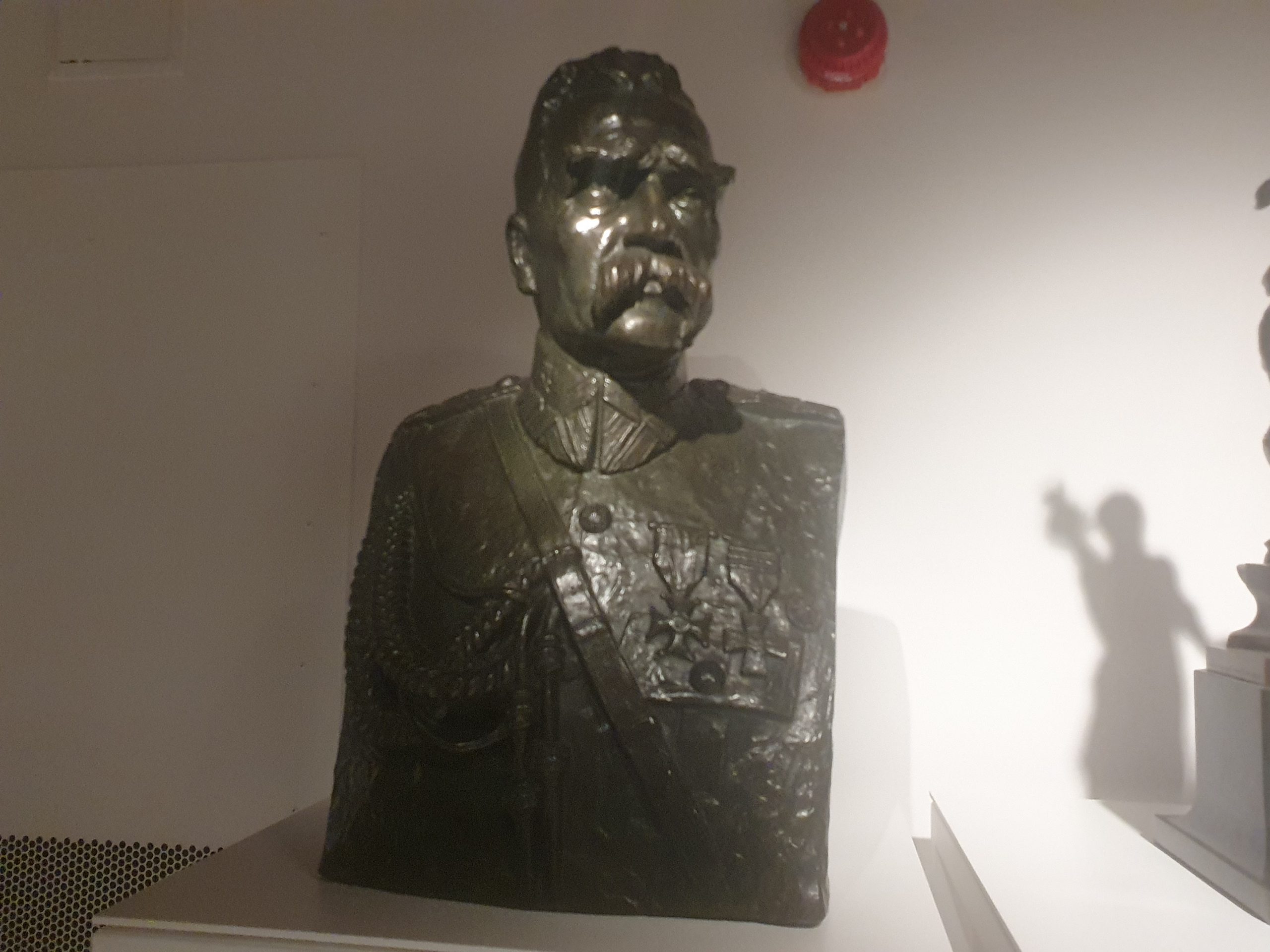
    I admit to being off on one of my slight flights of fancy with this one, but this bronze sufficiently intrigued me.

    This cast bronze of Józef Piłsudski (1867-1935) is in the collections of the Museum of Warsaw and was designed in 1929. He was a hugely important figure in the creation of the Second Polish Republic and was a military man who became the Prime Minister of Poland. I was intrigued to know where this bronze, which was designed by Jan Małeta, was during the Second World War, as the Germans would have destroyed this on sight given its importance. Unfortunately, the museum’s collection database is quite poor on provenance, so I have no idea where this has been.

    This is in St. John’s Archcathedral in Warsaw (I only noticed it this week), although he’s buried in Krakow (other than his heart and brain which are elsewhere).

    There are no shortage of statues and street names in Warsaw of one of their national heroes….. During the late 1930s, it was illegal to criticise him in public with a punishment of up to five years imprisonment. Although Piłsudski had died in 1935, he proved to be an inspirational figure to the Home Army in Warsaw during the Second World War when they were trying to reclaim the city.

  • Warsaw – Museum of Warsaw (Kazimierz Palace Garden Fountain Remnants)

    Warsaw – Museum of Warsaw (Kazimierz Palace Garden Fountain Remnants)

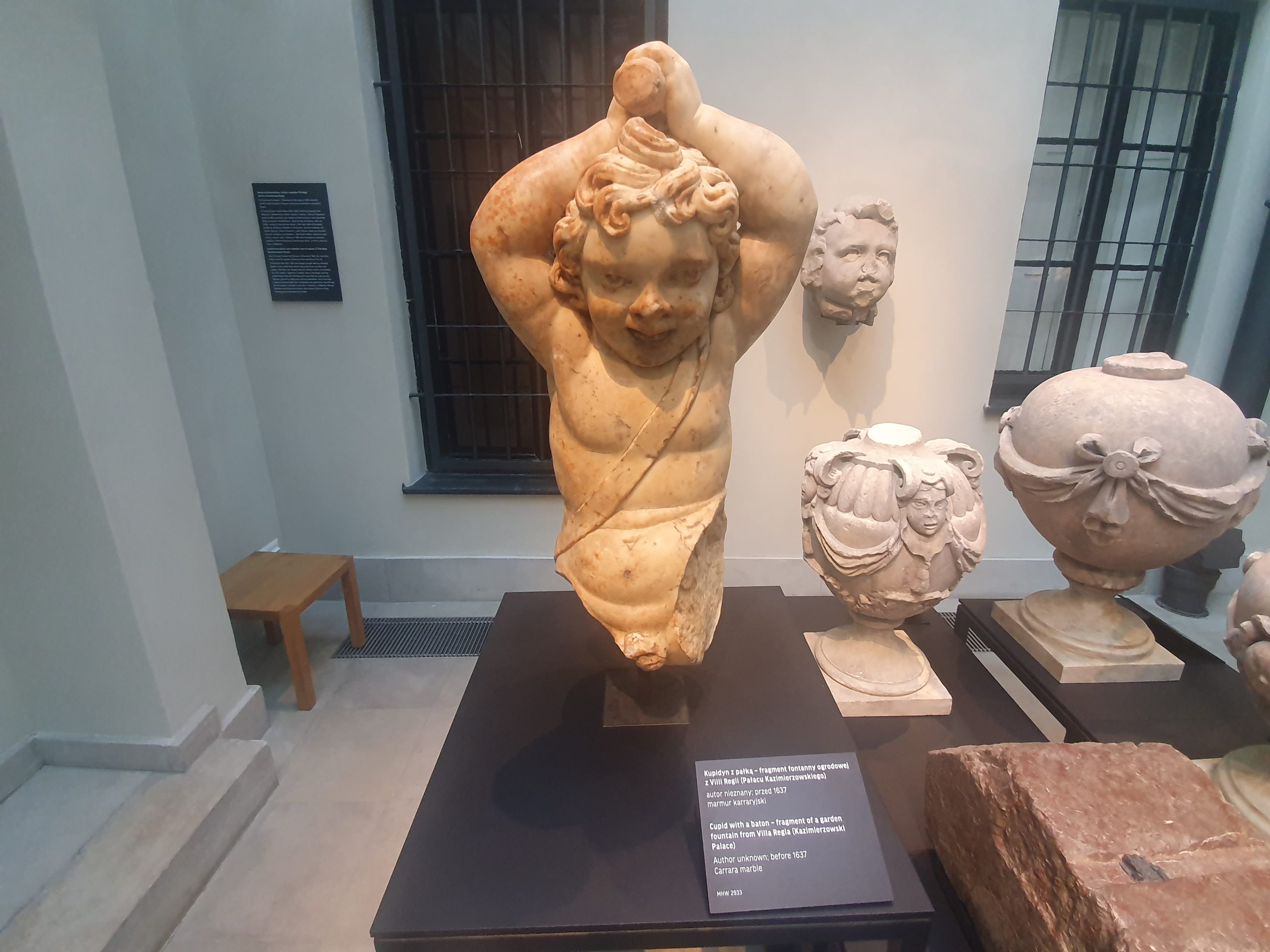
    And another in my series of items on display in the Museum of Warsaw that I think are interesting, this post is about a remnant which is on the ground floor display of architectural features. Warsaw’s near destruction towards the end of the Second World War meant that there were no shortage of remnants like this and so it’s positive that at least some have survived. The destruction of this item wasn’t down to the Germans on this occasion, it was looted by the Swedes in the sixteenth century. They were extracted from the Vistula River in 1906 as the barge they were on sunk during the transportation to Sweden.

    It’s Cupid with a baton which was part of a garden fountain from the Kazimierz Palace, a structure now part of Warsaw University and which has been knocked about many times over the centuries (more information on Wikipedia’s page about the building). It dates from the first building which was constructed on the site between 1637 until 1641, designed to be lived in for some of the year by King Władysław IV. Apparently made from Carrara marble, Cupid would once have been holding a club which would have been hitting a dolphin. Apparently this wasn’t meant to be an aggressive act (although it doesn’t sound ideal), just showing that Cupid was stopping excessive dolphin behaviour….

    I like the history of this item though, lovingly created, stolen by the Swedes, lost in the river for over two centuries, lifted back up, cleaned and then put on display (all whilst surviving the Second World War).

  • Warsaw – Museum of Warsaw (Warsaw Uprising Uniform Jacket)

    Warsaw – Museum of Warsaw (Warsaw Uprising Uniform Jacket)

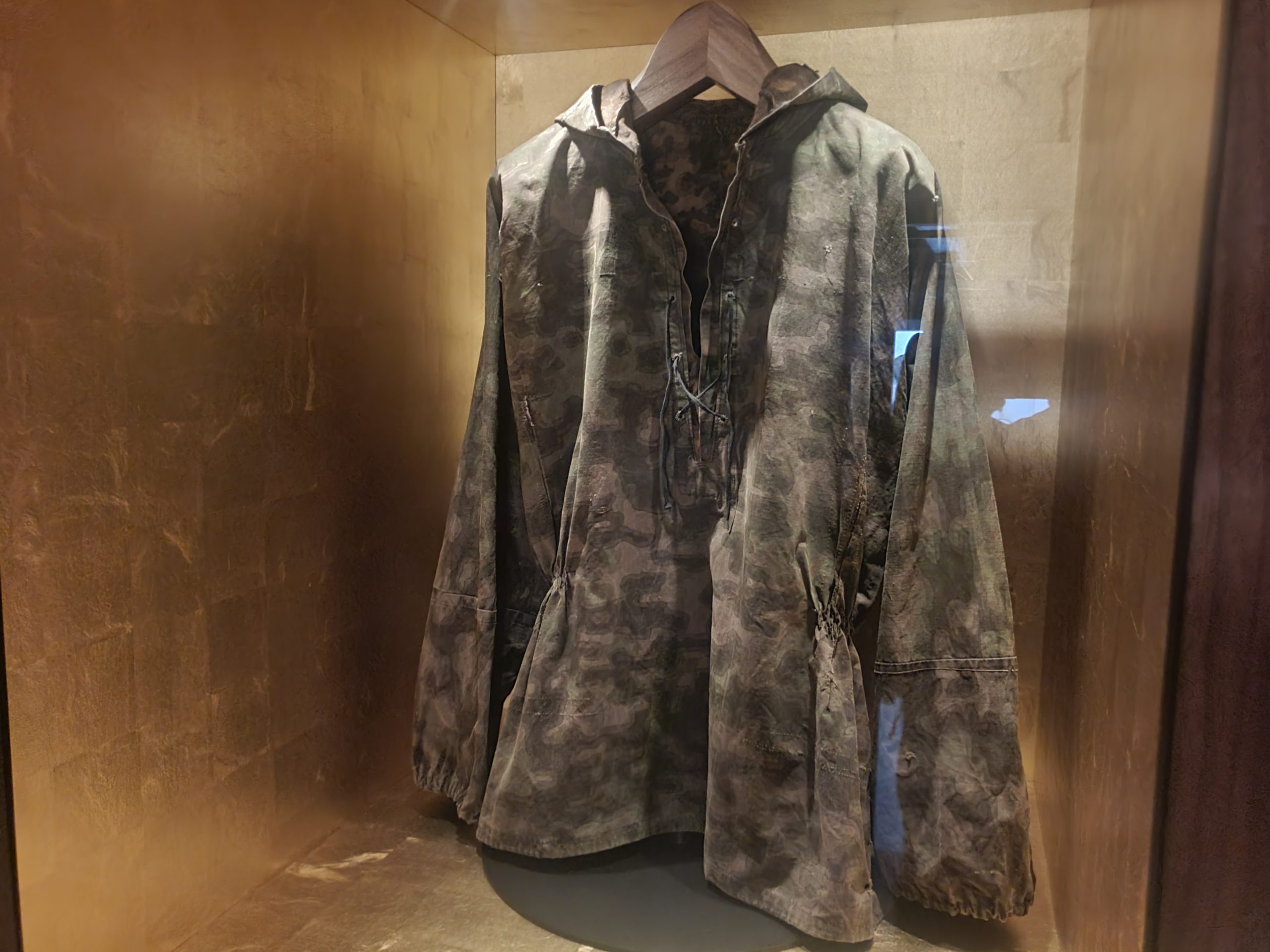
    Continuing my series of items that I thought were of interest that are in the displays at the Warsaw Museum.

    This is a tarpaulin jacket that was originally owned by the German Waffen SS when they were occupying Warsaw, but during the Warsaw Uprising the store was broken into. The jacket was given to Zdzisław Galperyn, from the Polish Home Army, battalion ‘Chrobry I’. He was captured in 1944 and sent to a prisoner of war concentration camp, but he returned to the city in 1945 and his coat was still where he left it in the attic of a tenement house at ul. Chmielna. It’s remarkable both that the individual and the coat remained intact during the Second World War, with Zdzisław donating the jacket to the museum in 2004.