Tag: Imperial War Museum

  • London – Lambeth – Imperial War Museum (Kindertransport of Peter Needham)

    London – Lambeth – Imperial War Museum (Kindertransport of Peter Needham)

    I’ve been having another look at the photo collection of the Imperial War Museum and this is something I haven’t seen before (© IWM HU 88869). It’s an image taken at Prague Airport on 12 January 1939 of Peter Needham, a half-Jewish Czech boy, with his parents. He was part of a Kindertransport flight bringing him to safety, one of around 10,000 children that the UK accepted. Being realistic, he would have likely died if he hadn’t have had this opportunity.

    Fortunately, the other side of this tale exists, and Peter (original surname of Niethammer) flew into Croydon Airport and had a happy life in the UK. His mother lived until 1993 and his parents had already commenced divorce proceedings.

    An interview with Peter noted:

    “Peter Needham (previously Niethammer), was born in May 1934 in Teplice, Czech Republic (then Czechoslovakia). His Lutheran lawyer father, Fritz, was born in Aachen, Germany, on 6 February 1900; his assimilated Jewish mother Anna (nee Bergman), an economic research worker, was born in Most (previously Brux) on 5 November 1910. However, following the September 1938 Munich Agreement ceding the Sudetenland region to Nazi Germany, they divorced, and Anna took Peter to her wealthy parents’ home in Radic, near Prague, of which he retains happy memories.

    Jews, though, were not entirely safe. After Anna’s discussion with German clergyman, Wilhelm (William) Wallner, The Barbican Mission to the Jews helped fly Peter, aged 4, from Prague to Croydon Airport, London, on 12 January 1939 with some 20 other children. She escaped soon after, then her parents on 31 March 1939. Peter’s uncles Hans and Seppl also escaped. Germany invaded and occupied rump Czechoslovakia mid-March 1939; a relative subsequently perished in the Holocaust.”

    His full story is at https://www.ajrrefugeevoices.org.uk/RefugeeVoices/Peter-Needham.
  • Imperial War Musuem – British Army Cadets in Cambridge During First World War

    Imperial War Musuem – British Army Cadets in Cambridge During First World War

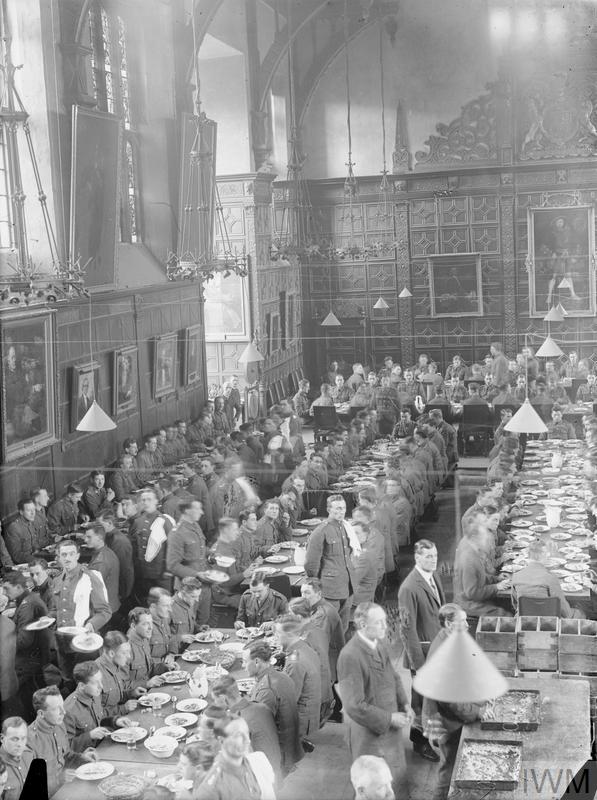
    Rummaging once again through the photographic collections of the Imperial War Museum, these are some photos of officer cadets in Cambridge during the First World War. The photos were taken by Horace Nicholls, likely taken in late 1917. There’s a timeless feel to the backdrops of the photos, the troops though are the reminder of the tragedy that was taking place elsewhere.

    Cadets of No. 5 Battalion parading in the Great Court, Trinity College, Cambridge, for Divine service.

    Cadets of No. 5 Officer Cadet Battalion entering the chapel at Trinity College, Cambridge.

    Cadets of No. 5 Officer Cadet Battalion in the dining hall of Trinity College, Cambridge.

    Cadets of No. 2 Officer Cadet Battalion halted at the gateway of Jesus College, Cambridge.

    Cadets parading outside Ridley Hall (a theological college), University of Cambridge.

    Cadets parading outside Ridley Hall (a theological college), University of Cambridge. December 1917.

    Cadets of No. 5 Officer Cadet Battalion assembled in Neville Court, Trinity College, Cambridge.

    Cadets seated round the fountain in the Great Court, Trinity College, Cambridge.

    © IWM Q 30318

    © IWM Q 30323

    © IWM Q 30297

    © IWM Q 30298

    © IWM Q 30311

    © IWM Q 30320

    © IWM Q 30312

    © IWM Q 30317

  • London – Lambeth – Imperial War Museum (Air Raid Damage in Norwich)

    London – Lambeth – Imperial War Museum (Air Raid Damage in Norwich)

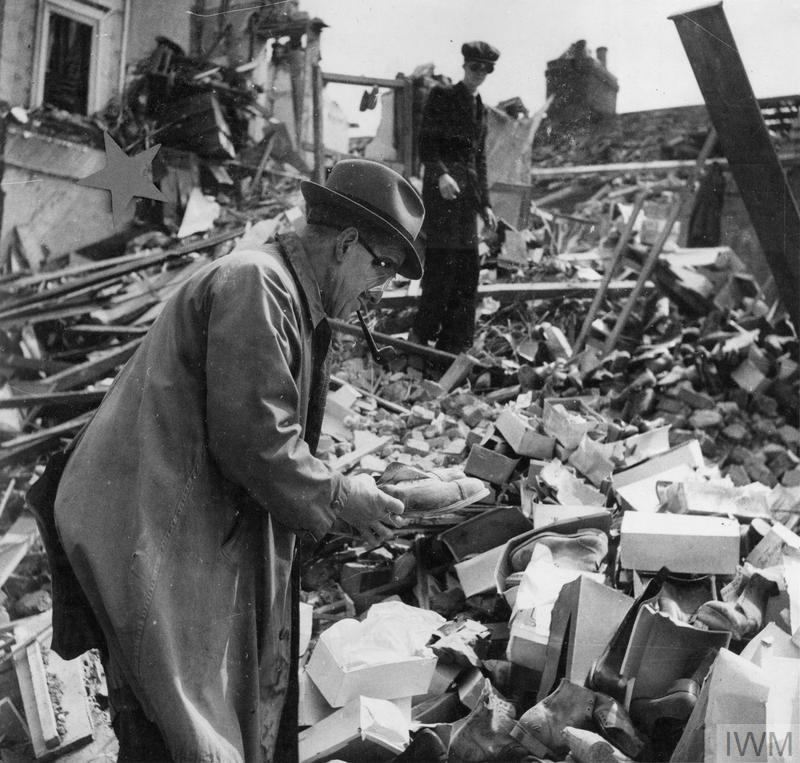
    From the collections of the Imperial War Museum (© IWM HU 140004), I’ve never seen this photo before. There’s no address on it, but it was taken in Norwich following a Baedeker Raid which took place on 29 April 1942. The man was the owner of the shoe shop which had been destroyed, looking through to see if he could salvage any of his stock.

  • London – Lambeth – Imperial War Museum (Still Smiling After Air Raid)

    London – Lambeth – Imperial War Museum (Still Smiling After Air Raid)

    I’m still rummaging through the Imperial War Museum’s on-line collection of photos (© IWM HU 36206) and this is very much smiling in the face of adversity. Perhaps it’s a little stage-managed, but maybe the home-owner is pleased to be at least able to save their plant and clock. The exact location was never noted, but the photograph was taken in London in 1940.

  • London – Lambeth – Imperial War Museum (Troops on Sheringham Beach)

    London – Lambeth – Imperial War Museum (Troops on Sheringham Beach)

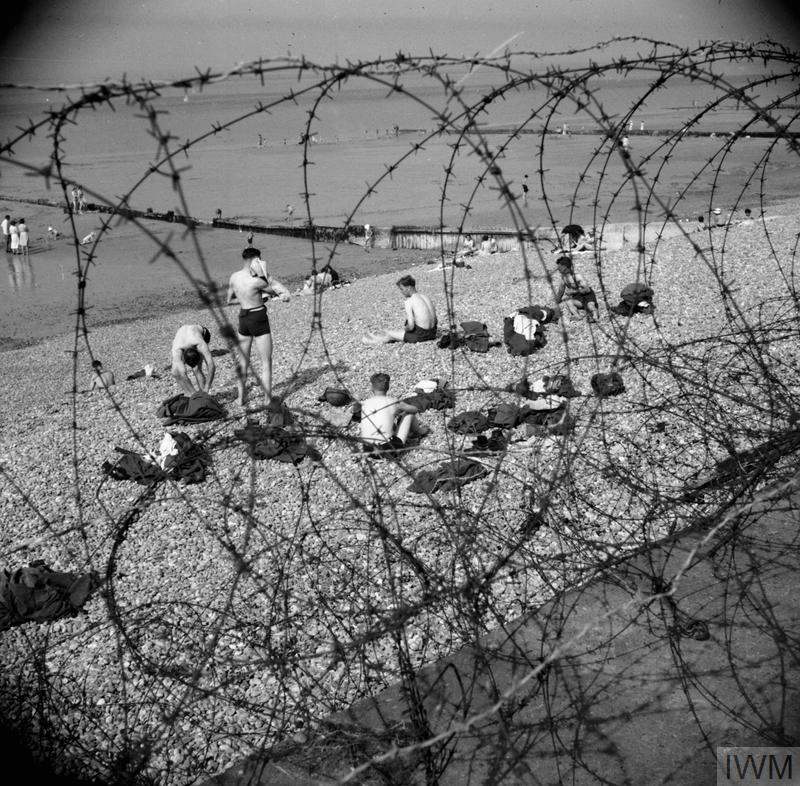
    And my last photo (for today at least) from the Imperial War Museum archive (© IWM H 11689), this is a photograph of Sheringham beach which was taken on 12 July 1941 by Captain Len Puttnam. The military had allowed the public to access the beach, but they were present to ensure that they didn’t stray too far, with the men of 2/5th Battalion of the West Yorkshire Regiment overseeing proceedings.

  • London – Lambeth – Imperial War Museum (Damage to Downing Street)

    London – Lambeth – Imperial War Museum (Damage to Downing Street)

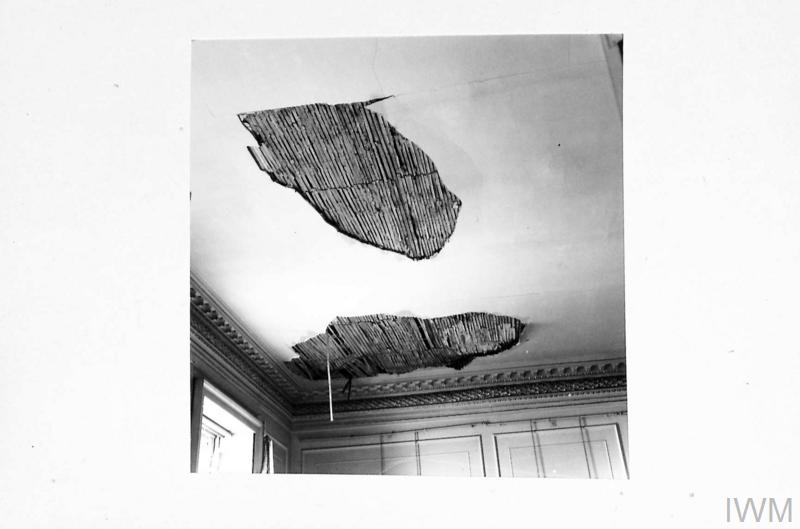
    I will, at some point, stop faffing about looking through the Imperial War Museum’s on-line photographic album, but these are interesting photos (well, I think) of damage done to Downing Street on 20 February 1944. A fleet of 200 German aircraft attacked London, killing 600 people and doing damage to numerous Government and residential buildings.

    Repairing the damage with ladders. This was towards the end of the bombings in London, the last Luftwaffe air raids were in May 1944.

    An annoying hole in the ceiling of the drawing room and that isn’t snow on the ground, it’s glass. The work of a sentryman had to continue though, so they made a path through the glass for him.

    The photographer at the time, Captain Horton, noted that although the window was blown out, the photograph of Winston Churchill was left intact.

    And thanks to the Imperial War Museum – © IWM H 36080 © IWM H 36081 © IWM H 36087 © IWM H 36091 © IWM H 36092 © IWM H 36088.

  • London – Lambeth – Imperial War Museum (War Shelters at London Liverpool Street)

    London – Lambeth – Imperial War Museum (War Shelters at London Liverpool Street)

    Rummaging through the on-line collections of the Imperial War Museum (© IWM D 1574), I rather liked this photo taken by Bill Brandt in 1940. Brandt was born in Hamburg in 1904, but he renounced his German origins and moved to live and work in London in 1933. This photo is of Londoners packed into the underground station of London Liverpool Street and for some reason, I hadn’t realised that they were quite so packed in. Some of the photographs that Brandt took at this time were sent to the President of the United States, Franklin D. Roosevelt, to show him the fortitude of the London population. Very much a snapshot of a different time.

    And another (© IWM D 1573), from the same station.

  • London – Lambeth – Imperial War Museum (Another War Recruitment Poster)

    London – Lambeth – Imperial War Museum (Another War Recruitment Poster)

    On the theme (well, I posted about one other) of recruitment posters at the Imperial War Museum photo archive, this (© IWM Q 33121) is another First World War recruiting poster. I wonder whether a similar campaign would work today if they needed men (or women now) to fight, would a call to protect Queen and country be enough? Hopefully we’ll never need to find out….

  • London – Lambeth – Imperial War Museum (War Recruitment Poster)

    London – Lambeth – Imperial War Museum (War Recruitment Poster)

    This poster can be found on the on-line collection (© IWM Q 71310) rather than the physical displays of the Imperial War Museum, but it’s an interesting poster and I was intrigued by the reference to Lovain as I hadn’t heard of it. The town is in Belgium, better known as Leuven today, and on 25 August 1914 the Germans attacked the town and went on a frenzy of destruction, including wrecking the university’s library and destroying 230,000 books including over 1,000 incunables. The British helped to re-equip the library after the war, although it was destroyed again during the Second World War with over one million books destroyed.

    Anyway, the poster is a reminder of how the Government wanted the Germans to be portrayed during the First World War, which was as a population who couldn’t be trusted. The allegations of firing on the sacred Red Cross and trashing cities certainly caused anger and concern amongst the British people, so I imagine this was a particularly successful campaign.

  • London – Lambeth – Imperial War Museum (Margaret Thatcher Spitting Image Puppet)

    London – Lambeth – Imperial War Museum (Margaret Thatcher Spitting Image Puppet)

    I’m not sure that I expected to see this former Spitting Image puppet of Baroness Thatcher at the Imperial War Museum, although it’s with reference to her image as a strong war leader when the Falklands Islands were attacked by Argentina.

    The puppet is made from metal, copper alloy and polyurethane foam, with a latex skin. It’s just over a metre in height and it was shown in the television’s musical sketch, ‘Go Now’. It appears in the Youtube video at https://www.youtube.com/watch?v=KCO5q1SQJNQ, although it’s shown there backwards in an attempt I assume to avoid copyright issues.