Tag: Haus der Geschichte

  • Bonn – Haus der Geschichte (Willi Schulz Shirt)

    Bonn – Haus der Geschichte (Willi Schulz Shirt)

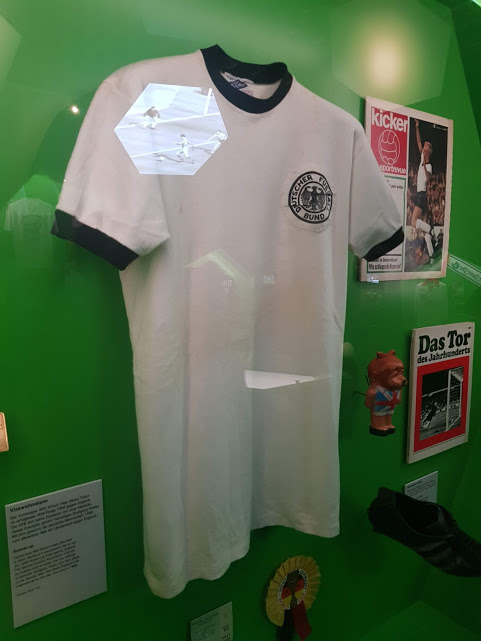
    According to Nathan, who studied this shirt in some detail (I’m not really into looking at old clothing), this is quite important for those interested in football. And, I must admit, it’s an interesting display item to have, which is a football shirt which was worn in the 1966 World Cup Final. It was worn by Willi Schulz, a German, er, footballer, who would have run up and down the field whilst wearing it. That’s all I can really write about football if I’m being honest.

    I was interested to read though that eight of the eleven England football players who received a winning medal felt the need to sell it to raise money. Certainly different times in terms of how much players received in wages. And, also, the majority of players seem to have suffered from Alzheimer’s, it’s suggested that might have been linked to how players used to head what would have been an heavier ball than is used now.

  • Bonn – Haus der Geschichte (Ballot Box)

    Bonn – Haus der Geschichte (Ballot Box)

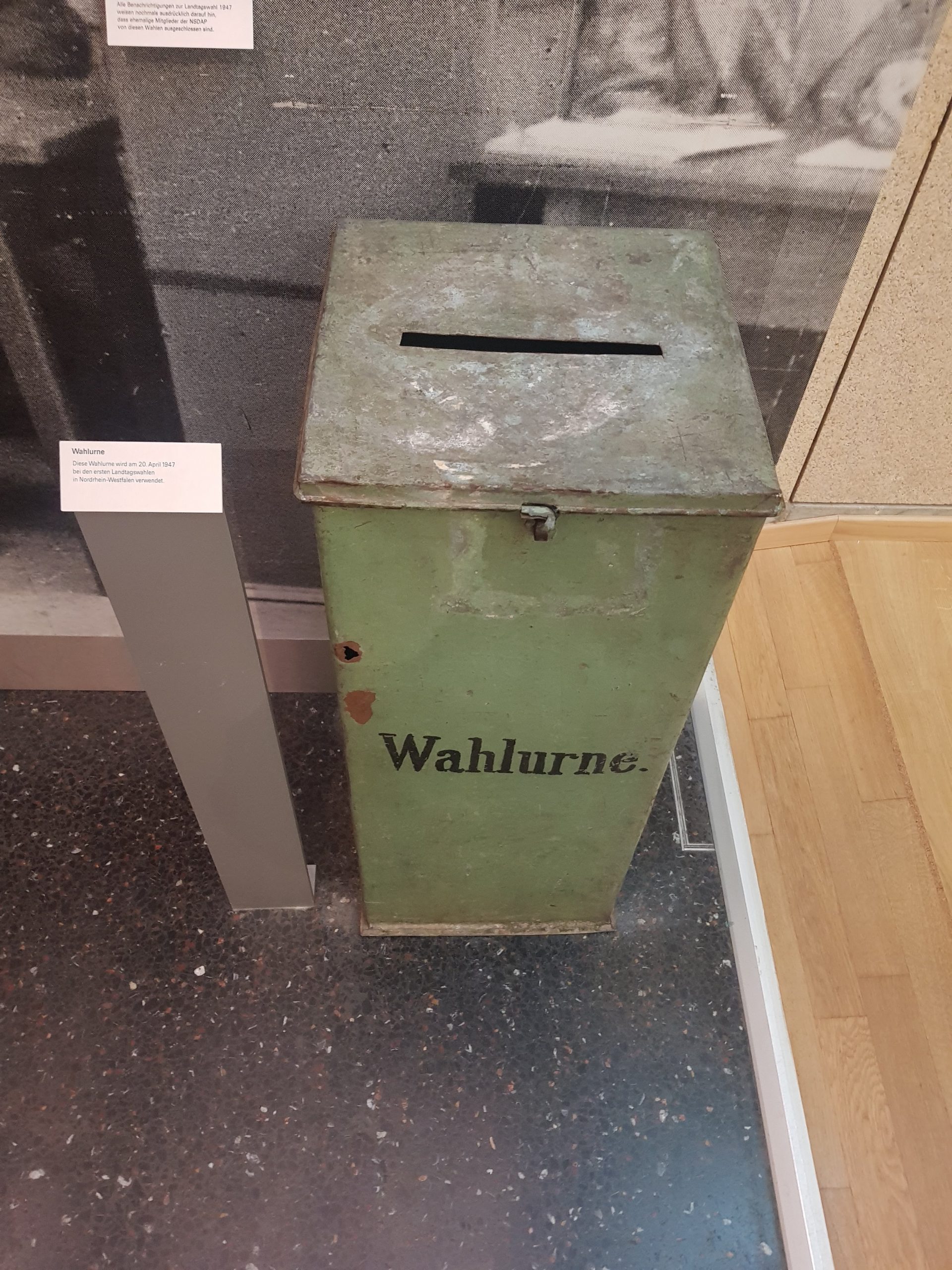
    In an attempt to be topical since today is a General Election, here’s a ‘wahlurne’, or ballot box, which was used in German elections on 20 April 1947. After the years of Nazi rule, it must have been something of a relief to be able to vote once again in a democratic election.

    And that’s all I’m going to say about today’s General Election…..

  • Bonn – Haus der Geschichte (1714 State Crown of King George I)

    Bonn – Haus der Geschichte (1714 State Crown of King George I)

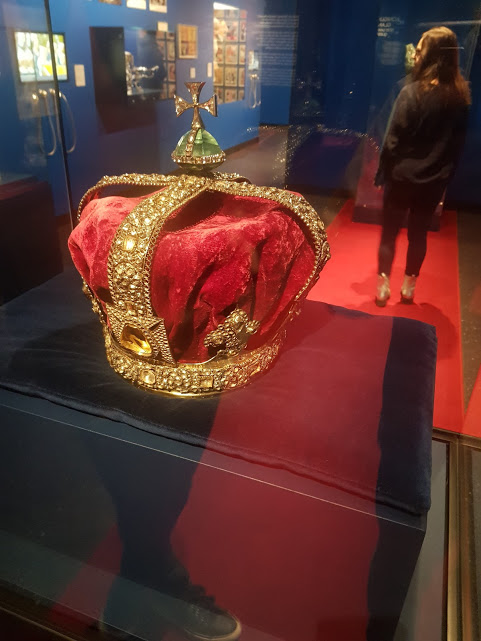
    I had wondered why there were so many staff at the UK exhibition at the Haus der Geschichte, but having seen the exhibits, I’m sure that many were actually security guards. Given some other little incidents at German museums recently, this seems a very wise precaution. HM Queen Elizabeth II has lent this 1714 State Crown from the Royal Collection, first used for the crowning of King George I. This is of course highly relevant to the museum, since King George I was German, the first Monarch from the House of Hanover.

    Only the empty gold frame of the crown now remains as the stones were used in a lighter replacement for Queen Victoria, so King William IV was the last to use it as his Coronation. The crown was discarded by the Royal Family and it somehow came into the hands of the Amherst family who placed it on long-term loan at the Museum of London. Later acquired by the Prince of Brunei, it was returned back to the Royal Collection as a generous donation, with apparently an estimated value of a little over £500,000, but it’s of a much more important historical value.

    The crown is usually on display at the Tower of London, where I assume it will be returned after this temporary exhibition ends. But what a rather lovely item to send to Bonn, although its importance was perhaps not as clearly described as it could have been on the small information panel at the museum.

  • Bonn – Haus der Geschichte (Fawlty Towers)

    Bonn – Haus der Geschichte (Fawlty Towers)

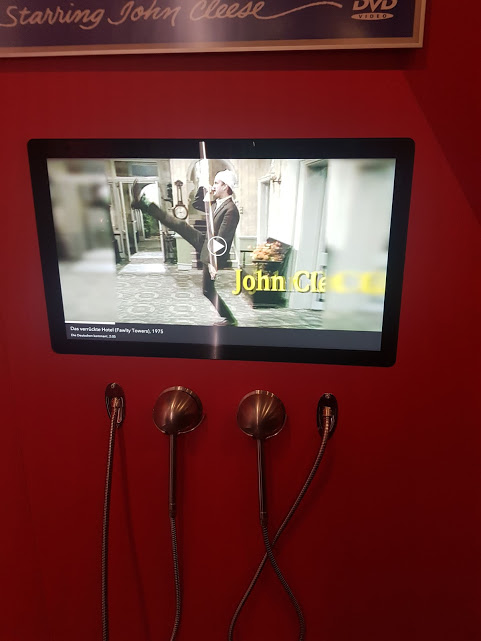
    Part of the exhibition on British-German relations at the special UK exhibition being held at the Haus der Geschichte. The curators seem to have amused themselves in finding cultural references to how the British view the Germans and vice versa.

    The light-hearted approach from British and German newspapers…..

  • Bonn – Haus der Geschichte (9/11 Girder from World Trade Center)

    Bonn – Haus der Geschichte (9/11 Girder from World Trade Center)

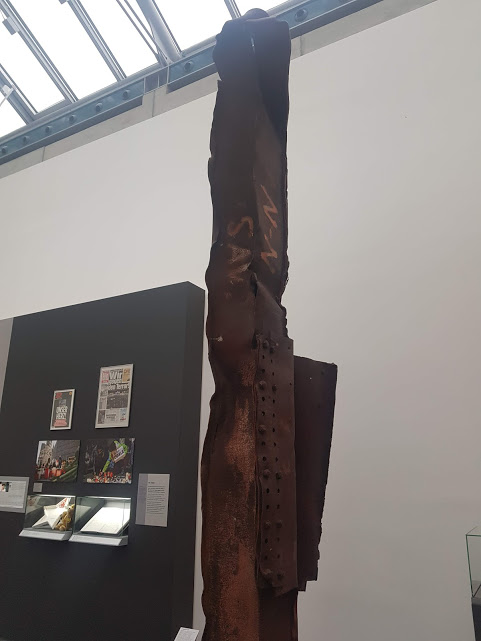
    This is one of the girders from the collapsed World Trade Center which was destroyed during the 9/11 attacks in 2001. The Port Authority of New York and New Jersey made available 2,200 of these pieces of steel to be used in museums and public buildings around the world. I’m not sure that a list exists of where they currently all are, but I must have seen tens of them over the years.

    Eleven Germans were killed during the attack and this is the museum’s memorial to them.

  • Bonn – Haus der Geschichte (Covering the Reichstag)

    Bonn – Haus der Geschichte (Covering the Reichstag)

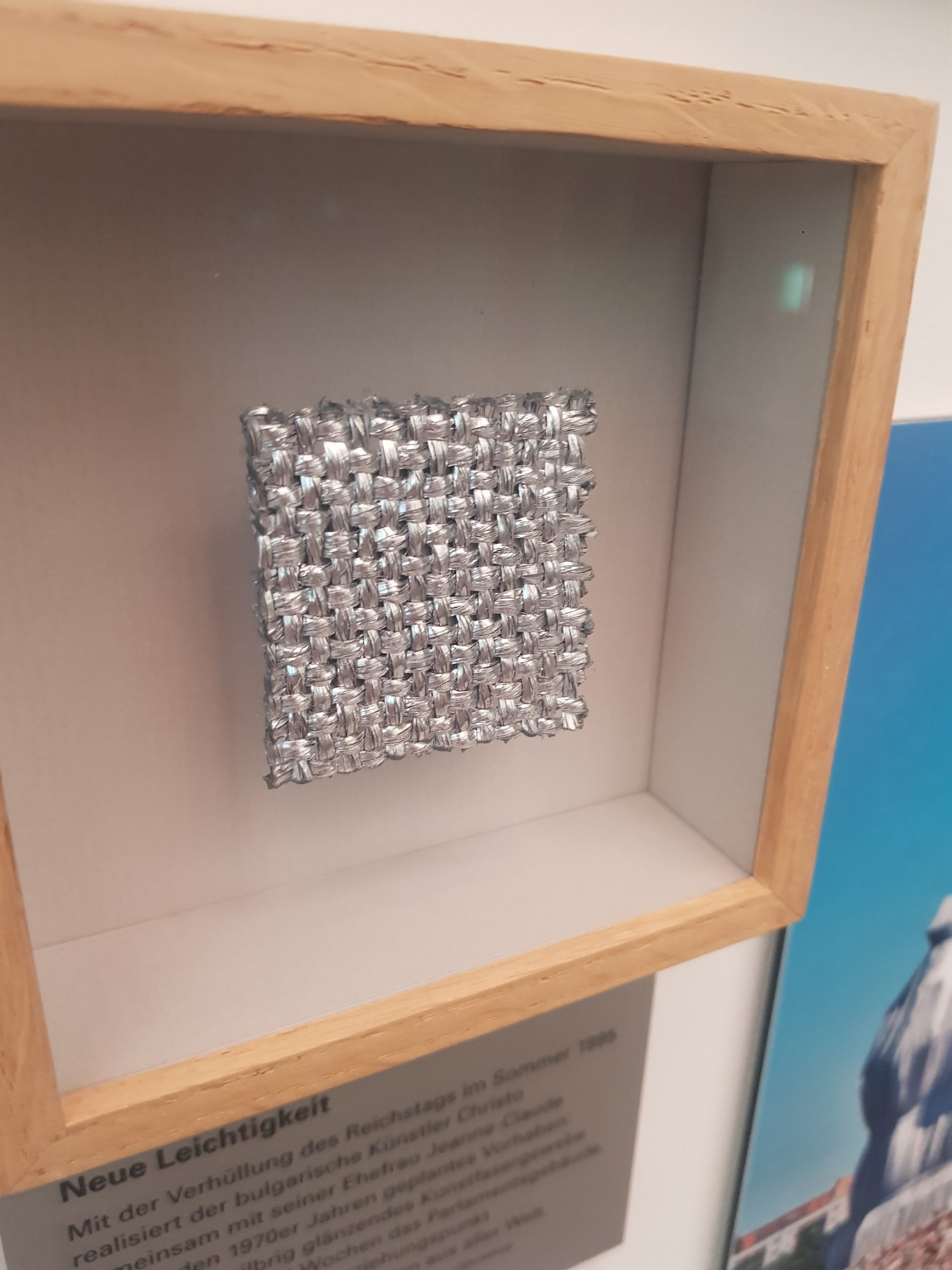
    I remember when an artist wrapped the Reichstag in Berlin, perhaps one of the largest art installations that there has been in Germany. The artist was Christo, who spent 24 years planning this project and being turned down on numerous occasions. His persistence is incredible and he went to speak to every one of the 350 deputies in a bid to convince them to support the project. He was able to win a majority over by promising that it was simply an art project, that it was self-funding and that all of the materials were recyclable.

    I’ve never given much thought to this project, but I always thought the covering was something like a thin and lightweight fabric. This though would have likely torn and looked ridiculous, so it was more of a metallic covering that was used. It didn’t come cheaply, as it cost over $15 million at the time, a significant sum of money. The artist has a policy that an artwork is never repeated and it can’t last for more than two weeks, so that was how long the covering remained over the building. The photo above shows a small piece of material which was used in the covering, which is “a thick woven polypropylene fabric with an aluminium surface”.

    The covering was unveiled on 24 June 1995 and it took 90 professional climbers and 120 installation workers to complete the work. The artist funded the project by selling original drawings and models, with no sponsorship money or public funds used. The photos on the artist’s web-site show just how amazing this must have looked.

    And what it looked like….

  • Bonn – Haus der Geschichte (Very British – Brexit Exhibition)

    Bonn – Haus der Geschichte (Very British – Brexit Exhibition)

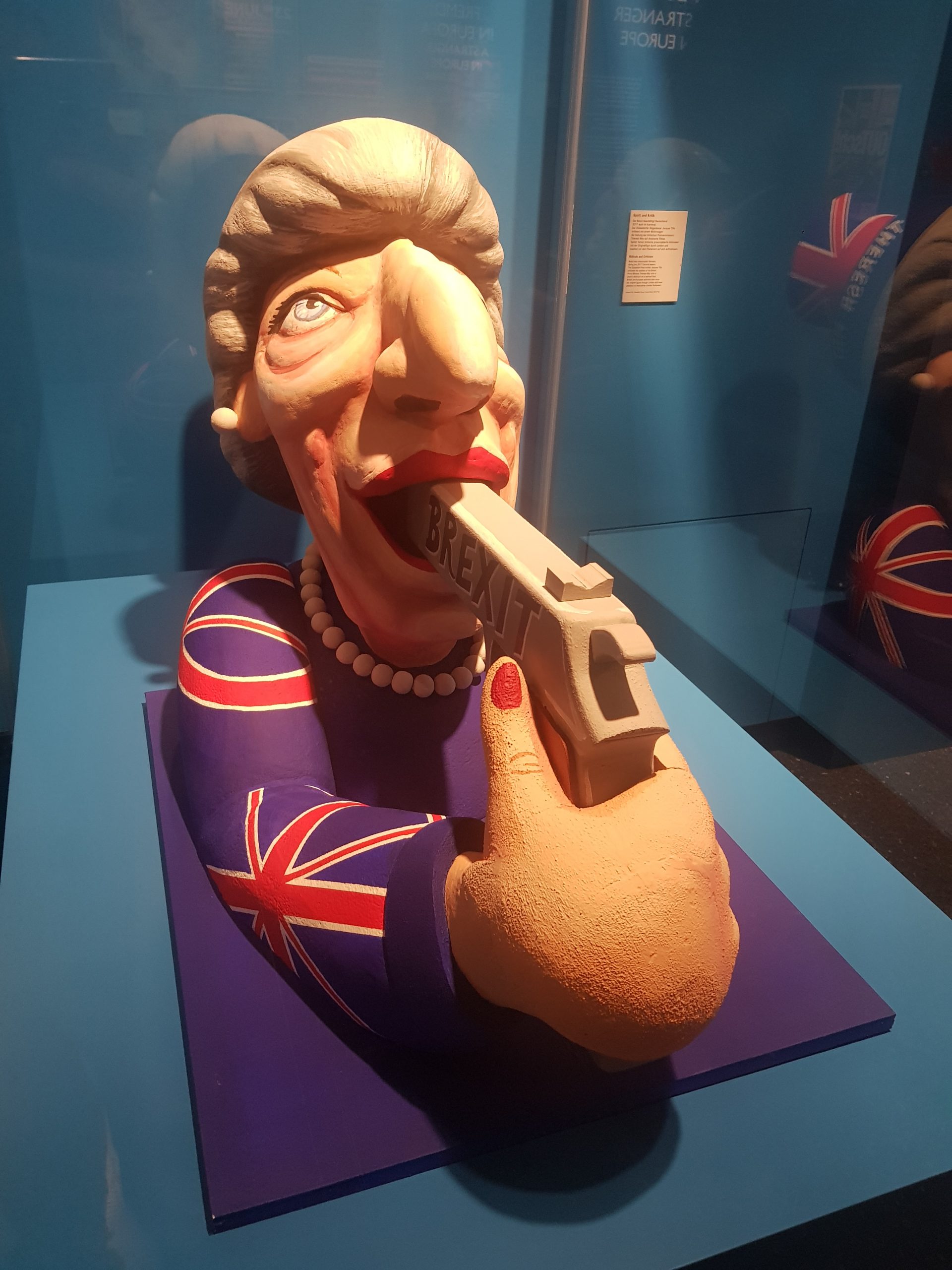
    Part of the ‘Very British’ special exhibition at the museum, this was the Brexit room, showing the changing British attitudes to the European Union over the years.

    In the photo above is a depiction of Theresa May which was designed by Jacques Tilly and used on a carnival float in Germany in 2017. It was used again in a pro-EU demonstration in London and has been much seen in images since then.

    The Brexit countdown clock.

    A Daily Mirror newspaper headline from when Ted Heath, the then Prime Minister, led the country into the then European Community, securing victory in the House of Commons by a majority of 112 on 28 October 1971. Ted Heath concluded that night:

    “Throughout my political career, if I may add one personal remark, it is well known that I have had the vision of a Britain in a united Europe; a Britain which would be united economically to Europe and which would be able to influence decisions affecting our own future, and which would enjoy a better standard of life and a fuller life. I have worked for a Europe which will play an increasing part in meeting the needs of those parts of the world which still lie in the shadow of want. I want Britain as a member of a Europe which is united politically, and which will enjoy lasting peace and the greater security which would ensue.”

    And Edward Heath, who I’m sure would have been enormously saddened with the current situation.

    The country entered the EU on the first day of 1973.

    A referendum was held in June 1975 to confirm the decision to enter the European Community, with this plate featuring the faces of Harold Wilson, Margaret Thatcher and Jeremy Thorpe.

    Not everyone agreed with membership.

    The sapphire dress and handbag of Margaret Thatcher. I think it’s fair to say that no-one is entirely sure what she would have thought of the current Brexit situation.

    It wasn’t made entirely clear whether this was the original, although on balance, I think that it was. It’s the letter from Theresa May to Donald Tusk, confirming that the UK were implementing Article 50 and leaving the European Union.

    As a side note to all this, I’m deeply impressed that a German museum managed to tell the story of Britain’s membership of the European Union and its predecessors with such clarity. I haven’t seen any museum in the UK make a similar effort, it was a magnificent exhibition as far as I’m concerned.